TThere is a specific kind of “culture shock” that only a biologist truly appreciates. It’s not about the food or the language; it’s about the wildlife that becomes wallpaper to the locals.
In Australia, where I’ve spent years working as an ecologist, I became used to wallabies and kangaroos thumping across the paddock or black cockatoos screaming from the banksia trees. However, a couple of years ago, I traded the bush for the humid, emerald landscapes of Langkawi, Malaysia. It was my first time in Southeast Asia, and I was working remotely while soaking in the tropical biodiversity.
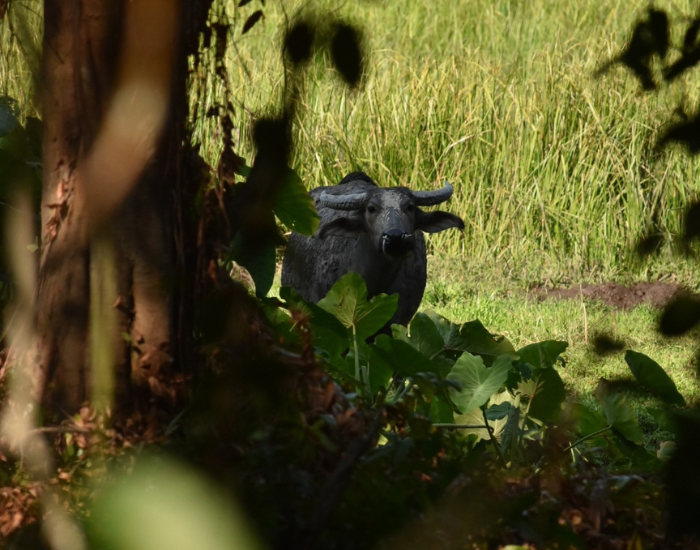
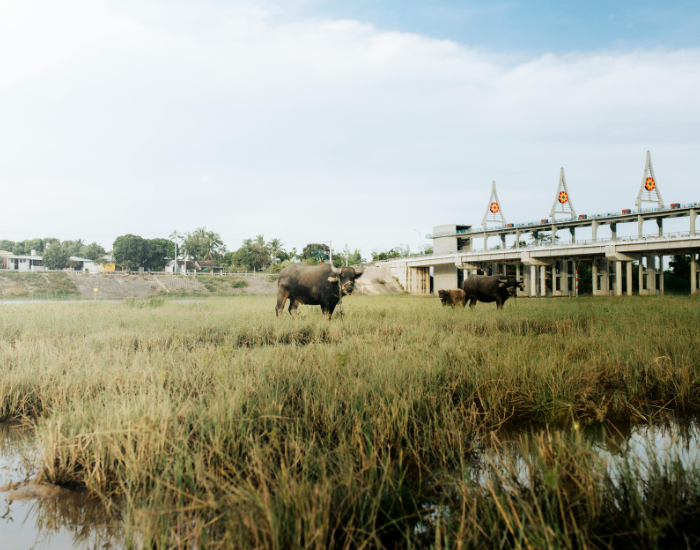
One morning, I was buzzing along on my scooter, caffeinated and ready for a day at the coworking space. I rounded a corner and nearly braked into a ditch. There, standing casually on the shoulder of the road, was a water buffalo. Then another. And a third.
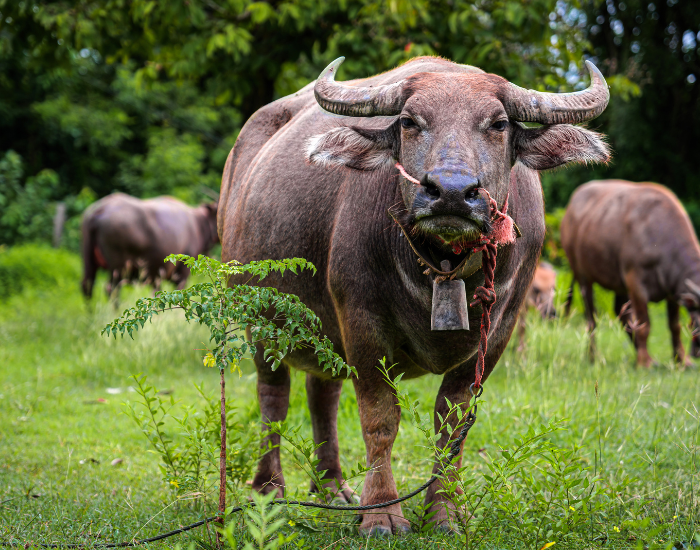
They were massive, easily twice the size of my scooter, with sweeping, prehistoric horns and a gaze that suggested I was the one out of place. While these were technically domestic water buffalo, they had the run of the island. To the locals, they were just part of the commute, much like the dusky leaf monkeys watching from the canopy or the macaques I’d later dodge in Bali and the Philippines. The Asian buffalo, in particular, has a deep historical and cultural significance in this region, having been domesticated for centuries and serving as a vital force in agriculture, especially for powering rice paddies and supporting rural economies.
Whether it’s coatimundis in Mexico or water buffaloes in Malaysia, I am forever fascinated by how these incredible species integrate into the human narrative. Today, we’re doing a deep dive into the “Living Tractor” of Asia.
1. Where do The come from: A Taxonomy Overview
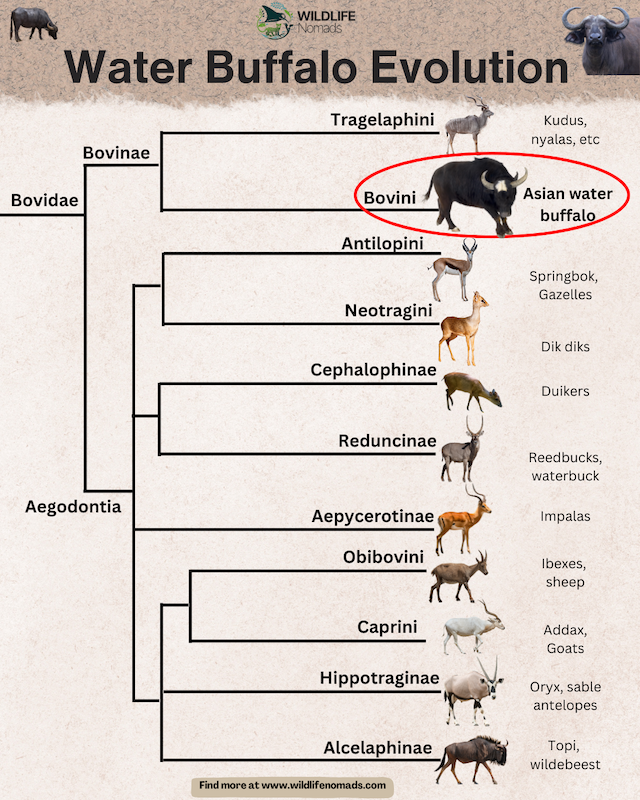
To understand the water buffalo animal, we have to look at the family tree. Often, people confuse them with the African buffalo (Syncerus caffer) or the American bison. Biologically, they are worlds apart.
The Asian water buffalo belongs to the genus Bubalus. The scientific name Bubalus bubalis refers to domestic water buffalo, while wild populations are classified as Bubalus arnee. Within the domestic world, we split them into two primary types: the river buffalo and the swamp buffalo.
Different species within this genus include the endangered mountain anoa and lowland anoa, both native to the Indonesian island of Sulawesi. However, when most people refer to “water buffalo,” they mean either the domesticated buffalo or the critically endangered wild water buffalo.
2. Water Buffalo Size: The Heavyweights of the Marsh
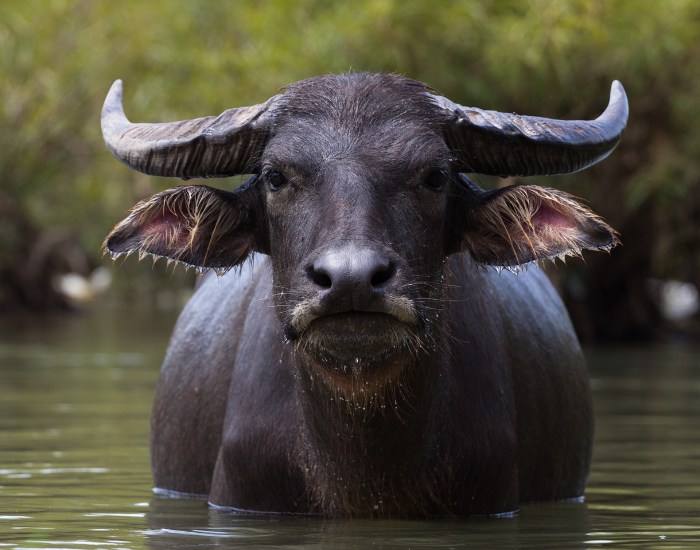
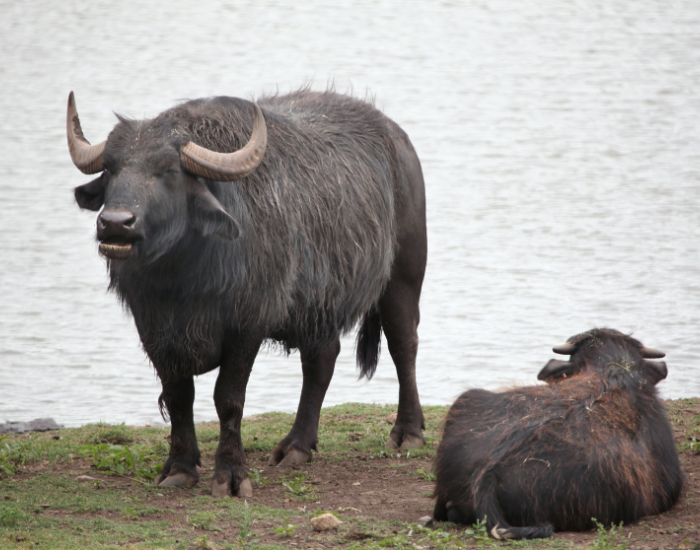
When you see a domestic water buffalo up close, the first thing that hits you is the sheer scale. A mature water buffalo height can reach up to 1.5 to 1.9 meters at the shoulder, with some individuals standing nearly 6 feet tall. Water buffalo have large, swept-back horns that can span up to 8 feet, adding to their imposing appearance.
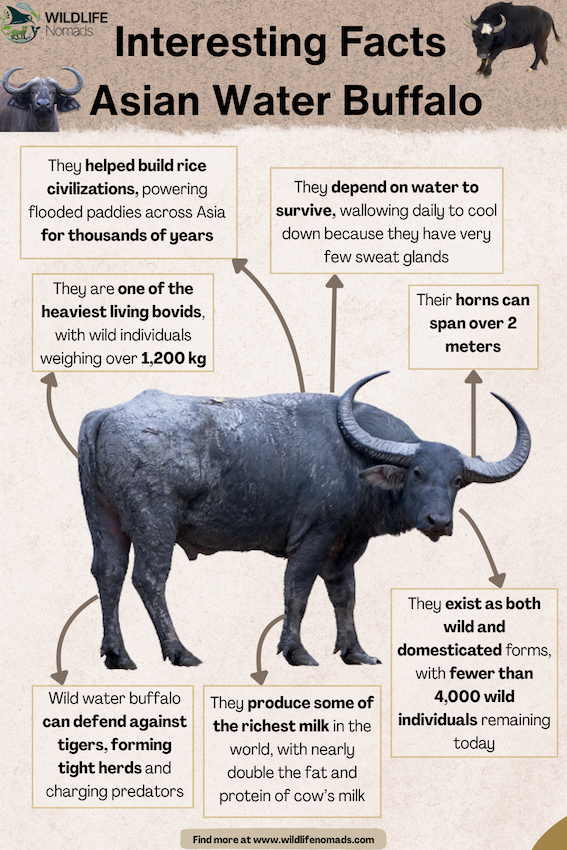
The water buffalo weight is even more impressive. A healthy adult domestic buffalo can tip the scales between 400 kg and 900 kg. Adult males are typically around 20% larger than female buffaloes. In the wild, the wild buffalo (wild Asian water buffalo, Bubalus arnee) can actually exceed 1,200 kg, making them one of the largest living bovid species on Earth. Body length ranges from 2.4 to 3 meters from head to tail, and they have a long tail with a tuft at the end.
Water buffalo have sparse hair compared to other large bovids, which is an adaptation to their environment and helps explain their need to wallow in water to cool down. Their physical features also make them valuable: water buffalo provide high-quality leather, and their horns and bones are often crafted into jewelry and musical instruments.
3. Why Are Water Buffaloes Called Water Buffaloes?
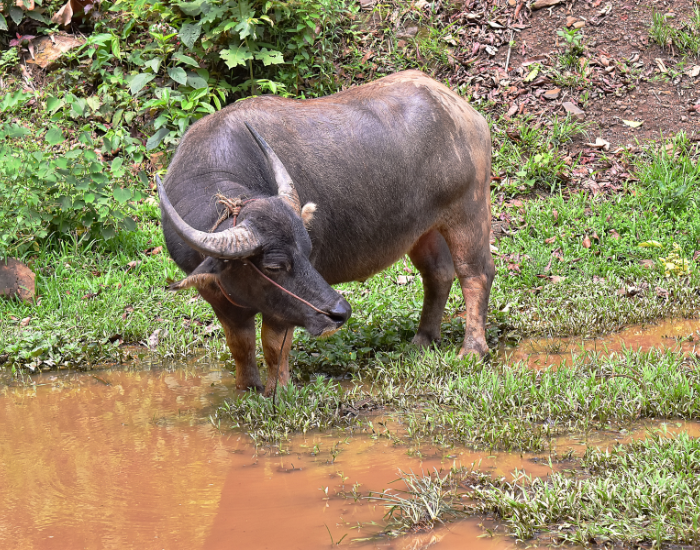
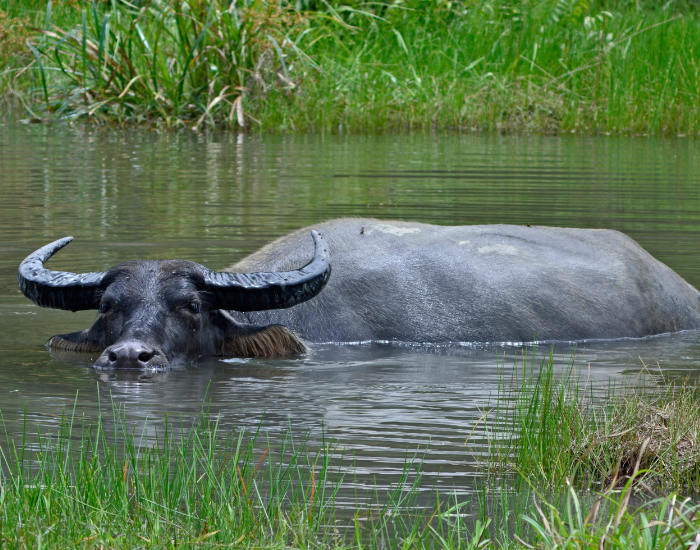
It isn’t just a catchy name. These animals literally have a physiological requirement for water that sets them apart from domestic cattle. Unlike many other bovids, water buffalo have fewer sweat glands, making them more sensitive to heat. This drives their need to wallow, as they are prone to heat stress in high temperatures and when water is scarce. To regulate their body temperature in the sweltering heat of water buffalo Asia habitats, they must submerge themselves in deep water or muddy waters, often with only their nostrils visible above the surface.
This behavior, wallowing, isn’t just for cooling. The mud acts as a natural sunscreen and a barrier against biting insects. Without access to water or deep mud, their health quickly declines. Water buffalo are both diurnal and nocturnal, adapting their activity patterns to avoid the midday heat. Therefore, wild water buffalo populations are always found near water sources in wet grasslands, swamp edges, and densely vegetated river valleys.
4. The Wild Asian Water Buffalo vs. The Domesticated Ones
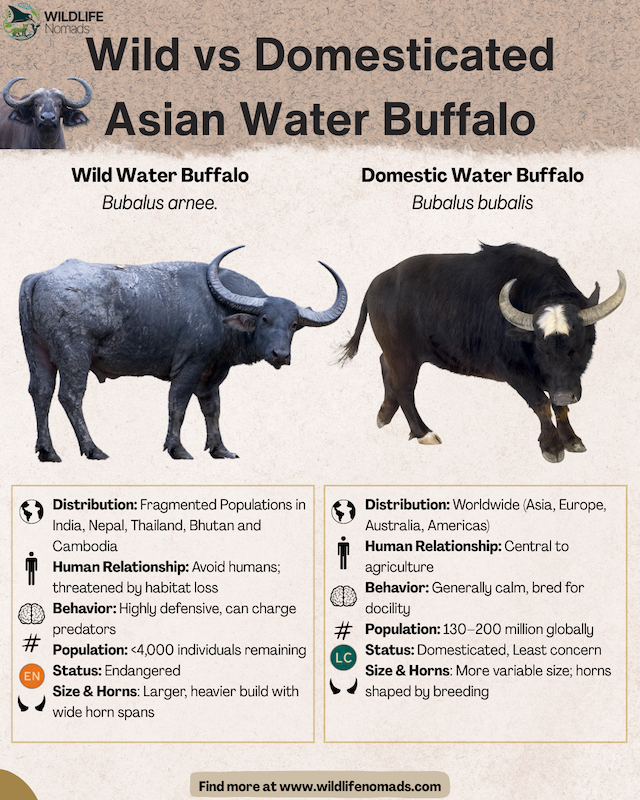
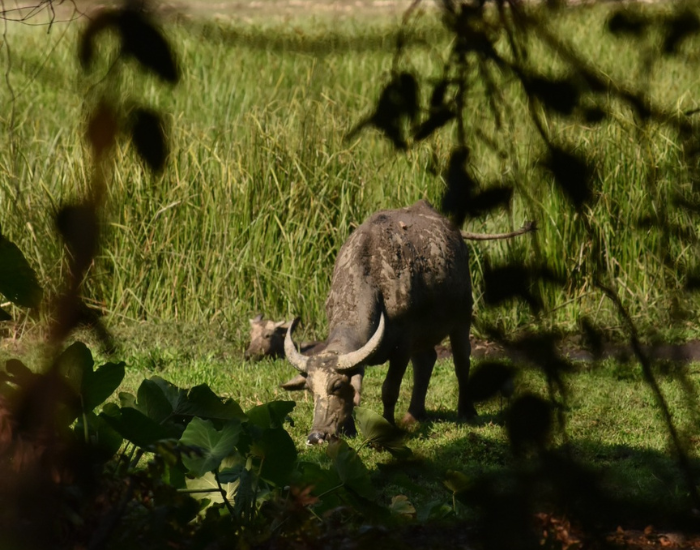
It is a common misconception that all buffalo are the same. Wild asian water buffalo are a distinct, endangered species. Today, they are confined to tiny pockets of protected land in India, Nepal, Bhutan, Thailand, and Cambodia, with an unconfirmed population in Myanmar.
According to the IUCN Red List, the wild water buffalo has been classified as endangered since 1986. While there are roughly 130 to 200 million domestic water buffaloes globally, there are fewer than 4,000 wild ones left. Some estimates suggest fewer than 2,500 mature individuals remain in the wild.
The greatest threat to the wild population? Ironically, it’s the domestic ones. Interbreeding between wild and domestic buffalo is slowly diluting the genetic purity of the wild stock. In India’s protected areas, wild male buffaloes sometimes mate with domestic females on village fringes. However, this is less of a threat than initially believed. The bigger issues are habitat loss, hunting, and disease transmission from domestic livestock.
5. Evolution of the Swamp Buffalo
The swamp buffalo is the icon of Southeast Asian agriculture. Evolutionarily, they developed wider hooves than their “river” cousins. This serves a specific purpose: it prevents them from sinking too deep into the soft, silty mud of rice paddies and marsh grasses.
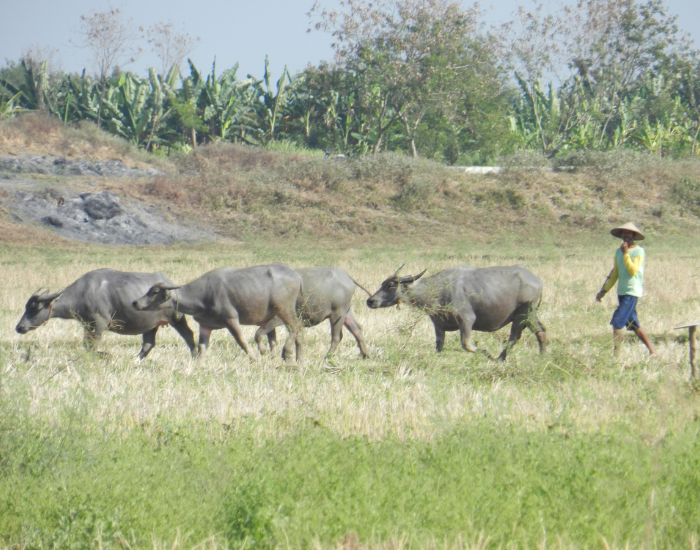
This “all-terrain” foot structure is why they are still the preferred method for plowing in many parts of the world. In Thailand, Cambodia, and throughout Southeast Asia, swamp buffalo pull plows through muddy waters where modern tractors would sink. They are perfectly adapted to tropical forests and rainy season flooding.
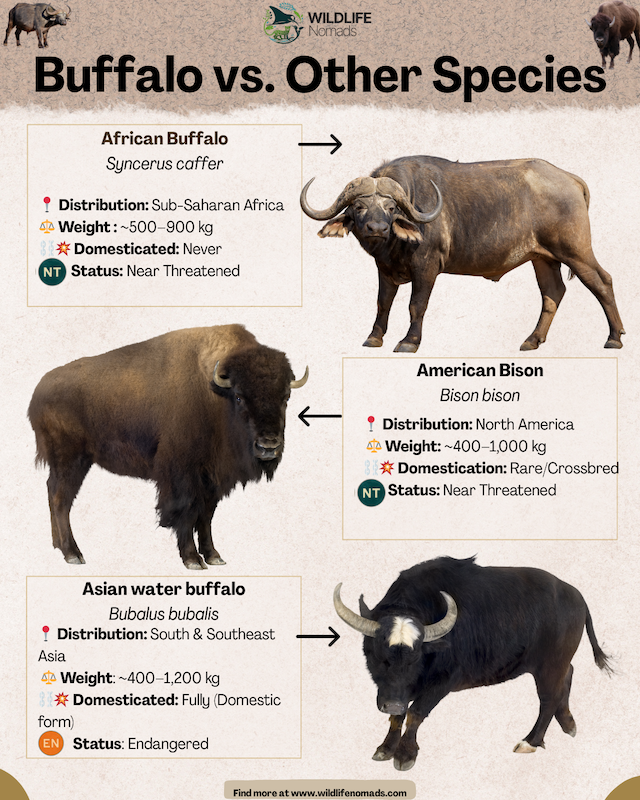
6. Comparison: Water Buffalo vs. African Buffalo vs. Bison
I often get asked if a water buffalo is just an Asian version of the cape buffalo. The answer is a hard “No.” These are distinct species with different temperaments, habitats, and physical features.
Temperament: Domestic water buffalo are generally docile. However, wild water buffalo can be aggressive, especially when protecting calves. African buffalo, also known as cape buffalo, are notoriously dangerous and earned the nickname “Black Death” among hunters. American bison are unpredictable and can charge without warning.
Horns: Water buffalo have either swept-back horns (swamp type) or curled horns (river type). African buffalo have horns fused at the base forming a “boss” that acts as a protective shield. American bison have short, sharp, curved horns.
Habitat: Water buffalo require wet grasslands, swamps, and access to deep water. African countries host cape buffalo in savanna and woodlands. American bison roam the plains and prairies.
7. Where Are Water Buffalo Found? (A Global Footprint)
If you are wondering where are water buffalo found, the answer is more surprising than you’d think. While they originated in the Indian subcontinent and Southeast Asia, they are now found across multiple continents.
South America: Massive feral herds roam the Amazon basin, where they were introduced for agriculture and have since established wild-living populations.
Europe: In Italy, particularly southern Europe, water buffalo are raised specifically for their milk to create authentic Mozzarella di Bufala cheese.
Australia: Considered an invasive species, they were introduced to northern Australia in the 19th century. Now, feral populations in the Northern Territory number in the hundreds of thousands, causing significant ecological impact on native range and aquatic plants.
Asia: The native range includes the Indian subcontinent, China, Southeast Asia, and islands throughout the region. India and Pakistan produce about 80% of all buffalo milk worldwide.
8. The “Chinese Water Buffalo” Connection
In China, the chinese water buffalo is more than an animal; it’s a cultural pillar. Domesticated over 5,000 years ago, they are referred to as the “steed of the East.” In many rural Chinese provinces, the wealth of a family was historically measured by the health of their buffalo.
River buffalo in China contribute significantly to dairy production. The animals are integral to traditional agricultural practices, particularly in rice cultivation. Their ability to work in flooded paddies makes them irreplaceable in many rural communities.
Beyond agriculture, water buffalo hold ceremonial significance. They appear in festivals, artwork, and traditional medicine. This deep cultural connection has helped preserve traditional farming methods even as mechanization spreads.

9. Are Water Buffalo Aggressive?
This is a nuanced question. I can tell you domesticated buffalo are generally “gentle giants.” They are domestic livestock bred for docility over thousands of years.
However, a wild asian water buffalo is a different beast entirely. They are known to charge dangerous animals, including kill tigers, when threatened. Even domestic water buffalo can become aggressive if they feel their calf is threatened or during breeding season.
10. Water Buffalo Milk: The Liquid Gold
One reason the water buffalo animal is so vital to global economics is its milk. Buffalo milk contains significantly more fat, protein, and lactose than cow milk. According to nutritional studies, buffalo milk has approximately 7-8% fat content compared to cow milk’s 3-4%.
The protein content in buffalo milk reaches 6-7%, nearly double that of cow’s milk. This higher protein content increases feelings of fullness and provides superior nutritional value. Buffalo milk also contains approximately 412 mg of calcium per cup, excellent for bone health.
The fat content makes buffalo milk ideal for producing butter, ghee, yogurt, ice cream, and various traditional dairy products. In Italy, it’s used almost exclusively for mozzarella cheese production. India, Pakistan, and China are the largest producers, with buffalo milk accounting for over 50% of total milk production in these regions.
11. Lifespan and Social Structure
In the wild, these animals live about 20 years. In a domestic setting with veterinary care, they can reach 25 or even 30 years. Sexual maturity is reached around 3 years of age, and females typically give birth to a single calf after a gestation period of approximately 10 months.
They are deeply social creatures. In Langkawi, I noticed they always moved in cohorts. These herds are matriarchal, led by an old female, while the males often form “bachelor groups” or wander solo. This explains my lone encounter on the scooter with a presumably solitary male.
Wild water buffalo live in herds of 5 to 30 individuals. These groups maintain home ranges of 170 to 1,000 hectares, including areas for resting, grazing, wallowing, and drinking. Female buffaloes and their young stay together for life, creating multi-generational family units.
During breeding season, adult males join female groups temporarily. The rest of the year, young males and adult males without harems form bachelor groups. This social structure helps protect calves from predators and ensures knowledge transfer about feeding areas and water sources.
12. Are Water Buffalo in the US?
Surprisingly, yes! While not native, there are several ranches across the United States (from Florida to Texas) that raise them for meat and dairy. They are gaining popularity because they are heartier and more disease-resistant than traditional cattle.
American farmers appreciate that water buffalo are adapted to hot climates and can thrive in conditions that stress conventional livestock. The animals produce high-quality meat and milk with superior nutritional profiles. Some specialty cheese makers now produce American buffalo mozzarella.
However, water buffalo in the US remain rare compared to cattle. The animals require specific infrastructure, particularly access to wallowing areas and adequate water for temperature regulation. As climate change makes certain regions hotter and wetter, water buffalo may become more economically viable for American agriculture.
FAQ: Quick Hits on Water Buffaloes
Generally, yes, if domesticated and respected. However, they are powerful animals. Never approach a mother with a calf or a wild individual. Wild water buffalo can be dangerous animals capable of defending against tigers.
River buffalo prefer clear running water and have high milk yields. They are primarily dairy animals. Swamp buffalo are built for mud, have larger hooves, and are primarily used for labor. River and swamp types also differ genetically and cannot always produce fertile offspring.
Unless you have a massive wetland in your backyard and a few tons of forage, no. They are livestock, not pets. Even domesticated animals can be unpredictable and dangerous.
Water buffalo are probably grazers by preference, feeding mainly on true grasses, marsh grasses, aquatic plants, and sedges. They also eat herbs, fruits, bark, and browse on trees. In agricultural areas, they sometimes feed on crops including rice and sugarcane.
Appreciating the Animal that Build Civilisations
Seeing a water buffalo for the first time in Malaysia reminded me why I went into ecology. We share this planet with massive, sentient, and biologically complex creatures that have literally carried the weight of human civilization on their backs for millennia.
From the flooded rice paddies of Southeast Asia to the protected areas of India, these animals represent an essential link between traditional agriculture and modern conservation. The contrast between thriving domestic populations and critically endangered wild water buffalo shows the complexity of conservation work.
The next time you’re traveling through Asia and see a pair of horns rising out of a muddy pond, stop and watch. You’re looking at an animal perfectly adapted to navigate the intersection of water and land, and one that has shaped human agricultural development across continents.