The ocean is one of those places that has captured our imagination since the dawn of humanity. Anyone who’s ever stood by the shore or sailed across open water has probably looked out, or down, and wondered what incredible creatures might be lurking below. Among the most fascinating are the ocean’s true giants: the whale shark, the largest fish in the world, and the giant oceanic manta ray, one of the biggest rays to ever glide through the seas.
These massive fish aren’t just impressive because of their size; they play a huge role in keeping marine ecosystems balanced. Whale sharks help manage plankton blooms, while manta rays support reef health by feeding on tiny organisms. But despite their size and ancient presence in our oceans, these species are facing growing threats by human activities such as overfishing and habitat destruction.
Let’s dive deeper into the world of these ocean giants, discover what makes them so important, and look at what’s being done to help protect them for future generations.
Numbers like 18 metres stop landing after the third one. If you would rather feel the scale than read it, our animal size comparison tool puts fifteen species next to a human figure at one true scale.
Interactive · free Shark size comparison Twenty sharks at true scale, from a 27 cm pygmy shark to a 15 m megalodon, each beside a 2 m diver. Pit any two head to head, or test your eye in the guessing game. Compare the sharks →
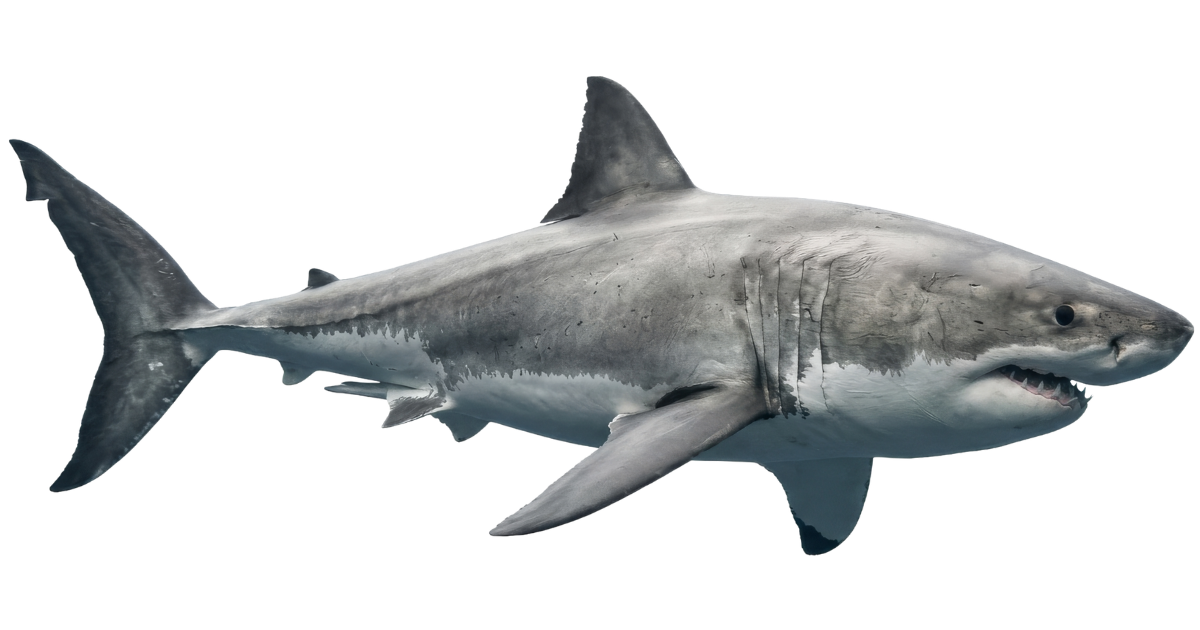


1. Whale Shark – Up to 18 Meters (21.5 tons)
The whale shark, easily the largest fish species in the world, inhabits warm tropical waters around Australia, the Philippines, and Mexico, while the beluga sturgeon holds the title of the world’s largest freshwater fish. Despite their imposing size, these gentle plankton feeders pose no threat to humans.
Whale sharks are essential in controlling plankton populations, keeping ocean ecosystems balanced. Interestingly, their spot patterns are unique, much like human fingerprints, and are used by scientists to identify individuals and track migration routes.

2. Basking Shark – Up to 12 Meters (5.2 tons)
Another colossal but harmless creature, and one of many shark species out there , the basking shark is recognized by its massive mouth, often wide open as it filters plankton from ocean waters, making it a filter feeder.
Basking sharks face heavy commercial exploitation due to extensive fishing practices for food and other products. Preferring temperate seas, this slow-moving shark is frequently spotted near the surface, appearing to “bask” in the sunlight.

3. Beluga Sturgeon – Up to 7.2 Meters (1.5 tons)
The beluga sturgeon, one of the biggest species found primarily in the Caspian and Black Seas, holds the title of the world’s largest freshwater fish. Famous for producing highly prized beluga caviar, overfishing and habitat loss have critically endangered this ancient fish. Their prehistoric appearance (just like the coelacanth) is fitting since sturgeon ancestors date back over 200 million years, emphasizing their importance to biodiversity and conservation.

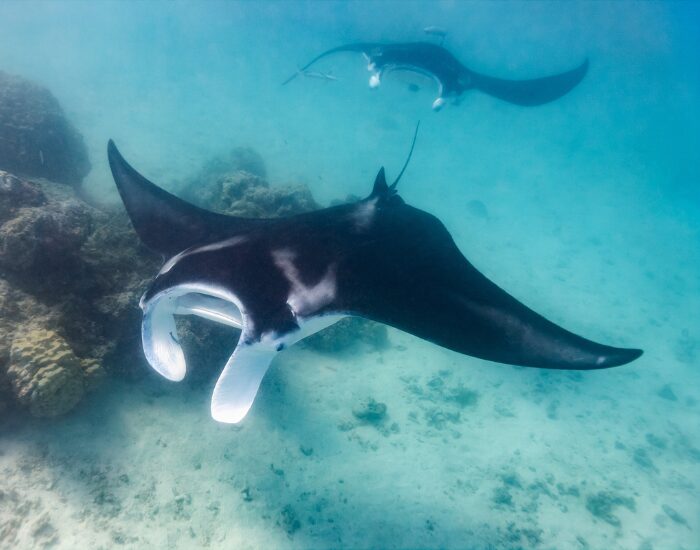
4. Giant Oceanic Manta Ray – Up to 7 Meters (3 tons)
Giant oceanic mantas are graceful, intelligent, and among the most beloved majestic creatures by divers. Found gliding through tropical and subtropical oceans, these filter feeders feed mainly on plankton. Unfortunately, these gentle giants often suffer from ocean debris entanglement, a subject highlighted in my article about how ocean pollution affects animals.
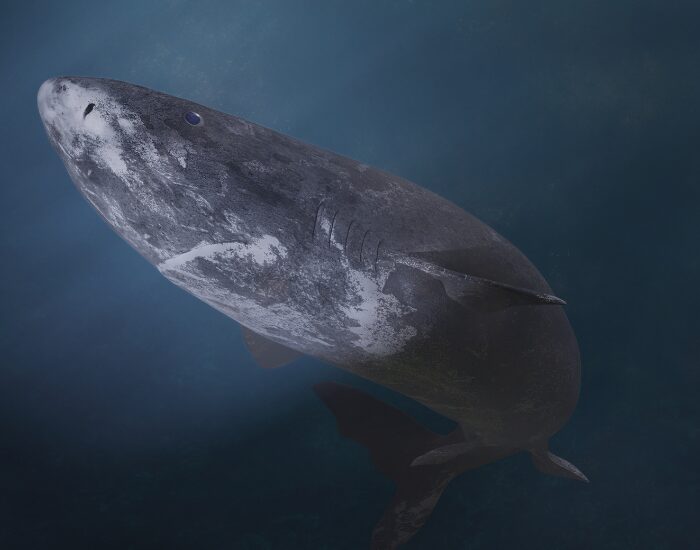
5. Greenland Shark – Up to 7 Meters (1 ton)
A slow-moving, deep-sea dweller, the Greenland shark is one of the ocean’s oldest vertebrates, with some individuals living over 400 years. These ancient sharks inhabit the deep blue, cold Arctic waters, as well as temperate oceans, adding to the ocean’s mystery. Found in cold Arctic waters, their longevity and adaptability continue to intrigue marine biologists. Greenland sharks demonstrate how size and age do not always correlate with danger, a concept also explored in Bull Shark Species: 12 Interesting Facts to Know Them Better.
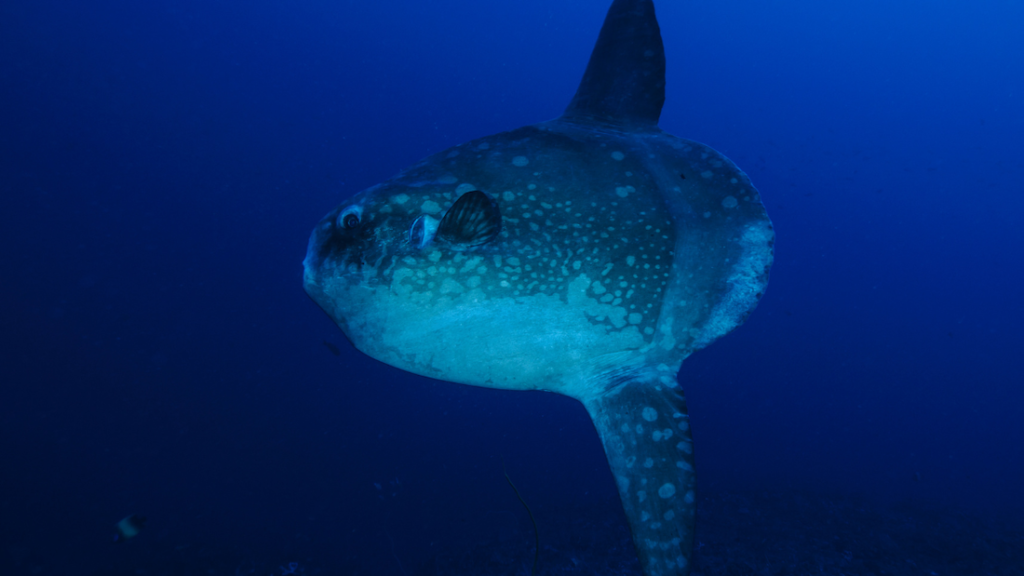
6. Ocean Sunfish (Mola mola) – Up to 3.3 Meters (2.3 tons)
The bizarre-looking ocean sunfish holds the title for the largest bony fish in the sea, making it one of the ocean giants. Often found basking on the ocean surface (thus its name), sunfish consume jellyfish, helping regulate their populations. Their unusual shape and behavior highlight nature’s incredible evolutionary diversity.

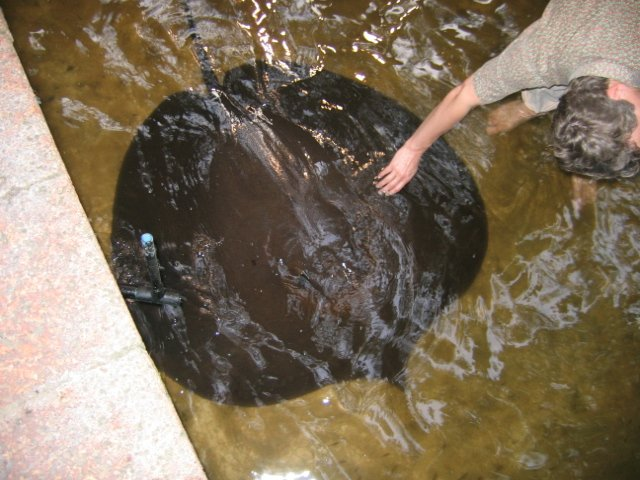
7. Giant Freshwater Stingray – Up to 5 Meters with tail (600 kg)
Living primarily in Southeast Asia’s murky rivers, giant stingrays are challenging to study due to their elusive nature. Another notable species in Southeast Asia is the giant barb, the largest species of carp, which can grow up to 10 feet and weigh up to 550 pounds. It spends most of its time buried in sandy riverbeds. This species underscores the importance of conserving freshwater habitats, ecosystems crucial for countless species.
8. Mekong Giant Catfish – Up to 3 Meters (350 kg)
Native to Southeast Asia’s Mekong River Basin, the Mekong giant catfish is among the world’s largest freshwater fish. Threatened by dam construction and overfishing, significant conservation efforts aim to preserve this gentle herbivore. Its vulnerability highlights broader ecological issues surrounding river management and human impacts, emphasizing the need to maintain ecological balance.

9. Arapaima – Up to 3 Meters (220 kg)
Arapaimas, or “pirarucu,” can reach a maximum length of up to 3 meters and reside in oxygen-poor waters of the Amazon basin. These giants navigate the winding rivers of the Amazon basin, showcasing their adaptability. They’ve evolved a fascinating ability to breathe air directly from the surface, showcasing adaptation to challenging environments. However, their size and popularity in sport fishing have made them susceptible to overfishing, emphasizing sustainable fishing practices’ importance.

10. Alligator Gar – Up to 3 Meters (137 kg)
The largest species in the gar family, and one of the biggest freshwater fish in North America. The officially recorded maximum length is 8 ft 5 in, from a 148 kg fish taken in Mississippi in 2011 and aged at 50 to 70 years old. Gars appear in the fossil record more than 100 million years back, and those armoured scales have barely changed since. The name comes from the broad snout and double row of teeth, not from any alligator or crocodile.
As an apex predator it keeps prey populations in check in warm, low-oxygen water that few other fish tolerate, gulping air into a modified swim bladder to cope. No attack on a human has ever been confirmed, though the bright red eggs are toxic if eaten. It is listed as Least Concern, but decades of culling as a trash fish emptied much of its historic range. More of its neighbours in my guide to the fish of Florida.
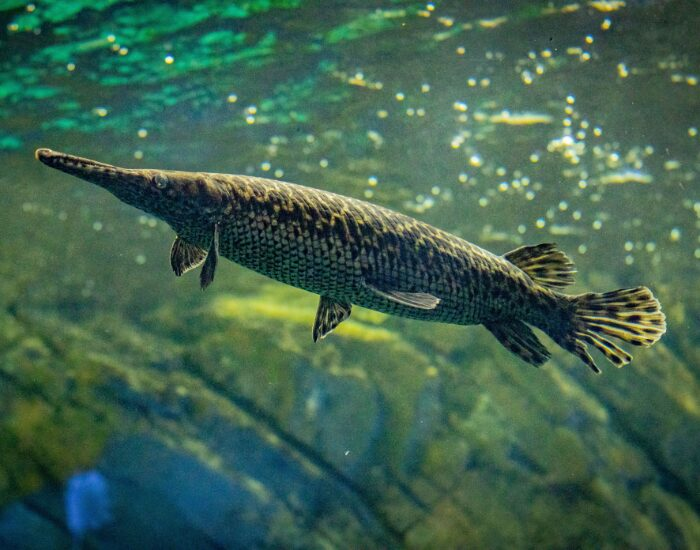
11. Paddlefish – Up to 2.2 Meters (90 kg)
The paddle is the whole animal. That rostrum carries tens of thousands of sensory pores that read the faint electrical fields of individual zooplankton, the same passive electroreception sharks use, aimed at prey a few millimetres long. The fish then swims with its mouth open and reaches 2.16 m and over 90 kg on copepods and water fleas alone. Its natural habitats are the Mississippi River Basin and its tributaries, across a reduced share of the historic range.
One correction, because it appears everywhere: paddlefish are not in the sturgeon family. They belong to Polyodontidae, sister group to the sturgeons, both in the ancient order Acipenseriformes. Only two paddlefish species survived into modern times, and the Chinese paddlefish was declared extinct in 2022, last confirmed alive in 2003. The American paddlefish is now the only one left, listed as Vulnerable, pressured by dams, channelised rivers and poaching for roe.

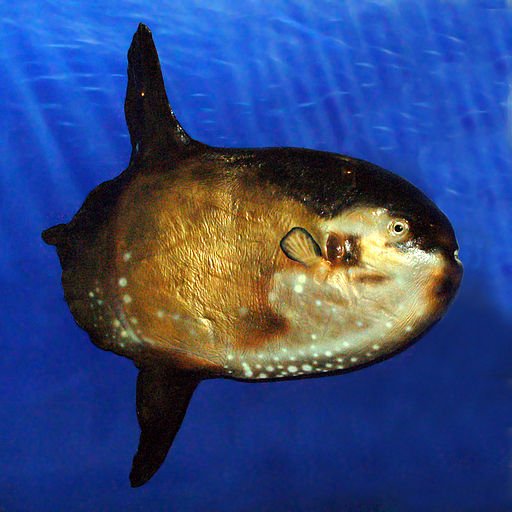
12. Sharptail Mola (Masturus lanceolatus) – Up to 3 Meters (2 tons)
The sunfish almost nobody sees. It reaches a maximum length near 3.4 m and around 2,000 kg, drifts through tropical and warm temperate seas between 5 and 200 metres, and surfaces so rarely that most records come from strandings and bycatch. Telling it from an ocean sunfish takes one detail: where Mola mola ends in a blunt rudder, the sharptail carries a pointed projection in the middle of it. Adults eat jellyfish, siphonophores and salps.
Worth clearing up, because these get merged constantly. The sharptail mola is not the southern sunfish, and it holds no weight record. That belongs to Mola alexandrini, the southern or bump-head sunfish, after a 2,744 kg animal was recovered off the Azores in 2021. Gomes-Pereira and colleagues published the measurements, which make Mola alexandrini the largest bony fish ever weighed, not Mola mola. Three species, routinely confused, one record holder.
Freshwater Giants: The Largest Fish Nobody Counts
Ask anyone to picture the biggest fishes on Earth and they will give you a whale shark. Almost nobody names a catfish.
That blind spot has consequences. Freshwater giants are declining faster than the ocean giants, and they get a fraction of the attention. He and colleagues tracked freshwater megafauna worldwide and found an 88% decline between 1970 and 2012. For the biggest fish species in rivers, the figure is worse.
The beluga sturgeon is the more extreme case. Records describe animals up to 24 feet and over 3,500 pounds. That makes it the world’s largest freshwater fish by a wide margin, and the largest known specimen measured 23.6 feet. Sturgeon lineages date back more than 200 million years. Roughly one century of fishing for beluga caviar pushed this ancient fish to critically endangered.
Here is why freshwater giants are so hard to save. They grow slowly, breed late, and need long stretches of connected river to spawn. A dam does not have to kill a single fish to end a population. It only has to sit between the adults and the gravel they spawn on.
North America has its own version. The white sturgeon grows up to 20 feet and 1,500 pounds in the Fraser and Columbia systems on the west coast. The giant barb of Southeast Asia reaches about 10 feet. Both need the same thing: winding rivers that still run end to end.
These freshwater habitats also hold Amazon river dolphins and giant river otters. Protect the freshwater rivers and you get all of them at once.
Fish in the Ocean Ecosystem: What Happens When the Giants Go
Big fish are not just impressive. They do work.
A whale shark filters plankton and small fish across thousands of kilometres of open ocean. Its droppings then release those nutrients somewhere else entirely. Giant oceanic manta rays and reef manta rays do a smaller version of the same job around reefs, primarily consuming plankton as they go. Ocean sunfish eat jellyfish. Alligator gar keep prey populations in check in southern US backwaters.
Adult giants have few natural predators, which is part of why they matter. A full-grown whale shark has almost nothing to fear. Killer whales and large sharks take juveniles, and a tiger shark will scavenge a carcass, but nothing routinely hunts the adults. That leaves fishing gear as the main source of mortality for the largest fish species alive.
The clearest evidence for their role comes from absence. White sharks disappeared from False Bay, South Africa, over a few years, and researchers watched the effects move down the food web. I covered that in what happened when white sharks left False Bay. Remove an apex predator and the system does not carry on with a neat gap in it.
Pacoureau and colleagues put a number on the scale. Oceanic shark and ray populations fell 71% between 1970 and 2018, driven almost entirely by fishing pressure. Three quarters of the species assessed are now threatened species.
That is the case for conservation efforts in one line. Losing these animals does not cost us a few impressive creatures. It changes how marine ecosystems run, from kelp forests to open water, and the ecological balance does not restore itself quickly.
Are Bigger Fish More Dangerous?
No, and the biggest fish in the world make the point better than any argument.
The whale shark, the basking shark and the giant oceanic manta ray are the three largest fish alive. All three are filter feeders. They eat plankton and small organisms, they have no interest in you, and the most dangerous thing nearby is usually the boat.
Smaller species deserve more respect. Bull sharks are a fraction of a whale shark’s size, yet they account for a disproportionate share of serious incidents. They hunt in shallow, murky, coastal water, which is exactly where people swim.
There is a physiological twist I did not expect. Dolton and colleagues fitted sensors to free-swimming basking sharks and found their muscle running 1.0 to 1.5°C above the surrounding water. Regional endothermy was supposed to belong to active hunters like great whites and makos. A plankton-eater has it too, so warm muscle is not the predator marker we assumed.
Size predicts nothing about danger. Behaviour and habitat do. For the honest ranking, my guide to the most dangerous sea animals is not led by anything on this list.
The whale shark and the basking shark also appear in my shark size comparison, drawn at true scale next to a diver.
Threats Facing the World’s Largest Fish Species
Every species here is in trouble, and the specific threat changes each time.
Whale sharks are listed as Endangered. Womersley and colleagues mapped whale shark movements against global shipping traffic. The two overlap almost everywhere the sharks go, which makes vessel strikes a substantial and largely unrecorded source of mortality. Illegal hunting continues in some regions on top of that.
Basking sharks are Endangered too, not vulnerable species as older sources still state. Decades of commercial fishing for liver oil and fins did the damage. Bycatch continues it.
Giant oceanic manta rays were uplisted to Endangered in 2020. They are taken deliberately for gill plates and accidentally in tuna gear. A species producing one pup every two to three years cannot absorb either.
Beluga sturgeon and Mekong giant catfish are both critically endangered, from the same combination of overfishing and habitat destruction.
Arapaima face a different pressure. Sport fishing and food demand have thinned populations across the Amazon, though community-managed lakes have shown real recoveries.
Marine Protected Areas are the intervention with the best evidence behind them, but only one kind works. Sala and Giakoumi compared protection levels across MPAs worldwide. Fish biomass averaged 670% higher inside fully protected no-take reserves than in unprotected water. It was still 343% higher than in partially protected MPAs. Paper parks do not deliver, which is the distinction I unpack in are protected areas effective for conservation.
Fishing regulations matter too, and they work best when the people fishing help write them. Thresher shark landings in one Indonesian community dropped sharply once local fishers designed the rules. I wrote that up in community-based thresher shark conservation.
Frequently Asked Questions about the Biggest Fish:
The whale shark is the world’s largest fish, growing up to 18 meters and weighing over 20 tons. The largest known specimen of a whale shark measured 18.8 meters in length.
The giant oceanic manta ray, reaching up to 7 meters in width, is the largest non-shark fish.
The extinct Leedsichthys problematicus, a giant bony fish from the Jurassic period, estimated up to 16 meters long.
Whale sharks, commonly spotted at Ningaloo Reef in Western Australia, are Australia’s largest fish.
The largest known specimen of a beluga sturgeon measures 23.6 ft long and weighs 1,571 kg.
How Well Do You Know the World’s Biggest Fish?
Ten questions on whale sharks, giant freshwater sturgeons, deep-sea ancient sharks, and ocean sunfish. Can you score 10/10?
Multiple Choice
References:
Dolton, H. R., et al., (2023). Regionally endothermic traits in planktivorous basking sharks Cetorhinus maximus. Endangered Species Research, 51, 227–232. https://doi.org/10.3354/esr01257
Gomes-Pereira, et al., (2023). The heaviest bony fish in the world: A 2744-kg giant sunfish Mola alexandrini (Ranzani, 1839) from the North Atlantic. Journal of Fish Biology, 102(1), 290–293. https://doi.org/10.1111/jfb.15244
He, F., Zarfl, C., Bremerich, V., David, J. N. W., Hogan, Z., Kalinkat, G., Tockner, K., & Jähnig, S. C. (2019). The global decline of freshwater megafauna. Global Change Biology, 25(11), 3883–3892. https://doi.org/10.1111/gcb.14753
Pacoureau, N., at al.,2021). Half a century of global decline in oceanic sharks and rays. Nature, 589(7843), 567–571. https://doi.org/10.1038/s41586-020-03173-9
Sala, E., & Giakoumi, S. (2018). No-take marine reserves are the most effective protected areas in the ocean. ICES Journal of Marine Science, 75(3), 1166–1168. https://doi.org/10.1093/icesjms/fsx059
Stewart, J. D., at al., (2018). Research priorities to support effective manta and devil ray conservation. Frontiers in Marine Science, 5, 314. https://doi.org/10.3389/fmars.2018.00314
Womersley, F. C., at al., (2022). Global collision-risk hotspots of marine traffic and the world’s largest fish, the whale shark. Proceedings of the National Academy of Sciences, 119(20), e2117440119. https://doi.org/10.1073/pnas.2117440119