I remember standing in the middle of a sun-scorched open plain in New South Wales, watching a mob of Red Kangaroos move across the horizon. In the books, you see the word ‘hopping.’ In person? It is a rhythmic, high-speed blur that makes you question everything.
That moment in Australia sent me straight back to the literature. I needed to know: was what I witnessed an illusion, or is the kangaroo genuinely one of the fastest land animals on Earth? The answer, I found, was the latter, and it is one of the most energy-efficient forms of locomotion in the entire animal kingdom.
Speed is the ultimate currency of the animal kingdom. Whether it is a predator closing in on Thomson’s gazelles at full sprint, or a hare zigzagging away from a fox at 72 km/h, the fastest animals in the world have evolved body sizes, flexible spines, and long legs that allow them to reach speeds that defy belief. I have written about the fastest birds in the world, the fastest sea animals, and animals with the biggest brains, but today we stay grounded. Here is the definitive deep-dive into the top 10 fastest land animals, ranked by top speed.

What Makes an Animal Fast?
Before we count down the world’s fastest animals, it helps to understand the mechanics. Speed in land animals is not accidental. It emerges from millions of years of evolutionary pressure, and a very specific set of physical traits.
Flexible spine: Animals like the cheetah and hare have a highly flexible spine that acts like a biological spring, dramatically extending stride length with every bound.
Long legs and long tail: Longer limbs increase ground coverage per stride. A long tail acts as a counterbalance and rudder, allowing sharp turns at great speed without losing momentum.
Body size and muscle ratio: Body weight matters enormously. Many of the fastest land animals are surprisingly lean, less body mass means less energy required to accelerate.
Fast-twitch muscle fibre density: Short-burst predators like lions rely on explosive fast-twitch fibres. Endurance runners like the pronghorn have a higher proportion of slow-twitch fibres that sustain speeds over long distances.
In short: the fastest land animals are not just ‘athletic.’ They are perfectly engineered machines, shaped by the relentless pressure of predator-prey dynamics over millions of years.
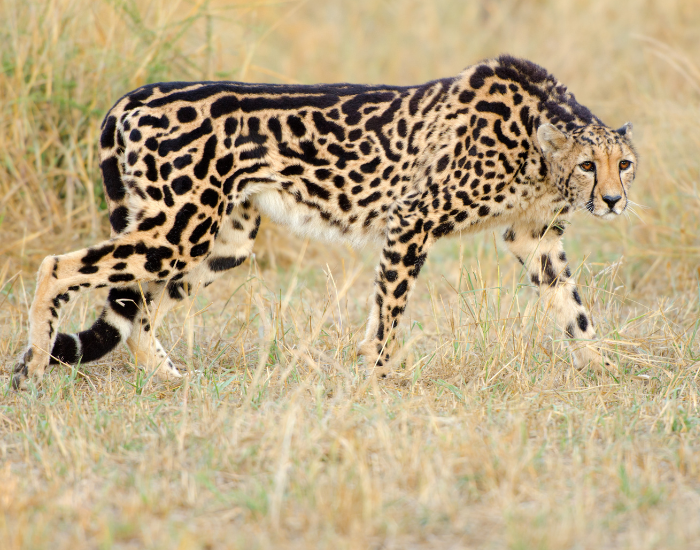
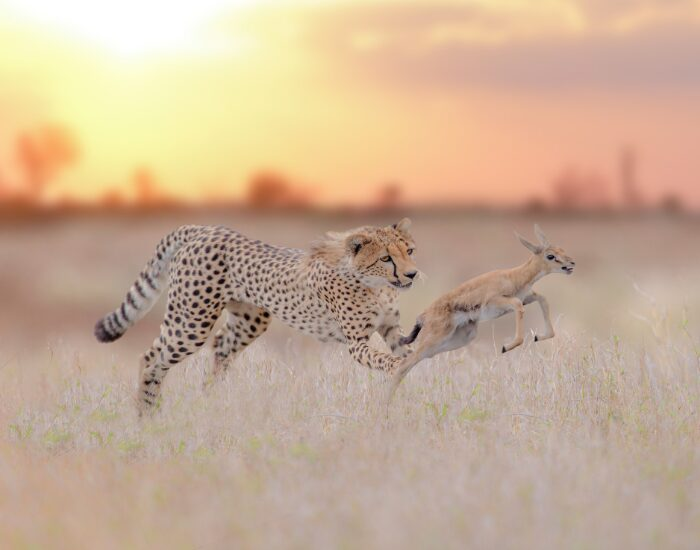
1. Cheetah (Acinonyx jubatus) – The Undisputed King
The cheetah’s speed is legendary for good reason. It is the fastest land animal on Earth, and it is not particularly close. A cheetah can reach a recorded top speed of 120 km/h (75 miles per hour) in short bursts, accelerating from zero to 100 km/h in roughly three seconds. No other animal in the world comes close to that acceleration on four legs.
- Max Speed: 120 km/h (75 mph)
- Key Adaptation: A flexible spine that acts like a spring and a long tail for sharp turns.
- The Catch: They can only sustain speeds for about 20–30 seconds. If they don’t catch the Thomson’s gazelles quickly, they run out of steam.
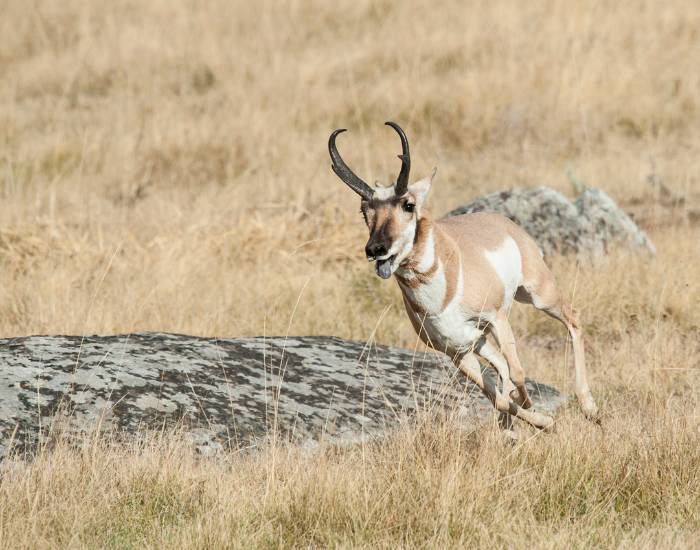
2. Pronghorn (Antilocapra americana) – The Marathoner
Often called the American antelope, the pronghorn is the fastest land animal in the Western Hemisphere and arguably the most underrated speed champion in the world. While the cheetah takes the sprint title, the pronghorn wins the marathon, and it is not even close.
- Max Speed: 88–98 km/h (55–60 mph)
- Key Strength: Sustained endurance over long distances
- Range: Western North America
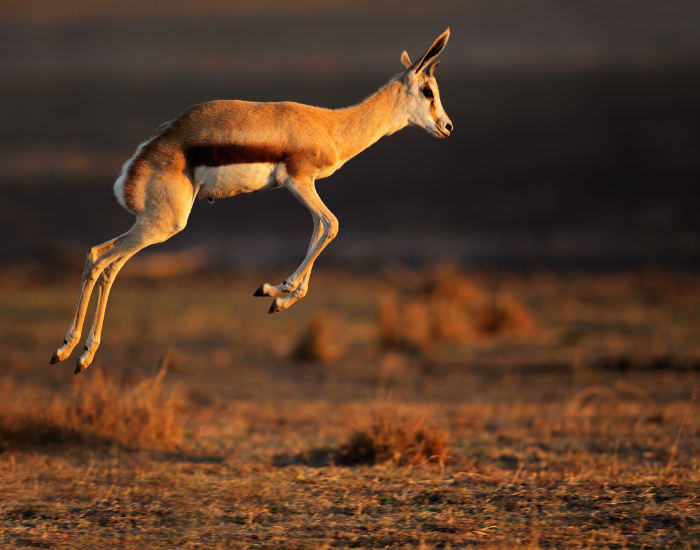
3. Springbok (Antidorcas marsupialis)
Native to southern Africa, the springbok is one of the fastest animals in the world relative to its body size. It can reach top speeds of 88 km/h and is equally famous for a behaviour called pronking, explosive, near-vertical leaps of up to three metres while running at great speed.
- Top Speed: 88 km/h (55 mph)
- Key Trait: Pronking and rapid directional change
- Range: Southern Africa
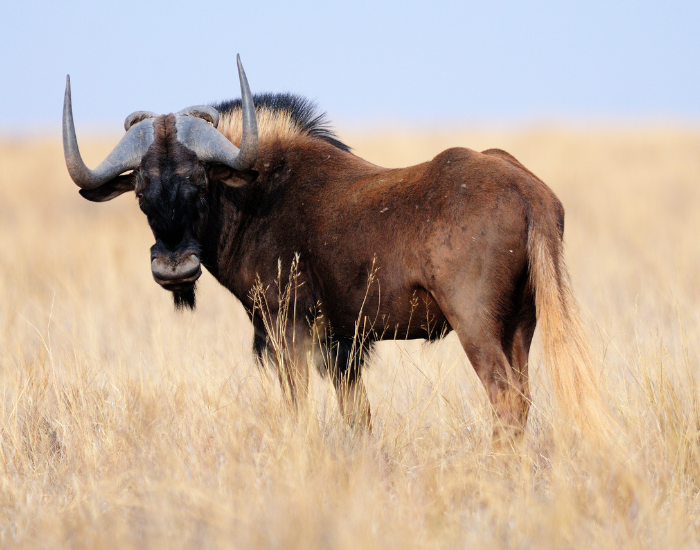
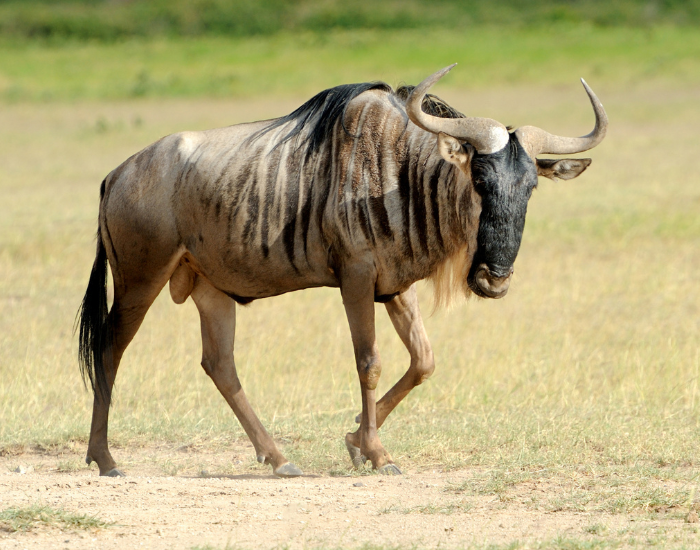
4. Blue Wildebeest (Connochaetes taurinus)
Don’t let the body weight fool you. The blue wildebeest, famous for its annual migration across the Serengeti, can achieve a ground speed of up to 80 km/h (50 miles per hour) when threatened. For an animal of their size, that is a remarkable achievement.
Their survival strategy combines speed with numbers. A lion or leopard targeting a single wildebeest must contend with thousands of animals moving simultaneously at high speed in multiple directions. Many predators fail not because their prey is faster, but because the sheer chaos of a stampeding herd makes targeting any individual nearly impossible.
- Top Speed: 80 km/h (50 mph)
- Key Strength: Herd dynamics amplify speed advantage
- Range: East and southern Africa
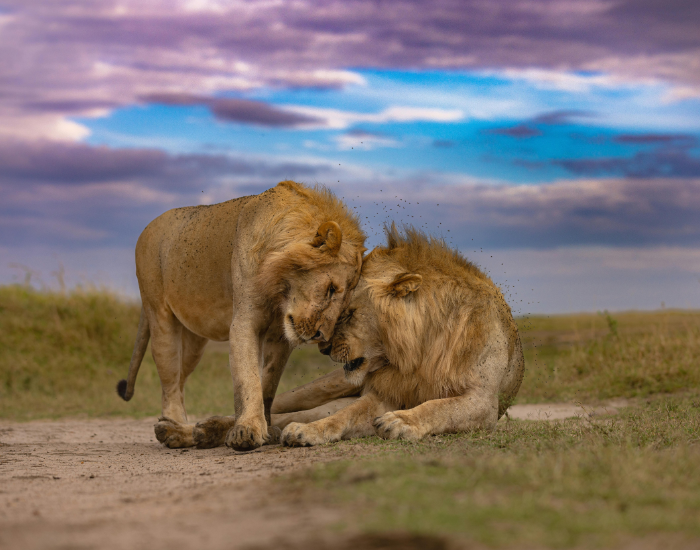
5. Lion (Panthera leo)
The king of the Savanna! An iconic african animal. Lions are among the big cats that can reach speeds of 80 km/h (50 mph) in short bursts. However, they are not built for sustained pursuit. Unlike the cheetah, which is the fastest member of the cat family, the lion is a power sprinter built for ambush, not the open chase.
Lions compensate for their limited top speed endurance through cooperative hunting strategy. Working as a pride, they coordinate to steer and exhaust prey, with faster females doing most of the active pursuit while others cut off escape routes. Speed, for lions, is one component of a far more sophisticated hunting system.
- Top Speed: 80 km/h (50 mph)
- Key Strength: Cooperative pride hunting strategy
- Range: Sub-Saharan Africa, small population in India
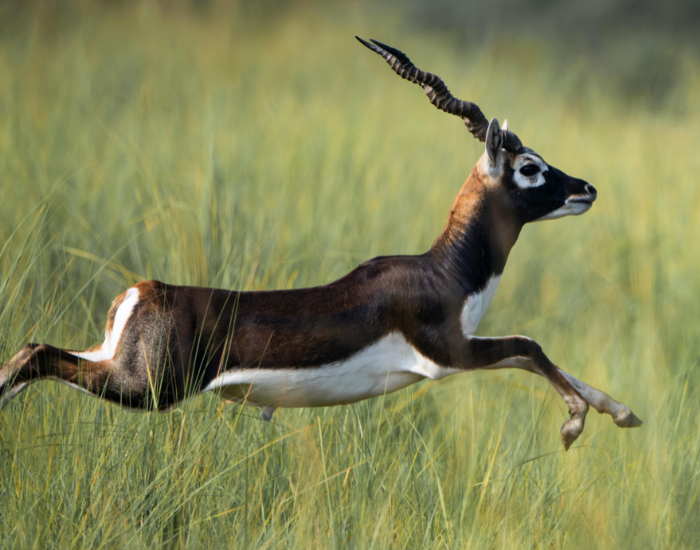
6. Blackbuck (Antilope cervicapra)
Found in India, the Blackbuck is a master of ground speed. They can maintain speeds of 80 km/h for over 1.5 km, a feat few other animals in the world can match.
- Top Speed: 80 km/h (50 mph)
- Key Strength: Sustained high speed over long distances
- Range: Indian subcontinent
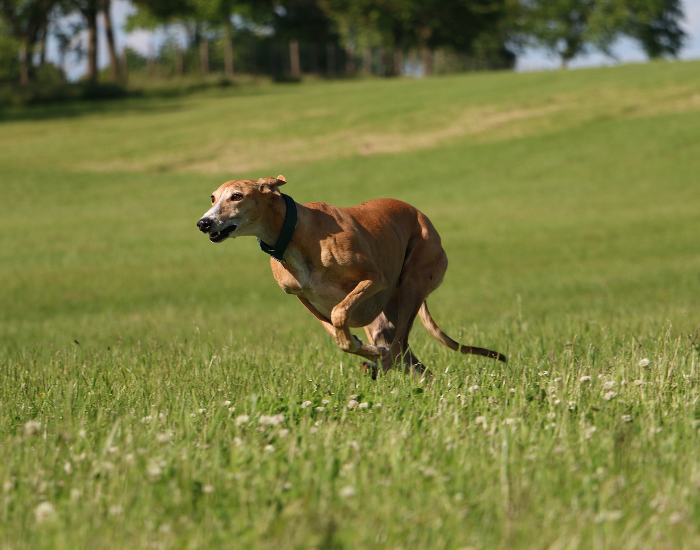
7. Greyhound (Canis lupus familiaris)
The greyhound is the fastest dog breed on Earth, capable of reaching a recorded speed of 72 km/h (45 miles per hour). As the only domesticated animal on this list, the greyhound’s speed is the product of centuries of selective breeding rather than wild evolutionary pressure, yet the biomechanics are just as remarkable.
- Top Speed: 72 km/h (45 mph)
- Key Trait: Double-suspension gallop
- Notable: Only domesticated species in the top 10
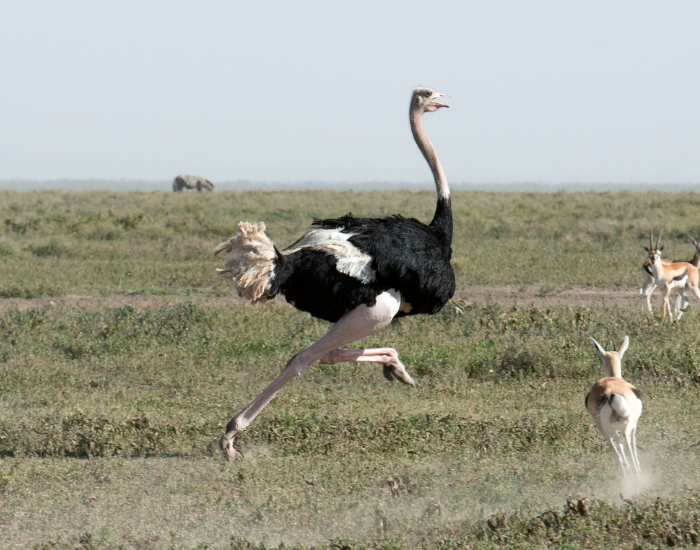
8. Ostrich (Struthio camelus)
The ostrich is the fastest bird on land, and also one of the biggest birds in the world! They are capable of sprinting at 72 km/h (45 mph) with strides of up to five metres. It is also the largest living bird on Earth, proof that body size and speed are not mutually exclusive.
- Top Speed: 72 km/h (45 mph)
- Key Trait: Spring-loaded legs, 5-metre stride
- Range: Sub-Saharan Africa
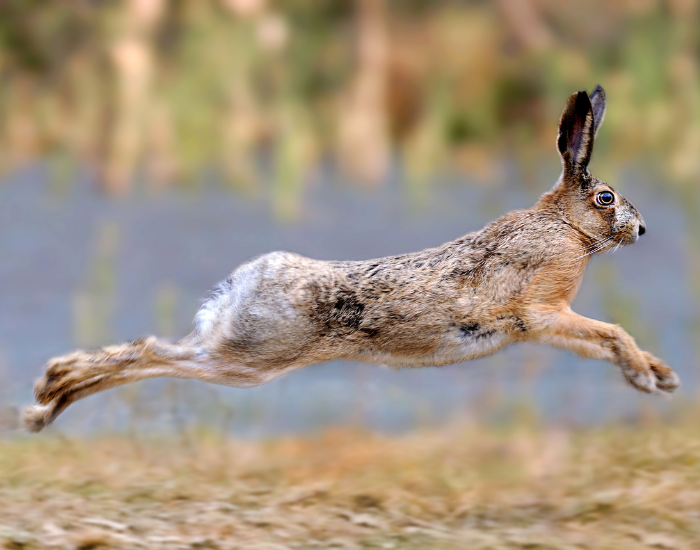
9. European Hare (Lepus europaeus)
The European hare is capable of reaching speeds of 72 km/h (45 miles per hour) — remarkable for an animal that weighs roughly three to five kilograms. Their long hind legs provide explosive acceleration, while a highly flexible spine allows for sharp directional changes mid-sprint.
What hares lack in sustained top speed compared to larger animals, they more than compensate for with agility. Their erratic, unpredictable escape pattern defeats many predators not because the predator is slower, but because it simply cannot predict the next change in direction. Even African wild dogs, renowned endurance hunters, struggle with hares in open terrain.
- Top Speed: 72 km/h (45 mph)
- Key Trait: Agility and unpredictable escape pattern
- Range: Europe and western Asia
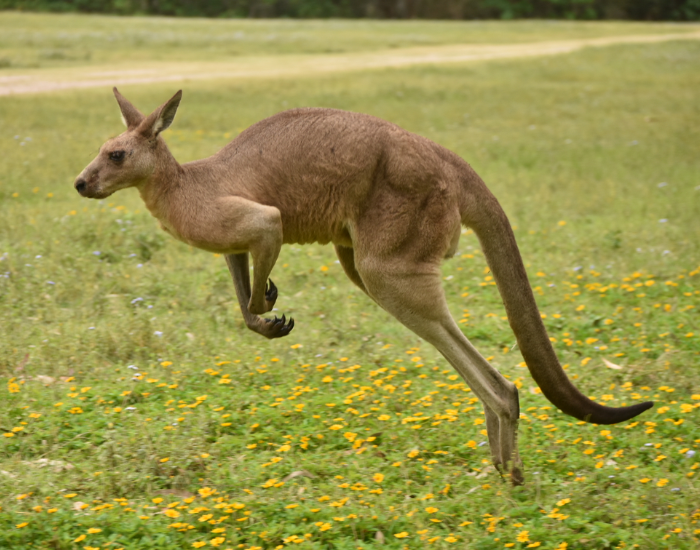
10. Red Kangaroo (Macropus rufus)
And here we are. The animal that sent me back to the books in Queensland. The red kangaroo, Australia’s largest marsupial and its fastest land animal, can reach top speeds of 71 km/h (44 miles per hour). Watching one cross open country at full speed, you understand immediately why this is not an animal to dismiss as merely ‘hopping around.’
What makes kangaroo locomotion genuinely extraordinary from a natural history perspective is its energy efficiency. Unlike most land animals, kangaroos become more fuel-efficient as they increase speed, not less. Their tendons act as giant elastic bands, storing kinetic energy with each landing and releasing it explosively into the next bound, a mechanism that uses less energy per kilometre than almost any other large mammal on Earth.
Their long tail acts as a counterbalance, allowing them to maintain stability and steer at high speed. A single bound can cover eight metres. In the arid interior of Australia, where food and water are unpredictable, this combination of great speed and energy efficiency is not just impressive, it is essential for survival.
Speed Comparison: Land vs. Air
While we focus on the fastest land mammal, it’s worth noting how they compare to the fastest flying animals. For instance, the peregrine falcon soars at high altitudes before a dive, but in horizontal flight, the white-throated needletail is a true contender. However, on the ground, the cheetah’s speed remains the world record for four-legged movement.
| Animal | Max Speed (km/h) | Category |
| Cheetah | 120 | Land Mammal |
| Pronghorn | 98 | Endurance Land |
| Ostrich | 72 | Land Bird |
| Quarter Horse | 88 | Short Distance |
Frequently Asked Questions (FAQs)
If we include the air, the peregrine falcon is the winner, reaching over 320 km/h in a dive. On land, it is the cheetah.
The American quarter horse is incredibly fast over a short track (about 88 km/h), but it cannot outrun a cheetah in a short burst.
The average speed across the top 10 fastest land animals is approximately 79 km/h (49 mph) at peak recorded speed. However, average speed during a typical hunt or escape is considerably lower — most predators approach prey well below maximum speed before the final sprint. Sustained average speed over long distances is best represented by the pronghorn, which can maintain around 56 km/h (35 mph) for extended periods.
References:
Bro-Jørgensen, J. (2013). Evolution of sprint speed in African savannah herbivores in relation to predation. Evolution, 67(11), 3371–3376. https://doi.org/10.1111/evo.12233
CHRISTIANSEN, P. (2002), Locomotion in terrestrial mammals: the influence of body mass, limb length and bone proportions on speed. Zoological Journal of the Linnean Society, 136: 685-714. https://doi.org/10.1046/j.1096-3642.2002.00041.x
Jones, M. E., Jones, K., & Nudds, R. L. (2026). Biomechanical limits of hopping in the hindlimbs of giant extinct kangaroos. Scientific reports, 16(1), 1309. https://doi.org/10.1038/s41598-025-29939-7
Lindstedt, S. L., Hokanson, J. F., Wells, D. J., Swain, S. D., Hoppeler, H., & Navarro, V. (1991). Running energetics in the pronghorn antelope. Nature, 353(6346), 748–750. https://doi.org/10.1038/353748a0
Wilson, A. M., Lowe, J. C., Roskilly, K., Hudson, P. E., Golabek, K. A., & McNutt, J. W. (2013). Locomotion dynamics of hunting in wild cheetahs. Nature, 498(7453), 185–189. https://doi.org/10.1038/nature12295