The first octopus I ever found myself was the size of a plum.
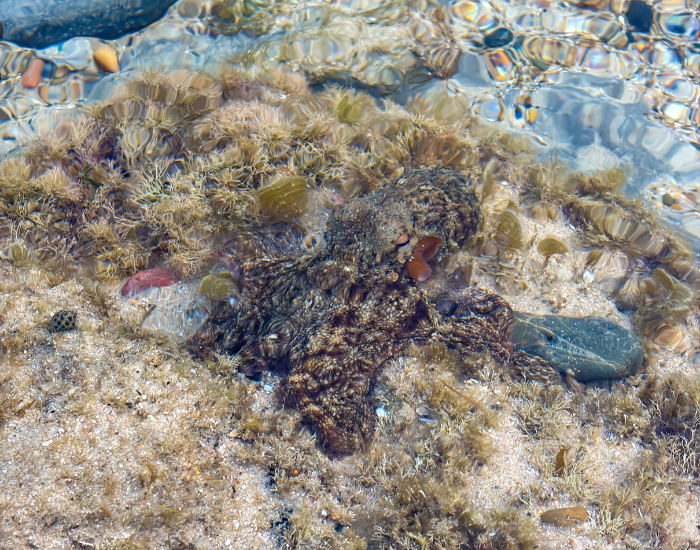
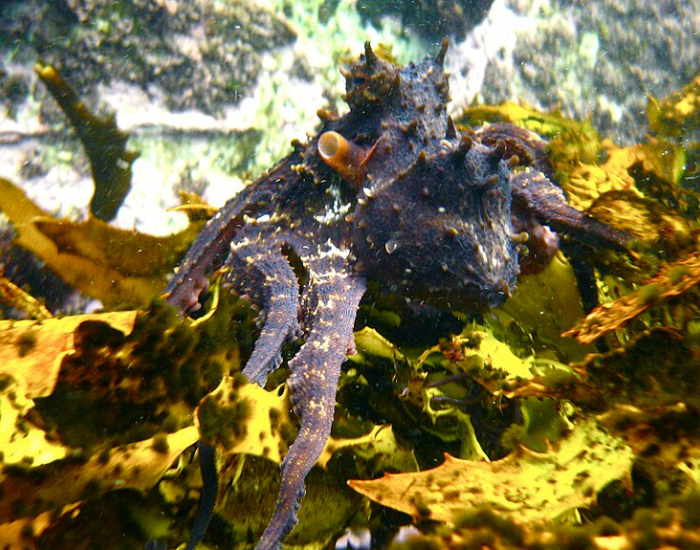
We were partway through our lap of Australia, walking the rock pools at Red Cliff, near Lake Arragan. The tide was dropping. I nearly put my hand on it. What I took for weed unfolded one arm, poured sideways, and turned rock-coloured again.
A gloomy octopus, Octopus tetricus, ten centimetres across. I have dived with far bigger. None outclassed me the way that one did, in six inches of water.
They are among the ocean’s strangest sea creatures. Below are 20 octopus facts showing how far these eight arms sit from the rest of marine life.
1. Octopuses Have Three Hearts
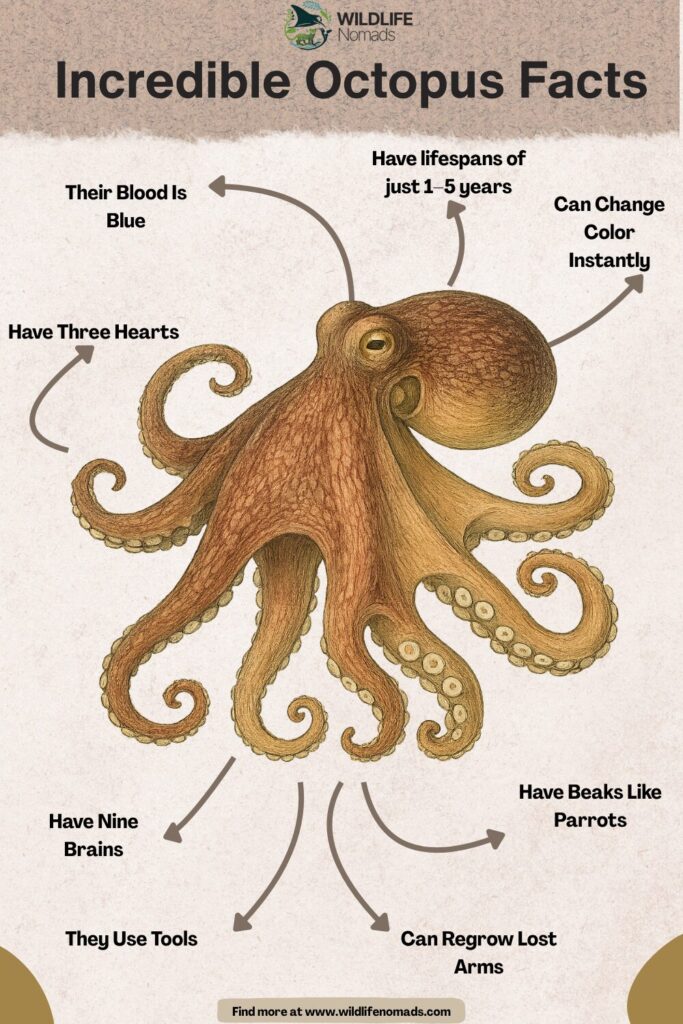
Two hearts pump blood to the gills. The third, the systemic heart, sends oxygen-rich blood to the organs.
That third heart stops beating whenever the animal swims. Jetting is exhausting for exactly that reason. It is why an octopus that swims well still mostly crawls.
2. Their Blood Is Blue
Their blood carries oxygen on hemocyanin, a copper-rich protein, not on iron. Copper is what makes octopus blood blue.
In cold, oxygen-poor water, hemocyanin outperforms haemoglobin. Blue blood is why a deep sea octopus survives where almost nothing else can.
3. They Change Colour in Under 30 Milliseconds
They have some of the weirdest adaptations in the world. Specialised cells called chromatophores sit under the skin, each a pigment sac ringed by muscle. Pull, and colour spreads faster than you can blink.
Texture is a separate system. Muscular bumps called papillae rise into spikes or flatten smooth. Running both at once is camouflage good enough to pass for rock. Colour carries meaning too: a flash of white means an animal that has had enough of you..
4. They’re Masters of Escape
They swim by filling the mantle with water and blasting water out through a muscular tube called a siphon. It goes backwards, fast.
The better escape is simply leaving. With no skeleton, they pour through small openings, anything larger than the beak. Aquarium staff have found them in neighbouring tanks, in pipes, and on the floor.

5. Octopuses Have Nine Brains
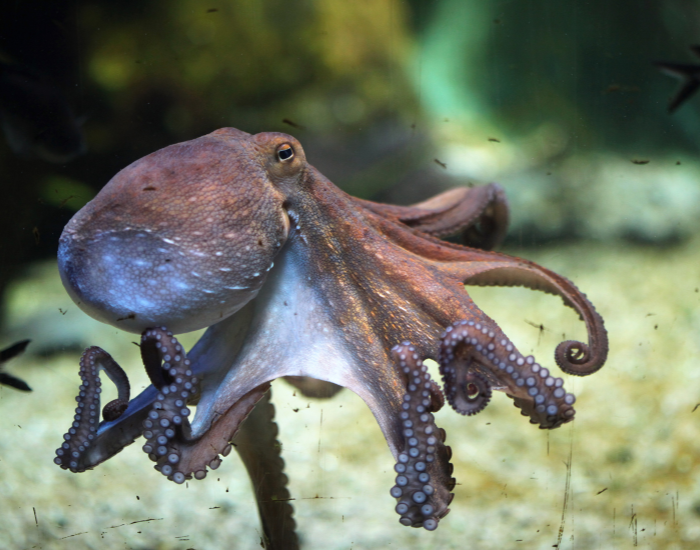
There is one central brain and a cluster of nerves in each arm. Two thirds of their 500 million neurons sit in the octopus arms, more than some small mammals carry in total.
Each arm solves much of its own problem, and a detached one keeps wriggling, still reaching for food. They are arms, not tentacles: squid and cuttlefish have both, octopuses only arms. At the Seattle Aquarium, octopuses told apart two keepers in identical uniforms. One fed them. One prodded them with a bristly stick. They backed away from the second.
6. They Use Tools
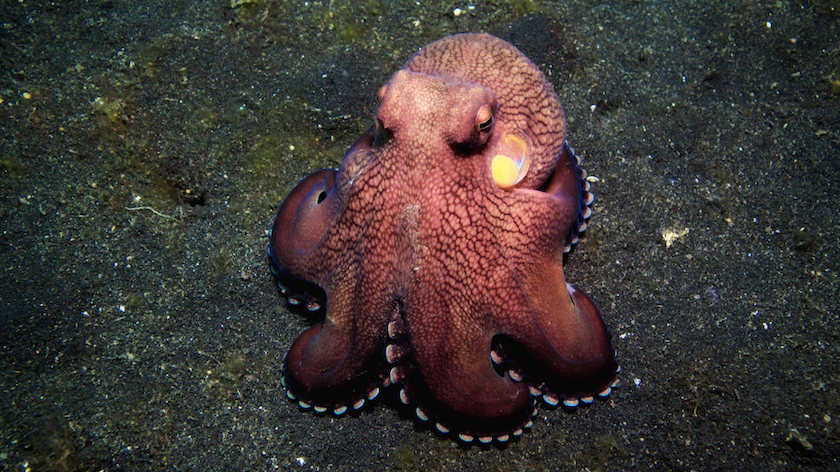
A coconut octopus carries two halves of a coconut shell across open sand. It holds them under its body and stilt-walks awkwardly, purely to have somewhere to hide later. Look for the octopus in my coral reef, one of the animals in the reef’s field guide.
That is genuine tool use. The shells are useless while carried and cost real effort. The animal pays now for protection it might need later, which is rare in the animal kingdom.
7. They Can Regrow Lost Arms
Lose one of those powerful arms and it grows back, nerves, muscle and suckers included. A severed arm tip took about 130 days to rebuild in one study.
Cephalopod blood does not clot, so the wound closes another way. Blood cells plug the gap while a bud of new tissue forms underneath.

8. Octopuses Have Beaks Like Parrots
The beak is chitin and sits at the centre of the arms. It is the only properly hard structure in the body. Everything else is muscle and skin.
Behind it sits a radula, a ribbon lined with rows of tiny chitinous teeth. The octopus uses it to rasp flesh from shells. Some species drill a hole through a clam first, then inject saliva to loosen the muscle.

9. They Shoot Ink to Escape Predators
A threatened animal fires a cloud of inky fluid and leaves. The cloud buys a second of confusion.
It does more than block the view. Compounds in the ink blunt a predator’s sense of smell. An animal that has only gone invisible is easy to track.

10. Octopuses Are Short-Lived but Brilliant
Most octopuses live one to two years. The giant Pacific octopus stretches to three or five.
Into that they fit more learning than seems reasonable. They solve mazes, open jars from the inside, and recognise individual human faces. They also learn by watching another animal first. Very few can, which is why they sit alongside dolphins and crows among the smartest animals. You can check how related you are to an octopus in my tree of life.
11. They Can Taste With Their Arms
Octopus arms end in suckers carrying chemotactile receptors, sensors that read chemicals by touch rather than at a distance.
They respond to molecules that barely dissolve in seawater, so they only register on contact. An octopus reaching blind into a crevice is not smelling what is in there. It is tasting it.
12. Some Octopuses Walk on Two Arms
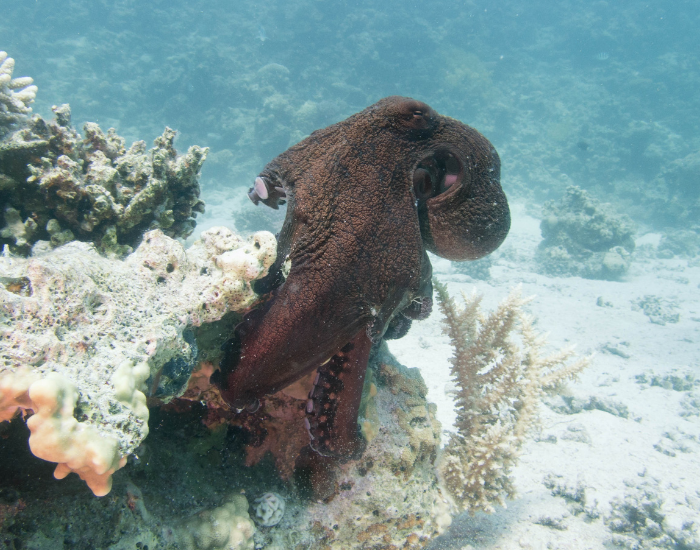
Two species are known to do it: the coconut octopus and Abdopus aculeatus. They tiptoe backwards on their two rear arms while the other six stay wrapped around the body.
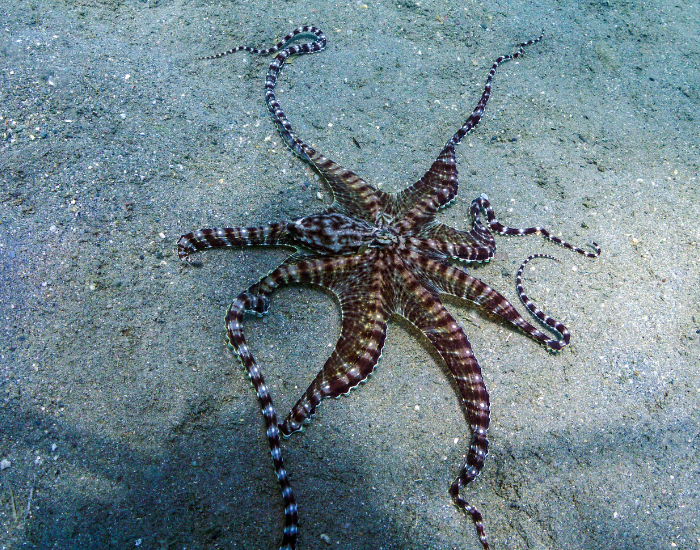
The point is the disguise. Held that way, the animal passes for a drifting coconut or a clump of algae. Better still, it keeps passing while it moves. The mimic octopus goes further. It flattens and trails its arms to pass for a sole, a lionfish or a sea snake.
13. Some Build Underwater Cities
The species I met at Red Cliff turns out to be the social one. In Jervis Bay, gloomy octopuses gather at two sites now called Octopolis and Octlantis. Ten to fifteen live together there, in dens built from sand and discarded shells.
It is not a peaceful commune. Researchers filmed signalling, mating, and octopuses evicting each other by force. Not bad for an animal long written off as solitary.
14. Mating Is a One-Way Trip
A male transfers sperm with a modified arm, the hectocotylus, reaching across at arm’s length. Males die shortly after, usually within weeks.
The female octopus outlives him, but only by months. She finds a den, lays her eggs in long strands, and stops eating.
15. Octopuses Might Dream
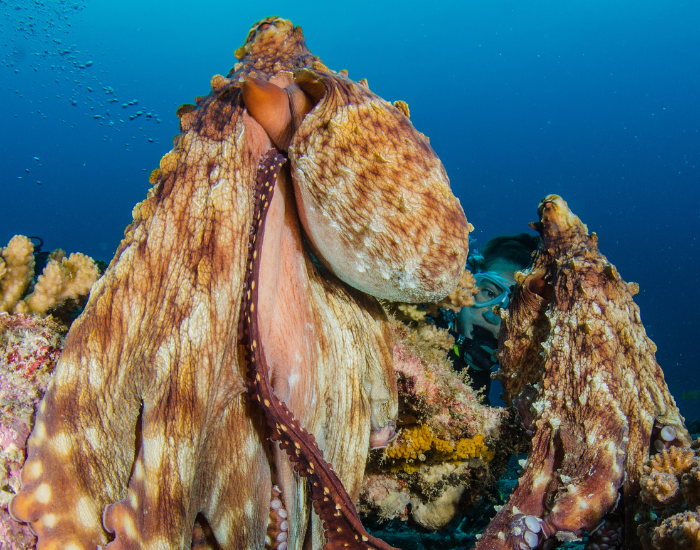
Resting animals cycle between quiet stillness and a brief active phase. Eyes move, arms twitch, skin colour races across the body.
The active phase lasts about forty seconds and returns roughly every half hour. Nobody can say whether an octopus dreams. The pattern does look a great deal like ours.
16. The Longest Motherhood on Earth
She guards the eggs, fanning and cleaning them, and does not feed the entire time. In the giant Pacific octopus that lasts around six months. The animal dies soon after her eggs hatch.
Then there is Graneledone boreopacifica. A submersible returned to one deep-sea female eighteen times across four and a half years. She was still there, still brooding. Fifty-three months, the longest egg-brooding period recorded in any animal.

17. The Giant Pacific Octopus Is the Biggest
A typical adult spans about 14 feet and weighs around 33 pounds. Exceptional ones pass 16 feet and 100 pounds. The largest ever claimed was bigger again, though nobody verified it.
Each arm carries roughly 280 suckers. A single one holds about 16 kg, the weight of eight house bricks. A female may lay well over 100,000 eggs. Compare it with the other biggest octopus species.

Octopuses in the World | Wildlife Nomads
18. They Build Dens and Defend Them
Most live close to shore, among rocks and coral reefs. The family reaches every ocean, and a dumbo octopus has been filmed a mile down in the deep sea. The telescope octopus and the dumbo octopus both live far below the surface in my deep sea dive.
Wherever they settle, they build. They gather rocks and shells into a den. A flat stone across the entrance works as a door that pulls closed behind them. They are territorial about it. Look for the midden outside: cracked crab and shellfish debris. That is usually how you find one.
DEPTH1,690
m Interactive · Deep Sea Dive Dive 1,690 m down to meet the telescope octopus Scroll from the surface to the Mariana Trench and log 61 ocean animals on the way. →
19. Some Species Are Venomous
Most are harmless, and few have predators to fear once grown. The blue ringed octopus is the exception for us.
It is the size of a golf ball and carries tetrodotoxin, the same toxin as a pufferfish, with no antivenom. It earns its place among Australia’s deadliest animals and the world’s most toxic animals. The rings only flash once it is alarmed, which is the problem. A calm one is easy to miss, and the bite is often painless.

20. Booming, and Still Vulnerable
Here is the odd part. Cephalopods climbed worldwide from the 1950s to 2013, across 35 species and every ocean region, while many fish stocks fell. Short lives and fast growth let octopus populations exploit a changing ocean faster than their competitors.
So no, they are not endangered. That is not the same as safe. The same researchers flagged overfishing. Climate change reaches an octopus through its own blood, because hemocyanin binds oxygen poorly as pH drops. Animals held at raised CO2 handled low oxygen worse. To protect octopuses and the marine species around them, pollution and temperature are what to watch. They feel both first.
Octopuses in Culture
The plural is octopuses, not octopi. The word is Greek, not Latin, so the Latin ending never applied.
Aristotle wrote them up in the fourth century BC and was unimpressed. He called the octopus a stupid creature, because it would approach a human hand. Twenty-three centuries later, we have decided that is the interesting part.
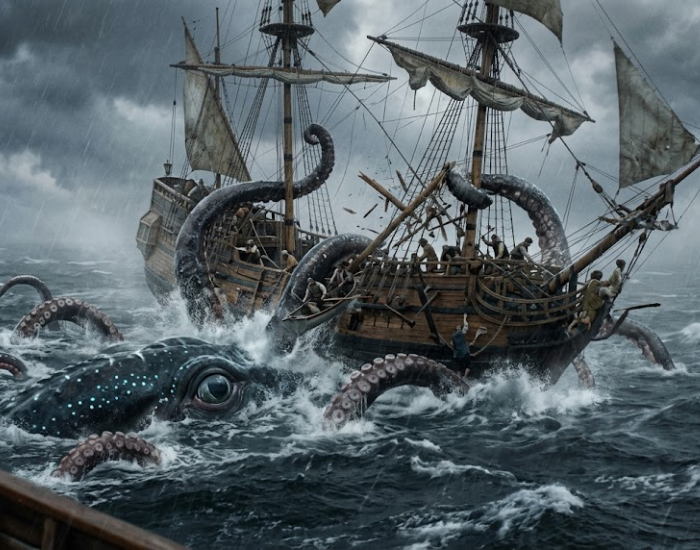
Norwegian sailors told of the Kraken, a monster that rose from the depths and dragged ships under. The name first appears in a glossary from 1646. Most scholars now match it to the giant squid, which is real and reaches over ten metres. Bishop Pontoppidan called it a colossal octopus in 1753, tracing it to the monstrous polypus Pliny reported from Carteia.
They surface in fiction too. While making Arrival, Denis Villeneuve pointed his concept artists at cuttlefish and squid. He wanted a creature with no obvious front or back. The result has seven limbs, which is why the film calls them heptapods. And Paul, a common octopus in a German aquarium, called eight World Cup matches in a row in 2010. That tells you more about human pattern-seeking than about octopus foresight.
Octopus FAQ
Yes, though not where you would expect. Inside the beak sits a radula, a ribbon covered in rows of tiny chitinous teeth. The octopus uses it to rasp flesh out of shells. Some species also drill a hole through a clam and inject saliva to loosen the muscle holding it shut.
No. Nothing about an octopus resembles a human mouth. There is no enamel, no jaw and no calcium involved. Just a beak and that toothed ribbon behind it. Photographs of “human teeth” in a sea creature are almost always a sheepshead fish.
Crabs, shrimp, clams, snails, fish, and fairly often other octopuses. Most hunt at night, feeling into crevices rather than looking. Prey goes back to the den, which is how those middens build up.
Most species manage one to two years, the giant Pacific octopus three to five. The record belongs to a deep-sea female that brooded for 53 months without eating. In cold water, well over a decade looks likely
Go and Look in the Rock Pools
Octopuses are the closest thing we have to an intelligent alien, and they got there down a separate road. Our last common ancestor was a flatworm-ish thing with no real brain, some 550 million years ago. Everything clever about an octopus was invented twice.
That is what stays with me from Red Cliff. Not the size of it. Something built on a different plan looked back and decided I was not worth the trouble.
Go at low tide. Walk slowly, look at the weed rather than past it, and put your hand nowhere you have not looked. They are easy to miss, which is rather the point.
Wildlife Nomads Challenge
Eight Arms, Ten Questions
A picture quiz on the ocean’s best escape artist. Instant feedback after every answer.
References:
Finn, J. K., Tregenza, T., & Norman, M. D. (2009). Defensive tool use in a coconut-carrying octopus. Current Biology, 19(23), R1069–R1070. https://doi.org/10.1016/j.cub.2009.10.052
Huffard, C. L., Boneka, F., & Full, R. J. (2005). Underwater bipedal locomotion by octopuses in disguise. Science, 307(5717), 1927. https://doi.org/10.1126/science.1109616
Medeiros, S. L. S., Paiva, M. M. M., Lopes, P. H., Blanco, W., Lima, F. D., Oliveira, J. B. C., Medeiros, I. G., Sequerra, E. B., Souza, S., Leite, T. S., & Ribeiro, S. (2021). Cyclic alternation of quiet and active sleep states in the octopus. iScience, 24(4), 102223. https://doi.org/10.1016/j.isci.2021.102223
Onthank, K. L., Trueblood, L. A., Schrock-Duff, T., & Kore, L. G. (2021). Impact of short- and long-term exposure to elevated seawater PCO2 on metabolic rate and hypoxia tolerance in Octopus rubescens. Physiological and Biochemical Zoology, 94(1), 1–11. https://doi.org/10.1086/712207
van Giesen, L., Kilian, P. B., Allard, C. A. H., & Bellono, N. W. (2020). Molecular basis of chemotactile sensation in octopus. Cell, 183(3), 594–604.e14. https://doi.org/10.1016/j.cell.2020.09.008
Zullo, L., Fossati, S. M., Imperadore, P., & Nödl, M.-T. (2017). Molecular determinants of cephalopod muscles and their implication in muscle regeneration. Frontiers in Cell and Developmental Biology, 5, 53. https://doi.org/10.3389/fcell.2017.00053