The tropical rainforests of Central and South America hold some of nature’s most dangerous secrets. Hidden among the leaf litter and forest floor, poison dart frogs display brilliant colors that serve as nature’s warning label. These tiny frogs, members of the Dendrobatidae family, pack enough toxin to kill multiple adult humans.
During my time working as a zookepper in Mexico, I worked directly with these deadly animals. But maybe deadly is an exaggeration in tis case, as toxicity depend o their diet, and captive individuals are not toxic. We housed several adult frogs, specifically: poison frog species, including the Blue Poison Dart Frog (Dendrobates tinctorius) and the legendary Golden Poison Frog (Phyllobates terribilis). Every tool and piece of foliage required careful handling with gloves. But in this cas enot beacuse of their toxicity, but to care for their very delicate skin.
The term “poisonous tree frog” is actually misleading. Most poison dart frogs live on the forest floor rather than in trees. However, they remain among the most poisonous frogs on Earth. In this guide, we’ll explore 20 species of poison dart frogs, their toxic skin secretions, habitat requirements, and the conservation challenges threatening their survival

20 Types of Poison Frogs: The Most Dangerous Species
The Phyllobates Genus: The Most Toxic Frogs
The genus Phyllobates contains the most toxic species of poison dart frogs. These frogs from Western Colombia possess the strongest batrachotoxins found in nature.
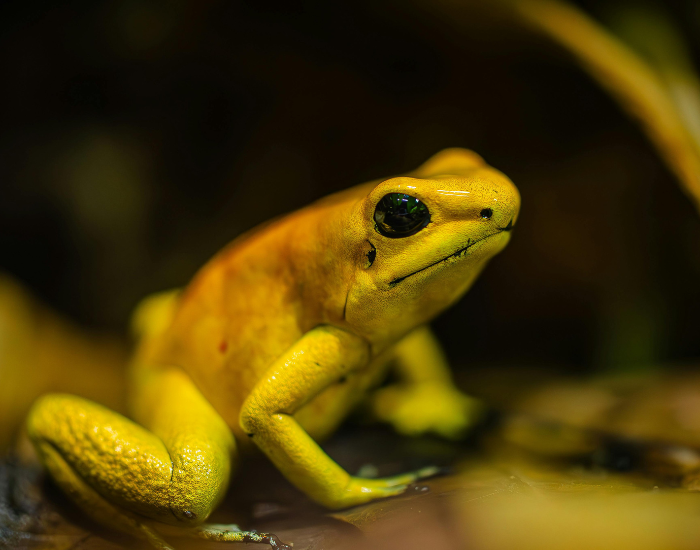
1. Golden Poison Frog (Phyllobates terribilis)
The Golden Poison Frog is on the list of the most toxic animals in the world, along the inland taipan, the box jellyfish, and the stone fish. But this cold blooded animal holds the title of the world’s most poisonous type of amphibian. This tiny frog, endemic to the Pacific coast of Colombia, carries enough poison to kill 10-20 adult humans. Indigenous tribes historically used its toxic skin secretions to coat their blow darts for hunting.
The bright yellow coloration serves as nature’s most effective warning. Some populations display mint green or orange coloring. Adults measure only 1.5 inches long, yet they remain the most dangerous poison dart frog species on Earth. Unfortunately, it is a Threatened Species by the IUCN.
2. Kokoe Poison Frog (Phyllobates aurotaenia)
The Kokoe Poison Frog inhabits the rainforests of Western Colombia. While smaller than the Golden Poison Frog, this species still produces highly toxic skin secretions. The frog displays distinctive yellow or gold stripes against a dark body.
Indigenous communities also used this species’ poison for their hunting darts. The toxin concentration, though lower than P. terribilis, remains deadly to most potential predators. Like other poison frogs, this species relies on its specialized diet to maintain toxicity.
3. Black-legged Poison Frog (Phyllobates bicolor)
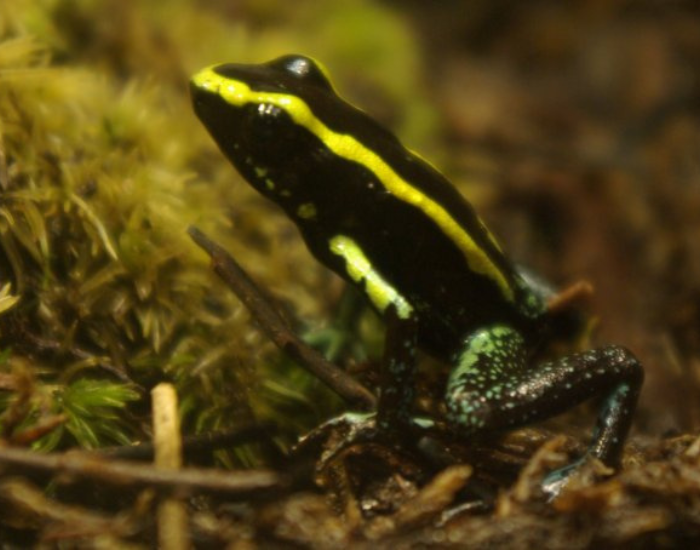
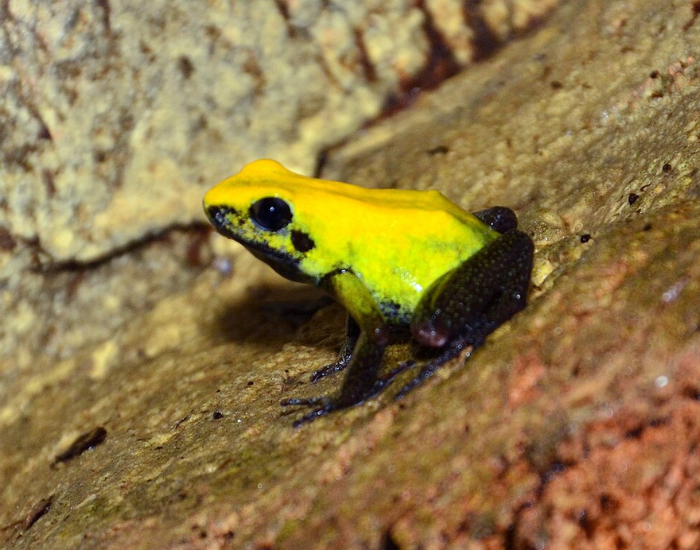
This threatened species features a bright yellow or orange back contrasting with black or dark brown legs. The Black-legged Poison Dart Frog lives in Colombia’s Pacific lowland forests. Males of this species demonstrate exceptional parental care, carrying tadpoles to suitable water sources.
The toxic skin secretions protect adults from most natural predators. However, habitat loss threatens wild populations throughout their range. Conservation efforts focus on protecting remaining forest floor habitat in Colombia.
The Dendrobates Genus: Classic Dart Frogs
The genus Dendrobates includes some of the most species recognized as poison dart frog species. These frogs display stunning patterns and have become popular in the captive frog trade. The entire family of poison dart frogs (Dendrobatidae) contains many species that are CR. For instance, the IUCN Red List lists other poison frogs like the Oxapampa Poison Frog (Ameerega planipaleae) and the La Planada Poison Frog (Paruwrobates andinus) as Critically Endangered, highlighting the extreme vulnerability of the group
4. Dyeing Poison Frog (Dendrobates tinctorius)
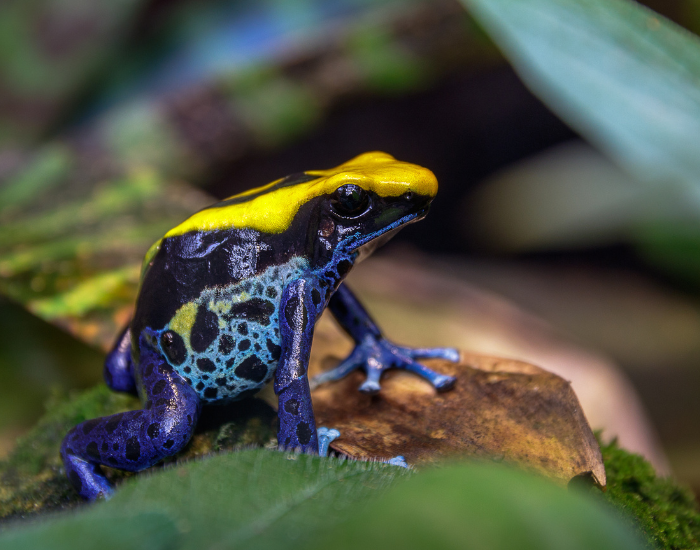
The Dyeing Poison Frog showcases remarkable color variation across its range. Different populations display blue-and-black, yellow-and-black, or other vibrant patterns. The name comes from indigenous tribes who historically used its toxins to alter parrot feather colors.
This species lives in the rainforests of northern South America, including Suriname, French Guiana, and Brazil. Adults grow slightly larger than many poison dart frogs, reaching nearly 2 inches. In captivity, breeders have developed numerous color morphs that appeal to hobbyists.
5. Blue Poison Dart Frog (Dendrobates tinctorius ‘Azureus’)
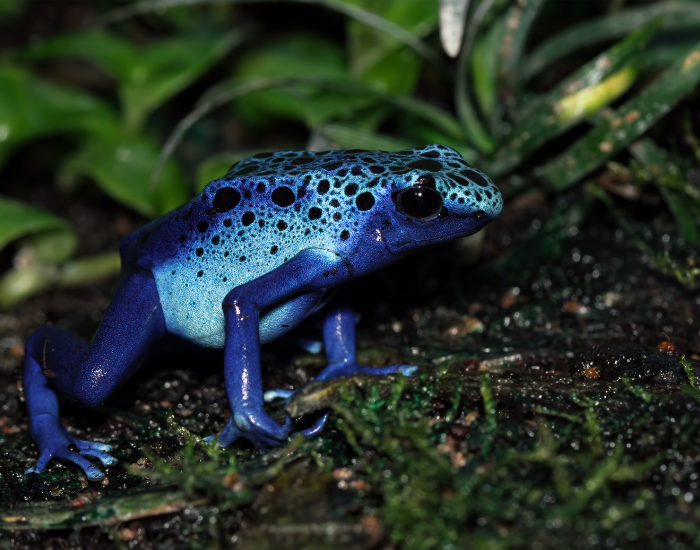
Once classified as a separate species, the Blue Poison Dart Frog is now recognized as a color morph of D. tinctorius. Its brilliant sky-blue coloration with black spots makes it one of the most stunning poison dart frog species.
This morph originates from a small region in Suriname. The bright coloration serves as effective aposematic coloration, warning predators of its toxic skin. Wild populations face threats from illegal pet trade and habitat loss.
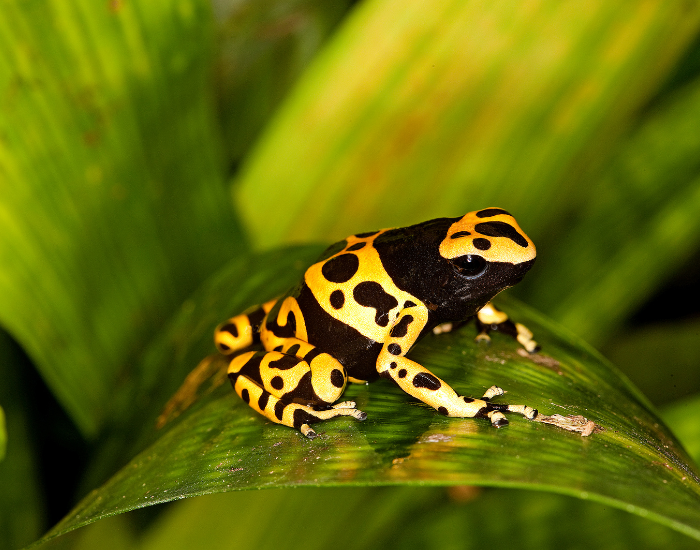
6. Yellow-banded Poison Frog (Dendrobates leucomelas)
The Yellow-banded Poison Frog displays thick black stripes or spots against a bright yellow background. This species inhabits Venezuela and Guyana, where it shows more arboreal behavior than most poison dart frogs.
Adults frequently climb on vegetation and can be found higher in the leaf litter than ground-dwelling species. The bold pattern provides clear warning to potential predators. In captivity, this species adapts well to properly maintained vivariums.
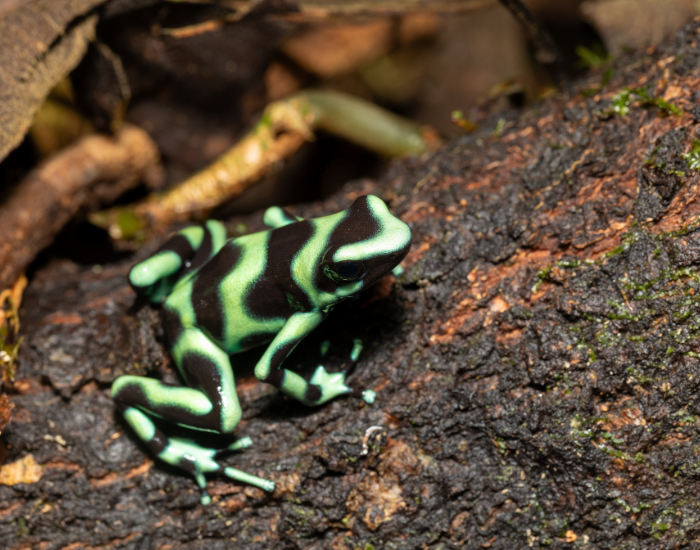
7. Green and Black Poison Dart Frog (Dendrobates auratus)
This widespread species lives throughout Central America, from Costa Rica to Colombia. The Green and Black Poison Dart Frog displays a beautiful marbled pattern, though some populations show blue instead of green coloring.
The species thrives in various rainforest habitats, making it more adaptable than many poison dart frogs. Males are territorial and produce distinct calls to attract females. Tadpoles develop in small pools of water found in leaf axils and tree holes.
The Oophaga Genus: Egg-Feeding Frogs
The genus Oophaga demonstrates fascinating parental care. Females feed their tadpoles with unfertilized eggs, a behavior rare among amphibians.
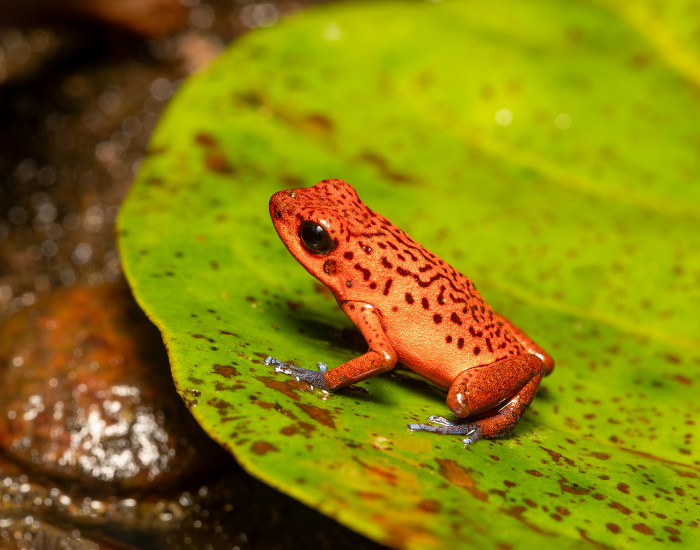
8. Strawberry Poison Frog (Oophaga pumilio)
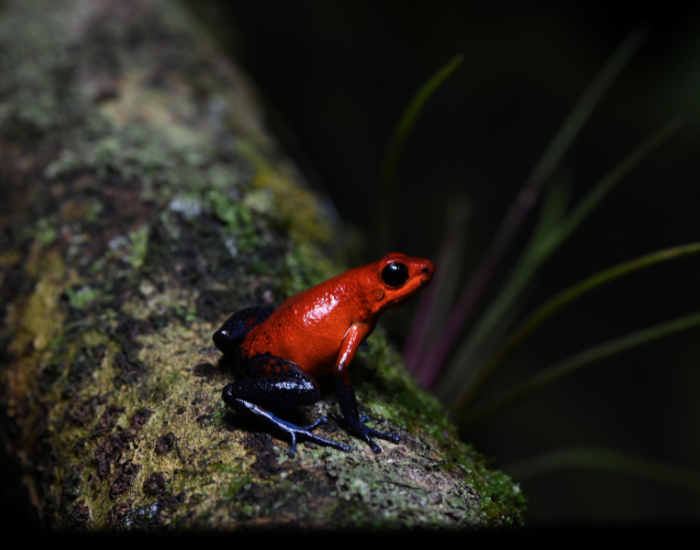
The Strawberry Poison Dart Frog displays more color variation than any other species, with over 15 distinct morphs. Populations range from bright red in Panama to turquoise in other regions. This small species rarely exceeds 0.75 inches in length.
Females exhibit remarkable maternal care, returning to feed tadpoles with unfertilized eggs every few days. Each tadpole develops in its own tiny pool, often in bromeliad leaf axils. This species lives throughout Central America, particularly in Costa Rica and Panama.
9. Diablito Poison Frog (Oophaga sylvatica)
Found in Ecuador’s rainforests, the Diablito Poison Frog features patterns of black with yellow or red markings. The species inhabits the forest floor in humid lowland and montane forests.
Like other Oophaga species, females demonstrate egg-feeding behavior with their tadpoles. Males are highly territorial and will defend their territory against other males. The species requires pristine forest habitat with abundant small water pools.
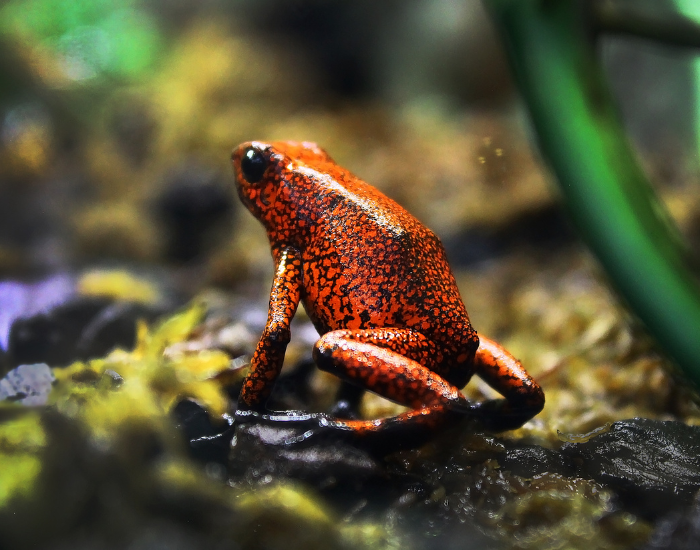
10. Granular Poison Frog (Oophaga granulifera)
This reddish-orange species gets its name from the granular texture of its skin. The Granular Poison Frog inhabits Costa Rica and Panama, living on the forest floor in humid rainforests.
Adults display the characteristic egg-feeding behavior of the Oophaga genus. Females locate appropriate water pools for each tadpole, then return regularly with unfertilized eggs. The species faces threats from habitat destruction and disease.
The Ranitomeya Genus: Tiny Terrors
Ranitomeya species rank among the smallest poison dart frogs. These tiny frogs often inhabit higher areas of the leaf litter and show semi-arboreal tendencies.
11. Amazonian Poison Dart Frog (Ranitomeya ventrimaculata)
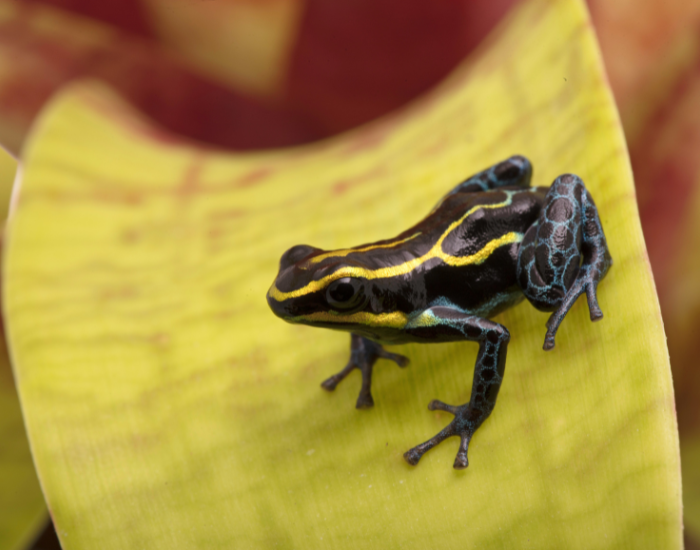
The Amazonian Poison Dart Frog displays a striking black body with yellow or orange netting patterns. This small species rarely exceeds 0.6 inches in length. Despite their size, these frogs produce toxic skin secretions.
The species inhabits the Amazon basin in Peru, Brazil, and Ecuador. Adults live in leaf litter and on low vegetation. Males call from elevated positions to attract females. Tadpoles develop in small water pools in the forest.
12. Vanzolini’s Poison Frog (Ranitomeya vanzolinii)
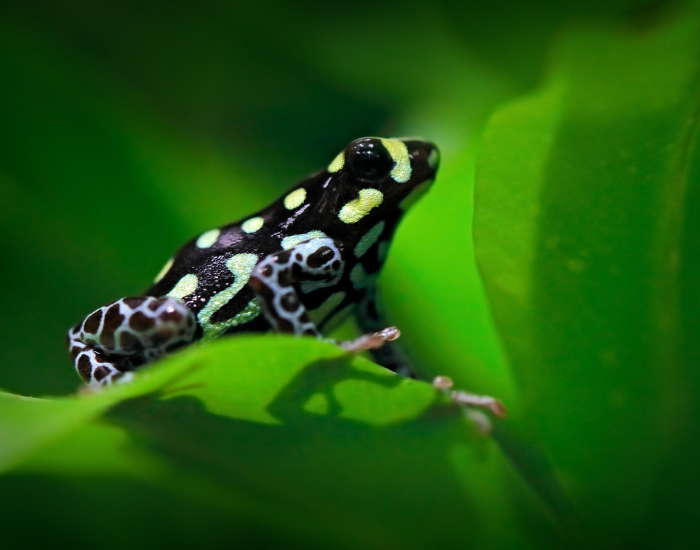
This small brown frog features yellow or green markings and lives in Brazil’s Amazon rainforest. The species inhabits areas with dense leaf litter and abundant insects.
Like other Ranitomeya species, these frogs show parental care by transporting tadpoles to water sources. The species remains relatively unstudied compared to more common poison dart frogs. Wild populations face threats from deforestation and habitat fragmentation.
13. Black-Jeans Poison Frog (Ranitomeya variabilis)
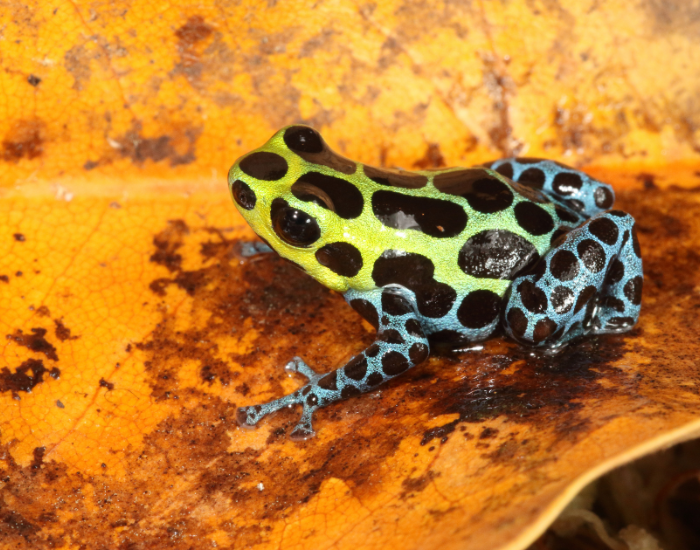
The Black-Jeans Poison Frog earned its name from the distinctive blue-green coloration on its legs, contrasting with a black body. This species lives in Peru’s rainforests.
The species displays variable patterns across its range, with some populations showing more extensive blue coloring. Adults remain small, making them vulnerable to habitat changes. Conservation status requires further assessment for this species.
The Adelphobates Genus: Bold Patterns
Adelphobates species feature contrasting colors and bold patterns that serve as effective warnings to predators.
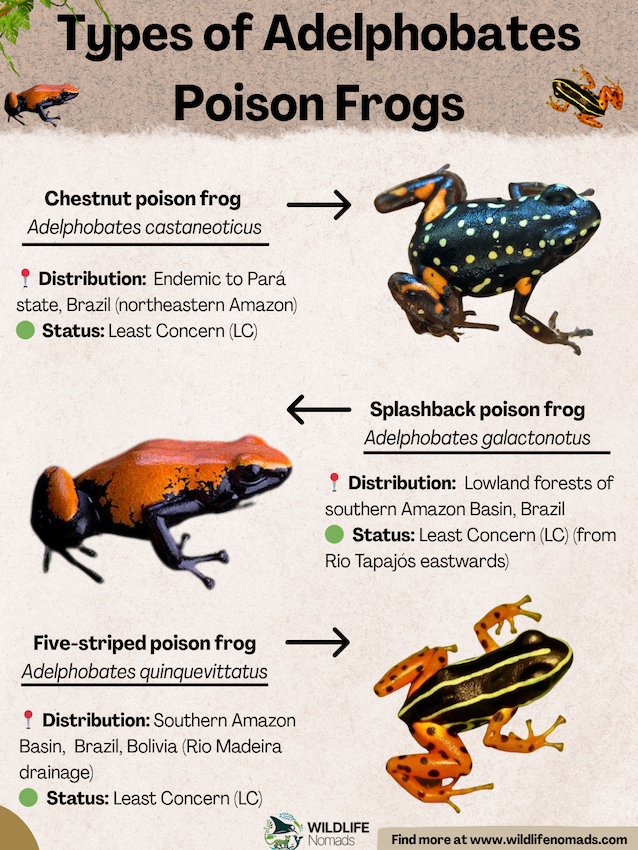
14. Three-striped Poison Frog (Adelphobates galactonotus)
This species typically displays solid red, orange, or yellow coloring on its back with a black underside. The Three-striped Poison Frog inhabits Brazil’s Atlantic rainforest.
The species shows strong territorial behavior, particularly among males. Vocalizations help males establish territories and attract females. In captivity, this species requires high humidity and warm temperatures.
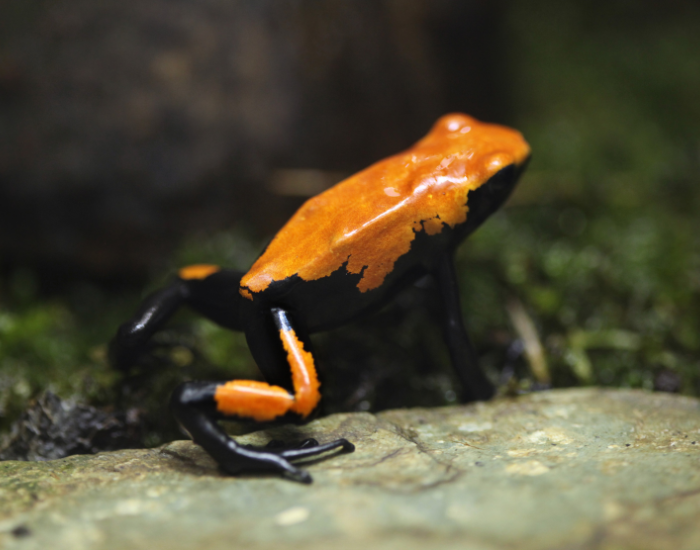
15. Imitating Poison Frog (Ranitomeya imitator)
This species demonstrates Batesian mimicry by copying the colors and patterns of more toxic species in its region. The Imitating Poison Frog lives in Peru’s rainforests.
Different populations mimic different species, creating remarkable variation across the species’ range. This survival strategy allows less toxic frogs to benefit from predators’ learned avoidance of more dangerous species.
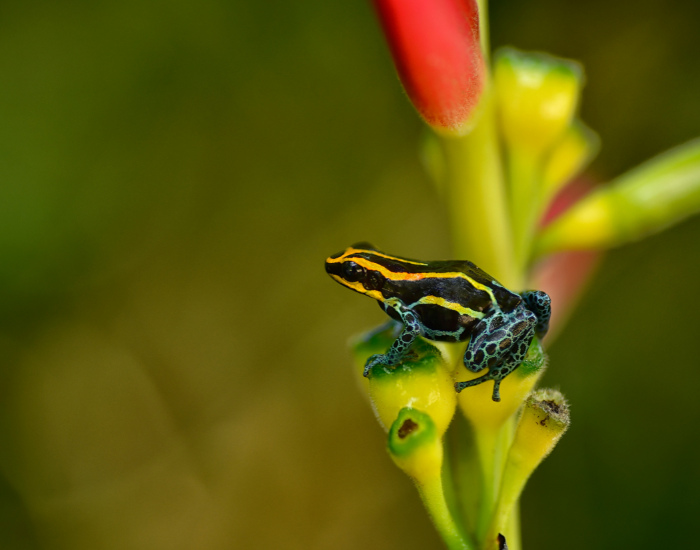
16. Splash-back Poison Frog (Adelphobates galactonotus)
Another stunning member of the Adelphobates genus, the Splash-back Poison Frog displays a splash-like pattern across its back. The coloring typically features bright red or orange against darker tones.
This species inhabits Brazil’s coastal rainforests. Males are territorial and produce calls to defend their space. The species faces critical threats from habitat loss in one of the world’s most endangered ecosystems.
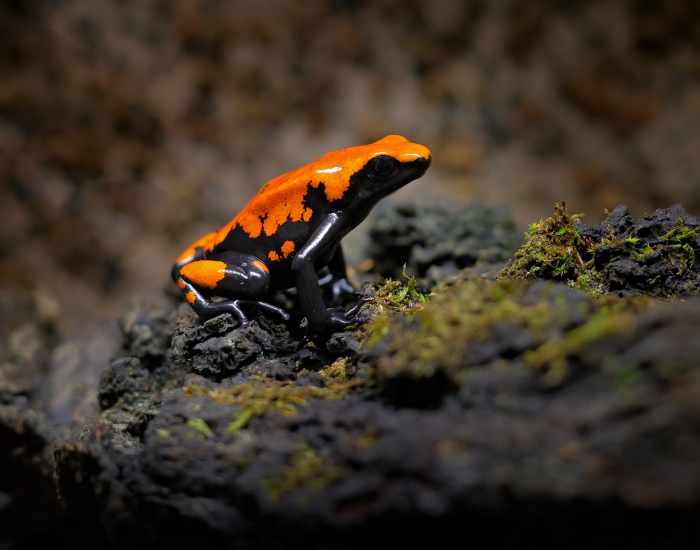
Additional Notable Species
17. Golfodulcean Poison Frog (Phyllobates vittatus)
This black frog features beautiful gold or green stripes running along its body. The Golfodulcean Poison Frog lives in Costa Rica’s rainforests.
As a member of the Phyllobates genus, this species produces potent toxins, though not as concentrated as P. terribilis. Indigenous peoples used this species’ poison for hunting. The species requires pristine forest floor habitat with high humidity.
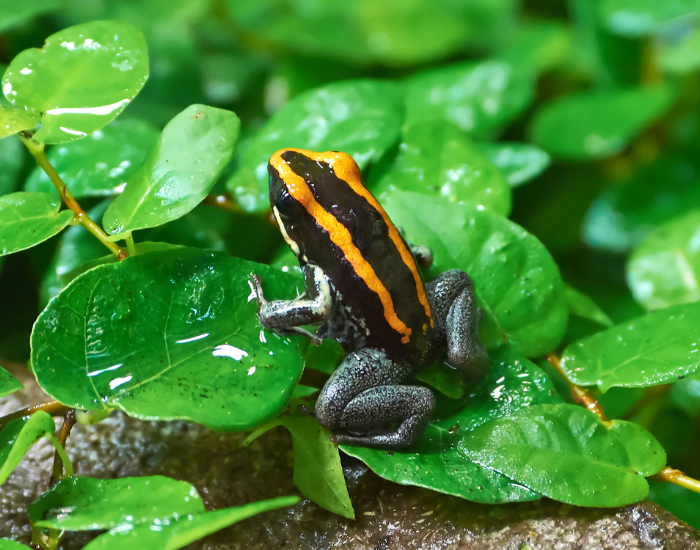
18. Phantasmal Poison Frog (Epipedobates anthonyi)
The Phantasmal Poison Frog contributed significantly to medical science. Researchers isolated the potent painkiller epibatidine from this species’ skin secretions. The compound proved 200 times more powerful than morphine.
This species lives in Ecuador and Peru. While less toxic than Phyllobates species, it still produces significant skin toxins. The discovery of epibatidine demonstrates the medicinal potential locked in poison dart frog toxins.
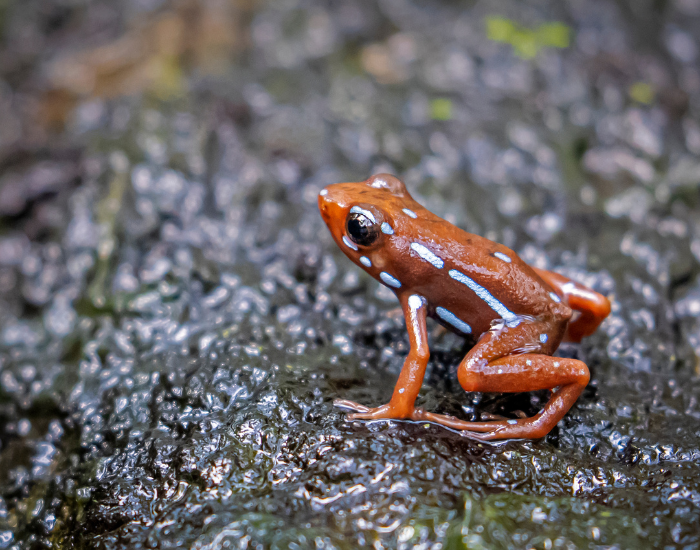
19. Anthony’s Poison Arrow Frog (Epipedobates anthonyi)
Often confused with the Phantasmal Frog, Anthony’s Poison Arrow Frog is a small brown species with white or yellow stripes. The species inhabits Ecuador’s montane forests.
Males transport tadpoles to suitable water sources after hatching. The species faces threats from habitat loss and disease. Conservation efforts focus on protecting high-elevation forest habitat.
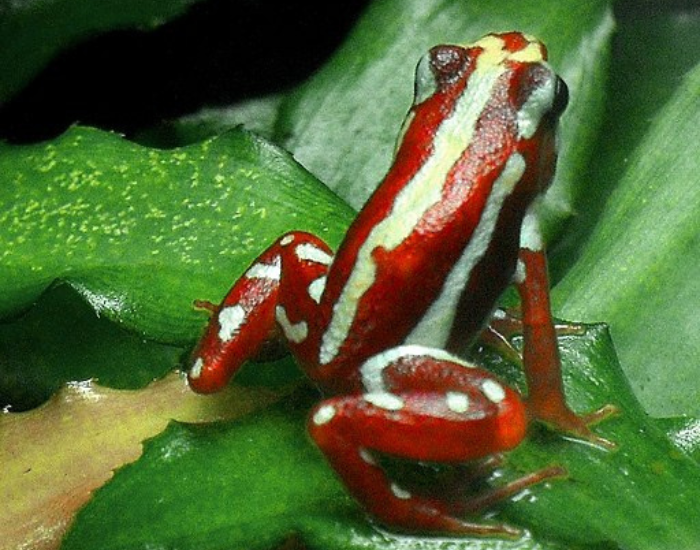
20. Tricolor Poison Frog (Epipedobates tricolor)
Found in Ecuador, the Tricolor Poison Frog typically displays red or orange coloring with three white or yellow longitudinal stripes. This small species lives on the forest floor in humid conditions.
The species produces toxic skin secretions, though less potent than Phyllobates species. Wild populations require intact rainforest with abundant insects and small water pools for breeding.

Conservation Status: Threats to Poison Dart Frogs
According to the IUCN Red List, many poison frog species face serious conservation challenges. Several factors threaten wild populations throughout Central and South America.
Habitat loss represents the primary threat. Deforestation for agriculture, logging, and mining destroys the specific microhabitats these frogs require. The rainforest habitat continues to shrink, fragmenting populations and limiting genetic diversity.
Chytrid fungus (Batrachochytrium dendrobatidis) has devastated amphibian populations worldwide. This fungal disease affects poison dart frogs, causing population declines in multiple species. The disease spreads rapidly through wild populations, and infected frogs show high mortality rates.
Climate change disrupts the delicate environmental balance. Changes in rainfall patterns and temperature affect the microhabitats poison dart frogs depend on. The specialized insects that provide toxins may also decline, further threatening these poisonous animals.
The illegal pet trade continues despite regulations. Collectors target the most colorful species, removing breeding adults from wild populations. However, reputable breeders now produce captive-bred specimens, reducing pressure on wild frogs.
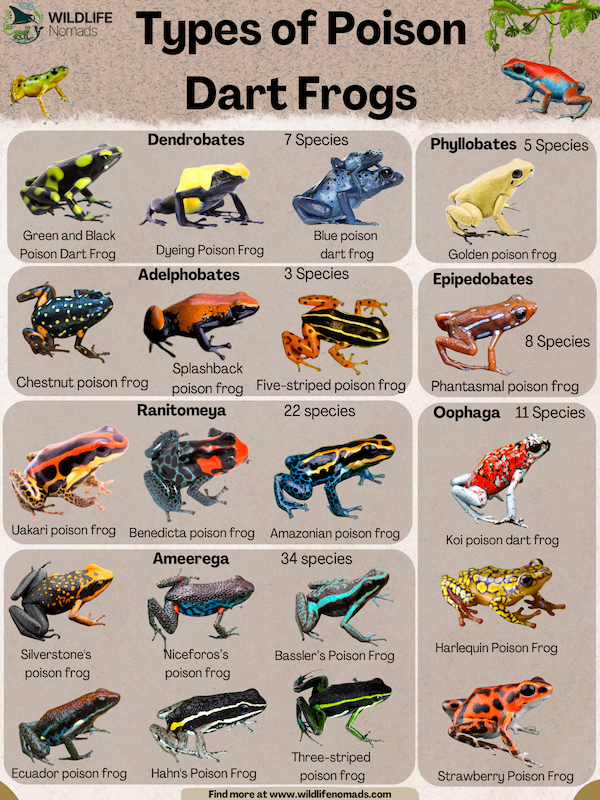
FAQs About Poisonous Frogs
Technically, few true tree frogs from the family Hylidae are poisonous. The term “poisonous tree frog” usually refers to poison dart frogs from the Dendrobatidae family. Most poison dart frogs actually live on the forest floor, not in trees.
The most toxic species include the Golden Poison Frog, Dyeing Poison Frog, and other members of the Phyllobates and Dendrobates genera.
In the wild, absolutely not. Wild poison dart frogs carry lethal toxins in their skin secretions. Contact with these toxins can be deadly, especially if you have open cuts or the poison reaches mucous membranes like eyes or mouth.
Captive-bred frogs are non-toxic because they lack access to the toxic insects that wild frogs eat. However, responsible keepers still minimize handling to reduce stress on these delicate animals. Even with non-toxic captive frogs, always wash hands thoroughly after any contact.
In nature, bright coloration indicates toxicity. This aposematic coloration serves as a warning to potential predators. Poisonous frogs typically display vibrant reds, blues, yellows, or oranges—colors that stand out against the forest floor.
No native poison dart frogs live in the United States. All species of the Dendrobatidae family inhabit Central and South America. The United States has no native frogs that produce batrachotoxins or similar deadly compounds.
In the wild, poison dart frogs eat tiny beetles, ants, mites, and other small insects. This specialized diet provides the toxins these frogs sequester in their skin glands. The insects themselves consume toxic plants, concentrating poison through the food chain.
The Connection Between Diet and Toxicity
The relationship between diet and toxicity in poison dart frogs demonstrates remarkable evolutionary adaptation. Wild frogs actively seek out toxic prey, concentrating poison in their skin over time. This sequestration process requires specific insects that feed on particular toxic plants.
Research shows that different frog populations eating different insects display varying toxicity levels. Frogs from regions with more toxic beetles produce stronger skin secretions. This variation highlights the critical link between habitat, prey availability, and defensive capabilities.
In captivity, even frogs bred from highly toxic parents remain non-toxic without the proper diet. This proves that toxicity is acquired, not inherited genetically. Captive breeding programs have demonstrated this conclusively over multiple generations.
The discovery of this diet-toxin relationship revolutionized our understanding of these animals. It also provided hope for conservation, as captive populations can be maintained safely without toxic handling protocols.
Indigenous Use of Poison Dart Frog Toxins
Indigenous tribes in Colombia and other regions historically used poison dart frog toxins for hunting. The practice gives these frogs their common name. Hunters would carefully extract toxins and coat blow darts or arrows.
The Golden Poison Frog provided the most potent toxin. A single frog yielded enough poison for multiple darts that remained lethal for over a year. Hunters developed careful techniques to harvest toxin without directly touching the frogs.
Other species like the Kokoe Poison Frog and Black-legged Poison Frog also served this purpose. The practice demonstrates deep knowledge of rainforest ecology and the properties of different animals. Indigenous peoples understood which species produced the most effective toxins.
This traditional use has largely disappeared as modern tools replaced traditional hunting methods. However, it remains an important part of cultural heritage in some regions. The practice also contributed to scientific interest in these remarkable animals.
genes to offspring. Over time, this created the spectacular diversity we see today.
Nature’s Warning Labels
From years of working with these incredible creatures, I can confirm that poison dart frogs represent evolutionary masterpieces. They embody the complex relationships between diet, environment, and defense that characterize rainforest ecosystems.
These tiny frogs serve dual roles as deadly poisonous animals and potential sources of life-saving medicines. Their brilliant colors provide both warnings and inspiration. Yet many species face extinction as rainforests continue to shrink.
The next time you see an image of a vibrant poison dart frog, remember the specialized ecosystem it requires. Consider the tiny beetles that make its toxins possible and the threatened habitat it calls home. These frogs remind us how much we stand to lose as deforestation accelerates.
Supporting rainforest conservation and amphibian research helps protect these remarkable species. Organizations working in Central and South America need funding and awareness. By understanding poison dart frogs better, we can appreciate the urgent need to preserve their homes.
The forest floor of the tropics holds countless wonders, and poison dart frogs rank among the most fascinating. Their continued survival depends on our commitment to protecting the rainforests they cannot live without.
Recommendations on Where to Spot Poison Dart Frogs
This blog is reader-supported. When you buy experiences through links listed on this site, we may earn an affiliate commission.
–