
Discovering the Fascinating Gila Monster
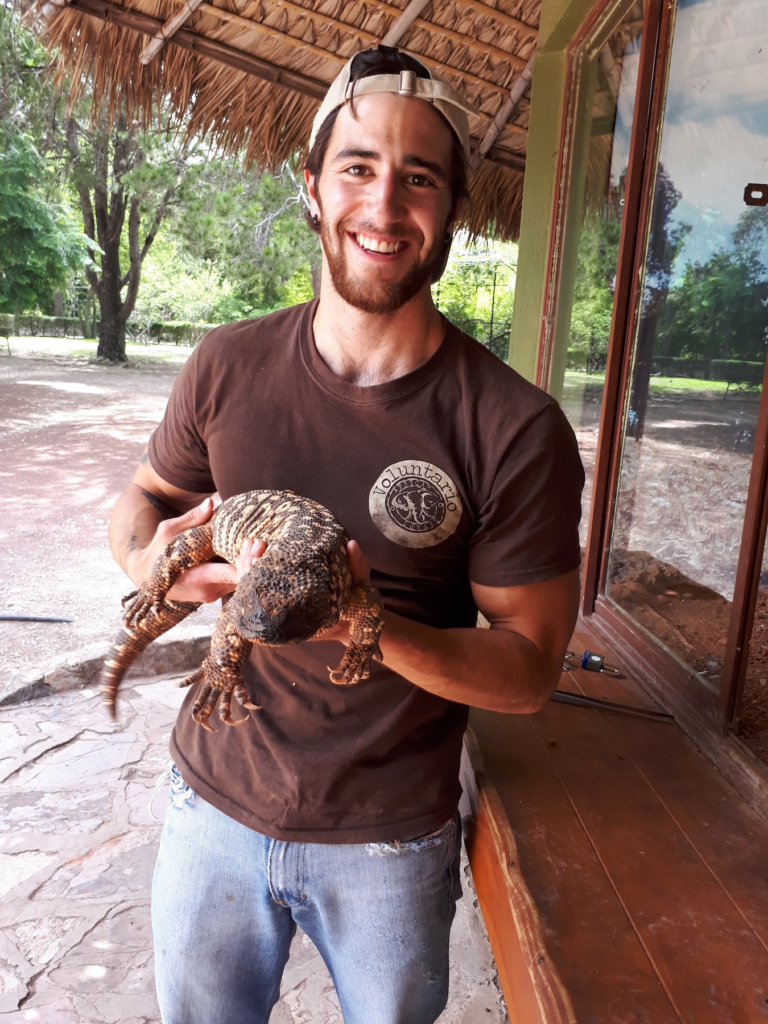
The first time I encountered a gila monster (Heloderma suspectum) wasn’t out in the desert but at a zoo where I was working as an intern. Part of my job was caring for reptiles, and among them was this strange massive lizards, the gila monster. At first, I was cautious, knowing it was venomous, but handling and feeding him quickly showed me something important: despite their fearsome reputation, gila monsters are calm, slow-moving, and far from the monsters people imagine. That experience was my first real lesson in understanding that even venomous animals often have no reason to be feared.
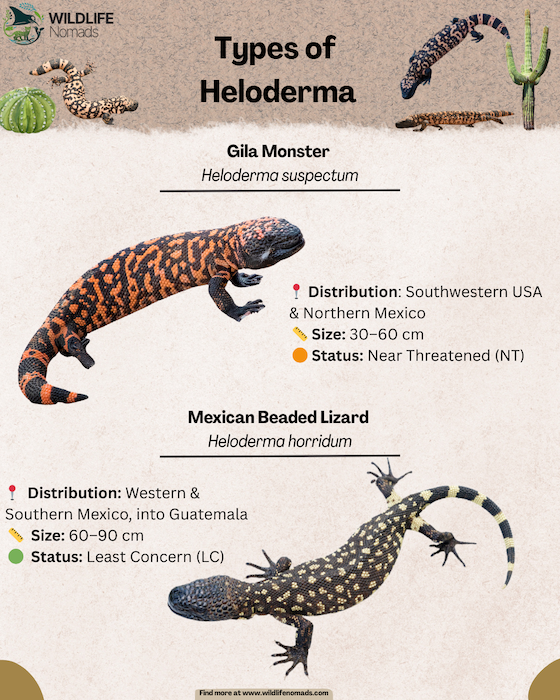
The gila monster is not just any lizard. It’s a type of venomous lizard (which are not as rare as it used to be believed). Beaded lizards are close relatives of the Gila monster, sharing many characteristics and an evolutionary history, and are native to Mexico and Guatemala. It’s also the largest lizards native to the southwestern united states, and while it has a reputation for being fearsome, it is one of the most solitary animals that rarely poses a threat to humans.
Let’s break down 12 surprising fun facts about this desert icon.
1. A Member of an Elite Venomous Club
Most lizards you’ll meet, from the harmless geckos in your garden to the iguanas lounging in Central America, are non-venomous. But the gila monster is different. Alongside its cousin, the mexican beaded lizard, it belongs to the helodermatidae genus.
For decades, biology textbooks claimed the Gila monster and its cousin, the Mexican beaded lizard, were the only two venomous lizards on Earth. However, modern research has flipped the script. We now know that many other reptiles, including the massive Komodo dragon and even some common iguanas, possess venom glands.
Still, the Gila monster remains in a league of its own. It belongs to the Helodermatidae family, a group of “beaded” lizards that have perfected a very specific and ancient form of chemical defense.
The Gila monster is classified within the squamata family and is one of several heloderma species, which are notable for their unique venom delivery system and distinctive physical traits.
Its venom is delivered not through fangs, but through grooved teeth in the lower jaw. When the lizard bites, it chews to allow venom to seep into the wound. It’s a slow process compared to snakes, but highly effective for defense.
2. Venomous, but Rarely Deadly
People often ask: Can a human survive a gila monster bite? The answer is yes. While the bite is described as excruciatingly painful, often compared to fire or crushed glass, fatalities are virtually unheard of. Although biting is rare, it is a significant defensive action for the Gila monster, and being bitten can be extremely painful and dangerous, requiring prompt medical attention. According to the Arizona Poison and Drug Information Center, there are no confirmed human deaths from gila monster bites in modern history.
Their gila monster venom’s real purpose isn’t to kill prey instantly, but to discourage potential predators and help the lizard subdue small mammals.
A very rare exception occurred in February 2024, when a man in Colorado passed away after being bitten by his illegal pet Gila monster. This was the first reported death from the species in the U.S. in nearly a century.

3. Their Venom Inspired Modern Medicine
Here’s a twist that fascinates me as both a biologist and storyteller: gila monster venom contains a human hormone called exendin-4, which became the foundation for drugs like exenatide (Byetta), used to treat type 2 diabetes. More recently, similar compounds have been connected to weight-loss drugs such as Ozempic.
So while this “monster” may look intimidating, it’s literally helping save human lives through human care applications.
4. The Biggest Gila Monsters Can Weigh Over 5 Pounds
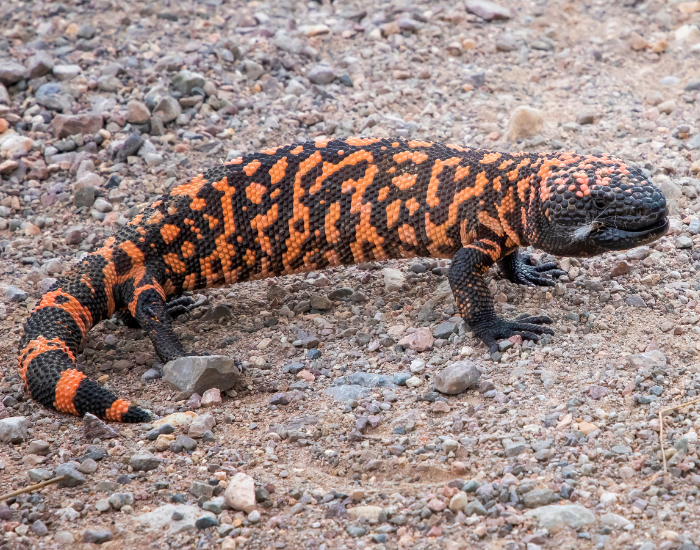
The average gila monster is about 20 inches long and weighs 3–5 pounds. The Gila monster is the largest lizard native to the United States, known for its robust body and distinctive appearance. That may not sound massive compared to a Komodo dragon, but for a venomous animal, it’s impressive. The biggest gila monster ever recorded tipped the scales at close to 5.8 pounds of body weight.
They’re nowhere near the size of a Komodo dragon (the world’s largest lizards), but they remain the heavyweight champions of North American reptiles.
5. They Survive on Just a Few Meals a Year
Gila monsters have a unique metabolic adaptation: they can gorge on one meal, storing body weight as fat in their thick tails, and then go months without eating again. Young Gila monsters can swallow up to 50% of their body weight in one meal, while adults are capable of consuming prey weighing up to a third of their own body weight. I once compared their diet to that of snakes, slow digestion, long breaks between large meals.
They prey on bird eggs, small mammals, lizards, and even other lizards’ eggs laid by reptiles, often raiding nests during the spring mating season.

6. Gila Monster Teeth Are Grooved for Venom Delivery
Unlike snakes, which use hollow fangs, gila monsters rely on grooved teeth in the lower jaw. The venom glands are located in the lower jaws, where the venom is produced and delivered during a bite. When they bite, venom flows along these grooves into the wound. Once they clamp down with their sharp claws, they rarely let go, sometimes chewing for minutes at a time.
It’s not just painful; it’s a survival strategy. Potential predators quickly learn that attacking this brightly patterned reptile is not worth the trouble.

7. Masters of the Desert
They are perfect examples of well adapted desert wildlife. From southern arizona and southwestern utah to northwestern new mexico, gila monsters inhabit sonoran desert and mojave desert regions, rocky foothills, and desert scrub. The Gila River Basin historically provided important habitat for the species, and their range extends from the southern tip of Nevada and Arizona down to southern Sonora in Mexico. They spend up to one third of their lives underground in burrows, emerging during the spring and early summer for feeding and mating season.
Despite their intimidating reputation, spotting one in the wild is rare. Even after months of traveling, you would only encountered a handful, making each sighting feel like a privilege during early june and mid august.
8. Ancient Bead-Like Scales
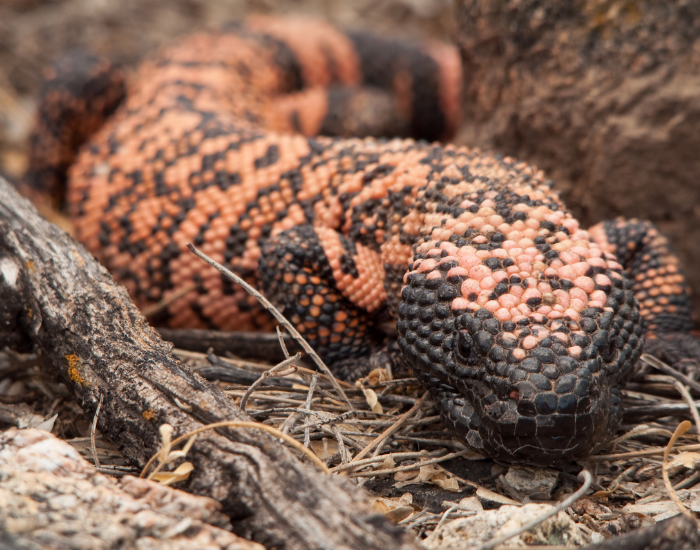
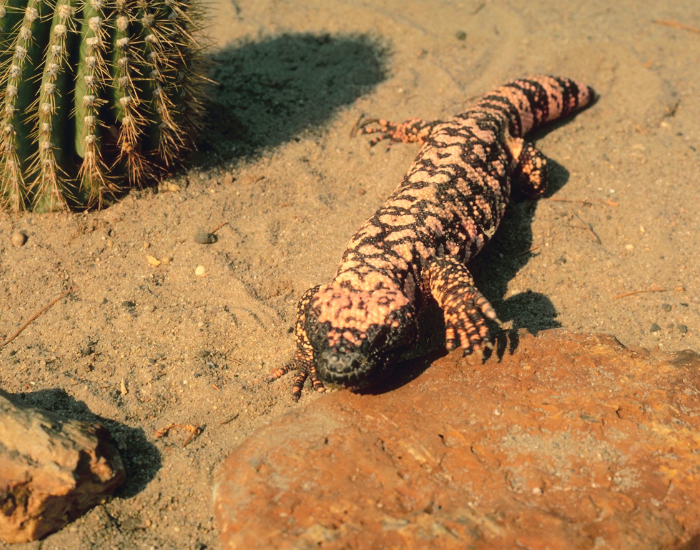
The genus name Heloderma means “studded skin,” referring to the bony plates under their bead like scales. These give the gila monster a prehistoric, armored appearance, like a living fossil. The bright reticulated pattern or banded patterns of orange, pink, or yellow serve as warning coloration to potential predators.
9. They Store Fat Like Living Canteens
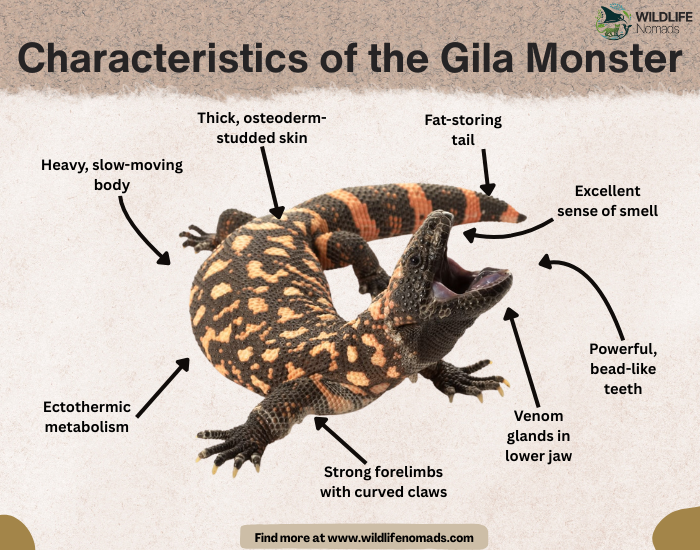
A gila monster’s thick tail isn’t just for balance. It’s where they store fat, allowing the lizard to go months without food or water, a perfect adaptation for survival in desert ecosystems. This body weight storage system helps them survive on just several feet of territory.

10. Solitary and Surprisingly Slow
Unlike agile lizards that dart across rocks, gila monsters move with deliberate slowness. They are solitary animals, avoiding contact except during the mating season in April and May, when males wrestle in combat to win mates. You might bite quickly assume they’re sluggish, but this is an evolutionary advantage.
11. Gila Monsters Share Ancient Venom Origins With Other Lizards
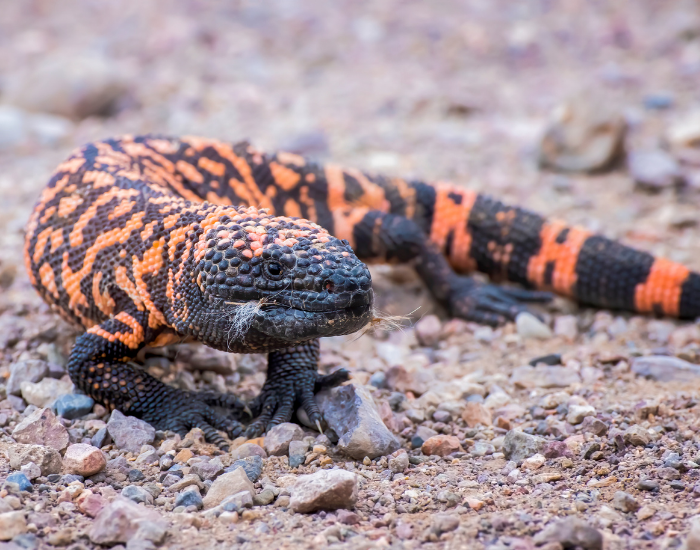
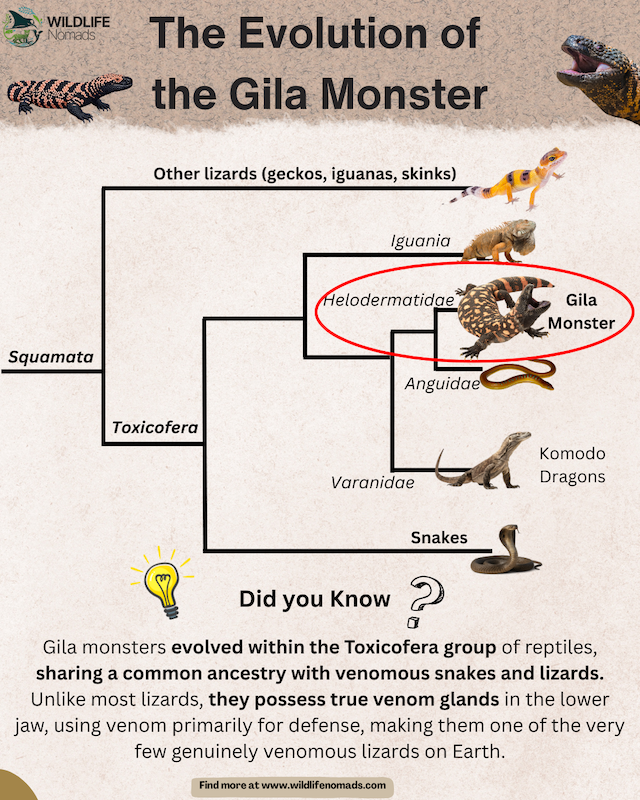
The Gila monster (Heloderma suspectum) belongs to the Helodermatidae family, one of only two venomous lizard families in the world. They share a close evolutionary relationship with their cousin, the Mexican beaded lizard (Heloderma horridum). They are classified classified within the squamata family and is one of several heloderma species, which are notable for their unique venom delivery system and distinctive physical traits.
What’s fascinating is that Gila monsters evolved within the Toxicofera group of reptiles—a massive evolutionary branch that includes venomous snakes, iguanas, and monitor lizards. This means their venom system has ancient origins, dating back over 200 million years to a common ancestor.
Unlike snakes, which inject venom through fangs, Gila monsters have grooved teeth that channel venom into their prey as they chew. This primitive delivery system is thought to represent an early stage in venom evolution.
Reproduction and Lifespan: Secrets of Survival in the Wild
Courtship, Nesting, and Hatchlings
Each spring, gila monsters emerge from their underground burrows to begin courtship. Males compete for females in ritualized wrestling matches that showcase strength and stamina. After mating, the female finds a safe, secluded burrow to lay 2–12 eggs. She buries them and leaves them to incubate for about 130 days. By late summer or early fall, hatchlings emerge already patterned and capable of delivering a venomous bite. Even at this early stage, young gila monsters defend themselves from predators. As they grow, they develop bead-like scales and vivid colors that warn would-be attackers of their venom. Their fat-storing tails help them survive long stretches without food in the harsh Sonoran and Mojave deserts.
Longevity, Threats, and Conservation
In the wild, gila monsters can live 20–30 years, though most survive around 10–15. Habitat destruction, competition with desert tortoises for burrows, and illegal pet trade pressures threaten their longevity. Their slow reproductive rate makes conservation crucial. The gila monster became the first venomous animal in the U.S. to receive legal protection, a recognition of its ecological importance and vulnerability. Despite their reputation, gila monsters rarely bite humans, and such cases almost always result from mishandling. They avoid confrontation, spend most of their lives hidden, climb trees to raid nests, and adapt surprisingly well.

Quick FAQ: Gila Monsters
Yes. It’s painful but rarely life-threatening to humans.
No confirmed modern deaths exist from gila bites.
Stay calm, remove the lizard if possible, and seek medical care immediately.
The gila monster — its venom inspired GLP-1 based drugs.
Yes, grooved teeth designed to deliver venom.
Very rare — they spend most of their lives in burrows underground.
Latest Scientific Research: Breaking Discoveries
Climate Change Impact Study (2025)
Recent research published in 2025 reveals that climate change poses a significant threat to gila monster populations. Scientists have found that extreme warming may dramatically shrink their range in the U.S. Southwest, with over 90 percent of current and future gila monster habitat in the mojave desert falling within public lands. This groundbreaking study, available in the PMC database, examines how dispersal abilities and climate factors will limit future habitats for these venomous species.
Revolutionary Medical Applications (2024-2025)
The most exciting recent development involves expanding medical applications of gila monster venom. Research shows that exendin-4, the key compound from gila monster venom that shares 53% of the amino acid sequence of human GLP-1, is now being explored for treating Alzheimer’s disease, not just diabetes. This research confirms that the toxic bite of a gila monster contains the specific ingredient that led to GLP-1 agonists like Ozempic and Wegovy.
Final Thoughts
That first time I saw a Gila monster in a zoo, I remember thinking it looked more like a relic from another era than a modern reptile. Decades later, after following their story through science and conservation, that impression still holds true. They carry with them the weight of millions of years of survival, unchanged yet vital to their desert ecosystems.
The gila monster is more than a “venomous animal.” It’s a keystone desert dweller, a cultural icon, and even a source of modern medicine. Protecting it means protecting the fragile desert ecosystems it calls home, from the sonoran desert to southwestern new mexico, where these remarkable largest lizards of North America continue to thrive as solitary animals in their natural habitat.
If you want to keep learning, check out these related reads:
- Mexican Gray Wolf: 12 Surprising Facts
- 10 Fascinating Red Wolf Facts
- Animals of California You Should Know