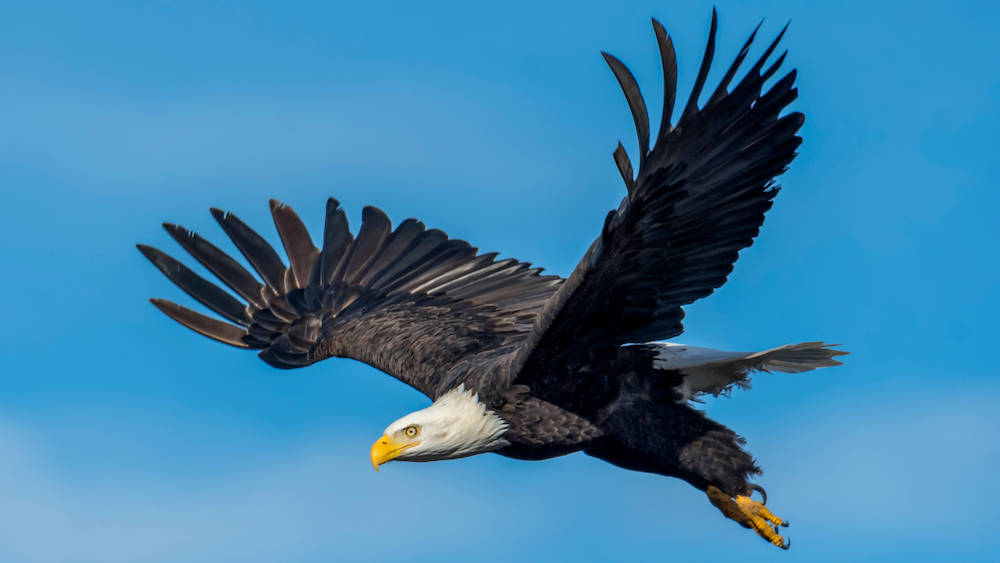
The first time I saw an American bald eagle was while traveling between Edmonton and Banff National Park. I pulled over near a river bend and there it was, an adult bald eagle perched in a large tree, its white head and tail glistening in the cold light. Later that same year, I found myself on Vancouver Island, where dozens of bald eagles circled above large lakes and fed along coastal estuaries. I remember thinking how surprising it was that this powerful raptor became the national symbol of the United States and not of Canada. Seeing them in the wild, especially in the north, makes you realize why entire nations have tied their identity to this bird.
1. Icon of North America
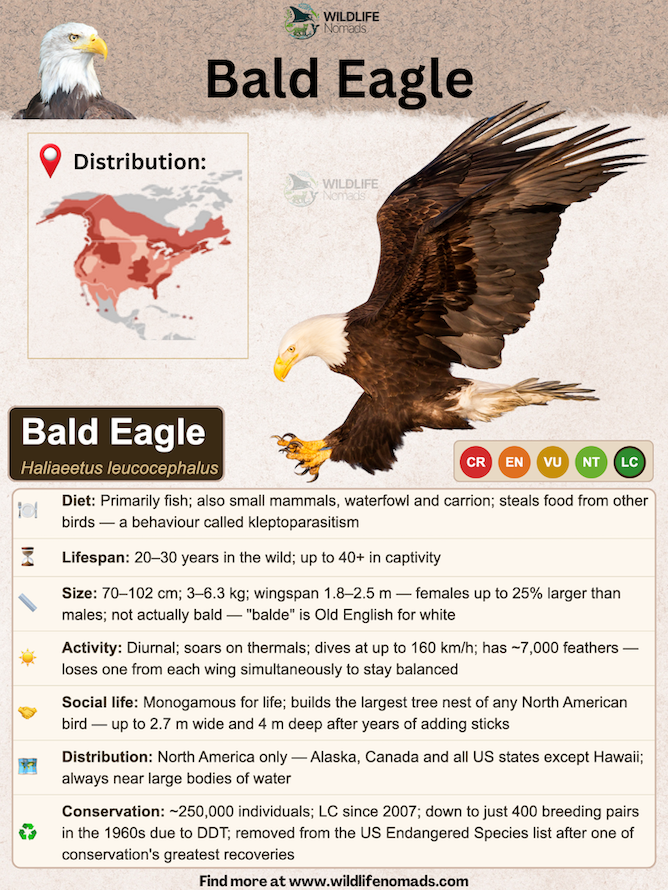
The American bald eagle is one of the most iconic sea eagles in the world. With a range stretching across North America, from southern Alaska down through the Rocky Mountains, New York, and into northern Mexico, this raptor’s presence is tied closely to water. They thrive around large bodies of water, coastal Alaska, the Great Lakes, and major rivers. Although many think of it as just an American symbol, its wings beat across Canada too, where northern birds are among the largest in the species.
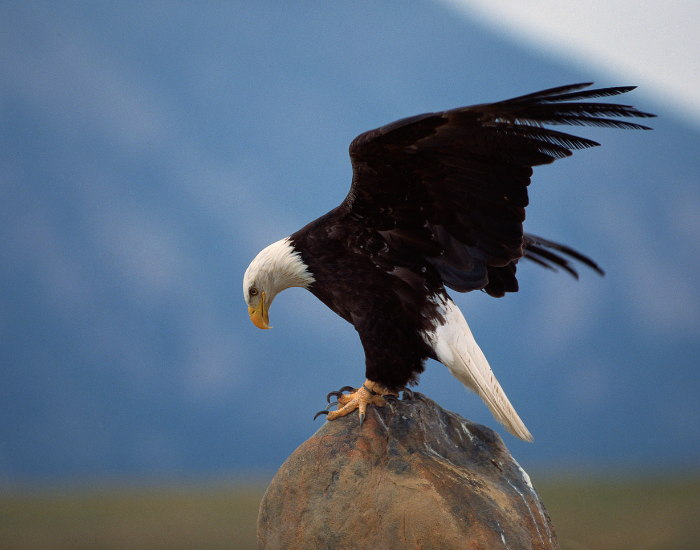
2. Size and Power – Females Outweigh the Males: Giants of the Sky
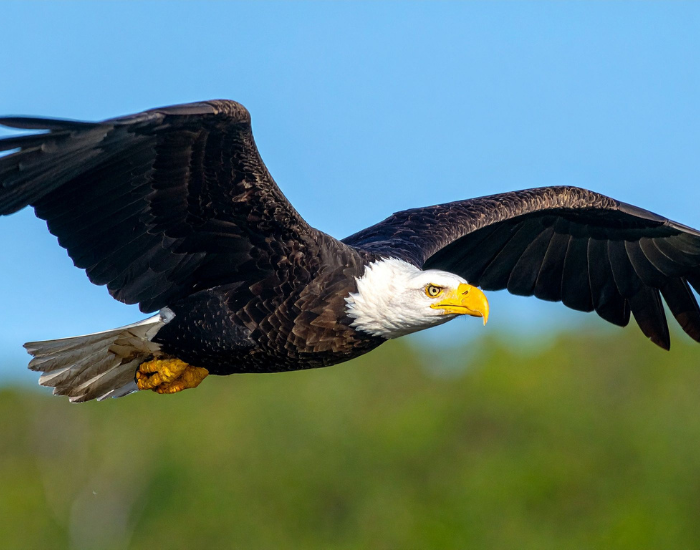
When we talk about American bald eagle size, we’re talking about one of the largest eagles in the world. Females, heavier than males, can reach a weight of 14 pounds and a wingspan up to 8.5 feet. With large talons and a bright yellow beak, their build is perfect for hunting. Northern populations, particularly in coastal Alaska and British Columbia, are the heaviest, while southern birds in Florida and the Gulf are generally smaller.

3. The White Head and Tail
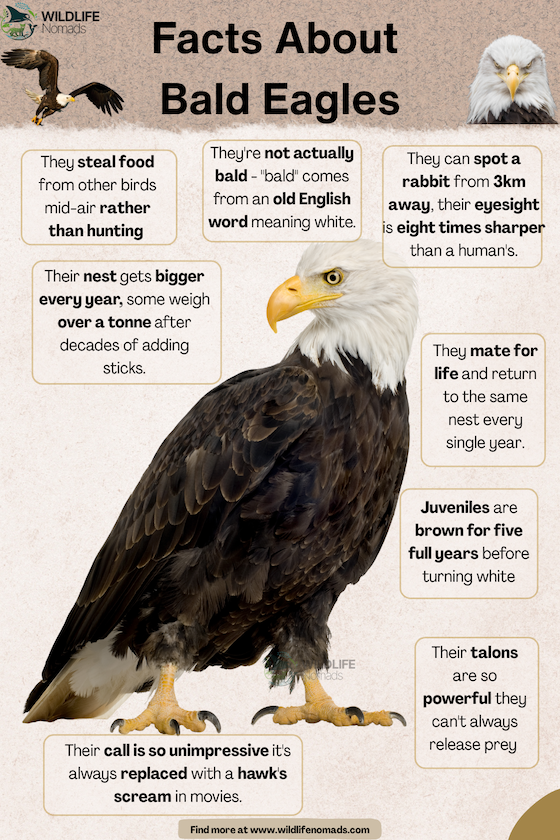
It’s the characteristic white head that makes them unmistakable. But only immature bald eagles grow into this look. Juvenile bald eagles are mottled brown, with dark bills and patchy plumage. They attain adult plumage at about five years of age, signaling sexual maturity. Until then, many birders mistake them for golden eagles or hawks.
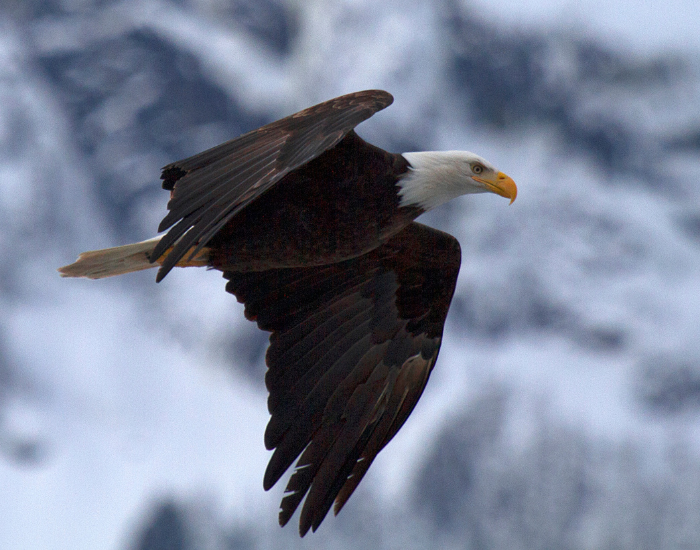
4. Bald Eagle Nests: Largest in the Bird World
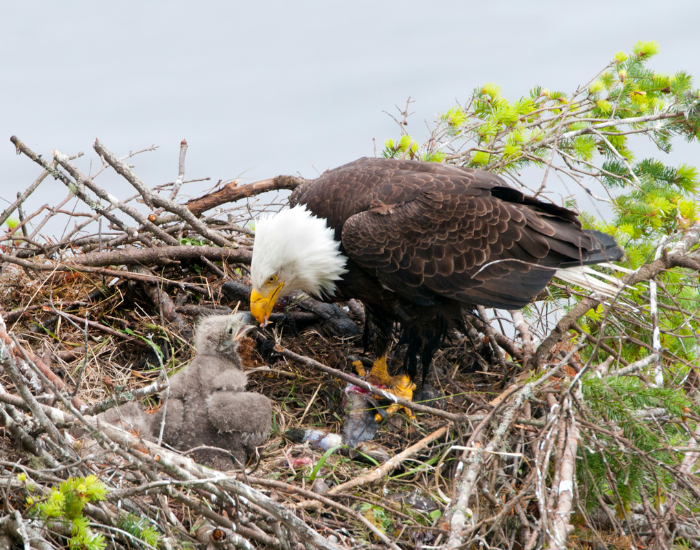
Bald eagle nests are legendary. A pair may build a new nest or reuse the same nest for years, expanding it each season. Over time, these stick structures can weigh more than two tons. Nesting often occurs in large trees near rivers or large lakes, but in the north, I’ve seen them perched on cliffs above habitat destruction zones where logging once pushed them out. Breeding pairs are devoted to nest-building, and in many regions, entire breeding populations cluster near good water sources.
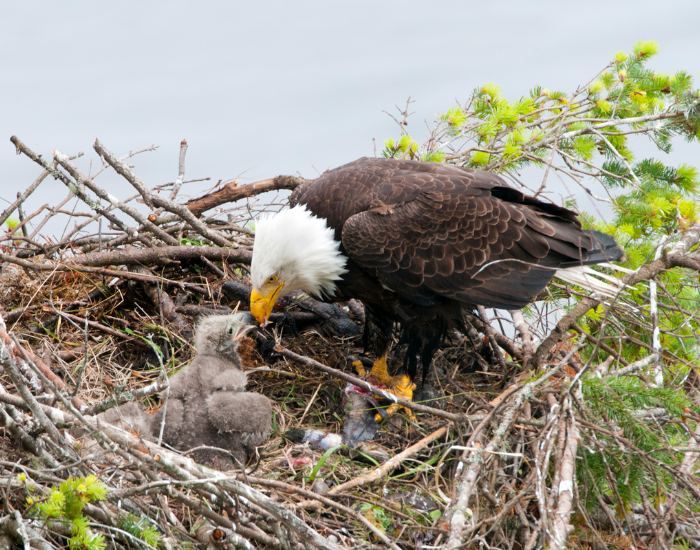
5. Reproduction and Breeding Season
Reproduction bald eagles follow a clear timeline. During the breeding season, which peaks in spring, an eagle pair performs aerial displays, sometimes locking talons in freefall. Females lay 1–3 eggs in February or March. Both parents incubate, and young eagles hatch after about five weeks. The young fledge between 10 and 14 weeks, with some young hatch lingering near the nest while learning to hunt. Bald eagles tend to reuse territories, and breeding pairs may return for decades if left undisturbed.
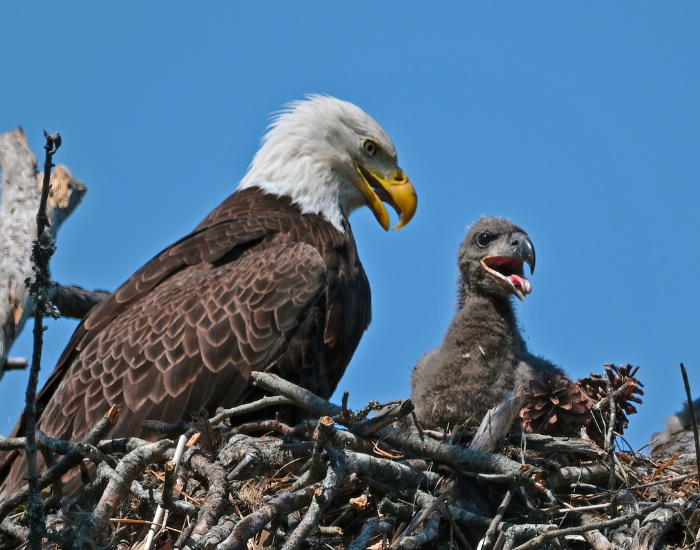
6. Feeding and Hunting
The bald eagle’s diet is dominated by fish, but they are opportunists. They will take small mammals, dead fish, or steal prey from other birds. I once watched an eagle grab a salmon carcass near a fish processing plant, joined by red tailed hawks that hovered for scraps. They will commonly feed on carrion in winter, often gathering in large groups along rivers.
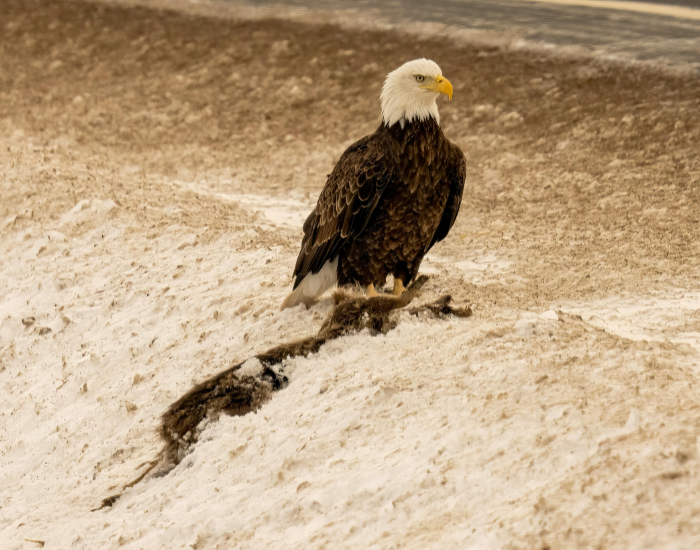
7. Bald and Golden Eagles: Rivals and Relatives
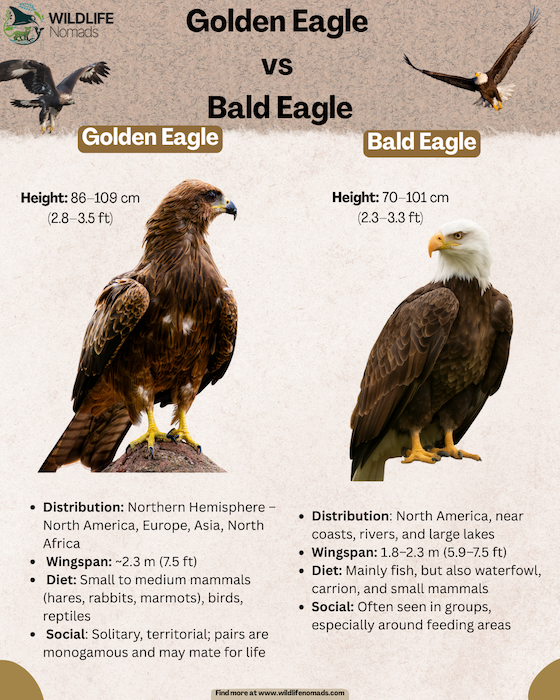
Comparisons between bald and golden eagles are inevitable. While both are largest birds of prey in North America, bald eagles stick close to water, while golden eagles dominate uplands and open ranges. The two species overlap in range, competing occasionally, but their niches differ. Many people confuse immature birds of both species, but once you learn the patterns, it’s hard to mistake the iconic white head of the bald eagle.
8. Endangered Species History
For decades, the bald eagle population collapsed due to illegal shooting, pesticides, and habitat destruction. By the 1960s, it was on the endangered species list and considered one of the most endangered animals in North America. Thanks to the Endangered Species Preservation Act and later the Bald Eagle Protection Act, numbers began to recover. In 2007, the American bald eagle endangered label was lifted, marking one of the greatest conservation efforts in wildlife history. Still, monitoring continues, and they remain under legal protection.
9. Human Disturbance and Challenges
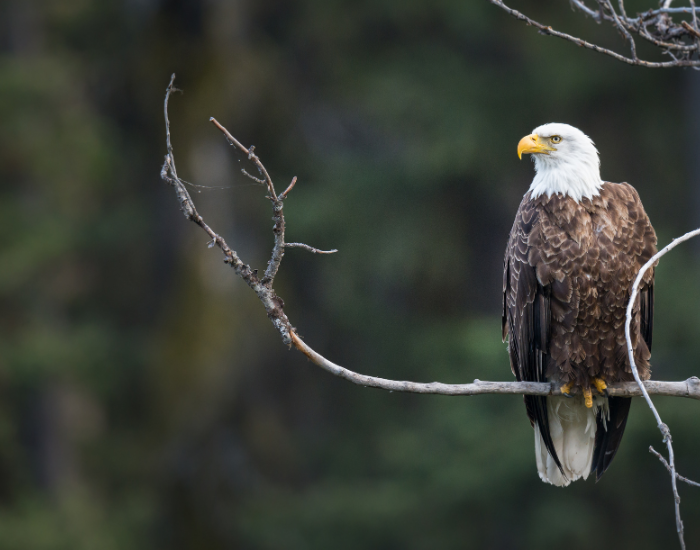
Modern threats haven’t disappeared. Human disturbance near nests reduces breeding success. Climate change alters fish runs. Illegal shooting remains a problem in isolated areas. And exposure to toxins like lead fragments from hunting ammunition threatens their health. Protecting them means protecting wildlife refuges and the same habitat they share with prairie dogs, smaller raptors, and countless fish species.
10. Cultural Symbol and National Emblem
Why the American eagle animal became the U.S. national emblem and not Canada’s symbol is still curious. Its presence across North America, from eastern Canada to northern Mexico, made it an obvious candidate. Known in Spanish as the águila calva, the bird represents strength, independence, and resilience. Native American cultures have long held the eagle sacred, viewing feathers and presence as spiritually powerful. Today, it’s stamped on currency, military insignia, and monuments, reinforcing its role as a living symbol.

11. Life Cycle: From Young to Old
Watching young birds transition from immature birds to adult birds is fascinating. They pass through stages of mottled brown plumage until their white head and tail appear. Young fledge at three months but may remain dependent for weeks. They live up to 30 years in the wild, sometimes more in captivity.
12. Why They Still Need Us
Even though they’re no longer on the threatened and endangered species lists, bald eagles still face human disturbance, habitat destruction, and pressures from development. Conservation isn’t over. We need to protect breeding pairs, keep toxins out of rivers, and ensure future generations can pull over on a road trip, like I did in Alberta, and witness these birds in the wild.
Biggest Myths About Bald Eagles
- They can carry off pets. Not true. Even the strongest adult bald eagles can’t fly away with a 20-pound dog or a 12-pound cat. At most, they lift 3–4 pounds of live prey.
- They live 70 years. In reality, most survive 20–30 years in the wild, though a few may live longer in captivity.
- They’re still endangered. While once on the endangered species list, the species recovered and is no longer classified as an endangered animal. They remain under strict legal protection.
- Juveniles have white heads. Only adult plumage shows the famous white head and tail; immature bald eagles are mottled brown for years.
American Bald Eagle Bird vs Other Raptors
- Golden eagles: Dark brown with a golden sheen on the back of the head; prefer uplands, not coasts. Juveniles have clear white wing patches, unlike blotchy immature bald eagles.
- Red tailed hawks: Much smaller, with bright red tails and stockier builds. Often mistaken from a distance, but their smaller raptor size is obvious up close.
- Other birds: Turkey vultures soar with a wobbly V-shape and small heads… easy to confuse until you notice the bald eagle’s large talons and commanding flight.
- Curious about more comparisons? Check out my full guide on birds of prey.
- Want to dive deeper into another giant raptor? Don’t miss my article on the harpy eagle

Frequently Asked Questions About the American Bald Eagle Bird
An adult bald eagle measures 28–40 inches long, with a wingspan of 6–8.5 feet and an average weight of 6.5–14 pounds. Northern birds, like those in Alaska, are the largest eagles in the species.
Despite myths, they can’t fly off with a 20-pound dog or a 12-pound cat. They may briefly lift 3–4 pounds of live prey, and if it’s too heavy, they sometimes “swim” it to shore using their wings.
They were once listed as endangered species under the Endangered Species Preservation Act, but after decades of conservation efforts, they were delisted in 2007. Today, they’re not considered endangered animals, but they remain under strict legal protection.
Yes, most breeding pairs remain together for life, though if a mate dies, they’ll bond with a new partner. Together, they build massive bald eagle nests and return to the same habitat each year.
The name comes from the old English word balde, meaning “white.” So, “bald eagle” really means white head, describing their striking adult plumage. In Spanish, they’re called águila calva.
They’re found across North America, from southern Alaska and British Columbia, across the Rocky Mountains and Great Lakes, to northern Mexico and eastern Canada. They prefer large lakes, rivers, and coasts.
Under the Bald Eagle Protection Act, killing or possessing an eagle, its parts, or its nest can lead to hefty fines and prison time. Even picking up a feather without a permit is illegal.
More Than Just an Eagle
The American bald eagle bird isn’t just another eagle, it is a cultural symbol, and a story of near-loss, resilience, and recovery. From southern Alaska to New York, from northern Mexico to the Rocky Mountains, these largest eagles remind us that conservation works. Their soaring presence over large lakes and rivers is more than a spectacle; it’s proof that when people commit to protecting species, recovery is possible. The next time you see that white head against the sky, remember it’s not just a bird, it’s a legacy.
Bald Eagle: Test Yourself 🦅
Eight multiple-choice questions on North America’s most famous raptor. Go back and change any answer before you score.
References:
Cruz, J., Windels, S. K., Thogmartin, W. E., Crimmins, S. M., Grim, L. H., & Zuckerberg, B. (2018). Managing individual nests promotes population recovery of a top predator. Journal of Applied Ecology, 55(3), 1418–1429. https://doi.org/10.1111/1365-2664.13062
Elliser, C. R., Edison, C., MacIver, K., & Rust, L. B. (2022). Kleptoparasitic interactions by bald eagles (Haliaeetus leucocephalus) during marine mammal foraging events. Behaviour, 159(13–14), 1387–1399. https://doi.org/10.1163/1568539X-bja10177
Gedir, J. V., Millsap, B. A., Howell, P. E., Wittig, T. W., White, H. M., & Bjerre, E. R. (2023). Nest success of bald eagles exposed to anthropogenic activities in the United States. Journal of Fish and Wildlife Management, 14(2), 283–293. https://doi.org/10.3996/JFWM-23-007
Route, W. T., Dykstra, C. R., Williams, K. A., Campbell-Spickler, J., Martell, M. S., & Key, R. L. (2022). Breeding phenology and nestling morphology of bald eagles in the upper midwestern United States. Journal of Raptor Research, 56(4), 421–436. https://doi.org/10.3356/JRR-21-76
Slabe, V. A., et al., (2022). Demographic implications of lead poisoning for eagles across North America. Science, 375(6582), 779–782. https://doi.org/10.1126/science.abj3068
Winder, V. L., & Watkins, M. A. (2020). Thirty years of bald eagle population recovery and nesting ecology in Kansas, 1989–2018. Journal of Raptor Research, 54(3), 255–267. https://doi.org/10.3356/0892-1016-54.3.255
Zimmerman, G. S., Millsap, B. A., Abadi, F., Gedir, J. V., Kendall, W. L., & Sauer, J. R. (2022). Estimating allowable take for an increasing bald eagle population in the United States. The Journal of Wildlife Management, 86(2), Article e22158. https://doi.org/10.1002/jwmg.22158