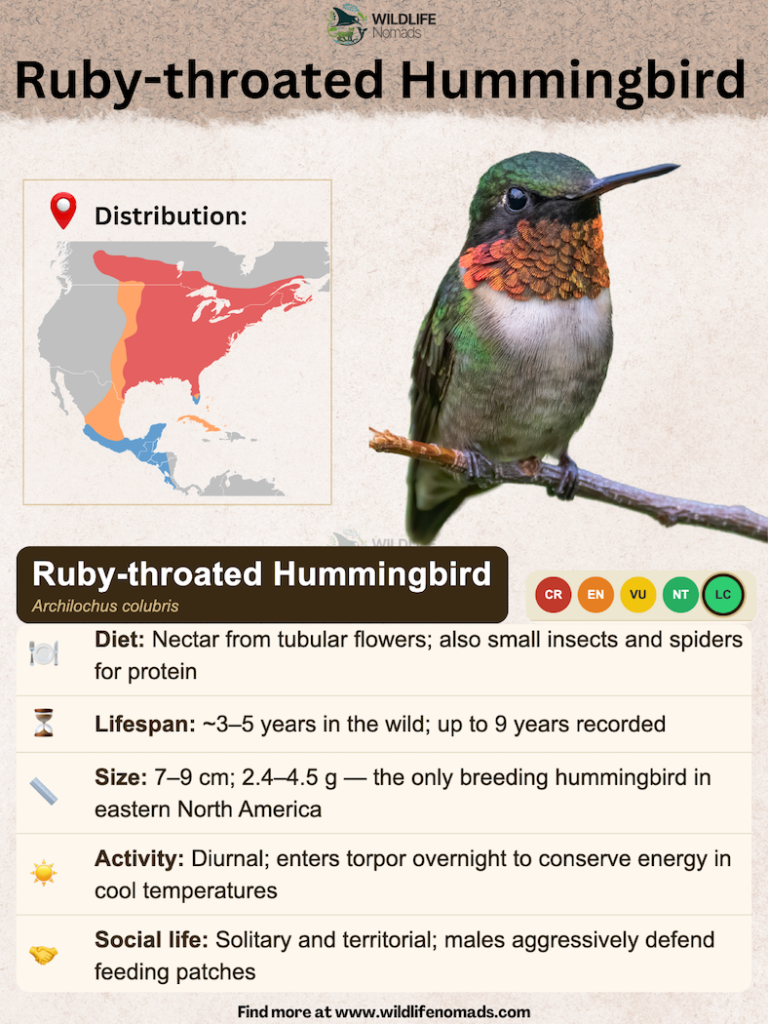
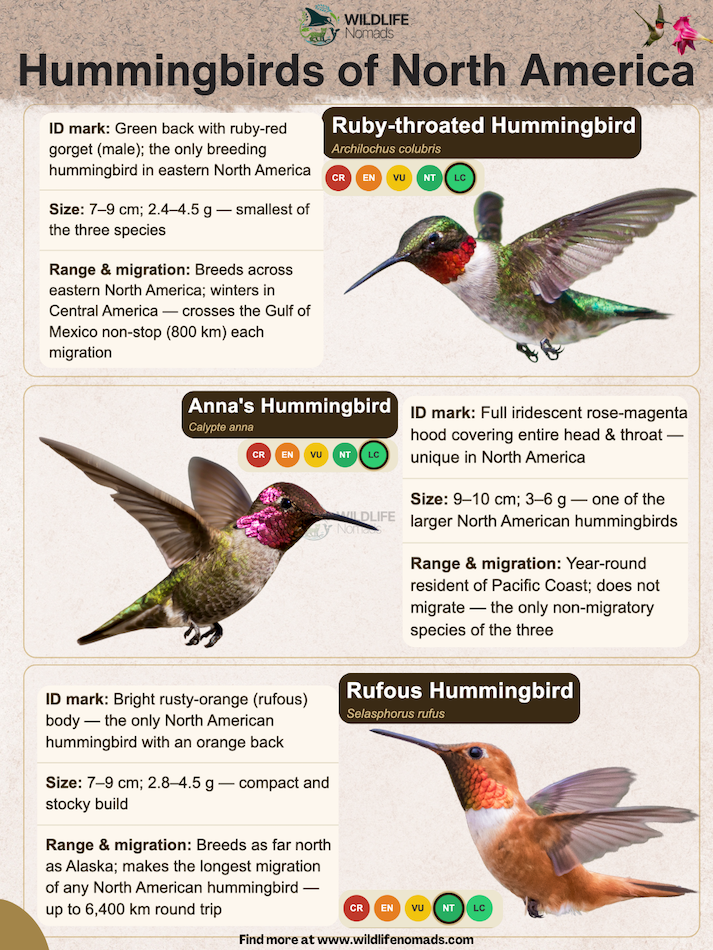
I have always thought that the most staggering biological wonders aren’t always the giants. Sometimes, they weigh less than a nickel. While I recently wrote about Anna’s Hummingbird and the rowdy Rufous Hummingbird, today we are looking at the crown jewel of the eastern United States.
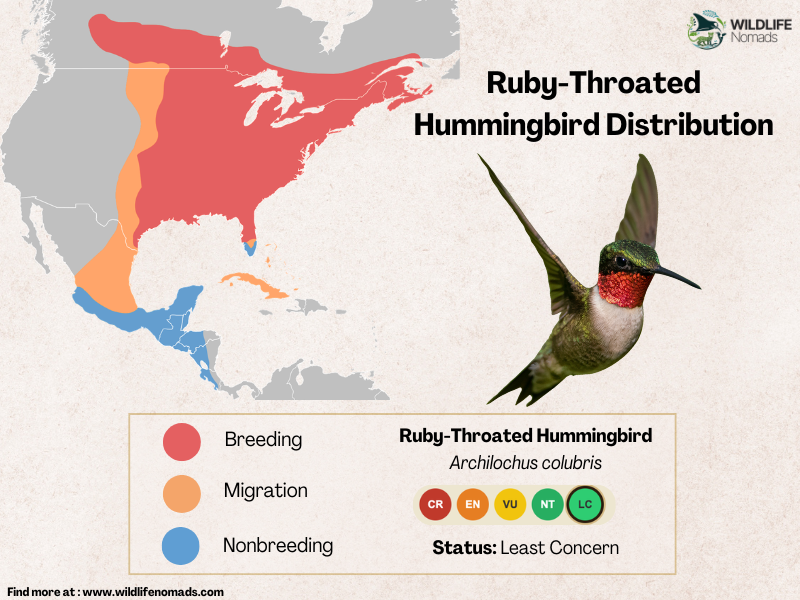
The Ruby-Throated Hummingbirds (Archilochus colubris) are the only hummingbird species that breeds east of the Mississippi River, making them a staple of summer gardens from Florida to Canada. I remember my first season in the field specifically looking for these tiny dynamos. I was struck by how a creature so small could possess such a fierce, almost prehistoric sense of territoriality.
Despite their delicate appearance, these birds are incredibly resilient. Whether they are crossing 500 miles of open water across the Gulf of Mexico or entering a death-like state of torpor to survive a cold night, their biology is a masterclass in extreme adaptation. If you’ve ever wondered about that hummingbird with red throat darting around your garden, you’re in the right place. Let’s dive into the science behind the shimmer.
1. The “Ruby” is Actually a Trick of the Light
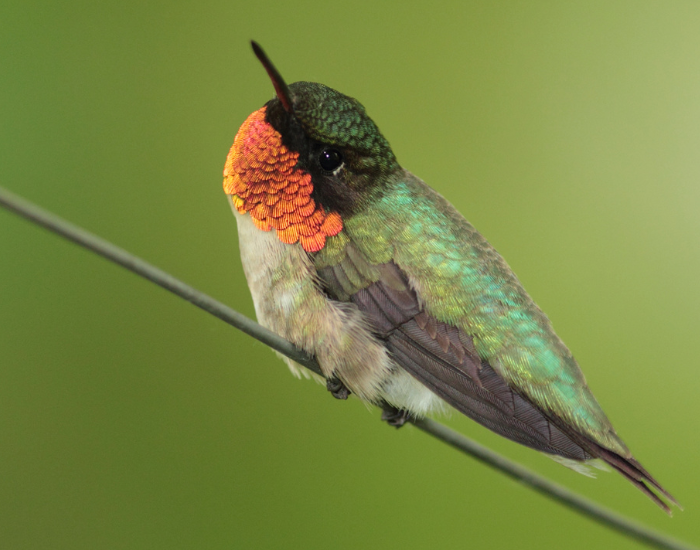
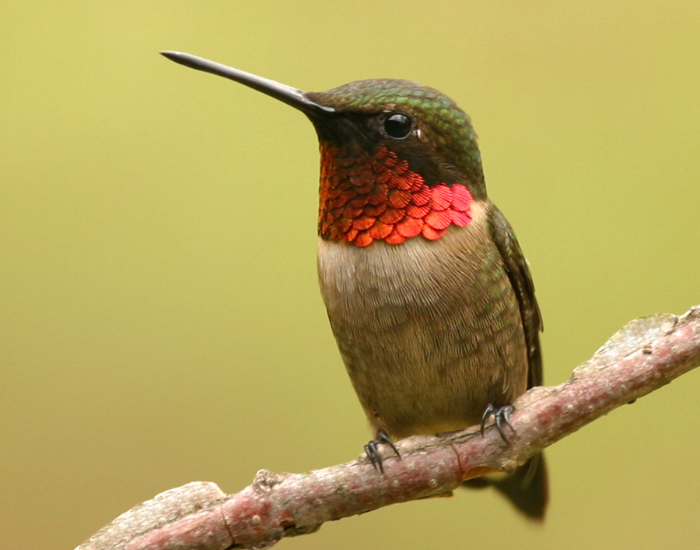
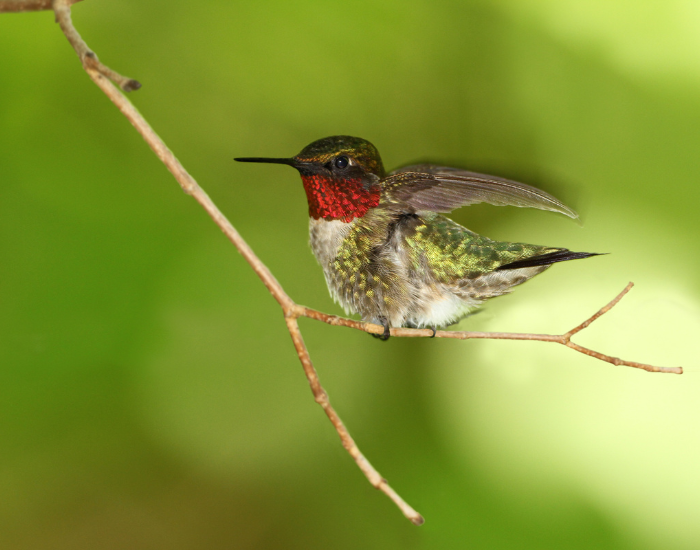
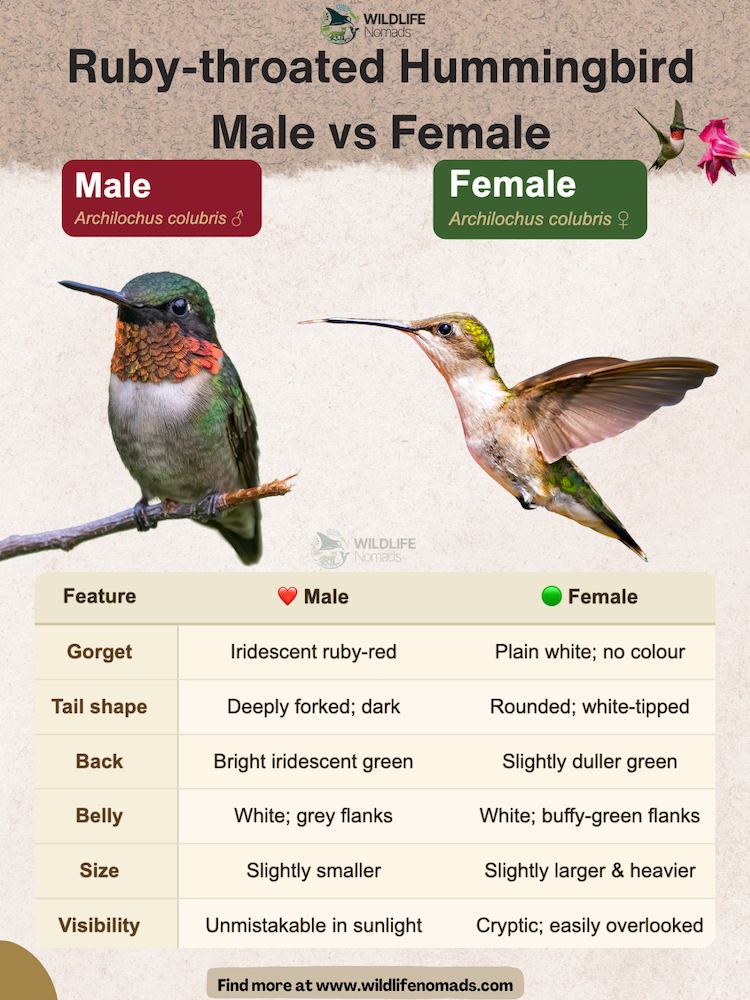
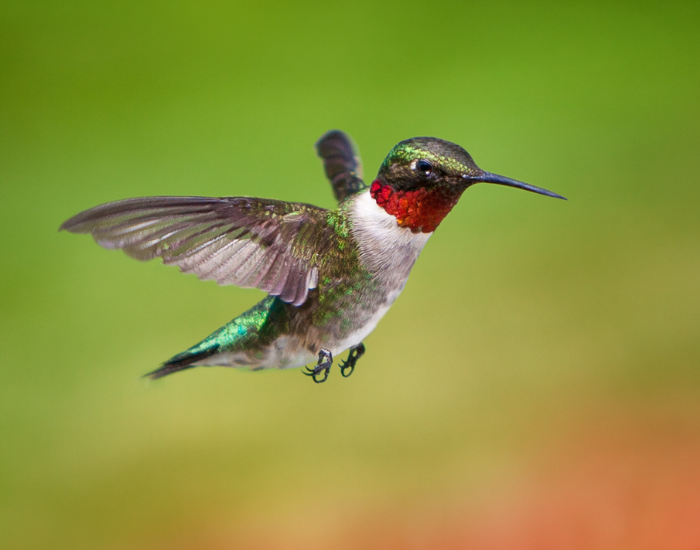
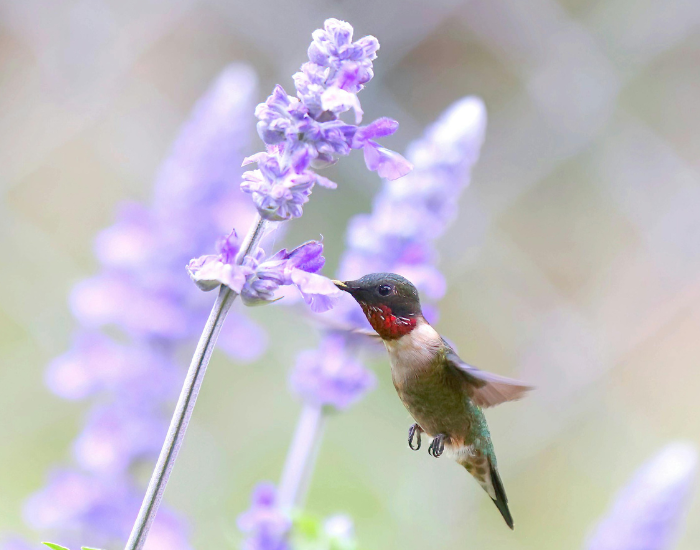
Adult male Ruby-throated Hummingbirds have a gorget of iridescent ruby red that shimmers in sunlight, and this effect is especially visible at certain angles. In addition to the striking throat patch, adult males also have brilliant green upperparts, including the back and crown, which are key identifying features.
The feathers contain microscopic layers of air bubbles and melanin that reflect light in a specific direction—a phenomenon called iridescence. The bird isn’t “painted” red; it’s physically engineered to catch the sun. This allows them to “flash” their throat at a female or a rival and then “disappear” into the shadows of the leaves by simply tilting their head.
2. They Cross the Gulf of Mexico in a Single Flight
Perhaps the most “impossible” fact about Ruby Throated Hummingbirds is their migration. Every year, these tiny birds migrate north each spring, typically arriving at their breeding grounds in North America around May. They are solitary and will migrate alone, with males typically arriving at breeding grounds before females. After the breeding season, ruby-throated hummingbirds migrate from their breeding grounds in North America to Central America for the winter, traveling long distances alone.
Many choose a path directly across the Gulf of Mexico—a roughly 500-mile nonstop journey. Others, however, take a longer but safer overland route, skirting the western Gulf by following the Texas coastline south into Mexico. The decision likely depends on the individual bird’s fuel reserves, wind conditions, and experience, with older birds better prepared for the more demanding over-water crossing.
Before they leave, they enter a state called hyperphagia, where they essentially double their body weight in fat. To prepare for migration, they build up fat reserves by consuming energy-dense flower nectar and insects. Older male and female ruby-throated hummingbirds are better prepared for long-distance migration than first-year birds, due to higher body weights and larger fuel loads. Research shows they can fly for 18 to 22 hours straight without a single rest stop. If a human had that same metabolic efficiency, we’d need to eat roughly 300 hamburgers a day to keep up!
3. Their Wings Don’t Flap—They Rotate
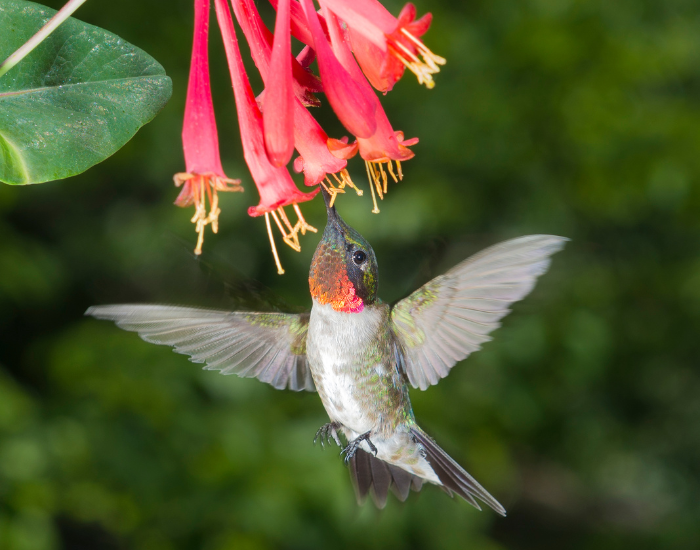
Most birds move their wings up and down, but hummingbirds are different. Their shoulder joints are incredibly flexible, allowing the wings to rotate nearly 180 degrees. This creates a “figure-eight” motion that generates lift on both the forward and backward strokes.
This is what allows them to hover, fly backward, and even fly upside down for short bursts. When you see a hummingbird ruby throated female hovering perfectly still at a flower, her wings are beating about 50 times per second. That “hum” you hear? It’s the sound of air displacement from that incredible speed.
4. The “Icy” Survival Strategy: Torpor
On cold nights, a hummingbird’s high metabolism becomes a liability. To avoid starving to death while they sleep, they enter a state called torpor. This is essentially a “mini-hibernation” where their body temperature drops from over 100°F (38°C) to as low as 55°F (13°C).
I’ve seen birds in torpor that look almost lifeless, clinging to a branch. Their heart rate can drop from 1,200 beats per minute to fewer than 50. It takes them from minute up to an hour to “wake up” in the morning, vibrating their muscles to generate heat before they can take their first flight.
5. They are Secretly Insectivores
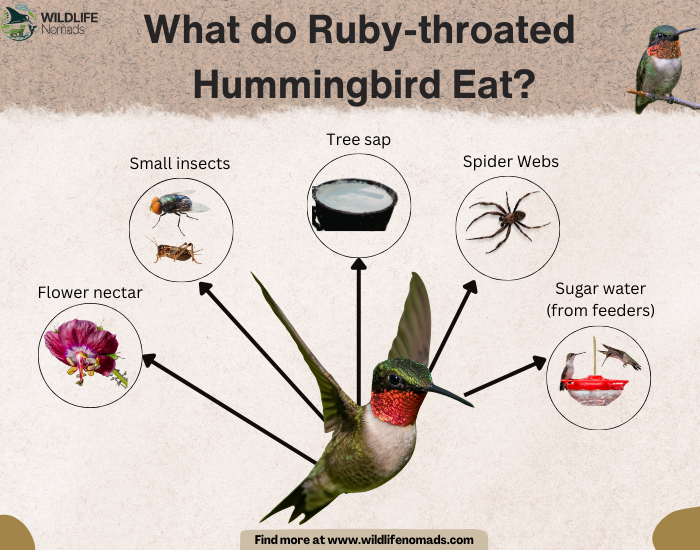
While we often focus on nectar, they are actually prolific hunters. Ruby-throated Hummingbirds primarily feed on nectar from flowers, favoring red and tubular blossoms as their main nectar sources. Nectar provides the “rocket fuel” (sugar), but insects provide the “building blocks” (protein and fat). They feed frequently throughout the day to maintain their high metabolic rate.
In fact, entomologist Dr. Doug Tallamy of the University of Delaware argues that hummingbirds are best understood as insectivores that also drink nectar, estimating that insects and spiders may make up as much as 80% of their diet — though other research puts the figure closer to 60% (Tallamy, cited in Choose Natives; Cape & Islands Applied Ornithology, 2024). Either way, the protein and fat from arthropods are non-negotiable for their survival.
hey catch insects on the wing and consume small insects and spiders for protein. Their food sources include nectar from flowers, sap from sapsucker wells, and small insects. They are particularly fond of “hawking”, catching insects mid-air, or gleaning them directly from spider webs. If you want to support them, stop using pesticides! A “sterile” garden with no bugs is a food desert for a hummingbird.
6. Female Ruby-Throated Hummingbirds are the Ultimate Architects
The female ruby-throated hummingbird is a single mother; the males take no part in nest building or chick-rearing. The slightly larger female constructs a tiny cup, about the size of a walnut shell, using plant down, moss, and lichen for camouflage. She builds the nest in a protected location, often on tree branches or shrubs, but sometimes even on unconventional objects like extension cords, demonstrating her adaptability.
The secret ingredient, however, is spider silk. She uses the silk to bind the nest to a branch or other support. This isn’t just for stickiness; spider silk is elastic. As the two chicks (each about the size of a navy bean) grow, the nest actually stretches to accommodate them. It’s one of the most elegant engineering feats in the avian world.
7. They Have an Incredible Spatial Memory
Don’t let the “bird brain” myth fool you. They have an enlarged hippocampus, the part of the brain responsible for spatial memory. They can remember the exact location of every flower and feeder in their territory, as well as how long it takes for a specific flower to refill its nectar.
I’ve had colleagues report birds returning to the exact spot where a feeder used to be three years prior. They are effectively mapping their world in high-definition, 3D detail to maximize their energy intake.
8. The Male’s “Pendulum” Courtship Display
To impress a hummingbird with red neck (the female), the adult male performs a spectacular aerial dance. He flies in a giant U-shaped arc, diving from heights of up to 50 feet. During these dive displays, the male uses his outer tail feathers to produce distinctive sounds that attract females. The arrangement and appearance of his outer feathers and tail feathers also play a crucial role in visual signaling and species identification during these displays. At the bottom of the arc, he reaches maximum speed and flashes his gorget.
If she remains interested, he transitions into a “shuttle display,” hovering just inches from her face and moving rapidly from side to side like a vibrating pendulum. It’s a high-energy performance designed to prove he has the best genes and the most stamina.
9. They Use “Sapsucker Wells” as a Backup
In early spring, before many flowers have bloomed, Ruby Throated Hummingbirds often follow Yellow-bellied Sapsuckers. These woodpeckers drill rows of small holes in trees to drink sap.
The hummingbirds swoop in to drink the sugary sap and eat the insects stuck in it. This “commensal” relationship is a vital survival strategy that allows them to push further north before the floral season has fully kicked in.
10. Their Tongues Work Like Tiny Pumps
For a long time, we thought hummingbirds used capillary action to “wick” up nectar. Recent high-speed videography has proven us wrong. Their tongues are actually “liquid traps.”
The tongue is forked at the tip and fringed with tiny hairs. When it hits the nectar, the forks open; when the bird pulls its tongue back, the forks zip shut, trapping the liquid inside. They do this up to 20 times per second. It’s a mechanical process, not just a passive soaking.
11. They are Fiercely Territorial (Even Against Hawks!)
Despite their size, these hummingbirds are some of the most aggressive birds I’ve ever observed. They are solitary and territorial, aggressively defending their feeding territories from other hummingbirds and sometimes even birds of prey like hawks! Males are especially territorial during the breeding season, when they aggressively defend their feeding territories from rivals to secure resources for courtship and nesting.
This aggression isn’t just “mean” behavior, it’s a survival necessity. Because they live on such a tight caloric budget, losing a high-quality food source to a competitor can be a death sentence.
12. Most “Red Throated” Birds are Actually Different Species
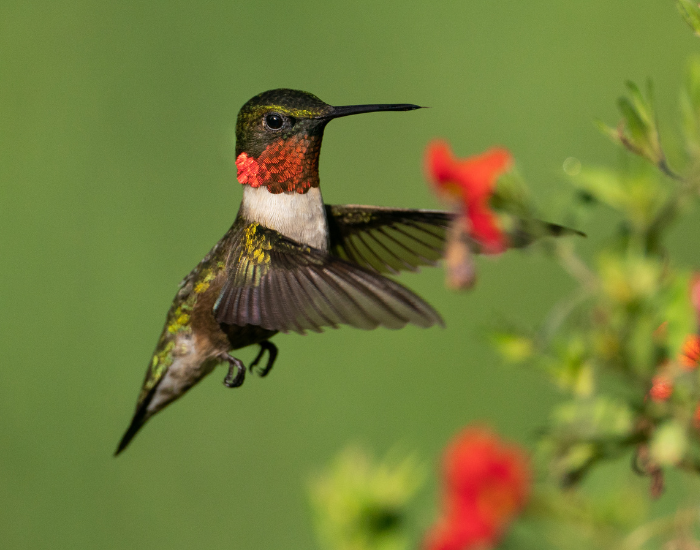
A common point of confusion for backyard birders is the hummingbird with red neck. If you are in the western US, you’re likely seeing an Anna’s or a Rufous. If you are in the East, and it has a shimmering red throat, it is almost certainly a male Ruby-throated. Ruby-throated hummingbirds have a long, slender bill perfectly adapted for sipping nectar from flowers.
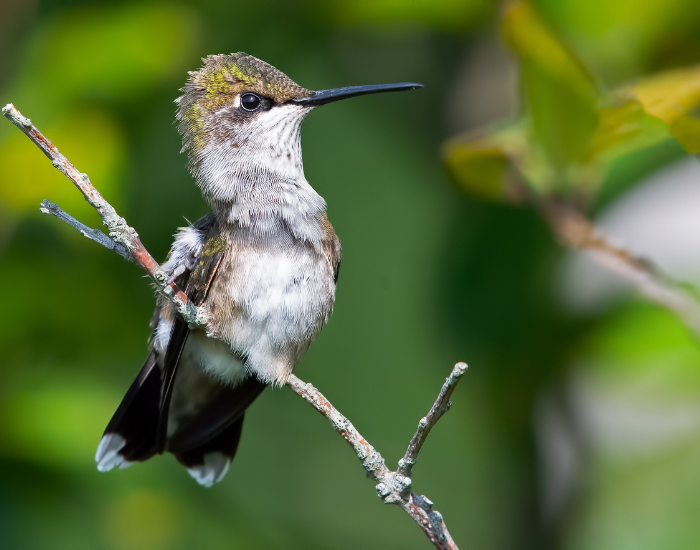
Juvenile males and female ruby-throated hummingbirds lack the red throat, instead sporting a white neck with subtle stippling. Identifying them requires looking for the emerald green back and the distinct “notched” tail shape.
How to Support Ruby-Red Throated Hummingbirds Locally
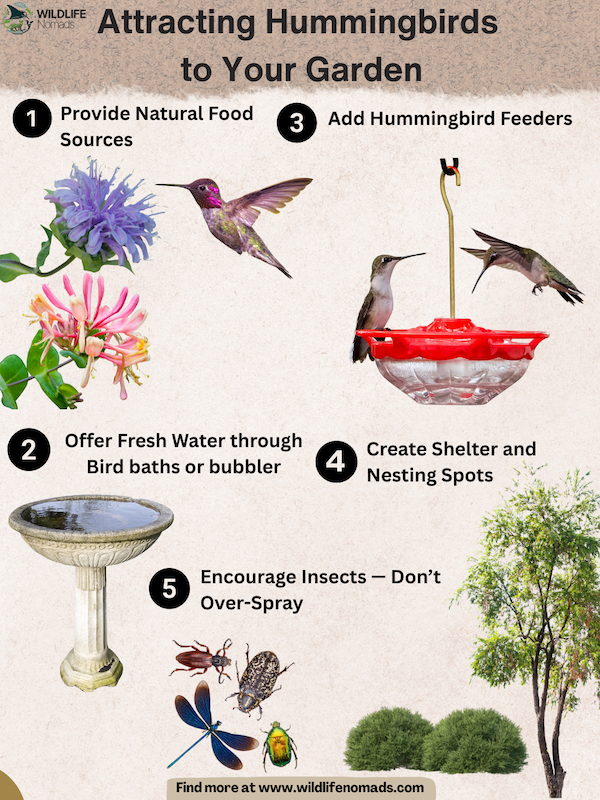
- Plant Native: Choose native and flowering plants on your garden that serve as nectar sources for ruby red throated hummingbirds, such as tubular flowers like Bee Balm (Monarda), Cardinal Flower (Lobelia cardinalis), and Trumpet Creeper. Including plants like jewelweed and other perennial flowers supports hummingbird migration and feeding behavior.
- The 4:1 Rule: To make your own nectar, combine 4 parts boiling water to 1 part refined white sugar. Never use honey, brown sugar, or red dye—the red ports on your hummingbird feeders are enough to attract them.
- Clean Regularly: Feeders need to be cleaned at least each week to prevent mold growth and ensure the health of the birds. In the heat of an American summer, nectar ferments quickly, so clean your feeders with hot water every 3–5 days to prevent deadly fungal infections.
- Window Safety: Install decals or screens on large windows to prevent the collisions that claim millions of bird lives annually.
FAQ: Your Top Hummingbird Questions Answered
In most of the eastern US, aim for the last week of April. Males arrive first to scout territories, followed by females about 10 days later.
While not definitively proven to be toxic in all cases, it is unnecessary and potentially harmful. Stick to clear nectar; the red plastic on the feeder is all the “signage” they need.
They likely haven’t left! In mid-summer, native flowers are in peak bloom, and females are busy sitting on nests. They often rely more on natural sources than feeders during this time.
While many don’t survive their first migration, those that do can live 5 to 9 years. The oldest recorded Ruby-throated was 9 years and 1 month old.
This is a persistent myth! These tiny birds are fully capable of flying thousands of miles on their own power. They do not “hitch a ride” on larger birds.
References:
Audubon Society. (2025). 10 fun facts about the ruby-throated hummingbird. Audubon Magazine. https://www.audubon.org/magazine/10-fun-facts-about-ruby-throated-hummingbird
Cornell Lab of Ornithology. (2025). Ruby-throated hummingbird life history. All About Birds. https://www.allaboutbirds.org/guide/Ruby-throated_Hummingbird
Eberts, E. R., Guglielmo, C. G., & Welch, K. C., Jr (2021). Reversal of the adipostat control of torpor during migration in hummingbirds. eLife, 10, e70062. https://doi.org/10.7554/eLife.70062
Hutchinson, A. J., Staples, J. F., & Guglielmo, C. G. (2024). The mitochondrial physiology of torpor in ruby-throated hummingbirds, Archilochus colubris. Journal of Experimental Biology, 227(21), jeb248027. https://doi.org/10.1242/jeb.248027
Rico-Guevara, A., & Rubega, M. A. (2011). The hummingbird tongue is a fluid trap, not a capillary tube. Proceedings of the National Academy of Sciences, 108(23), 9356–9360. https://doi.org/10.1073/pnas.1016944108
Ward, B. J., Day, L. B., Wilkening, S. R., Wylie, D. R., Saucier, D. M., & Iwaniuk, A. N. (2012). Hummingbirds have a greatly enlarged hippocampal formation. Biology letters, 8(4), 657–659. https://doi.org/10.1098/rsbl.2011.1180
Zenzal, T. J., Jr., & Moore, F. R. (2016). Stopover biology of ruby-throated hummingbirds (Archilochus colubris) during autumn migration. The Auk: Ornithological Advances, 133(2), 237–250. https://doi.org/10.1642/AUK-15-161.1