If you’ve followed my previous deep-dives into the vocal power of wrens, the elegance of thrushes, or the eccentricities of the common hoopoe, you know I have a soft spot for the underdogs of the avian world.
I first truly “met” the Goldcrest during my time at Uppsala University in Sweden. I was part of a project studying foraging trade-offs – basically, how “fear” dictates where a bird eats. We spent a week huddled in the cold weather, recording every visitor to our feeding stations in the conifer woodland.
The corvids would land with a heavy thud and a swagger. The chaffinch, magpies and blue tit were frantic, high-energy bundles. However, there were the “ghosts.” In the shadows of the conifer plantations, a small woodland bird would move so fast it looked like a glitch in the light.
That was the Goldcrest (Regulus regulus). As the UK’s smallest bird, it weighs about the same as a 20p piece. In northern Scotland and across southern Europe, these tiny birds flit through sub-zero forests. They seem too fragile to exist, yet they are some of the most resilient resident birds we have.
Here are 12 field-tested facts about the Goldcrest, the tiny sovereign of British woodlands.
1. The Undisputed Title: UK’s Smallest Bird
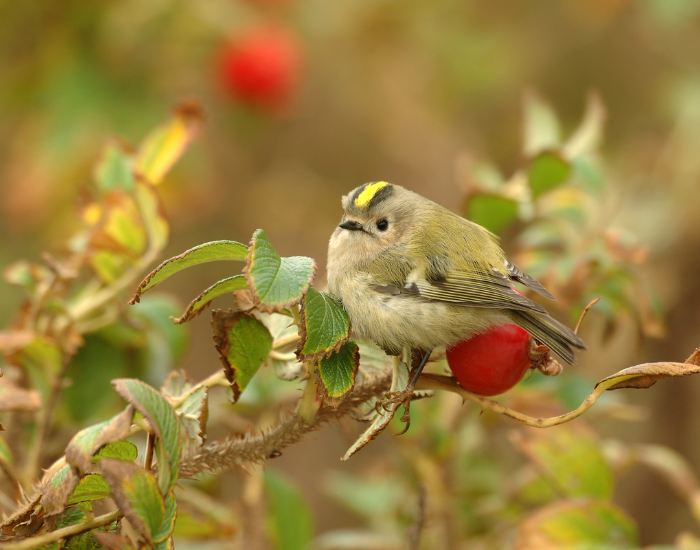
The Goldcrest officially holds the crown as the smallest bird in Britain. Many people assume the Eurasian wren takes this title. While the wren is short and stubby, the Goldcrest measures just 9cm in body length with a wingspan of roughly 14cm.
In the field, you’ll notice Goldcrests are much “rounder” than other small woodland birds. They lack the long tailed tit’s distinctive tail, giving them a spherical appearance. Therefore, they look almost pom-pom-like as they hover near tree branches in mixed woodland areas.
The smallest songbird title goes to the Goldcrest across most of Europe. However, its close cousin, the Firecrest, competes for attention among bird species enthusiasts.
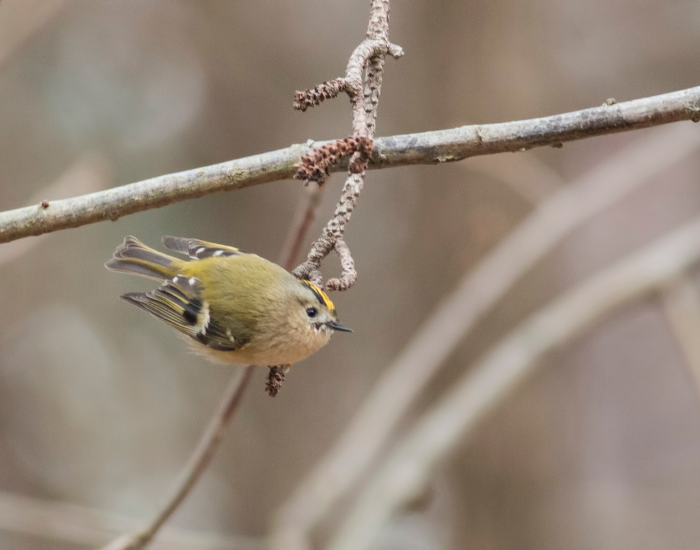
2. The Yellow Stripe on Head: A Biological Mood Ring
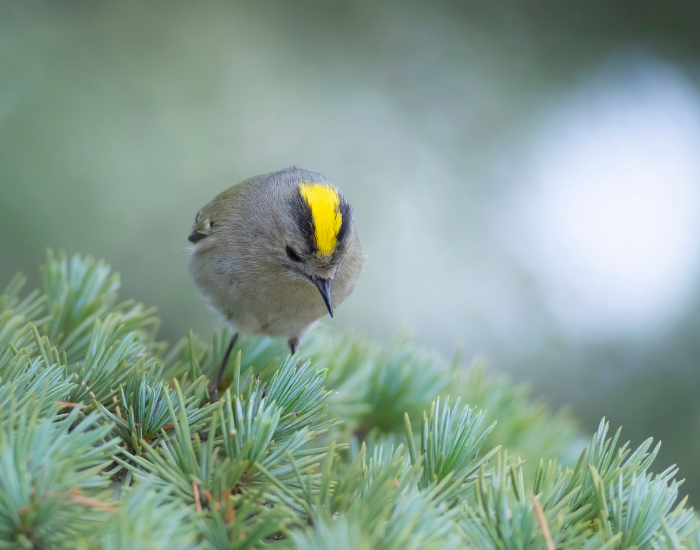
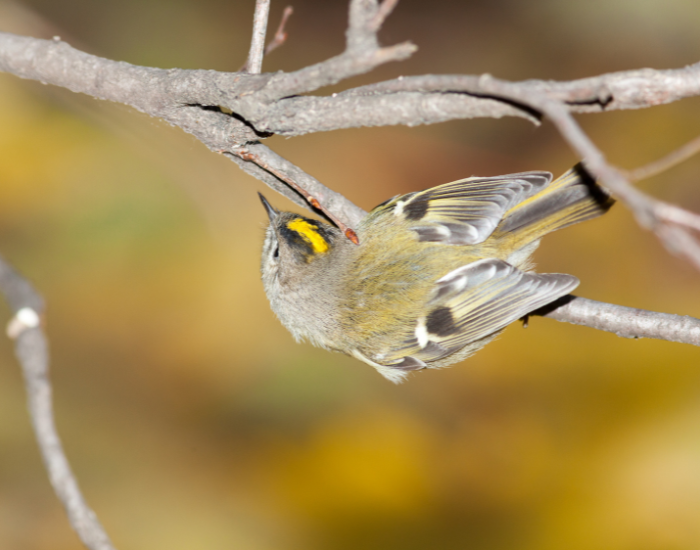
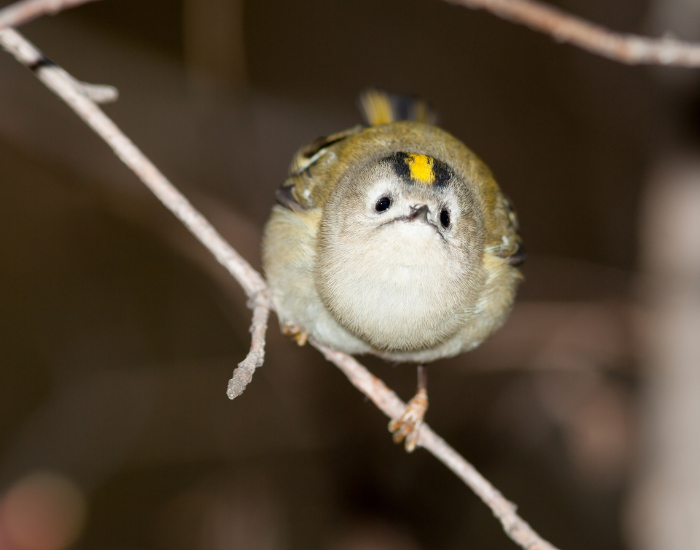
The most striking feature of Goldcrests is their yellow feathers. This yellow stripe (or orange centre in males) serves as more than decoration. Males can raise these feathers into a mini-mohawk when excited or defending territory.
If you see a small bird with a yellow stripe on head flashing a fiery orange centre, you’re observing a fired-up male. Female Goldcrests sport a purely yellow crest with no orange. This sexual dimorphism provides a key identification tool when you’re squinting through binoculars in conifer woodlands.
The pale belly contrasts beautifully with the yellow crown. Dark flight feathers complete the distinctive appearance of these woodland birds.
3. Body Weight That Defies Physics
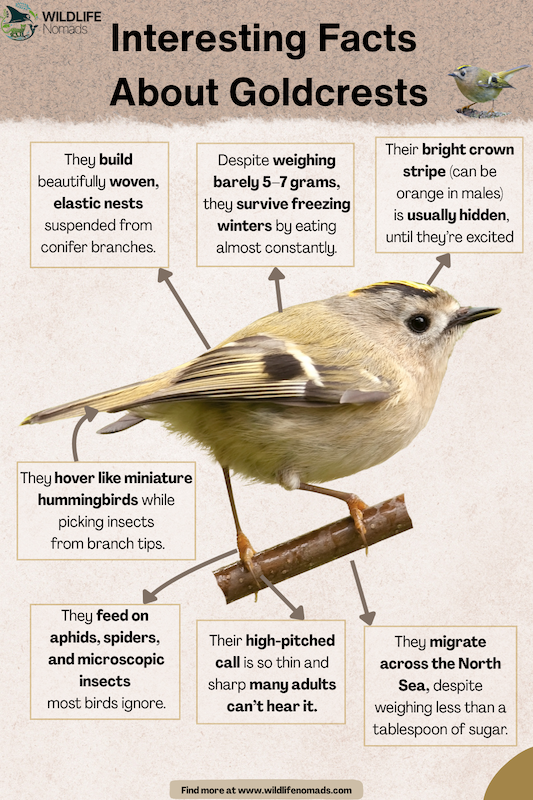
The body weight of a Goldcrest is mind-boggling. An adult female’s bodyweight can be as little as 4.5g, roughly one and a half times a nickel. Even a “hefty” male rarely tops 7g, making them one of Europe’s tiny birds.
During my time in Sweden, I wondered how such a tiny kinglet maintains core temperature in cold weather. The answer lies in constant movement and high metabolism. These birds have a metabolic rate that requires almost continuous eating.
For example, an hour without food in winter isn’t just inconvenient for a Goldcrest, it’s life-threatening. This explains why they’re found dead after particularly harsh winters.
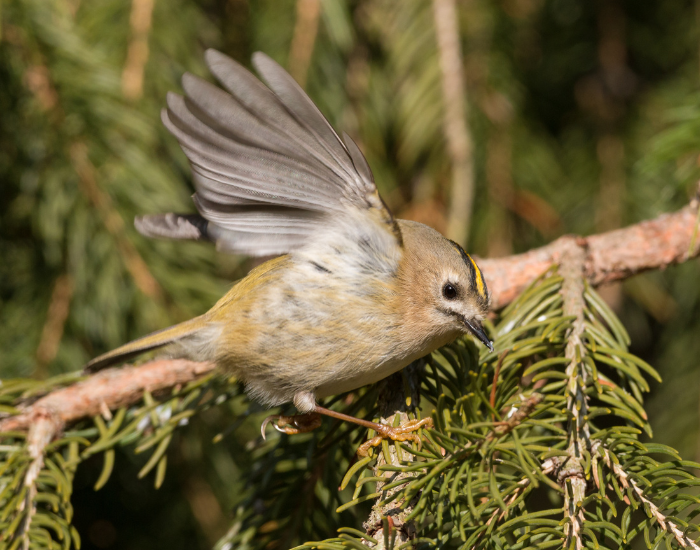
4. The “Woodcock Pilot” Folklore and Migration
European folklore surrounds these migrating Goldcrests. Because they appear on the east coast of the UK in large numbers simultaneously with Woodcocks, ancient mariners called them the “Woodcock Pilot.”
The legend suggested these tiny birds hitched rides on Woodcocks’ backs to cross the North Sea. However, the reality proves more impressive. Migrating Goldcrests fly over 300 miles of open water independently.
Birds found on the east coast during autumn migration include large numbers of continental visitors. In addition, some Goldcrests migrate south, while others remain as resident birds year round across the UK.
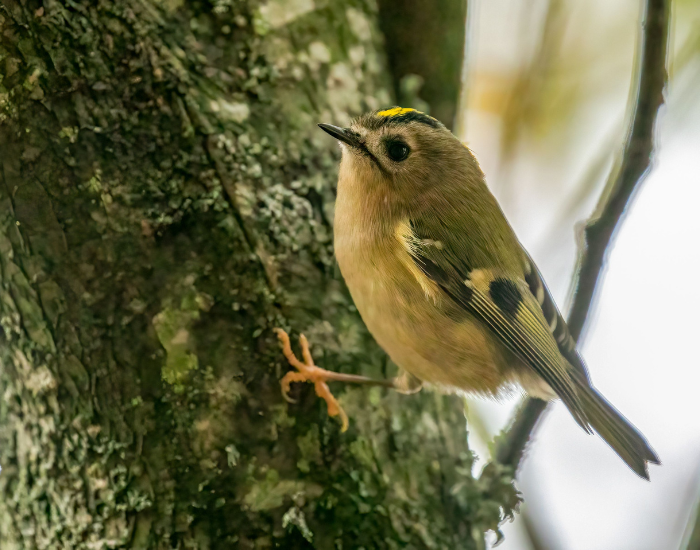
5. High Pitched Calls Only Young Ears Can Hear
If you’re over a certain age, you might lose the ability to hear a Goldcrest. Their contact call and song pattern are exceptionally high pitched, sometimes reaching frequencies that half the adult population cannot detect.
The song consists of a rhythmic, thin, “needle-like” tweedle-tweedle-tweedle, ending in a flourish. In mixed woodland, you can use their call to locate them before seeing them. If you hear a sound like a tiny rusty gate hinge vibrating in tree branches, look up into the conifer canopy.
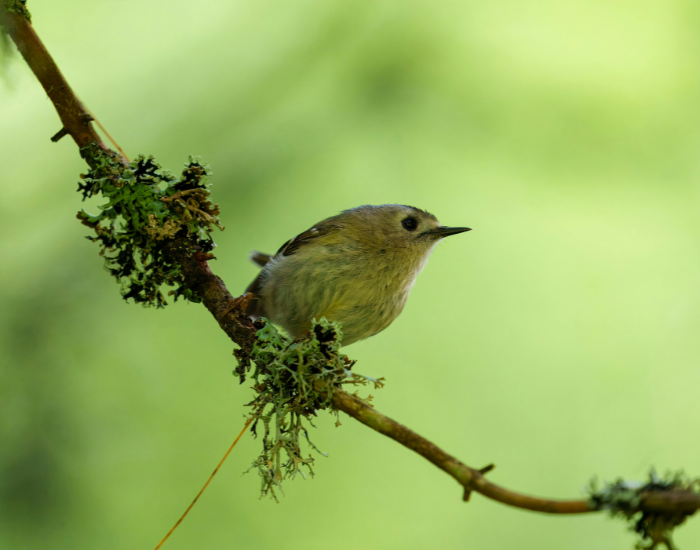
6. Master Architects: The Spider’s Web Nest
The breeding season typically runs from late April to August. During this time, Goldcrests showcase impressive engineering skills. The nest is a three-layered cup made of spiders webs, moss, and lichen. It hangs like a hammock from the underside of a conifer branch.
Using spiders webs demonstrates genius, the material allows the nest to expand as chicks grow. Goldcrests often produce first brood and second brood in a single breeding season. Sometimes they start the second nest while the male still feeds the first brood.
This high reproductive rate offsets their mortality during winter months. Therefore, population numbers can recover relatively quickly after severe winters wipe out large numbers.
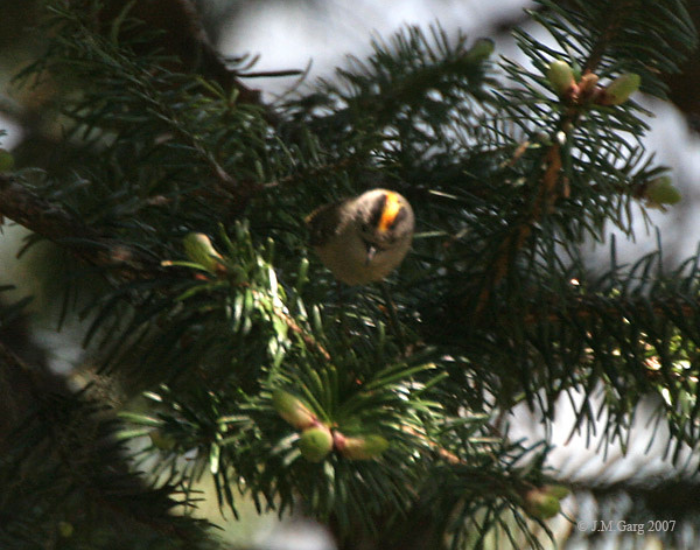
7. Foraging Technique: The Hover-and-Pick Master
Unlike the treecreeper which spirals up trunks, Goldcrests master the outer twigs. They are among the few British birds that hover effectively for short periods. In addition, they pluck insects and spiders from the underside of leaves with precision.
They have a thin beak perfectly evolved for reaching into narrow gaps of conifer needles. If you see a small greenish bird fluttering at spruce branch tips, it’s almost certainly a Goldcrest. Coal tits and blue tit species sometimes forage nearby, but Goldcrests specialize in the thinnest tree branches.
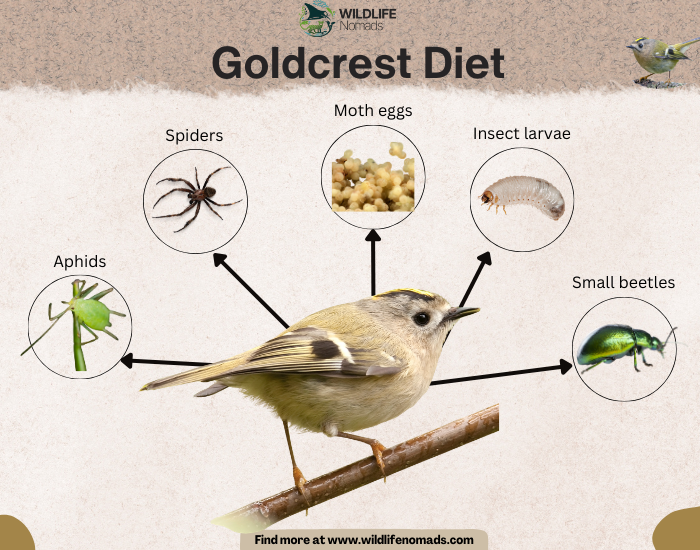
Their insect diet includes aphids, spiders, and small invertebrates. Therefore, parks and gardens with dense evergreen vegetation attract these insectivores, especially during autumn and early November when natural food sources decline.
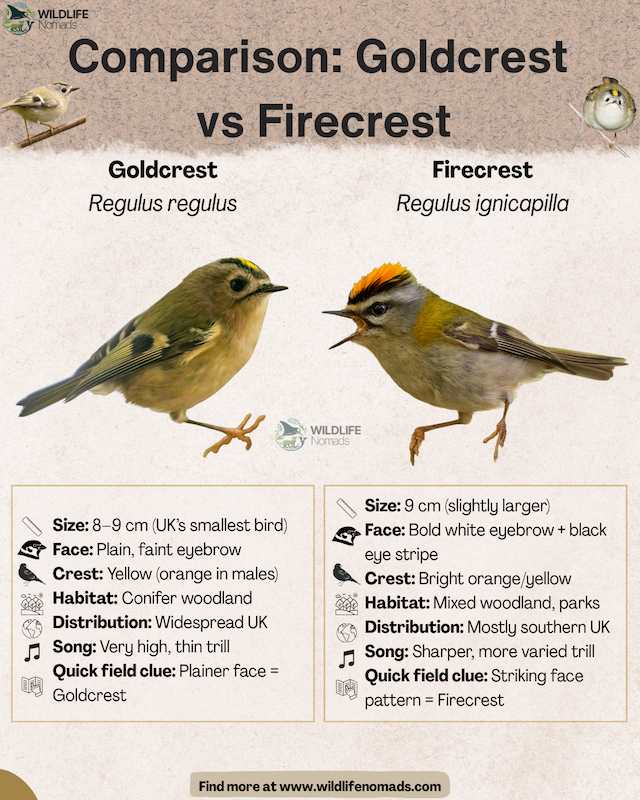
8. Goldcrest vs Firecrest: Identifying the Closely Related Species
A common question in birding circles asks: which is rarer, Goldcrest or Firecrest? The closely related Firecrest (Regulus ignicapilla) is much scarcer in the UK. While Goldcrests are widespread across British woodlands, Firecrests remain relatively uncommon.
To tell them apart, examine the face closely. The similar Firecrest displays a bold white “eyebrow” (supercilium) and a black stripe through the eye. This gives it a much more “angry” or “masked” appearance. In contrast, the Goldcrest has a “plainer” face with a pale ring around large, dark eyes, creating a permanently startled expression.
Other species in the Regulus genus exist across southern Europe and beyond. However, only these two regularly occur in the UK. The Firecrest’s bold facial stripes and more vivid orange centre distinguish it from its cousin.
9. Vulnerability to Severe Winters and Conservation Status
Despite being widespread from northern Scotland to southern sand dunes, Goldcrests face significant threats. They appear on the Green List of conservation concern in the UK. However, they remain highly sensitive to habitat loss and extreme weather.
A single severe winter can eliminate up to 80% of the UK population. Because they’re so small, they cannot store fat reserves for cold weather survival. This explains why you’ll find them huddling with coal tits or long tailed tit flocks in winter, not just for protection, but to find food sources more efficiently.
Population recovery depends on successful breeding seasons following harsh winters. Therefore, maintaining conifer woodland and mixed woodland habitats proves essential for year round survival of resident birds.
10. The Petty King: Folklore and Name Origins
The name Regulus means “petty king” or “little king” in Latin. This stems from ancient fable where birds held a contest to determine who could fly highest. The eagle soared above everyone, but a tiny bird hid in the eagle’s feathers and hopped out at the last second to fly just a bit higher.
Whether it was a wren or a Goldcrest depends on which European folklore you’re reading. However, the tiny kinglet has held the “King of Birds” title across many cultures for centuries.
11. How to Attract Goldcrests to Parks and Gardens
Many people wonder how to attract Goldcrests to gardens. Unlike blue tit or coal tits, they rarely eat sunflower hearts or peanuts. They are strict insectivores requiring specific habitat conditions.
Planting large conifer plantations isn’t necessary for attracting these birds. However, having one or two dense evergreen shrubs or a holly tree provides the cover and insect life they need. In early November through winter, they venture into parks and gardens more frequently.
Creating habitat that supports insects proves more effective than traditional bird feeders. Therefore, if you want Goldcrests year round, focus on native vegetation that harbors spiders, aphids, and other small invertebrates they consume.

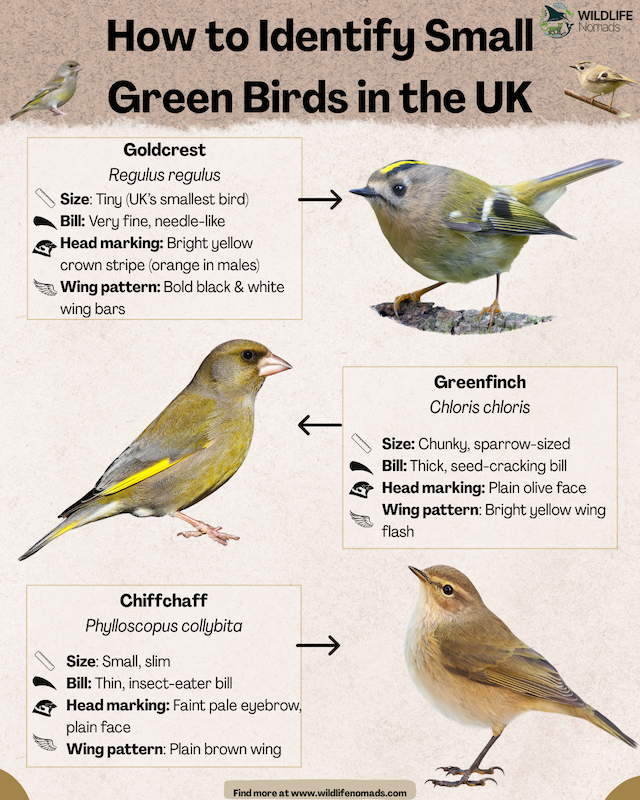
12. Identifying This Small Green Bird: A Quick Guide
If you’ve spotted a small green bird in the UK, here’s a process of elimination:
Greenfinch: Much larger with a thick “finch” beak designed for seeds.
Chiffchaff: Longer, more olive green in color, with no yellow head stripe.
Goldcrest: Tiny size, pale belly, dark flight feathers, and that unmistakable yellow stripe with orange centre in males.
The Goldcrest’s thin beak and spherical body shape distinguish it from other species. In addition, their behavior on tree branches—hovering and picking at the outermost twigs—provides another identification clue.
Field Biologist FAQ
Not at all. They are resident birds found year round across Britain. However, their numbers swell dramatically during autumn as migrating Goldcrests arrive from the North Sea regions and southern Europe.
Yes. While the Eurasian wren is heavier and louder, the Goldcrest is shorter in length and significantly lighter in body weight.
The closely related Firecrest has a distinctive black cap, bold white eyebrow stripe, and more vivid orange centre to its crown. Goldcrests have plainer faces with larger eyes and lack the dramatic facial markings.
These small woodland birds inhabit conifer woodland, mixed woodland, parks and gardens throughout the UK. They’re particularly common in northern Scotland, across sand dunes, and in conifer plantations. Large numbers appear on the east coast during autumn migration.
Goldcrests are insectivores that feed primarily on spiders, aphids, and small insects found on tree branches and conifer needles. Their thin beak allows them to extract prey from narrow gaps where other birds cannot reach.
My Final Take from the Field
The Goldcrest reminds us that in biology, “small” doesn’t mean “weak.” Watching these birds in Sweden’s deep forests taught me that survival depends on finding a niche and mastering it completely. They occupy the high-canopy, “thin-twig” niche that larger birds simply cannot access.
Next time you’re in mixed woodland or even a local park, stop and listen for that needle-thin, high pitched call. You might just catch a glimpse of the “petty king” of British forests. Whether during the breeding season or in the depths of winter, these remarkable tiny birds demonstrate extraordinary resilience against cold weather and habitat loss.