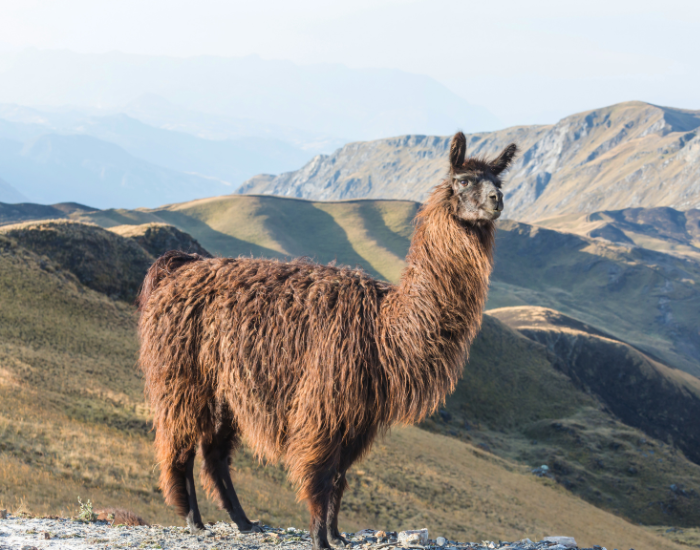
This article started with a phone call from Jackie, a member of the Wildlife Nomads team. She’d just returned from trekking through the highlands outside Cusco, Peru, and she was buzzing. “I kept seeing these camelids everywhere — vicuñas on the ridgelines, alpacas in the villages, llamas on the trails — and they all look so similar. What’s the difference?” A large brown male had even spit at her on a mountain pass. She described the spray as warm, green, and absolutely foul. That single question from Jackie sparked a deep dive into llamas that turned into an entire series.
Most people think of llamas as goofy, fluffy critters from memes. The reality runs much deeper. Llamas helped shape entire civilizations across South America. They carry loads over mountain passes, protect herds from predators, and even visit nursing homes as therapy animals. So we’re kicking off this camelid series with the biggest and most misunderstood of the bunch. Here are twelve fun facts about llamas that reveal what this remarkable llama animal actually is, and why these animals deserve far more respect than they get.
1. Llamas Haven’t Existed in the Wild for Thousands of Years
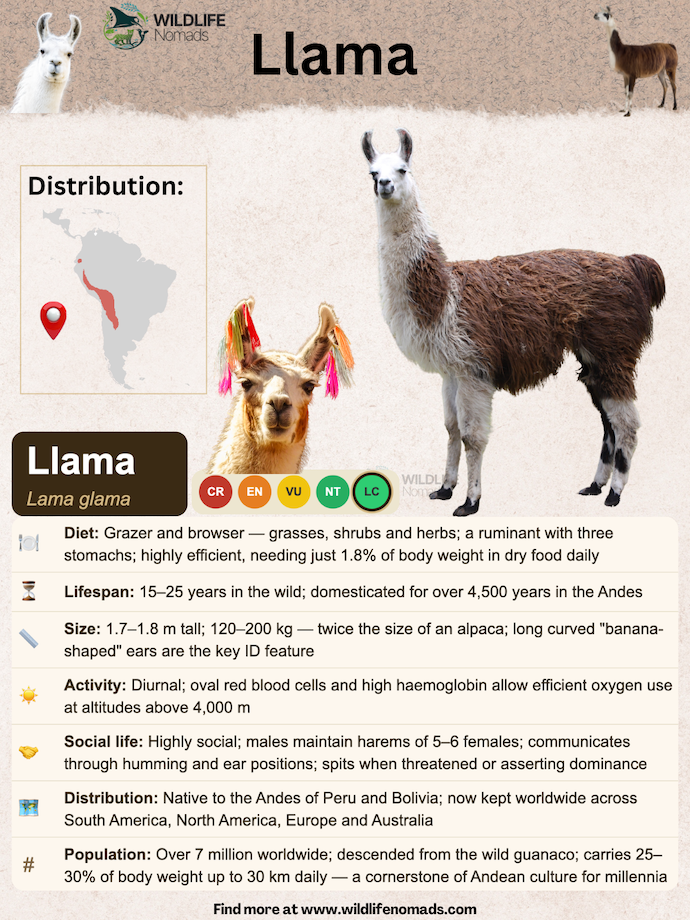
Here’s something that surprises most people seeking llamas information: there are no wild llamas. Not one. The llama animal you see on farms, at petting zoos, and in viral videos is a fully domesticated species. People bred llamas from wild guanacos (Lama guanicoe) roughly 4,000 to 6,000 years ago in the Andes Mountains of South America. That makes them one of the oldest domesticated animals on the planet.
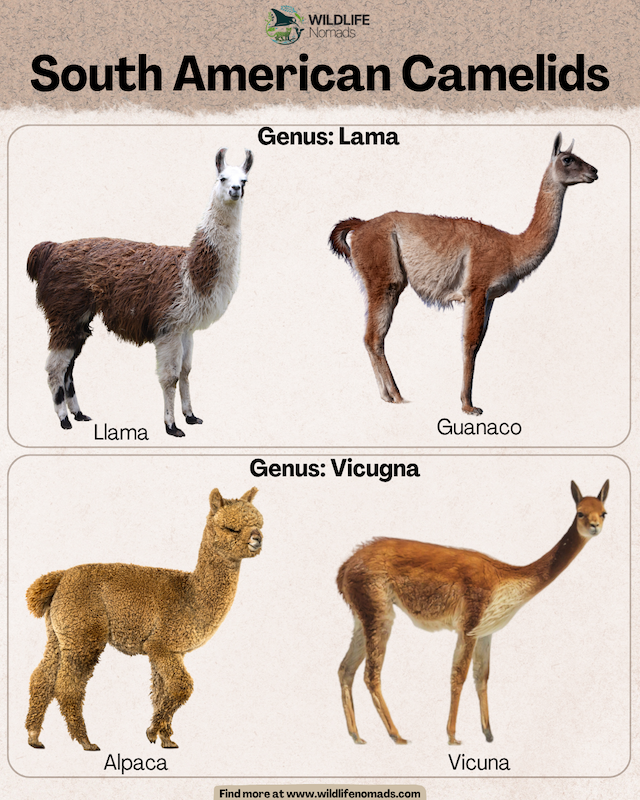
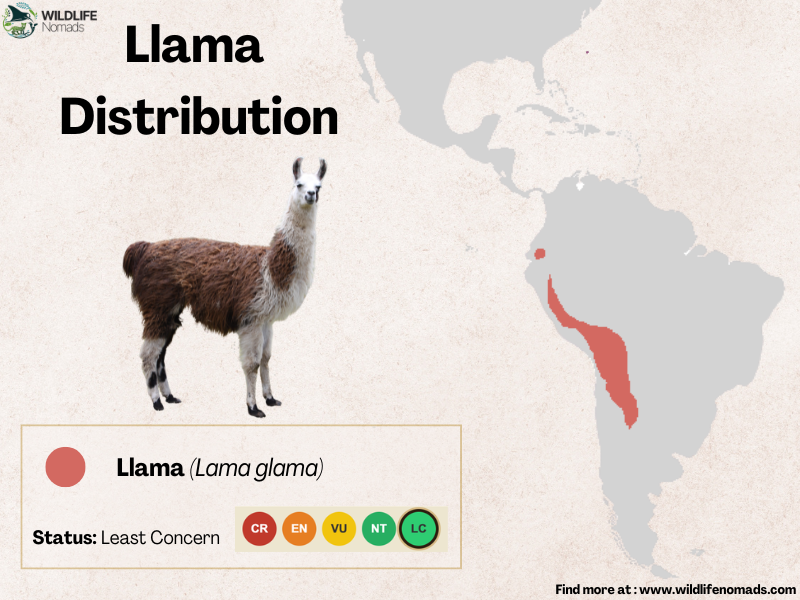
Wild guanacos still roam the highlands of Peru, Argentina, Bolivia, and Chile. They’re leaner, faster, and far more skittish. Llamas, by contrast, have been bred for temperament, size, and wool production over millennia. The scientific name Lama glama reflects that domestic lineage. So, “where does a llama live?”, the answer is wherever humans have brought them. Their llamas natural habitat is, technically, a pasture.
2. They’re Camels That Took a Very Different Road
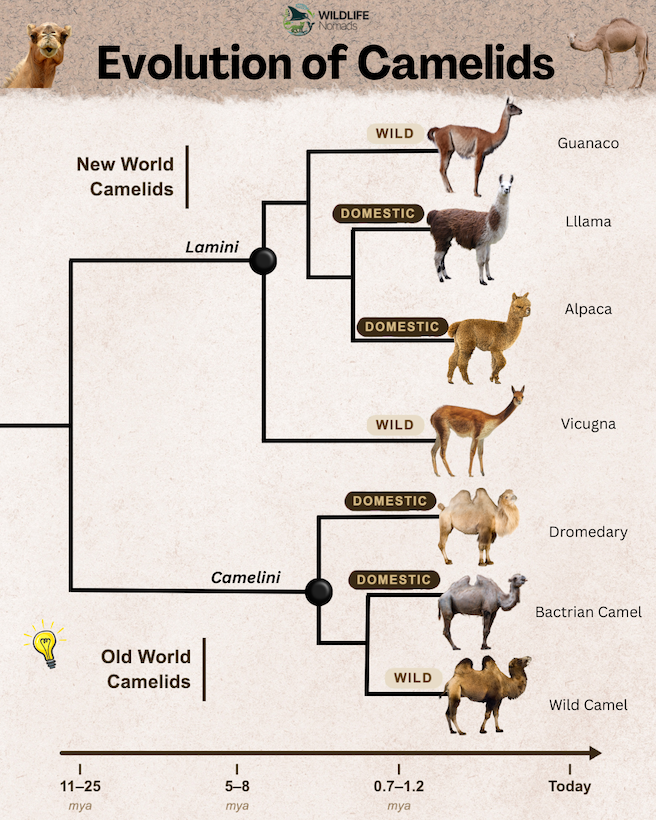
This might be the strangest of all llama fun facts. Llamas are closely related to camels. Both belong to the family Camelidae, and they share a common ancestor that originated in North America roughly 40 million years ago. Over time, one branch migrated across the Bering land bridge into Asia and Africa, becoming the camels we know today. The other branch moved south into South America and became llamas, alpacas, guanacos, and vicuñas. Four distinct species from one ancient lineage.
Jackie told me how she saw a herd of llamas navigate a rocky slope with the same sure footed confidence we have seen in camels crossing sand dunes. The mechanics looked nearly identical. Both sway their long necks for balance. Both survive on sparse vegetation. The difference? Camels adapted to desert heat. Llamas adapted to thin mountain air. The llamas adaptations for high-altitude living, efficient oxygen use, thick fur, and padded feet, evolved to help them survive above 4,000 meters.
3. Llama Spit Is Way Worse Than You Think
Everyone knows llamas spit. Few people understand how strategic it is. Llamas don’t spit randomly. They spit to establish dominance within the herd, to settle disputes over grazing access, and to reject unwanted mating advances. Females spit at males constantly during breeding season. Males spit at rival males to claim territory.
The spit itself escalates. A mild warning spit is mostly air and saliva. An angry spit draws from the first stomach compartment, a green, partially digested slurry that smells like fermented grass and regret. When a llama feels threatened, that spit can travel over ten feet. I’ve seen dominant males spit so aggressively that subordinate males develop what breeders call “sour mouth”, a drooping lip expression from being spit at repeatedly. Herd members learn quickly to give the dominant male space. The spit hierarchy is real, and every llama in a herd knows exactly where they stand.
Interestingly, llamas almost never spit at people unless provoked or poorly socialized. A llama that spit at a person has usually been hand-raised without herd contact, never learning proper spit etiquette from other llamas. Breeders call these “berserk males.” Some resort to animal bites when agitated, though this behavior remains rare in well-managed herds.
4. They Have Three Stomachs and a Split Upper Lip
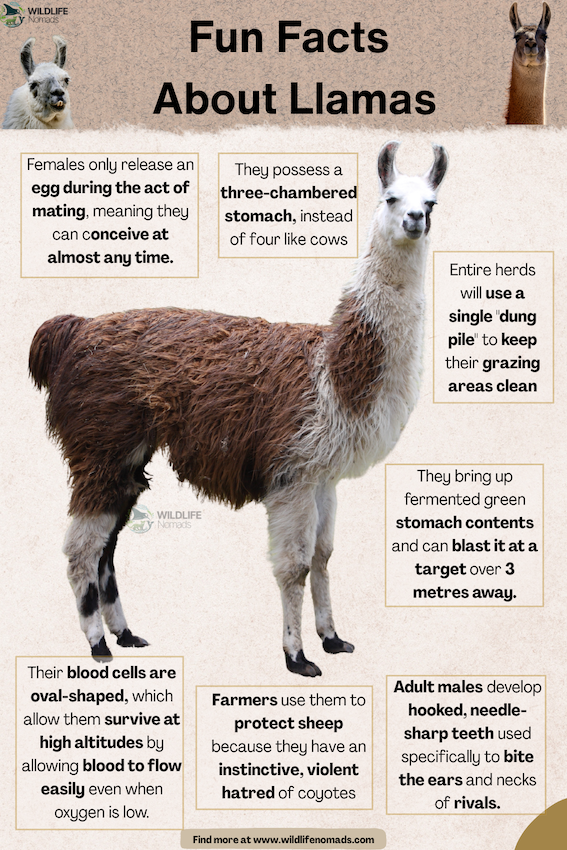
Llamas are often called modified ruminants, though the classification sparks debate among biologists. True ruminants like cows have four stomach compartments. Llamas have only three. This three-chambered digestive system lets them break down tough, high-cellulose vegetation, dry grass, shrubs, bark, that most other species can’t process efficiently.
That split upper lip plays a critical role. Unlike other animals that bite vegetation with their teeth, llamas use their split upper lip to grasp, sort, and manipulate food with surprising precision. I’ve watched llamas selectively strip leaves from thorny branches without scratching themselves. The split upper lip functions almost like a pair of soft, nimble fingers. Combined with their efficient gut, this adaptation lets llamas thrive on the sparse forage of their high-altitude llamas habitat. They eat less food per body weight than most comparably sized mammals.

5. A Single Llama Will Guard Your Entire Flock
One of the most practical fun facts about llamas: they make exceptional livestock guardians. Across North America, ranchers use guard llamas to protect flocks from predators like coyotes, foxes, and feral dogs. A 1990 Iowa State University study found that flock losses to predators dropped from 21% to just 7% after introducing a guard llama.
How do they do it? Llamas are naturally alert and aggressive toward canine predators. They’ll charge, kick, and spit at intruders. They herd the flock away from danger and position themselves between the vulnerable members and the threat. That said, guard llamas have limits. They can protect against one or two coyotes. Against cougars, bears, or wolf packs, llamas cannot defend effectively. They’re prey animals themselves at that point, and many prey animals instinctively know when to escape predators rather than fight.
6. Males and Females Live Very Different Social Lives
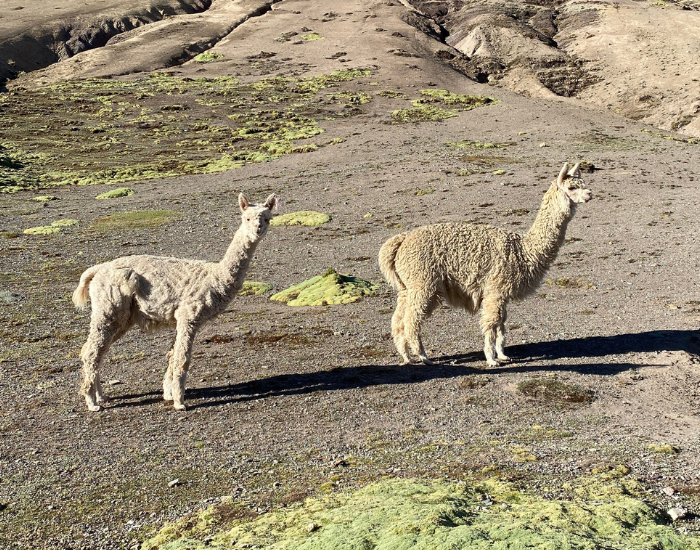
Llama herd dynamics fascinate me. In traditional Andean management, and Jackie saw this firsthand outside Cusco, males and females are kept in separate herds for most of the year. Males establish dominance through chest-ramming, neck wrestling, and relentless spitting. The dominant male earns mating access. Subordinate males form bachelor groups and wait their turn.
Females run a quieter but equally complex social structure. A lead female llama guides the herd to grazing areas and water. Females rarely spit at each other outside of feeding disputes. During mating season, breeders introduce selected males to female herds in a controlled setting. Females are induced ovulators, mating itself triggers egg release, so conception rates are high on the first attempt. Males vocalize with a distinctive humming sound called an “orgle” during mating. Once you hear it, you never forget it.
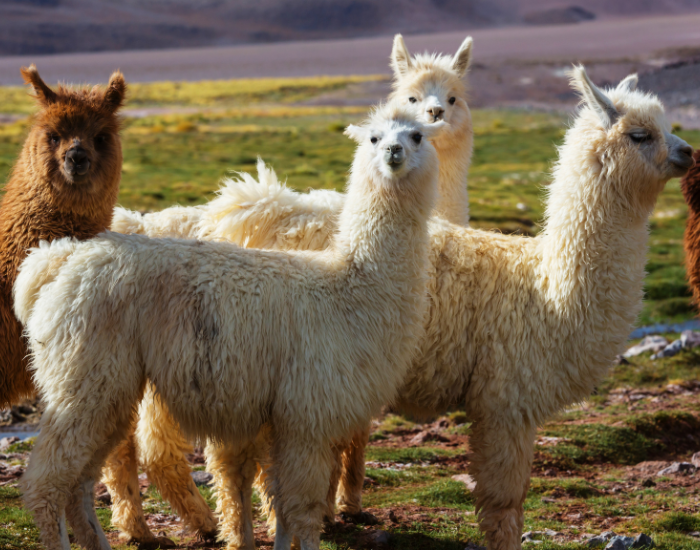
7. Baby Llamas Stand Up Within One Hour of Birth
A baby llama is called a cria. The gestation period runs about 350 days, nearly a full year. Mothers almost always deliver a single cria. Twins are extraordinarily rare. What amazed me the first time I witnessed a llama birth standing in a field in the southern Andes was the speed of it. Most mothers deliver during morning hours, likely an adaptation to give the cria maximum daylight warmth. Within thirty to sixty minutes, the cria stands on wobbly legs and begins nursing.
Llama mothers don’t lick their cria clean the way other animals do. Instead, mothers nuzzle and hum to bond. That humming is how llamas communicate across the herd, mothers to cria, females to females, even males to each other. A distressed cria produces a high-pitched hum that brings its mother running. I’ve watched experienced dams physically position themselves between a newborn cria and unfamiliar visitors. The protective instinct is immediate and fierce.
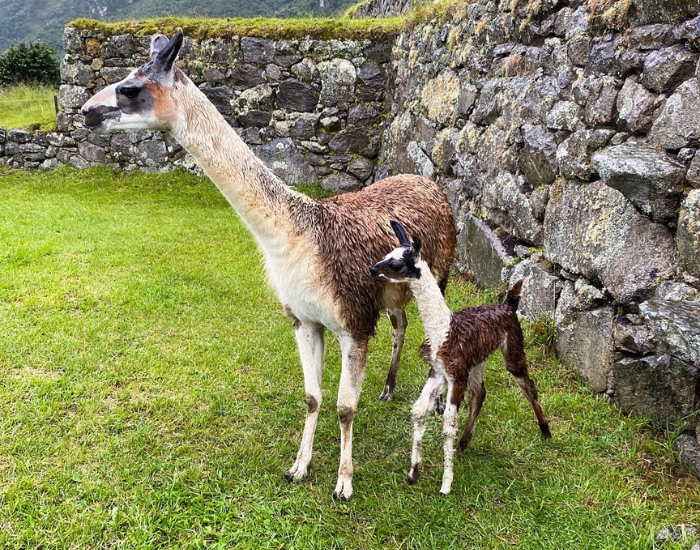
8. They’re Pack Animals — But You Can’t Ride Them
Llamas helped build civilizations. For over 5,000 years, Andean cultures used llamas as their primary pack animals. Before the Spanish brought horses to South America, llamas carried goods along trade routes stretching from Peru to Bolivia. They moved food, wool, and supplies to settlements as high as Machu Picchu. Some historians believe the Inca road system — one of the engineering marvels of the ancient world — was designed specifically for llama caravans. These were the original beasts of burden and the most trusted pack animals on the continent.
A strong male can carry loads of 50 to 75 pounds across rugged terrain for up to 20 miles per day. They’re sure footed on rocky switchbacks and require far less water than most draft breeds. However, llamas will not carry more than they’re comfortable with. Overload a llama and it simply lies down and refuses to move. They know their body limits.
9. Llama Wool Is Finer Than You’d Expect
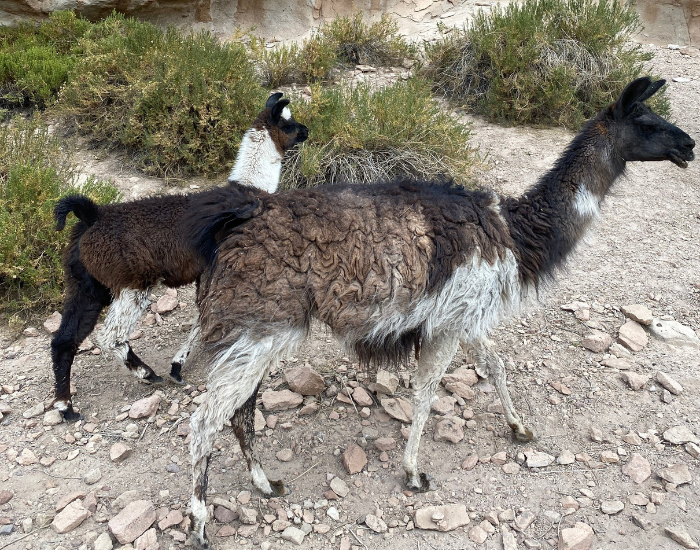
Llama wool, technically fiber, since wool traditionally refers to fleece from sheep, is a surprisingly warm and hypoallergenic material. It contains almost no lanolin, the oily substance that makes raw fleece greasy and allergenic. This makes llama fiber naturally clean and ready to process with minimal washing.
The fiber varies across the body. The soft undercoat from the sides and barrel works beautifully for garments. Coarser outer guard hair gets used for ropes, rugs, and wall hangings. Colors range from white to brown, reddish brown, gray, and near-black. The best soft llama fiber rivals alpaca fleece in quality. Historically, llama fiber wasn’t just a trade good, it was currency. Andean communities still breed llamas partly for their wool, selecting Lama glama stock with thick fur and dense undercoats across successive generations.
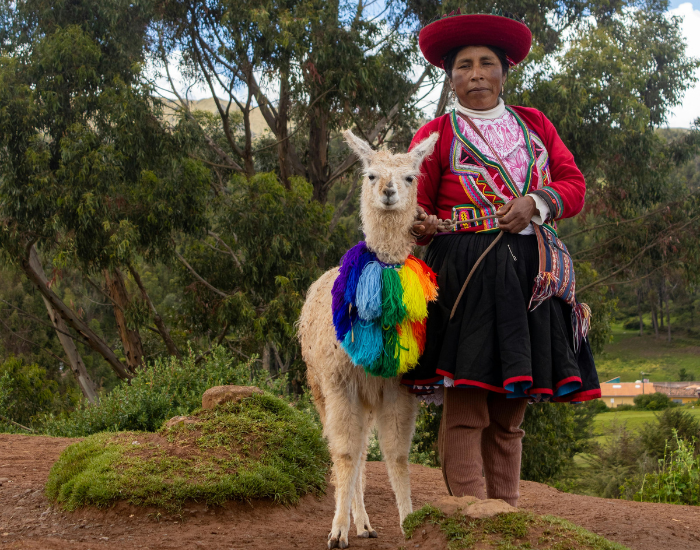
10. Llamas Visit Nursing Homes as Therapy Companions
This ranks among my favorite fun facts about llamas. Across the United States, certified therapy llamas visit nursing homes, hospitals, schools, and rehabilitation centers. Their calm, gentle personality makes them ideal for assisted interventions. Studies show that interaction with therapy creatures reduces blood pressure, lowers anxiety, and improves mood in elderly patients.
What makes the llamas personality uniquely suited for this work? They’re naturally curious but not pushy. They approach people gently, make sustained eye contact, and tolerate being touched by multiple residents simultaneously. I’ve visited a therapy llama program in Oregon and watched residents who hadn’t spoken in weeks reach out to stroke a llama’s brown fur. The effect was visible and immediate. Llamas rarely spit in these settings because they’re well-socialized with extensive herd experience.
11. They Helped Build Machu Picchu
No article with llamas information would be complete without mentioning Machu Picchu. The iconic Inca citadel sits at nearly 8,000 feet in the Andes Mountains of Peru, and llamas were essential to its construction and daily life. Llamas hauled building stones, provisions, and supplies up steep mountain trails that no wheeled vehicle could navigate. The Inca empire ran on llama power.
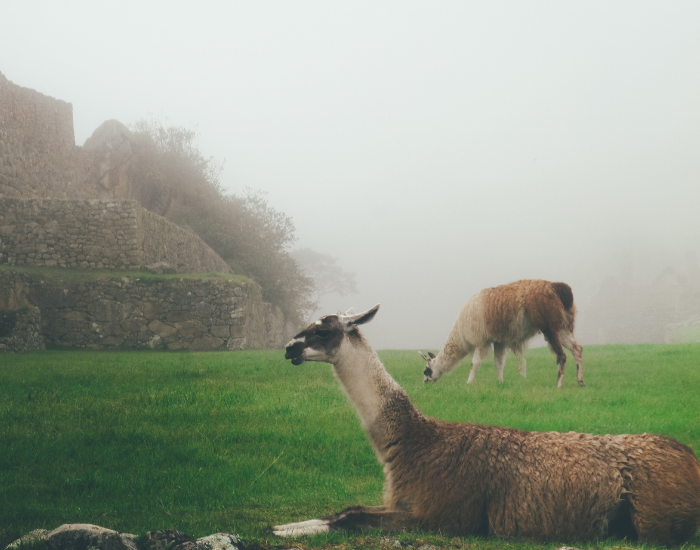
Beyond hauling, llamas provided meat, fiber, and even fuel. Dried llama dung served as the primary cooking and heating fuel at high altitude where wood was scarce. Their hides became leather. Their meat fed workers. After the Inca fell, llama populations declined but never disappeared. Today, llamas still graze the terraces at Machu Picchu, partly for tourism, partly to keep the grass trimmed naturally.
12. Their Proportions Look Like an Evolutionary Joke
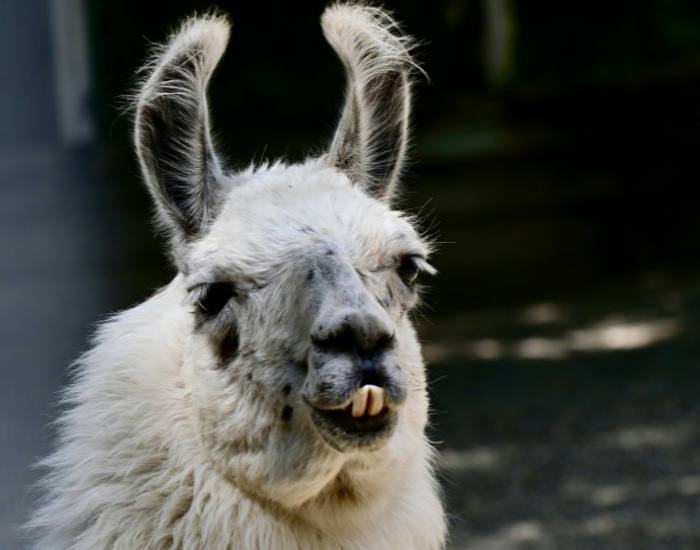
I mean this with deep affection. Llamas can look ridiculous. They have long necks perched on barrel-shaped frames, small heads with banana-shaped ears, and absurdly short tails. Their proportions seem assembled from spare parts. Yet every feature serves a purpose.
Those long necks provide a high vantage point for spotting predators across open terrain, essential for prey creatures living in exposed mountain grasslands. Their small heads reduce weight at the top of that long neck, improving balance on uneven ground. The short tails? Llamas don’t need long tails to swat flies because their dense, thick fur already provides protection against insects at high altitude. Even their padded, two-toed feet, unlike the hard hooves of goats, prevent erosion on fragile mountain trails. Every seemingly awkward feature of the Lama glama is actually a refined adaptation. They may look funny, but the engineering is flawless.
Frequently Asked Questions About Llamas
No. Llamas are strong pack animals that can bear loads up to 75 pounds, but their skeletal structure cannot safely support a rider. Overloading a llama causes spinal injury. They’re built to distribute weight across their backs, not to bear a rider’s concentrated mass.
Absolutely. Llamas and goats coexist well, and many ranchers keep a guard llama specifically to protect goat herds from predators. Llamas naturally adopt sheep as part of their herd and will actively protect them.
Yes. Llamas eat a variety of vegetation including grass, hay, and certain vegetables. Carrots make a healthy occasional treat. Their primary diet should be grass and hay — most llamas are fed hay during winter months when pasture grass is unavailable
Llamas can be kept as domestic animals on properties with adequate space, but they’re not house pets. They need at least one other llama companion — these are herd animals that suffer psychologically in isolation. A well-socialized llama makes a friendly, curious companion with a gentle personality. However, males that are hand-raised without herd contact can develop aggressive behavioral problems. Prospective owners should research llamas thoroughly before committing.
The Funny Creatures of the Andes
These twelve fun facts about llamas barely scratch the surface. From their ancient role as the backbone of Inca civilization to their modern work as therapy visitors and livestock guardians on American ranches, llamas continue to surprise us. They’re not just quirky creatures from internet memes. They’re survivors — domesticated thousands of years ago, bred across generations, and still adapting alongside humans in ways most never consider.
Next time you encounter a llama, look closer. Watch how it moves, how it watches you back, how it communicates with its herd through subtle hums and posture. Llamas have earned their place in our shared history. I’d love to hear your own llama encounters in the comments below. And if these fun facts sparked your curiosity, check out more from Wildlife Nomads.
Ethical Experiences with Llamas !
Here is a list of 3 tours where you can have an experience with them. As a biologist, I only recommend tours that follow strict ethical guidelines to ensure we don’t disturb wildlife. These are the three tours/ partners I trust most based on their conservation records:
This website is reader-supported. When you buy experiences through links listed on this site, we may earn an affiliate commission.
References:
Ercoli, M. D., Álvarez, A., & Moyano, S. R. (2023). Masticatory myology of the llama (Lama glama, Camelidae) and comparisons with other camelids and euungulates. Journal of anatomy, 243(5), 770–785. https://doi.org/10.1111/joa.13891
Franklin, W. L. (2011). Guard llamas: A part of integrated sheep protection. Iowa State University Extension and Outreach, PM-1527. https://dr.lib.iastate.edu/server/api/core/bitstreams/91410a45-23e9-405a-9fac-e248dd6f7e42/content
Fowler, M. E. (2010). Medicine and Surgery of Camelids (3rd ed.). Wiley-Blackwell. https://doi.org/10.1002/9781118785706
Kadwell, M., Fernandez, M., Stanley, H. F., Baldi, R., Wheeler, J. C., Rosadio, R., & Bruford, M. W. (2001). Genetic analysis reveals the wild ancestors of the llama and the alpaca. Proceedings. Biological sciences, 268(1485), 2575–2584. https://doi.org/10.1098/rspb.2001.1774
Markemann, A., & Valle Zárate, A. (2010). Traditional llama husbandry and breeding management in the Ayopaya region, Bolivia. Tropical animal health and production, 42(1), 79–87. https://doi.org/10.1007/s11250-009-9388-6
Meadows, L. E., & Knowlton, F. F. (2000). Efficacy of guard llamas to reduce canine predation on domestic sheep. Wildlife Society Bulletin, 28(3), 614–622. https://www.jstor.org/stable/3783611
Wheeler, J. C. (2012). South American camelids — past, present and future. Journal of Camelid Science, 5, 1–24. https://doi.org/10.5281/zenodo.3738605