Growing up in Mexico, there two animals that everyone is familiar: opossums, squirrels, and coatimundis. And these creatures generate so many feelings in people. I watched the bold red-tailed squirrel zip across terracotta rooftops like it owned the neighborhood. However, nothing prepared me for the first time I saw a Eurasian red squirrel in a mossy Swedish woodland. It was smaller, shy, and blazing with reddish fur against grey bark. It looked like a lit match.
As a biologist, I can tell you that red squirrels are far more complex than their cute reputation suggests. These tree squirrels are very fascinating mammals. They shape forests, hoard food with remarkable intelligence, and face serious conservation concern across their range.
In this guide, I pull from my field journals to give you a thorough, accurate description of red squirrels (both the eurasian and american): their biology, diet, reproduction, threats, and what we can do to help them survive.
Red Squirrel Taxonomy: Two Species, One Name
When people say ‘red squirrel,’ they usually mean one of two very different animals. Understanding the distinction matters for conservation.
The American red squirrel (Tamiasciurus hudsonicus), belongs to a separate genus from its Eurasian relative. It is sometimes called the pine squirrel, the Hudson’s Bay squirrel, or the North American tree squirrel. It spans a massive range from Alaska and Canada south into the Rocky Mountains and Appalachians.
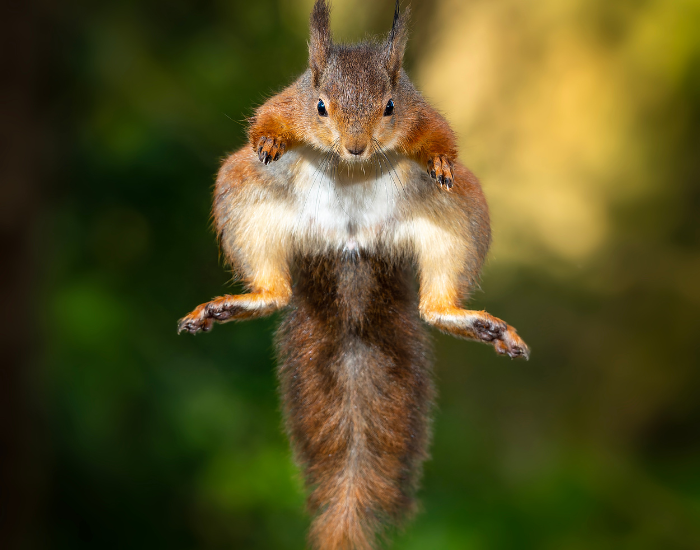
The Eurasian red squirrel, Sciurus vulgaris, is the native icon of the UK and continental Europe. It is larger, with very prominent ear tufts in winter. Its diet is broader, including walnut trees, hazel, and deciduous mast alongside conifer seeds.
Despite looking superficially similar, these two lineages diverged millions of years ago. They share behaviors — particularly their extraordinary food-storing strategies — but belong to entirely different branches of the squirrel family.

Where Do Red Squirrels Live?
The North American red squirrel thrives across the northern half of the continent, from Alaska and British Columbia east to the Atlantic coast and south through the Rocky Mountains. In the Eastern United States, populations persist in the Appalachians. Alaska American red squirrels are particularly robust, thriving in dense spruce and fir forests.
In the Southern half of the United States, you find populations in isolated mountain sky islands, particularly in the Southwestern United States, such as the Mt. Graham red squirrel — an endangered subspecies clinging on in Arizona’s Pinaleno Mountains.
Eurasian red squirrels once covered most of Europe’s northern forests. However, their range has contracted dramatically, especially in the UK, southern British Columbia-equivalent regions of Europe, and Italy, largely due to competition with introduced grey squirrels.
─────────────────────────────────────

Red Squirrel’s Diet: What Do They Actually Eat?
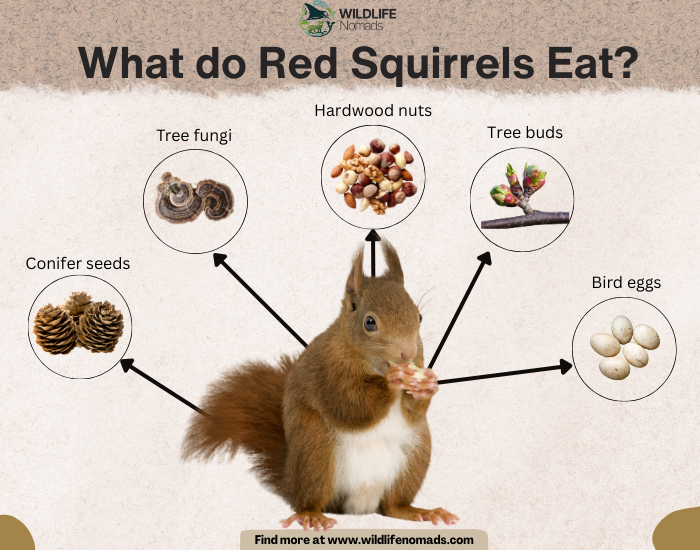
The red squirrel’s diet is more varied than most people expect. Their primary food source is conifer seeds, especially white spruce cones and pine seeds. However, they are far from strict vegetarians.
American red squirrels eat a broad range of foods depending on the season. In spring and summer, they consume spruce buds, maple tree sap, mushroom species, and berries. In autumn, their behavior shifts to intense food storage. They are also opportunistic — I have personally observed a small red squirrel raid bird nests for bird eggs and young birds when protein is scarce.
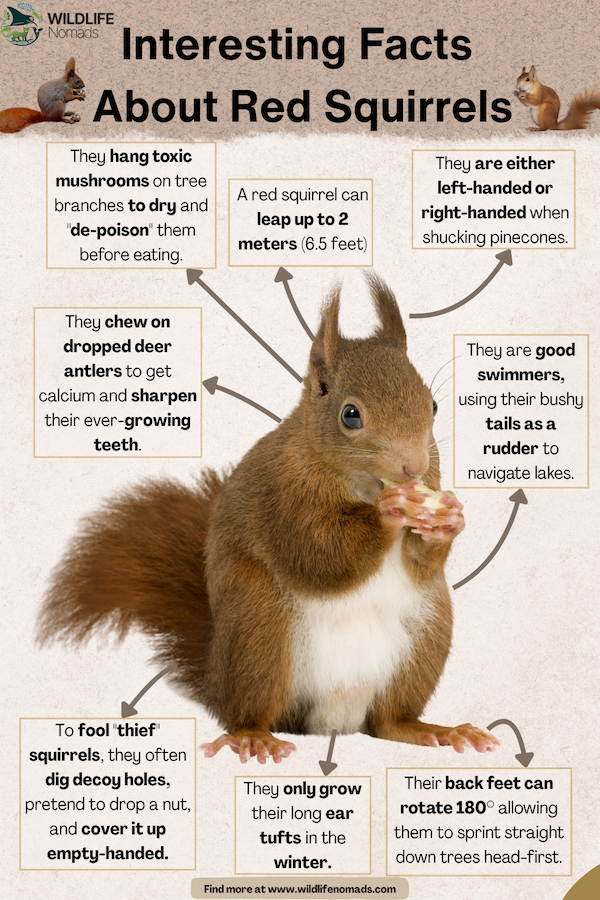
The Eurasian species shows similar flexibility, consuming hazel nuts, acorns, and fungi alongside consumed seed cones from pine and spruce. Both species wedge mushrooms into the forks of evergreen trees to dry them — a clever preservation technique that prevents rot in damp underground caches.
One remarkable detail: American red squirrels regularly harvest mushroom species that are toxic to humans. They dry and store them without apparent ill effect, suggesting fascinating biochemical adaptations we still don’t fully understand.
─────────────────────────────────────
12 Fascinating Facts About Red Squirrel Behavior
1. They Are the Loudmouths of the Forest
North American tree squirrels are famously vocal. If you enter a red squirrel’s territory, you will not stay secret for long. I have had American red squirrels follow me for several hundred meters through the Rocky Mountains, chattering and stamping their feet. This vocalization defends the midden from rivals and alerts the territory to predators.
2. The Black Stripe Is a Seasonal Uniform
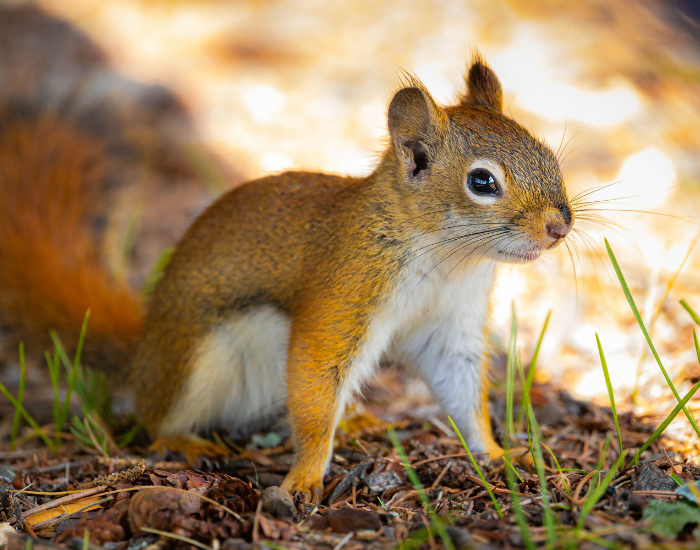
During summer, the North American red squirrel develops a distinct black stripe along its flank, separating its reddish back from its white belly. This black stripe fades in winter, when they also grow ear tufts to conserve heat. Therefore, identification changes seasonally — a useful detail for fresh red squirrel tracks trackers and naturalists.
3. They Are Solitary by Design
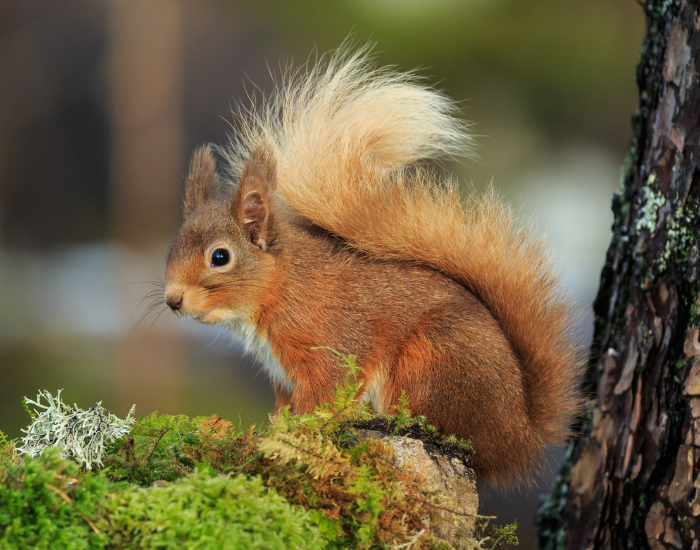
Sociality in red squirrels is almost non-existent outside of mating. Each animal defends a territory of roughly 1–2 acres. The behavior feeding eating nut and caching food is a solo operation — intrusion by another squirrel triggers immediate, aggressive defense, not social sharing.
4. The Bushy Tail Does More Than Balance
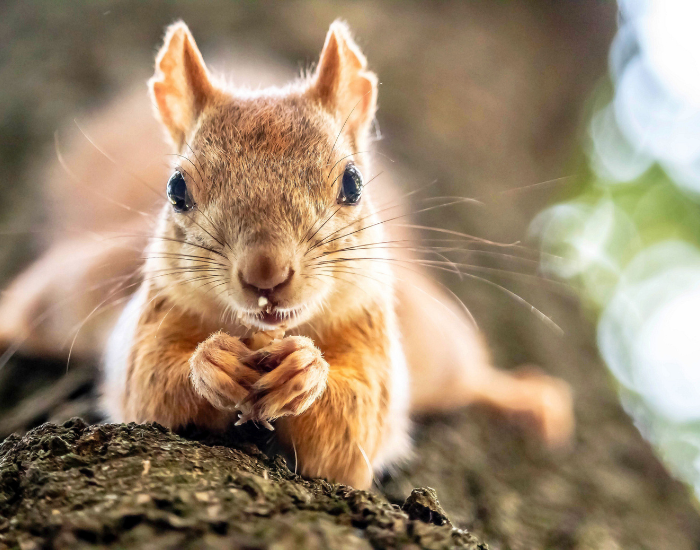
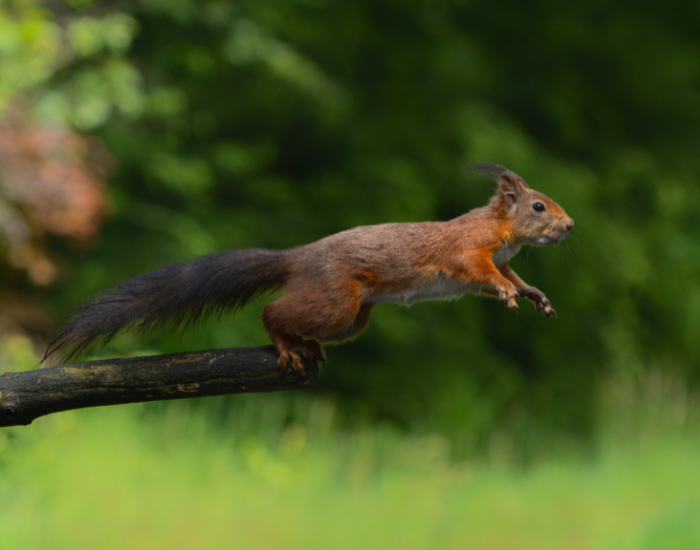
The tail is a radiator in summer, a blanket in winter, and a rudder during leaps. When a red squirrel flees a predator, the tail enables 90-degree mid-air turns on branches as thin as a pencil. Young squirrels tend to practice these acrobatic leaps relentlessly — it is a high-stakes game where a fall can be fatal.
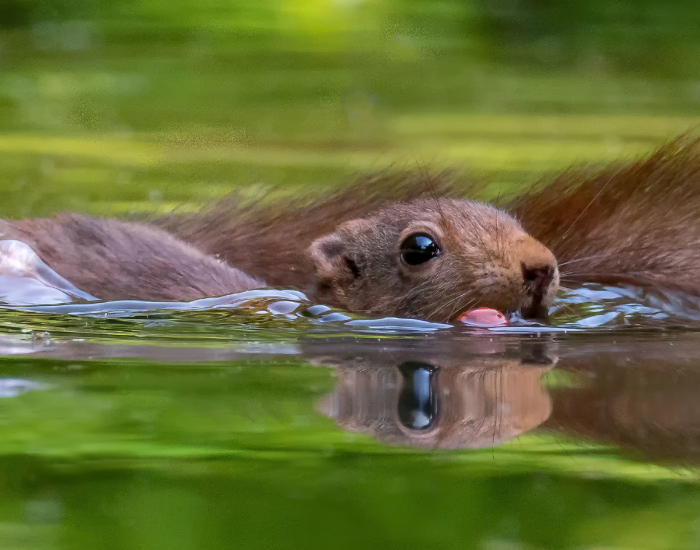
5. They Can Swim!
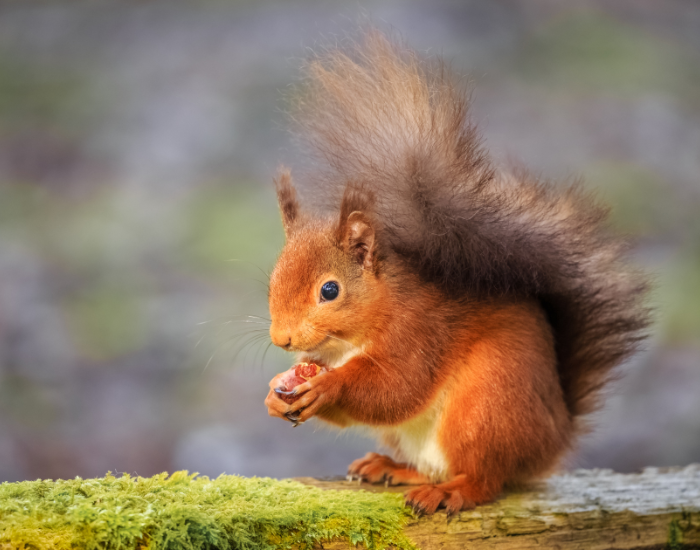
Survival red squirrel swimming has been observed across small alpine lakes and rivers. They are not graceful swimmers, but they are capable of crossing water to reach new territories. However, they remain highly vulnerable to predators like large fish and hawks while in the water.
6. Female Red Squirrels Choose Cavities for Nurseries
Reported female red squirrels often prefer tree cavities or abandoned woodpecker holes over open dreys for raising young. This provides superior protection against weather and predators. A mother typically settles into the highest-quality cavity available, giving her litter — which typically ranges three or four offspring — the best survival odds.
7. They Are Early Risers
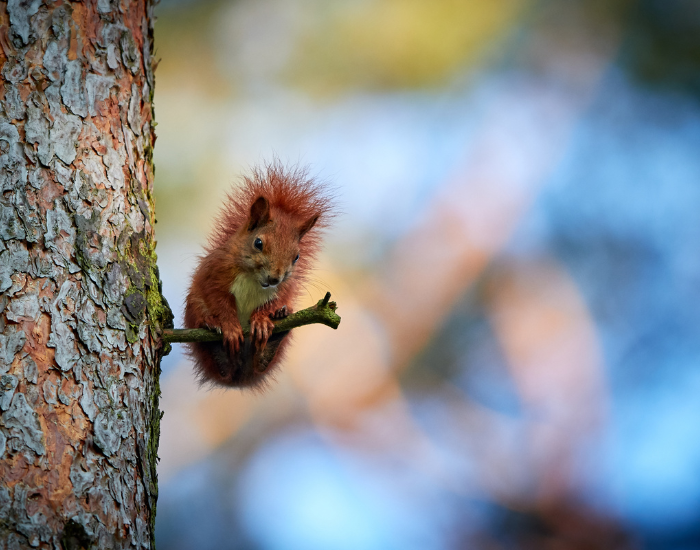
Early morning is the peak foraging window for red squirrels. They do most of their activity just after sunrise, particularly american red squirrels eat their fill before midday heat arrives. In Eastern Oregon and the Southwestern United States, they retreat to the shade of evergreen trees by early afternoon to conserve energy.
8. Young Squirrels Grow Up Fast
Juvenile American red squirrels are weaned and expelled from the mother’s territory by 8–10 weeks of age. When females delay breeding due to poor cone crops, populations can dip significantly. This tight link between food availability and reproduction american red squirrels shows how closely their life cycle depends on forest health.
9. The Douglas Squirrel Overlap
In the Pacific Northwest, Douglas squirrel overlap with American red squirrel territories occurs regularly. The Douglas squirrel (Tamiasciurus douglasii) occupies similar conifer habitats along the Pacific coast. While they look similar, these are distinct species with subtle behavioral and dietary differences. Dwarf squirrels in tropical regions are a more distant relative, despite superficial resemblance.
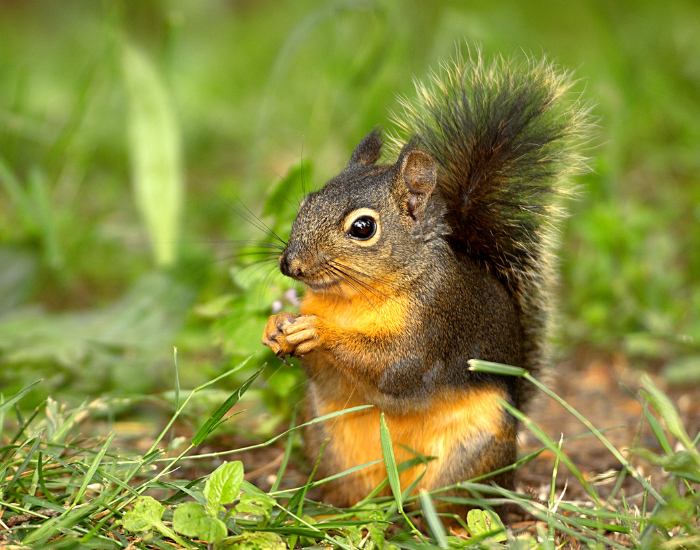
10. They Prefer Abnormally Dense Vegetative Growth — But It Causes Problems
Red squirrels thrive in dense conifer stands. However, abnormally dense vegetative growth caused by decades of fire suppression can actually hinder their movement between tree canopies. In some areas, forest management now aims to restore patchier, more natural stand structures to benefit both red squirrels and broader north american fauna.
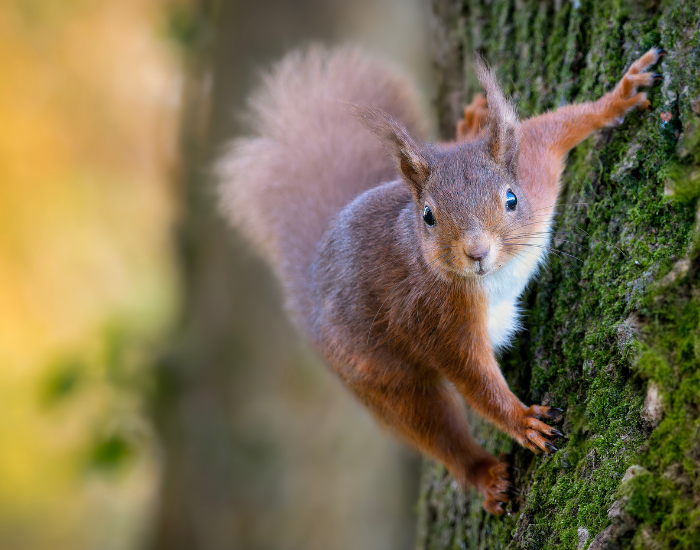
11. They Plant Tomorrow’s Forest
By caching pine seeds and white spruce cones across a territory, red squirrels basically plant trees. The seeds they forget — or cannot retrieve — germinate and grow. In the northern forests of the North American continent, these animals have influenced forest composition for thousands of years.
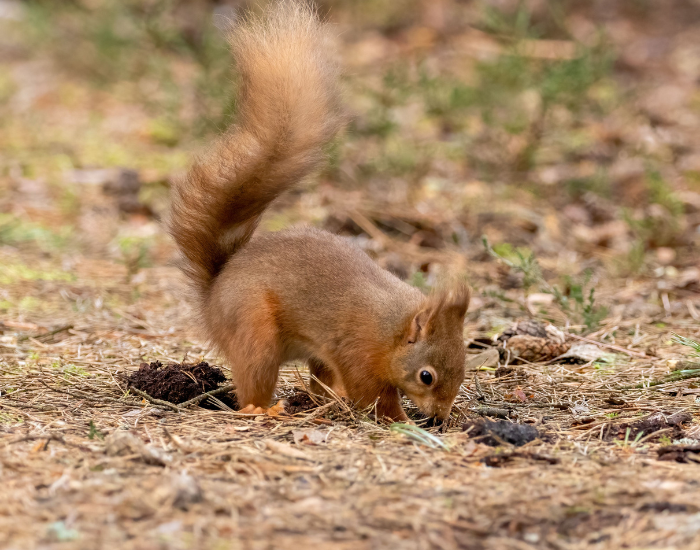
12. The Impact of Grey Squirrels
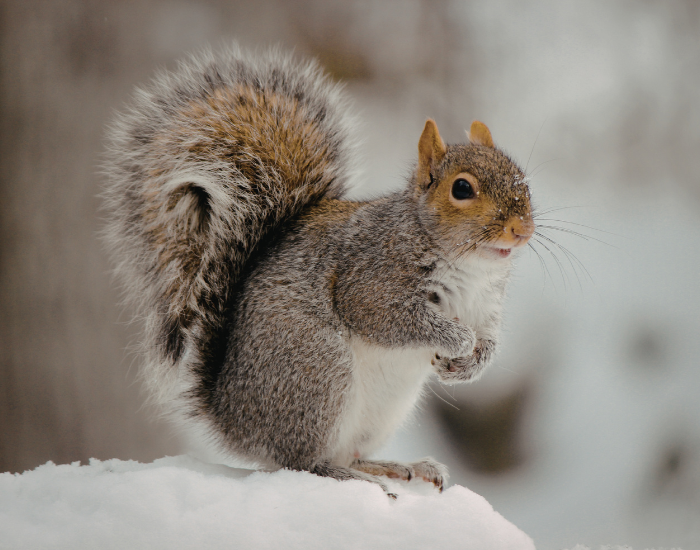
In Southern British Columbia and parts of the Eastern United States, the overlap with grey squirrels is a non-issue. However, for the Eurasian red squirrel, the introduction of the Eastern Grey has been catastrophic. Greys carry a “Squirrel Pox” virus that is lethal to reds. This is why biodiversity is important; losing the red squirrel changes the entire forest’s regeneration cycle.
─────────────────────────────────────
Reproduction: How Red Squirrels Raise Their Young
Females breed once or twice per year depending on food availability. In good cone years, females breed earlier and may produce two litters. When females delay breeding due to cone crop failure, the entire local population feels the impact.
The litter sizes typically range from three to four offspring, though litters of up to six are possible in exceptional conditions. Young squirrels are born blind and hairless, entirely dependent on the mother for the first eight weeks. After weaning, the mother actively drives juveniles away to find their own american red squirrel territories.
Mating itself is a frantic, noisy affair. Males chase females in extended mating chases through the canopy, sometimes involving multiple males competing for a single female. There is no pair bonding — after mating, the male plays no further role in raising the young.
───────────────────────────────────
Conservation Efforts: What Is Being Done?
In the UK, conservation programs focus on two strategies: red squirrel refuges in areas free from grey squirrels (particularly in Scotland and northern England), and grey squirrel control programs. Wildlife trusts manage dedicated red squirrel woodland, planting native conifers and restricting grey squirrel access.
In the United States, the Mt. Graham red squirrel recovery program involves habitat protection, predator management, and monitoring. The US Forest Service’s southern research station in Arizona has produced detailed population studies that inform ongoing management.
Wildlife corridors play a critical role in connecting isolated red squirrel populations, particularly in the Rocky Mountains and the Southwestern United States. Without these corridors, small populations risk inbreeding and local extinction. For a deeper look at how corridors work, see our guide to wildlife corridors.
Citizen science programs also contribute valuable data. Reported female red squirrels with ear tags, fresh red squirrel tracks recorded in snow surveys, and nest site monitoring all help researchers build accurate population maps across the North American continent.
─────────────────────────────────────
FAQs About Red Squirrels
To humans, no. To each other, extremely. They are highly territorial mammals and will engage in prolonged vocal battles and chases to defend their midden. Both male red squirrels and female red squirrels defend territories year-round.
The American red squirrel as a species is not endangered. However, the Mt. Graham red squirrel is an endangered subspecies in the Southwestern United States. The Eurasian red squirrel is listed as Near Threatened in parts of Europe, and conservation concern is high in the UK and Italy.
Look for reddish fur, white eye-rings, and a bushy tail. In summer, North American red squirrels display a distinct black stripe along the flank. Eurasian red squirrels are larger and show very prominent ear tufts in winter. Both species are smaller than grey squirrels.
Estimates suggest approximately 120,000–160,000 Eurasian red squirrels remain in the UK, with the majority in Scotland. The population in England and Wales has declined dramatically due to grey squirrel competition and Squirrel Pox.
─────────────────────────────────────
References:
Boutin, S., Larsen, K. W., & Berteaux, D. (2000). Anticipatory parental care: acquiring resources for offspring prior to conception. Proceedings. Biological sciences, 267(1457), 2081–2085. https://doi.org/10.1098/rspb.2000.1252
Lurz, P. W. W., Gurnell, J., & Magris, L. (2005). Sciurus vulgaris. Mammalian Species, 769, 1–10. https://doi.org/10.1644/769
Steele, M. A. (1998). Tamiasciurus hudsonicus. Mammalian Species, 586, 1–9. American Society of Mammalogists. https://doi.org/10.2307/3504443
Dantzer, B., Boutin, S., Humphries, M. M., & McAdam, A. G. (2012). Behavioral responses of territorial red squirrels to natural and experimental variation in population density. Behavioral Ecology and Sociobiology, 66(3), 865–878. https://doi.org/10.1007/s00265-012-1335-2
Gurnell, J., Wauters, L. A., Lurz, P. W. W., & Tosi, G. (2004). Alien species and interspecific competition: Effects of introduced eastern grey squirrels on red squirrel population dynamics. Journal of Animal Ecology, 73(1), 26–35. https://doi.org/10.1111/j.1365-2656.2004.00791.x
Humphries, M. M., & Boutin, S. (2000). The determinants of optimal litter size in free-ranging red squirrels. Ecology, 81(10), 2867–2877. https://doi.org/10.1890/0012-9658(2000)081
Koprowski, J. L., & Corse, M. C. (2001). Time budgets, activity periods, and behavior of Chiricahua fox squirrels and Mt. Graham red squirrels. Southwestern Naturalist, 46(3), 356–362. https://doi.org/10.1644/1545-1542(2005)86[947:TBAPAB]2.0.CO;2