While I’ve come face-to-face with reindeer herds and studied on my masters degree the elusive wolverine, there is one animal that consistently earns admiration of many people, despite weighing less than a bottle of water: the ermine weasel.
If you’ve ever been out in the northern hemisphere during the dead of winter and seen a flash of pure white winter coat dart across the snow, you’ve met the Mustela erminea. Whether you call it an ermine, or stoat, this little mustelid is a master of survival. Ermines are small, carnivorous mammals, and the mustelid family includes a wide range of species, most species are diverse in size and habitat, such as badgers, arctic foxes, arctic hares, and other arctic animals.
In this deep-dive, I’m taking you into the world of the ermine animal, blending the hard science of Mustela erminea with the stories I’ve gathered from the field. Larger predators like foxes, cats, and badgers are known to target ermines and weasels, making their survival skills even more impressive.
1. What’s in a Name? Ermine vs. Stoat vs. Weasel
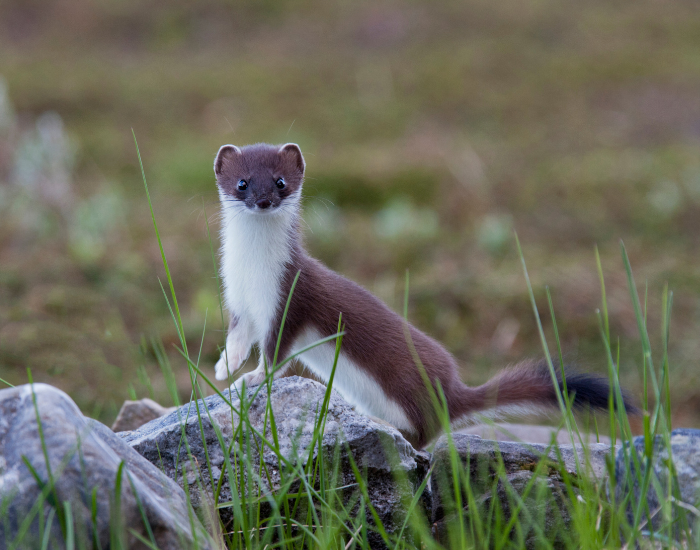
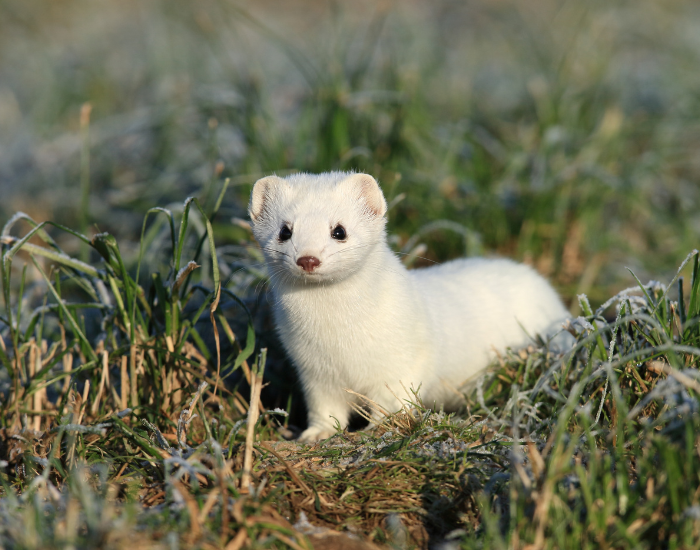
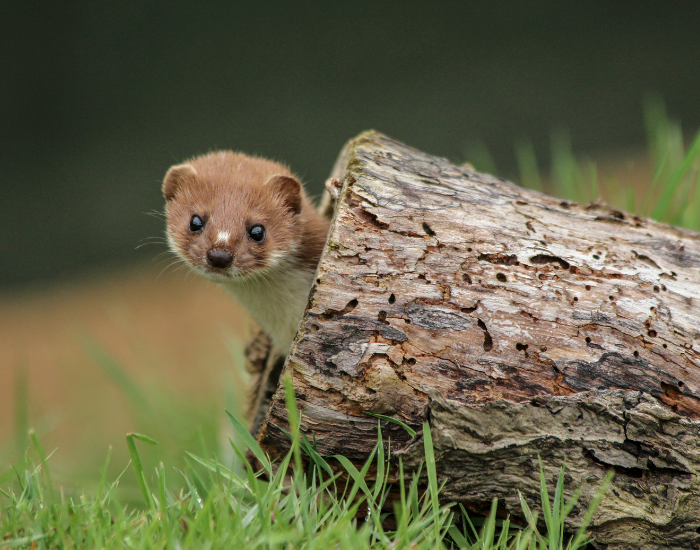
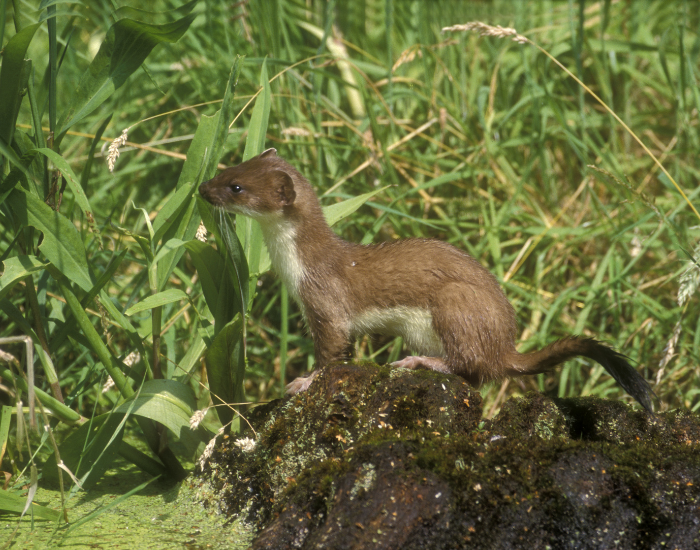
The ermine weasel belongs to the genus Mustela. In the biological world, “stoat” and “ermine” are often used interchangeably for the same species, Mustela erminea. The stoat is also known as the Eurasian ermine or simply ermine. Generally, “stoat” is used for the animal in its sandy brown summer coat, while “ermine” refers to the animal once it has donned its white fur for the winter. The term ‘white weasels’ is often used to describe weasel species, like the ermine, that develop a white winter pelage as an adaptation to snowy environments.
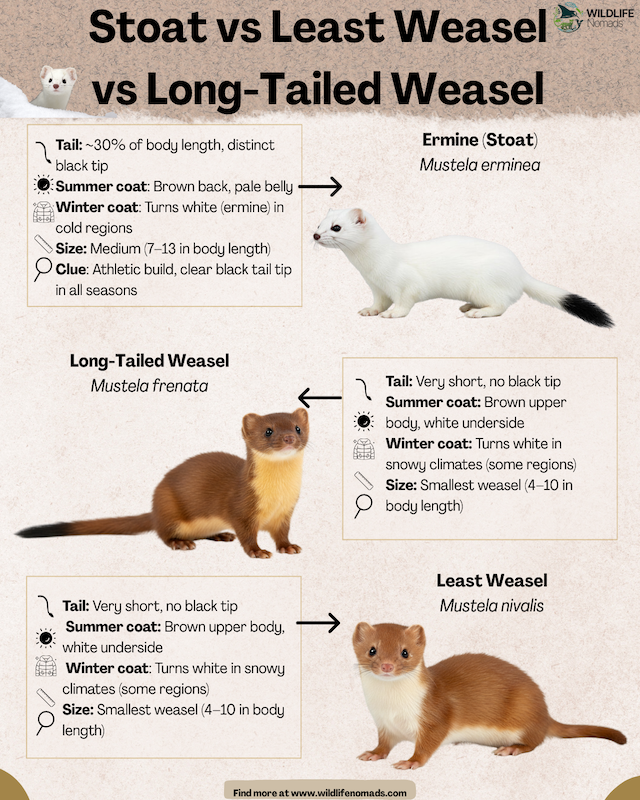
Unlike the least weasel (Mustela nivalis), which is even smaller, or the long-tailed weasel (Mustela frenata), the ermine stoat is characterized by its medium body length and a very specific black tail tip. The mink, another member of the Mustelidae family, is semi-aquatic, has a dark-colored coat year-round, and does not change to white in winter, which distinguishes it from ermines and other weasels.
It’s easy to get turned around with mustelids, especially when you throw the pine marten into the mix. I’ve had hikers point to a pine marten in the canopy and call it a “giant weasel.” While they are cousins, the pine marten is significantly larger, has a bushy tail without a distinct black tip, and sports a tell-tale creamy-orange throat patch

2. The Master of Camouflage: The White Weasel
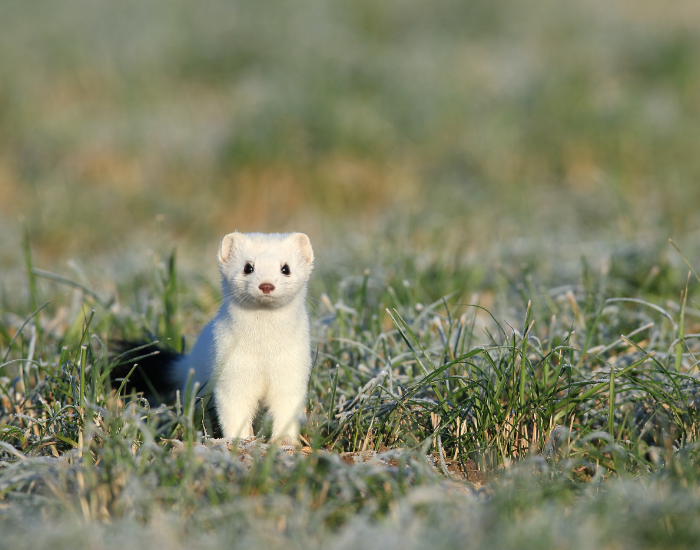
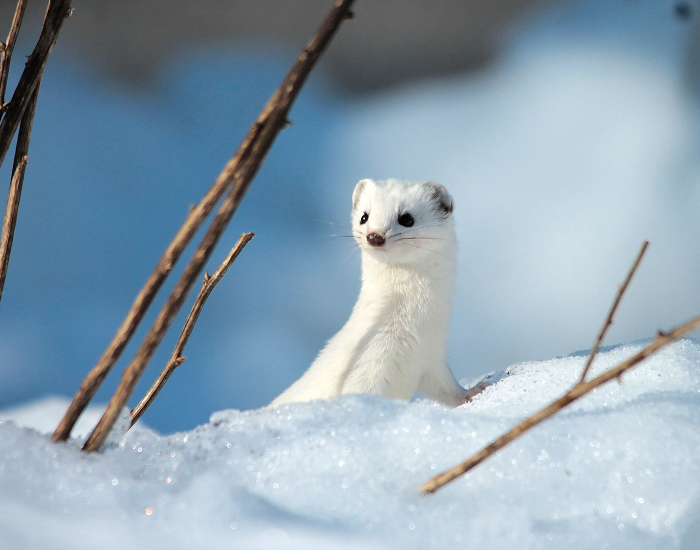
In the arctic tundra, survival is about blending in. The white ermine weasel undergoes a radical transformation twice a year. As the days shorten, a hormonal trigger causes the ermine colour to shift from a chocolate brown with a yellowish-white belly to a completely white pelt.
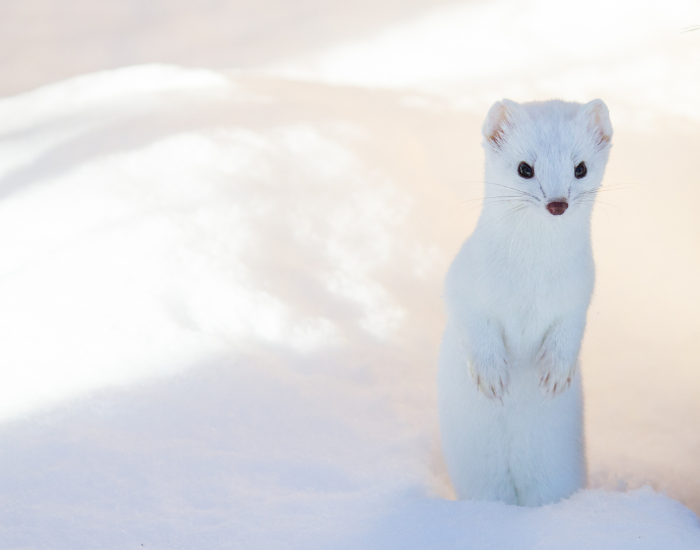
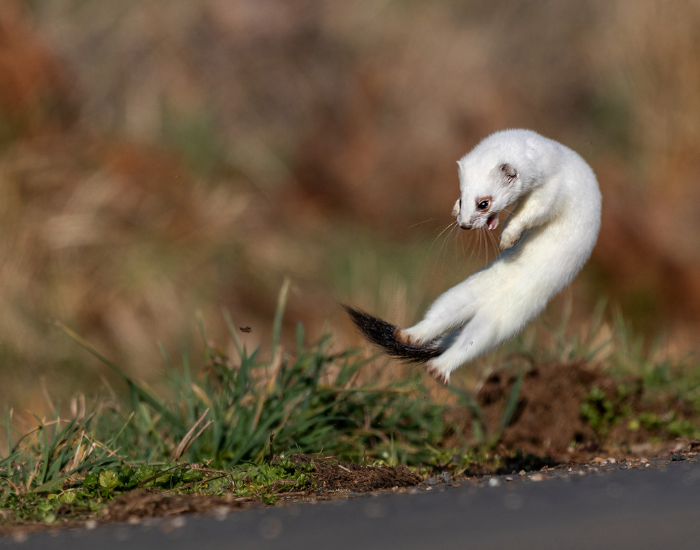
If it weren’t for the black tip on its tail, it would virtually invisible against the snow. This white winter coat is so iconic that it became a global status symbol (more on that later), but for the animal, it’s strictly a tactical advantage for avoiding larger predators like foxes, and birds of prey like hawks, and owls.
3. The Black Tail Tip: A Deadly Distraction
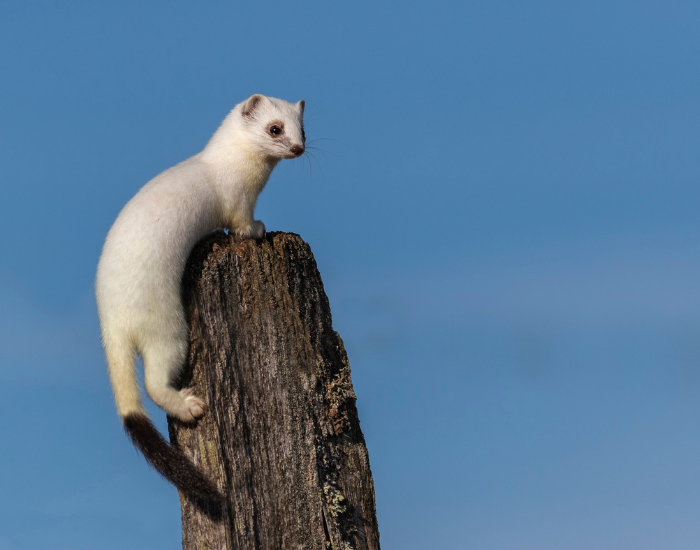
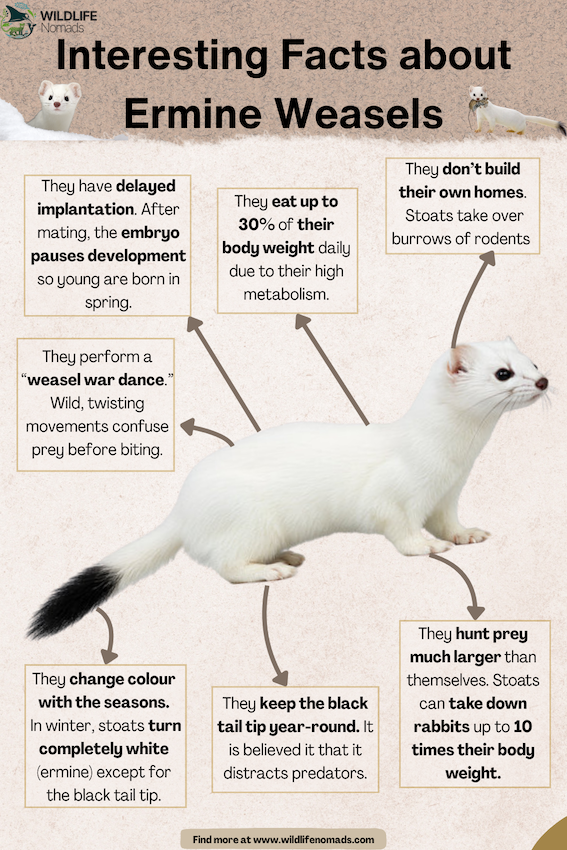
Why does a white weasel keep a black tail tip? It seems counterintuitive for camouflage. However, research suggests this is a brilliant survival mechanism. When a bird of prey like a hawk dives at an ermine, it focuses on the most visible part—the black tip. Because the tail is at the end of the long body, the hawk often misses the vital organs, giving the ermine a split second to escape into a burrow.
4. A Predator That Punches Way Above Its Weight
Don’t let the “cute” face fool you. The ermine weasel is a savage carnivore. While their primary prey consists of small mammals like shrews, rodents, and voles, they are famous for their ability to control rabbits, animals ten times their size.
When an ermine hunt a rabbit in a meadow, it is performing what biologists call the “weasel war dance”, jumping, twisting, and contorting to confuse the rabbit before delivering a precise, lethal bite to the base of the skull. Stoats are highly skilled predators that specialize in capturing rodents and small mammals, and are capable of hunting large prey, often much larger than themselves. When attacking large prey, the stoat immobilizes its victim with a bite to the spine at the back of the neck. They are the wolverine of the miniature world.
5. The Science of the “Short-Tail”
I’ve learned that nature doesn’t do “accidental” measurements. While in Fact 1 I covered the names, identifying these animals in the wild comes down to specific biological proportions, what I call the “Golden Ratio” of the ermine stoat.
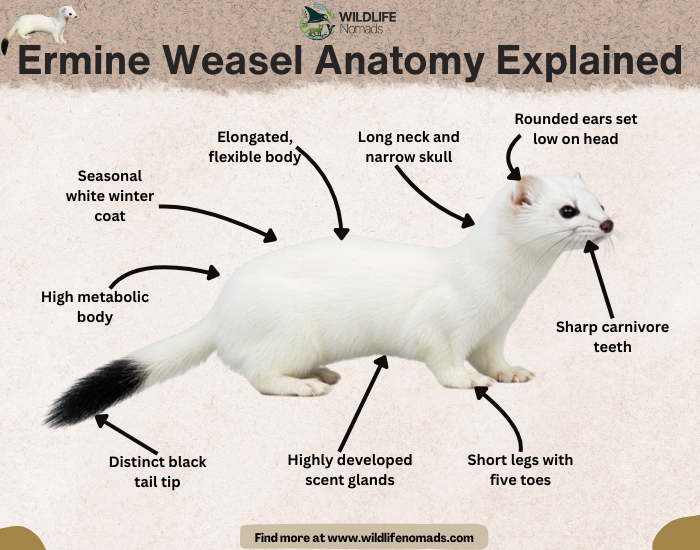
Five-Toed Traction: If you find tracks in the mud near an arctic char stream, look for five toes. Each foot ends in sharp, curved claws. Unlike many other small mammals, the short-tailed weasel has a refined, athletic length and a “slinky” spine that allows it to turn 180 degrees inside a narrow burrow.
The 30% Rule: The tail of an ermine animal is almost exactly one-third (30%) of its body length. If the tail looks like it’s half the body, you’re likely looking at a long-tailed weasel.
The Black Tip: This isn’t just a color; it’s a tactical decoy.
6. Delayed Implantation: A Reproductive Superpower
One of the most fascinating aspects of the stoat biology is delayed implantation. Stoats mate in the summer, but the embryo doesn’t actually attach to the uterine wall for nine to ten months.
This ensures the young (or kits) are born in the spring when food is most abundant. This biological “pause button” allows the female stoats to focus on surviving the harsh winter without the metabolic drain of pregnancy.
7. Home is Someone Else’s House
Ermines are the ultimate “house flippers” of the animal phyla. They rarely dig their own nest. Instead, they find a burrow belonging to a vole or a mouse, kill the occupant, eat it, and then line the nest with the fur of their victim to keep their litter warm. It’s grisly, but in the Arctic, it’s efficient.
8. High Metabolism = Constant Hunger
Because of their long body and high surface-area-to-volume ratio, ermines lose heat rapidly. To stay warm, they have to eat about 25% to 30% of their body weight every single day. I’ve often seen them caching extra prey (like an arctic char or a bird) in stone walls to save for a lean day.
9. Geography: From North America to the UK
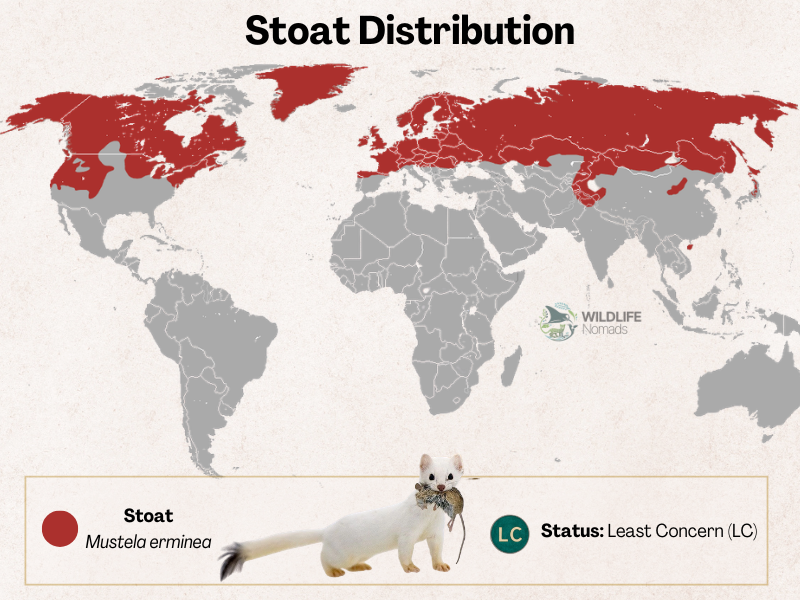
Ermines are incredibly hardy. They are found across North America, Europe, and Asia. In the UK, wild stoats are common, though they don’t always turn white in the winter because the climate is milder than the arctic tundra.
Interestingly, they were introduced to New Zealand in the late 19th century to control rabbits, but they quickly became an invasive nightmare, decimated the local bird populations. It’s a classic example of human interference gone wrong.
10. The 2021 Species Split
For years, we thought all ermines were one species. However, recent genetic studies (the kind of peer-reviewed journals I geek out over) led to a split. We now recognize three distinct species:
- Mustela erminea (Eurasia and the Arctic)
- Mustela richardsonii (North America)
- Mustela haidarum (Haida Gwaii islands)
This discovery has huge implications for conservation and how we protect specific habitat types.

11. The Fur Trade and Royal “Trim Coats”
The ermine fur has a dark history. For centuries, it was the “fur of kings.” Because of its purity and the difficulty of catching such a small, fast animal, the white winter pelts were used to trim coats and robes for European royalty.
Weasel pelts have served as status symbols, often adorning robes and garments worn by upper-class nobility throughout history. The fur from the winter coat of the stoat is referred to as ermine and is a symbol of royalty and high status in Europe. In the 15th century, ermine fur was used by Catholic monarchs as part of ceremonial robes. The stoat was a fundamental item in the fur trade of Russia until the 20th century, with high-quality pelts being harvested. Weasels were also a significant part of the fur trade during European colonization of North America, with thousands of skins processed annually.
If you look at old portraits of monarchs, those little black spots on their white collars are actually the black tail tips of dozens of dead ermines. Today, the fur trade for ermine is strictly regulated, and in many places, it has vanished entirely in favor of synthetic alternatives.
12. They are Surprisingly Mature
In the world of sexual maturity, ermines are outliers. Female kits can actually become sexually mature while they are still in the nest, being nursing by their mothers. This “precocious” development is rare among mammals and helps the population bounce back quickly if they hit a rough year with low predators or food scarcity.
Field Identification Table
| Feature | Ermine (Stoat) | Least Weasel | Long-Tailed Weasel |
| Scientific Name | Mustela erminea | Mustela nivalis | Mustela frenata |
| Tail Tip | Distinct Black | No Black Tip | Distinct Black |
| Winter Coat | Turns White | Turns White (some) | Mostly Brown |
| Body Length | 7–13 inches | 4–10 inches | 11–22 inches |
| Primary Habitat | Tundra/Forest | Fields/Woodlands | Varied/Open |
FAQs about Ermines
Yes, the ermine is a specific species within the weasel family (Mustelidae). While all ermines are weasels, not all weasels are ermines.
To humans? No, they’ll usually run away. To anything their size or slightly larger? They are incredibly aggressive and fearless hunters.
No. While they are related (both are mustelids), ferrets are domesticated descendants of the European polecat. Ermines are wild, smaller, and have different seasonal coat changes.
Yes, stoats are widespread across the UK and are often seen in hedgerows and woodlands.
They are also called short-tailed weasels or stoats.
The Bottom Line: A Tiny Titan of the Tundra
The ermine weasel is a reminder that size isn’t everything in the animal kingdom. From their delayed implantation to their white winter coat, every part of their biology is fine-tuned for the extremes of the northern hemisphere.
In my time as a biologist, I’ve learned that the smallest creatures often have the most complex stories. Whether they are balancing the ecosystem by acting as a control for rabbits or simply surviving a sub-zero night in the arctic, the Mustela erminea is a true masterpiece of evolution.