
If there’s one animal that creates fascination in many of us, it’s the bengal tiger. Without a doubt, this is one of the world’s most iconic apex predators. My fascination didn’t start in a humid jungle or a research lab as with many other creatures. Instead, it started when I was about ten years old at my local zoo.
I remember two specific enclosures that felt different from the rest. The first was the Mexican gray wolf. It was shrouded in mystery; the fence was heavily screened because these wolves were being prepared for reintroduction. They were ghosts, avoiding all human contact. However, right next to them lived something entirely otherworldly.
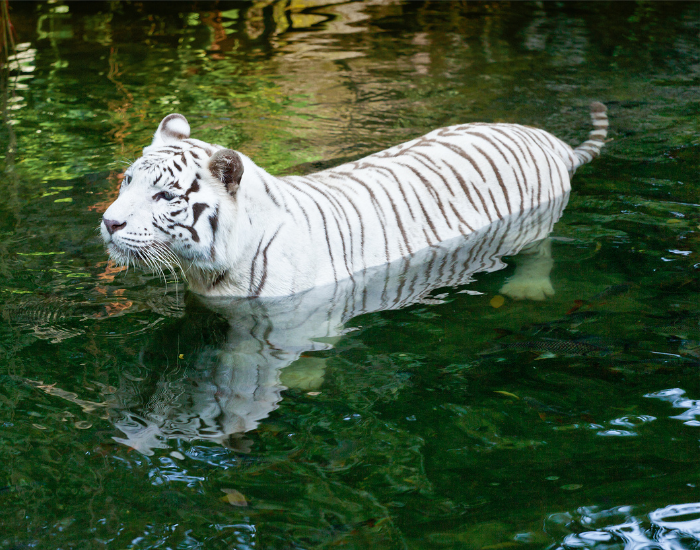
It was a Bengal tiger. Not just any tiger, but a massive, orange-and-black force of nature. In the enclosure beside him was a white tiger, an albino variant. Seeing those two side-by-side, the contrast of orange against snow-white, stayed with me forever.
Even though my professional career has taken me toward other species, that childhood spark never left. I’ve written about the elusive African wild cats and the extinct-in-the-wild Barbary lion, but the bengal tiger remains the gold standard for feline evolution.
Here are 12 things you need to know about the bengal tiger, from a biologist who has spent a lifetime admiring them from afar.
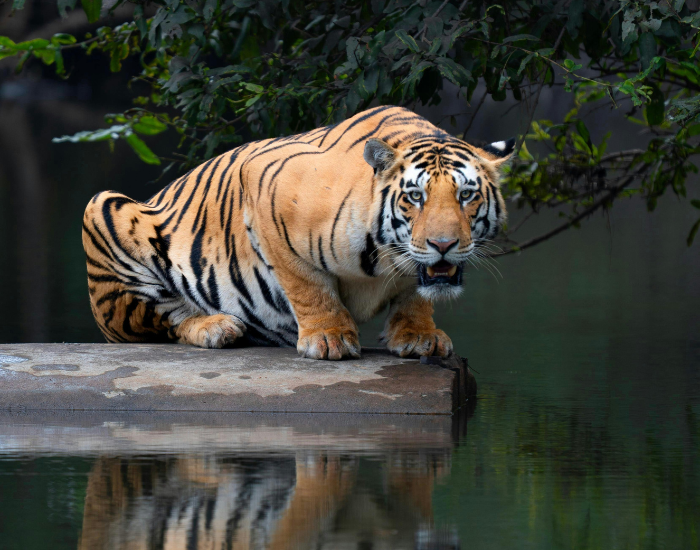
1. What Exactly is a Bengal Tiger? (Understanding Panthera Tigris)
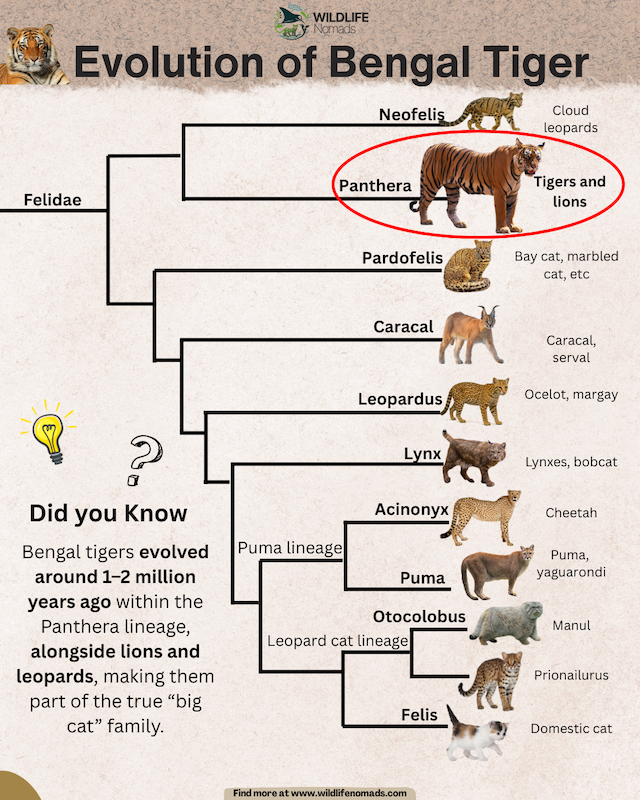
When we talk about the bengal tiger, we’re discussing the subspecies Panthera tigris tigris. Historically, scientists divided tigers into eight or nine subspecies. However, modern bengal tiger classification groups them under the mainland Asian tiger umbrella alongside Siberian tigers.
Is it just a ‘type’ of tiger? Yes, but modern taxonomy is nuanced. While scientists previously recognized eight or nine subspecies, the IUCN SSC Cat Specialist Group now classifies all mainland tigers, including the Bengal, Siberian, and Malayan, under one single subspecies: Panthera tigris tigris. However, the Bengal tiger remains the ‘standard’ by which others are measured and is the national animal of both India and Bangladesh.”
2. The King’s Weight: How Heavy Are Male Tigers?
One of the first things people ask me is: “Which is bigger, the Siberian or the Bengal?”
For a long time, Siberian tigers held the undisputed heavyweight title. However, recent data suggests that the bengal tiger average weight is now highly competitive due to habitat pressure in Russia affecting Siberian tiger populations.
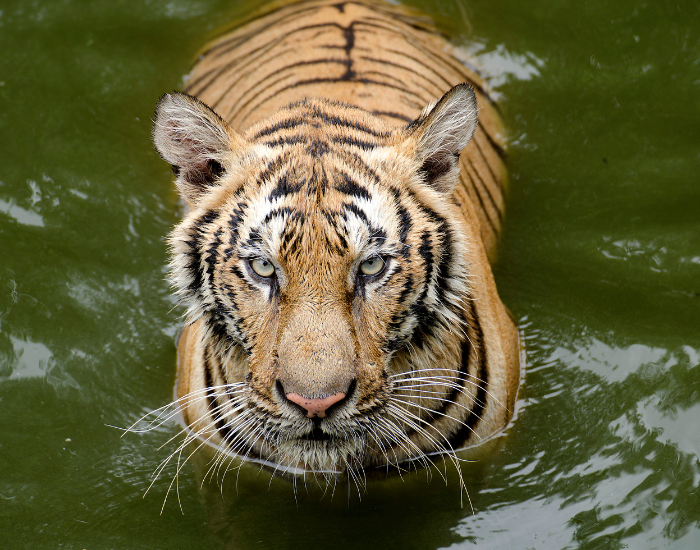
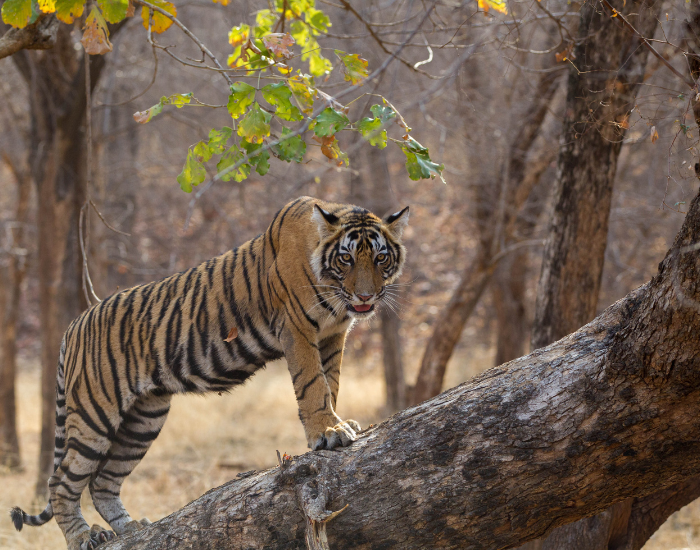
Male Bengal Tigers: Can weigh between 180kg to 260kg (400 to 570 lbs). In some regions like the Terai Arc and Chitwan National Park, males have been recorded pushing even higher weights.
Female Bengal Tigers: Generally smaller, ranging from 100kg to 160kg (220 to 350 lbs). Female tigers are sleeker but equally formidable hunters.
In fact, their powerful build allows them to take down prey as large as gaur, which can weigh over 1,000kg.
3. Where Bengal Tigers Live: From Mangrove Swamps to National Parks
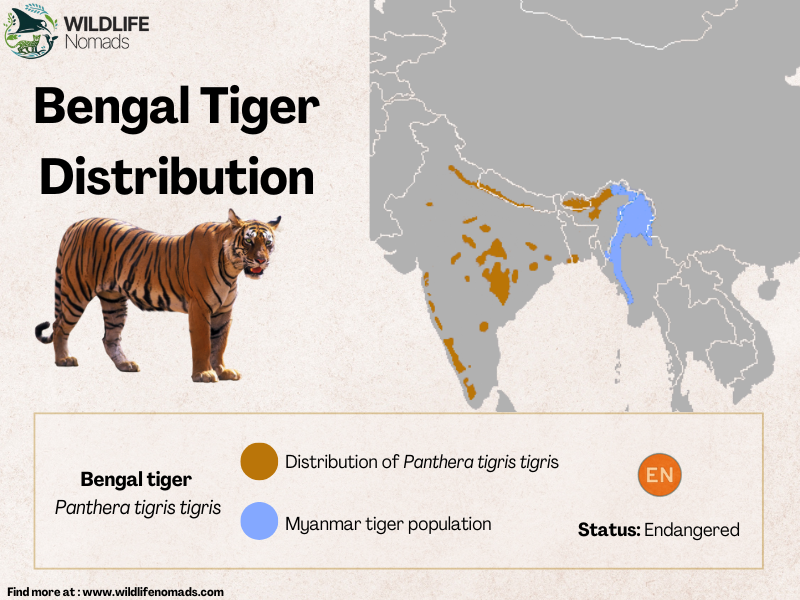
The bengal tiger habitat is incredibly diverse and adaptable. While we often associate them with “the jungle,” their range spans various ecosystems:
India: Home to roughly 75% of the global wild tiger population. Tigers live in national parks across the Indian subcontinent, including temperate forests and tropical forests.
Nepal: Specifically Chitwan National Park, where bengal tiger numbers have remarkably doubled in recent years. Young tigers dispersing from protected areas are creating new populations.
Bhutan: Where tigers have been spotted at surprisingly high altitudes in the Himalayas, proving their adaptability.
Bangladesh: The famous Bangladesh Sundarbans—the largest mangrove forest in the world—hosts a unique bengal tiger population.
The bengal tiger population in Nepal is particularly interesting to biologists. These tigers prove they can thrive in temperate grasslands and thick bush, not just tropical heat. Furthermore, tiger habitat in protected areas like national parks has become critical for the endangered species’ survival.
4. Ghosts of the Mangrove Forest: The Bangladesh Sundarbans Tigers
The Bengal tiger in Bangladesh is a unique beast. In the Sundarbans, tigers have adapted to a semi-aquatic lifestyle that’s unmatched anywhere else. The mangrove swamps are a harsh environment—the water is salty, the mud is thick, and the prey is smaller.
Biologists refer to these as a distinct “eco-type.” The Bengal tigers of the Sundarbans exhibit incredible ecological plasticity, meaning they have physically adapted to their environment over the last 2,000 years. They are significantly more compact than their cousins in the Himalayan foothills; a male in the Sundarbans typically weighs between 100–150 kg, nearly half the weight of a mainland male. This smaller frame is a necessary evolution for navigating deep mud and swimming miles of open water.
These tigers are famously aquatic, known to swim across rivers over 5 miles wide. However, this habitat is under threat. Rising sea levels due to climate change endanger the world’s only mangrove tiger habitat. Despite this, conservation is working: the 2024 Bangladesh Tiger Survey recorded an increase to 125 tigers, a nearly 10% jump from 2018.
Local communities still face significant human-tiger conflict. Fishermen and honey collectors often venture into the forest, leading to dangerous encounters. To combat this, the Forest Department has begun installing 60 kilometers of nylon fencing to separate tiger territories from human villages, a modern solution to an ancient struggle for space.
This video provides a rare look at how Bengal tigers have adapted to the mangrove environment, specifically showcasing their swimming abilities and hunting strategies.
5. What Bengal Tigers Eat: The Apex Predator’s Menu
As an apex predator, the Bengal tiger keeps the ecosystem in check. If they disappear, the herbivore population explodes, leading to overgrazing and forest destruction. I’ve written before about nilgai and Asian water buffalo, these are the “heavy hitters” on the tiger’s menu.
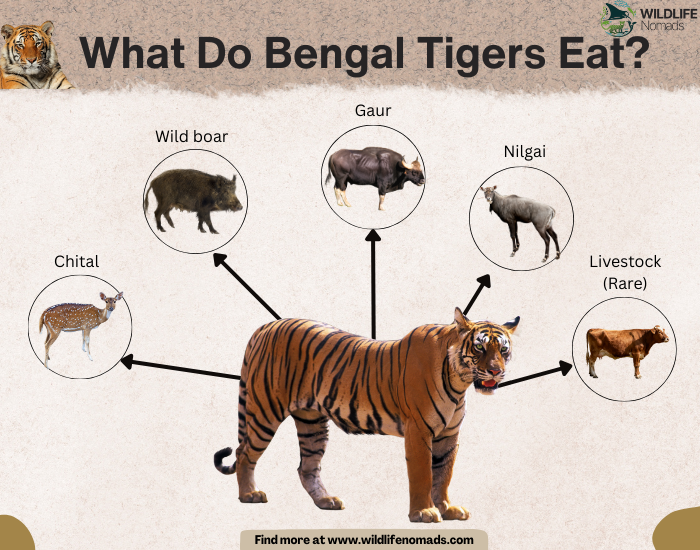
A hungry tiger can consume up to 30kg (66 lbs) of meat in a single night. Their main prey includes:
Chital (Spotted Deer): The “bread and butter” of their diet. These deer are abundant in many national parks where tigers live.
Wild Boar: Dangerous prey that requires precision to kill. Wild pigs can inflict serious injuries with their tusks.
Gaur: The largest bovine in the world. Only a Bengal tiger has the raw power to take down a 1,000kg bull gaur.
Other Prey: Includes sambar deer, nilgai, and occasionally domestic livestock in areas with human tiger conflict.
The predator-prey dynamic maintains balance in tropical forests and grasslands. Without bengal tigers, entire ecosystems would collapse. This makes tiger conservation critical not just for tigers, but for thousands of other animals and favorite animals that share their habitat.
6. Bengal Tiger Population: How Many Are Left in the Wild?
The bengal tiger number is the most critical metric in conservation. In the early 1900s, there were over 100,000 wild tiger populations across Asia. By the 1970s, we had nearly lost them all.
Thanks to intensive tiger conservation efforts like “Project Tiger” in India, bengal tiger numbers are rebounding. Current estimates place the bengal tiger population at approximately 3,500 individuals in the wild.
India’s 2022 census reported 3,167 tigers, a significant increase from previous years. This makes India the stronghold for the remaining tigers in the world.
While these tiger numbers are encouraging, they remain an endangered species listed on the IUCN Red List. Tiger reserves and national parks across the Indian subcontinent are essential to their survival. However, isolated populations face genetic challenges.
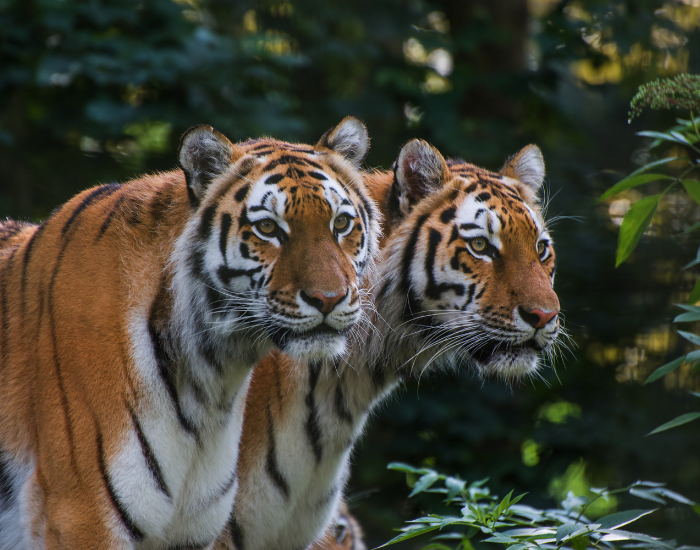
7. The Mystery of White Bengal Tigers: Not True Albinos
Remember the white tiger I saw at the zoo? Biologically speaking, white tigers are not true albinos, as they still produce melanin for their eyes and stripes. Instead, they possess a rare genetic condition caused by a mutation in the SLC45A2 gene. This recessive trait inhibits the production of red and yellow pigments (pheomelanin) that create the classic orange coat, but leaves the black pigments (eumelanin) for the stripes intact.
In the wild, a white tiger faces a massive survival disadvantage. Without their orange-and-black disruptive coloration, they lack the camouflage needed to stalk prey effectively in the dappled light of the forest. This is why the trait is virtually non-existent in nature; natural selection favors the orange coat.
Almost all white tigers in captivity today are descendants of a single male named Mohan, captured in the wilds of Rewa in 1951. To keep the white trait alive for public display, breeders often rely on intensive inbreeding. This practice has led to a high prevalence of health issues, including visual impairments (strabismus), immune deficiencies, and skeletal deformities. While they are striking to look at, white tigers are a genetic anomaly of captivity, not a separate subspecies or a conservation priority.
8. Territorial Behavior: The Solitary Hunter’s Domain
Unlike lions, bengal tigers are solitary animals. A male tiger will maintain a massive territory—up to 100 square kilometers, that usually overlaps with the territories of several female tigers.
Male tigers mark their territory using several methods:
Scent marking: Spray containing pheromones that signal their presence.
Scratches on tree bark: Visual markers that demonstrate their size and strength.
Vocalizations: Roars that can be heard over 2 miles away, warning other tigers to stay away.
If a younger male tiger tries to move into an established male’s territory, the resulting conflict is often fatal. This is why habitat destruction is such a problem. Tigers need space to move without constant territorial fights.
In areas like Chitwan National Park and other tiger reserves, researchers track bengal tiger rivals and territorial disputes. Understanding these patterns helps the Forest Department manage protected areas effectively.
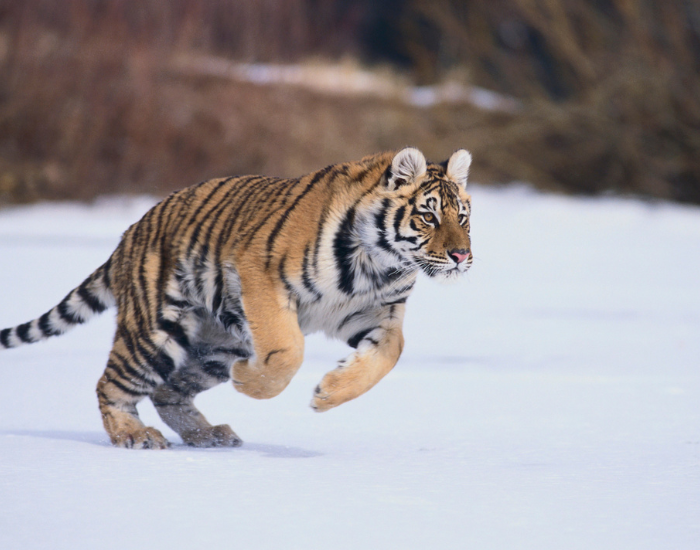
9. Are Bengal Tigers Dangerous to Humans? Understanding Human Tiger Conflict
I’ll be direct here: Yes, bengal tigers are dangerous. Unlike some African wild cats that might ignore a safari vehicle, the Bengal tiger is highly territorial and inherently wary of humans.
While they aren’t natural “man eating” predators, human tiger conflict is a real issue. As villages expand into tiger habitat, tigers may prey on domestic livestock. In rare cases, usually involving an old or injured tiger that can no longer hunt fast prey like deer, they may turn to humans.
The Bangladesh Sundarbans has historically seen more human tiger conflict than other areas. However, in most of their range, wild tigers avoid humans at all costs.
Conservation efforts now focus on reducing conflict. This includes:
- Protecting domestic livestock with better enclosures
- Creating buffer zones between villages and tiger reserves
- Educating local communities about tiger behavior
- Compensating farmers for livestock losses
Therefore, killing tigers in retaliation has decreased in many areas. The Indian Government and Bangladesh Forest Department work with local communities to promote coexistence.
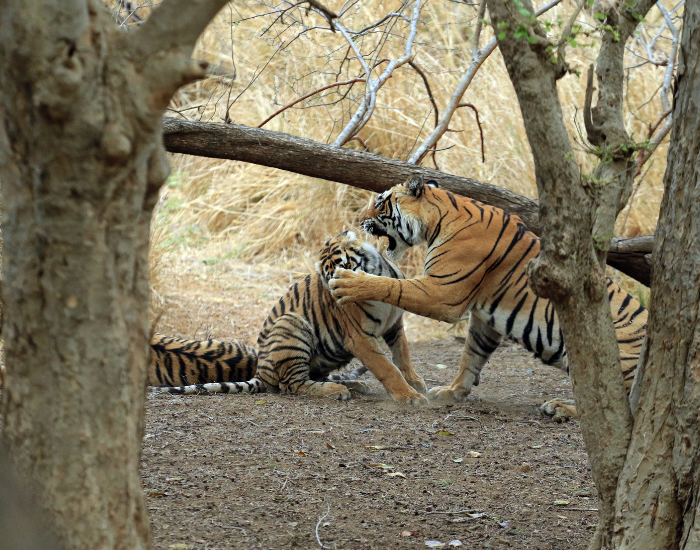
10. Bengal Tiger Reproduction: The Struggle for Survival
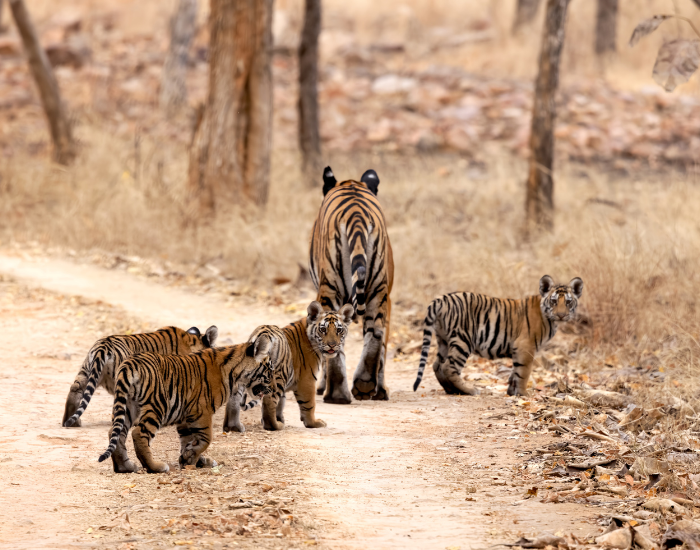
A female tiger reaches sexual maturity at about 3-4 years. After a gestation period of roughly 100 days, she gives birth to 2-4 cubs in a hidden den.
The first two years are the most dangerous for young tigers. Tiger cubs must learn to hunt and defend themselves. Mortality rates are high, nearly 50% of cubs don’t reach adulthood due to:
Infanticide by rival males: New dominant males often kill cubs to bring females back into breeding condition.
Starvation: If the mother is killed or injured, cubs cannot survive alone.
Injuries from prey: Even young tigers learning to hunt can be injured by wild boar or other dangerous prey.
Female bengal tigers are devoted mothers. They teach cubs everything from stalking techniques to identifying the best prey. In national parks with stable tiger populations, more cubs survive to adulthood.
Tiger numbers in protected areas grow when female tigers successfully raise cubs. Therefore, protecting breeding females is critical for tiger conservation.
11. Major Threats: Why Bengal Tigers Remain an Endangered Species
It isn’t just one thing threatening the bengal tiger. It’s a perfect storm of multiple factors:
Poaching: The illegal trade in tiger parts remains a multi-million dollar industry. Tiger bones, skin, and other body parts are sold for traditional medicines despite having no proven medical value.
Habitat Destruction: We’re losing tropical forests and grasslands to urbanization and agriculture at an alarming rate. Fragmented habitat creates isolated populations that can’t maintain genetic diversity.
Climate Change: In the Sundarbans, rising sea levels are literally drowning tiger habitat. Mangrove swamps are particularly vulnerable.
Human Tiger Conflict: As human populations expand, conflicts increase. Domestic livestock predation leads to retaliatory killing tigers.
Tiger reserves and national parks must expand to support growing tiger populations. In addition, connecting fragmented habitats through wildlife corridors allows tigers to move safely between protected areas.
12. Bengal Tiger vs Siberian Tigers: Which Is the Ultimate Cat?
While we now know that Bengal and Siberian (Amur) tigers are part of the same Mainland Asian tiger subspecies, they have evolved distinct physical traits to survive in their specific climates.
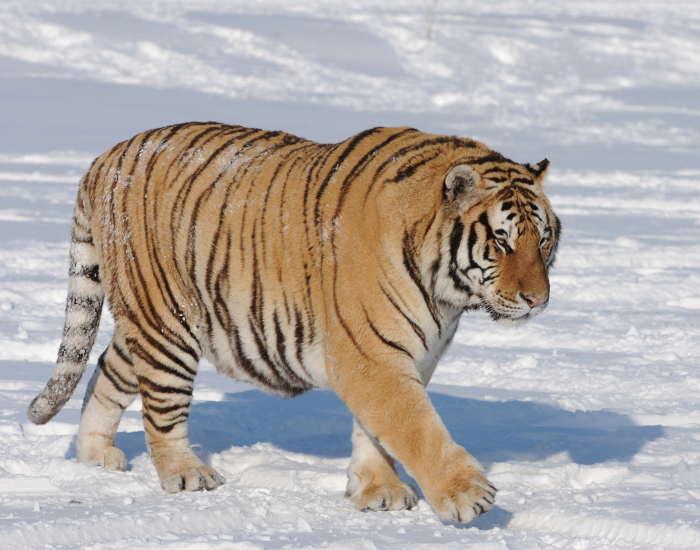
- Siberian (Amur) Tigers: Adapted for the Russian Far East, they have a longer body, thicker fur, and a layer of fat to survive sub-zero temperatures. Historically, they held the heavyweight title, but recent studies show that wild Siberian males are often smaller than they were a century ago due to habitat fragmentation.
- Bengal Tigers: Living in the prey-rich environments of India and Nepal, Bengals have shorter fur and a more compact, muscular build. Because their habitat is more crowded, they are often statistically more territorial and aggressive.
While the Siberian tiger is often longer from nose to tail, the Bengal tiger is now widely considered the current heavyweight champion in the wild. High prey density in places like Kaziranga National Park allows Bengal males to reach massive weights that rival or exceed modern wild Siberian tigers.
Ultimately, comparing the two is like comparing a heavyweight boxer to a mountain climber—both are peak athletes of the same species, perfectly tuned for their “home court.”
FAQ: Your Quick Bengal Tiger Questions Answered
Yes, it’s the most numerous subspecies of tiger (Panthera tigris tigris) and is found primarily in India, Bangladesh, Nepal, and Bhutan.
Approximately 3,500 remain in wild tiger populations, making them an endangered species despite recent population increases.
Yes, but they have a rare genetic mutation called leucism. White bengal tigers exist almost exclusively in captivity and descend from a single wild male caught in 1951.
Habitat destruction, poaching for body parts and traditional medicines, human tiger conflict, and climate change (especially affecting the Sundarbans population) all threaten their survival.

Protecting the King of Asian Forests
Looking back at that kid in the zoo, I realize now that my “encounter” was just a glimpse into a much larger, more complex story of survival. The bengal tiger isn’t just a mascot or a beautiful animal to admire. It’s a biological indicator of the health of our planet’s forests.
When we protect bengal tigers, we protect the water, the trees, and thousands of other animals. from Asian water buffalo to nilgai, that share their habitat. They are the true kings of Asian jungles, and it’s our job to ensure they have a kingdom left to rule.
Tiger conservation isn’t just about saving one species. It’s about preserving entire ecosystems that support countless other favorite animals and plants. National parks and tiger reserves across the Indian subcontinent represent hope for the future.
The remaining tigers of the world, all subspecies, deserve a future. Wild tiger populations can recover if we give them space, protection, and respect. The comeback of bengal tiger numbers proves this is possible.
Where to see Bengal Tigers?
Here is a list of 6 safari tours where you can see some bengal tigers. As a biologist, I only recommend tours that follow strict ethical guidelines to ensure we don’t disturb wildlife. These are the three tours/ partners I trust most based on their conservation records:
This blog is reader-supported. When you buy experiences through links listed on this site, we may earn an affiliate commission.