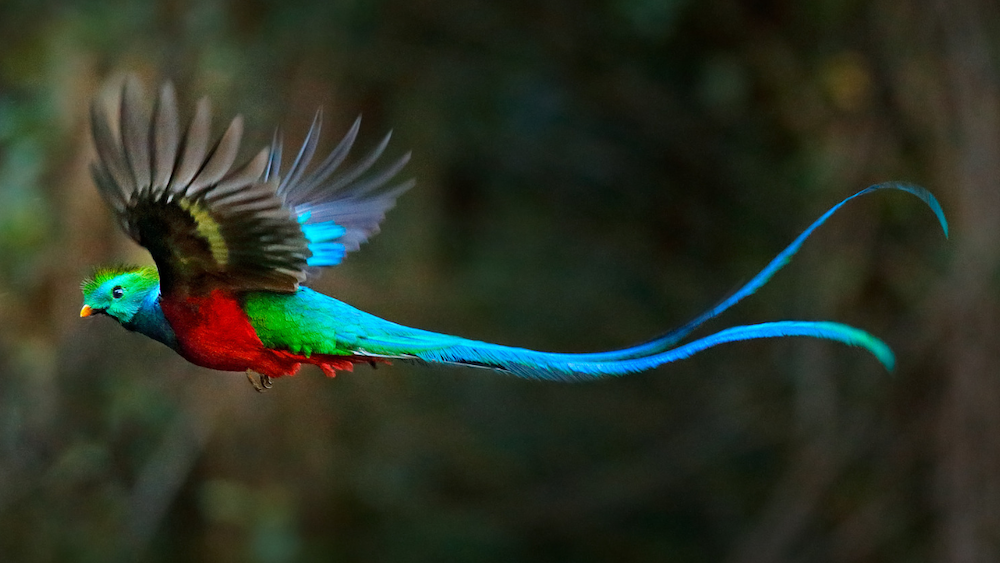
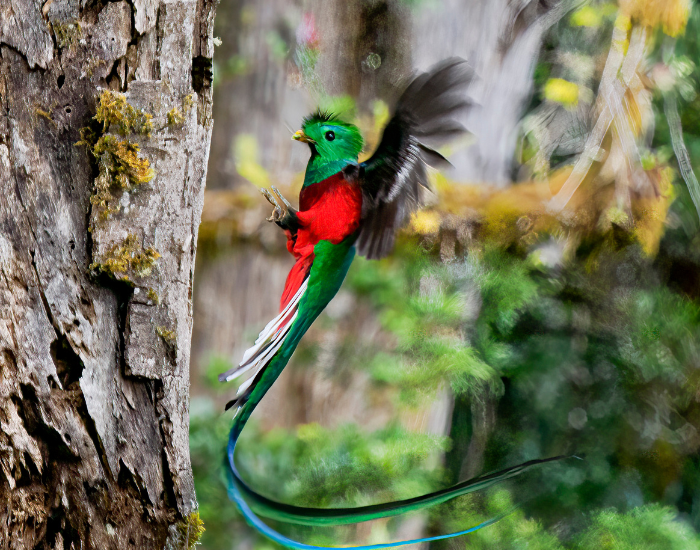
Recently, a video went viral showing a male resplendent quetzal leaving a misty branch. As the quetzal flew, its long green plumes rippled behind it like a snake. It didn’t look like a bird. Actually it looked like a dragon.
It looked exactly like Quetzalcoatl, the feathered serpent god. I spent years reading about that god while exploring the ancient Maya ruins of Palenque and Chichén Itzá. I also walked among the pyramids of Teotihuacan, near Mexico City.
Still, I have never seen a quetzal in the wild. That gap haunts me. This bird outlived empires, the Spanish conquest and centuries of habitat loss. Today it remains the national bird of Guatemala.
Below, I cover everything about this living emerald serpent: its five cousins, its odd feet, its nest, its yearly journey and its future.
🪶 How well do you know the quetzal?
Twelve questions on plumes, wild avocados, nest holes and feathered serpents. Read on, then test yourself at the end.
Jump to the quiz ↓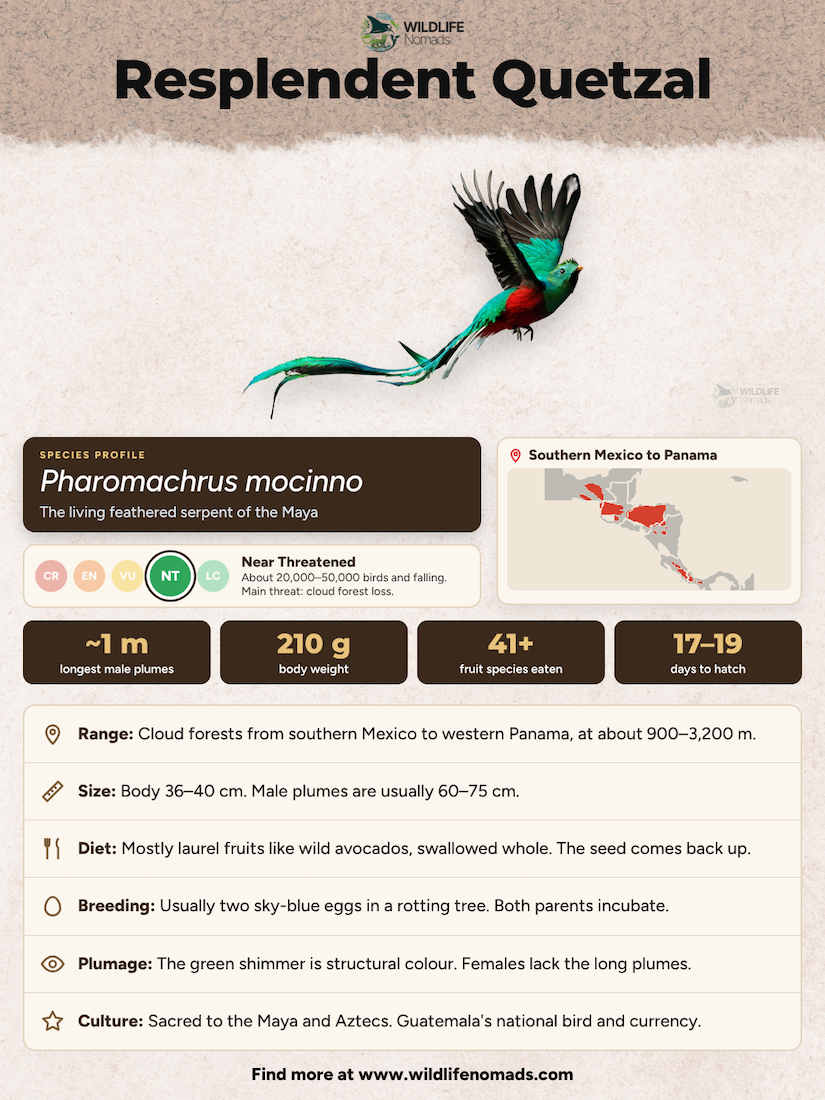
What is a Quetzal?
The resplendent quetzal (Pharomachrus mocinno) belongs to the trogon family, Trogonidae. It is the largest trogon of all. The word quetzal comes from the Nahuatl quetzalli, a long, shining feather.
The scientific name tells a story too. Pharomachrus joins the Greek words for mantle and long. Mocinno honours José Mariano Mociño, a Mexican naturalist of the 1700s.
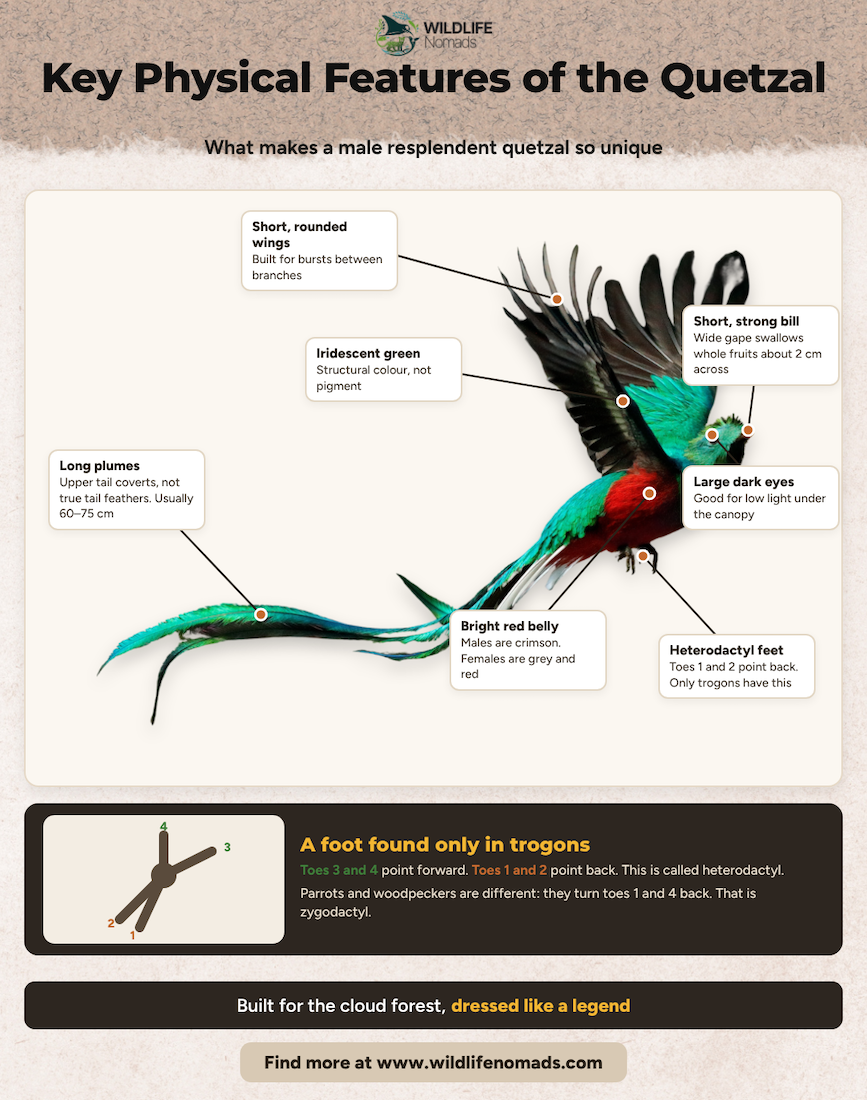
Here is the twist. Those long tail feathers aren’t really tail feathers. They are upper tail coverts, which grow over the true tail. In most males, they reach about 60 to 75 cm. A few stretch close to 1 m.
Male quetzals show off these plumes in courtship flights. No wonder they inspired centuries of myth.
Five Species of Quetzals You Should Know
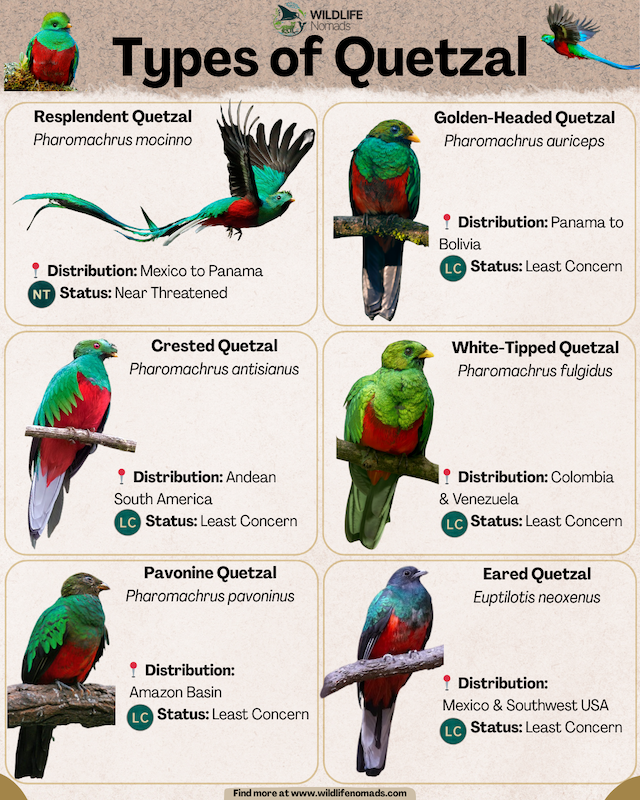
The resplendent quetzal gets the fame, but the genus Pharomachrus holds five species:
1. Resplendent Quetzal (Pharomachrus mocinno) lives from southern Mexico to western Panama. It is the most famous species and Guatemala’s national bird.
2. Golden-Headed Quetzal (Pharomachrus auriceps) lives in Andean cloud forests, from eastern Panama to Bolivia.
3. Crested Quetzal (Pharomachrus antisianus) is another Andean species, named for its bushy crest.
4. White-Tipped Quetzal (Pharomachrus fulgidus) lives in the mountains of Venezuela and northern Colombia. White tips on its outer tail feathers give it its name.
5. Pavonine Quetzal (Pharomachrus pavoninus) is the lowland one. It lives in the Amazon Basin of South America.
The eared quetzal (Euptilotis neoxenus) belongs to a different genus, and some guides call it the eared trogon. It is the only species of quetzal ever recorded in the United States. It turns up rarely in southeastern Arizona, and it first nested there in 1991.
Physical Characteristics That Define These Birds
Size and Appearance
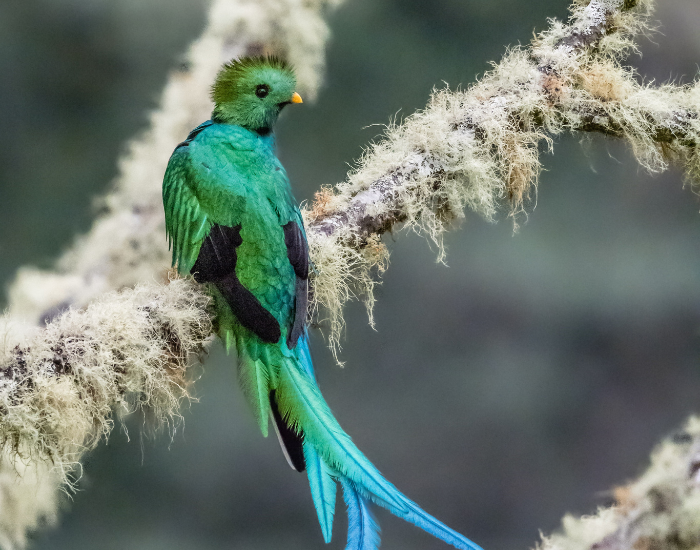
Quetzal birds measure about 36 to 40 cm (14 to 16 in) from bill to tail. With his plumes, a male resplendent quetzal can reach around 1 m in total. Those long tail plumes create one of nature’s most dramatic silhouettes.
The Spectacular Plumage
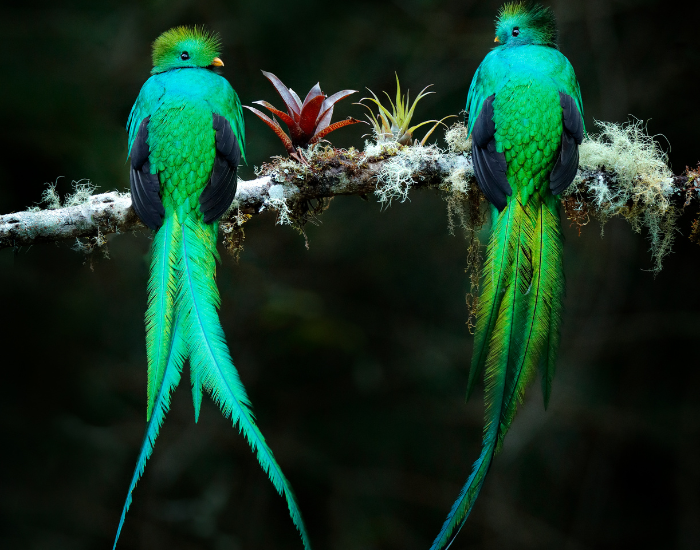
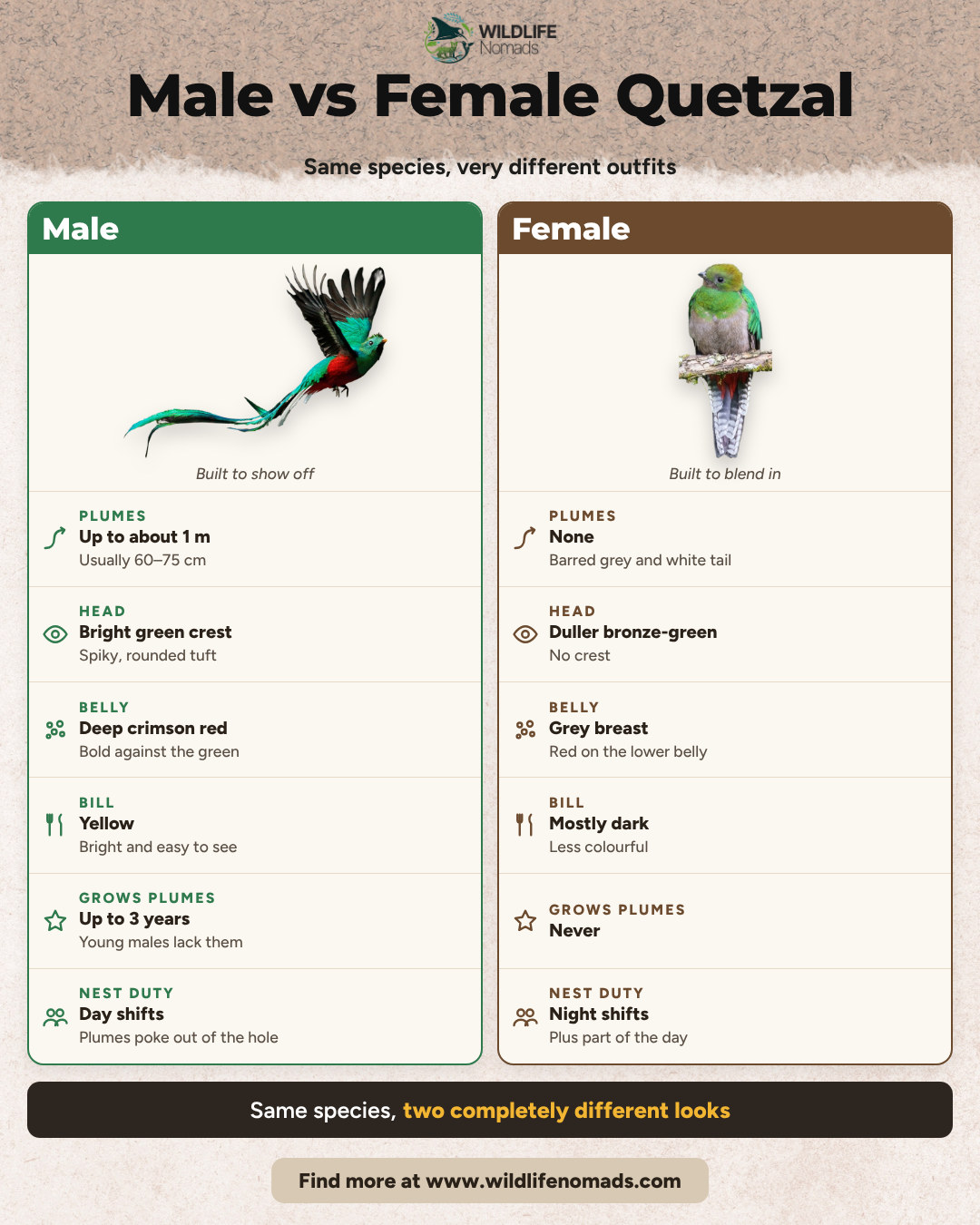
Males wear iridescent golden green feathers on the head, back and wing coverts. The breast and belly glow crimson red. Under the tail, the feathers are white.
Females are built to blend in. They have a bronze-green head, a grey breast and red only on the lower belly. They never grow the long plumes, and their tail is barred grey and white.
That shimmer comes from structural colour, not pigment. Tiny melanin structures inside the quetzal feathers bend the light. Out of direct sun, the green melts into wet, mossy leaves.
Specialised Features
Quetzals have short, strong bills with a wide gape. An adult’s gape measures about 2.1 cm, wide enough to swallow fruits whole.
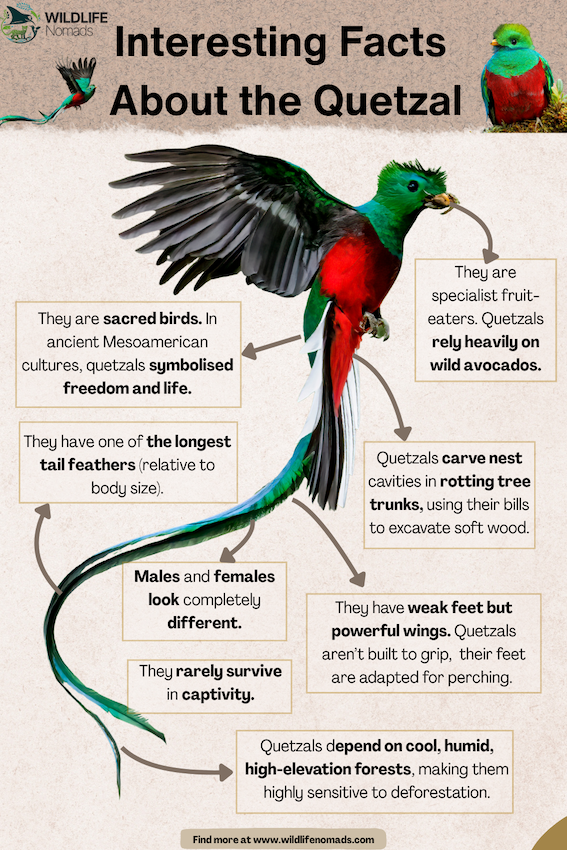
Their feet are unique. Like all trogons, they are heterodactyl: toes 1 and 2 point backwards. Parrots and woodpeckers turn toes 1 and 4 back instead. Quetzal feet are small and weak, built for perching high in the canopy, not for walking.
Where Quetzals Are Found
Natural Habitat
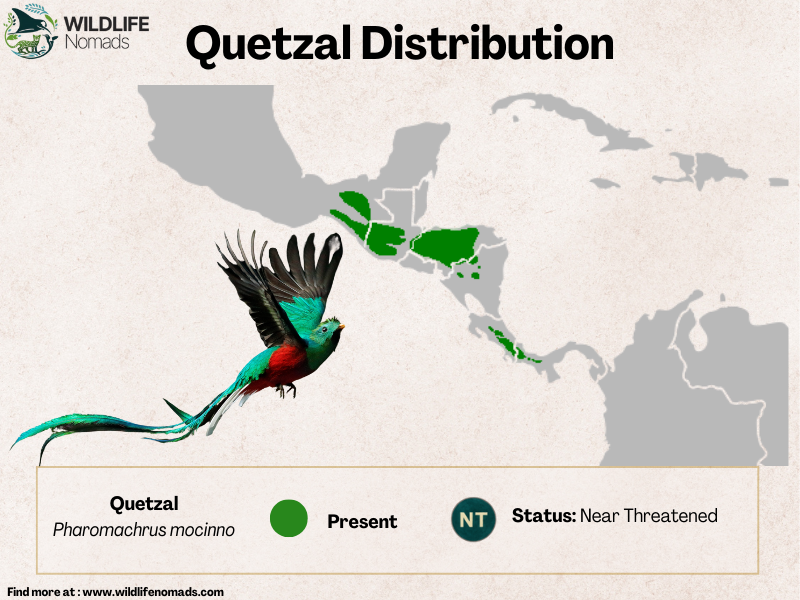
Quetzals live in the cloud forests of Central America. Mist, moss and humidity rule these mountains. Most quetzals live between about 900 and 3,200 m.
Their natural habitat needs three things: tall forest, old rotting trees for nests and plenty of fruiting trees. You can explore how these forest layers stack up in our rainforest layers tool.
You can find quetzal birds in:
- Guatemala: the bird’s cultural home and national symbol
- Costa Rica: the easiest country for bird watchers hoping to see one
- Southern Mexico: the high cloud forests of Chiapas and Oaxaca
- Honduras: mountain parks such as Celaque and Cusuco
- El Salvador: remaining cloud forest patches, such as Montecristo
- Nicaragua: the northern highlands
- Western Panama: the cloud forests of Chiriquí
Geographic Distribution
The resplendent quetzal ranges from southern Mexico to western Panama. Scientists recognise two subspecies. The northern one lives from Mexico to Nicaragua. The southern one lives in Costa Rica and Panama.
The other quetzal birds keep to South America. The golden-headed and crested quetzals live in the Andes. The pavonine quetzal prefers the Amazon’s tropical forests.
I’ve trekked through the rainforest of Chiapas many times. I’ve stood on the Maya ruins of Palenque, scanning the canopy for those plumes. And I’ve seen iconic jungle birds and many birds of Mexico. But never a quetzal. Despite all that colour, they vanish into the mist.
A Bird That Follows the Fruit
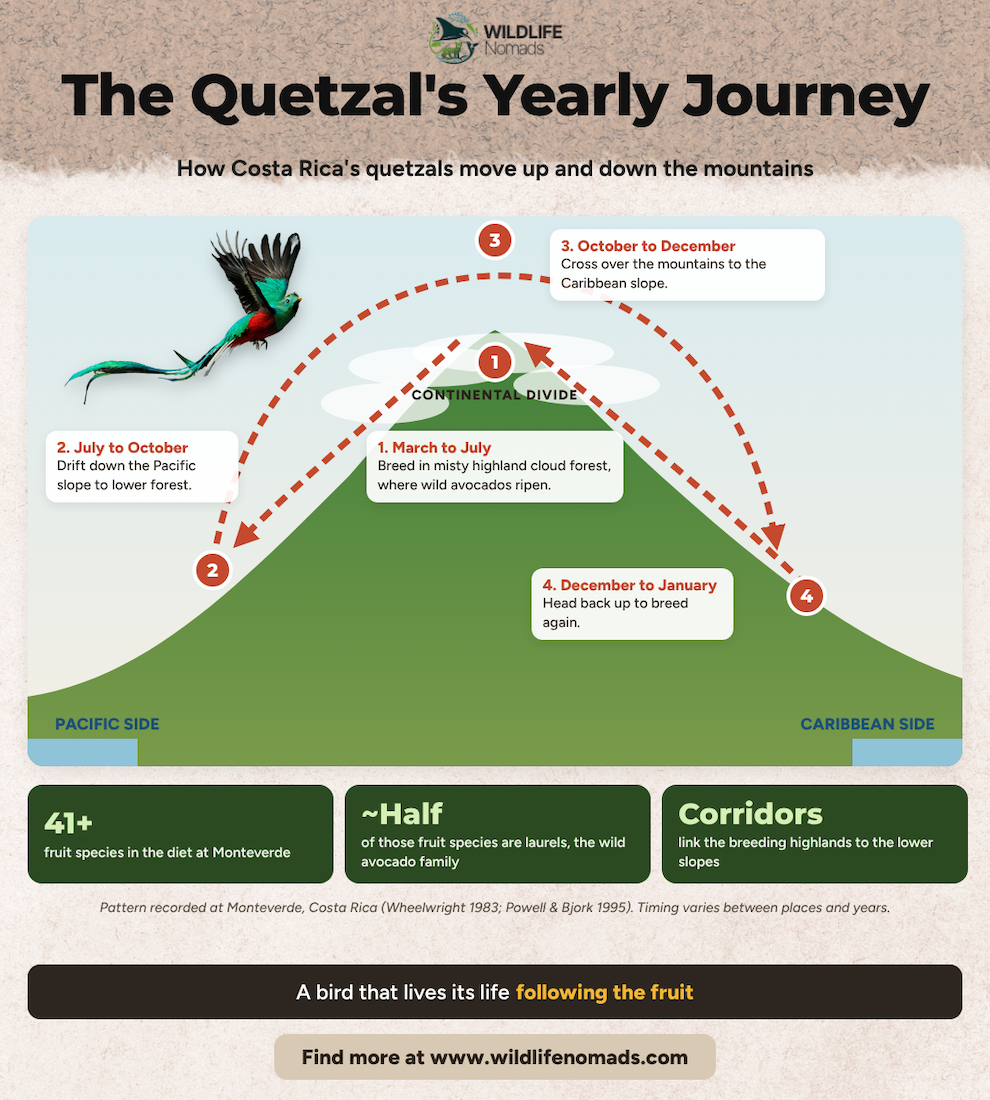
The resplendent quetzal is an altitudinal migrant. It doesn’t cross continents. Instead, it moves up and down its own mountains.
In Costa Rica, radio-tracked quetzals bred in the highland cloud forest from March to July. Afterwards, they drifted down the Pacific slope. Later in the year, they crossed to the Caribbean slope, then climbed back to breed.
The driver is fruit. Quetzals track trees of the laurel family as they ripen at different heights. That is why protected forest corridors matter so much. Read more in our guide to wildlife corridors.
The Diet of a Legend: What Does a Quetzal Eat?
What Quetzals Eat
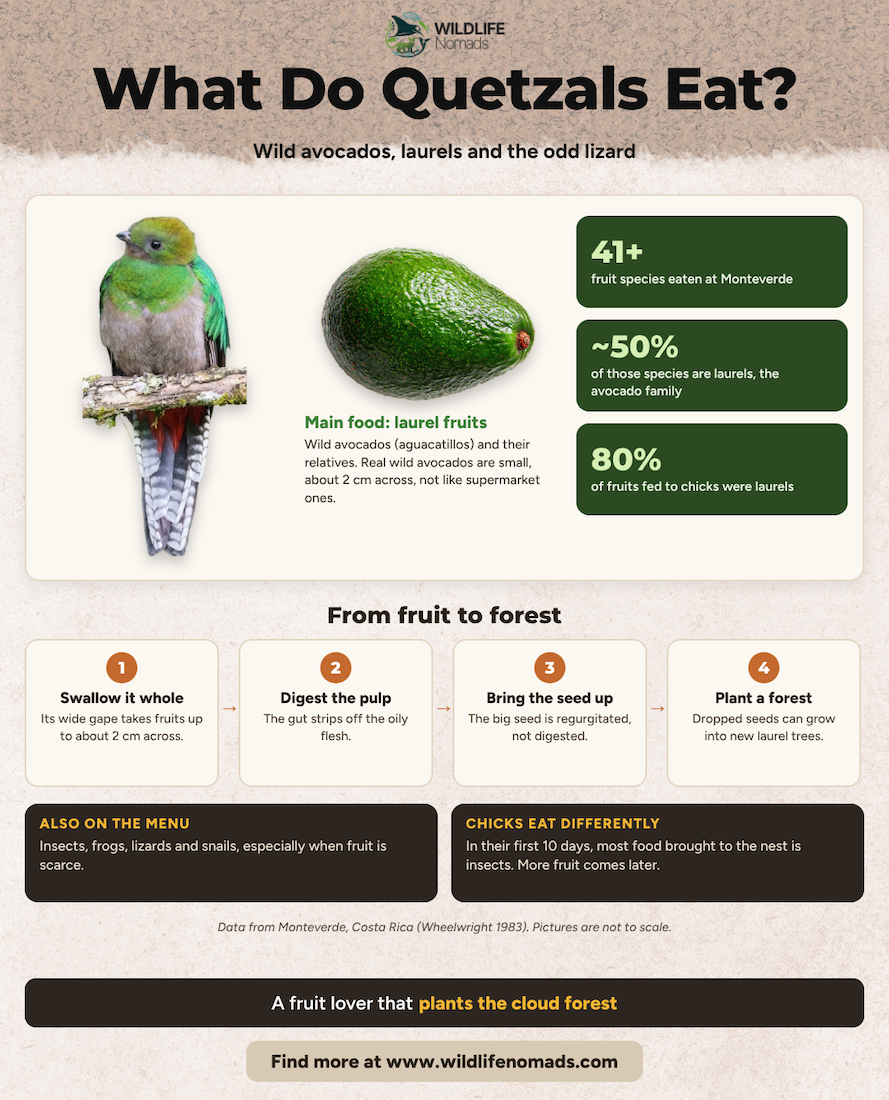
Quetzals are mainly frugivorous, which means they live on fruit. At Monteverde, researchers recorded at least 41 fruit species in their diet. About half came from the laurel family, the family of wild avocado trees.
They pluck fruit in flight, hovering or swooping from a perch. Then they swallow it whole. After digesting the pulp, they regurgitate the large seed.
That is the role the quetzal plays in forest regeneration. Few other birds have a gape wide enough for large wild avocado fruits. Quetzals are one of the few seed dispersers that can carry them.
Fruit isn’t everything. Quetzals also eat insects, snails, small frogs and lizards. Chicks get the most protein: in their first days, over half their meals are insects and lizards.
Breeding and Survival: The Cycle of the Serpent
Mating Displays
The breeding season runs from about March to July, peaking in April and May. During the mating season, males fly up above the canopy, calling, then dive back down with their plumes rippling. These flights help them attract females and hold territories.
Nesting and Eggs
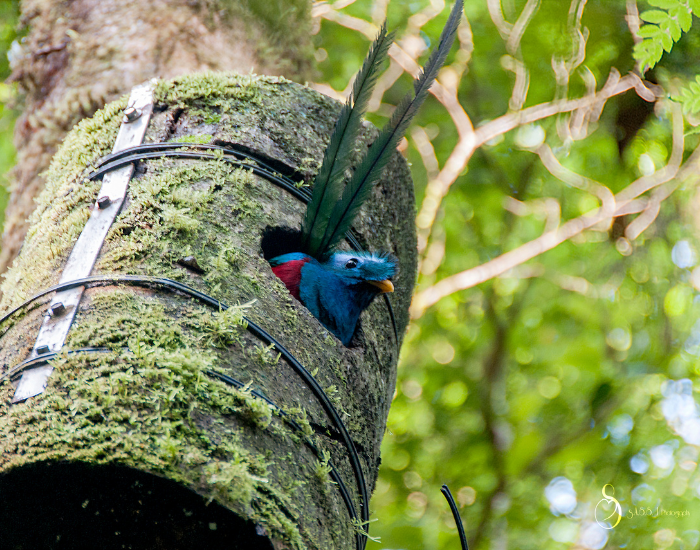
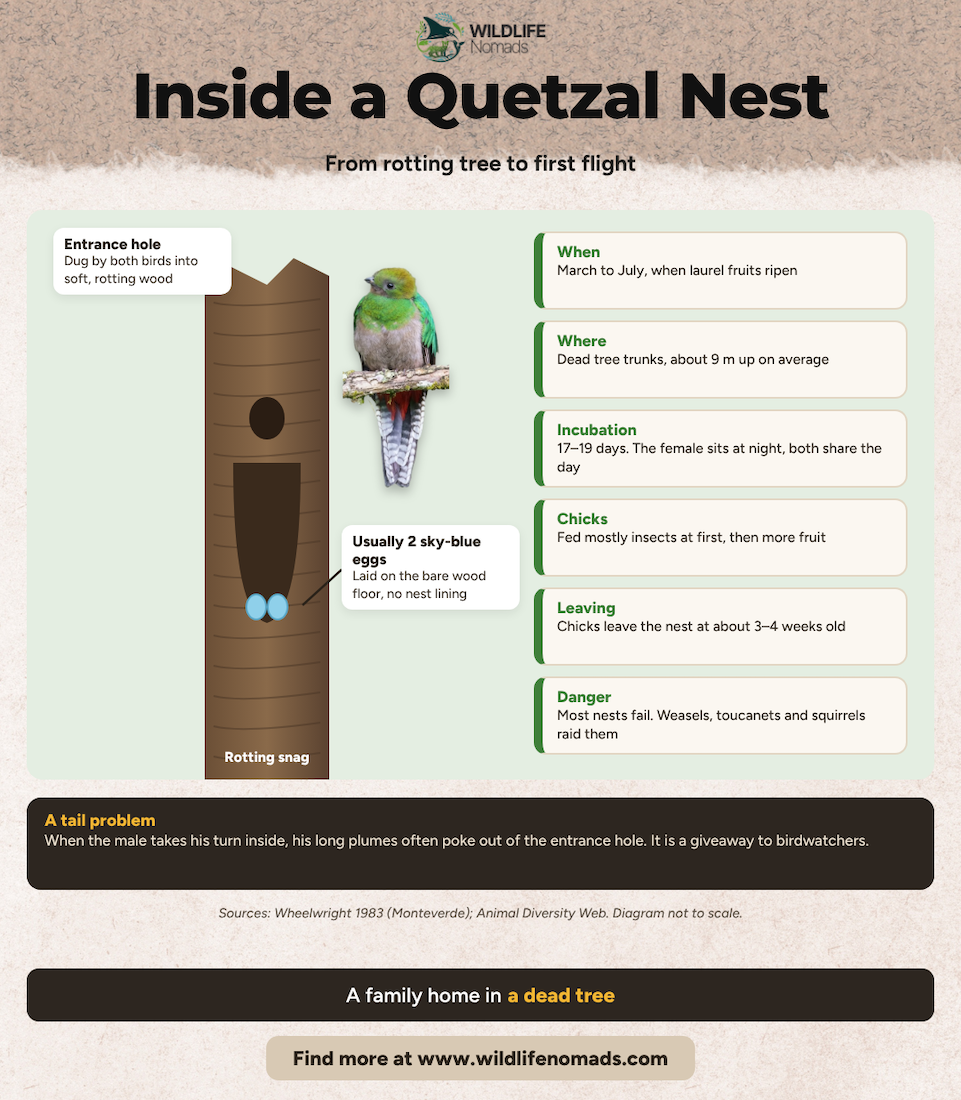
Quetzals nest in holes in rotting trees, often dead snags around 9 m above the ground. Both birds dig the nesting cavity into soft wood, or they enlarge an old woodpecker hole.
The female lays one to three eggs, usually two sky-blue eggs on the bare wood. The pair take turns incubating. The female sits through the night, and both share the day.
Males tend the eggs in daytime shifts, but their plumes rarely fit inside. A male sits facing out, and his plumes often poke out of the entrance. Birders use that giveaway to find the nest site.
The incubation period lasts 17 to 19 days. Once the chicks hatch, both parents bring food. Quetzals feed their chicks mostly insects at first. The young quetzals leave the nest at about three to four weeks old.
Survival is hard. In one Monteverde study, 67% to 78% of nests failed. Weasels, squirrels and emerald toucanets raid them. Read more about these toucan relatives.
Life Cycle
Young males don’t grow their full plumes until about their third year. Until then, they look closer to females. Wild lifespan is poorly known, because so few birds have been followed from hatching.
A Bird That Inspired Empires: Cultural Significance
The Feathered Serpent God
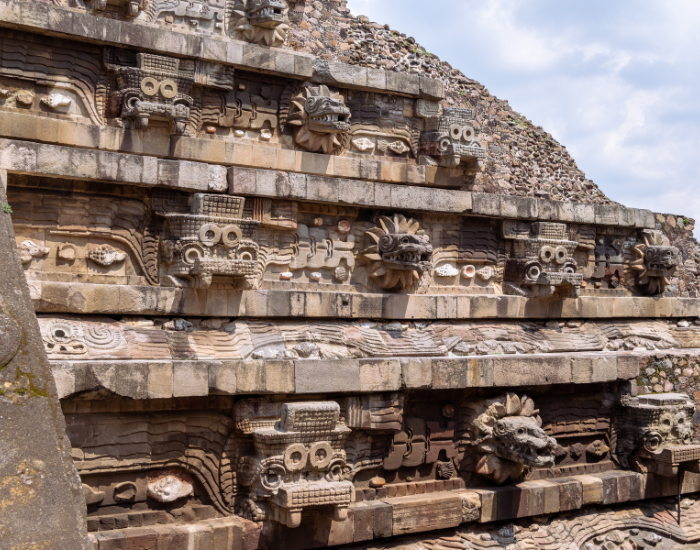
Across Mesoamerica, the quetzal was sacred. The Aztecs and the people of Teotihuacan honoured Quetzalcoatl, the feathered serpent. His Nahuatl name joins quetzalli, the precious feather, with coatl, the serpent.
In Mayan culture, the feathered serpent had its own names. The Yucatec Maya called him Kukulkan, and the K’iche’ Maya called him Q’uq’umatz. The same god carried names in several Mesoamerican languages.
The long green plumes symbolised spring plant growth and fertility. Only rulers, nobles and priests wore them. Many accounts say people trapped males, took a few plumes and released the birds.
To the Aztecs, these feathers were worth more than gold. The Spanish conquistadors, who wanted gold, found that hard to understand.
Symbol of Freedom
An old belief says quetzals die of sadness in captivity. That idea made the bird a symbol of freedom. It isn’t fully true, though. The Miguel Álvarez del Toro Zoo in Tuxtla Gutiérrez, Chiapas, announced successful captive breeding in 2004.
When I walked through the ruins of Tikal, I pictured rulers in towering headdresses of these iridescent plumes. It was easy to imagine. The forest still breathes around those temples.
Modern Guatemala
The resplendent quetzal is Guatemala’s national bird. It sits on the flag and the coat of arms. The currency is the Guatemalan quetzal.
A K’iche’ legend links the bird to Tecún Umán, who fought the conquistador Pedro de Alvarado in 1524. The story says the quetzal’s breast turned red with the hero’s blood.
Today, the bird also pays bills. Local guides and lodges across its range earn a living from quetzal tourism.
Conservation Status and Threats
Current Status
The conservation status of the resplendent quetzal is Near Threatened on the IUCN Red List. BirdLife International estimates 20,000 to 49,999 mature birds, and the number is falling.
It also sits on the Partners in Flight Red Watch List. As a biologist, I look past the wow factor to that trend line.
Major Threats
Habitat loss: the biggest threat is losing the cloud forests of Central America. Farms, cattle pasture, logging and roads keep cutting into them. Fragments leave quetzals in small, isolated groups.
Climate change: cloud forests depend on mist. At Monteverde, researchers linked warmer seas to fewer misty days and a rising cloud base. If the clouds keep climbing, these forests have nowhere left to go.
Hunting and trade: some quetzals are still hunted or trapped for the illegal wildlife trade. It is a smaller threat than habitat loss, but it still happens.
Best Places to See Quetzals
Costa Rica
Costa Rica is the easiest place to see a quetzal, along with many other birds of Costa Rica. Monteverde Cloud Forest Reserve and the San Gerardo de Dota valley are prime spots. Your odds of seeing these spectacular birds rise from March to July.
Guatemala
Guatemala is the bird’s cultural homeland. The Biotopo del Quetzal in Baja Verapaz was created to protect it. Seeing a quetzal there links you to centuries of cultural significance.
Mexico and Panama
In Chiapas, the El Triunfo Biosphere Reserve protects some of Mexico’s best quetzal forest. In Panama, birders head to the trails around Volcán Barú in Chiriquí. See more places to see animals in Mexico.
Find a Birdwatching Tour to Spot the Quetzal!
Choose tours that keep a respectful distance from nests and never use playback to pull birds in. Here are tours you can book:
Your FAQs about the Quetzal
No. Capturing or keeping a wild quetzal is illegal across its range. Quetzals also need cool, humid forest and a specialised fruit diet. A quetzal belongs in the cloud forest, not a cage.
They aren’t close to extinction, but they are declining. The IUCN lists the resplendent quetzal as Near Threatened, with 20,000 to 49,999 mature birds. They are also shy and hard to spot, though Costa Rica’s best sites give good odds in the breeding season.
Yes. Resplendent quetzals live in the high cloud forests of Chiapas and Oaxaca, the northern edge of their range. The eared quetzal also lives in western Mexico’s pine-oak mountains.
Their shimmer comes from structural colour. Tiny melanin structures inside the feathers bend the light, so the green changes with the angle. The male’s long plumes are upper tail coverts, not true tail feathers.
Six. Five species belong to the genus Pharomachrus: the resplendent, golden-headed, crested, white-tipped and pavonine quetzals. The eared quetzal sits in its own genus, Euptilotis.
Quetzals mainly eat fruit, especially wild avocados and other laurels. They swallow the fruit whole and regurgitate the seed. They also eat insects, snails, small frogs and lizards, which they feed to their chicks.
The breeding season, from about March to July, is best. Males are more active and vocal, and pairs return to the same nest trees. Early mornings at fruiting wild avocado trees give the best chances.
Let’s Save the Flying Serpent
We have mapped almost every corner of the planet. Yet the quetzal still feels like magic in natural history. It looks designed by myth-makers, and it lives on wild avocados in the heart of Central America.
That magic has limits. I don’t want this bird to join the extinct birds or the animals that went extinct recently. Cloud forests need to stay misty, and quetzals need to stay free.
You can help. Support protected areas and forest corridors, choose shade-grown coffee and travel with ethical guides. See how other species are doing in our Endangered Animals Explorer. Which bird would you most like to see in the wild?
This blog is reader-supported. When you buy experiences through links listed on this site, we may earn an affiliate commission.
References:
Pounds, J. A., Fogden, M. P. L., & Campbell, J. H. (1999). Biological response to climate change on a tropical mountain. Nature, 398(6728), 611–615. https://doi.org/10.1038/19297
Powell, G. V. N., & Bjork, R. (1995). Implications of intratropical migration on reserve design: A case study using Pharomachrus mocinno. Conservation Biology, 9(2), 354–362. https://doi.org/10.1046/j.1523-1739.1995.9020354.x
Renner, S. C. (2005). The resplendent quetzal (Pharomachrus mocinno) in the Sierra Yalijux, Alta Verapaz, Guatemala. Journal of Ornithology, 146(1), 79–84. https://doi.org/10.1007/s10336-004-0060-7
Solórzano, S., Castillo, S., Valverde, T., & Ávila, L. (2000). Quetzal abundance in relation to fruit availability in a cloud forest in southeastern Mexico. Biotropica, 32(3), 523–532. https://doi.org/10.1111/j.1744-7429.2000.tb00498.x
Wheelwright, N. T. (1983). Fruits and the ecology of resplendent quetzals. The Auk, 100(2), 286–301. https://doi.org/10.1093/auk/100.2.286
Wheelwright, N. T. (1985). Fruit-size, gape width, and the diets of fruit-eating birds. Ecology, 66(3), 808–818. https://doi.org/10.2307/1940542