When I first arrived in Australia, I was excited to finally experience its wildlife (not the dangerous animals everyone talks about) and birds up close. I assumed that would mean fieldwork in remote landscapes, not everyday life in suburban Sydney. Yet it was there that I first encountered Australian native animals like water dragons, black cockatoos, kingfishers, king parrots, and galahs, quietly sharing the same urban spaces.
During my first month, I heard heavy thumps and rhythmic scratching from the roof every night. It sounded like a determined burglar. However, one evening I stood on my balcony with a torch and locked eyes with a Common Brushtail Possum staring back with copper eyes.
After that encounter, my “invisible neighbour” became familiar. Later, my fieldwork in National Parks revealed that these marsupials aren’t just roof dwellers. They represent a complex, diverse group of survivors. From the tiny Mountain Pygmy Possum to acrobatic gliders, Australia hosts some of Earth’s most specialized marsupials.
In this guide, we explore the 15 types of possums you’re most likely to encounter in Australia, plus essential tips for living alongside them.
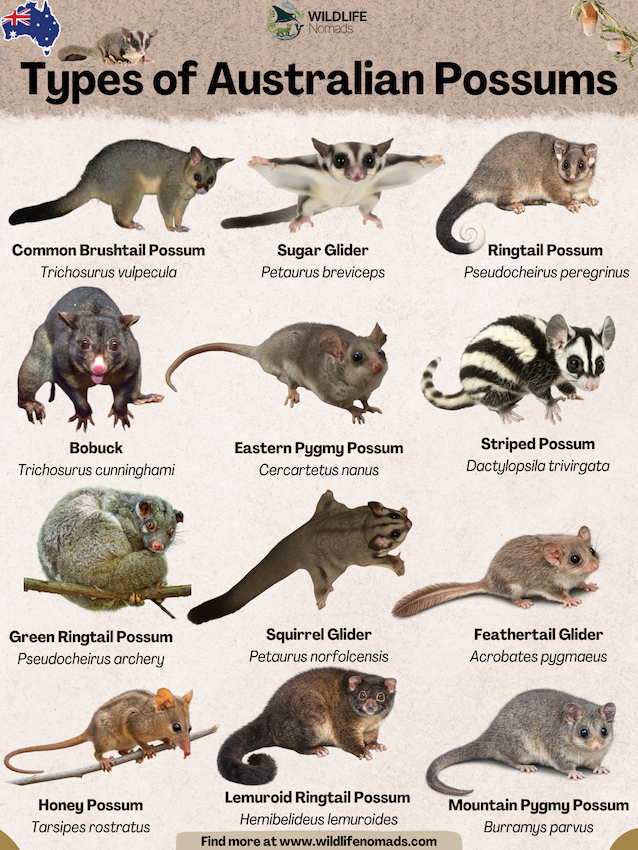
1. Common Brushtail Possum (Trichosurus vulpecula)
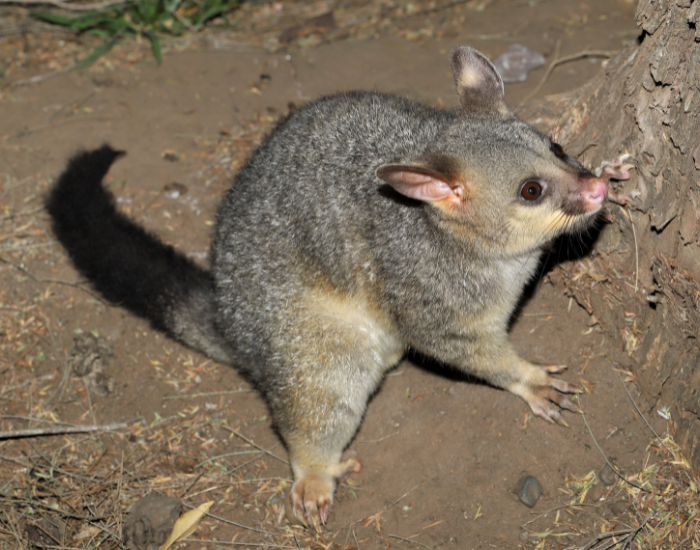
The heavyweight of suburban Australia. About the size of a domestic cat, the Common Brushtail Possum is the species you’ll most likely hear “river-dancing” on your tin roof at 2:00 AM.
Identification: Bushy tail, large pointed ears, and fur ranging from silver-grey to coppery-brown. The typical body length of a Common Brushtail Possum ranges from 32 to 58 cm (13 to 23 in), with males generally being larger than the female brushtail possum, which also has a well-developed pouch for carrying young.
Habitat: Found everywhere from urban Sydney to central deserts. In urban areas, brushtail possums can cause significant damage to ornamental plants in parks and gardens.
2. Common Ringtail Possum (Pseudocheirus peregrinus)
The “polite” cousin of the Brushtail. Common ringtail possums are smaller, more social, and far less likely to invade ceiling spaces.
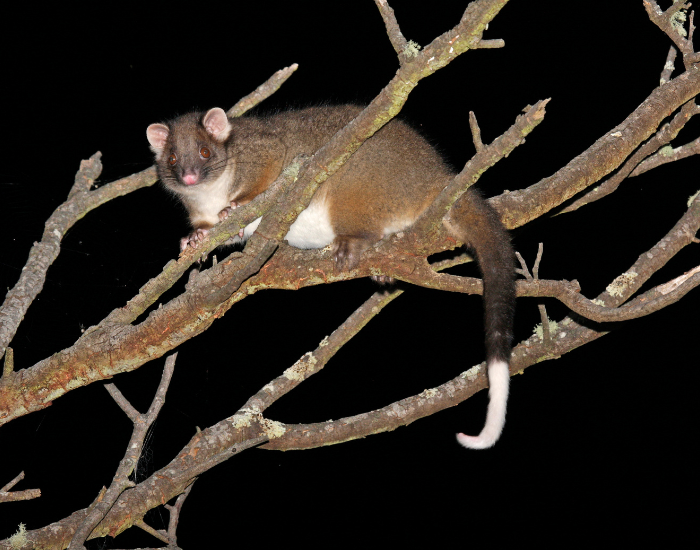
Identification: Slender build with a prehensile tail featuring a distinctive white tip. The Common Ringtail Possum is much smaller than the brushtail, about half the size of a cat, with round ears and a curled tail with a white tip. Their body length typically ranges from 30 to 35 cm, which is noticeably shorter than the brushtail possum.
Identification: Slender build with a prehensile tail featuring a distinctive white tip. The Common Ringtail Possum is much smaller than the brushtail, about half the size of a cat, with round ears and a curled tail with a white tip. Their body length typically ranges from 30 to 35 cm, which is noticeably shorter than the brushtail possum.
Habitat: Coastal forests and suburban gardens across the East Coast.
Behavior: They build spherical nests called dreys from sticks, bark, and grass. These structures are often visible in thick garden shrubs.
3. Mountain Brushtail Possum (Bobuck) (Trichosurus cunninghami)
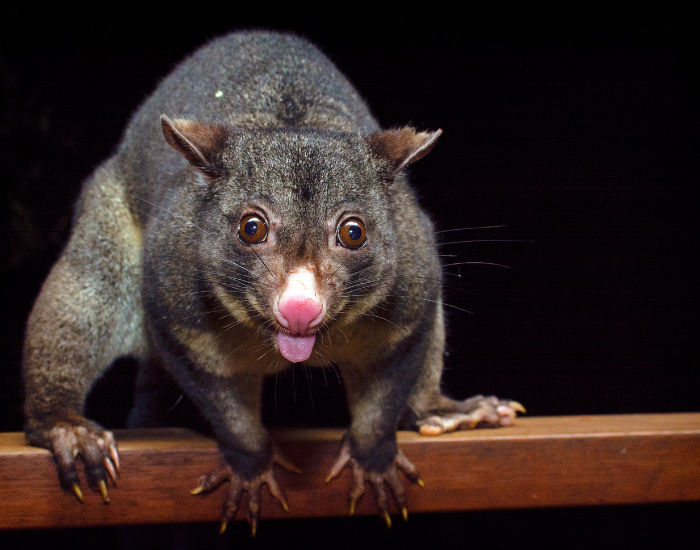
Found in wetter, high-altitude forests of Victoria and New South Wales, the Bobuck is a sturdier, darker version of its common cousin. These possums are particularly well-adapted to cold climates and are known for their thick, luxurious fur that provides excellent insulation. They prefer wet sclerophyll forests and can often be seen foraging for eucalyptus leaves and wattle during the cooler months. Unlike their urban-dwelling relatives, Bobucks tend to avoid human settlements and maintain a more solitary lifestyle in their mountain habitats.
Identification: Shorter, round ears and a very thick, bushy tail.
Note: Less likely to occupy roof spaces but commonly spotted by campers in places like Lamington National Park.
4. Sugar Glider (Petaurus breviceps)
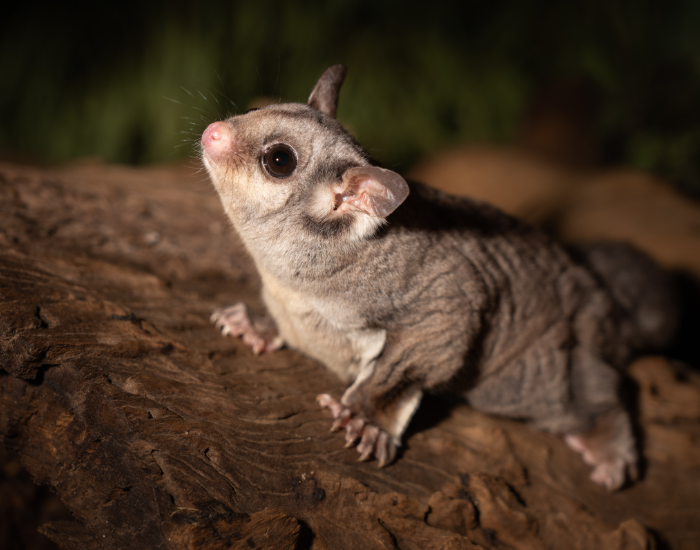
The “possum” that glides like a bird. These tiny creatures have a membrane (patagium) stretching from wrists to ankles, enabling glides up to 50 meters. Sugar Gliders are highly social animals, living in colonies of up to seven adults plus their young. They communicate through a range of vocalizations including barking, chattering, and hissing. Their ability to glide allows them to efficiently travel between trees while foraging, and they mark their territory using scent glands located on their forehead and chest.
Identification: Grey fur with a dark stripe down the back and large, nocturnal eyes.
Diet: They favor nectar, pollen, and acacia tree sap.
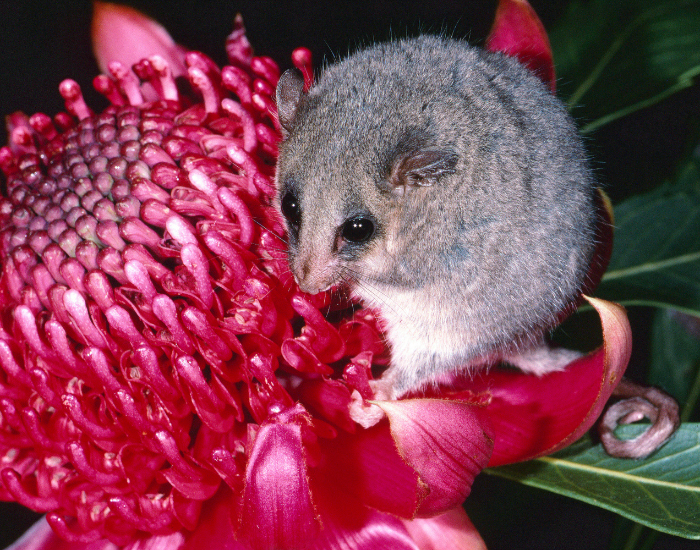
5. Eastern Pygmy Possum (Cercartetus nanus)
One of the world’s smallest possums, weighing roughly the same as a golf ball. Despite their tiny size, Eastern Pygmy Possums are skilled climbers with a remarkable ability to enter torpor during cold weather to conserve energy. They feed primarily on nectar and pollen from native flowers like banksias and eucalyptus, making them important pollinators. Their prehensile tail acts like a fifth limb, allowing them to navigate through dense vegetation with ease.
Identification: Mouse-sized with huge ears and a thick tail used for fat storage.
Conservation: While not endangered, they’re vulnerable to habitat loss. Their small size makes sightings rare.
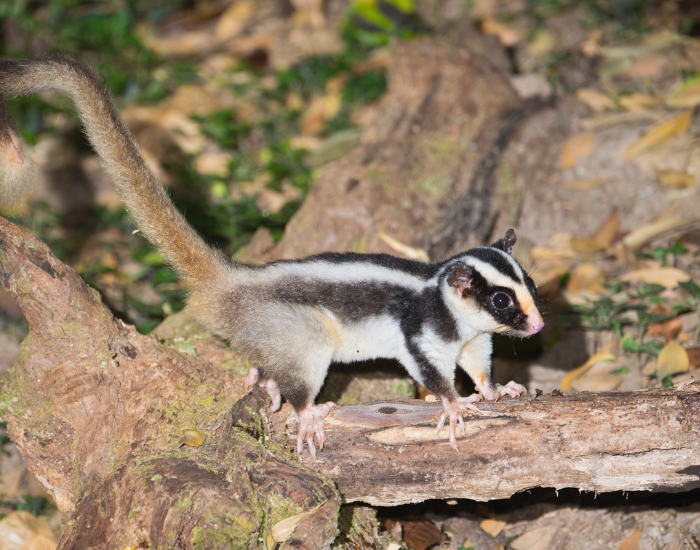
6. Striped Possum (Dactylopsila trivirgata)
The “skunk” of Australian possums in appearance, not smell. Found in the rainforests of North Queensland and New Guinea, these possums are one of the few nocturnal marsupials that are boldly patterned rather than camouflaged. They’re insectivores by nature and use their keen sense of smell to locate wood-boring larvae beneath tree bark. Their loud calls, which sound like rapid clicking or chattering, can be heard echoing through the rainforest at night.
Identification: Bold black-and-white longitudinal stripes.
Special Skill: They possess an elongated fourth finger (similar to Madagascar’s Aye-aye) used to extract grubs from rotten wood.
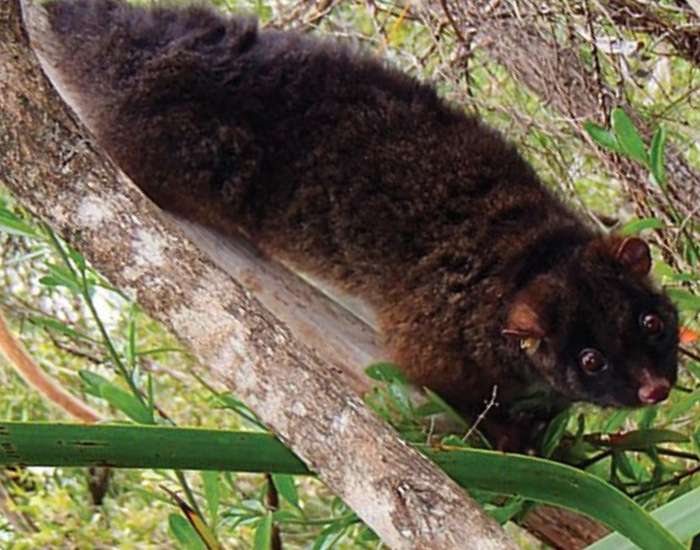
7. Western Ringtail Possum (Pseudocheirus occidentalis)
A Critically Endangered species found only in the south west of Western Australia. The decline of this species has been dramatic, with populations shrinking by more than 80% over recent decades due to habitat fragmentation and introduced predators like foxes and cats. They require dense, low vegetation for shelter and feed primarily on peppermint tree leaves. Conservation efforts include predator control programs and habitat restoration to protect remaining populations.
Identification: Similar to common ringtail possums but with darker fur and a more delicate build.
Status: Highly protected. Spotting one in your yard in Western Australia means you’re observing a conservation priority.
8. Mountain Pygmy Possum (Burramys parvus)
The only Australian marsupial that hibernates beneath snow. Weighing only 30-80 grams, these tiny possums survive winter by entering deep hibernation for up to seven months, living off fat reserves stored during summer. They have specialized adaptations including the ability to lower their body temperature to near freezing. Climate change poses a significant threat as rising temperatures reduce snow cover and affect the migration patterns of Bogong moths, their crucial pre-hibernation food source.
Habitat: Restricted to boulder fields in the Australian Alps (Mt Buller, Mt Hotham, and Mt Kosciuszko).
Conservation: Critically endangered due to climate change and declining Bogong moth populations—their primary food source.
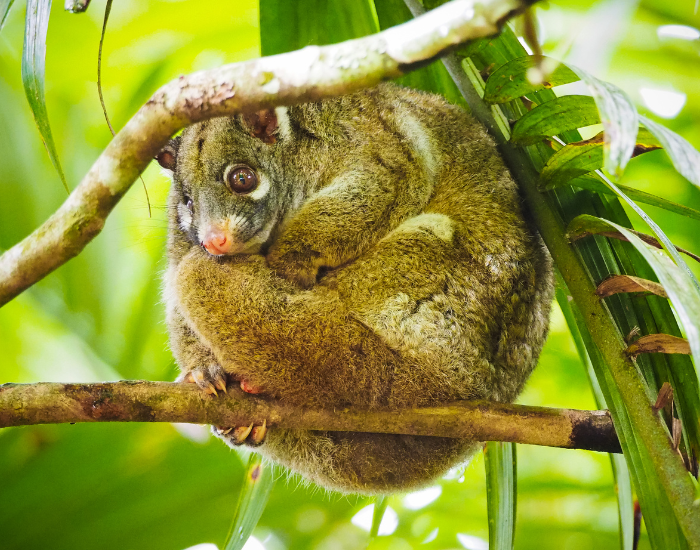
9. Green Ringtail Possum (Pseudochirops archeri)
A genuinely “green” possum found only in North Queensland rainforests. These possums are so well-camouflaged that they’re extremely difficult to spot among the moss-covered branches where they spend their days curled up sleeping. They’re specialized folivores, feeding almost exclusively on the leaves of fig trees and other rainforest canopy plants. Unlike most possums, they’re relatively slow-moving and rely on camouflage rather than speed to avoid predators. Their limited range makes them vulnerable to habitat loss from deforestation and climate change.
Identification: Fur has a greenish tinge from yellow, black, and white hair bands. This provides perfect camouflage in the mossy rainforest canopy. The Green Ringtail Possum is found in the rainforests of northern Queensland.
10. Squirrel Glider (Petaurus norfolcensis)
Often confused with Sugar Gliders but larger with a much bushier tail. Squirrel Gliders are distinguished by their size, nearly twice as large as Sugar Gliders, and their preference for drier woodland habitats. They’re social animals that live in family groups and use tree hollows as communal dens. Unfortunately, their populations have declined due to habitat clearing and competition for tree hollows with introduced species like bees and starlings. They’re capable of gliding up to 50 meters between trees and use their fluffy tail as a stabilizer during flight.
Identification: White belly and longer, fluffier tail.
Habitat: Dry sclerophyll forests along the East Coast.
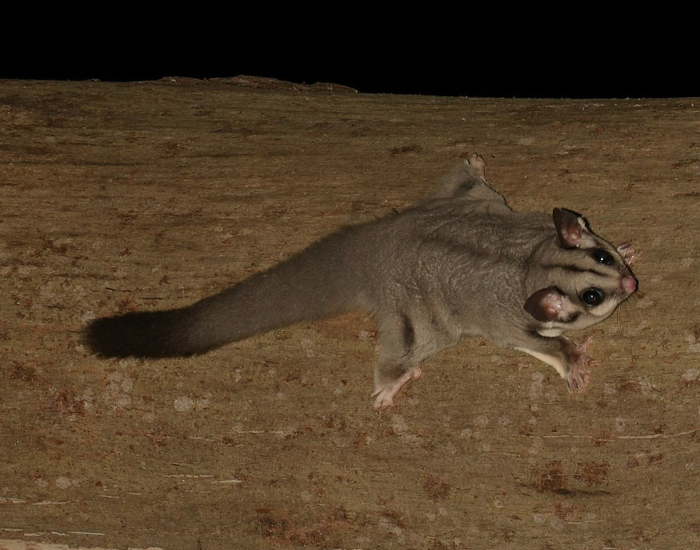
11. Feathertail Glider (Acrobates pygmaeus)
The smallest gliding mammal in the world. Weighing just 10-15 grams, these remarkable creatures can glide up to 25 meters despite their tiny size. Their feather-like tail has stiff fringes of hair on either side, functioning as a rudder to help them steer mid-flight. Feathertail Gliders are incredibly agile and can even run upside-down along branches thanks to their specialized toe pads that grip like suction cups. They feed on nectar, pollen, and small insects, often visiting flowering eucalyptus and banksias.
Identification: A tail resembling a bird’s feather, used as a rudder during flight.
Fun Fact: They once appeared on the Australian 1-cent coin.
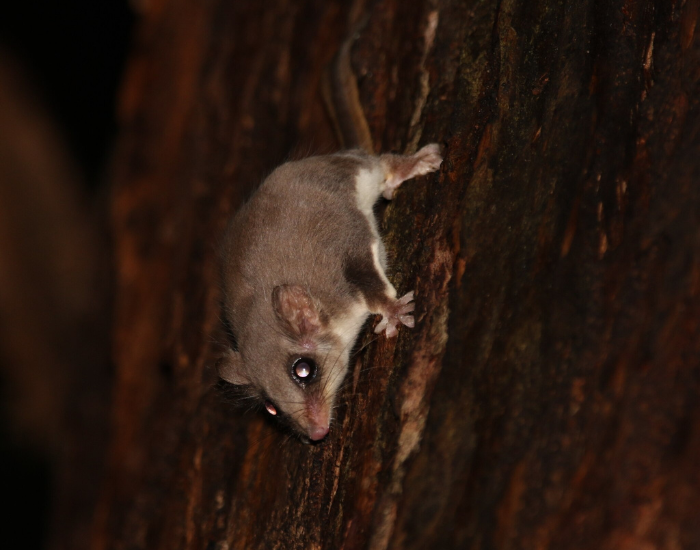
12. Honey Possum (Tarsipes rostratus)
A Western Australian specialist living almost entirely on nectar and pollen. This remarkable marsupial has evolved to fill a niche usually occupied by birds and insects, making it one of the few mammals that feeds exclusively on floral resources. Honey Possums have an extremely high metabolic rate and must feed constantly throughout the night to survive. Males are significantly smaller than females, and both sexes have long, brush-tipped tongues perfectly adapted for extracting nectar from tubular flowers like banksias and grevilleas.
Identification: Long, pointed snout and three dark stripes down the back.
Unique Trait: They have fewer teeth than any other land mammal because they don’t chew—they simply “sip” their meals.
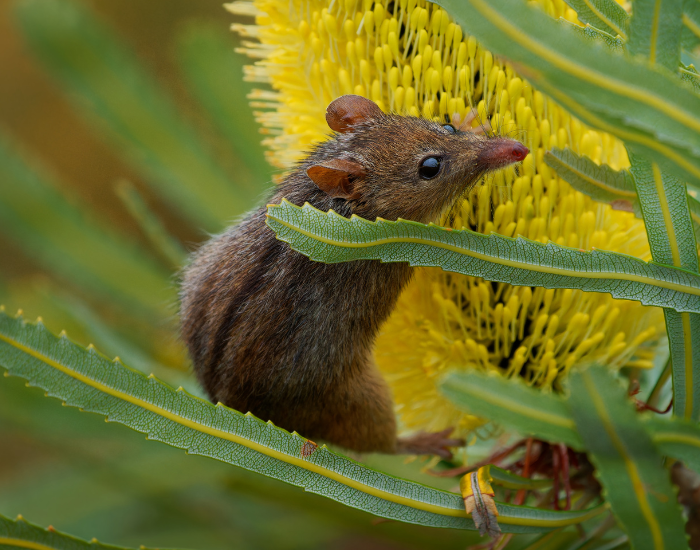
13. Northern Brushtail Possum (Trichosurus arnhemensis)
The Top End’s version of the Brushtail. This tropical species has adapted to the hot, humid conditions of northern Australia and experiences a different seasonal cycle compared to southern possums. They’re slightly smaller and less robust than their southern relatives, with adaptations that help them cope with heat stress. Northern Brushtails are less commonly encountered in urban areas and prefer the relative wilderness of eucalyptus woodlands and monsoon forests where they feed on leaves, flowers, and fruits.
Identification: Smaller than southern species, often with a sparsely furred tail rather than bushy.
Habitat: Open forests across Northern Australia and the Kimberley.
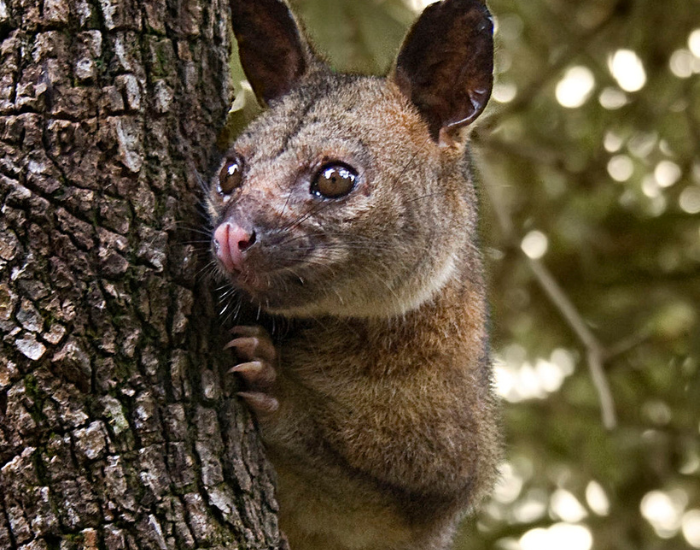
14. Lemuroid Ringtail Possum (Hemibelideus lemuroides)
A rare, lemur-like possum from the Daintree and Atherton Tablelands. These possums exist in two color forms—a more common brown form and a rare chocolate-black form found only at higher elevations. They’re entirely arboreal, rarely descending to the ground, and feed exclusively on rainforest leaves. Lemuroid Ringtails are particularly vulnerable to temperature increases; studies show they become heat-stressed at temperatures above 30°C, making them an important indicator species for climate change impacts in tropical rainforests.
Identification: Thick, woolly fur and a bushy tail. The Lemuroid Ringtail Possum can be distinguished from the Herbert River ringtail by its paler coloration and preference for higher altitude rainforest, while the Herbert River ringtail is typically darker and found at lower elevations.
Climate Risk: Highly sensitive to heat, making them one of the species most threatened by rising tropical temperatures.
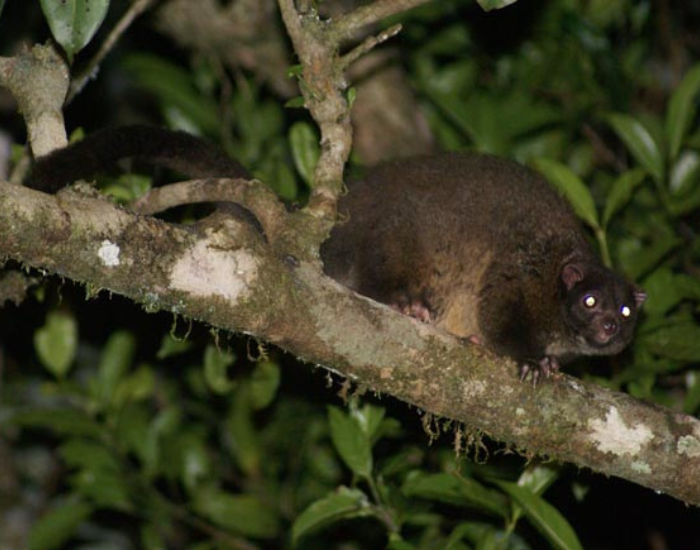
Is It Illegal to Trap Possums in Australia?
Generally, no. However, incredibly strict rules apply. In most states (NSW, VIC, and QLD), it’s illegal to relocate possums more than 50 to 150 meters from the capture site. If you need to trap a possum, a cage trap is the recommended and legal type of trap to use.
Why? Possums are highly territorial. Dropping a Brushtail in a park 10km away means it will likely be killed by resident possums or starve because it doesn’t know local food sources or shelter locations. Studies show that relocated possums have nearly 0% survival rates.
The Law: In Victoria, for example, you must release trapped possums on the same property within 50 meters of the capture site. Moreover, release must occur at sunset.
What Is the Best Bait for Trapping Possums?
If you’re legally trapping to remove one from roof spaces (before sealing entry points), irresistible baits include:
- Apple slices dusted with cinnamon
- Banana
- Peanut butter on crackers
FAQ: Your Possum Questions Answered
Neither! Possums are marsupials, more closely related to kangaroos and koalas. They have pouches where joeys develop.
Not at all. Seeing possums in your yard indicates a healthy local ecosystem and is a sign of possum living in your area. Possums may interact with other possums as they share or compete for resources. Unless they’re inside roof spaces or eating prize orchids, they’re harmless neighbors.
They’re strictly nocturnal. Possums rest during daylight hours and are active at night. You’ll usually hear them emerge about 30 minutes after sunset. In places like Melbourne and Victoria, they’re active all night until dawn.
Yes—thousands! Melbourne’s parks (like Treasury Gardens) are famous for bold Brushtail populations perfectly adapted to city life.
Generally, no. They’re not aggressive and usually hiss or run away. However, like any wild mammals, they’ll bite or scratch if cornered or handled. Understanding possums includes knowing they are solitary animals, and if you see two together, it is usually a mother and her joey. Possums are also known to forage on the ground, especially when searching for food. If you find an injured possum, call registered wildlife carers (like WIRES or Wildlife Victoria) rather than attempting to handle it yourself.
Living in Harmony with Native Animals
As a biologist, I’ve spent years observing these animals in natural habitats. While I understand the frustration of 3:00 AM roof activity, I can’t help but admire their resilience. They’re the ultimate urban survivors.
By shifting our perspective from seeing them as “pests” to “displaced residents,” we can find ways to coexist. Whether it’s installing nest boxes or planting extra native shrubs for them to browse, we can make room for Australia’s iconic marsupials in our suburban gardens. When providing nest boxes for possums, it’s important to regularly remove nesting materials from introduced birds such as mynas, sparrows, and starlings, as these species can compete with possums for shelter.
Remember, managing possums in your roof requires patience and humane methods. Providing alternative shelter before sealing entry points ensures these highly territorial creatures have somewhere safe to live. Also, providing artificial food to encourage possums is unnecessary and can actually lead to competition and stress among them. In doing so, we protect threatened species and preserve Australia’s unique wildlife heritage.