Most people picture moths as small brown insects circling a porch light. After fifteen years running light traps from Sumatra to southern Mexico, I can tell you that image covers a fraction of the truth. Moths make up roughly 90% of the order Lepidoptera, with about 160,000 described species. They occupy nearly every terrestrial habitat on Earth. Many moths pollinate plants that bees ignore entirely, and most species remain unstudied.
What are Moths?
Moths are insects in the order Lepidoptera, the group that also contains butterflies. All the moths share four wings covered in overlapping scales, a coiled proboscis in most families, and a four-stage life cycle. Sizes range from micromoths under 3 mm to the Hercules moth, whose 11-inch wingspan is the largest recorded in any living moth.
Entomologists split moths into two informal categories. Macromoths are the large moth families, hawk moths, silkmoths, owlet moths, tiger moths. Micromoths are the small, mostly ancient lineages, including clothes moths and leaf miners. Both groups matter ecologically, though micromoths outnumber macromoths by a wide margin.
Moths evolved long before flowering plants diversified, and their body plans reflect that deep history. Compared with butterflies, moths tend to have a heavy body, more hair-like scales, and larval food plants that are often far more specialised.
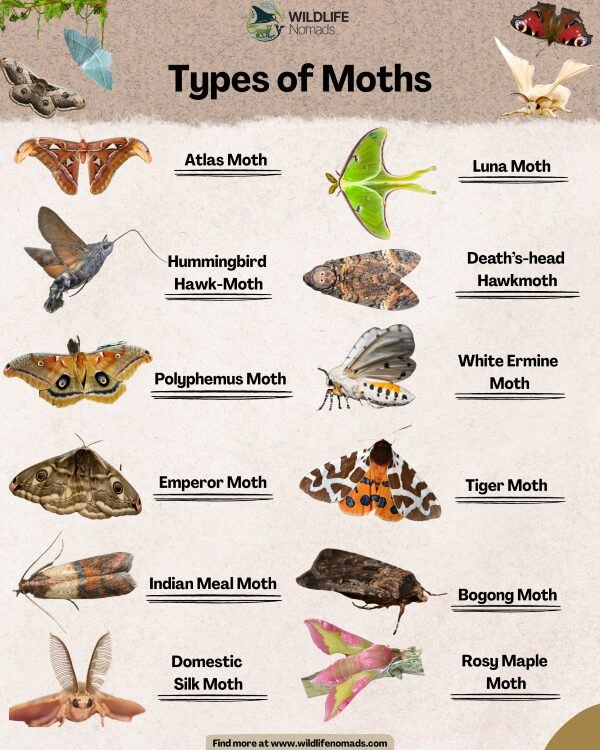
Moth Families and Groups
Five families account for most of the moths you will encounter in the field.
Giant Silkworm Moths (Saturniidae). The largest moths belong here — atlas, luna, cecropia, comet. Adults of many species emerge without functional mouth parts and never feed. They live on fat reserves built during the larval stage.
Owlet Moths (Noctuidae). The largest family of moths, and the one I trap most often. Drab brown and grey winged adults dominate, several species are serious crop pests, and their caterpillars feed on almost every plant family.
Geometrid Moths (Geometridae). Their caterpillars loop along twigs in a distinctive gait, which is why we call them inchworms. Adults rest flat against tree trunks with four wings spread, often disguised as lichen or dead leaves.
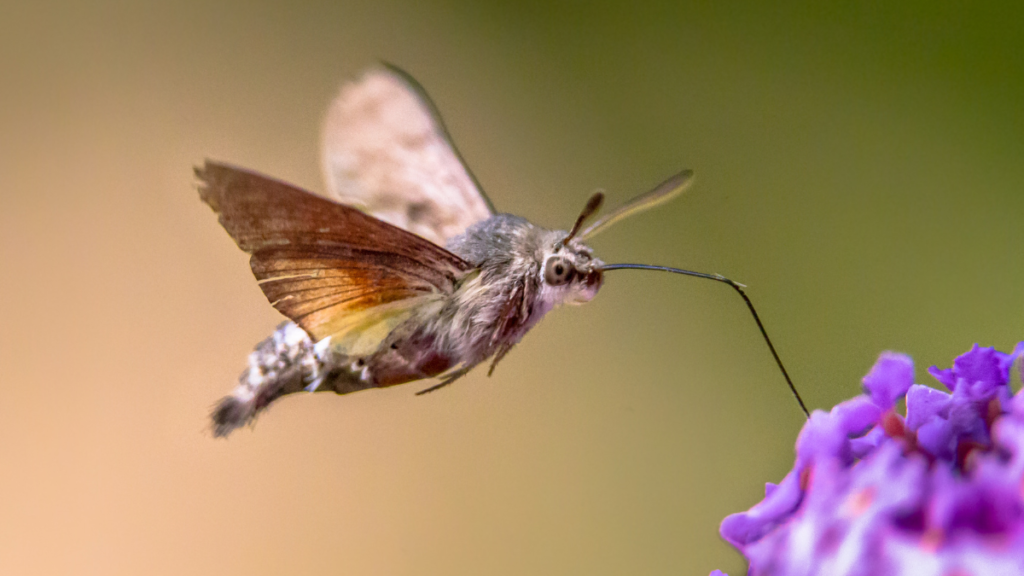
Sphinx Moths (Sphingidae). Also called hawk moths. Heavy body, narrow wings, powerful flight. Several hover in front of flowers like hummingbirds, including the hummingbird clearwing of North America.
Clothes Moths (Tineidae). Small, unremarkable, and the reason moths get a bad reputation. Their larvae digest keratin from animal fibres such as wool and silk.
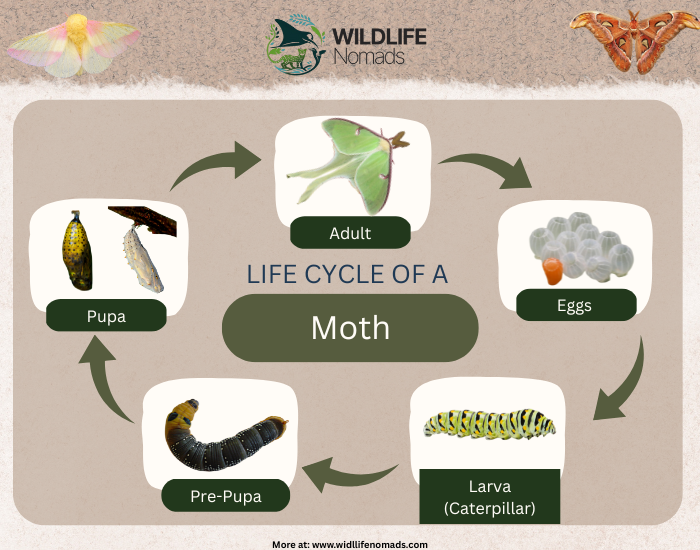
The Moth Life Cycle: From Egg to Adult
All moths undergo complete metamorphosis across four stages.
- Egg. Moth eggs vary in shape, size, and colour, and many are patterned for camouflage against bark or leaves. Females lay them directly on suitable food plants.
- Larva (caterpillar). The larval stage typically lasts four to eight weeks. Larvae feed constantly, moult several times, and do nearly all the growing the animal will ever do.
- Pupa. Many species spin a silk cocoon; others pupate underground or in leaf litter without silk. The pupal stage is immobile while the body reorganises entirely.
- Adult stage. Winged adults emerge to reproduce. Most live only one to two weeks, and several moths never eat at all.
Contrary to a common myth, moths do not lay eggs in bedding unless it contains natural fibres.
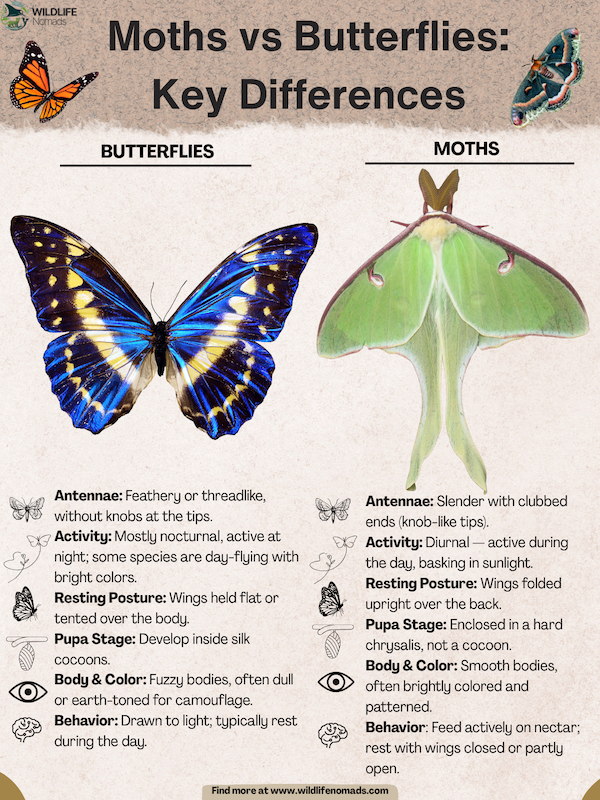
Moths vs. Butterflies: What’s the Difference?
- Antennae. Butterflies have thin antennae with clubs at the ends. Moth antennae are usually feathery or taper to a point.
- Activity. Moths are primarily nocturnal; butterflies are diurnal. Some moths fly in daylight hours anyway.
- Resting posture. Butterflies fold wings vertically; moths hold them flat or tented.
- Body. Moths carry a heavier, hairier body than similar species of butterflies.
- Pupa. Moths often spin a silken cocoon; butterflies form a hard chrysalis.
15 Types of Moths Worth Knowing
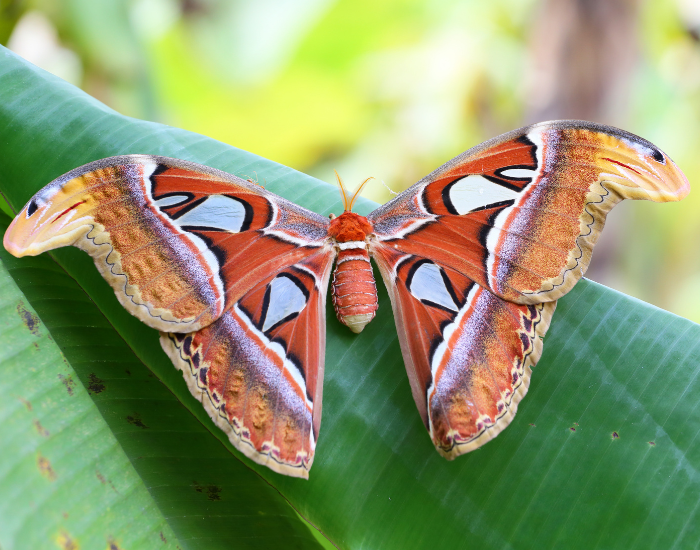
1. Atlas Moth (Attacus atlas)
Native to Southeast Asia, this is among the largest moths alive, with wingspans reaching 10 inches. Adults have no working mouth parts and rely on energy stored during the larval stage. The wingtips mimic snake heads, a bluff I have watched deter a bulbul at close range.
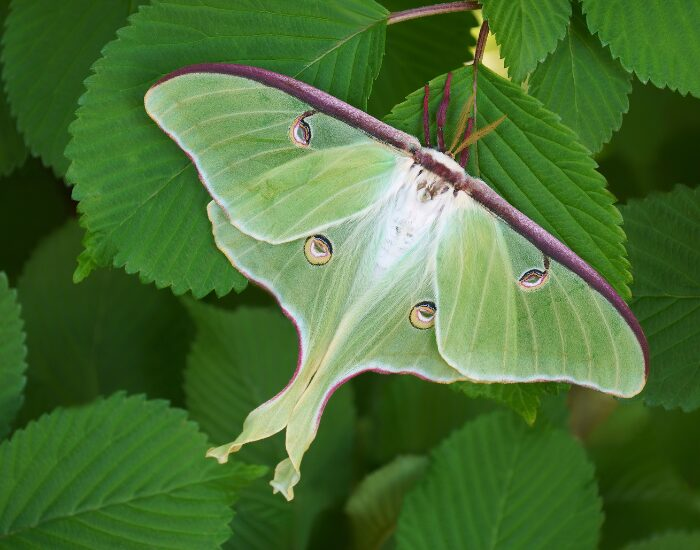
2. Luna Moth (Actias luna)
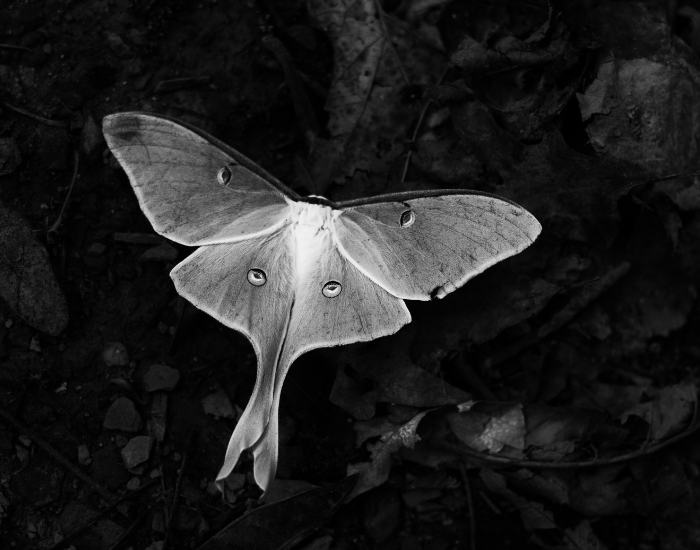
The luna moth carries pale, bright green wings spanning around 12 cm including its long tails. It ranges across eastern North America into southern Canada. Adults live about a week without feeding. Caterpillars feed on birch, walnut, and sweetgum.
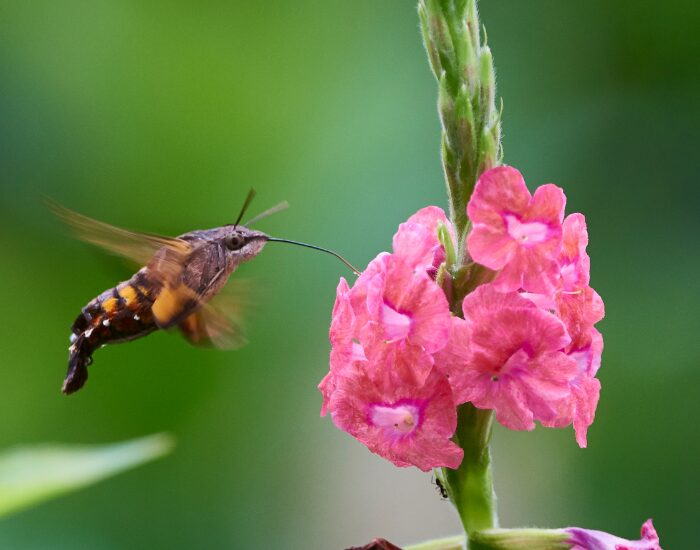
3. Hummingbird Hawk-Moth (Macroglossum stellatarum)
Found across Europe and Asia, this sphinx moth flies in full daylight hours and hovers at flowers while drinking nectar. People routinely mistake it for a tiny bird. Its close relative, the hummingbird clearwing, fills the same role in North America.
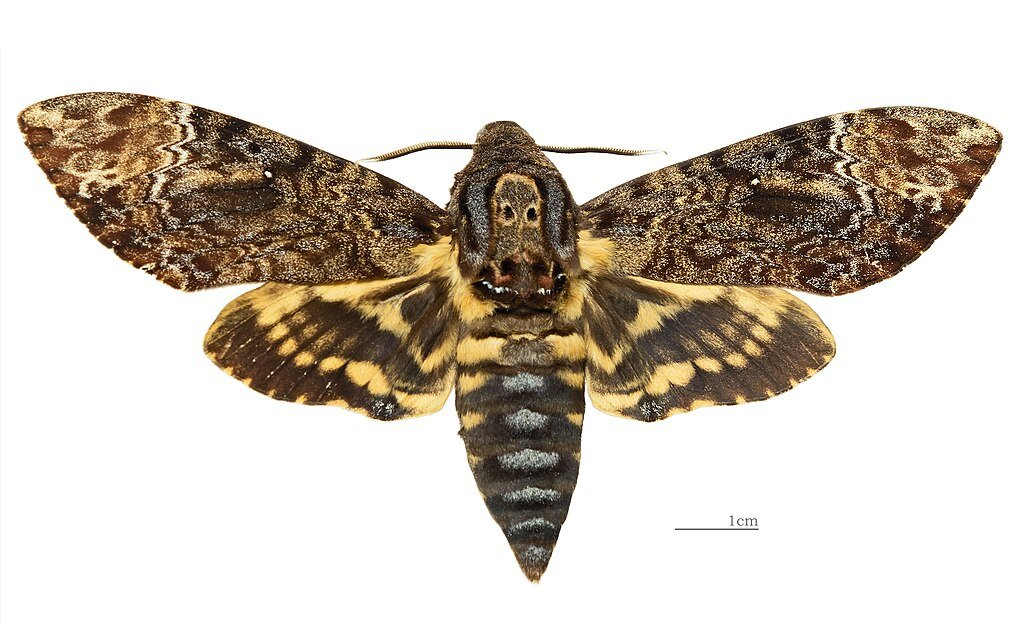
4. Death’s-head Hawkmoth (Acherontia atropos)
The skull-shaped marking on its thorax made this moth famous. It raids beehives for honey and squeaks audibly when handled. Range covers Europe, North Africa, and parts of Asia. The larvae are enormous and feed mainly on potato and nightshade.
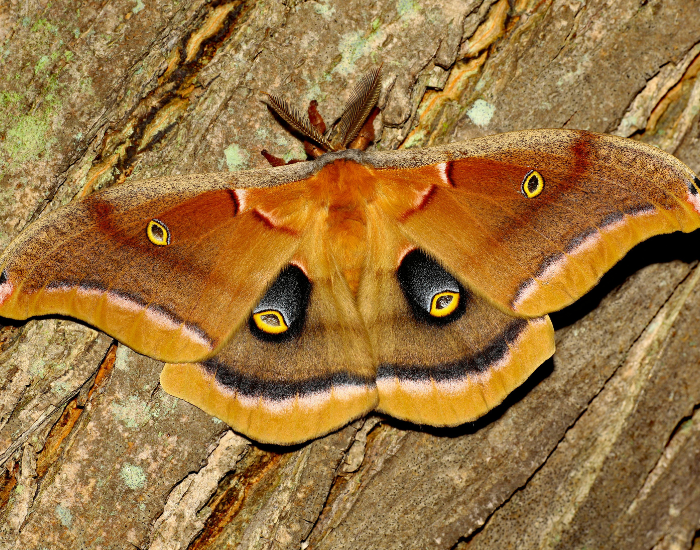
5. Polyphemus Moth (Antheraea polyphemus)
Named for the mythical cyclops, this large moth flashes huge black eyespots when disturbed. Widespread in North American forests, its larvae feed on oak, maple, and other hardwood host tree species. I have found their tough silken cocoons hanging in leaf litter through winter.
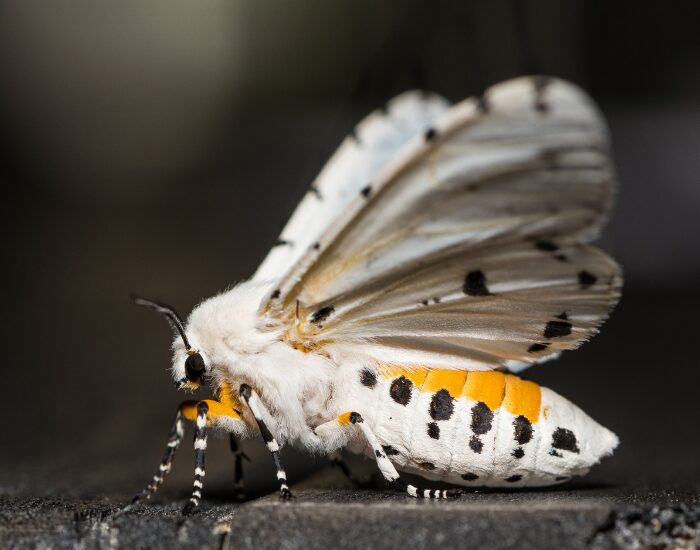
6. White Ermine Moth (Spilosoma lubricipeda)
Common across Europe, this small moth wears a furry white body and scattered black spots. Caterpillars feed on nettles, dock, and dandelions, weeds most gardeners pull. It is one of the easiest species to attract to a garden light sheet.
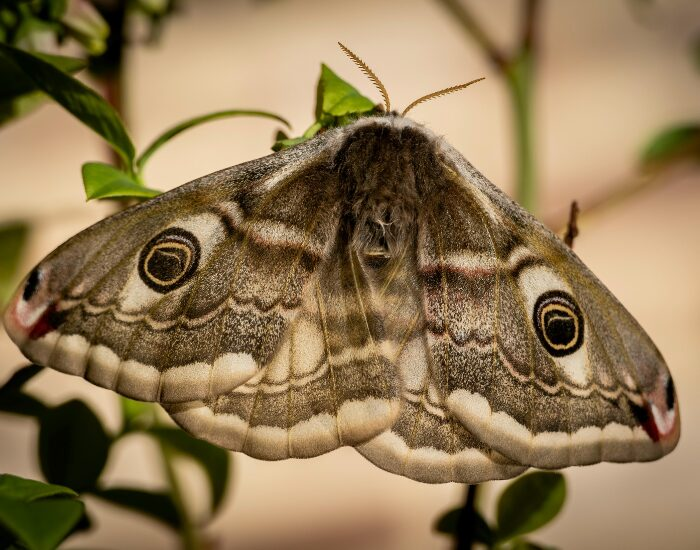
7. Emperor Moth (Saturnia pavonia)
The only native Saturniidae in the British Isles. Males fly by day, females by night. Female moths release pheromone plumes that males detect with feathery antennae from over a mile away. Larvae grow on heather and bramble.
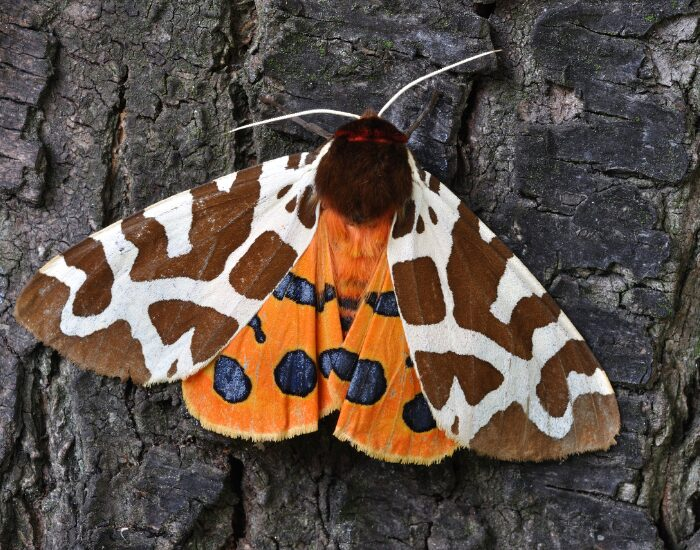
8. Tiger Moth (Arctia caja)
A striking moth of Europe and North America, with white lines across the forewings and vivid red hindwings marked with black spots. The colour is a warning: the tiger moth is genuinely unpalatable. It also emits ultrasonic clicks that jam bat echolocation.
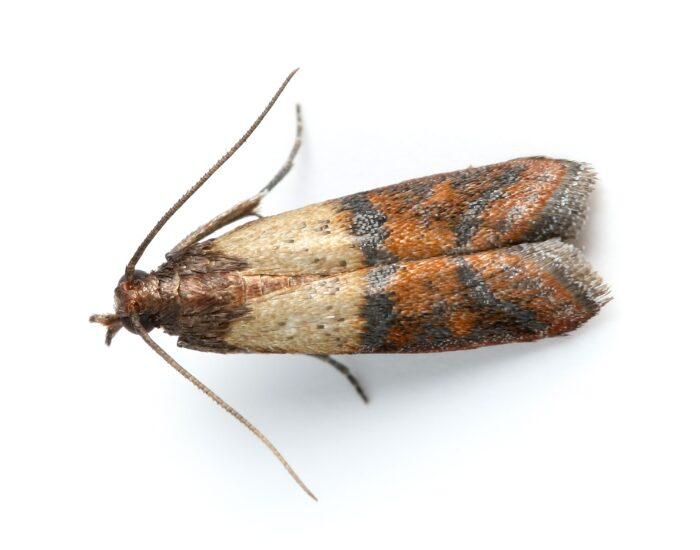
9. Indian Meal Moth (Plodia interpunctella)
The world’s most common pantry pest. Larvae eat stored grains, cereals, and dried fruit, contaminating food with silk webbing. Found in kitchens on every continent. Unlike clothes moths, this species targets food rather than fabric.
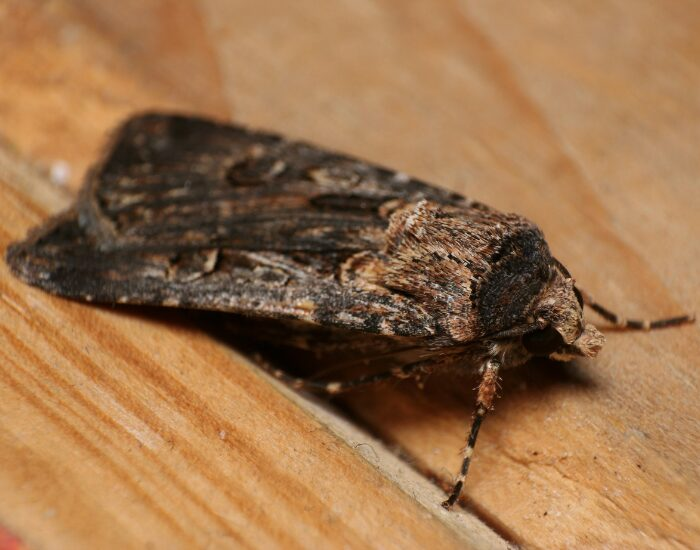
10. Bogong Moth (Agrotis infusa)
This Australian owlet migrates a thousand kilometres to alpine caves each summer. Populations have collapsed, threatening the endangered mountain pygmy possum that depends on them. It remains the clearest case I know of a moth holding a whole food web together.
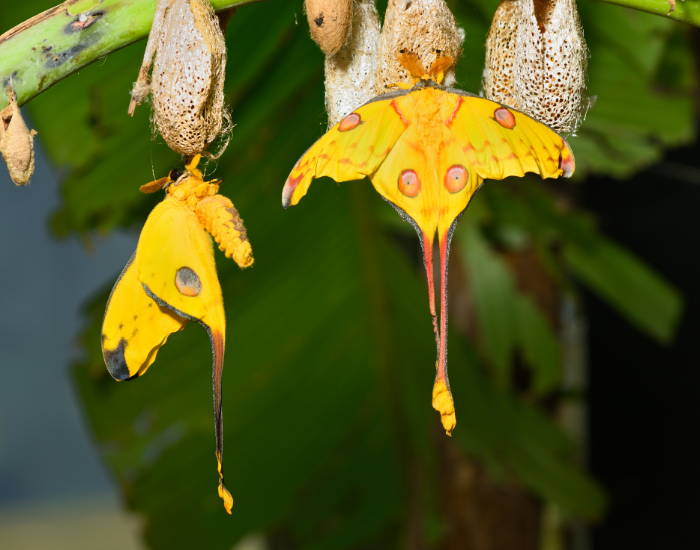
11. Comet Moth (Argema mittrei)
Endemic to Madagascar’s eastern rainforest, the comet moth has a wingspan of nearly 8 inches and trailing tails longer than its body. The colour is a deep orange yellow. Those tails disrupt bat sonar during evasive manoeuvres. Habitat loss has pushed the species toward endangerment.
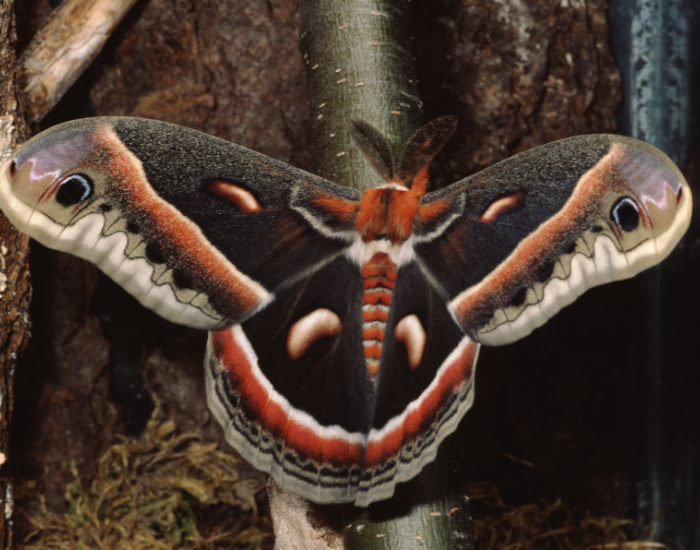
12. Cecropia Moth (Hyalophora cecropia)
North America’s largest moth at roughly 7 inches across, ranging from Florida to southern Canada. Rusty brown wings carry crescent-shaped white lines and a black eyespot near each tip. Larvae feed on maple, cherry, and birch before spinning a silk cocoon against a branch.
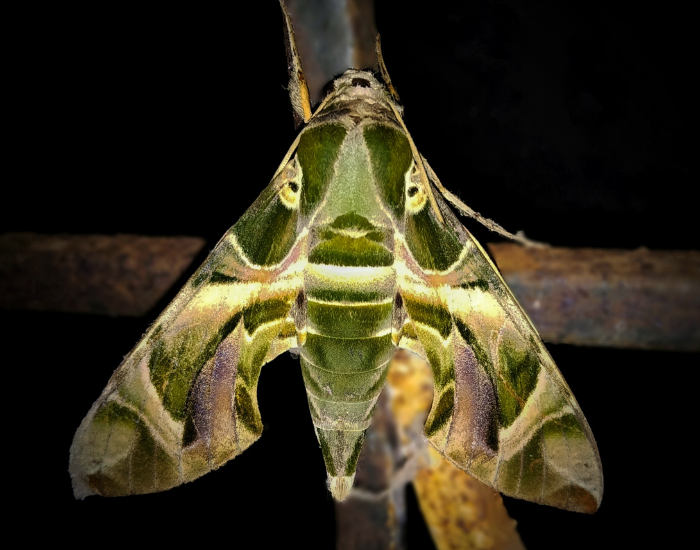
13. Oleander Hawk-Moth (Daphnis nerii)
Also called the army green moth for its camouflage-pattern wings. It breeds across North Africa, southern Europe, and South and Southeast Asia, and strays north each summer. Larval food plants are oleander and periwinkle, both toxic. Fifth-instar larvae show two brilliant blue-and-white eyespots.
14. Japanese Silk Moth (Rhodinia fugax)
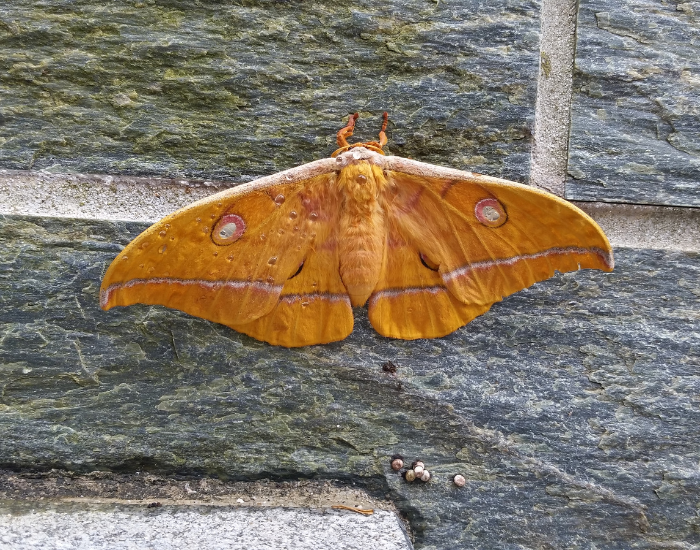
A mountain species of Japan, Korea, and northeast China. Adults are a warm orange yellow with a translucent window in each wing. The caterpillar spins a bright green, pitcher-shaped silk cocoon with a drainage hole at the base, the strangest cocoon I have handled. Larvae feed on oak and cherry, and adults take no food beyond occasional tree sap encounters as larvae.
15. Io Moth (Automeris io)
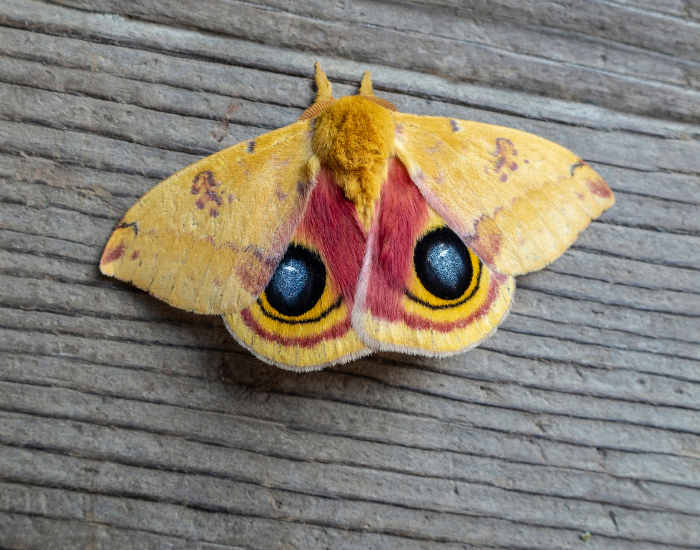
Widespread in eastern North America. Males are yellow, females reddish brown, and both flash enormous black eyespots on the hindwings when threatened. The green larvae carry stinging spines, a lesson I learned barehanded in Georgia. They feed on a wide range of garden plants and hardwoods.
Why Moths Matter
Moths are essential nocturnal pollinators. Night-blooming plants often depend on them entirely, the yucca moth and its yucca plant are locked into obligate mutualism. Moths also carry pollen between plant species that bees skip, and certain species are key pollinators in Himalayan crop systems at elevations where bees struggle.
They also feed the night. Moths contribute a large share of the insect biomass available to insectivores, and bats and birds are the primary consumers. Songbirds time their nesting to caterpillar abundance. Bats hunt moths so relentlessly that entire moth lineages evolved ultrasonic clicks and evasive manoeuvres in response.
Caterpillars matter below ground too. Frass from larvae feeding in the canopy returns nitrogen to forest soil, supporting the biodiversity that plant communities depend on.
Defence Mechanisms
Many moth families show diverse adaptations for survival. Camouflage comes first: geometrids resting on tree trunks vanish against lichen, and several moths mimic dead leaves so precisely you can only find them by movement.
Warning coloration comes second. The garden tiger moth’s red hindwings and black spots advertise toxicity. Io and polyphemus moths use large eyespots to startle predators into hesitating.
Sound is the third defence. Ultrasonic clicking has evolved repeatedly across moth lineages, either warning bats of toxicity or actively jamming their sonar.
Threats: Light Pollution, Climate, and Invasives
Climate change is shifting moth ranges northward and pulling emergence dates out of sync with their food plants. Light pollution has driven severe global declines by disrupting navigation, feeding, and mating. Habitat loss threatens narrow-range species like the comet moth directly.
Invasive moths cause damage in the other direction. The spongy moth (Lymantria dispar) can defoliate and kill thousands of trees across a single season in North America, outcompeting native species in the process.
Cultural Significance
Bombyx mori, the silkworm moth, has been farmed for silk for millennia and no longer exists in the wild. In several cultures, moth larvae are eaten as protein. National Moth Week draws thousands of people to their porch lights each July, and the luna moth appears in art, tattoos, and pharmaceutical branding alike.

Common Moth Myths Debunked
Myth: Moths and butterflies are the same. Antennae, resting posture, and body build separate them reliably.
Myth: All moths eat clothing. Only a handful of tineid species digest fabric. Most moths never touch it.
Myth: Moths are drab. Sunset moths, luna moths, and tiger moths rival any butterfly.
Myth: All moths are nocturnal. Hummingbird hawk-moths and male emperor moths fly in daylight hours.
Frequently Asked Questions (FAQ)
Owlet moths (Noctuidae) are the most commonly encountered group worldwide — over 35,000 species of dull brown and grey winged adults. In gardens, you will also see geometrid moths, tiger moths, and grass moths at almost any light trap.
Two. The Indian meal moth (Plodia interpunctella) infests pantries, feeding on grains and cereals. The webbing clothes moth (Tineola bisselliella) attacks wool, silk, and fur. Both thrive in dark, undisturbed spaces.
The luna moth is the most recognised in North America. Globally, the atlas moth and the Madagascan sunset moth compete for attention, and Bombyx mori is the most economically important.
Scientists think moths use moonlight as navigation, confusing artificial lights as moonlight, causing them to spiral toward bulbs.
Embracing the Diversity of Moths
Moths hold ecosystems together after dark — pollinating, feeding predators, cycling nutrients. Turn off unnecessary outdoor lights, plant native larval food plants, and leave the leaf litter where it falls. The moths will find you.
Can You Name That Moth? 🌙
A 15-photo identification challenge — the wrong answers are deliberately tricky look-alikes from a similar family. Go back and change any answer before you score.
Which moth is this?
References:
Barber, J. R., Plotkin, D., Rubin, J. J., Homziak, N. T., Leavell, B. C., Houlihan, P. R., Miner, K. A., Breinholt, J. W., Quirk-Royal, B., Padrón, P. S., Nunez, M., & Kawahara, A. Y. (2022). Anti-bat ultrasound production in moths is globally and phylogenetically widespread. Proceedings of the National Academy of Sciences, 119(25), e2117485119. https://doi.org/10.1073/pnas.2117485119
Kawahara, A. Y., Plotkin, D., Espeland, M., Meusemann, K., Toussaint, E. F. A., Donath, A., … Breinholt, J. W. (2019). Phylogenomics reveals the evolutionary timing and pattern of butterflies and moths. Proceedings of the National Academy of Sciences, 116(45), 22657–22663. https://doi.org/10.1073/pnas.1907847116
Macgregor, C. J., Pocock, M. J. O., Fox, R., & Evans, D. M. (2015). Pollination by nocturnal Lepidoptera, and the effects of light pollution: A review. Ecological Entomology, 40(3), 187–198. https://doi.org/10.1111/een.12174
Rubin, J. J., Hamilton, C. A., McClure, C. J. W., Chadwell, B. A., Kawahara, A. Y., & Barber, J. R. (2018). The evolution of anti-bat sensory illusions in moths. Science Advances, 4(7), eaar7428. https://doi.org/10.1126/sciadv.aar7428
van Langevelde, F., Braamburg-Annegarn, M., Huigens, M. E., Groendijk, R., Poitevin, O., van Deijk, J. R., WallisDeVries, M. F. (2018). Declines in moth populations stress the need for conserving dark nights. Global Change Biology, 24(3), 925–932. https://doi.org/10.1111/gcb.14008
Wagner, D. L. (2020). Insect declines in the Anthropocene. Annual Review of Entomology, 65, 457–480. https://doi.org/10.1146/annurev-ento-011019-025151
Walton, R. E., Sayer, C. D., Bennion, H., & Axmacher, J. C. (2020). Nocturnal pollinators strongly contribute to pollen transport of wild flowers in an agricultural landscape. Biology Letters, 16(5), 20190877. https://doi.org/10.1098/rsbl.2019.0877