My first moray eel sighting happened in 2015 while snorkeling off Tulum’s coast. The water was clear, allowing for excellent visibility and making the moray eel sighting possible. As an undergraduate biology student, I was hovering over coral reefs when something long and sinuous emerged from the rocks. My immediate thought? Snake!
The eel’s head turned slightly, its mouth opening and closing rhythmically. I remember I could just see rows of sharp, glassy teeth appeared with each breath. It was a scary moment, I am not gonna lie, but also incredible fascinating, it was such a unique creature.
Since then, I’ve encountered morays across Australia’s Great Barrier Reef and Southeast Asia’s vibrant coral gardens. Each sighting reinforced how diverse and ecologically vital these creatures are. Therefore, I’m sharing 12 facts that reveal the biology, behavior, and evolutionary wonders of moray eels.
1. Moray Eels Belong to the Family Muraenidae
All moray eels belong to the family Muraenidae, which includes over 200 species across 15 genera. Moray eels are classified within the order Anguilliformes, which includes all true eels. These species inhabit tropical and subtropical waters worldwide, from shallow coral reefs to rocky coastlines. In addition, smaller fish often share their reef habitats.
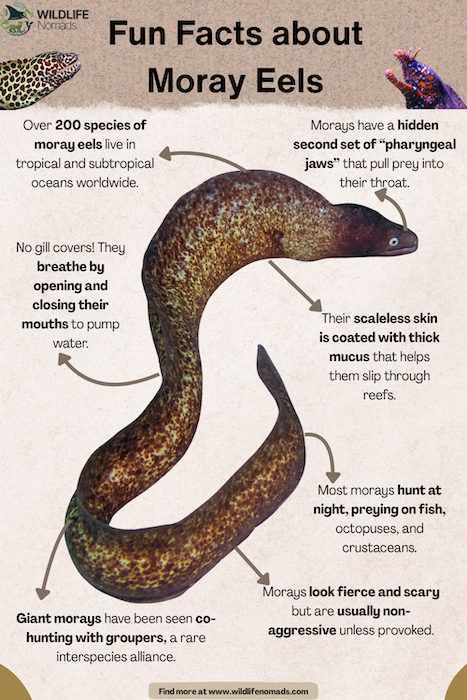
Unlike most eels, morays lack pectoral fins entirely. Their scaleless skin features a protective mucus coating that helps them squeeze into tight crevices. Consequently, few predators can follow them into these narrow spaces.
The term “moray” traces back to Latin mūrēna and Greek muraina, both meaning “sea fish.” Portuguese moréia evolved into modern English “moray.” Therefore, when people ask about the Latin mūrēna definition, it literally translates to “eel.”
2. They Thrive in Coral Reefs, Rocky Coasts, and Fresh Water
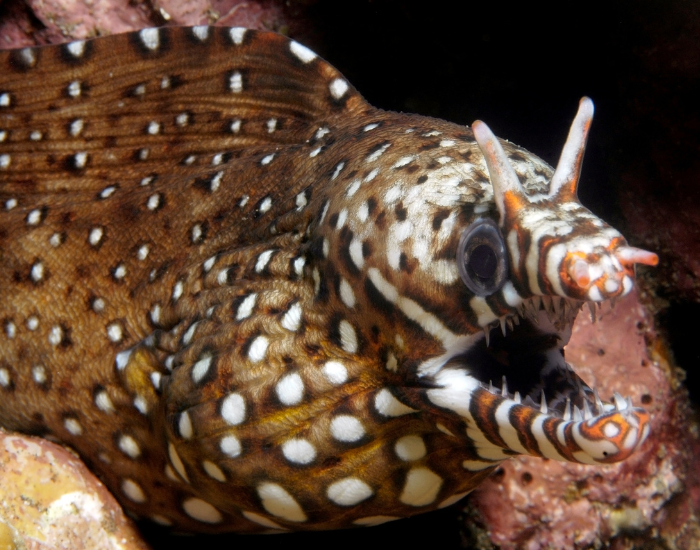
Most moray eels live in saltwater environments. However, a few species tolerate brackish and freshwater conditions. For example, the freshwater moray eel (Gymnothorax polyuranodon) moves between rivers and coastal reefs. This makes it popular among advanced aquarists.
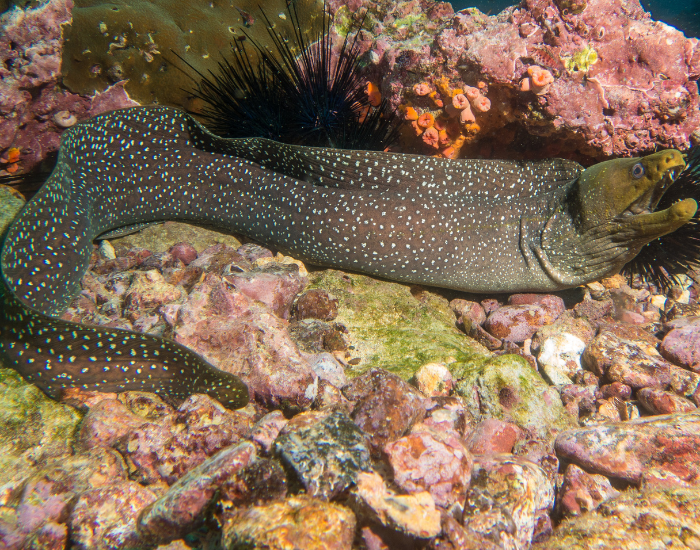
These eels aren’t truly freshwater species, though. They thrive best in slightly saline conditions. Many morays inhabit coral reefs in regions like Australia, Scotland’s waters, and throughout the Pacific. Rocky coasts provide additional hunting grounds for these adaptable predators.
3. Their Jaws Hide a Secret Second Set: The Pharyngeal Jaw
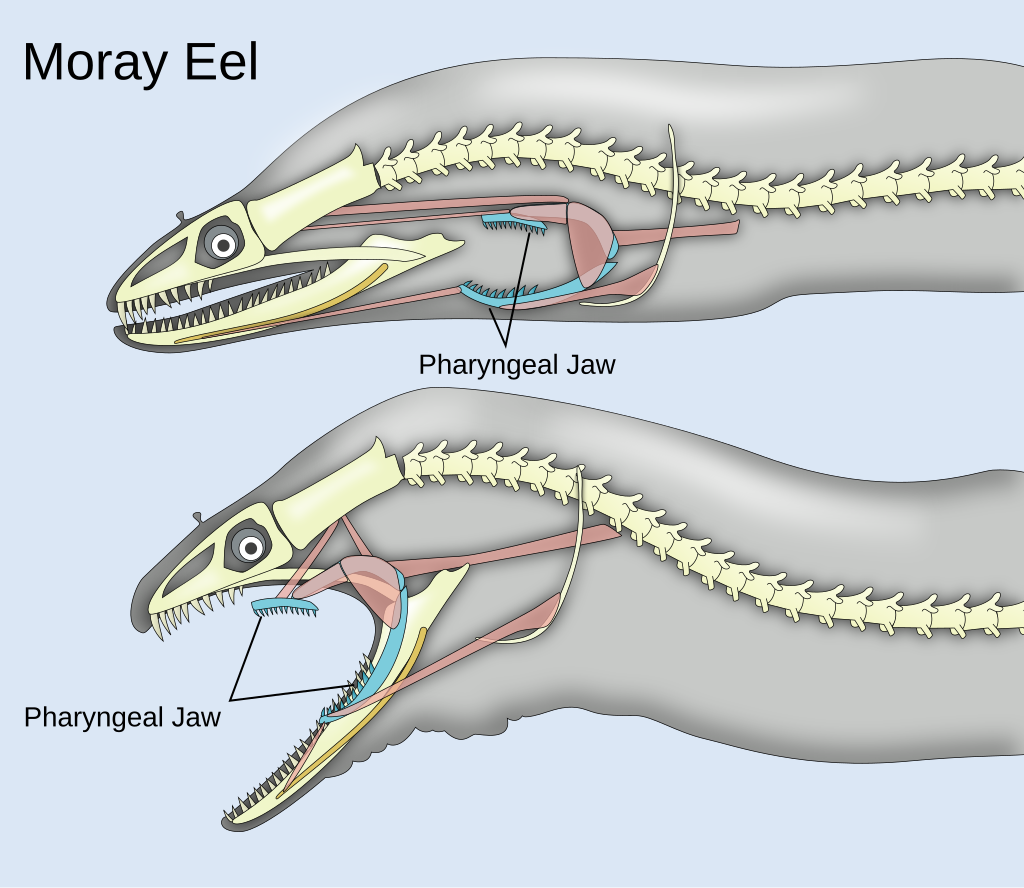
Moray eels possess one of nature’s most extraordinary feeding mechanisms. Hidden deep in their throat lies a second set of jaws called pharyngeal jaws. This jaw shoots forward to grasp prey, then pulls it down the eel’s gullet. Morays represent one of the only vertebrates using throat jaws to capture food, not just swallow it.
The pharyngeal jaw gives moray eels a significant hunting advantage. They can secure struggling prey in tight crevices where other predators fail.
4. Morays Are Masters of Camouflage
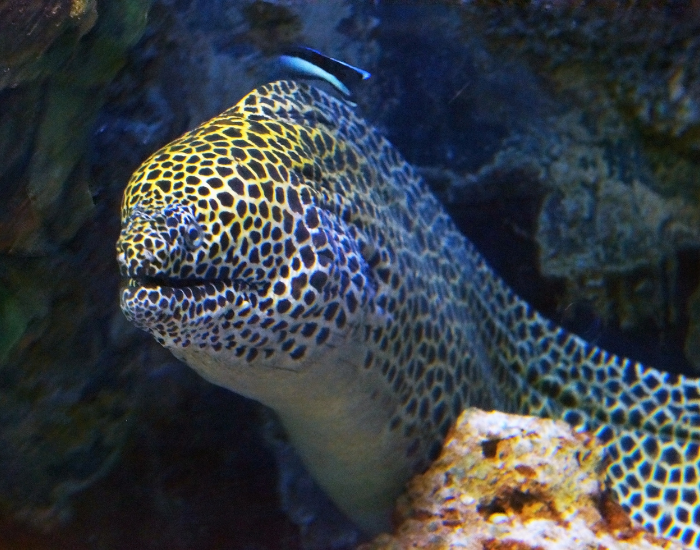
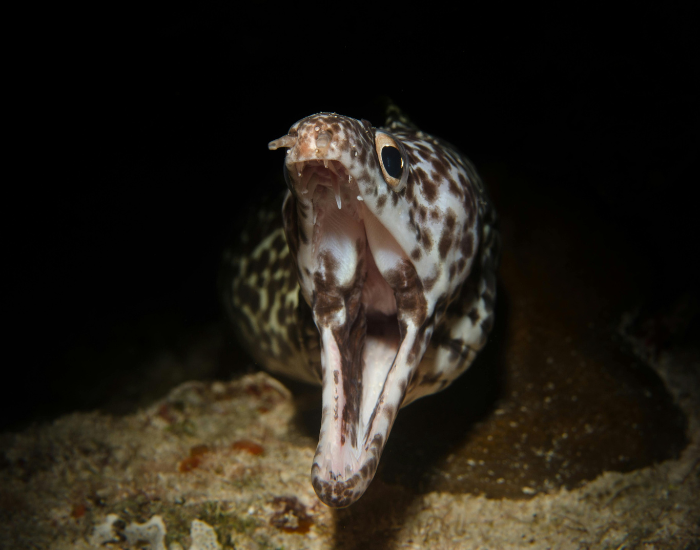
Moray eel skin displays spectacular patterns that serve crucial survival functions. The tiger moray eel (Muraena helena) shows kind of leopard-like spots, while Gymnothorax favagineus features honeycomb mosaics. These markings help morays blend perfectly with coral and rocky surfaces.
During daylight hours, many morays tuck themselves inside reef holes. They expose only their heads while monitoring their surroundings. That constant mouth-opening motion often scares divers, but it’s simply how morays breathe. Water passes over their gills with each rhythmic opening.
This camouflage protects morays from larger fish and marine predators. It also helps them ambush prey more effectively.
5. Giant Moray Eels Can Grow to Massive Sizes
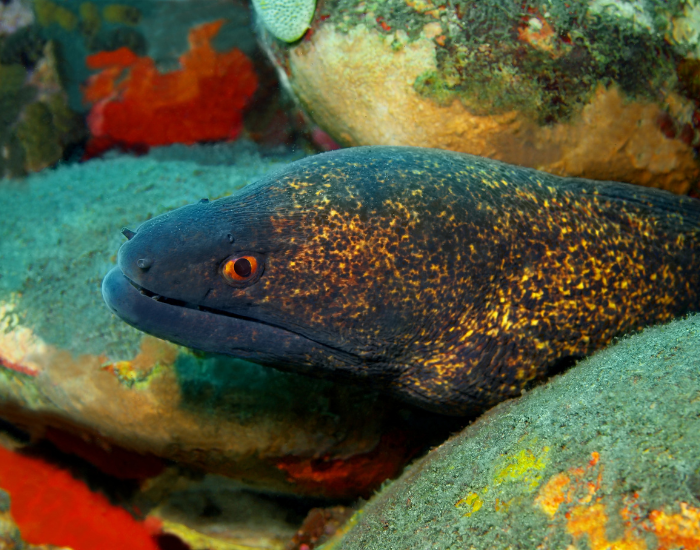
How big can a moray eel get? The giant moray (Gymnothorax javanicus) reaches up to 3 meters (10 feet) in length. These massive eels can weigh over 30 kilograms (66 pounds).
In contrast, smaller reef species like the snowflake moray (Echidna nebulosa) grow only 60–70 cm. This enormous size range reflects their habitat diversity, from deep reefs to shallow tidal areas.
Larger species dominate Indo-Pacific coral reefs, while smaller morays inhabit Caribbean and Mediterranean waters. Body size directly influences their role in marine ecosystems.
6. They Hunt with Groupers Through Cooperative Hunting
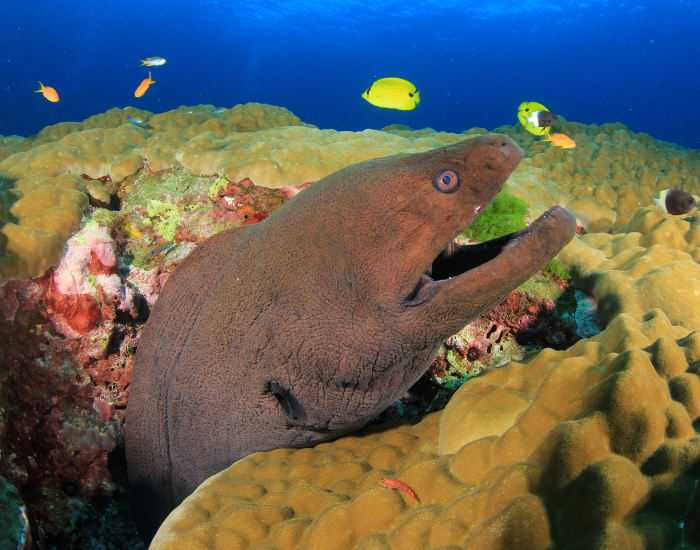
Moray eels demonstrate remarkable intelligence through interspecies teamwork. Research documented cooperative hunting between morays and groupers. When groupers spot prey hiding in tight crevices, they perform a distinctive head-shake signal.
The moray responds by slipping into the reef structure. This flushes out the hiding prey, which either escapes into the grouper’s waiting mouth or becomes the moray’s meal. This rare hunting behavior shows that moray eels possess far more social intelligence than previously believed.
Cooperative hunting benefits both species equally. Therefore, this partnership has evolved across multiple ocean regions.
7. Morays Have a Bad Reputation, But They’re Not Aggressive
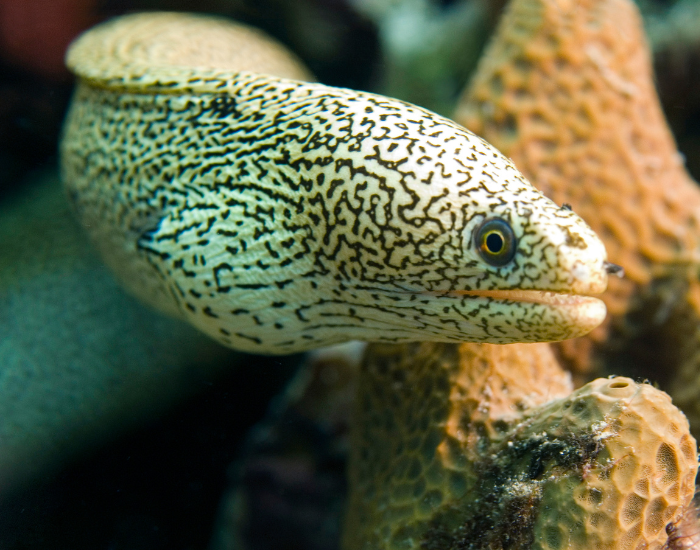
Like wolf eels, moray eel may look aggressive, which leads me to the next question, are moray eels aggressive to humans? Not really. Most biting incidents occur when divers accidentally corner these eels or attempt hand-feeding.
During my first encounter in Tulum, the moray darted backward into coral the moment I moved closer. Years later in Australia, I learned that morays are naturally shy creatures. They may appear menacing with their constant jaw movements, but their bite serves primarily as defense.
Still, a moray eel bite can cause painful injuries. Bacteria in their mouths sometimes lead to infections. If bitten, rinse the wound with clean water, apply disinfectant, and seek medical help immediately, especially for deep lacerations.
8. They’re Not Venomous, But Larger Fish Can Cause Ciguatera
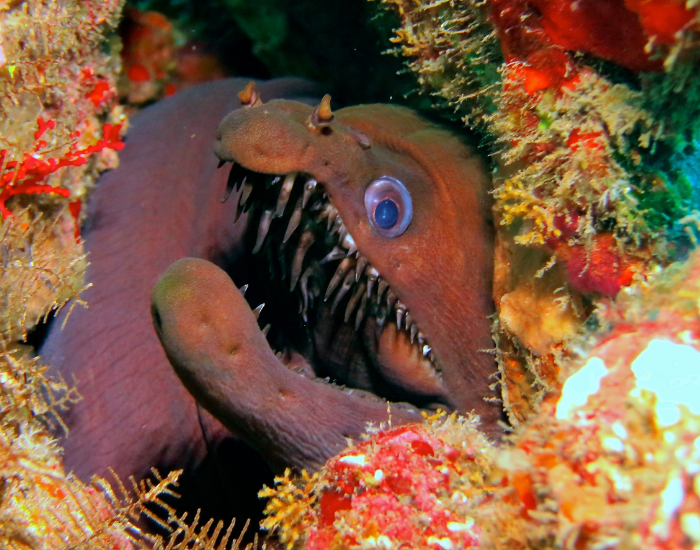
Moray eels don’t inject venom like some marine species. However, some large species such as the giant moray and yellow-edged moray accumulate ciguatoxins. These toxins come from reef fish they consume over time.
Eating moray eel meat, particularly the liver, can cause ciguatera poisoning in humans. This serious illness produces neurological and gastrointestinal symptoms that can last for months. Therefore, consuming moray eel is considered risky in many tropical regions.
In addition, local fishing communities avoid larger moray species for food safety reasons.
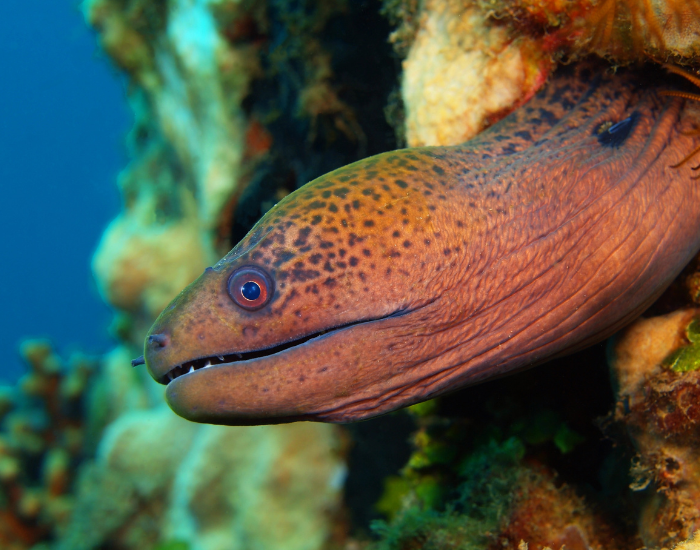
9. They Balance Reef Ecosystems as Key Predators
Moray eels function as apex or mesopredators in coral reef ecosystems. They control populations of smaller fish, crustaceans, and octopuses throughout their hunting grounds. By keeping prey numbers balanced, morays help maintain coral health and species diversity.
Their nocturnal hunting patterns complement daytime predators perfectly. This creates a 24-hour regulation cycle across reef systems. Remove morays from the equation, and reef equilibrium may suffers. Smaller species could overpopulate, potentially disrupting the entire food web.
Coral reefs in regions like Australia depend heavily on healthy moray populations. Conservation efforts must protect these vital predators.
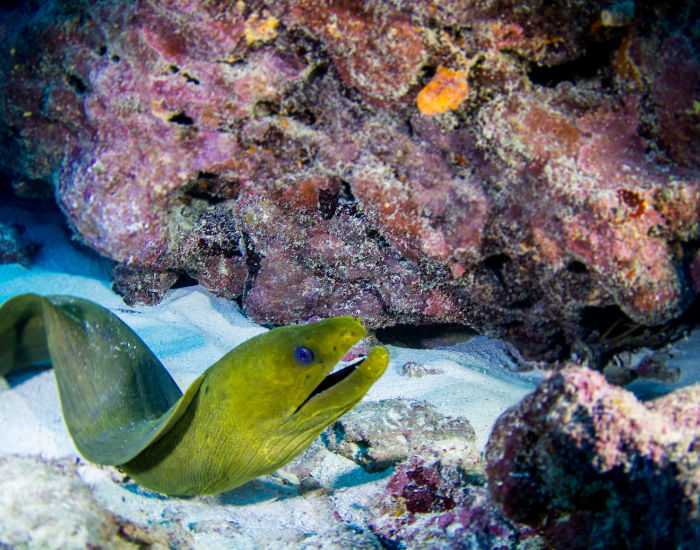
10. Moray Eel Reproduction Remains Mysteriously Complex
Despite their aquarium popularity, moray eel reproduction remains poorly understood. Most species are oviparous, meaning females release eggs that males fertilize externally. The eggs hatch into transparent, leaf-shaped leptocephalus larvae.
These larvae drift for months in open ocean currents before metamorphosing into juveniles. This extended pelagic stage explains how morays colonize isolated reefs and remote islands. Some larvae travel thousands of kilometers before finally settling. At the end of their larval development, moray eels undergo metamorphosis into juveniles, marking the end of this stage and the beginning of their juvenile life.
Marine geneticists now use DNA barcoding to track these remarkable journeys. However, many aspects of moray reproduction still puzzle scientists.
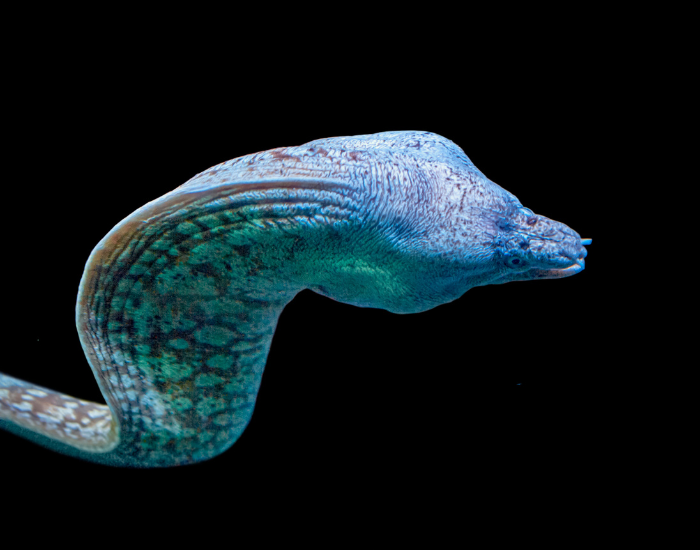
11. Moray Eels Carry Cultural and Linguistic Significance
Beyond marine biology, “moray” carries linguistic weight across cultures. The English term comes from Portuguese moréia and Latin mūrēna. Dictionary definitions describe morays as “a family of elongated eels found chiefly in warm seas.”
Interestingly, Scotland’s Moray Firth takes its name from the old Scottish “Moireabh,” meaning “sea plain.” This geographical term has no connection to the fish itself. Meanwhile, the “social moray” referenced online isn’t an actual eel, it’s a playful pun mixing moray with morals or mores.
Moray is also a historic Scottish title, most notably associated with the Earl of Moray. The region played a significant role in Scottish history, particularly during the abdication of Mary, Queen of Scots. After her abdication, Mary was defeated at the Battle of Langside by James Stewart, the 1st Earl of Moray, who held the title and was instrumental in her downfall. The use of ‘title’ in this context highlights the importance of noble designations in Scottish history.
The Latin mūrēna appeared in ancient Roman texts describing Mediterranean species. Therefore, moray eels have fascinated humans for thousands of years.
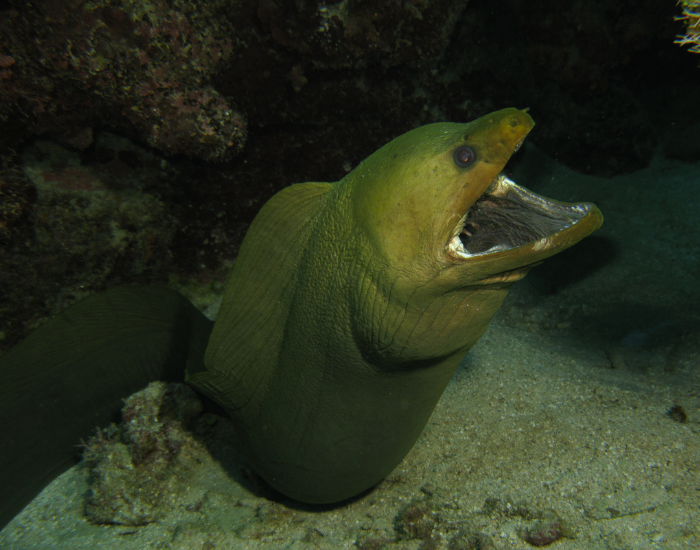
12. Their Global Diversity Spans Hundreds of Species
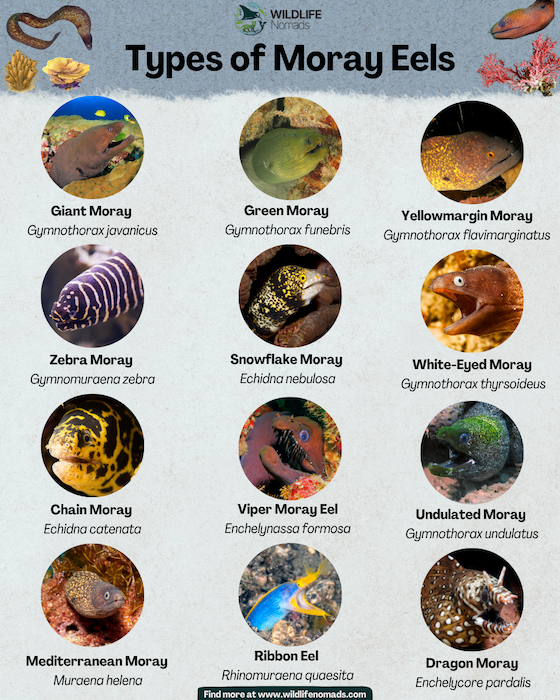
Moray eels are a kind of fish known for their elongated bodies and secretive habits. From the Indo-Pacific giant moray to the Mediterranean tiger moray, species diversity is astonishing. The ribbon eel displays striking blue-and-yellow hues that captivate divers worldwide.
Here are examples of notable species worth knowing:
Giant Moray (Gymnothorax javanicus) – Largest species, coral reef apex predator found across the Pacific
Tiger Moray (Muraena helena) – Vivid pattern, native to eastern Atlantic and Mediterranean waters
Snowflake Moray (Echidna nebulosa) – Smaller species, common in home aquariums
Ribbon Moray (Rhinomuraena quaesita) – Elegant, color-changing species in Southeast Asia
Freshwater Moray (Gymnothorax polyuranodon) – Amphidromous species moving between rivers and seas
Moray eels are often observed alongside turtles and other marine animals in coral reef habitats. In descriptive sentences about marine life, moray eels are frequently mentioned as key reef inhabitants.
While true eels (order Anguilliformes) originated roughly 100 million years ago during the Cretaceous, the moray eel family (Muraenidae) likely diverged between 34 and 54 million years ago, during the Eocene to Oligocene periods.
Are Moray Eels in Danger? Conservation Status Explained
Most moray eel species carry a “Least Concern” status from the IUCN. However, local populations face serious threats from overfishing, reef destruction, and pollution. In Southeast Asia and the Pacific, dynamite and cyanide fishing degrade the coral homes morays depend on.
Scientists urge divers and fishers to avoid disturbing moray habitats. Coral reef conservation directly protects the creatures that sustain these ecosystems, including moray eels. Climate change also threatens reef systems where morays thrive.
Therefore, protecting coral reefs means safeguarding moray eel populations for future generations.
FAQs About Moray Eels
No, but they’re not hostile either. Morays naturally avoid human contact. They only bite when provoked, cornered, or hand-fed by divers.
The bite can cause deep lacerations and bacterial infections. Seek immediate medical attention and thoroughly disinfect the wound to prevent complications.
They don’t inject venom. However, some larger species accumulate natural toxins from prey fish, which can affect humans who consume moray meat.
Yes, but they’re technically brackish species. Gymnothorax polyuranodon migrates between rivers and seas, tolerating various salinity levels.
Giant morays reach up to 3 meters (10 feet) in length. Most coral reef species stay under 1.5 meters throughout their lives.
Respect the Serpent of the Sea
Seeing my first moray eel in Tulum reminded me how much we still don’t understand about ocean inhabitants. These creatures might look intimidating, but their behavior reveals delicate balances of instinct, adaptation, and intelligence.
From tropical Pacific reefs to the Mediterranean’s stony coasts, morays play vital roles in keeping ecosystems healthy. Next time you spot one sliding through a coral crevice, pause and observe carefully. You’re witnessing a 350-million-year lineage still thriving beneath the waves.
Their pharyngeal jaws, cooperative hunting with groupers, and remarkable size variations make moray eels truly unique. Therefore, protecting their habitats remains crucial for maintaining marine biodiversity.
Further Reading
- Top 12 Facts About Trigger Fish
- 12 Fascinating Facts About Gulper Eels
- Stone Fish: 12 Shocking Facts