
The king parrot ranks among Australia’s most iconic birds you’ll encounter across the country. A flash of emerald and crimson darts through rainforest trees and suburban gardens alike. When I first moved to South-East Queensland, these Australian king parrots appeared on my balcony regularly. They would perch curiously, eyeing me while I sipped morning coffee. Their friendly nature transformed my daily routine into moments of genuine wild connection.
In bigger cities like Sydney, spotting a king parrot bird proves much rarer. These parrots keep to well-treed suburbs away from heavy traffic and urban areas. However, the hinterland and leafy neighborhoods host them commonly. The King-Parrot appears to be increasing in abundance in well-treed suburbs and at artificial feeding stations. They often approach humans with surprising boldness in these settings. Your location completely shapes your experience with Australian birds and wildlife.
I have written articles about galahs and Black Cockatoos in Australia, but today, let’s explore 12 fascinating facts about these colorful parrots. We’ll cover their biology, behavior, cultural significance, and conservation challenges across eastern Australia.
1. A Bird of Royal Colors
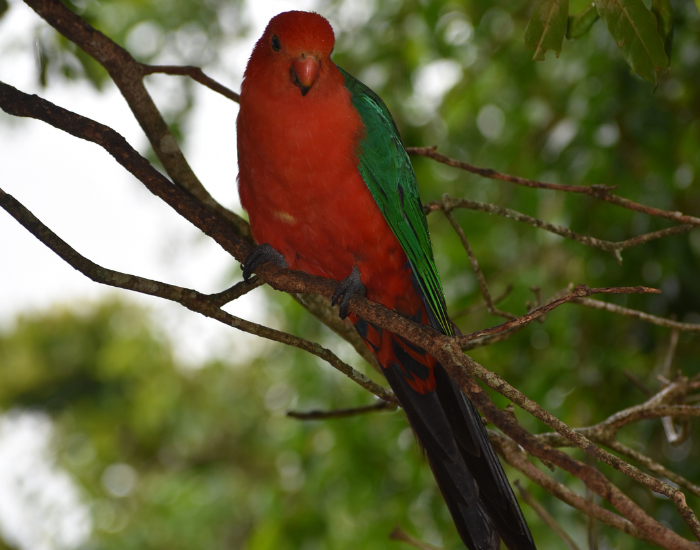
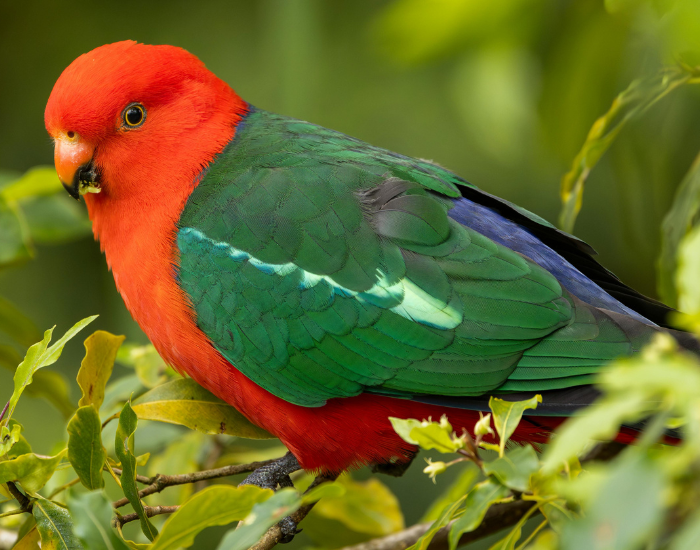
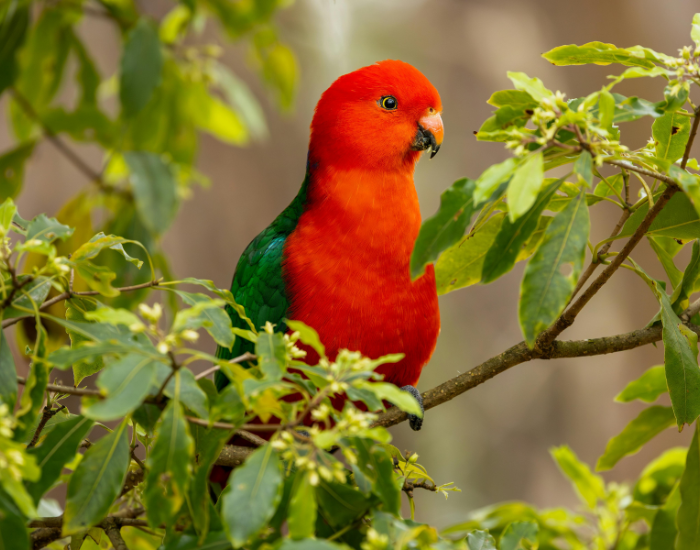
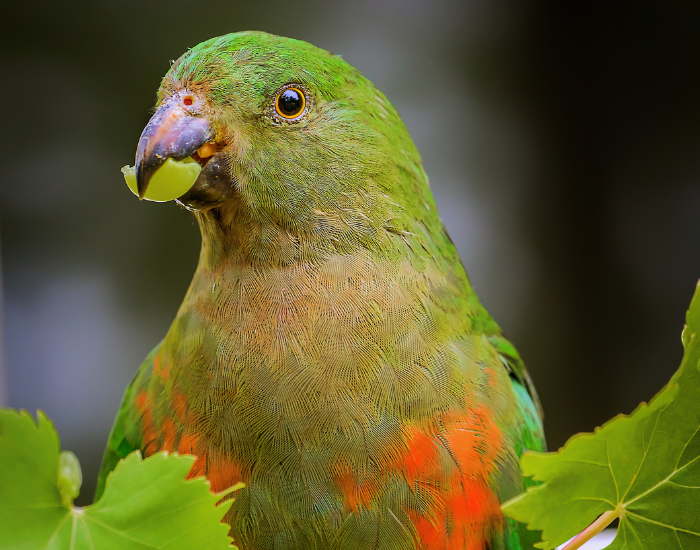
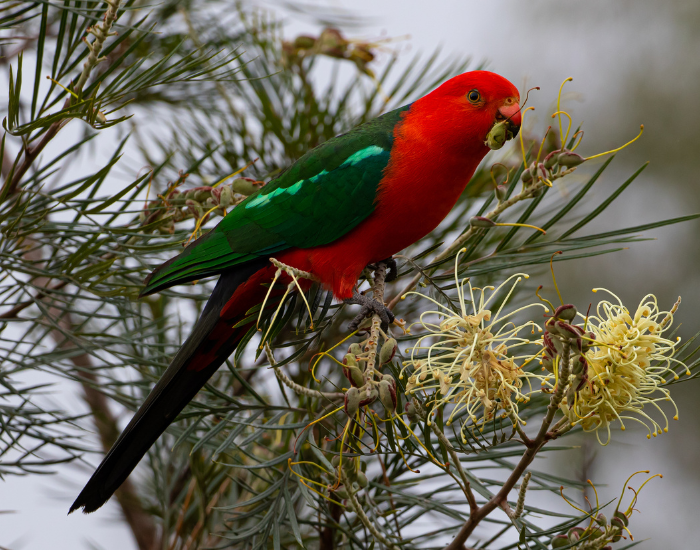
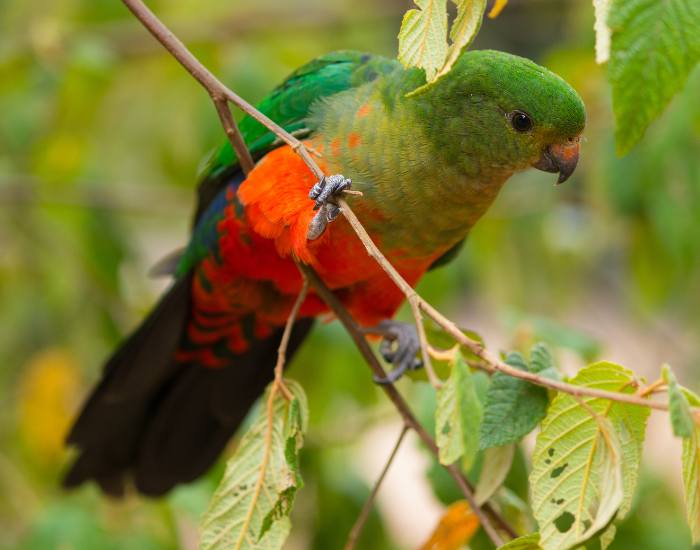
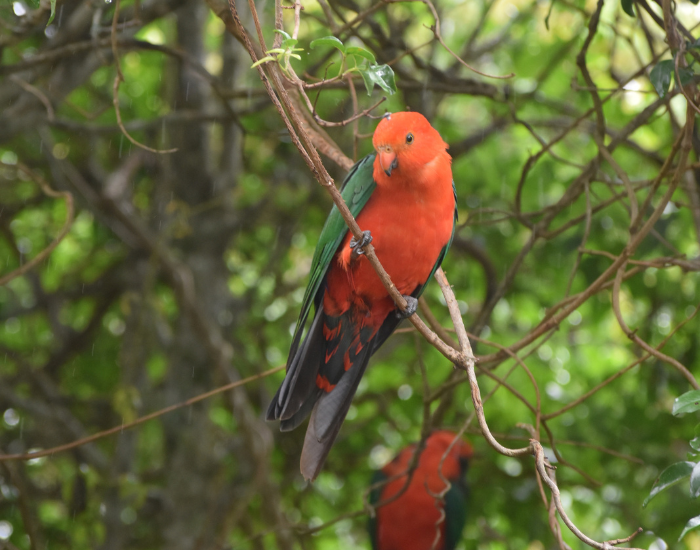
The Australian King Parrot (Alisterus scapularis) truly deserves its regal name. Male Australian king parrots display a distinctly red head and bright red belly. Deep green wings contrast beautifully with their crimson plumage. A long green tail tipped in blue completes their distinctive appearance. Female king parrots have a completely green head, which is a key identification feature, and wear mostly green feathers with subtle red on their belly. This clear sexual dimorphism makes identification straightforward at a glance.
Males stand out as the only Australian parrots with entirely and distinctly red heads. No other species in Australia displays such bold, solid blocks of red and green. Therefore, birdwatchers can easily distinguish them from rosellas and rainbow lorikeets in the field.
2. Habitat Ranging Across Eastern Australia
King parrots in Australia inhabit the entire east coast region. King parrots are found along the east coast and ranges of Australia, particularly in rainforests, wet sclerophyll forests, and urban areas with tall trees. Their range stretches from northern Queensland through New South Wales down to Victoria. These birds prefer rainforests, eucalypt forests, and wet sclerophyll woodlands as primary habitat. However, they’ve proven highly adaptable to changing environments.
Along the east coast, king parrots frequently venture into well-treed suburbs. They visit backyard feeding stations in neighborhoods with mature trees and native vegetation. Urban areas with sufficient green space attract small groups of these parrots regularly. In addition, they forage at forest edges where rainforests meet open ground.
Distribution: Eastern Australia from Queensland to Victoria
Habitat: Rainforests, sclerophyll forests, eucalypt woodlands, and leafy suburbs
3. Their Distinctive Call Signals Their Arrival
Before you see king parrots, you’ll often hear their high-pitched whistle. They emit a sharp “kee-ow” sound that carries through the forest canopy. Once you’ve tuned into this call, spotting them becomes significantly easier on bushwalks. Many birds use vocalizations for communication, but the king parrot’s whistle stands out distinctly.
4. Unique Among Australian Parrots
The male king parrot bird holds a unique position among Australian species. As mentioned, it’s the only Australian parrot sporting a completely red head and belly. Other parrots may display patches of red in their plumage. However, none wear crimson as boldly and extensively as king parrots do. This feature serves as the primary identifier for birdwatchers distinguishing them from similar species.
5. A Friendly Bird…But Not a Pet
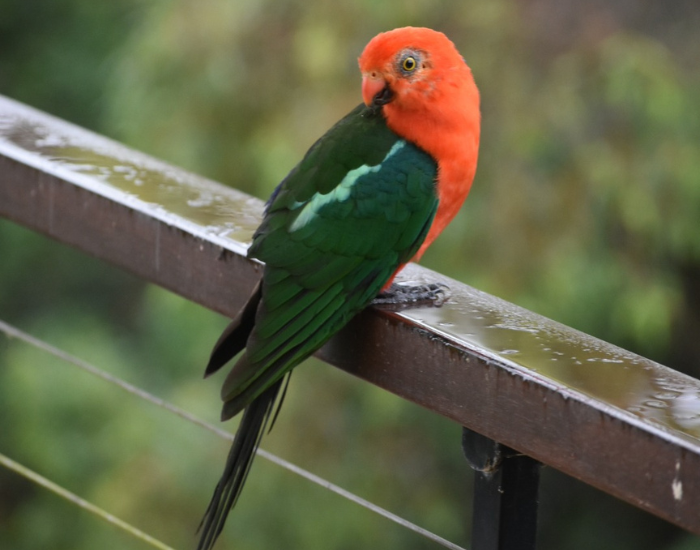
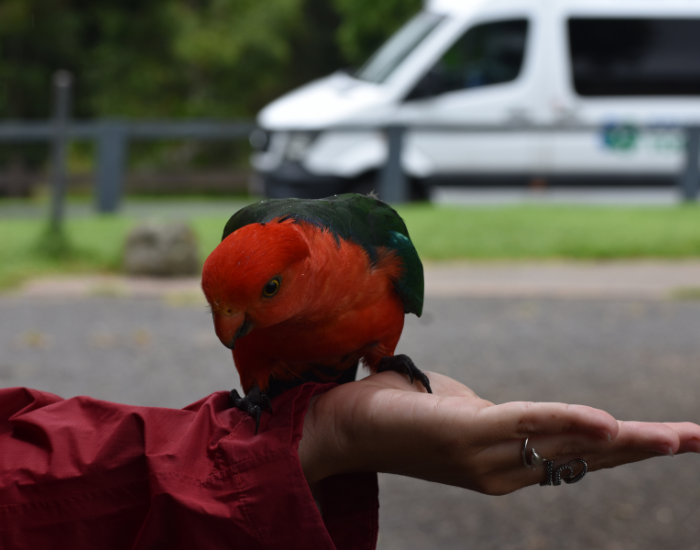
Are Australian king parrots friendly? In many situations, yes. Wild king parrots show curiosity and boldness around humans. They happily accept food offerings in suburban and rural settings. Nevertheless, they’re not suited as pets despite their approachable nature.
In Australia, keeping native parrots like king parrots requires special permits. Conservationists strongly discourage removing these birds from wild populations. They thrive best in their natural habitat where they fulfill important ecological roles. Therefore, appreciate them in nature rather than attempting captivity.
6. A Balanced Diet of Seeds, Fruits, and Berries
Australian king parrots feed on a variety of seeds, fruits, and berries, including those from wattle and hop bushes.
King parrots function primarily as frugivores and granivores in their ecosystem. They forage in tall trees for seeds and fruit from native plants. Wattle seeds, eucalypt fruits, and native berries form their staple diet. In urban areas, they’ll visit backyard feeds stocked with sunflower seeds or fresh fruit.
However, experts warn that artificial feeding stations carry risks. Psittacine beak and feather disease (PBFD) spreads more easily at feeding sites. Many birds congregating in small spaces increases disease transmission. For example, decayed wood dust and food debris can harbor pathogens. Therefore, maintain clean feeding areas if you choose to feed wild parrots.
7. They Play a Role in Seed Dispersal
Like many Australian parrots, king parrots serve as key ecological players. They eat fruits from native trees and disperse seeds through their droppings. This behavior helps regenerate forests and woodlands across eastern Australia. Their feeding patterns keep ecosystems diverse and resilient over time.
Working in the field, I’ve observed how quickly native plants sprout where parrots forage. Fruiting trees benefit particularly from this seed dispersal service. In addition, king parrots contribute to forest regeneration in areas recovering from disturbance.
8. Life Cycle and Family Bonds
Breeding season for Australian king parrots runs from September through January. During these months, pairs form monogamous bonds and raise chicks together. They nest in a deep hollow of old eucalyptus or angophora trees, often choosing tall, decayed tree cavities high above the ground. These nesting hollows provide essential shelter for eggs and young birds.
Female king parrots lay 3–5 eggs per clutch in their tree hollow nest. Females incubate the eggs for approximately 20 days while males provide food. Both parents share responsibilities once chicks hatch, with females caring for the young. Juveniles remain in the nest for around five weeks before fledging. Young birds develop their adult plumage gradually over several months.
King parrots are often seen in family groups during the breeding season, highlighting their social nature.
In wild populations, king parrots can live up to 25–30 years. This represents a long lifespan for such vibrant and active birds. Their longevity allows them to breed multiple times throughout their life.
9. Conservation Status: Least Concern, But Not Immune
The king parrot bird currently holds a “Least Concern” status with the IUCN. This classification means populations remain stable across their range. However, several threats endanger their long-term future in Australia.
Habitat loss from urban expansion continues to reduce available nesting sites. Agriculture also converts suitable forest habitat into cleared ground. Climate change may alter the distribution of food plants and suitable habitat. Furthermore, artificial feeding has been linked to disease transmission in wild populations.
Conservation efforts focus on preserving old trees with nesting hollows. Protecting rainforests and eucalypt forests ensures these parrots retain adequate habitat. Education about responsible feeding practices also plays a vital role in conservation.
10. A Species Full of UV Secrets
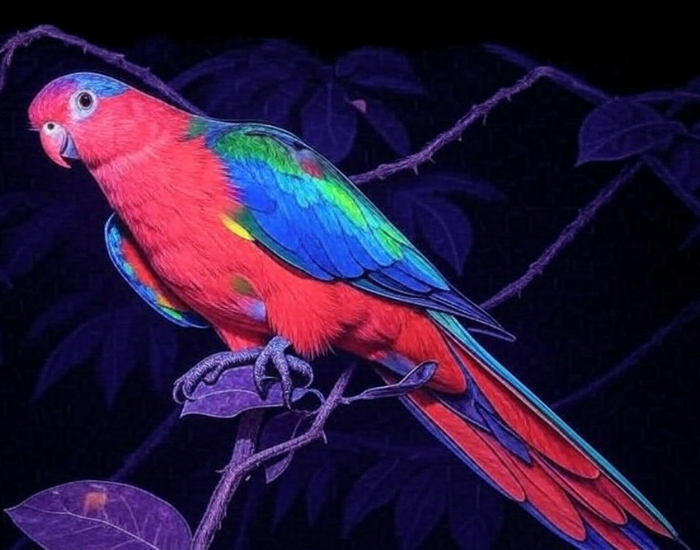
Recent research reveals that many parrots, including king parrots, possess ultraviolet (UV) reflectance. Their feathers contain colors invisible to human eyes but dazzling to other birds. Under ultraviolet light, the king parrot’s feathers reveal a prominent yellow glow on the wings, with their plumage displaying glowing patterns across wings and body.
Birds have four types of cone cells in their eyes, allowing them to see into ultraviolet wavelengths. Scientists believe these UV patterns play a role in mate selection. Birds perceive these ultraviolet wavelengths clearly during breeding season. This hidden dimension of their appearance adds complexity to their social behavior. Many birds rely on UV signals that humans cannot detect naturally.
11. King Parrots vs. Other Australian Parrots
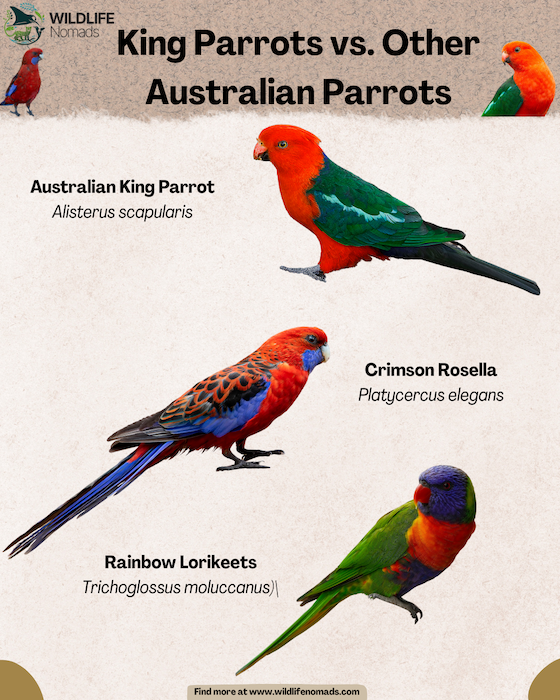
Australia hosts numerous green parrots that casual observers might confuse. However, king parrots stand apart from rosellas and rainbow lorikeets in several ways.
Rosellas display mottled blue, red, and yellow plumage patterns. The crimson rosella shares some habitat with king parrots but appears smaller. Their feather patterns differ significantly from the solid color blocks of king parrots.
Rainbow lorikeets appear slender with brush-tipped tongues adapted for nectar feeding. They form loud, fast-moving groups in urban areas and along the east coast. Their diet and behavior contrast sharply with seed-eating king parrots.
King Parrots appear larger and chunkier than both species. They display solid blocks of bright red and green without mottling. Males have that distinctive completely red head found in no other Australian species.
12. Spotting King Parrots in the Wild
Want to see Australian king parrots in their natural habitat? Head to the hinterlands of South-East Queensland or the Blue Mountains near Sydney. Victoria’s Otways also host healthy populations of these colorful birds. Look for them around rainforest edges or in well-treed suburbs with mature vegetation.
Early morning offers the best viewing opportunities when parrots actively forage. Small groups often feed together in tall trees before dispersing later. In my experience, the most memorable encounters happen unexpectedly. For instance, opening your balcony door to find one waiting for breakfast creates an unforgettable wildlife moment.
National parks along Australia’s east coast provide excellent habitat for observation. Port Campbell and areas with abundant eucalypt forest support year-round populations. Bring binoculars and listen for their high-pitched whistle as you explore these areas.
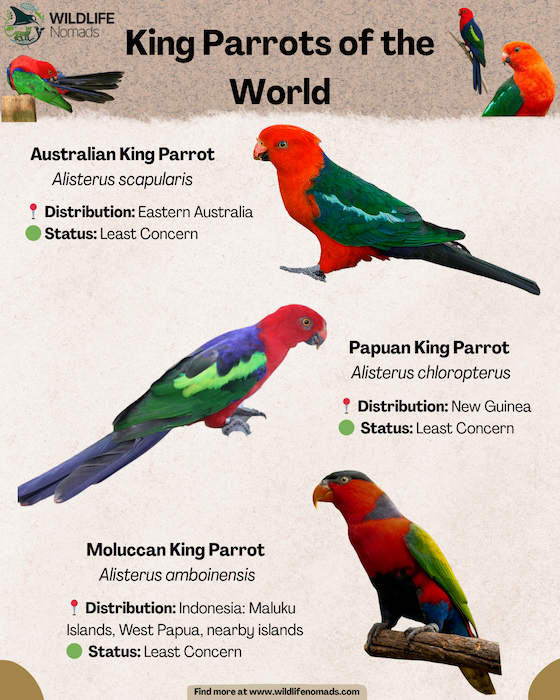
13. King Parrots of the World: Their Global Cousins
King parrots aren’t limited to Australia, their close relatives can be found across New Guinea and Indonesia too. Together, the Australian, Papuan, and Moluccan King Parrots form a striking trio within the genus Alisterus. To give you a broader view, here’s an infographic showcasing all three king parrot species and where they live.
But the story doesn’t stop there. Parrots belong to one of the most diverse bird families on Earth, with over 370 species found across the tropics and subtropics.
FAQ: King Parrots in Australia
No, they appear relatively common along the east coast. However, heavily urbanized areas see them less frequently than forested regions.
Yes, wild populations show curiosity and tameness around humans. This occurs especially in suburban or rural settings with regular human presence.
Their striking plumage and regal red “crown” inspired the royal name. Males wear their crimson like a king’s robes.
No, they represent separate species with different characteristics. Rosellas have distinct coloration patterns and different diet preferences.
In wild populations, they can live up to 25–30 years. Captive birds with proper care may live even longer.
They inhabit eastern Australia from northern Queensland through New South Wales to Victoria. Their range follows the east coast closely.
They feed primarily on seeds and fruit from native trees. Wattle seeds, eucalypt fruits, and berries form their main diet in the wild.
Guardians of the Forest
The king parrot stands as one of Australia’s most captivating native species. Whether glimpsed in rainforests or perched on a suburban balcony rail, they instantly brighten any day. These colorful parrots remind us of the richness found in Australian wildlife and ecosystems.
Protecting their habitat ensures future generations experience that joy. Imagine looking up from morning coffee to find a splash of bright red and green waiting nearby. Conservation of eucalypt forests, rainforests, and old trees with nesting hollows remains crucial.
For more information on Australian wildlife conservation, visit the Australian Wildlife Conservancy or the IUCN Red List. Field guides like The Australian Bird Guide provide additional details on identifying and observing king parrots in the wild.
Further Reading
If you enjoyed learning about black cockatoos, you might also like these wildlife guides:
- What You Need to Know About Water Dragons in Australia
- Crocodiles of Australia: What You Need to Know
- 12 Fascinating Facts About Wombats
- Sharks of Australia: 12 Fascinating Facts
- 12 Facts About Monitors Lizards