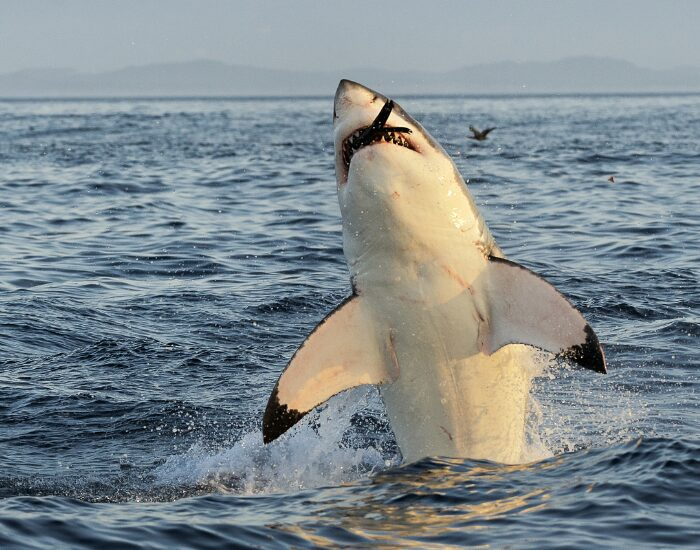
When you think of sharks, your mind probably jumps to razor-sharp teeth and aggressive predators like the Great White Shark and other shark species. But what if I told you that the world’s largest shark is actually one of the ocean’s most gentle creatures? Meet the whale shark – a magnificent giant that’s rewriting everything we thought we knew about these incredible marine animals.
The whale shark (Rhincodon typus) isn’t just another fish swimming around our oceans. It’s literally a living fossil to nature’s incredible diversity and a species that deserves our respect, protection, and fascination. Today, I’m sharing 12 amazing facts about whale sharks that will completely change how you view these ocean giants.
1. Whale Sharks Are Actually the World’s Largest Fish (Not Whales!)
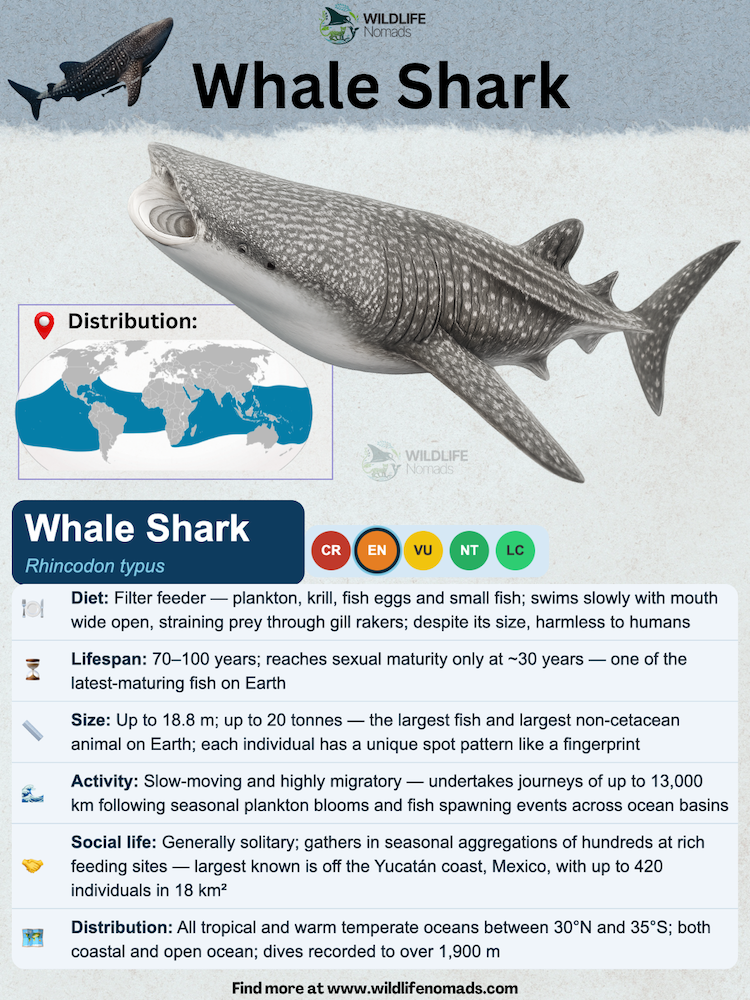
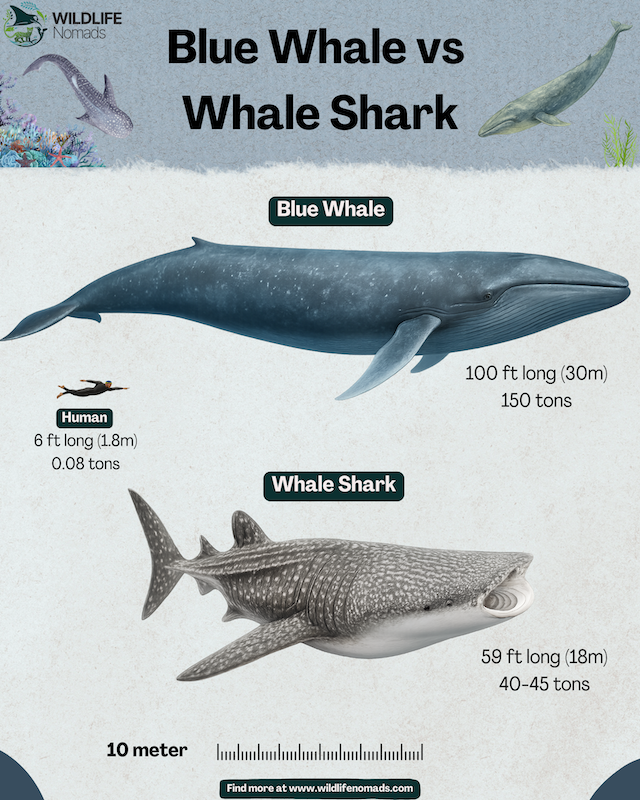
Despite their name, whale sharks aren’t whales at all – they’re fish, and they hold the impressive title of being the largest living large fish species on Earth. This common misconception comes from their enormous size, which rivals that of many whale species and is reflected in their remarkable body length.
How long are whale sharks exactly? Adult whale sharks typically reach lengths of 12-14 meters (39-46 feet), though some exceptional individuals can grow up to 20 meters (65 feet) long. The average length of whale sharks is around 9-10 meters (30-33 feet), which is significantly larger than most other large fish species. To put this in perspective, that’s longer than a school bus and about the same length as a bowling alley!
The whale shark weight is equally impressive. These giants can weigh up to 21.5 tons (47,000 pounds) – that’s equivalent to about three adult elephants combined. The heaviest whale shark ever recorded weighed an estimated21.5 metric tons (47,000 lbs), making it not just the largest fish but one of the heaviest creatures in our oceans.
2. They’re Ancient Ocean Residents with a 60-Million-Year History
Whale sharks belong to the prehistoric Rhincodontidae family, and fossil evidence suggests their lineage dates back approximately 66 million years. In scientific literature, the whale shark has also been historically referred to as ‘micristodus punctatus gill’, reflecting its earlier taxonomic classification. This means whale sharks were swimming in our oceans when dinosaurs were still roaming the Earth – talk about living fossils!
Their genus name “Rhincodon” literally means “rasp-tooth,” referring to their unique dental structure. This ancient lineage has allowed them to perfect their feeding strategies over millions of years, making them incredibly efficient filter feeders. Like other sharks, whale sharks possess a cartilaginous skeleton, which is a key evolutionary trait.
3. Their Mouths Are Architectural Marvels
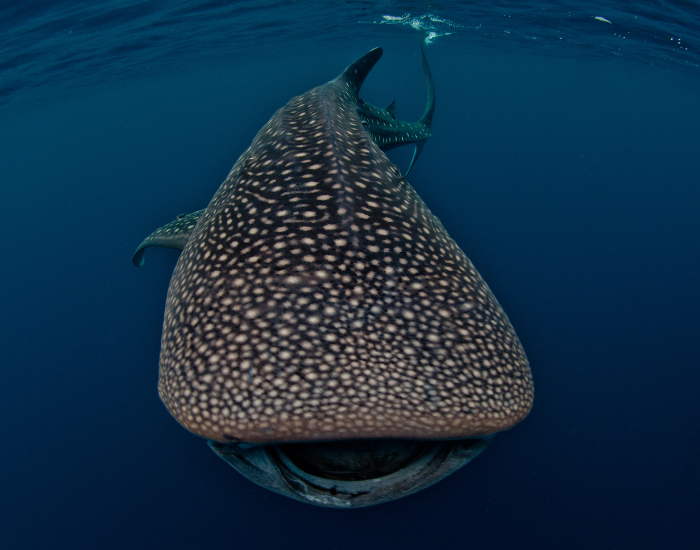
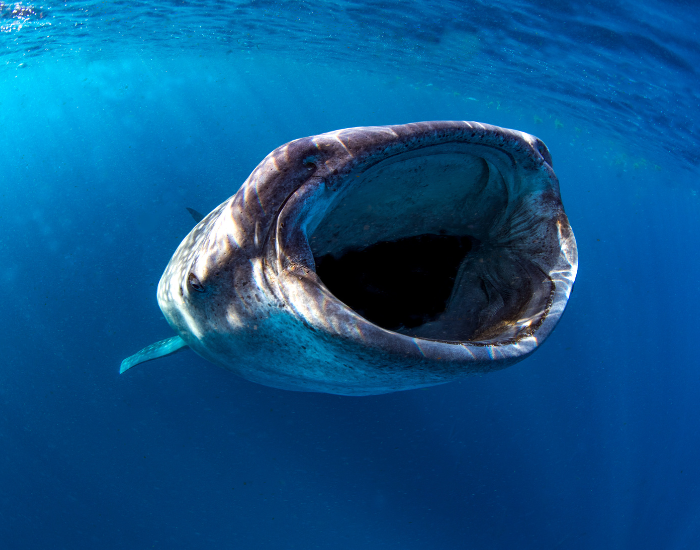
The whale shark mouth size is nothing short of spectacular. These giants can open their mouths up to 1.5 meters (5 feet) wide – wide enough for a small car to drive through! Their large mouth is a defining feature among filter feeding sharks, allowing them to efficiently filter vast amounts of plankton and small fishes from the water.
But here’s what makes it even more fascinating: despite having the biggest mouth of any shark species, they use it not for hunting large prey, but for filtering tiny organisms.
4. Do Whale Sharks Have Teeth? Yes, but Not How You’d Expect
This is one of the most frequently asked questions about these creatures. Yes, whale sharks do have teeth – thousands of them! However, these teeth are tiny (only about 2-3mm long) and serve a completely different purpose than what you might expect from a shark.
Inside that massive mouth, you’ll find up to 300 rows of small, teardrop-shaped teeth. But here’s the twist – these teeth aren’t used for biting or chewing. Instead, whale sharks rely on specialized filtering pads and gill rakers to strain food from the water.
As one of the largest filter feeding sharks, their large mouth is specially adapted to filter feed efficiently, using both ram filtration and active suction feeding techniques. The teeth help create turbulence in the water flowing through their mouths, which aids in the filtering process. It’s like having thousands of tiny water directors working together to make feeding more efficient.
5. The Whale Shark Diet: They’re Gentle Filter Feeders
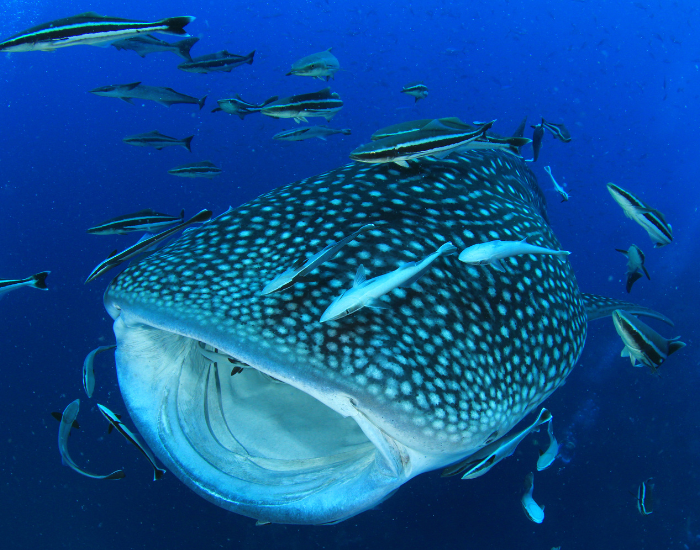
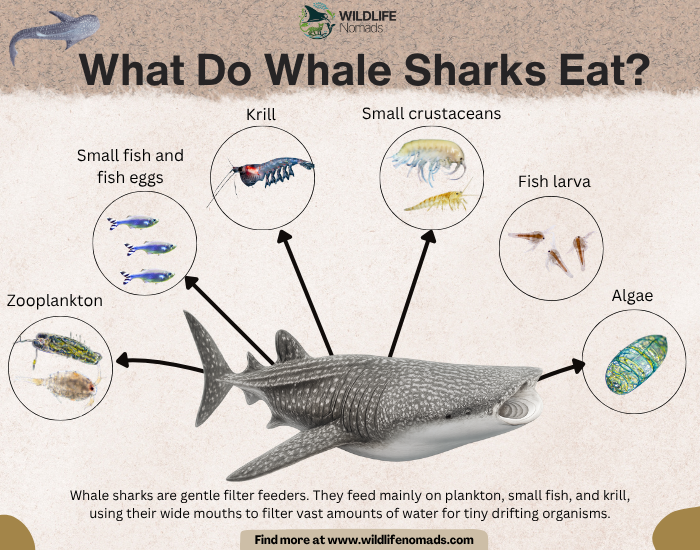
What’s the biggest thing a whale shark can eat? Surprisingly, despite being the largest fish in the ocean, they primarily feed on some of the smallest organisms. Their diet consists mainly of:
- Zooplankton
- Small fish and fish eggs
- Algae
- Krill
- Small crustaceans
- Fish larvae
Whale sharks feed primarily on plankton, which includes microscopic plants such as phytoplankton. Their diet also includes small fishes, making them important consumers in the marine food web.
Whale sharks can process over 20,000 grams (44 pounds) of plankton daily. Larger whale sharks (443-622 cm in length) can ingest between 1,467 and 2,763 grams of plankton per hour, with daily intake estimates ranging significantly based on feeding hours. They accomplish this through two main feeding methods: active suction feeding at the surface and filter feeding while swimming.
The largest prey item a whale shark can swallow is typically no bigger than a small tuna – quite modest for such a massive creature! This gentle feeding behavior is why many divers and snorkelers can safely swim alongside these magnificent animals.
6. Are Whale Sharks Aggressive? Absolutely Not!
One of the most common concerns people have is: “How aggressive are whale sharks?” The answer might surprise you – whale sharks are among the most docile creatures in the ocean. They pose virtually no threat to humans and are often described as the “golden retrievers of the sea.”
Are whale sharks friendly to humans? While “friendly” might be anthropomorphizing their behavior, whale sharks are remarkably tolerant of human presence. They rarely show signs of distress when approached respectfully, and many have been observed seeming curious about divers and snorkelers.
However, it’s important to remember that these are wild animals deserving of respect. While whale shark encounters are generally safe, maintaining appropriate distances and following local guidelines is crucial for both human safety and whale shark welfare.
7. Why Can’t You Scuba Dive with Whale Sharks?
This is actually a common misconception. You can scuba dive with whale sharks in many locations worldwide, but there are important regulations and considerations:
Safety Regulations:
- Most locations require maintaining a distance of 3-4 meters from the animal
- No touching or riding is permitted
- Flash photography is often prohibited
- Group sizes are typically limited
Behavioral Considerations:
- Whale sharks often feed near the surface, making snorkeling more practical
- Scuba equipment bubbles can sometimes disturb their feeding behavior
- Their unpredictable movements can make close encounters challenging for divers
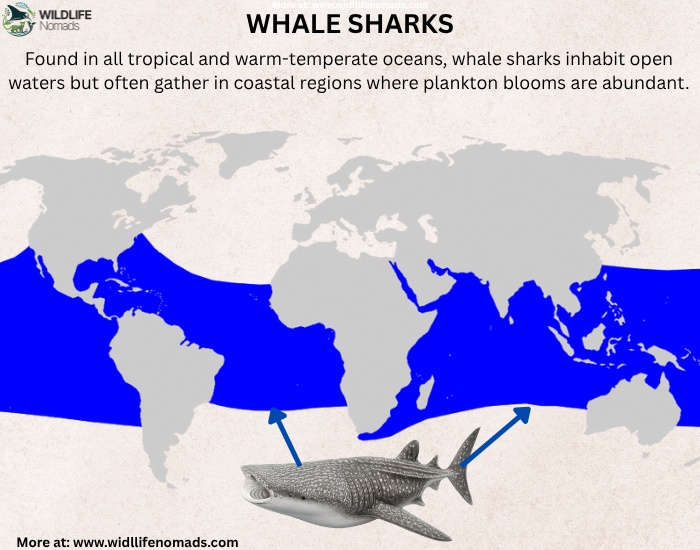
Popular whale shark diving and snorkeling destinations include the Ningaloo Reef in Western Australia, the Galápagos Islands, Mexico’s Yucatan Peninsula, and the Philippines. Whale sharks are also commonly found in the western and central Pacific, Indian Ocean, Atlantic Ocean, central Pacific, western Indian Ocean, and Arabian Gulf. Coral atolls in these regions are important aggregation sites for whale sharks.
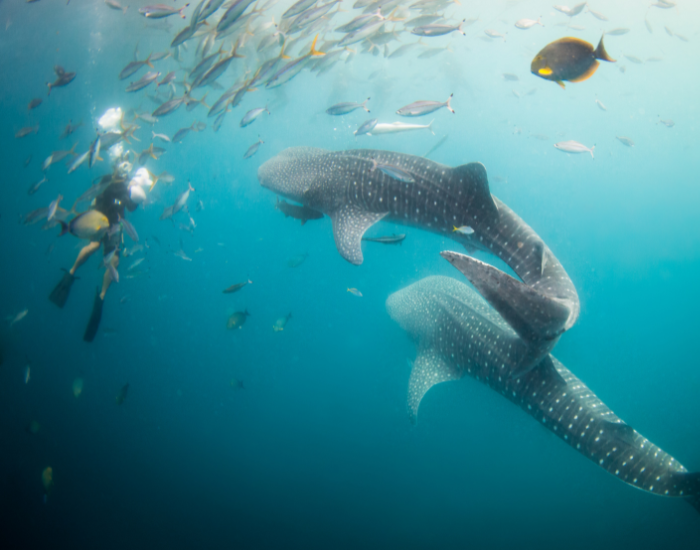
8. Only 10% of Whale Sharks Reach Adulthood – Here’s Why
One of the most sobering facts about whale sharks is their low survival rate. Research indicates that only about 10% of whale shark pups survive to reach adulthood. Several factors contribute to this challenging statistic:
Natural Predators:
- Young whale sharks face predation from larger sharks, including tiger sharks and bull sharks
- Marine mammals like orcas occasionally prey on juvenile whale sharks
- The smaller the whale shark, the more vulnerable it is to predation
- Juvenile whale sharks are particularly vulnerable to predation due to their smaller size and limited defenses
- Younger whale sharks are often found in shallow waters, where they may interact with divers and are sometimes observed displaying gentle and playful behavior
Environmental Challenges:
- Climate change affecting food availability
- Ocean acidification impacting plankton populations
- Pollution and plastic debris in feeding areas
Human-Related Threats:
- Fishing bycatch (accidentally caught in fishing nets)
- Vessel strikes, particularly affecting surface-feeding individuals
- Habitat degradation in coastal feeding areas
This low survival rate, combined with their late sexual maturity (around 25 years), makes whale shark populations particularly vulnerable to decline. Female whale sharks may produce a steady stream of pups over an extended period, which is a unique aspect of their reproductive strategy and helps increase the chances of some offspring surviving to adulthood.
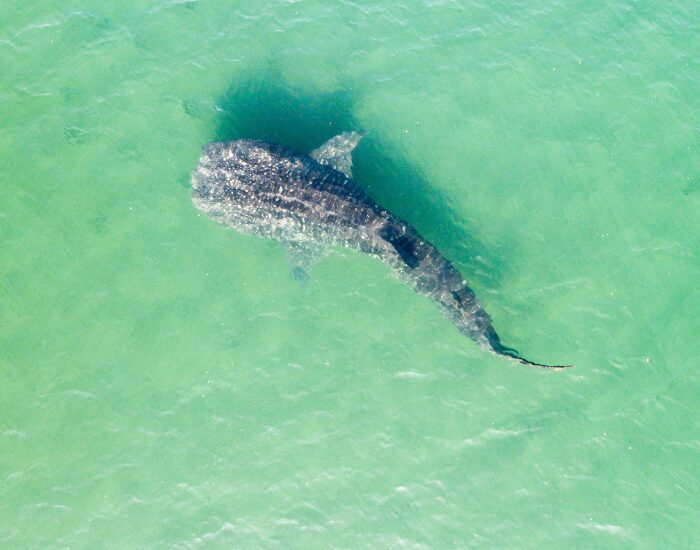
9. They Can Live Over 100 Years (Possibly Up to 130!)
Can whale sharks live up to 100 years? Research suggests they can live even longer! Recent studies using vertebral growth bands indicate that whale sharks may have lifespans of up to 130 years, making them among the longest-lived fish species.
This exceptional longevity comes with trade-offs:
- Late sexual maturity (around 25 years for males, possibly later for females)
- Slow growth rates compared to other shark species
- Long reproductive cycles
Their extended lifespan means that whale sharks born today could potentially still be swimming in our oceans well into the 22nd century – if we protect them properly.
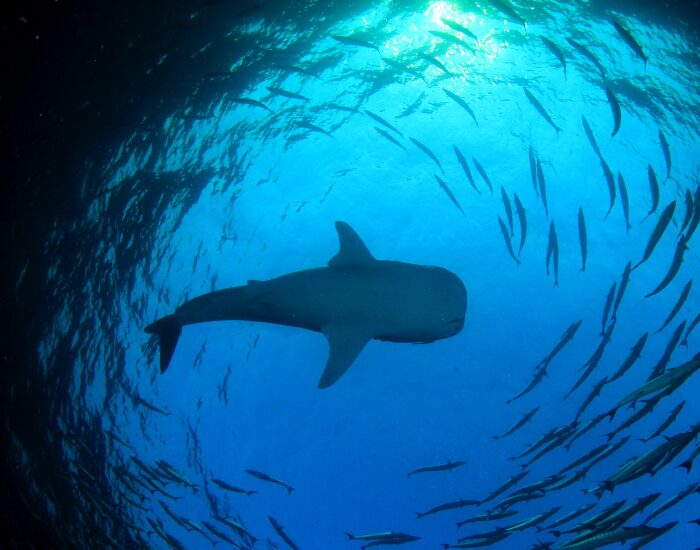
10. Giant Whale Shark Reproduction: They Give Birth to Live Young
Whale sharks are ovoviviparous, meaning they produce eggs that hatch inside the mother’s body, and she then gives birth to live young. The whale shark’s unique reproductive adaptations include internal fertilization and the ability to store sperm for extended periods, allowing for greater flexibility in timing fertilization. This reproductive strategy is relatively rare among sharks and adds another layer of fascination to these creatures.
Reproduction Facts:
- Females can carry up to 300 pups at various developmental stages
- Pups measure 40-60 cm (16-24 inches) at birth
- Gestation period is estimated at 12-14 months
- Females may store sperm for extended periods before fertilization
The discovery of a pregnant female whale shark in 1996 provided most of our knowledge about their reproduction, as observing mating behavior in the wild remains extremely rare.
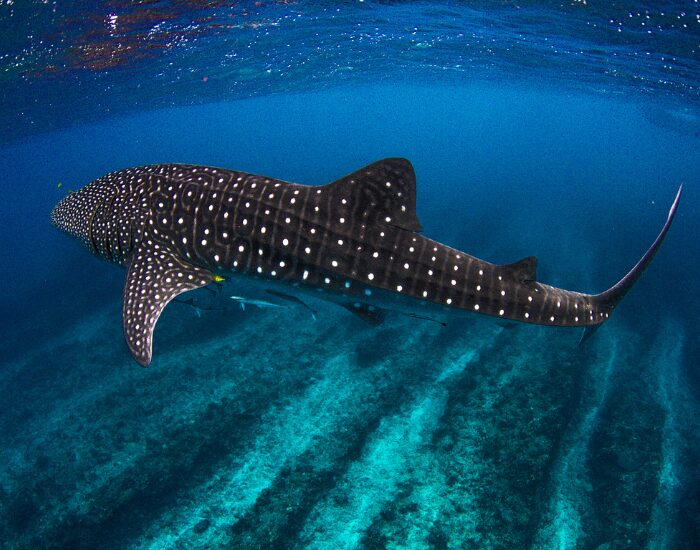
11. Their Global Population Is Declining Rapidly
The conservation status of whale sharks is a serious concern. The IUCN Red List classifies whale sharks as “Endangered,” with the global population estimated to have declined by approximately 50% over the past 75 years. The global whale shark population is considered an endangered species due to significant declines caused by threats such as fishing, habitat loss, and illegal trade.
Current Population Estimates:
- Global population: 130,000-200,000 individuals
- Two main subpopulations: Atlantic and Indo-Pacific
- The Indo-Pacific holds about 75% of the global population
The population trend for the whale shark population shows declines in both the Indo-Pacific and Atlantic subpopulations. The Atlantic subpopulation, in particular, is smaller and faces unique conservation challenges, with its conservation status also classified as endangered.
Major Threats Include:
- Fishing bycatch and targeted fishing in some regions
- Vessel strikes in high-traffic areas
- Marine pollution and plastic debris
- Climate change affecting food sources
- Poorly managed whale shark tourism
12. They’re Protected but Need More Help
Recognizing their vulnerable status, whale sharks are now protected under several international agreements:
- CITES Appendix II: Regulates international trade
- CMS Migratory Sharks MoU: Promotes conservation across their range
- National protections: Many countries have banned whale shark fishing
The International Union for Conservation of Nature (IUCN), as a leading international union, plays a key role in coordinating global conservation efforts for whale sharks, working with other organizations to establish and monitor international agreements and regulations.
However, enforcement remains challenging due to their wide-ranging, migratory nature and the international waters they frequently inhabit.
Conservation Success Stories:
- The Georgia Aquarium’s long-term captive care research
- Whale shark tourism providing economic incentives for protection
- Satellite tagging programs improving our understanding of their behavior
- Community-based conservation programs in key habitats

What Makes Whale Sharks Different from Other Sharks?
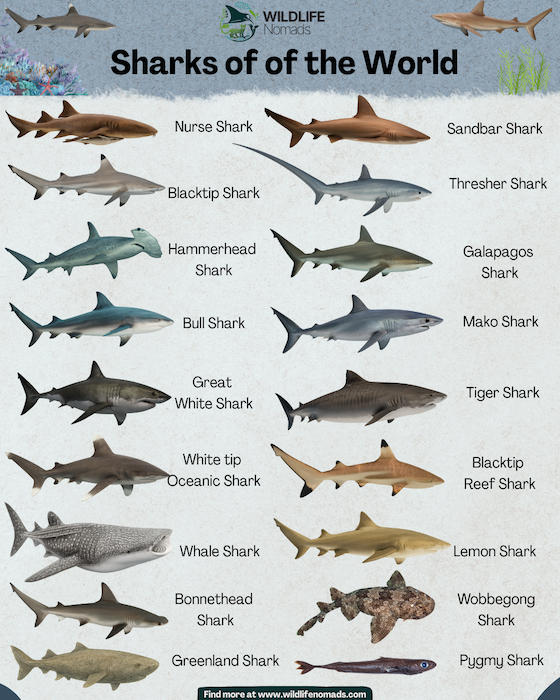
Whale sharks stand apart from their shark relatives in remarkable ways. Unlike apex predators such as great white sharks or tiger sharks, whale sharks occupy a completely different ecological niche.
Key Differences:
- Feeding behavior: Filter feeding vs. active predation
- Body structure: Whale sharks have a terminal mouth, five large gill slits on each side of the head, and three prominent ridges running along each side of the body from above and behind the head to the caudal peduncle. These prominent ridges are a key identification feature. Their dorsal fins, including a large first dorsal fin set rearward on the body, are distinct in size and placement compared to most sharks. The large, paired pectoral fins and pelvic fins are positioned to provide stability and steering, similar to but often more pronounced than in most sharks, and are not fused to the head.
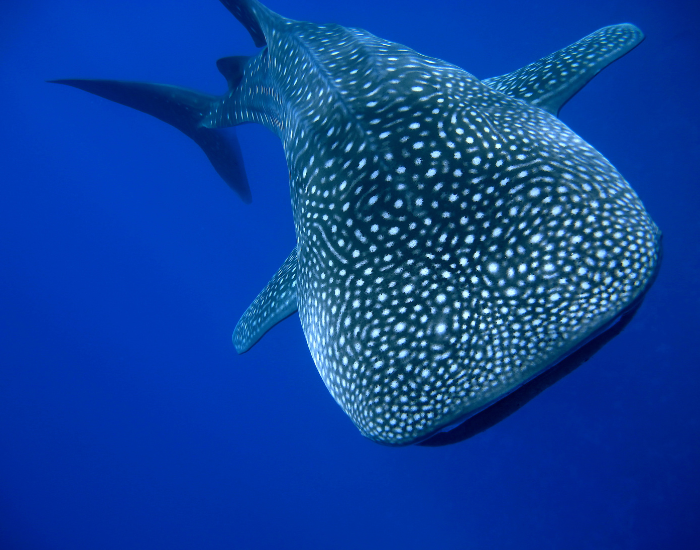
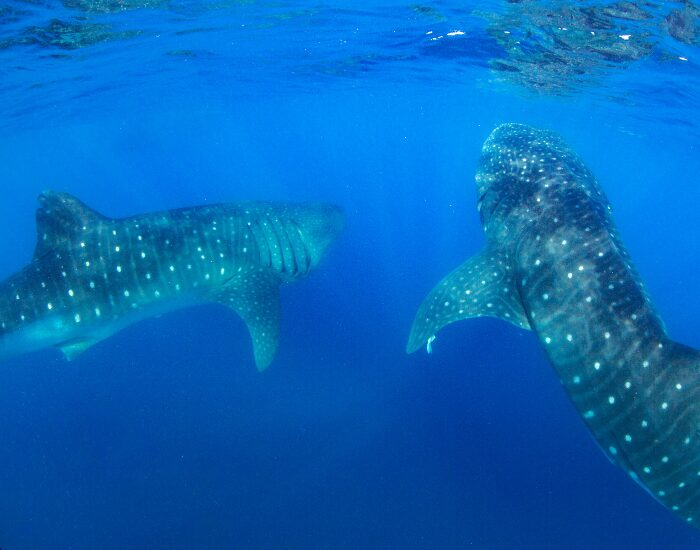
- Coloration: Whale sharks display a checkerboard pattern of light spots and stripes on a dark background, which is unique among sharks and aids in identification.
- Swimming behavior: Slow, methodical movement vs. burst swimming
- Interaction with humans: Tolerant vs. typically avoidant
- Ecological role: Primary consumer vs. apex predator
This unique combination of characteristics makes whale sharks one of the most distinctive and fascinating species in our oceans.
The Future of Whale Sharks: Why They Matter
Whale sharks play a crucial role in marine ecosystems as both consumers of plankton and as mobile marine habitats themselves. Their bodies often host entire communities of smaller fish and marine organisms, creating traveling ecosystems across ocean basins. Marine biology research is essential for understanding and protecting whale sharks, as it provides insights into their behavior, biology, and the conservation challenges they face.
Whale sharks inhabit the open sea, primarily in tropical oceans and warm waters, where they feed near the surface and undertake long migrations. They are also found in warm temperate seas, highlighting their broad distribution across various regions worldwide.
How You Can Help:
- Support responsible whale shark tourism
- Choose sustainable seafood options
- Reduce plastic use to decrease marine pollution
- Support organizations working on whale shark conservation
- Spread awareness about these remarkable creatures
Protecting Ocean Giants for Future Generations
Whale sharks represent everything we should love and protect about our oceans. These gentle giants, with their massive mouths, ancient lineage, and peaceful nature, remind us that size doesn’t determine aggression, and that some of the ocean’s most impressive residents are also its most vulnerable.
From their incredible 130-year lifespan to their massive 20-meter length, from their tiny teeth to their enormous appetites for microscopic prey, whale sharks continue to amaze researchers and ocean enthusiasts alike. But with only 10% reaching adulthood and populations declining globally, these magnificent creatures need our protection more than ever.

Find Whale Shark Experiences
This blog is reader-supported. When you buy experiences through links listed on this site, we may earn an affiliate commission.
References:
Motta, P. J., Maslanka, M., Hueter, R. E., Davis, R. L., de la Parra, R., Mulvany, S. L., Habegger, M. L., Strother, J. A., Mara, K. R., Gardiner, J. M., Tyminski, J. P., & Zeigler, L. D. (2010). Feeding anatomy, filter-feeding rate, and diet of whale sharks Rhincodon typus during surface ram filter feeding off the Yucatan Peninsula, Mexico. Zoology, 113(4), 199–212. https://doi.org/10.1016/j.zool.2009.12.001
McKinney, J. A., Hoffmayer, E. R., Holmberg, J., Graham, R. T., Driggers, W. B., Galván-Pastoriza, B. E., Fox, S., Pierce, S. J., & Dove, A. D. M. (2017). Long-term assessment of whale shark population demography and connectivity using photo-identification in the Western Atlantic Ocean. PloS one, 12(8), e0180495. https://doi.org/10.1371/journal.pone.0180495
Ong, J. J. L., Meekan, M. G., Hsu, H. H., Fanning, L. P., & Campana, S. E. (2020). Annual bands in vertebrae validated by bomb radiocarbon assays provide estimates of age and growth of whale sharks. Frontiers in Marine Science, 7, Article 188. https://doi.org/10.3389/fmars.2020.00188
Pierce, S.J., Rohner, C.A., Perry, C.T., Jabado, R.W., Norman, B., Reynolds, S., Womersley, F., Robinson, D., Graham, R. & Araujo, G. (2025) Rhincodon typus. The IUCN Red List of Threatened Species 2025: e.T19488A126673248. https://dx.doi.org/10.2305/IUCN.UK.2025-2.RLTS.T19488A126673248.en.
Schmidt, J. V., Schmidt, C. L., Ozer, F., Ernst, R. E., Feldheim, K. A., Ashley, M. V., & Levine, M. (2009). Low genetic differentiation across three major ocean populations of the whale shark, Rhincodon typus. PloS one, 4(4), e4988. https://doi.org/10.1371/journal.pone.0004988