
Who is the Kea Bird?
The kea parrot (Nestor notabilis) is one of New Zealand’s most charismatic and intelligent native birds. Endemic to the South Island, it holds the unique title of the world’s only true alpine parrot. Known for its curiosity, problem-solving skills, and occasional mischief, the kea has earned a reputation as the “clown of the mountains.”
Despite its charm, the kea is a nationally endangered and protected species, with wild populations numbering only around 3,000–7,000 individuals. Wild kea, particularly wild subadult kea, face a challenging future in their harsh mountain environment. The Kea Conservation Trust works alongside the Department of Conservation (DOC) to monitor populations, protect habitat, and raise public awareness about kea conservation.
Kea Habitat and Distribution
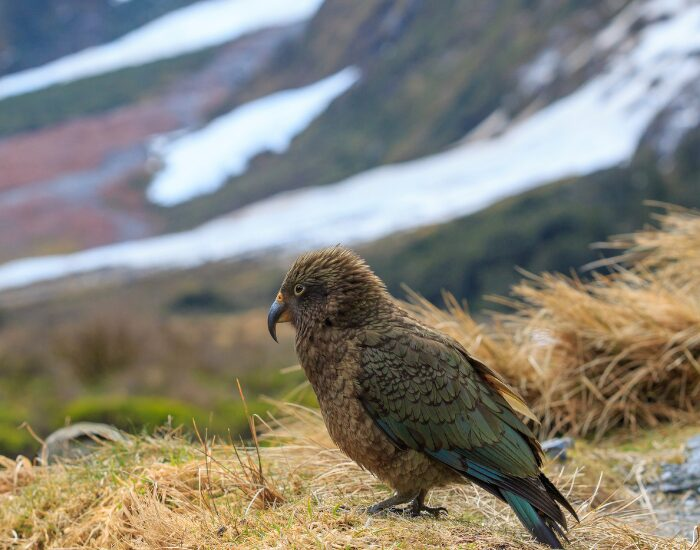
Kea live exclusively in the South Island of New Zealand, inhabiting a range of environments from lowland forests to the rugged Southern Alps. They thrive in areas such as Nelson Lakes National Park, Fiordland, and Arthur’s Pass, and are often spotted around South Island ski fields and remote mountain huts.
Their range spans alpine ridges, steep mountain ranges, and lowland or coastal sites during the colder months. This adaptability is key to their survival, but their distribution is limited by habitat loss, predation, and human conflict.
Kea habitat facts:
- Range: South Island only.
- Core zones: alpine ecosystems, subalpine scrub, and mixed beech forest.
- Adaptations: olive green plumage for camouflage, strong beak for foraging in rocky terrain.
Biology and Behavior
Kea are intelligent bird species known for their ability to solve multi-step puzzles and even cooperate to achieve goals, skills rarely seen in the bird world.
They are highly social, living in small flocks, and spend hours exploring their surroundings. This curiosity leads them to interact with people, sometimes by unzipping backpacks, sliding down snowy roofs, or dismantling unattended gear.
Their call, “kee-aa,” gives them their name in Māori, but unlike some other native species, kea have no link to Greek mythology, their story is rooted entirely in New Zealand culture.
Kea Research and Study
The Kea Conservation Trust, BirdLife International, and DOC collaborate on monitoring kea populations across the South Island. Research projects track kea movements, assess genetic diversity, and study how environmental changes affect breeding success.
Studying kea intelligence has revealed their remarkable adaptability, which helps them survive in the harsh mountain environment but also leads them into conflict when human objects become tempting “toys.”
Kea Intelligence – Why They’re Called the World’s Smartest Parrot
Kea intelligence is legendary, earning them the nickname “genius of the mountains.” Studies have shown that kea can solve logic puzzles, use tools, and even cooperate with each other to achieve shared goals.
One famous experiment involved a string-pulling test, where kea figured out how to work in pairs to pull two ends of a rope at the same time to release a food reward — if one bird pulled too soon, the other would stop and wait until they could coordinate.
Their intelligence isn’t just about problem-solving; it’s also social. Kea have been observed “teaching” younger birds, sharing food, and using play to strengthen group bonds. This mental agility is likely an evolutionary adaptation to surviving in unpredictable alpine environments, where food sources change seasonally, and creative foraging is essential.
Kea in Māori Culture and History
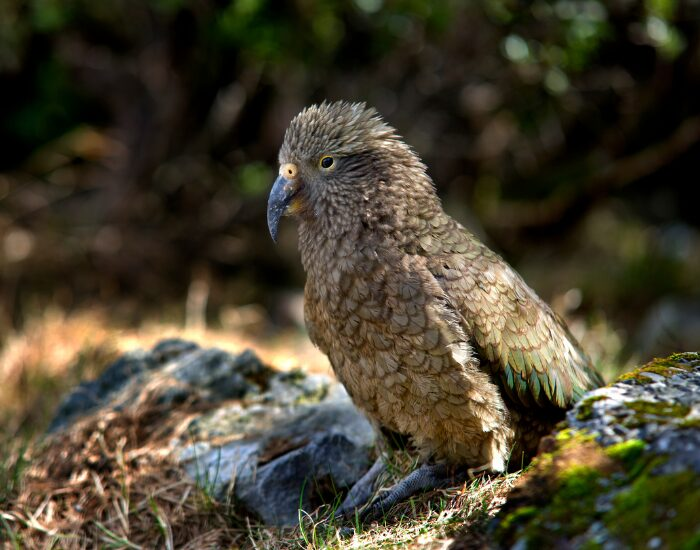
The kea holds a unique place in the cultural landscape of New Zealand. Māori traditionally recognized the bird for its intelligence and adaptability, often noting its presence in high mountain passes. The name “kea” comes from the sound of their distinctive call — a loud, rolling “kee-aa” that echoes through valleys.
For early Polynesian settlers and later European explorers, kea were both a curiosity and a challenge. Their habit of approaching campsites and investigating supplies made them unforgettable to travelers in the Southern Alps. While 19th-century sheep farmers saw them as pests, today the kea is celebrated as a taonga (treasure) species, symbolizing the wild, untamed spirit of New Zealand’s high country.
In recent years, kea have become ambassadors for native birds, featuring in conservation campaigns, tourism materials, and even local school programs teaching about native vegetation and alpine ecosystems.

Threats to Kea Populations
The kea’s conservation status is threatened by a combination of natural and human pressures:
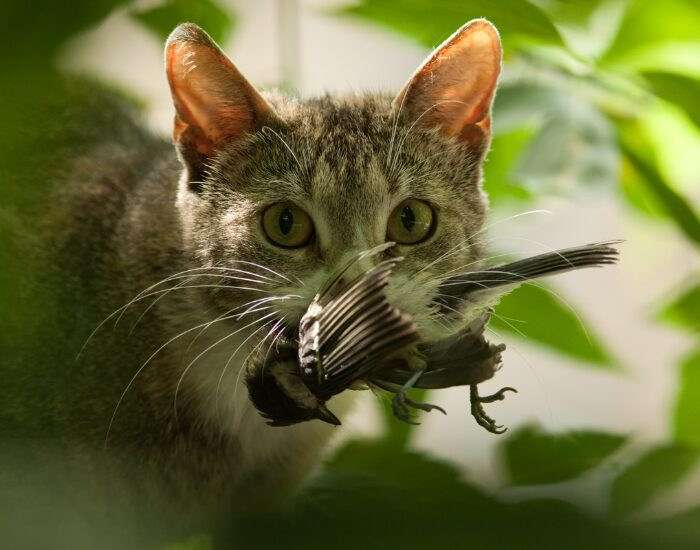
- Mammalian predators such as stoats, possums, and feral cats prey on kea eggs and chicks.
- Invasive predators threaten nests in alpine and forested areas.
- Historical conflict with sheep farmers, fueled by reports of kea attacking newly shorn sheep and even injured but otherwise healthy sheep.
- Tourists feeding kea human food, leading to illness and dependency.
- Habitat loss due to land development and climate change altering native vegetation in alpine zones.
Conservation Efforts
The Kea Conservation Trust works to protect kea through:
- Predator control in breeding zones.
- Nest site protection and monitoring.
- Public education campaigns to stop feeding kea.
- Kea conservation trust works in partnership with DOC to restore degraded habitat and strengthen community involvement.
These efforts aim to improve the kea’s conservation status and secure its role in alpine ecosystems for generations to come.
Kea and the Ecosystem
Kea are vital contributors to alpine ecosystems. Their foraging disturbs soil, aiding seed dispersal, and they help maintain plant diversity by feeding on berries and roots of native vegetation.
Like many other native birds, kea have a role in regulating insect populations and recycling nutrients through scavenging.
What About The Lifecycle and Breeding?
Breeding begins in July and can extend to January. Adult females breed once a year, laying 2–4 eggs in sheltered nest sites under rocks, in tree roots, or in burrows. The female incubates while the male forages for food.
Chicks hatch after about a month and remain dependent for several months, with juvenile kea and young kea especially vulnerable to predators.
Meet Their Diet and Foraging
Most kea eat a varied diet of alpine plants, berries, land snails, beetle larvae, and carrion. They have been observed feeding on seabird colonies and scavenging deer carcasses.
Historical reports of kea attacking newly shorn sheep contributed to widespread culling in the past. Today, DOC focuses on educating farmers and visitors about coexistence.
Unfortunately, some kea have developed a taste for human food, which can cause fatal digestive issues and alter their natural foraging behavior.
Mountain Parrot Characteristics
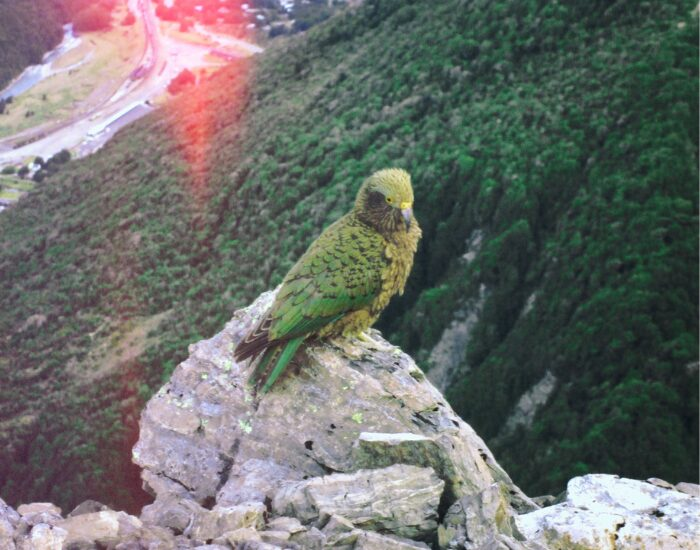
Kea are the ultimate mountain parrot: olive green plumage with brilliant orange underwings, strong wings for soaring over valleys, and a powerful beak for digging in snow or prying open pine cones.
They’re playful, resourceful, and adapted to the harsh mountain environment where temperatures can plummet and food sources fluctuate.
How is The Community Engagement?
Community action is crucial. Locals and visitors can:
- Report sightings to the Kea Conservation Trust.
- Support predator control projects.
- Avoid feeding kea to protect their health.
- Join citizen science projects to record kea observations.
These efforts help track local kea populations and inform conservation strategies.

Kea Habitat Protection!
Preserving kea habitat involves DOC-managed predator control, restoration of natural habitat, and partnerships with local communities.
Protection measures also benefit other native species sharing the same environment, from the whio (blue duck) to the rock wren.
Common FAQs About Kea Birds
About 3,000–7,000 remain in the wild.
Yes, it’s endemic to the South Island.
In alpine crevices, burrows, and forest edges.
No — they are a protected species.
More Than a Clever Bird
The kea parrot (Nestor notabilis) is more than a clever bird; it’s a keystone species in New Zealand’s alpine ecosystems. Protecting kea means safeguarding the balance of these fragile habitats and the future of one of the world’s most remarkable parrots.
From predator control to habitat restoration, the Kea Conservation Trust works tirelessly — but success depends on community support. Whether you’re crossing the Southern Alps or visiting South Island ski fields, keep an eye out for these brilliant, mischievous mountain parrots, and help ensure they remain a vibrant part of New Zealand’s wild landscapes.