
I have never seen a Przewalski’s horse on open steppe. The closest I have come is herds of semi-domesticated reindeer in Sweden, and that gap is still on my list. So this news made me grin. In late August 2026, two foals took their first steps on the grass of central Kazakhstan.
They were the first Przewalski’s horse foals born in Kazakhstan in more than 200 years. Their names are Botai and Tumar. For a species that once survived only in zoos, that is a remarkable moment.
Below, I cover the births and the meaning of the names. I also explain a genetic twist about how “wild” these horses are, and the plan for a free herd.
Two foals in two weeks
Both foals were born at the Alibi reintroduction centre, inside Altyn Dala State Nature Reserve in Kostanay Region. Kazakhstan’s Ministry of Ecology and Natural Resources announced the births.
- The first male foal arrived on 22 August, to a seven-year-old mare called Tessa.
- The second male foal arrived on 31 August, to a mare called Umbra.
- Both mares came to Kazakhstan from Tierpark Berlin in 2024.
- Both foals share the same father, a stallion called Zorro, who has since died.
- The herd lives in a 56-hectare enclosure while it settles in.
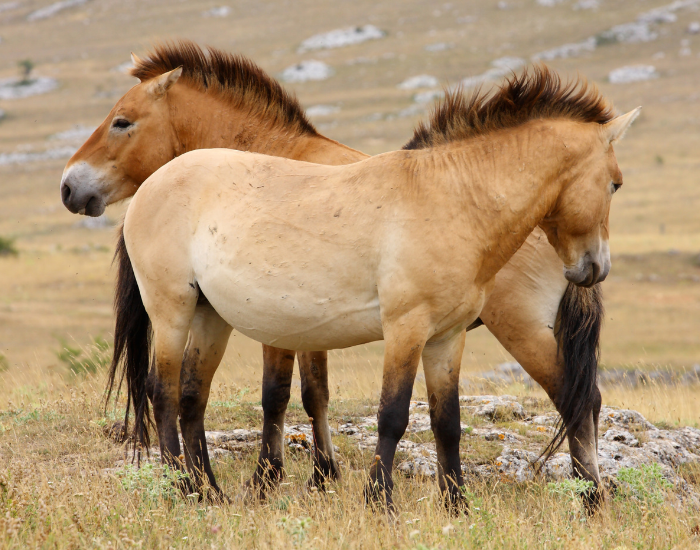
Albert Salemgareyev, who leads the reintroduction work, got the first call in Astana. He then drove about 12 hours to reach the centre. For him, the birth marked the start of a new generation in Kazakhstan.
Alyona Krivosheyeva, conservation director of the Association for the Conservation of Biodiversity of Kazakhstan (ACBK), explained why it matters. The foals show that horses from European zoos are adapting to the local climate and land.
What their names mean
Botai honours the ancient Botai culture of northern Kazakhstan, which flourished about 5,500 years ago. Its villages hold some of the oldest evidence of close contact between people and horses. Tumar is a traditional Kazakh name for a protective amulet.
The first name carries more meaning than it seems. In fact, it points straight at one of the biggest debates in horse science.
Are Przewalski’s horses truly wild?
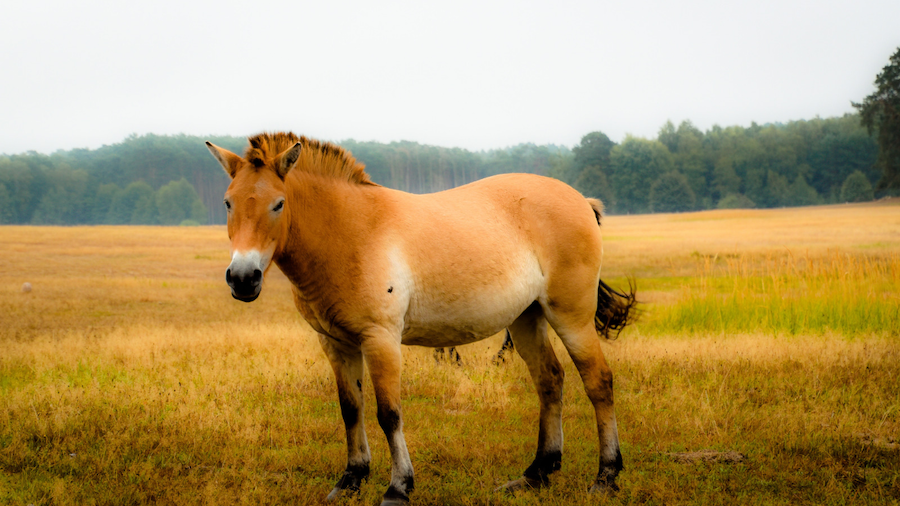
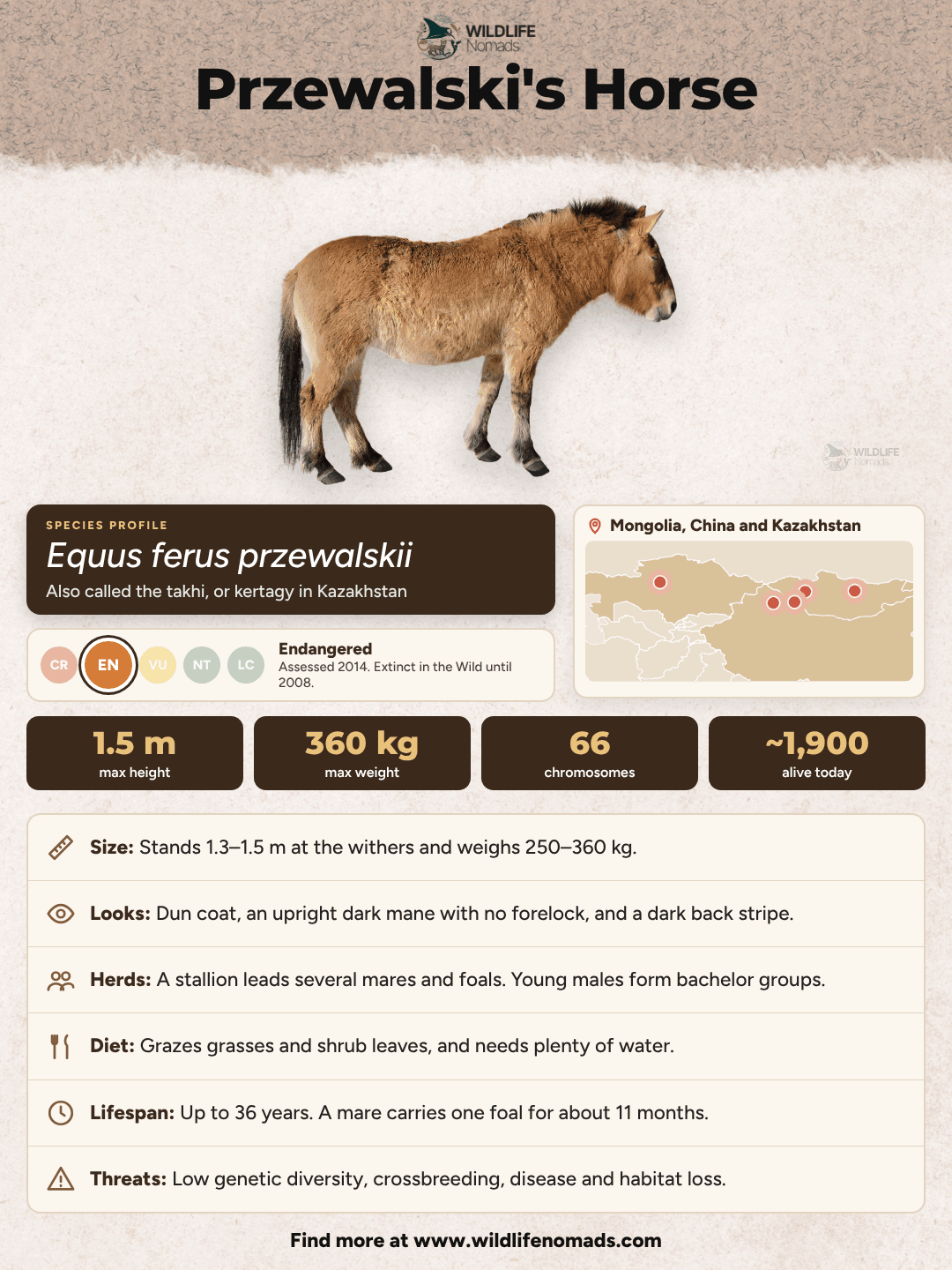
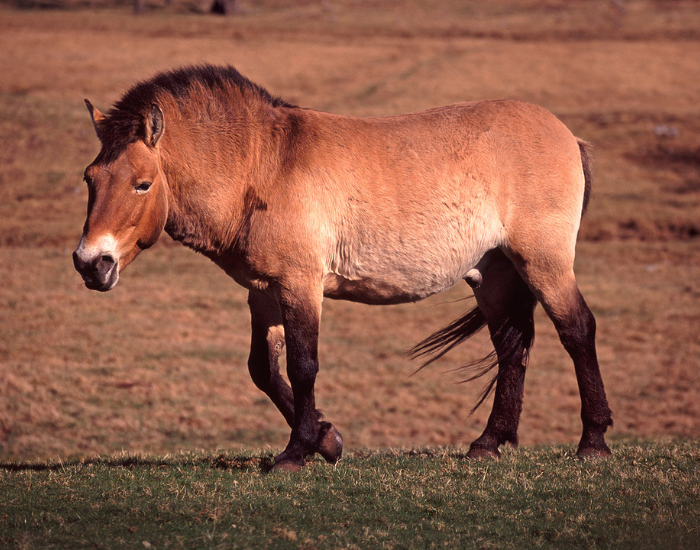
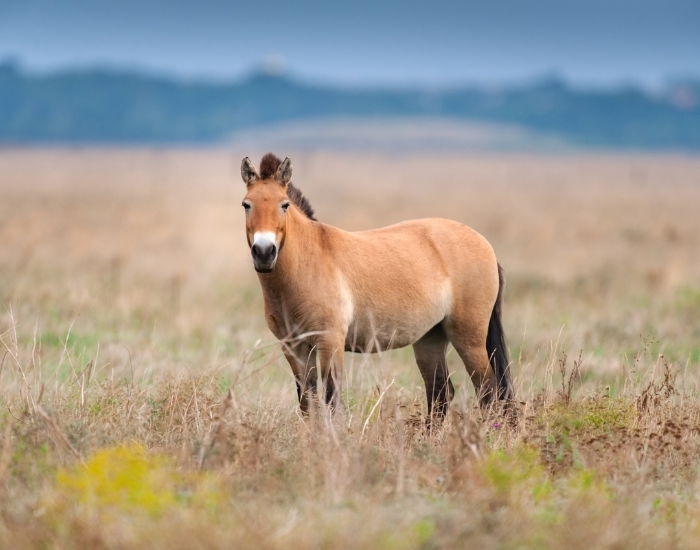
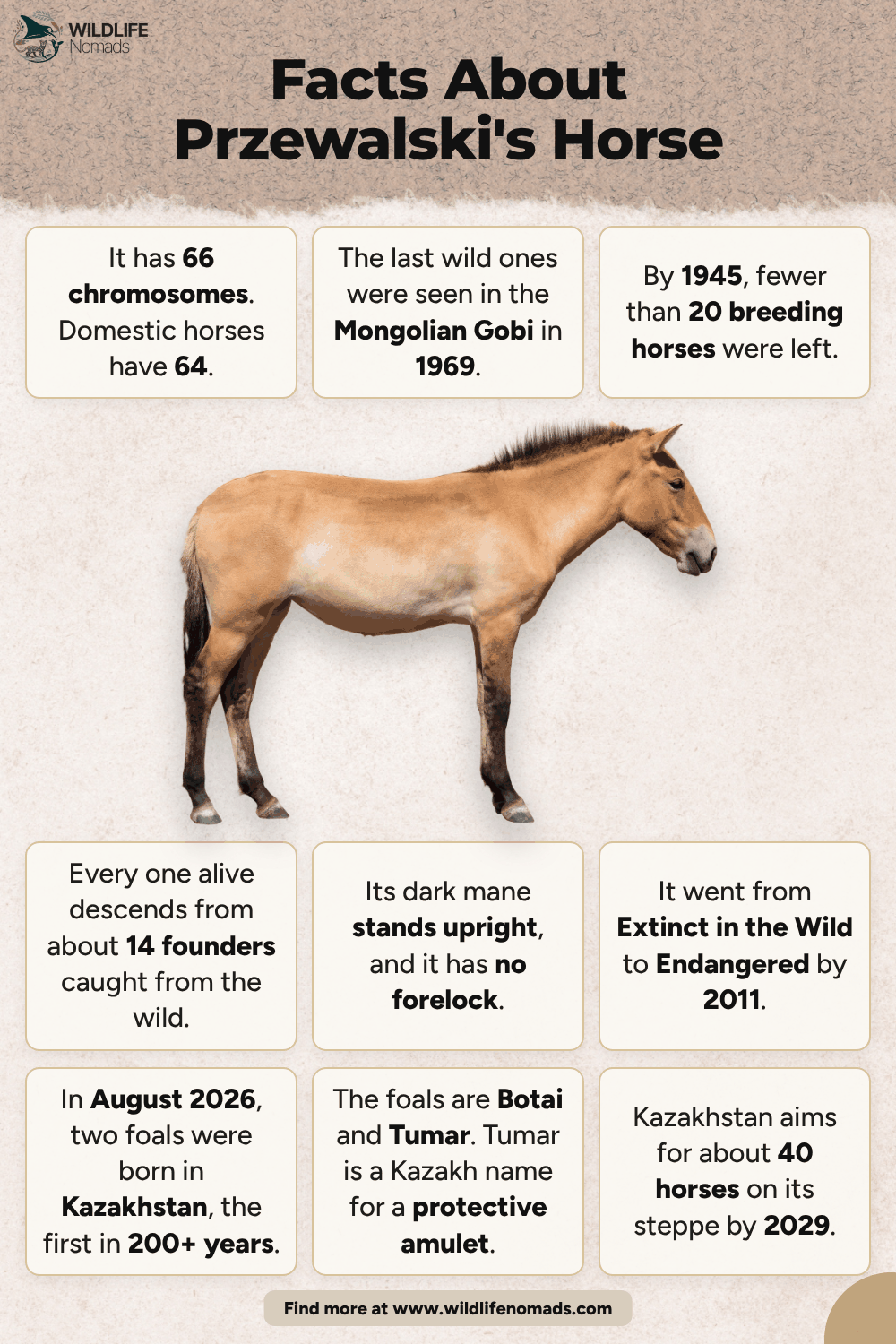
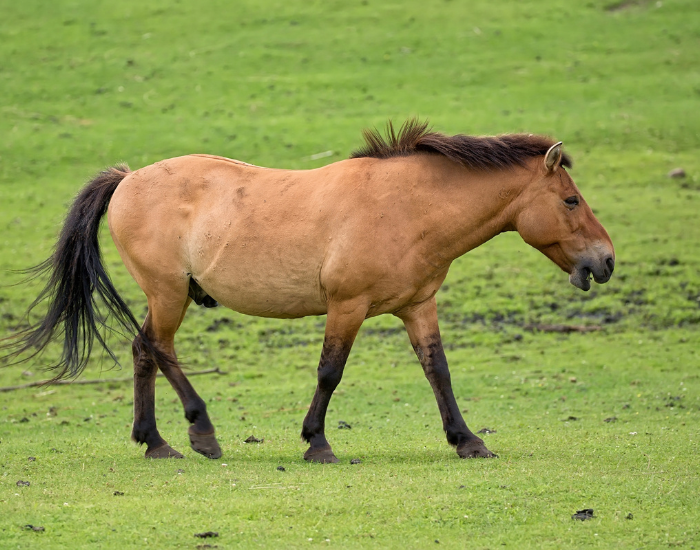
Przewalski’s horse (Equus ferus przewalskii) is often called the last wild horse. Locally, people call it kertagy. It has 66 chromosomes, while domestic horses have 64.
However, a 2018 study in Science sequenced 42 ancient horse genomes, including 20 from Botai sites. It found that Botai horses were not the ancestors of today’s domestic horses. Instead, they were the ancestors of Przewalski’s horses.
If Botai people herded those horses, then Przewalski’s horses are feral, not truly wild. That said, the domestication question is still open. A 2021 study argued that the Botai evidence fits wild horse hunting better, and other researchers rebutted it.
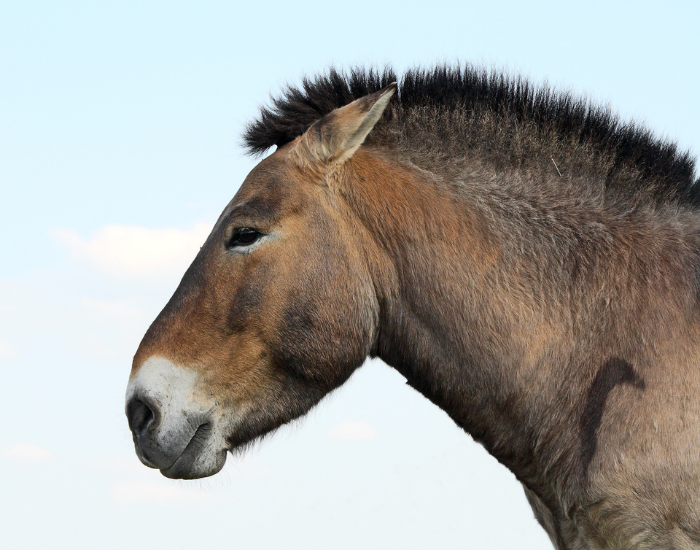
Either way, Przewalski’s horse is genetically distinct from every domestic breed. Conservationists still treat it as the last wild-type horse. So naming a foal Botai is a neat nod to that shared history.
Why wild horses vanished from Kazakhstan
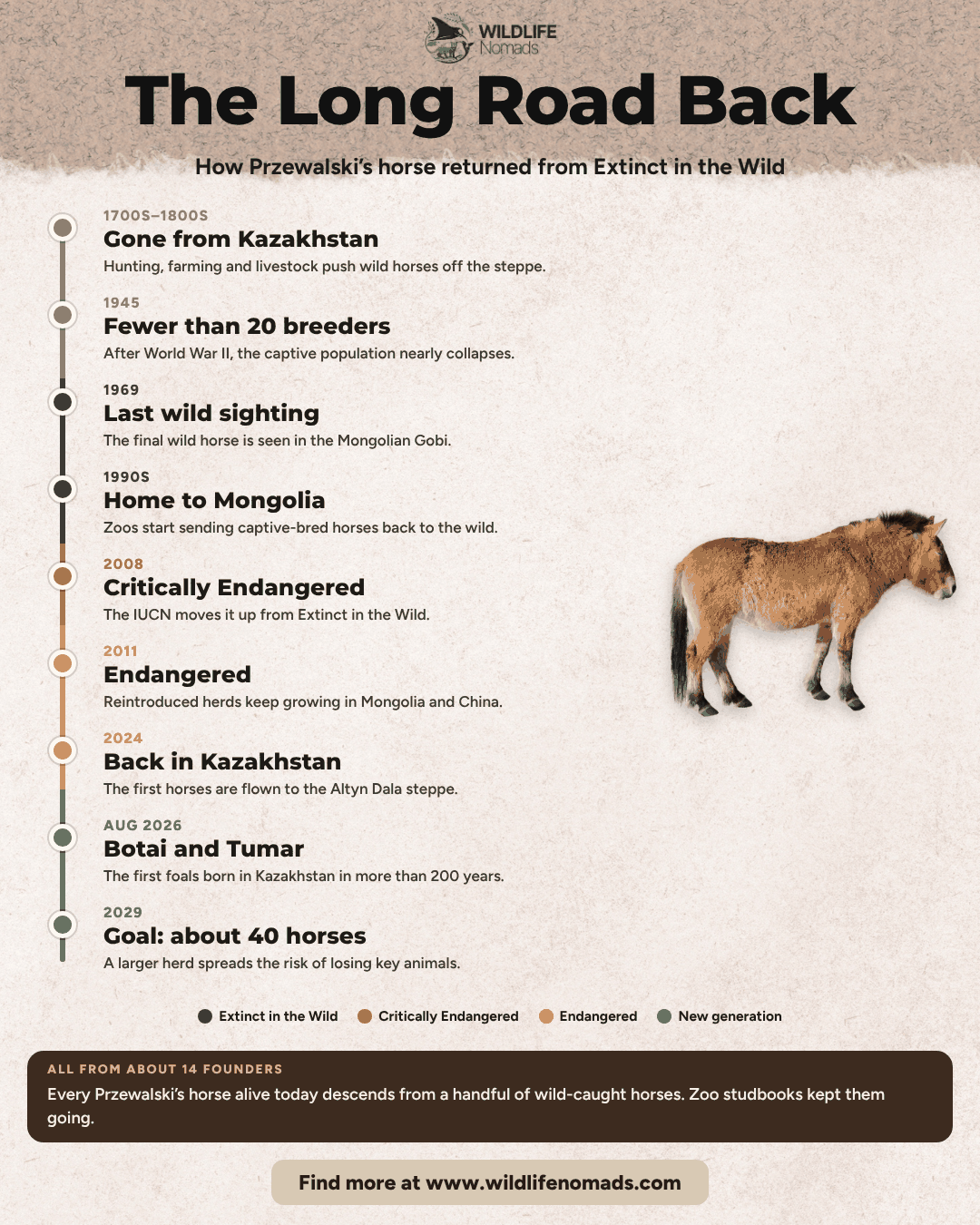
Przewalski’s horses once roamed steppe grasslands across Russia, Kazakhstan, Mongolia and northern China. Kazakhstan lost them between the mid-1700s and the mid-1800s.
Farming and livestock spread across the steppe as the Russian Empire expanded. The horses lost access to water and winter pastures. People also hunted them heavily, and many bred with domestic horses.
Elsewhere, the decline continued into the 20th century. Harsh winters, hunting and competition with livestock squeezed the last herds into the dry Dzungarian Gobi. The last wild Przewalski’s horses were seen in the Mongolian Gobi in 1969. After that, the species survived only in captivity.
How Przewalski’s horses came back
Every Przewalski’s horse alive today descends from about a dozen wild-caught founders, plus a few domestic horses. Zoos kept careful studbooks for decades to manage that tiny gene pool.
From the 1990s, zoos began sending horses home, one of the best-known cases of the reintroduction of species. Reintroduced herds now live in Mongolia and China, and the IUCN status improved step by step. The species moved from Extinct in the Wild to Critically Endangered in 2008, then to Endangered in 2011.
Kazakhstan joined in 2024. The numbers so far:
- Seven horses arrived from Prague Zoo and Tierpark Berlin in 2024.
- Seven more arrived in 2025, and eight more in 2026.
- That makes 22 horses flown to the steppe in three years.
- The goal is about 40 horses by 2029, the minimum for a self-sustaining herd.
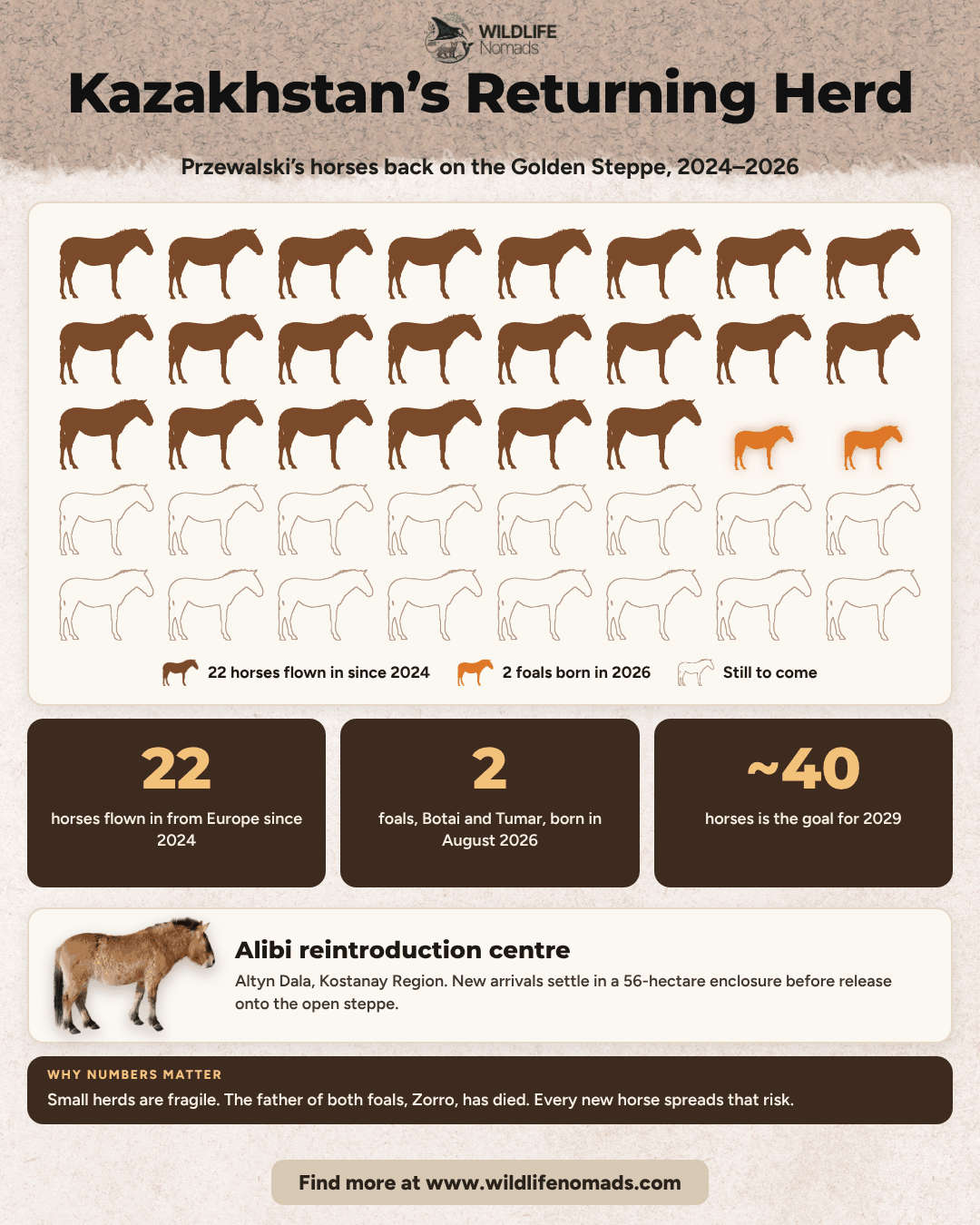
The loss of Zorro shows why that target matters. Small herds are fragile, because inbreeding and chance events hit them hardest. With so few stallions, one death can reshape the herd’s genetics. More arrivals will spread that risk.
Altyn Dala: a steppe coming back to life
Altyn Dala State Nature Reserve covers about 489,000 hectares of steppe. It has already helped two other grazers recover: the saiga antelope and the kulan, or Asiatic wild ass.
The saiga antelope story is especially hopeful. After crashes from poaching and disease, the IUCN moved it from Critically Endangered to Near Threatened in 2023. Now the horses join it on the same plains.
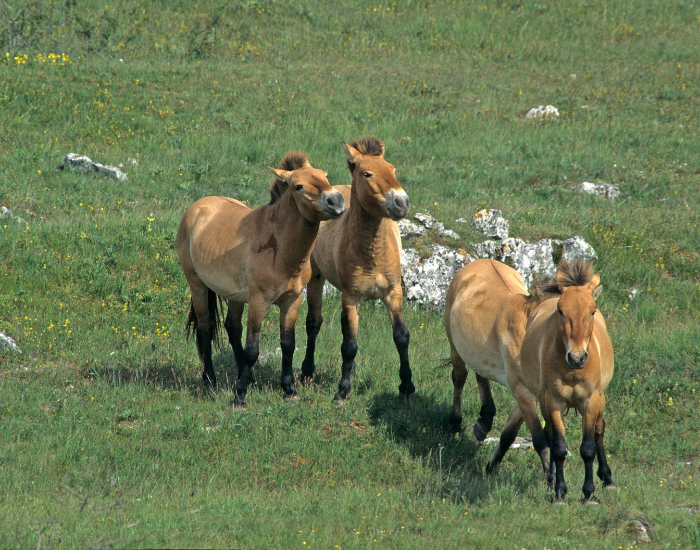
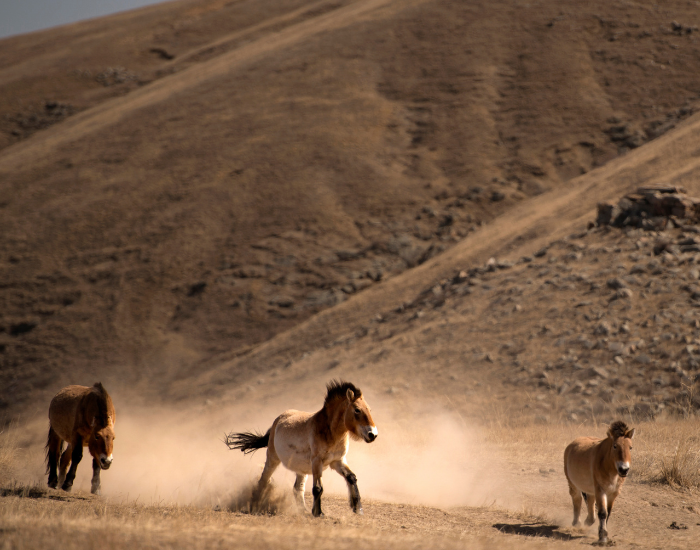
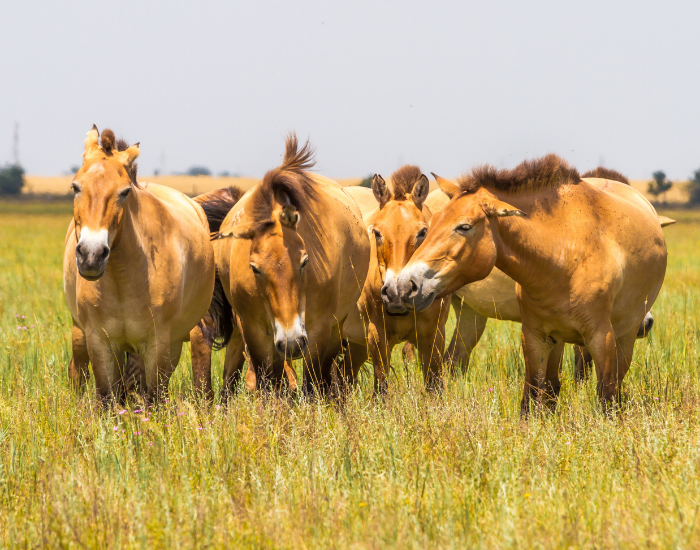
Przewalski’s horses act as ecosystem engineers. Their grazing trims dry grass and lowers wildfire risk. Their hooves break the soil so seeds can take root, and they spread seeds as they roam. You can see how grazers shape open landscapes in our biome explorer.
What happens next
The horses spend an adaptation period at the Alibi centre before release into the wider reserve. Specialists track their health, behaviour and movements. Some released horses wear GPS collars.
ACBK executive director Vera Voronova summed up the new task. The team now watches how the first generation born on Kazakh soil grows and develops. Those foals will tell everyone whether the steppe can support a lasting herd.
I love stories like this one. A species that vanished from a whole country is having foals there again. It shows that zoos, governments and scientists can undo old damage when they work together.
FAQs About Przewalski’s Horses in Kazakhstan
Two male foals were born in late August 2026, on 22 August and 31 August. They were the first Przewalski’s horses born in Kazakhstan in more than 200 years.
The foals are named Botai and Tumar. Botai honours the ancient Botai culture of northern Kazakhstan, and Tumar is a traditional Kazakh name for a protective amulet.
They were born at the Alibi reintroduction centre inside Altyn Dala State Nature Reserve, in Kostanay Region of central Kazakhstan. The herd lives in a 56-hectare enclosure for now.
It is the only horse lineage living wild today. However, a 2018 genetic study found it descends from horses linked to the Botai culture, so some scientists call it feral rather than truly wild.
Twenty-two horses arrived from Prague Zoo and Tierpark Berlin between 2024 and 2026. The goal is about 40 horses by 2029.
The IUCN lists Przewalski’s horse as Endangered, a status it has held since 2011. It was previously Extinct in the Wild, then Critically Endangered from 2008.
Let the Steppe Run Again
The Przewalski’s horse in Kazakhstan is no longer a memory. Two foals, born on grass their ancestors left more than 200 years ago, prove the plan can work. The next test is a herd of 40 that breeds on its own.
Want to learn more about the steppe? Read about the animals of the Mongolian Gobi Desert, where Przewalski’s horses also roam again. Then explore which species are recovering in our endangered animals explorer. Tell me in the comments which comeback you are cheering for.
12 questions, all drawn from the article above. Ready?
Your score
References:
Gaunitz, C., Fages, A., Hanghøj, K., Albrechtsen, A., Khan, N., Schubert, M., et al. (2018). Ancient genomes revisit the ancestry of domestic and Przewalski's horses. Science, 360(6384), 111–114. https://doi.org/10.1126/science.aao3297
Taylor, W. T. T., & Barrón-Ortiz, C. I. (2021). Rethinking the evidence for early horse domestication at Botai. Scientific Reports, 11, 7440. https://doi.org/10.1038/s41598-021-86832-9
Hanbury, S. (2026, September 9). Two wild Przewalski's horse foals born in Kazakhstan after 200 years. Mongabay. https://news.mongabay.com/short-article/2026/09/two-wild-przewalskis-horse-foals-born-in-kazakhstan-after-200-years/
The Astana Times. (2026, October 4). First Przewalski's horse foals born in Kazakhstan named Botai and Tumar. https://astanatimes.com/2026/10/first-przewalskis-horse-foals-born-in-kazakhstan-named-botai-and-tumar/
United Nations Environment Programme. (2026, September 23). After 200 years, a birth of the world's last truly wild horse on Kazakhstan's steppe. https://www.unep.org/news-and-stories/story/after-200-years-birth-worlds-last-truly-wild-horse-kazakhstans-steppe