

Working a field season on an endangered Ambystoma in central Mexico, I spent more nights than I can count crouched in cold water, untangling traps from aquatic plants. We were studying a close cousin of the axolotl in a shrinking lagoon next to a highway. After every shift I surfaced with the same nagging question. If axolotls and tiger salamanders are technically salamanders, then what exactly are newts? A separate animal? A subgroup? A marketing term invented by the pet trade?
After years of fieldwork on three continents, here is the short answer. All newts are salamanders, but not all salamanders are newts. Newts belong to the family Salamandridae, and they share a few traits that separate them from other salamanders: rougher skin, a stronger pull toward aquatic life, and in many cases a famously poisonous skin. In this guide I walk you through 15 iconic newt species. Unlike frogs, newts hold their tails for life.

What Exactly Is a Newt?
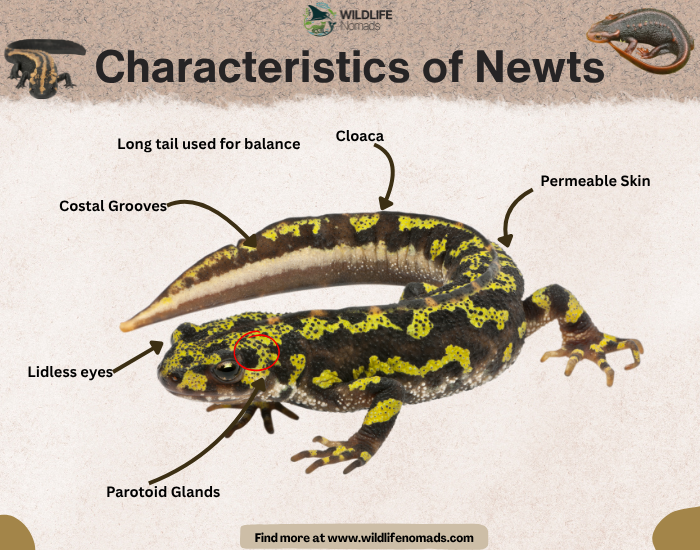
Newts are amphibians with four legs, long tails, and moist skin. Like other salamanders, newts begin life as eggs, hatch as gilled larvae, and pass through a larval stage before transforming. Many newts then live a terrestrial juvenile phase called the eft for several years before returning to water as aquatic adults. By contrast, lungless salamanders skip true lungs entirely and breathe through their skin on land for life. Most species of salamander are not newts at all.
Encyclopedia Britannica places every newt within the family Salamandridae, a tidy group of around 100 species spread mostly across the northern hemisphere. As an aquatic species at heart, many newts return to water every spring to breed. Their long tails are flattened side-to-side for paddling, and their legs end in small webbed toes. The genus Triturus alone holds the largest crested newts in Europe, while Notophthalmus dominates eastern North America.
15 Types of Newts From Around the World
1. Eastern Newt (Notophthalmus viridescens)
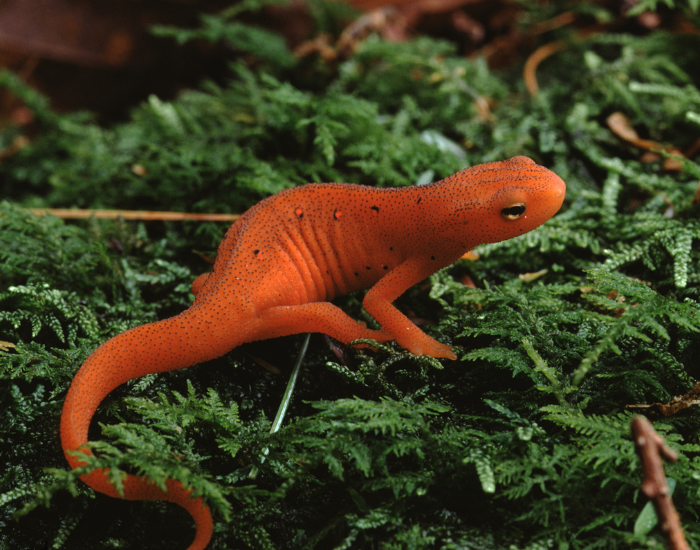
The eastern newt has the most theatrical life cycle of any newt I have handled in the field. Eggs hatch into aquatic larvae with feathery gills, then transform into bright orange juvenile efts that wander forest floors for several years. Those efts are brightly colored on purpose — a warning. Their newt’s skin contains tetrodotoxin, the same toxin pufferfish use, and most potential predators learn to leave them alone fast.
2. California Newt (Taricha torosa)
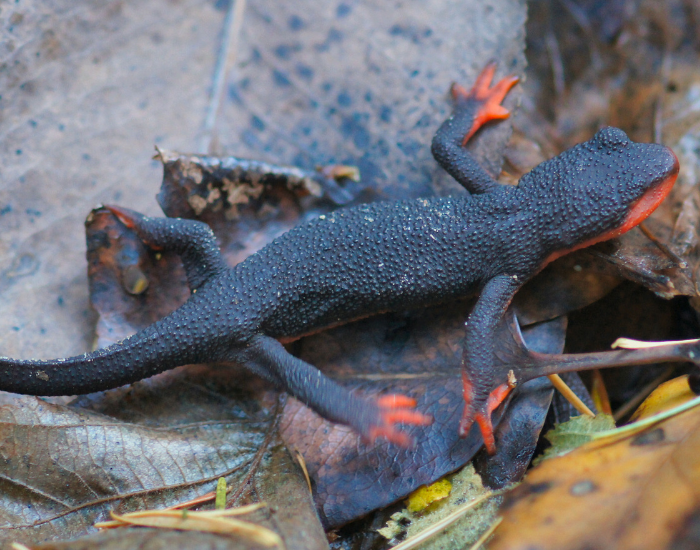
I have written a full article about the California Newt elsewhere, but it earns a spot here. This chocolate-brown newt breeds in streams and ponds across coastal California. Its skin holds enough poison to kill a small dog, and indigenous Californian groups historically warned children never to drink standing water that might hold one.

3. Rough-skinned Newt (Taricha granulosa)
The rough-skinned newt is the most poisonous newt on Earth. A single adult carries enough toxin to potentially kill several adult humans. In 1979 an Oregon man swallowed one on a dare and died within hours. The skin moist with milky toxin is its only real defense against predators, but among salamanders it is more than enough.

4. Red-bellied Newt (Taricha rivularis)
Endemic to a narrow strip of California redwood country, the red-bellied newt has a tomato-red underside and an almost supernatural homing ability. Marked individuals return to the exact same breeding stream year after year, even when displaced kilometers away across ridges and roads. Few western salamanders show this kind of natal fidelity.
5. Great Crested Newt (Triturus cristatus)
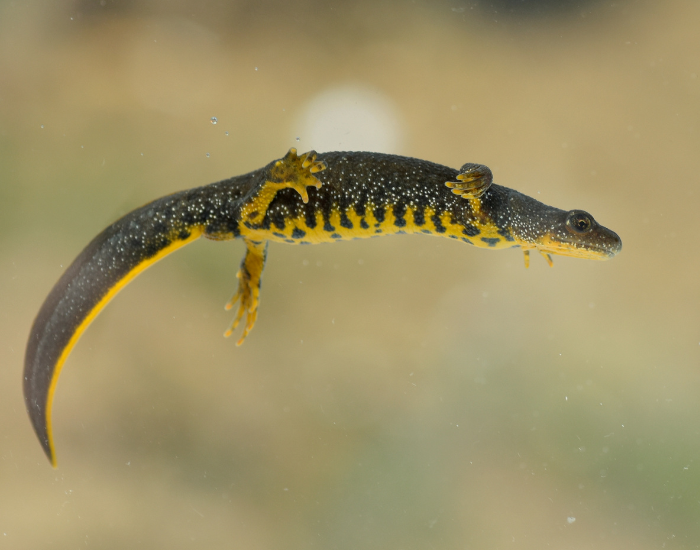
The largest newt in the United Kingdom, this species is so threatened that British developers must legally survey ponds before construction begins. The animal is fully protected under UK wildlife law. Breeding adults grow jagged dragon-like crests that run from neck to tail-tip, framing some of the showiest tails in the family. Females also lay several hundred eggs each spring. The first time I saw one in a Yorkshire pond, I genuinely thought I was looking at a tiny dinosaur.
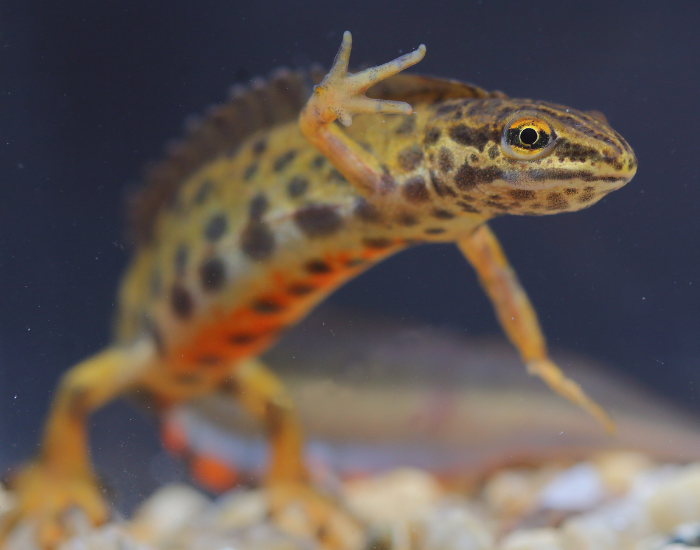
6. Smooth Newt (Lissotriton vulgaris)
Europe’s most common newt species, the smooth newt turns up in garden ponds from Ireland to western Russia. Breeding males develop a wavy crest and a bright orange belly. Out of season they look forgettable, until you flip one over and see the fire on its underside.
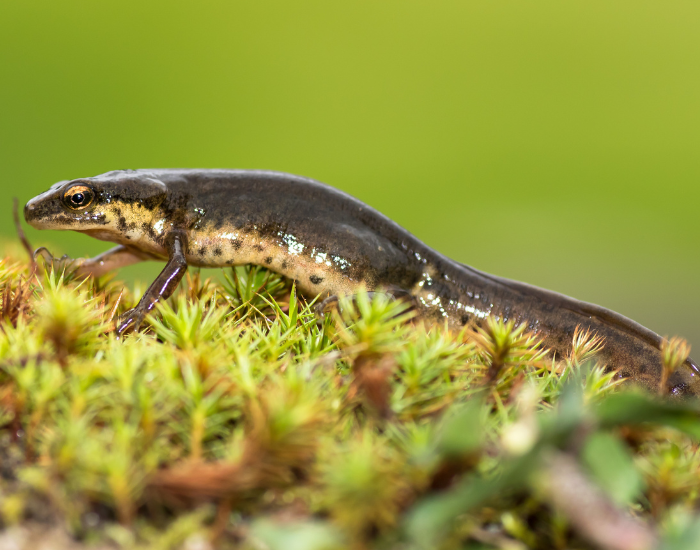
7. Palmate Newt (Lissotriton helveticus)
Smaller and shyer than its cousin, the palmate newt prefers acidic upland pools where few other amphibians breed. Breeding males grow webbed black hind feet that look like miniature swim fins.
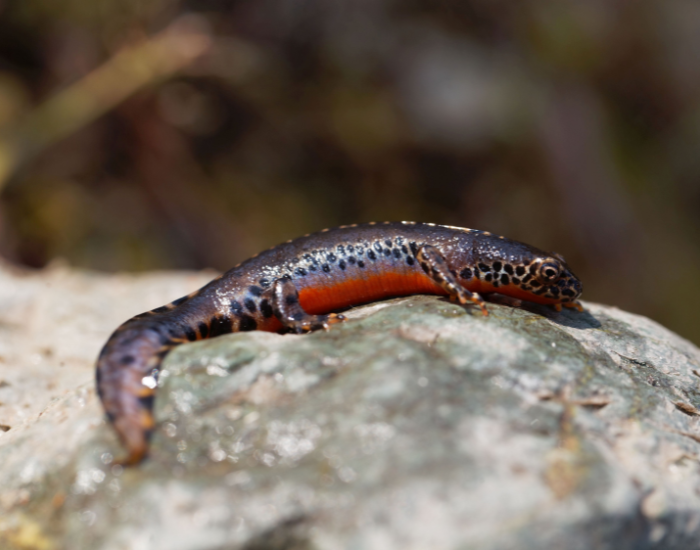
8. Alpine Newt (Ichthyosaura alpestris)
I have watched alpine newts court in glacial puddles above 2,000 meters in the German Alps. Their belly is a shocking, uniform orange, and most adults split time between land and water. A few isolated groups skip metamorphosis entirely and keep their larval features for life — paedomorphic, much like the axolotl, but evolutionarily unrelated. Few salamanders pull off this trick.
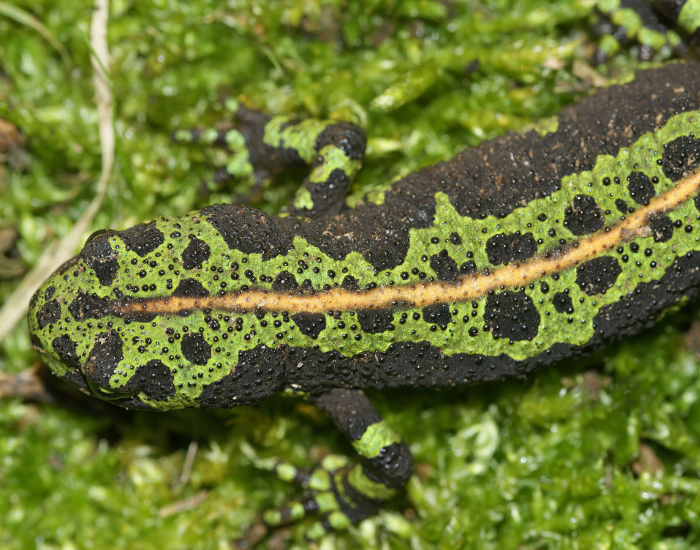
9. Marbled Newt (Triturus marmoratus)
The marbled newt looks painted. Bright green skin laced with black covers the back, and females carry an orange dorsal stripe. It is a southwestern European specialty that occasionally hybridizes with the great crested newt where their habitat overlaps. Many salamanders in the genus Triturus blur into one another at the contact zones.
10. Iberian Ribbed Newt (Pleurodeles waltl)
This is the warty newt that hikers in Spain and Morocco often mistake for a small lizard. The Iberian ribbed newt has a defense unlike any other amphibian: it pushes its sharp ribs through toxic glands and out through its own skin, creating venom-tipped spikes. It is also the only amphibian successfully bred aboard the International Space Station, and one of the few newts naturally found in both Iberia and parts of North Africa.
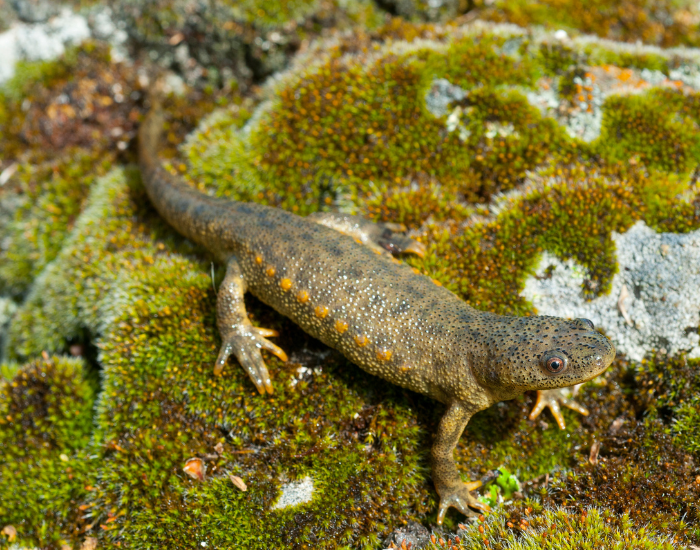
11. Pyrenean Newt (Calotriton asper)
The Pyrenean newt lives in cold mountain streams along the Spanish-French border. I have only seen one in the wild, hiding under a flat rock at 1,800 meters. Unlike most newts, it skips the showy crest, terrestrial life this cold leaves no energy for display. It’s worth noting they have a depressed body shape and a granular skin texture to help them wedge into crevices in fast-flowing mountain streams.
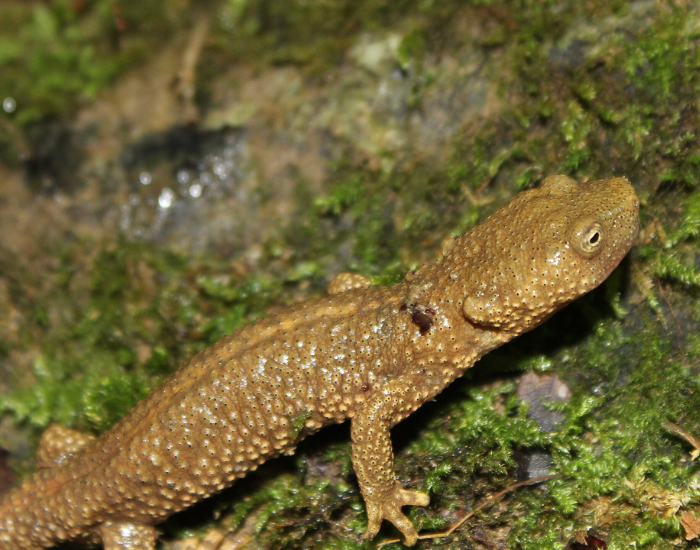
12. Japanese Fire-Belly Newt (Cynops pyrrhogaster)
A brown, palm-sized newt with a vivid red belly, the Japanese fire-belly is the species most often kept in captivity. Wild populations are now declining due to chytrid fungus and habitat loss across Japan. Females lay fertilized eggs singly, glued under aquatic plants. Like many newts in the genus Cynops, adults can live well over a decade.
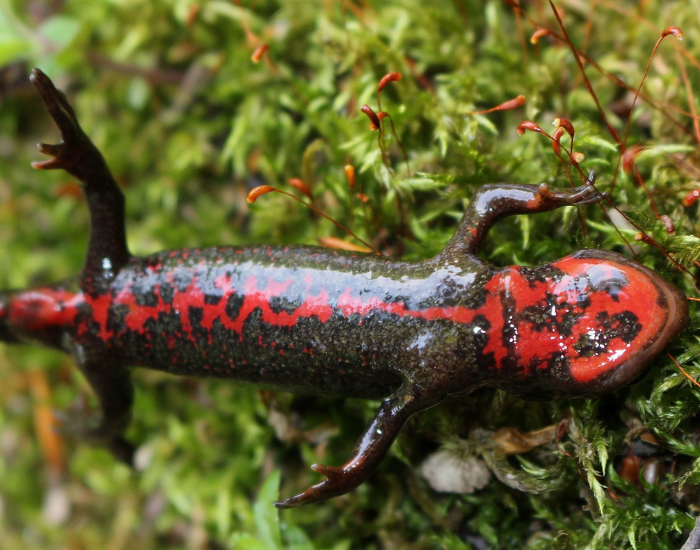
13. Chinese Fire-Belly Newt (Cynops orientalis)
Smaller and more colorful than its Japanese cousin, this is the most common pet-shop newt in North America. Decades of wild-caught exports have done real harm to source populations in eastern China. Modern keepers should buy only captive-bred individuals.
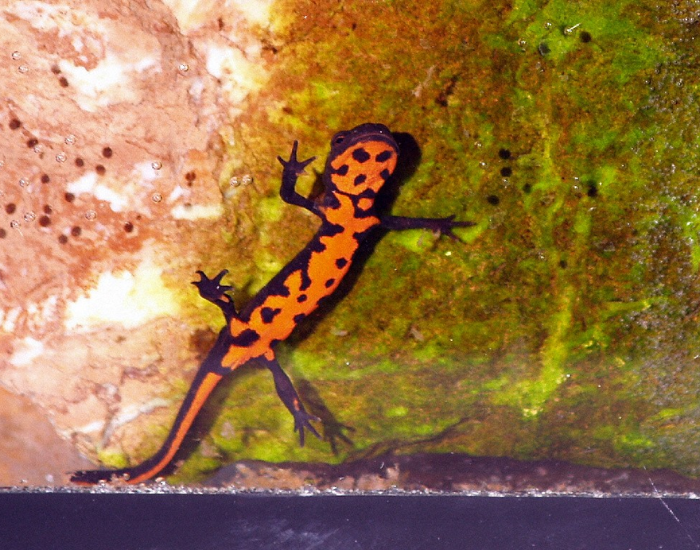
14. Asian Red-tailed Knobby Newt (Tylototriton kweichowensis)
A vivid red stripe runs the length of the tail in this stunning Asian species, contrasting with rows of bright orange knobs along the spine. The Asian red-tailed knobby newt is one of the most brightly colored newts I have ever seen behind glass. Accredited institutions like the san diego zoo run captive-breeding programs for threatened Tylototriton, and the san diego zoo population now contributes adults to other zoos worldwide.

15. Banded Newt (Ommatotriton vittatus)
Ranging from Turkey through the Levant, the banded newt has a striking white side stripe and tails thicker than most newts of similar size. Its larvae grow unusually long gills as an adaptation to oxygen-poor desert pools. The banded newt also marks the southeastern edge of newt distribution before this group of salamanders thins out across the Middle East, often found in the Levant specifically (Israel, Palestine, Lebanon, Syria, Jordan).
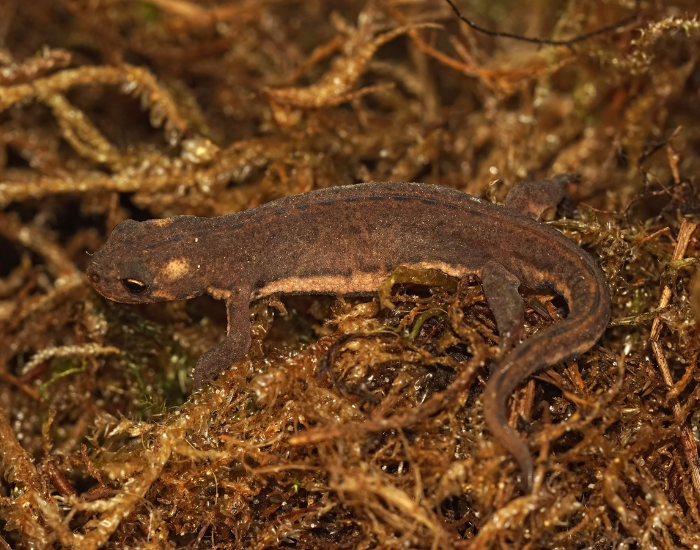
Newt vs Salamander: A Field Biologist’s Quick Test
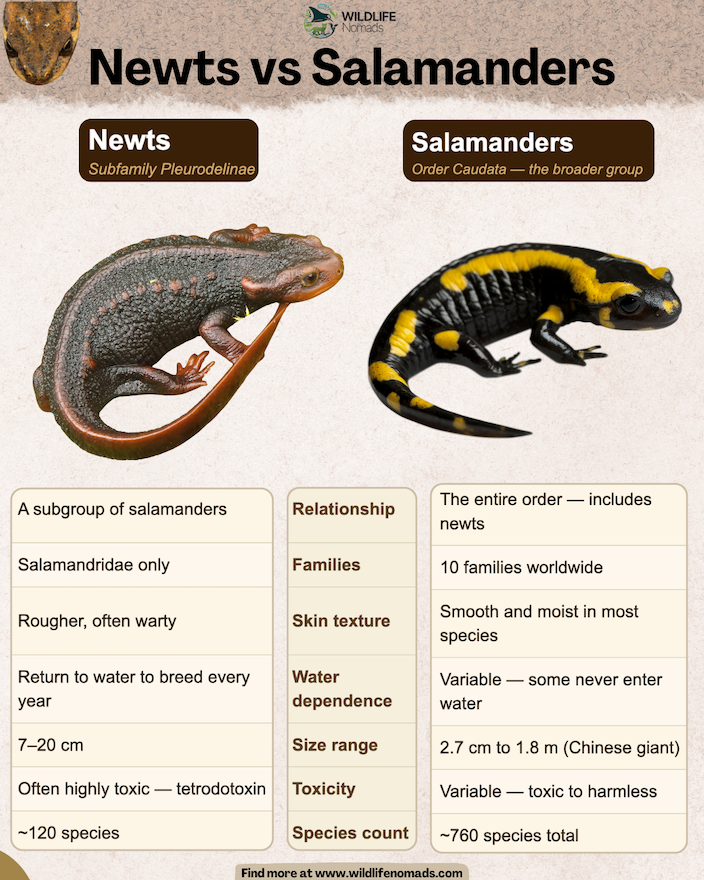
People ask me this constantly, often after spotting something under a log. The honest answer, and the one Encyclopedia Britannica uses: every newt is a salamander species within Salamandridae, but not every salamander is a newt. So how do you tell them apart in the field? Newts have rougher, drier-feeling skin than the slick red salamanders or other lungless salamanders you find under bark. Newts also spend much more of adulthood in water. If the animal is in a pond swimming on four legs with a paddle-shaped tail, it is almost certainly a newt. If it is hiding on a damp forest floor with no obvious gills, it is more likely another salamander.
Are Newts Poisonous to Humans?
Most species produce some toxin in glands across their poisonous skin. The level of poison varies wildly. A smooth newt is harmless to handle. A rough-skinned newt is not. Wash your hands after touching any newt and never put one near your mouth. Frogs and toads in the same wetland may also carry toxic skin chemistry, but the newt’s skin is in a separate league. Newts also hold their long tails year-round, unlike most frogs. The relevant rule for any field biologist or curious hiker is simple: handle gently, then wash. The same toxin that protects newts from fish and snakes can absolutely send a human to the hospital.
Credit: Wildlife Nomads
FAQ
The word “newt” comes from a medieval English mishearing of “an ewt,” which itself derives from the Old English efeta, meaning a small lizard-like animal. Today the term refers specifically to salamanders in the family salamandridae, especially those with strong aquatic life stages and a terrestrial phase as efts.
In British English a newt’s terrestrial juvenile stage is called an eft, and the word is sometimes used loosely for the whole animal. Some older texts use “water lizard,” which is misleading because newts are amphibians, not lizards. In Spanish-speaking countries you will often hear tritón, after the genus Triturus.
Newts begin life as eggs laid in water, often glued individually to plants. They hatch as aquatic larvae with external gills and small budding legs. After this larval stage, most newts transform into terrestrial juvenile efts that live on land for years. Once they reach sexual maturity, the majority return to water as aquatic adults to breed for the rest of their lives.
Adult newts can breathe underwater through their skin and a partially functional set of lungs, which is why so many remain aquatic year-round. Larvae rely entirely on gills until metamorphosis is complete.
Why Newts Still Matter
Across all 15 types of newts above, the same pressures keep showing up: habitat loss, wildlife trade, chytrid fungus, and chemical runoff into the streams and wetlands where they breed. Like all salamanders, newts are sentinel animals — when they vanish from a wetland, something deeper has gone wrong with the water. Their skin is too permeable to lie about pollution.
If this guide helped you finally name the small four-legged amphibian in your local pond, drop a comment below with where you found it. To go deeper, my full pieces on types of salamanders, types of amphibians, and axolotl facts are the natural next reads, and the California newt deep-dive pairs well with this list. If you ever find a newt in the wild, watch quietly, take a photo, and put it back exactly where you found it. Wildlife observation is a skill, and these animals reward patience.
References:
Brodie, E. D., Ridenhour, B. J., & Brodie, E. D. (2002). The evolutionary response of predators to dangerous prey: Hotspots and coldspots in the geographic mosaic of coevolution between garter snakes and newts. Evolution, 56(10), 2067–2082. https://doi.org/10.1111/j.0014-3820.2002.tb00132.x
Bucciarelli, G. M., Shaffer, H. B., Green, D. B., & Kats, L. B. (2017). An amphibian chemical defense phenotype is inducible across life history stages. Scientific Reports, 7, 8185. https://doi.org/10.1038/s41598-017-08154-z
Wielstra, B., & Arntzen, J. W. (2016). Description of a new species of crested newt, previously subsumed in Triturus ivanbureschi (Amphibia: Caudata: Salamandridae). Zootaxa, 4109(1), 73–80. https://doi.org/10.11646/zootaxa.4109.1.6
Lewis, B., Griffiths, R. A., & Wilkinson, J. W. (2017). Population status of great crested newts (Triturus cristatus) at sites subjected to development mitigation. Herpetological Journal, 27(2), 133–142
Rowley, J. J. L., Brown, R., Bain, R., Kusrini, M., Inger, R., Stuart, B., Wogan, G., et al. (2010). Impending conservation crisis for Southeast Asian amphibians. Biology Letters, 6(3), 336–338. https://doi.org/10.1098/rsbl.2009.0793
Recuero, E., Buckley, D., García-París, M., Arntzen, J. W., Cogălniceanu, D., & Martínez-Solano, I. (2014). Evolutionary history of Ichthyosaura alpestris (Caudata, Salamandridae) inferred from the combined analysis of nuclear and mitochondrial markers. Molecular Phylogenetics and Evolution, 81, 207–220. https://doi.org/10.1016/j.ympev.2014.09.014





.jpg)
