
The Mexican black kingsnake (Lampropeltis getula nigrita) is one of nature’s most striking serpents, with jet black scales that shimmer like polished obsidian against the dusty landscape of northwestern Mexico. These creatures represent the perfect fusion of beauty and functionality in the reptile world, elegant enough to captivate any observer, yet tough enough to thrive in some of the harshest desert environments on Earth.
The primary natural range of the Mexican black kingsnake includes the arid and semi-arid regions of northwestern Mexico, and parts of Arizona, where these snakes are commonly found in rocky and dry habitats.
This Mexican black kingsnake has a reputation among reptile enthusiasts as both a captivating pet and a marvel of adaptation in the wild. Let’s unravel the facts, myths, and science behind the Mexican black kingsnake and why it’s earned such fascination among captive snakes enthusiasts and wildlife researchers alike.
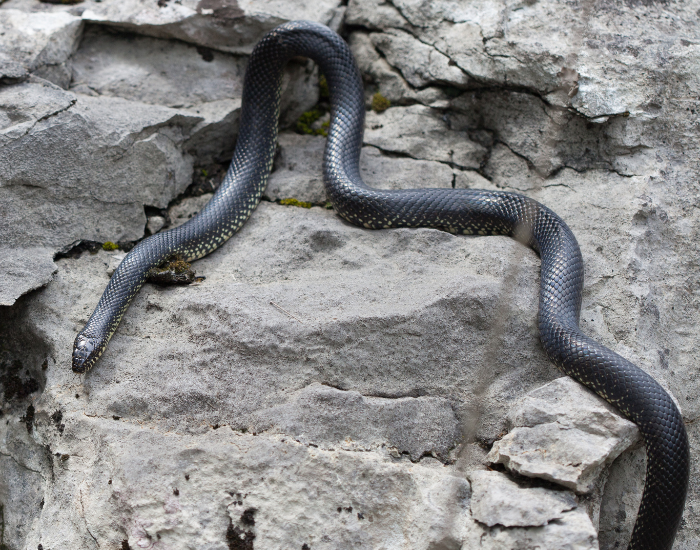
King Snakes and Mexican Black Kingsnakes
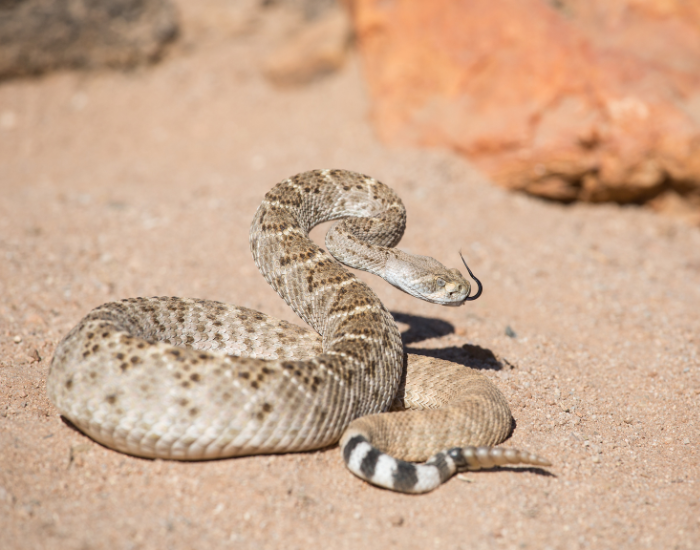
King snakes are a diverse group, known for their black colors, manageable size, and unusual immunity to the venom of other snakes. That’s right, these king snakes can eat rattlesnakes, copperheads, and even other venomous species without batting an eye.
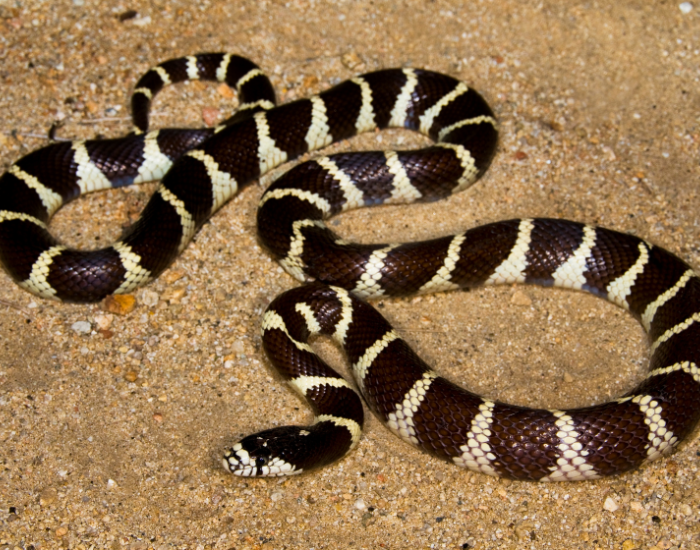
The Mexican black kingsnake stands out from its king snake relatives. Instead of the bright patterns seen on banded kingsnakes, this Mexican black kingsnake is dressed in sleek, jet black scales. In the reptile world, it’s the equivalent of wearing a tuxedo to the desert. The Mexican black king snake is a popular and visually striking species in the reptile trade. These hardy species represent one of the most sought-after captive snakes in the reptile trade.
Here you can find an article about the California Mountain Kingsnake
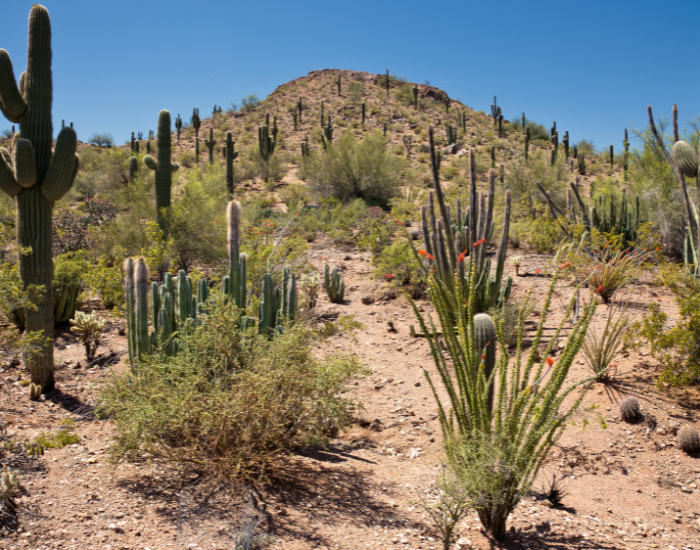
1. Habitat: Where Do Mexican Black Kingsnakes Live?
Mexican black kingsnakes are native to northwestern Mexico, primarily Sonora, Sinaloa, and the Sonoran Desert ecosystem. Some ranges extend into Arizona, where these king snakes thrive in varied diet conditions and ambient temperature fluctuations.
Lampropeltis nigra, the Eastern Black Kingsnake, is another related species found in the United States, demonstrating the diversity within the Lampropeltis genus.
Mexican black kingsnakes are found in semi-desert habitats, rocky outcrops, scrubland, and grasslands. They often shelter beneath rocks, tree bark, or underneath things like abandoned boards in rural areas. These Mexican black kingsnakes are also known to adapt surprisingly well to human environments, from irrigated lawns to suburban areas where prey is abundant.
From my time studying reptiles in Arizona, I can confirm how resilient these Mexican black kingsnakes are, I’ve lifted rocks near field stations only to find these king snakes coiled calmly, soaking in the earth’s warmth during early summer months.
2. Mexican Black Kingsnake Size and Physical Characteristics
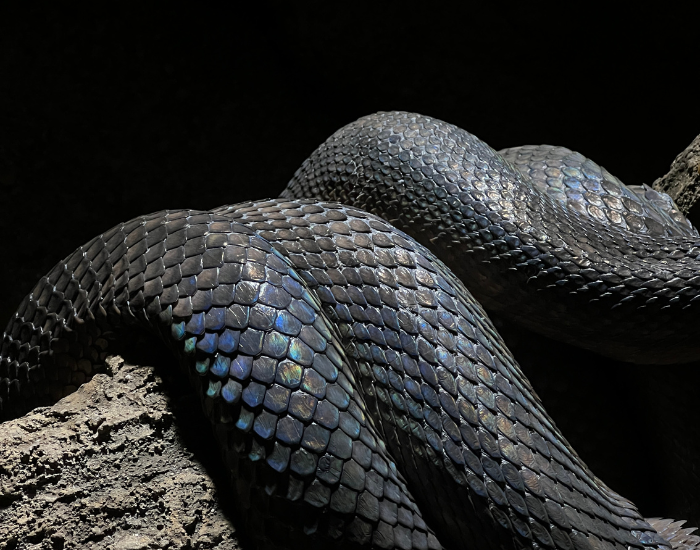
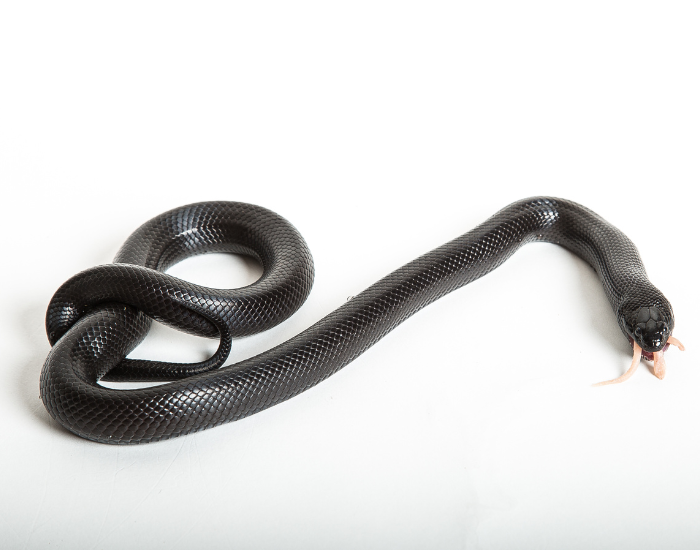
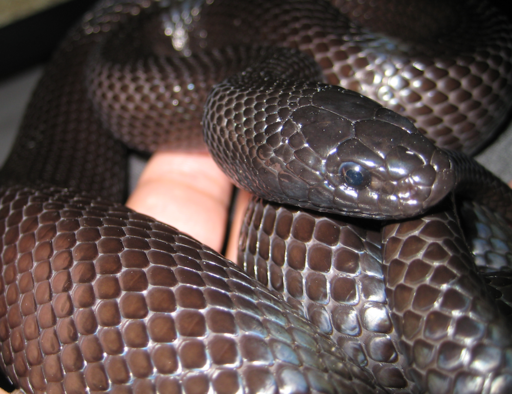
A full grown Mexican black kingsnake averages a total length between 3–4 feet from head to tail, but some Mexican black kingsnakes can reach a total length of 5 feet. Despite their manageable size compared to larger snakes, these Mexican black kingsnakes are powerful constrictors, capable of subduing prey much larger than expected. The head of the Mexican black kingsnake is not distinct from the neck, with the scale pattern in this area blending smoothly into the body, which contributes to their streamlined appearance. The jet black scales of Mexican black kingsnakes create their distinctive appearance, making them easily recognizable among other snakes.
These black kingsnakes display remarkable uniformity in their jet black coloration, with some individuals showing subtle variations under different lighting conditions. The Mexican black kingsnake’s smooth scales contribute to their streamlined appearance and efficient movement through their natural habitat.
3. Are Mexican Black King Snakes Venomous?
No, Mexican black kingsnakes are non-venomous. Instead of venom, these Mexican black kingsnakes rely on constriction, coiling around prey until it suffocates. Their immunity to pit viper venom is what makes these king snakes so unique among other snakes. This natural resistance allows Mexican black kingsnakes to prey on venomous species safely.
The non-venomous nature of Mexican black kingsnakes makes them excellent choices for captive snakes enthusiasts who want hardy species without the risks associated with venomous serpents.

4. What Do Mexican Black Kingsnakes Eat?
These Mexican black kingsnakes are opportunistic feeders with a varied diet. Their diet includes:
- Rodents and small mammals (even grasshopper mice)
- Birds and eggs
- Lizards and small arthropods
- Other snakes, including venomous species
In captivity, Mexican black kingsnakes thrive on frozen-thawed rodents. The prey size should be appropriate for the Mexican black kingsnake’s size, with juveniles requiring smaller prey than adults. These captive snakes adapt well to regular feeding schedules when proper care is provided. Mexican black kingsnakes should be fed on a regular schedule to maintain health, especially when preparing for breeding.
5. Behavior and Temperament of Mexican Black Kingsnakes
In the wild, Mexican black kingsnakes are secretive. They seek shelter in crevices, rocks, and sandy soils, becoming more active at night or during cooler parts of the day. These king snakes demonstrate remarkable adaptability to ambient temperature changes throughout their range.
In captivity, Mexican black kingsnakes are generally docile, though juveniles may be a bit feisty. They may release musk or bite defensively if startled, but with gentle handling these captive snakes tame down quickly. Mexican black kingsnakes rarely bite when properly acclimated to handling.
Adaptations of Mexican Black Kingsnakes
Mexican black kingsnakes possess several remarkable adaptations:
- Immune to venom of rattlesnakes and copperheads
- Smooth, jet black scales may help with thermoregulation, absorbing heat efficiently in cold desert mornings
- Their segmented body musculature makes Mexican black kingsnakes fast movers and excellent constrictors
- Natural resistance to various environmental stressors makes them hardy species
These adaptations allow Mexican black kingsnakes to thrive in challenging desert environments while maintaining their position as effective predators of other snakes.
Mexican Black Kingsnake Personality and Captive Behavior
While “personality” might sound anthropomorphic, reptile keepers often describe Mexican black kingsnakes as curious, calm, and confident. Compared to other colubrids, these Mexican black kingsnakes are less skittish, making them a favorite for handling among captive snakes enthusiasts.
Mexican black kingsnakes in captivity often develop individual behavioral patterns. Some Mexican black kingsnakes become more active during feeding time, while others remain consistent in their daily routines. These behavioral traits make Mexican black kingsnakes fascinating subjects for long-term observation.
Growth and Lifespan of Mexican Black Kingsnakes
Mexican black kingsnake hatchlings start at about 10–12 inches. They can grow to adult size within 2–3 years with proper care and adequate prey size. In captivity, with proper care, Mexican black kingsnakes can live 15–20 years.
Before brumation, it is important to ensure the snake’s digestive tract is completely empty to promote health and successful hibernation.
The growth rate of Mexican black kingsnakes depends on several factors including feeding frequency, ambient temperature, and overall health. Juveniles require more frequent feeding than adults, with prey size adjusted accordingly as these king snakes mature.
Caring for Mexican Black Kingsnakes as Captive Snakes
Enclosure & Habitat Setup
Tank size requirements for Mexican black kingsnakes:
- Minimum 20-gallon for juveniles
- 40-gallon for adult Mexican black kingsnakes
- Provide hides on both cool and warm ends
- Substrate options: aspen, paper towel, or reptile carpet. Substrates should retain some moisture to help maintain proper humidity. Adding cork bark can provide hiding spots and climbing opportunities for enrichment.
Be sure to provide a water bowl large enough for the snake to soak in, as this helps with hydration and maintaining humidity.
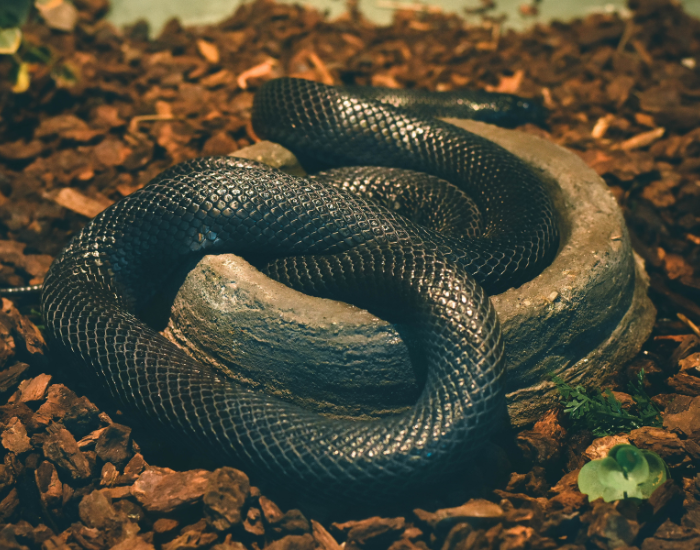
Mexican black kingsnakes require secure enclosures as they are notorious escape artists. The enclosure should provide adequate space for these king snakes to move comfortably while maintaining proper temperature gradients.
Temperature & Lighting Requirements
Proper care for Mexican black kingsnakes requires specific temperature ranges:
- Cool side: 75–80°F
- Warm basking area: 85–90°F
- Humidity: 40–60%
- Natural day-night lighting cycles
- UVB is optional but beneficial for Mexican black kingsnakes
- Use appropriate heating devices, such as heat mats or ceramic bulbs, to create a temperature gradient within the enclosure
Temperature regulation is crucial for Mexican black kingsnakes, as these hardy species rely on external heat sources for proper digestion and overall health maintenance. Always monitor enclosure temperatures to ensure the health and well-being of your snake.
Feeding Mexican Black Kingsnakes in Captivity
Feeding schedules for Mexican black kingsnakes:
- Juveniles: feed every 5–7 days
- Adult Mexican black kingsnakes: every 10–14 days
- Stick to frozen-thawed prey — safer and more humane
- Prey size should be appropriate for the Mexican black kingsnake’s girth
Some keepers prefer to drop the mouse into the enclosure rather than hand-feed, as dropping prey can signal feeding time and help reduce handling stress for the snake.
Breeding Mexican Black Kingsnakes
To breed Mexican black kingsnakes, it requires cooling periods (brumation). Breeding typically begins in spring, triggered by seasonal changes. Males are generally smaller than females and play a key role in courtship. During mating, the male may bite the female by the neck to align for copulation, and the female lifts her tail to facilitate mating. Females typically lay 6–12 eggs in early summer, and eggs hatch after an incubation period of approximately 60 days at 82–85°F, depending on temperature and humidity. Breeding Mexican black kingsnakes successfully requires careful attention to temperature cycling and proper care throughout the process.
Mexican black kingsnakes reach sexual maturity around 2-3 years of age. Observing the pre lay shed is an important indicator that the female is about to lay eggs. It is also important to monitor the female’s skin condition during breeding and egg laying to ensure her health. Breeding programs for these captive snakes have helped maintain healthy populations in the pet trade while reducing pressure on wild Mexican black kingsnake populations.
Threats to Wild Mexican Black Kingsnakes
While not endangered, Mexican black kingsnakes face several threats:
- Habitat loss due to farming and urban expansion
- Persecution by humans who mistake them for venomous species
- Road mortality, especially at night
- Collection pressure for the pet trade
Fun Facts About Mexican Black Kingsnakes
Mexican black kingsnakes possess several fascinating characteristics:
- They can be found using a black light — their jet black scales fluoresce faintly under UV
- They’re called “king” snakes because they eat other snakes
- Their musk smells like rotten eggs when they’re stressed
- In folklore, Mexican black kingsnakes are considered guardians of the desert because of their role in controlling venomous snake populations
- They undergo regular shedding, which is essential for their growth and health
These king snakes have adapted remarkably to their environment, developing unique traits that distinguish them from other snakes in their range.
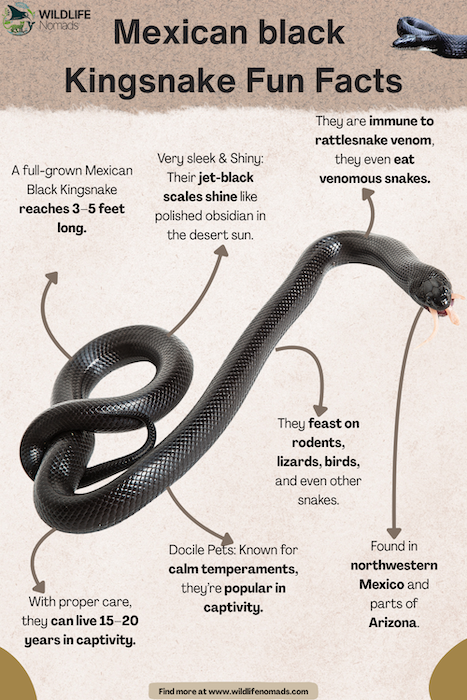
Mexican Black Kingsnakes as Pets
Why Mexican Black Kingsnakes Are Popular Captive Snakes:
- Hardy species, adaptable, non-venomous
- Stunning appearance with uniform jet black scales
- Manageable size compared to boas or pythons
- Generally docile temperament among captive snakes
Challenges of Keeping Mexican Black Kingsnakes:
- Need secure enclosures (they’re escape artists)
- Some individuals remain defensive and may bite defensively
- Require consistent ambient temperature and humidity
- Long-term commitment (15-20 year lifespan)
Mexican black kingsnakes make excellent choices for both beginner and experienced keepers seeking hardy species with minimal care requirements.
Latest Scientific Research on Mexican Black Kingsnakes and Related Species
Recent scientific advances have shed new light on Mexican black kingsnakes and related king snake species. Research into colubrid venomics has revealed fascinating insights into how these non-venomous constrictors interact with their prey and environment.
Studies on colubrid species have intensified over the past decade, with researchers applying advanced -omics techniques to understand the complex biology of these diverse snakes. While most venom research has historically focused on front-fanged species, Mexican black kingsnakes and other colubrids represent a vast majority of extant snake species deserving scientific attention.
Recent breakthrough research in antivenom development has implications for understanding how Mexican black kingsnakes resist venom from their prey. Scientists at Scripps Research described a new antibody approach in February 2024 that protected mice from deadly snake venoms, including those from black mambas and king cobras. This research provides insights into venom immunity mechanisms that may be similar to those evolved naturally in Mexican black kingsnakes.
The study of snake genomics continues to reveal evolutionary adaptations in ophiophagous (snake-eating) species. While much research focuses on venomous king cobras, the principles of prey specialization and venom resistance in Mexican black kingsnakes follow similar evolutionary pressures. Understanding these mechanisms helps explain how these hardy species evolved their remarkable ability to consume venomous prey safely.
FAQs About Mexican Black Kingsnakes
No, Mexican black kingsnakes are non-venomous and safe to handle with proper techniques.
Yes, Mexican black kingsnakes are hardy species, generally docile, and low-maintenance with proper care requirements met.
Most Mexican black kingsnakes reach 3–4 feet, with some specimens growing up to 5 feet in captivity.
At least 40 gallons for an adult Mexican black kingsnake, with secure lids to prevent escapes.
Yes — Mexican black kingsnakes are immune to venom and regularly prey on rattlesnakes and other venomous species.
Mexican black kingsnakes thrive on a diet of frozen-thawed rodents sized appropriately for their age and size.
With proper care, captive Mexican black kingsnakes can live 15–20 years.
Mexican black kingsnakes require ambient temperature gradients from 75–90°F with proper humidity levels.
Desert Survivors With a Secret
These hardy species serve as desert survivors, predators with unique roles in controlling venomous snake populations, and reminders of nature’s clever balance. Whether you’re a pet keeper interested in captive snakes or a field biologist like me, encountering Mexican black kingsnakes is a moment you don’t forget.
So, next time you hear the phrase “Mexican black kingsnake,” think not of fear but of fascination, and perhaps respect for these king snakes that rule quietly, yet powerfully, in the deserts of Mexico and Arizona. These remarkable serpents with their distinctive jet black scales represent some of nature’s most successful adaptations to harsh desert environments.
From their immunity to venom to their role as beneficial predators of rodents and other snakes, Mexican black kingsnakes embody the perfect balance of beauty, functionality, and ecological importance.