
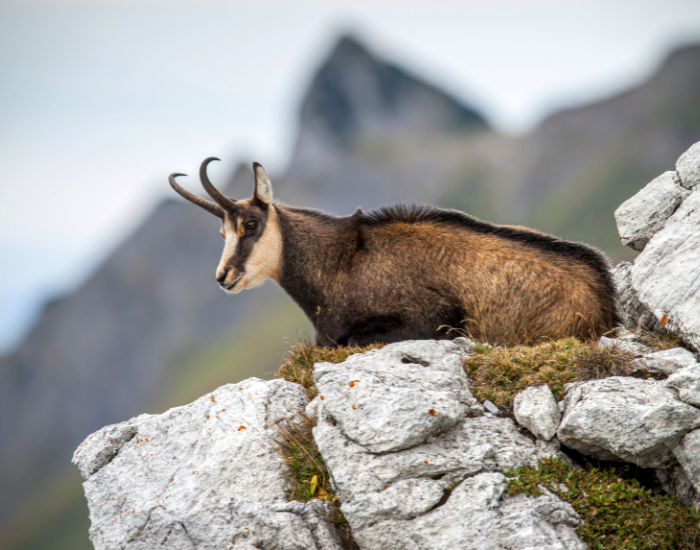
High in the Alps, a small goatlike antelope picks its way along a ledge no wider than a paperback book. One slip means a thousand-foot fall. It does not slip. As a field biologist, I’ve spent years looking for animals in extreme habitats — from Australian Echidnas to primates in South East Asia, but the chamois remains on my personal list of species I have not yet seen in the wild. This summer I’m heading to northeastern Turkey, where the Anatolian subspecies still lives in the Kaçkar Mountains, and I’m hoping to finally watch one in person.
Until then, I want to walk through what makes this animal so worth knowing. The chamois (Rupicapra rupicapra) is one of the continent’s most underrated mammals, built for vertical terrain, woven into centuries of folklore, and the unlikely source of the soft polishing tool in your garage. Here are ten facts about this remarkable creature that have stuck with me since I first started reading about it.
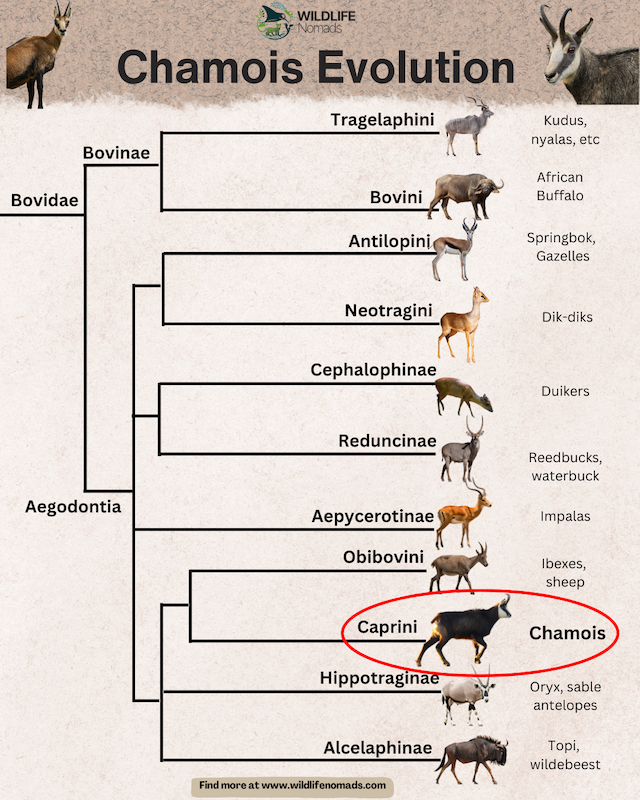
1. The Chamois Sits Between Two Family Branches
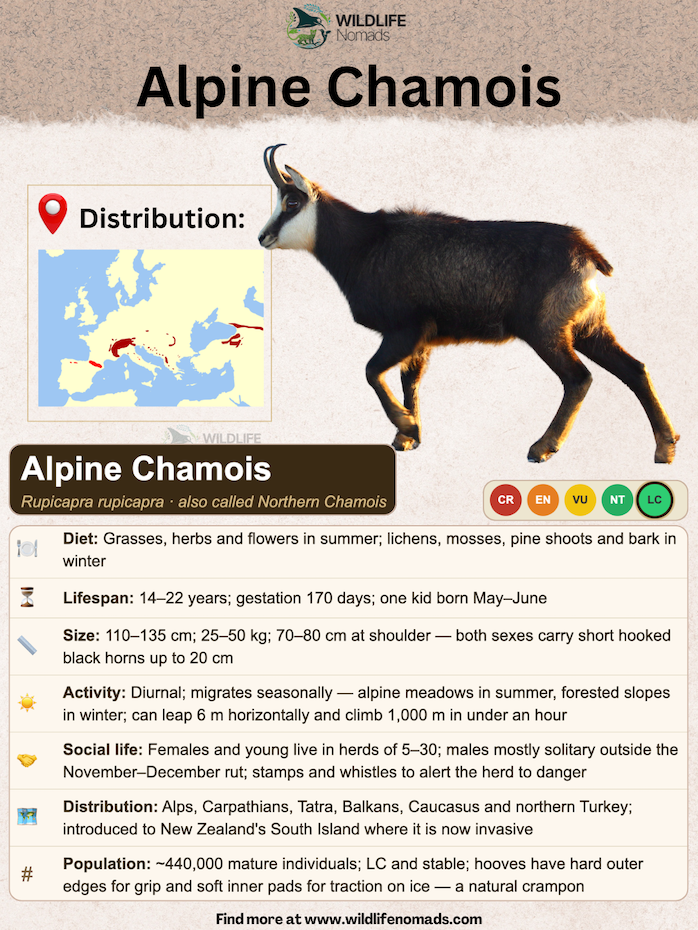
It belongs to the subfamily Caprinae, which makes it a closer relative of wild goats than of bovid grazers. Scientists call this type of animal a goat antelope — a category that includes the Sichuan takin, the Rocky Mountain goat of North America, and a handful of other oddballs that do not fit neatly into either branch of the family. The plural chamois is the same as the singular, like the words deer or sheep, a quirk it inherited from its French roots.
Taxonomically, this caprid sits in the genus Rupicapra, which contains two recognized members: R. rupicapra and R. pyrenaica. I find that in-between status fascinating because it tells you something about evolution. The body plan evolved to fill a narrow ecological niche: high, jagged, near-vertical terrain, that demanded something between a goat’s stability and an ungulate’s grace. Form followed function. Taxonomy is just bookkeeping.
2. They Are Arguably the Most Agile Cliff-Dwellers in the Alps
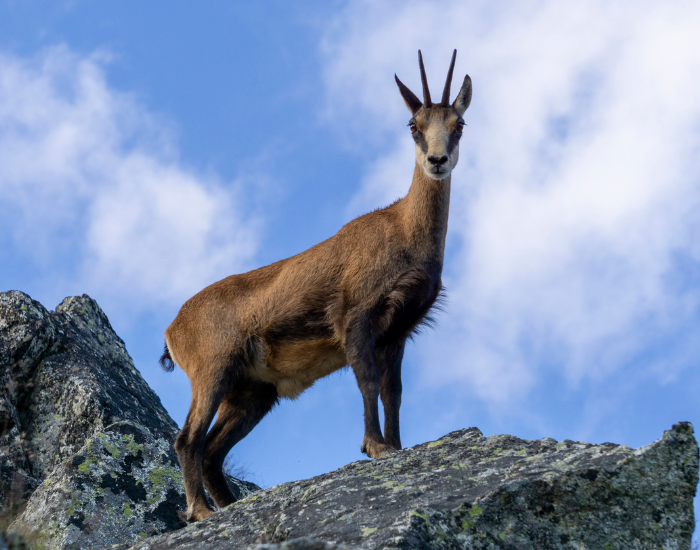
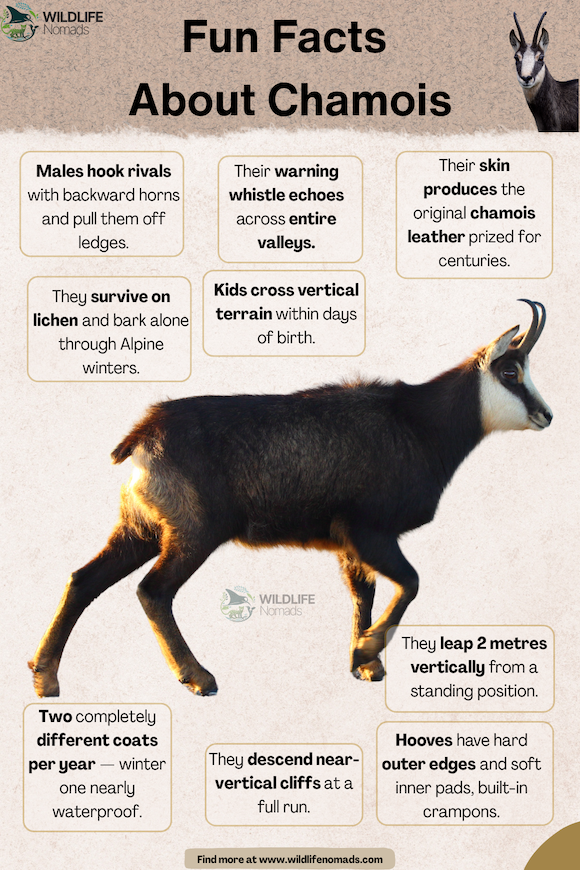
Watch footage of one moving across a rock face and two things stand out: speed and confidence. An agile adult can leap nearly 6 meters horizontally and 2 meters straight up from a standstill. They run at up to 50 km/h on flat ground and, more impressively, navigate near-vertical rock at the same pace.
The agility comes from their hooves. Each hoof has a soft, rubbery inner pad and a hard outer rim — essentially a built-in crampon. The two halves of each cloven hoof spread independently, gripping irregular rock the way a climbing shoe edges a tiny ledge. Their large eyes give them a wide field of view, which helps them pick lines through complex terrain at speed.
3. Their Horns Curl Backward, and They Never Shed Them
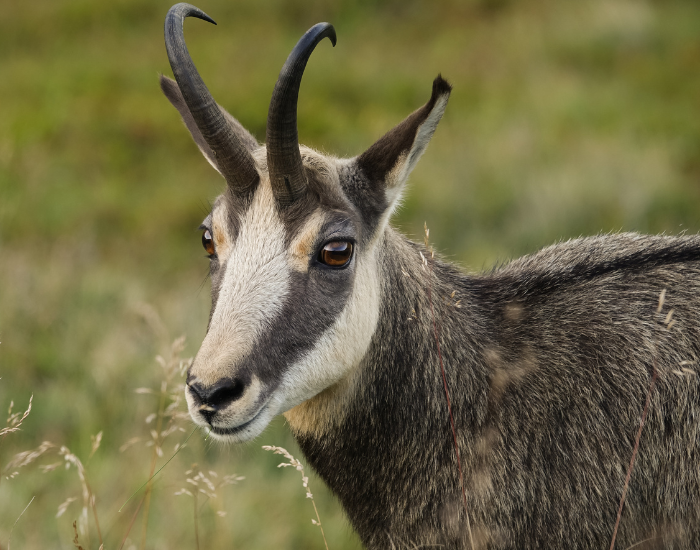
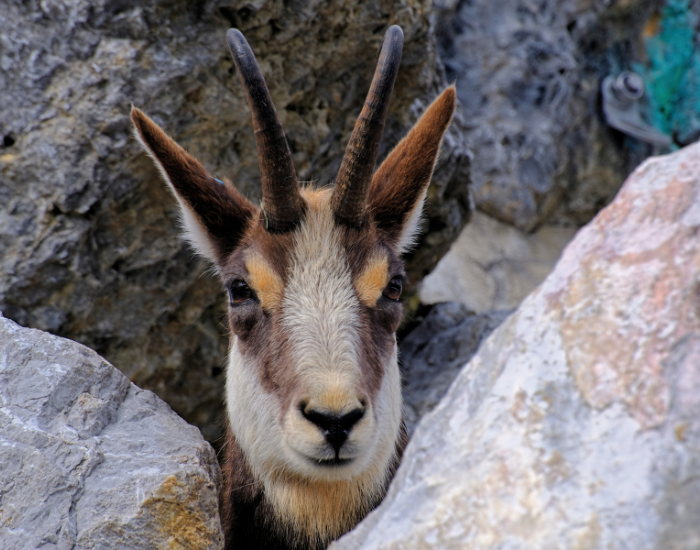
Both sexes grow that distinctive headgear, and both keep it for life. Unlike deer, which drop and regrow their antlers each year, a chamois carries the same hook-tipped pair from about six months of age until death. The shape rises straight up before curving sharply backward at the tip, distinctive and easy to spot from a distance, useful for telling this caprid apart from similar mountain ungulates.
Field biologists use horn rings to estimate age. Growth slows in winter, leaving visible bands like tree rings. I’ve used the same method aging Himalayan tahr, and it is surprisingly reliable for the first dozen years.
4. The Word “Chamois” Comes From a Forgotten Alpine Language
The word chamois is itself a small etymological mystery. In modern usage it functions as a noun, a modifier, and occasionally a verb, to chamois something means to polish or dress it. The word entered English from French during the medieval period, and they inherited it from Late Latin camox, possibly borrowed from a pre-Roman Alpine language now lost to history.
The pronunciation tripped me up the first time I encountered the word in print. In French it sounds like “sham-WAH.” In casual speech, especially when referring to the material, it becomes “SHAM-ee” — which is why the variant spellings shammy and chammy leather still appear in hardware-store catalogs from London to New York. Same beast, same root, three slightly different words depending on which region used the term most.
5. Several Subspecies Exist, and Some Are Critically Endangered
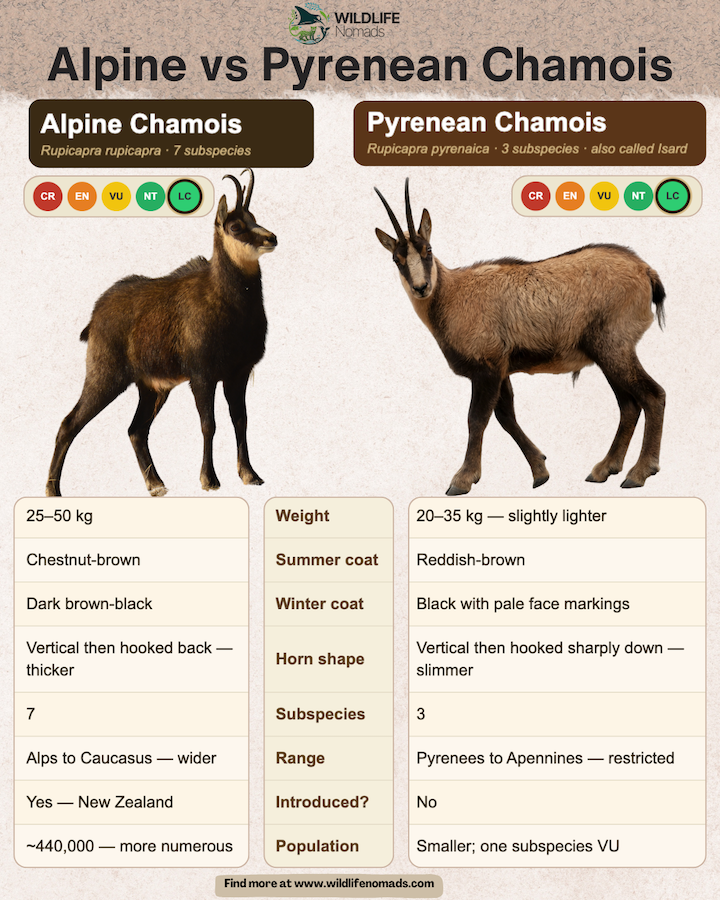
Their range covers a wide European span, but populations are fragmented across mountain areas. The genus splits into multiple subspecies, each adapted to its region. The Alpine form is by far the most numerous. The Balkan chamois (Rupicapra rupicapra balcanica) holds on in the Dinaric and Pindus mountains. The Tatra subspecies (R. r. tatrica) survives in just a few hundred individuals across the Tatra range of Poland and Slovakia.
The Apennine chamois (R. pyrenaica ornata), endemic to a small piece of central Italy, was down to a few hundred individuals in the 1990s before targeted conservation pulled it back. The Anatolian form — the one I’m hoping to find in Turkey — is still relatively understudied compared to its Alpine cousin, partly because access to its core range in the eastern Black Sea range is difficult even in good weather.
6. Their Coats Change Dramatically With the Seasons
In summer, they wear a short, reddish-brown coat, almost the color of a fox. By winter, that same creature transforms into a thick, near-black animal with a creamy white face and rump. The contrast is striking, and it serves real thermal purposes. The dark winter pelage absorbs more solar radiation at high altitude during the short Alpine day. Longer guard hairs trap an insulating layer of warm air against the body.
Hunters historically prized the long winter beard hair of an old male to produce the Gamsbart, a tuft worn on traditional Alpine hats by every well-dressed man in certain valleys. The practice persists in parts of Austria and Bavaria today, though wild-sourced hair has become rare and the cultural order has shifted toward synthetic substitutes.
7. Chamois Leather Has Been Polishing Things for Centuries
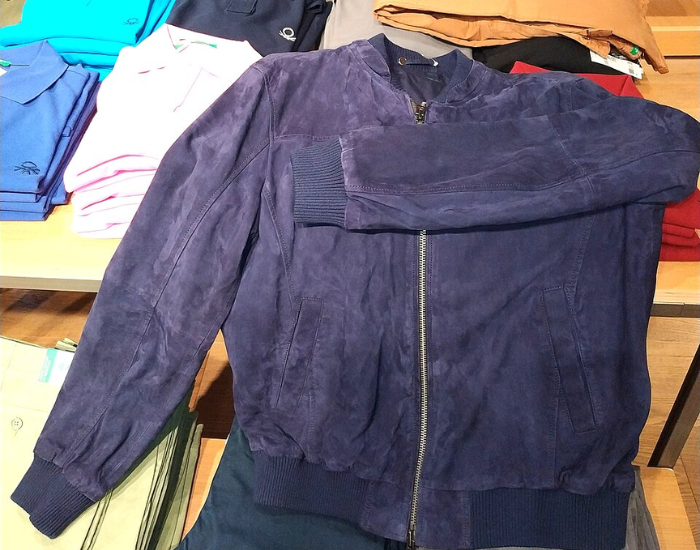
This is where the animal meets everyday use. Chamois leather, also called shammy leather, chamois cloth, or simply shammy, is traditionally made from the skin of the chamois itself, though today it is more often made from various skins (usually ovine) processed to mimic the original. Detailers dress the skins in cod oil rather than chrome or vegetable tanning agents, which produces a uniquely soft suede leather that is both absorbent and gentle on smooth surfaces.
For generations, this soft leather has been the material of choice for polishing glass, brass, silver, and especially car paint. Drop a piece into a bucket of water, wring it out, and it lifts moisture without scratching. Even now, professional detailers reach for genuine chamois cloth over cotton cloth or synthetic alternatives because nothing else handles delicate surfaces in quite the same way. The skin of the chamois — or alternative skins finished to imitate it — remains the industry standard for fine cleaning work.
8. Goldbeaters Built a Whole Industry on Chamois Skin
Here is the fact I find most surprising. For centuries, the traditional production of gold leaf, the impossibly thin gold sheets used in gilding and bookbinding, depended entirely on the animal-skin dressing trade. While the specific material pounded by a goldbeater’s hammer is actually “goldbeater’s skin” (made from the tough, thin intestinal membrane of cattle), chamois leather played a crucial supporting role.
Artisans used the incredibly soft, absorbent chamois cloth to wrap the heavy molds, cushion the alignment tools, and wipe down the delicate gold sheets without scratching them. This craftsmanship dates back generations. While modern synthetic films have been tested as replacements over the years, master gilders still look to traditional, oil-dressed leathers and specialized animal membranes to achieve a flawless finish. It is a quiet example of how mountain livestock and specialized leather trades built the foundation for a high-end luxury art form.
9. Wolves, Lynx, Hunters, and Woodcutters Have All Shaped Chamois Populations
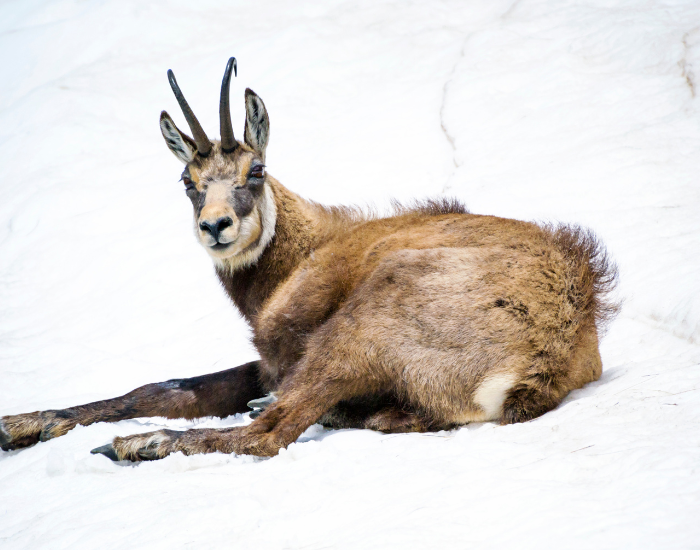
In the high country, an adult has few natural predators. Golden eagles take the occasional kid. Wolves, where they have returned in recent decades, will hunt them through deep snow. Eurasian lynx are perhaps the most effective predators in regions where both still occur. Their ambush strategy works: a quiet stalk, a short rush, and a precise neck bite.
Historically, the bigger pressure has come from people. A chamois hunter in the 19th century could expect to bring back meat, hide, and the curving trophy from a single animal. In the same era, woodcutters working high in the Alps often supplemented their winter income by trapping these agile creatures — a practice that put real pressure on local numbers. Overhunting collapsed several subspecies in the early 20th century. Most have rebounded under regulated management, though poaching pressure persists in parts of southeastern Europe.
10. They Can Live Longer Than You Would Expect
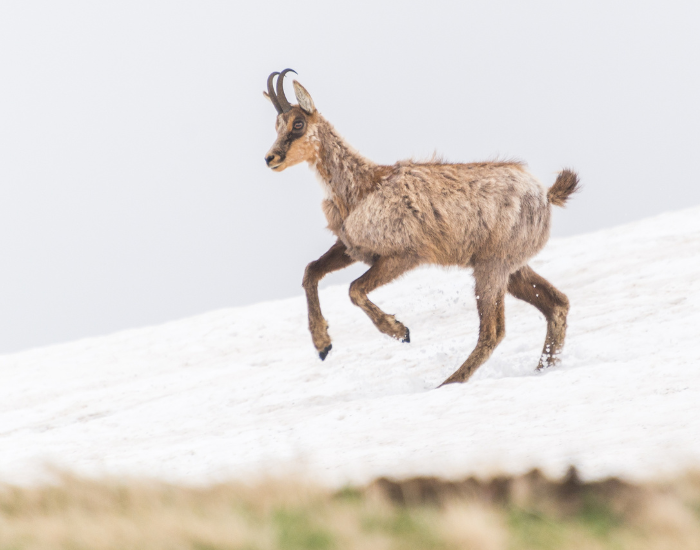
A wild chamois can live 14 to 17 years and up to 22 in captivity, which is remarkable for a medium-sized ungulate facing harsh winters and steep falls regularly. Females tend to outlive males. Old individuals carry the visible scars of many years, chipped horn tips, healed leg breaks, and the matted hair of seasons spent above the tree line.
When I think about what makes any mountain creature worth a multi-day trek to find, it is the combination, the agility, the strange in-between taxonomy, the seasonal transformation, and the deep human history layered onto a wild beast. This caprid has all of it.
FAQs about Chamois
It is a mountain caprid native to the highlands of Europe and parts of Asia Minor. Two members exist within the genus Rupicapra: the widespread Rupicapra rupicapra (which includes the Alpine, Balkan, Carpathian, Tatra, and Anatolian forms) and Rupicapra pyrenaica (the Pyrenean and Apennine variants). Despite its slender build and speed, it sits in the same subfamily as wild goats. The word can also refer to the soft leather made from its hide.
Chamois leather, sometimes called shammy leather or chammy leather, is a soft suede leather traditionally made from the skin of the chamois (and today often from various skins dressed in cod oil to mimic it). It is used for polishing glass and brass, cleaning car paint with a bucket of water, drying delicate surfaces without leaving marks, and for the traditional craft of goldbeating, where it shields tiny gold sheets from the hammer.
Genetically, it sits closer to wild goats than to other bovid grazers. Taxonomists place it in subfamily Caprinae, alongside the broader caprid family and similar mountain ungulates such as the takin and the Rocky Mountain goat. The traditional label reflects a slender build and speed rather than any deep evolutionary tie.
The Unique European Ungulate
It is one of those animals that rewards a closer look. On the surface, it is another European ungulate. Underneath, you find an evolutionary tightrope-walker, a linguistic time capsule, and the unlikely raw material behind everything from gold leaf to a garage cleaning rag. That is a lot of story packed into one mountain herbivore.
If you’ve ever spotted one in the wild — in the Alps, the Pyrenees, the Carpathians, or, hopefully soon for me, the peaks of northeastern Turkey — I’d love to hear about it in the comments below. And if other mountain wildlife with impressive antlers and headgear fascinates you, take a look at my guides to animals with horns, antelope species, and types of deer. This caprid does not fit neatly into any of those categories — which is exactly why it deserves its own article.
References:
Anderwald, P., Ambarli, H., Avramov, S., Ciach, M., Corlatti, L., Farkas, A., Papaioannou, H., Peters, W., Sarasa, M., Šprem, N., Weinberg, P., & Willisch, C. (2021). Rupicapra rupicapra (amended version of 2020 assessment). The IUCN Red List of Threatened Species 2021. https://doi.org/10.2305/IUCN.UK.2021-1.RLTS.T39255A195863093.en
Corlatti, L., Lorenzini, R., & Lovari, S. (2011). The conservation of the chamois Rupicapra spp. Mammal Review, 41(2), 163–174. https://doi.org/10.1111/j.1365-2907.2011.00187.x
Crampe, J. P., Bon, R., Gerard, J. F., Serrano, E., Caens, P., Florence, E., & Gonzalez, G. (2007). Site fidelity, migratory behaviour, and spatial organization of female isards (Rupicapra pyrenaica) in the Pyrenees National Park, France. Canadian Journal of Zoology, 85(1), 16–25. https://doi.org/10.1139/z06-185
Loison, A., Festa-Bianchet, M., Gaillard, J. M., Jorgenson, J. T., & Jullien, J. M. (1999). Age-specific survival in five populations of ungulates: Evidence of senescence. Ecology, 80(8), 2539–2554. https://doi.org/10.1890/0012-9658(1999)080[2539:ASSIFP]2.0.CO;2
Rossi, L., Fraquelli, C., Vesco, U., Permunian, R., Sommavilla, G. M., Carmignola, G., Da Pozzo, M., & Meneguz, P. G. (2007). Descriptive epidemiology of a scabies epidemic in chamois in the Dolomite Alps, Italian Alps. European Journal of Wildlife Research, 53(2), 131–141. https://doi.org/10.1007/s10344-006-0067-x
Šprem, N., & Buzan, E. V. (2016). The genetic impact of chamois management in the Dinarides. Journal of Wildlife Management, 80(5), 783–793. https://doi.org/10.1002/jwmg.21081