I was born in Mexico, where seeing the monarchs is a standard school excursion. Mine happened when I was about ten. I only went the once.
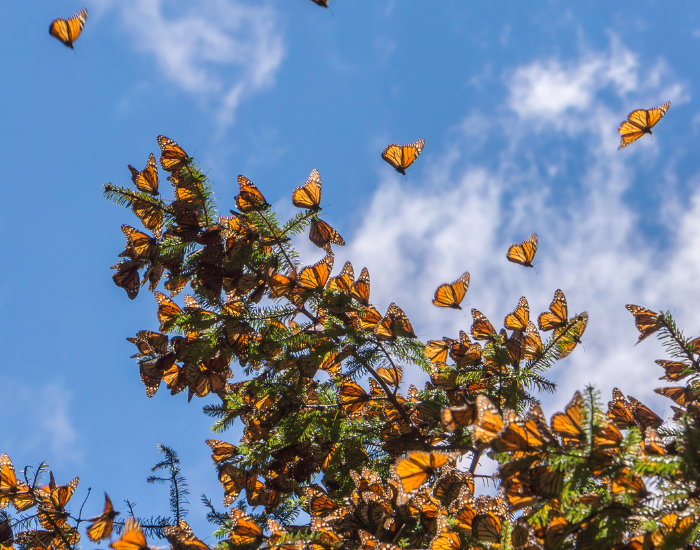
What stayed with me was the number. More butterflies moving at one time than a ten-year-old has any way of filing. The branches were not green. They were orange, and they moved.
Later I became a biologist and monarchs stopped being a day out. They became a subject, and the subject is not comfortable. Few insects are such an iconic species, and few have declined so publicly.
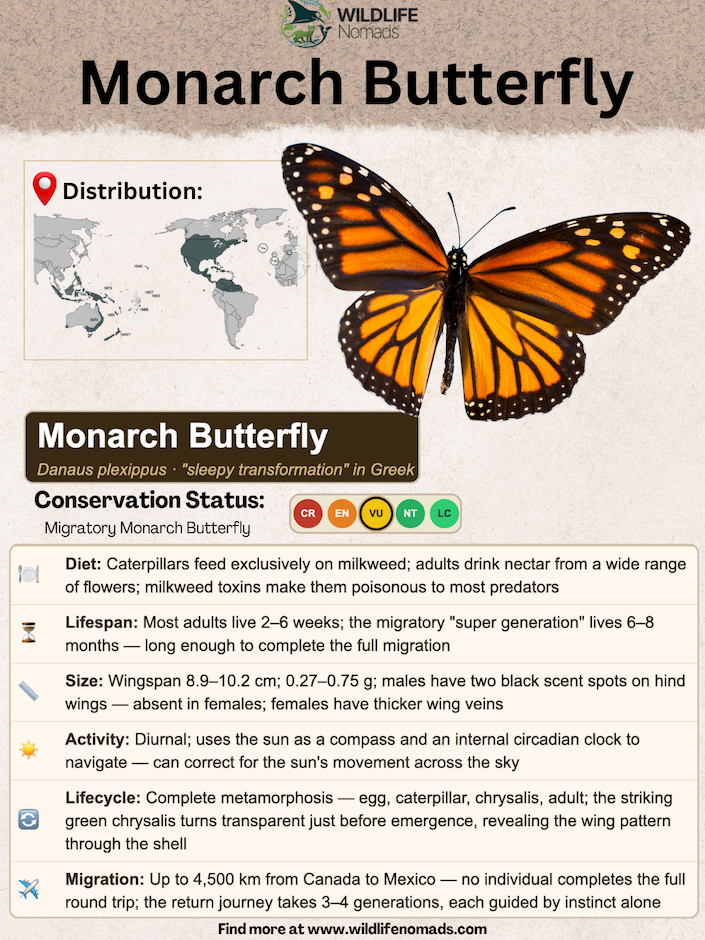
So: are monarch butterflies endangered? The honest answer has three parts, and they do not agree with each other. Below are twelve facts that explain why. You can also follow the monarch butterfly migration month by month on our interactive map, and compare their size with other animal in our size comparison tool.
1. They Are Not Legally Endangered in the US, and That Decision Keeps Slipping
The monarch butterfly is not listed under the Endangered Species Act. In December 2024 the US Fish and Wildlife Service proposed listing it as a threatened species. The proposal included 4,395 acres of critical habitat. Public comment ran into March 2025.
Then it stalled. In December 2025 the Department of the Interior moved the monarch to its long-term action list. A final rule is now expected in late 2026 at the earliest.
So the species sits in a familiar gap. Everyone agrees the trend is bad. Nobody has signed the paperwork.
2. The IUCN Said Endangered in 2022, Then Changed Its Mind
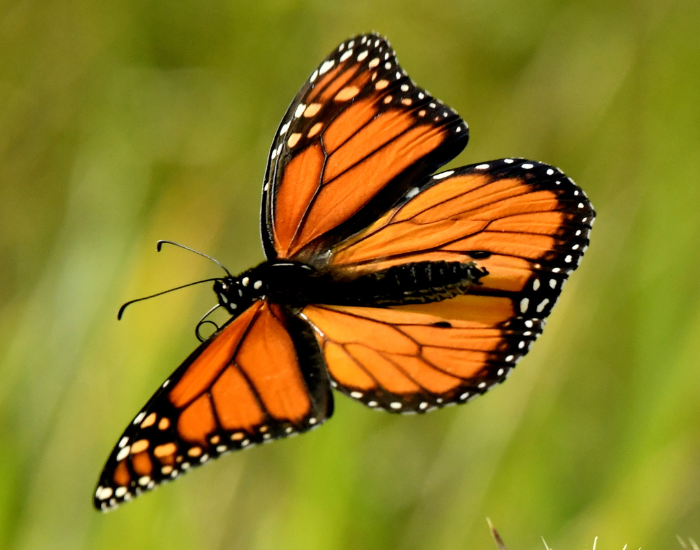
In July 2022 the IUCN listed the migratory monarch butterfly as Endangered on its Red List. Headlines everywhere. In 2023 it reassessed the same population as Vulnerable.
That reversal confused a lot of people, so it is worth being clear. The IUCN Red List measures extinction risk. It carries no legal force in any country.
An Endangered listing is a scientific warning, not protection. That distinction is the whole reason this article exists.
3. The Eastern Population Is Down Roughly 80% Since the Mid-1990s
Overwintering monarchs cluster in oyamel fir stands in the mountain forests of central Mexico. Researchers do not count individuals. They measure the area of forest the clusters occupy.
The 2024 season covered 1.79 hectares. December 2025 came in at 2.93 hectares, a 64% rise and slightly above the ten-year average of 2.81.
Two good winters do not reverse two decades. But monarch populations are more volatile than the headlines suggest, and 2025 was genuinely better.

4. The Western Population Has Lost More Than 95%
Monarchs overwinter along the California coast across western North America, rather than travelling to Mexico. Their collapse has been far steeper.
The 1980s estimate sat between three and ten million butterflies. The 2018–19 winter count came in under 30,000. The 2024 Thanksgiving count recorded 9,119.
Numbers that low stop being a population trend. They become a question about whether the western migration survives at all.
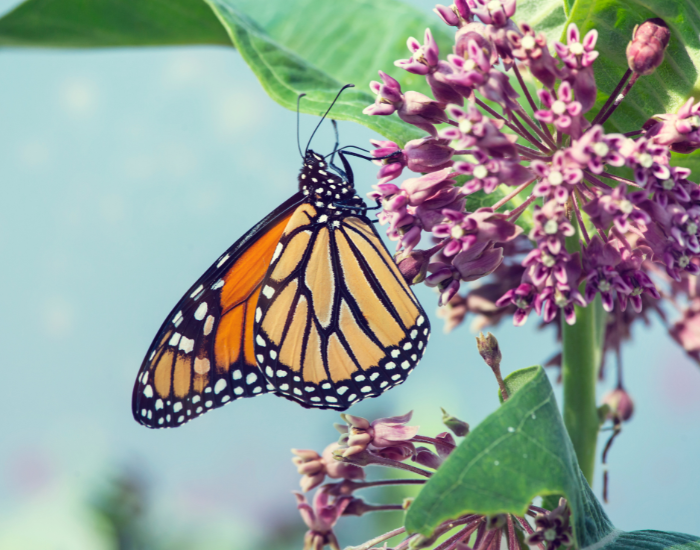
5. Milkweed Is the Only Plant They Can Breed On
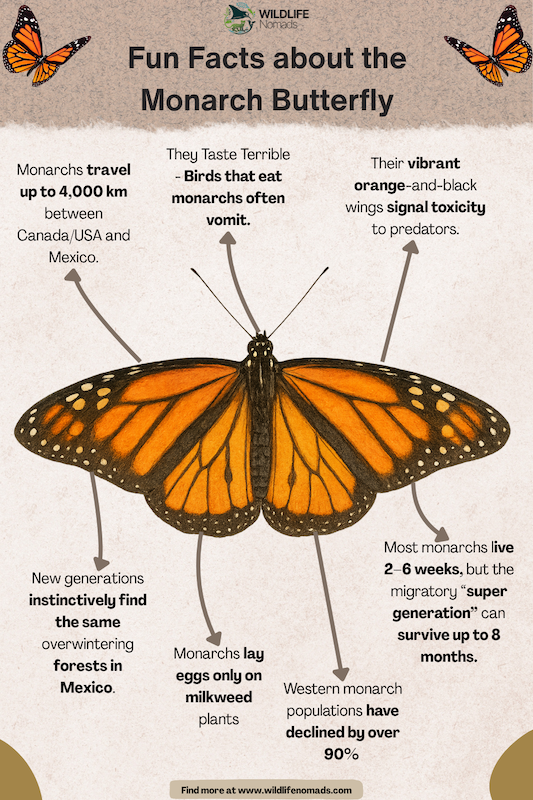
Female monarchs are laying eggs on milkweed and nowhere else. Monarch caterpillars eat milkweed leaves and nothing else. The whole life cycle is welded to one genus.
Asclepias covers over 70 North American milkweed species, from common milkweed through desert milkweed and heartleaf milkweed. Adult monarchs feed on nectar from many plants. The larvae have no such flexibility.
That is the vulnerability in one line. Remove the host plant and the species cannot reproduce, however much nectar is left.
6. Herbicide-Tolerant Crops Erased Milkweed From Farmland
Milkweed used to grow between crop rows across the American Midwest. Herbicide-tolerant corn and soy changed that in about a decade.
Roughly 95% of US corn and soybean acreage now uses herbicides that kill milkweed. Glyphosate has removed close to 99% of the milkweed that once grew in croplands.
Urban development took more. Habitat loss across the Midwest runs to an estimated 165 million acres of monarch habitat.
7. The Bright Coloration Is a Warning Label
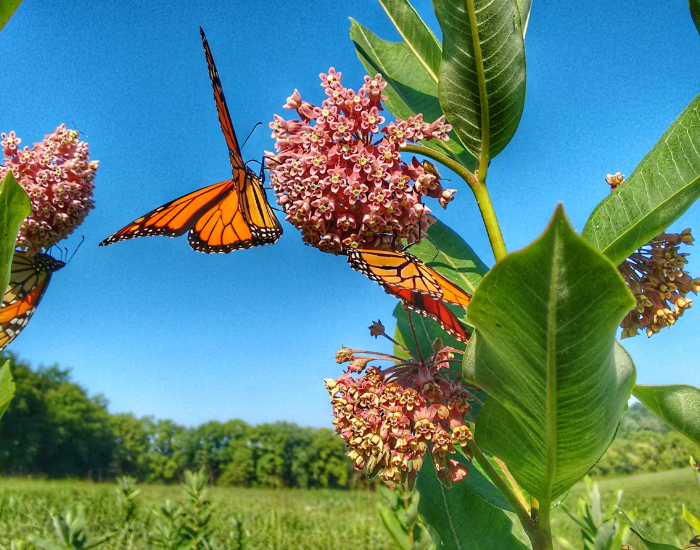
Milkweed is toxic. Monarch caterpillars sequester those compounds and keep them through metamorphosis, which makes the adult butterfly poisonous too.
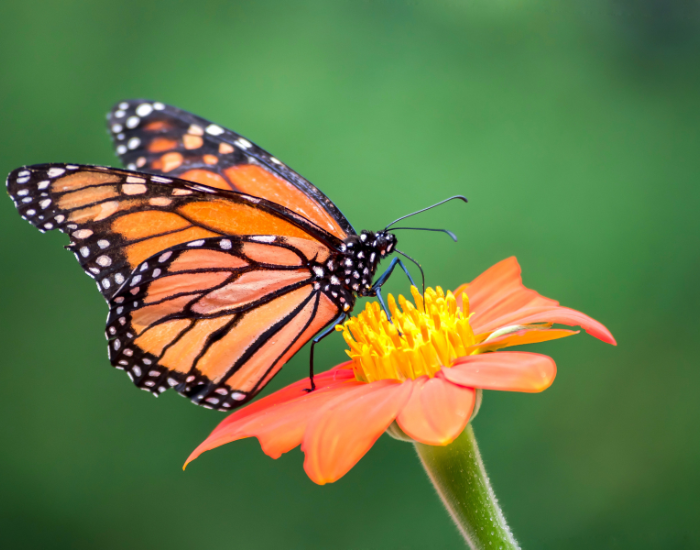
The orange wings, black veins and white spots are advertising aimed at predators. A bird that eats one monarch vomits, then avoids the pattern for life. Two pairs of wings, hind wings included, carry the same signal.
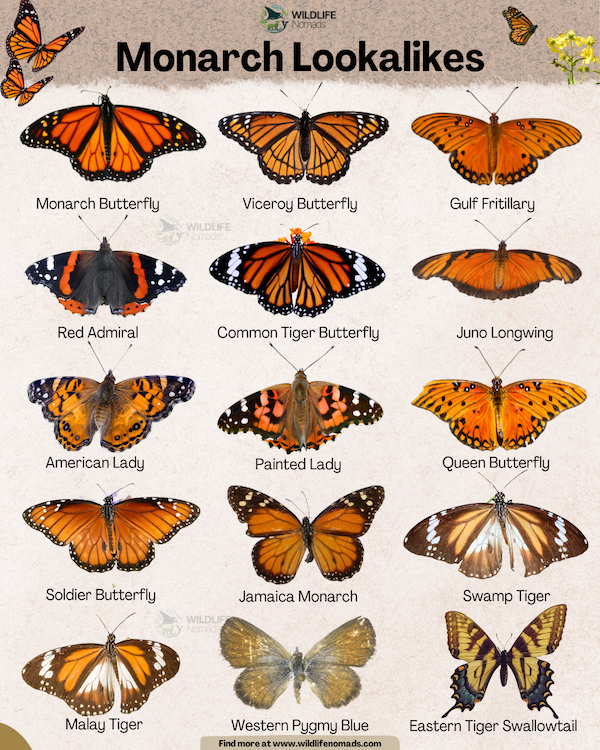
It works well enough that other butterflies copy it. The viceroy is the classic mimic, smaller with an extra black line across the hind wings.
8. The Whole Life Cycle Runs in About a Month
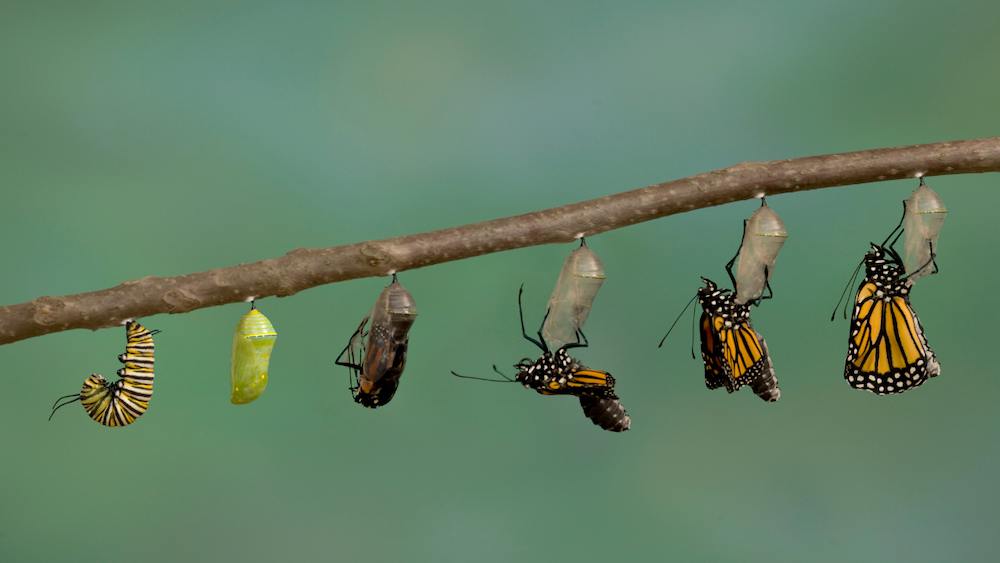
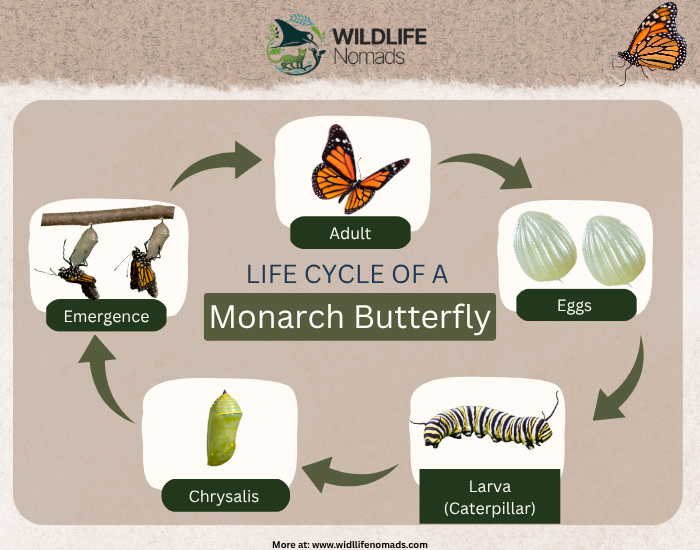
Danaus plexippus goes through complete metamorphosis, and the life stages are fast. Eggs hatch in three to five days.
The larval stage lasts nine to fifteen days, during which the caterpillar moults through five instars. The chrysalis takes another nine to fourteen days. A new generation emerges as adult butterflies, pumps fluid into the wings, and flies within hours.
Summer adult monarchs live two to five weeks. That is enough time to produce three or four generations across one breeding season.
9. The Last Generation of the Year Lives Eight or Nine Months
Shortening days and cooling nights in late summer trigger something different. The final generation emerges in reproductive diapause, with sexual development switched off.
Those overwintering adults live eight to nine months instead of five weeks. They fly south, cluster through winter, then start the journey northward around mid March.
It is the same species running two completely different programmes. Nothing else about monarch biology changes. Only the calendar it was born into.
10. No Single Butterfly Completes the Round Trip
Eastern monarchs travel over 2,000 miles from southeast Canada and the northeast United States to central Mexico. Western monarchs cross 300 to 1,000 miles from west of the Rocky Mountains to the coast.
Migration patterns differ in each direction. The fall migration is one long flight south by one long-lived generation. The return is not. It takes three or four generations to work back up through eastern North America to the summer breeding grounds.
So no monarch has ever seen the overwintering site it is heading for. They navigate to a forest their great-grandparents left. Among the world’s longest animal migrations, that is the strangest mechanism I know of.
Interactive
Four generations, one round trip
Drag the slider, or press play. Watch the autumn generation fly the whole way to Mexico, then three or four more work the family back north.
Open the full monarch migration map · See all six migration maps
11. Some Monarchs Have Stopped Migrating Altogether
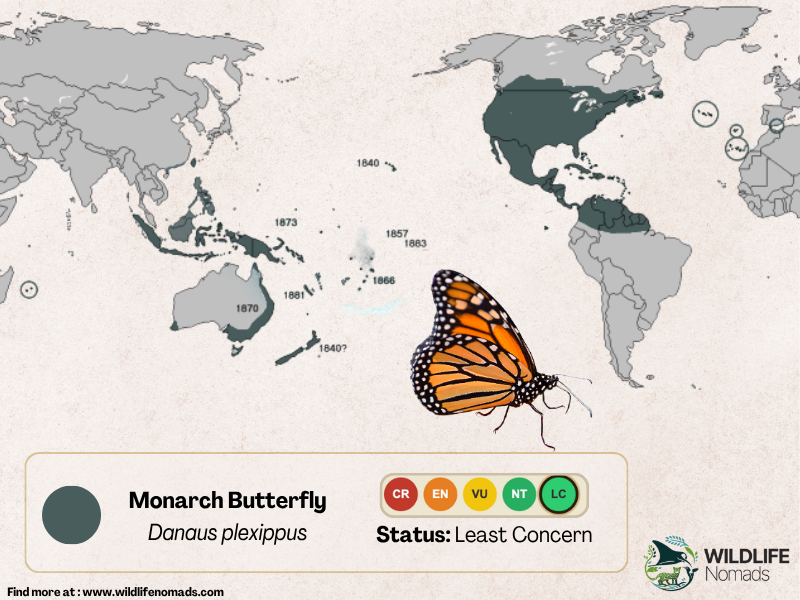
Not every monarch migrates. Non-migratory populations breed year-round in Florida, the Caribbean, Central America and parts of South America. They persist wherever milkweed and warmer climates do.
Tropical milkweed planted in gardens is now producing the same effect further north. Butterflies that would have left instead stay, breed through winter, and carry higher parasite loads.
Migration is a behaviour, not a fixed trait. Change the climate conditions and the migration routes change with them. Climate change is already redrawing both.
12. In Michoacán, Defending the Forest Has Cost Lives
The overwintering sites are protected on paper. Illegal logging continues anyway, because the timber is worth money and the enforcement is thin.
Homero Gómez González ran the El Rosario sanctuary. A former logger, he had turned it into a conservation success and campaigned openly against illegal cutting. He disappeared on 13 January 2020, and his body was found in a holding pond on 29 January. The autopsy recorded a head injury before drowning. Raúl Hernández Romero, a guide at the same sanctuary, was found dead days later. Netflix released a documentary on the case, The Guardian of the Monarchs, in 2024.
This is what Mexican biologists mean when they talk about monarch conservation. It is not signage and good intentions. It runs against organised crime and the money in illegal timber. Worth holding in mind next to a tidy orange arrow on a migration map.
What Actually Helps
Conservation efforts have measurable targets, which is rare and useful. Research estimates 1.3 billion additional milkweed plants are needed across the breeding range. Over 1.1 million acres of monarch habitat have already been restored.
Four things work, in rough order of impact:
- Plant native milkweed for your region, not tropical milkweed. The USDA publishes region-specific guides, and its SAFE Initiative funds milkweed on farmland.
- Stop using pesticides where monarchs feed or breed. A 2024 study found insecticides, more than herbicides or land use, were the strongest driver of Midwest butterfly decline, accounting for roughly a third of monarch losses.
- Add nectar sources across the whole season. A wildlife-friendly garden supports monarchs alongside other pollinators such as native bees.
- Record what you see. Citizen science programmes like Journey North and iNaturalist supply the sighting data these population models run on.
- Back the policy. The Pollinator Health Task Force dates to 2014 and California has since legislated for monarch habitat. Our guide to saving endangered animals covers what else moves the needle.
At university I helped a professor plant a pollinator garden of native Mexican flowers. Within one season it filled with bumblebees, moths and spiders. Small habitat works faster than people expect.
Support the Monarch Butterfly by visiting them!
Frequently Asked Questions
Eastern monarchs are measured by the forest area they occupy in central Mexico rather than counted individually. That figure was 2.93 hectares in December 2025, up 64% from 1.79 hectares the previous winter. The western population is counted directly. It recorded just 9,119 butterflies in 2024, down from millions in the 1980s.
Three pressures overlap. Herbicide-tolerant crops removed almost all milkweed from US farmland, and milkweed is the only plant monarchs can breed on. Insecticides, particularly neonicotinoid-treated seed, kill larvae and adults directly. Climate change disrupts migration timing, dries out breeding habitat and drives extreme weather at the overwintering sites.
Plant milkweed species native to your specific region, which the USDA and the Xerces Society both publish guides for. Common milkweed suits much of the Midwest, while desert milkweed and heartleaf milkweed suit drier southwestern sites. Avoid tropical milkweed outside its native range, because it stays green through winter and can interrupt migration.
Monarch Butterfly Challenge
Eight multiple-choice questions on the world’s most famous — and most contested — migrating insect. How many can you get?
References:
Pelton, E. M., Schultz, C. B., Jepsen, S. J., Black, S. H., & Crone, E. E. (2019). Western monarch population plummets: Status, probable causes, and recommended conservation actions. Frontiers in Ecology and Evolution, 7, 258. https://doi.org/10.3389/fevo.2019.00258
Zylstra, E. R., Ries, L., Neupane, N., Saunders, S. P., Ramírez, M. I., Rendón-Salinas, E., Oberhauser, K. S., Farr, M. T., & Zipkin, E. F. (2021). Changes in climate drive recent monarch butterfly dynamics. Nature Ecology & Evolution, 5(10), 1441–1452. https://doi.org/10.1038/s41559-021-01504-1
Van Deynze, B., Swinton, S. M., Hennessy, D. A., Haddad, N. M., & Ries, L. (2024). Insecticides, more than herbicides, land use, and climate, are associated with declines in butterfly species richness and abundance in the American Midwest. PLOS ONE, 19(6), e0304319. https://doi.org/10.1371/journal.pone.0304319
Thogmartin, W. E., López-Hoffman, L., Rohweder, J., Diffendorfer, J., Drum, R., Semmens, D., … Wiederholt, R. (2017). Restoring monarch butterfly habitat in the Midwestern US: “All hands on deck”. Environmental Research Letters, 12(7), 074005. https://doi.org/10.1088/1748-9326/aa7637
Semmens, B. X., Semmens, D. J., Thogmartin, W. E., Wiederholt, R., López-Hoffman, L., Diffendorfer, J. E., Pleasants, J. M., Oberhauser, K. S., & Taylor, O. R. (2016). Quasi-extinction risk and population targets for the eastern, migratory population of monarch butterflies (Danaus plexippus). Scientific Reports, 6, 23265. https://doi.org/10.1038/srep23265