
Wildlife Nomads · Play · Interactive chart
Animal Lifespan Chart: How Long Do Animals Live?
From a mayfly that lives a few hours to a glass sponge that passed 11,000 years. Travel through time with 50 animals and meet the longest living species on planet Earth.
By Cesar Medina, conservation biologist · Every record fact-checked, October 2026
- 50 animals
- 7 animal groups
- 3 ways to play
- Minutes to 11,000 years


How long do animals live?
Animal lifespan stretches from minutes to millennia. An adult mayfly may live for a few hours, while a glass sponge can pass 11,000 years. Most mammals and birds sit in between, at years to decades. Meanwhile, a handful of animals in cold waters live for centuries.
When I worked in a zoo reptile house, I fed the Galápagos giant tortoises huge salads. They ate slowly, moved slowly and, as I learned later, age slowly too. Back then, I never wondered how long they would outlive me. Now I can't stop wondering.
So I built this animal lifespan chart. It puts 50 animal species on one timeline, from a mayfly's single day to the immortal jellyfish. Every record comes with the method behind it, plus an honest note when the number is a guess.
How to use the animal lifespan chart
Scroll sideways to travel through time, or press Time travel and let the chart carry you. Land animals stand above the shoreline, and sea animals swim below it.
Keep in mind that each number is a maximum lifespan, the oldest individual we know about. The average lifespan of the same species is usually far shorter.
Along the top, history flags show what was happening when the oldest animals were young. For instance, a 392-year-old Greenland shark alive today would have hatched around the time Abel Tasman reached Tasmania.
The longest living animals on planet Earth
Here are the ten oldest animals on the chart, ranked by their longest known life. Tap any of them to jump straight to its card on the chart.
For the full story behind the top 15, read my guide to the longest-living animals. Below, I break the records down by group.
Sponges and corals: the oldest animals
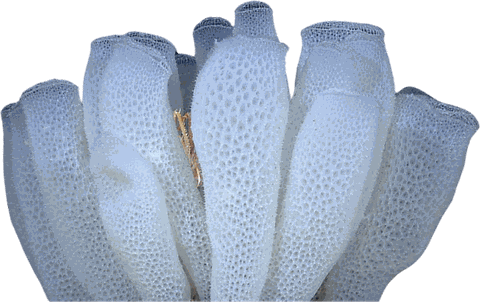
Sea sponges are the champions. A glass sponge from the East China Sea, Monorhaphis chuni, has been dated to about 11,000 years. In other words, it started growing around the end of the last ice age.
Their simple body structure helps. Sponges have no organs to wear out, and many live on the cold, quiet ocean floor. Similarly, some giant barrel sponges on Caribbean coral reefs may be over 2,300 years old, judging by their growth rates.
Black corals come next. A colony from the genus Leiopathes, found 300 to 500 m deep off Hawaii, is about 4,265 years old. Remember, though, that this is the age of a colony. Each tiny polyp lives only a few years.
Ocean quahog: the oldest single animal
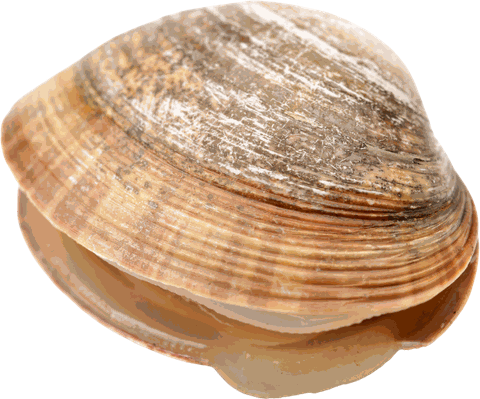
In 2006, scientists dredged an ocean quahog off north Iceland and later nicknamed it Ming. Their first count of its shell bands said 405 years. However, a recount in 2013 broke that previous record, at 507 years (Butler et al., 2013).
Ocean quahogs burrow into the sea floor of the North Atlantic, from shallow waters to a few hundred metres deep. There, cold water slows their growth, and slow growth tends to go hand in hand with long lives.
The longest living vertebrates
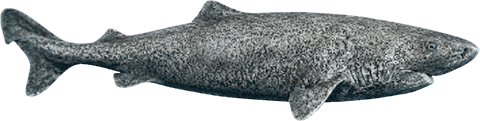
Among animals with a backbone, the Greenland shark holds the record. Scientists dated the eye lenses of 28 sharks. The largest female came out at about 392 years (Nielsen et al., 2016). The range is wide, though: 272 to 512 years.
These sharks cruise the cold arctic waters of the North Atlantic, well inside the Arctic Circle. In those icy waters, they grow only about a centimetre a year. Read more in my Greenland shark facts.
The bowhead whale is the longest living mammal, at an estimated 211 years. Meanwhile, rougheye rockfish reach 205 years, and red sea urchins pass 200. Tuataras and coelacanths, often called living fossils, may also reach about 100.
The oldest living land animal
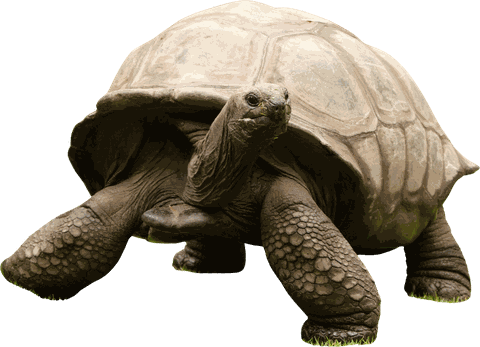
On land, the record belongs to Jonathan, a giant tortoise on Saint Helena. He hatched around 1832, while Charles Darwin was still sailing on HMS Beagle. Today he is about 194 years old.
Jonathan is usually classed as a Seychelles giant tortoise, a subspecies of the Aldabra giant tortoise. Most Aldabra giant tortoises live 100 to 150 years. You can meet the whole family in my guide to tortoise types.
What about the longest living land mammals? Humans hold that record. Jeanne Calment, a French woman from Arles, lived to 122 years and 164 days. According to Guinness World Records, she is still the oldest human being with documented proof.
Born before Columbus: an animal time machine
Old animals carry history inside them. So I lined up some record holders by the year they were born. Each one was already alive while these events happened.
How do scientists know how old an animal is?
Wild animals don't carry birth certificates. Instead, scientists read animal lifespan from the body itself, a bit like counting tree rings. Radiocarbon dating, often called carbon dating, is one of the most powerful tools.
Bomb radiocarbon deserves a special mention. Nuclear tests in the 1950s and 1960s left a pulse of carbon-14 in the oceans. As a result, any tissue that grew during those years carries a time stamp.
Since then, that time stamp has rewritten records. For example, it showed that great white sharks can live about 73 years (Hamady et al., 2014). That is far longer than older band counts suggested. Read more in my great white shark facts.
Why do some animals live so long?
There is no single secret. However, long-lived animals tend to share a few traits, and the chips on the chart light each one up. As a general rule, slow, safe and cold beats fast, hunted and warm.
Cold waters and slow metabolisms
Near-freezing water slows metabolism, and slower chemistry means slower wear and tear. That's why so many record holders live in deep waters and cold seas. You can meet more of these slow giants on my deep-sea dive.
Some long-lived species also seem better at repairing their DNA. The bowhead whale's genome, for example, carries changes in genes linked to DNA repair and cancer.
Armour and few natural predators
If nothing can eat you, evolution rewards a body that keeps repairing itself. In particular, shells, spines and sheer size help. That's why tortoises, clams, sea urchins and crocodiles all show up on the long end of the chart.
I fed whole chickens to the crocodiles in that same reptile house. Most of them were placid, although a few were properly aggressive. Little in the wild dares to tackle an adult, and wild saltwater crocodiles can live past 70.
Big bodies and wings
In mammals, body size is one of the best predictors of animal lifespan. Bigger usually means longer, from elephants to whales. During whale season on the east coast, I see humpbacks breaching almost every day. From the shore they look small, but whale bodies are built for the long haul.
Birds, on the other hand, break the size rule. A pink cockatoo named Cookie reached 83, far older than any mammal his size. Macaws from Central and South America can pass 30 too. See more in my guide to the types of parrots.
Royalty in the colony
In some species, animal lifespan depends on your job. A honey bee worker lasts about six weeks in summer, while her queen lives for years. Similarly, a black garden ant queen lived 28 years and 9 months in a lab.
Naked mole rats work the same way. They live in underground burrows, with one breeding queen per colony. Their risk of dying barely rises with age, which breaks the usual pattern for other mammals.
Biological immortality
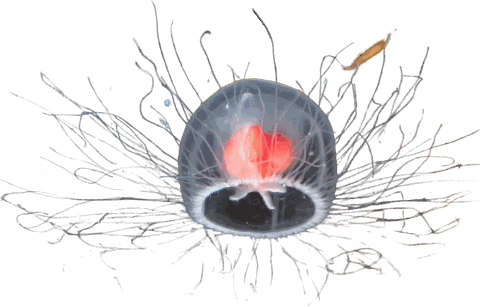
No animal has eternal life. Still, the immortal jellyfish, Turritopsis dohrnii, comes close. When stressed, an adult can shrink back into a young polyp and start its life again. Fish and disease still claim plenty of them, though.
Tiny freshwater hydra are another puzzle. In one lab study, their death rate did not rise at all over four years.
Live fast, die young
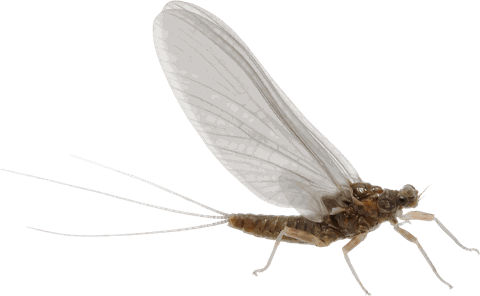
At the other end of the animal lifespan chart, many animals pack a whole life into days. Female Dolania americana mayflies get under five minutes as winged adults. They can't even eat, because adult mayflies have no working mouthparts.
Monarch butterflies show both extremes in the same species. Summer adults live two to five weeks. Yet the last generation of the year flies to Mexico and lives up to about nine months.
I visited a monarch sanctuary in Michoacán once, when I was about ten. I still remember the sheer number of butterflies. Every one of them was a long-lived traveller, and you can follow their route on my monarch migration map.
Closer to home, the Australian box jellyfish lives for a single season. Likewise, the common octopus rarely sees its second birthday, because mothers die soon after their eggs hatch. It's a short life, but a busy one.
All 50 animals on the animal lifespan chart
Want to browse instead? Filter the cards by group, then tap a picture to see that animal on the chart. Each card also links to my full guide when I have one.
Records worth a second look
Some famous animal lifespan records are guesses, and I'd rather tell you than hide it. On the chart, a little warning chip flags each one.
Still, none of this makes the science weak. It simply means every record is a best estimate, and better methods keep moving the numbers.
Slow lives, slow recoveries
However, a long animal lifespan has a catch. Animals that grow slowly also breed slowly, so their populations bounce back slowly too.
The Greenland shark is listed as Vulnerable, partly because fishing gear catches it by accident. A female lost as bycatch may have needed 150 years just to grow up. In the same way, glass sponges face bottom trawling and deep-sea mining.
Human activity adds more pressure. Carbon dioxide from burning fossil fuels is warming and acidifying the ocean. Climate change therefore stresses corals, clams and sponges that took centuries to grow.
I've dived with whale sharks off Holbox, and I think about this often. Whale sharks live at least 50 years, so every adult lost takes decades of growth with it. Dugongs, coelacanths and many parrots face the same maths.
If you want to help, start with my guide on how to save endangered animals. Then meet the sea animals closest to extinction.
Frequently asked questions
What animal lives the longest?
The longest-lived animal we know of is a glass sponge, at about 11,000 years. Among animals with a backbone, the Greenland shark leads at around 392 years. For a single animal with a solid count, Ming the ocean quahog reached 507.
What is the oldest living land animal?
Jonathan, a giant tortoise on Saint Helena. He hatched around 1832, which makes him about 194 years old in 2026.
What is the longest living mammal?
The bowhead whale. Scientists estimated one male at 211 years from the chemistry of his eye lenses. Humans come next among mammals with solid records, at 122.
How long do Greenland sharks live?
At least 272 years, and probably close to 400. The best estimate for the oldest shark studied is 392 years, plus or minus 120.
Is any animal immortal?
Not truly. The immortal jellyfish can turn back into a young polyp, so it doesn't die of old age. Still, predators and disease kill plenty of them.
Do lobsters live forever?
No. American lobsters keep growing, and some may pass 100 years, but moulting gets harder with age. Their ages come from body size, so nobody has a firm maximum.
What animal has the shortest lifespan?
As adults, mayflies. Some females live under five minutes after their final moult. Their whole life is longer, though, because the nymphs live underwater for weeks to two years.
What are the longest living organisms?
Plants beat animals. A Great Basin bristlecone pine in California, nicknamed Methuselah, is over 4,800 years old. Some clonal plants and fungi may be older still.
What affects animal lifespan?
Body size, metabolism, predators and habitat all play a part. In general, cold water, armour, wings and a protected life in a colony push animal lifespan up. Being small, busy and hunted pushes it down.
How long do dogs live?
Most dogs live about 12 to 13 years, according to a large UK study. Small breeds with long noses tend to live longest. The oldest dog widely cited is Bluey, an Australian cattle dog who reached 29 years and 5 months.
References
- Butler, P. G., Wanamaker, A. D., Jr., Scourse, J. D., Richardson, C. A., & Reynolds, D. J. (2013). Variability of marine climate on the North Icelandic Shelf in a 1357-year proxy archive based on growth increments in the bivalve Arctica islandica. Palaeogeography, Palaeoclimatology, Palaeoecology, 373, 141–151. https://doi.org/10.1016/j.palaeo.2012.01.016
- Hamady, L. L., Natanson, L. J., Skomal, G. B., & Thorrold, S. R. (2014). Vertebral bomb radiocarbon suggests extreme longevity in white sharks. PLOS ONE, 9(1), e84006. https://doi.org/10.1371/journal.pone.0084006
- Nielsen, J., Hedeholm, R. B., Heinemeier, J., Bushnell, P. G., Christiansen, J. S., Olsen, J., Ramsey, C. B., Brill, R. W., Simon, M., Steffensen, K. F., & Steffensen, J. F. (2016). Eye lens radiocarbon reveals centuries of longevity in the Greenland shark (Somniosus microcephalus). Science, 353(6300), 702–704. https://doi.org/10.1126/science.aaf1703



