I met my first koi in a hotel pond in Mexico, at six in the morning, jet-lagged and holding bad coffee. Twenty golden bodies rose to my shadow. That was the moment carp stopped being background scenery for me.
Since then I have watched carp on five continents. I have seen them tailing in Hungarian oxbows, hanging under Egyptian bridges. The same broad family shows up in Amazon-adjacent aquaculture ponds and in Canadian marshes.
Here is what makes them worth your attention. Carp are one of humanity’s oldest farmed animals and a beloved cultural icon. They are also among the most damaging invasive species on Earth. All three things are true at once.
Below I break down 15 species and varieties I have personally chased, netted, or simply watched. Expect the carp facts that actually matter: biology, behaviour, field marks, and honest ecological accounting.
What is a carp, exactly?
The term carp covers a diverse group of freshwater fish belonging to the family Cyprinidae. That family holds well over 1,500 species, so “carp” is a loose label rather than a precise one.
Most share a few traits. They have a protrusible, toothless mouth, pharyngeal teeth in the throat, and a strong preference for still or slowly flowing waters. Many carry barbels, and many tolerate low oxygen better than salmon or trout ever could.
Common carp can adapt to a remarkable range of freshwater habitats, from farm ponds to enormous rivers. That adaptability explains both their aquaculture value and their invasive success.

1. Common Carp (Cyprinus carpio)
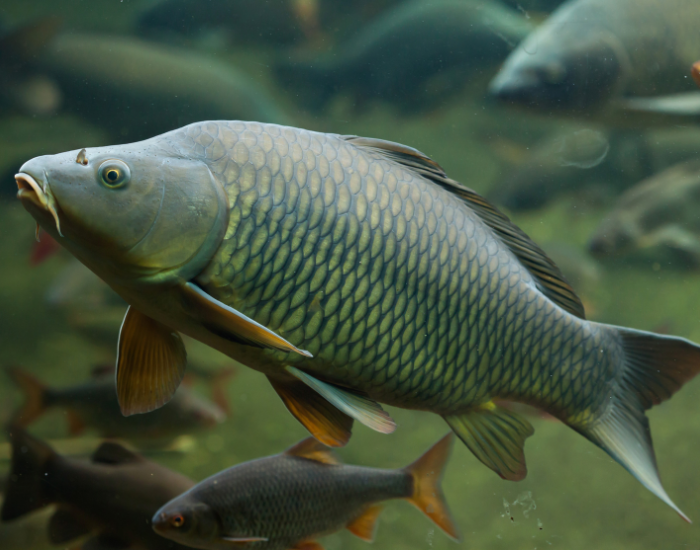
The common carp is the ancestor of nearly everything else on this list. Adults commonly reach 40–60 cm, though carp can grow up to 1.2 metres long. Exceptional common carp can weigh up to 60 kg, a large size for any freshwater fish species.
You can find them in backwaters where the water ran the colour of milky tea. That turbidity is often self-inflicted. Common carp uproot aquatic vegetation while rooting for insect larvae and other invertebrates, which resuspends sediment and degrades water quality.
2. Koi Carp (Cyprinus rubrofuscus – “koi”)
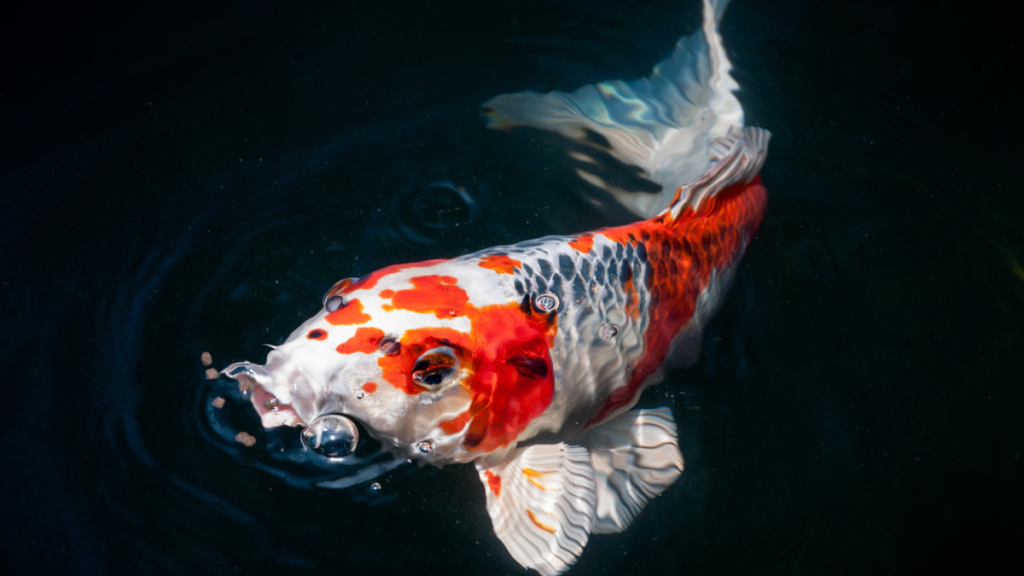
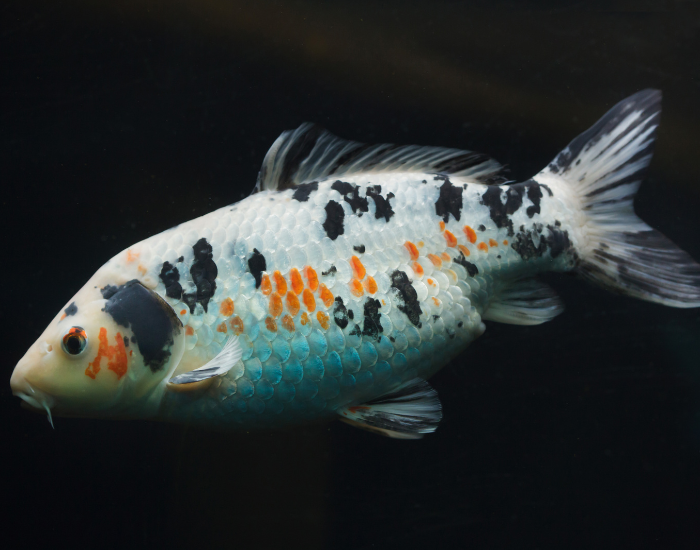
Koi carp are ornamental variants bred for colour and pattern, and they remain my personal favourite. Japanese breeders turned a muddy food fish into living calligraphy through centuries of selective breeding.
Kohaku, Showa, Utsuri, Ogon, each variety follows strict standards for colour edges and body shape. In Niigata I watched a breeder cull 90% of a spawn by sight in about four minutes. Interestingly, koi released into the wild revert toward drab bronze within a generation or two.
3. Mirror Carp
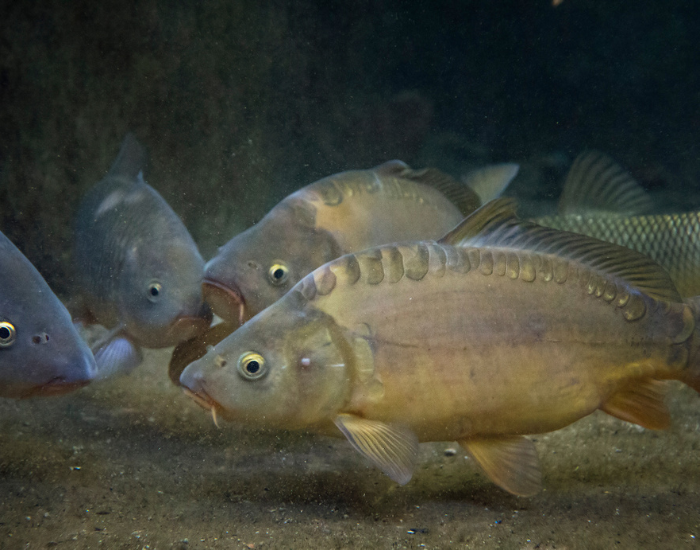
Mirror carp are a genetic variant of common carp with large, irregular patches of scales instead of full coverage. Some carry a neat row along the lateral line; others look randomly tiled.
The mutation traces back to European monastery aquaculture, where fewer scales meant easier cleaning. I once photographed a mirror carp in a French château moat whose flank scales formed an almost perfect crescent. Anglers name individual fish this way, and honestly, I understand why.
4. Leather Carp
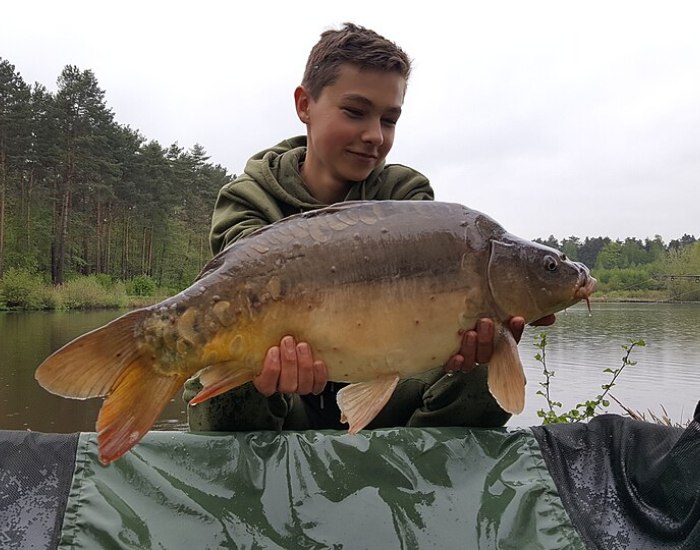
Leather carp take the same mutation further. They are a mutation of common carp with very few scales, or almost completely smooth skin.
Handling one feels genuinely strange, cool, soft, slightly rubbery. That said, the trait comes at a cost. Leather carp typically grow more slowly than mirror or fully scaled fish. They also tend to be more sensitive to poor environmental conditions.
5. Grass Carp (Ctenopharyngodon idella)
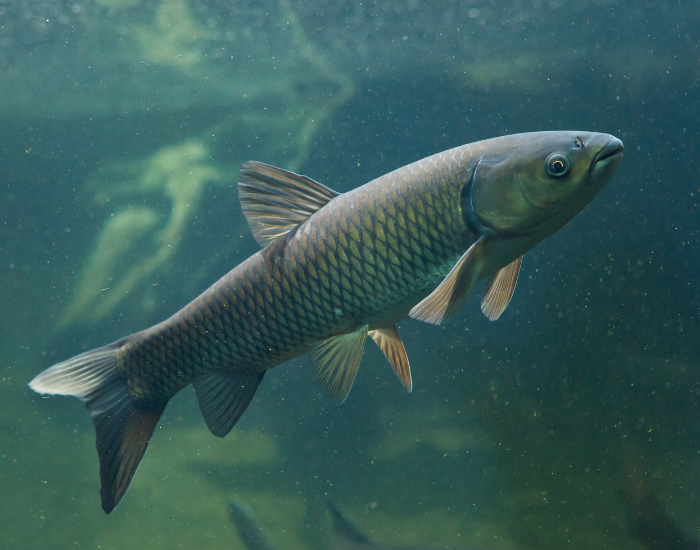
Grass carp are slender, torpedo-shaped, herbivorous fish specialised in aquatic weed control. A large adult carp can eat its own body weight in plant material within a few days.
Managers stock them deliberately for controlling aquatic vegetation. I have seen a Texas reservoir go from hydrilla-choked to open water in two seasons. However, that efficiency cuts both ways, overstocking strips habitat that native fish and waterfowl depend on.
6. Silver Carp (Hypophthalmichthys molitrix)
Silver carp are famous for their extreme jumping behaviour when startled. Outboard motors trigger it reliably, and a 10 kg fish arriving at head height leaves an impression.
Their filter-feeding behaviour is the real ecological story. Silver carp strain phytoplankton through modified gill rakers. As a result, they compete directly with native filter feeders for the same food sources. Paradoxically, dense populations can both suppress and worsen algal blooms depending on which plankton size classes they crop.
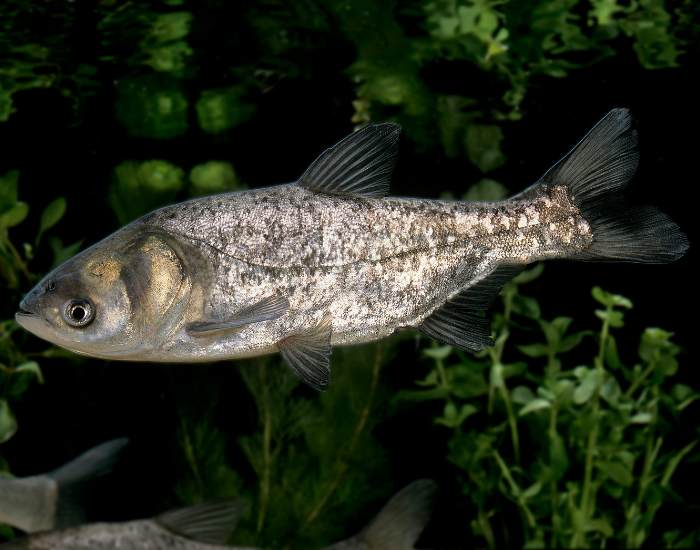
7. Bighead Carp (Hypophthalmichthys nobilis)
Bighead carp are massive filter-feeders that primarily consume zooplankton. The head really is enormous, roughly a third of the body length, with eyes set low on the face.
They rarely jump like their silver cousins, which makes them easier to overlook. In parts of the Mississippi basin, these fish now dominate the plankton budget entirely.
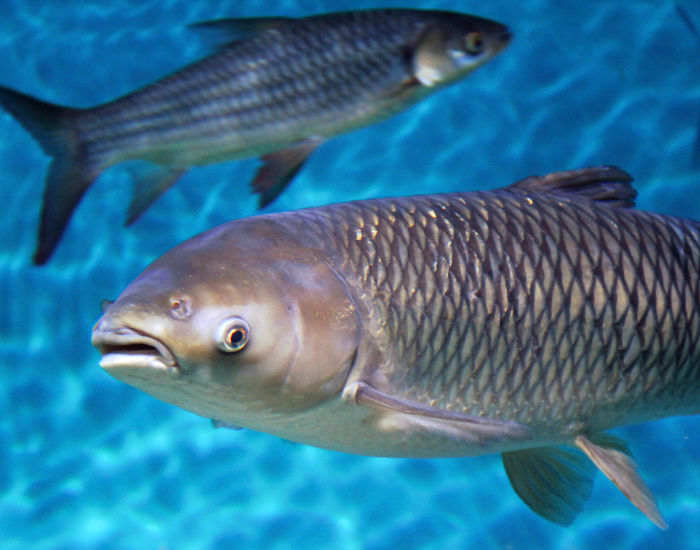
8. Black Carp (Mylopharyngodon piceus)
Black carp are adapted to crush hard-bodied prey such as mollusks and snails. Their pharyngeal teeth look like molars and generate startling bite force.
In their native Chinese rivers, black carp play an important ecological role by controlling mollusk populations. In North America, by contrast, the same appetite threatens already-imperilled native mussels. Recent lab work shows juveniles readily consume snails, fingernail clams, and zebra mussels alike.
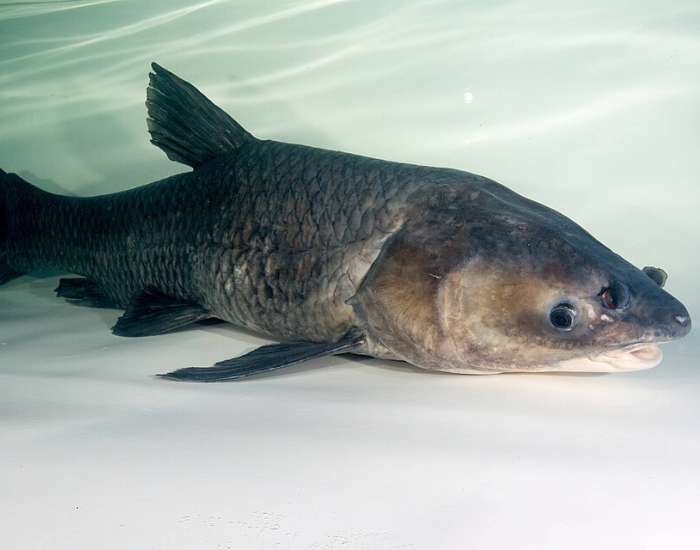
9. Crucian Carp (Carassius carassius)
Crucian carp are a smaller relative of goldfish, characterised by golden-bronze flanks and a rounded, deep-bodied profile. Adults rarely exceed 25 cm in length.
Their real superpower is survival. Crucians can survive months under ice in oxygen-free water by converting lactate to ethanol and releasing it through the gills. I sampled a Finnish forest pond in spring where crucians were the only fish present — and thriving.
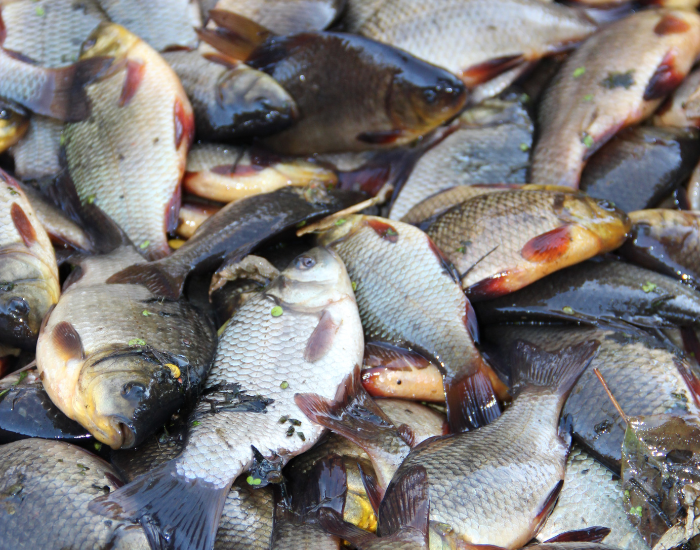
10. Goldfish (Carassius auratus)
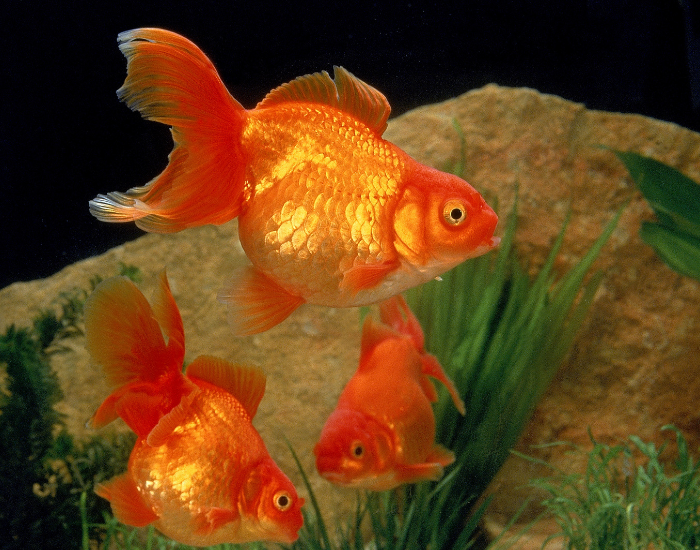
Yes, the goldfish is a carp. Carassius auratus came from Chinese ornamental breeding programmes over a thousand years ago. Today it remains one of the most widely kept fish in the world.
Released goldfish become serious invasive species. I have measured feral goldfish in Western Australia at over 30 cm, weighing nearly two kilograms. They lose their orange colour, gain a bronze-olive back, and stir up mud exactly like their larger relatives.
11. Prussian Carp (Carassius gibelio)
Prussian Carp look like a drab crucian, yet they reproduce in a way that borders on science fiction. Females can clone themselves using sperm from other cyprinid species, a process called gynogenesis.
The result is explosive spread. Prussian Carp have colonised much of Europe and are pushing hard across the Canadian prairies. As a result, all-female populations can build in large numbers within a handful of seasons.

12. Catla (Gibelion catla)
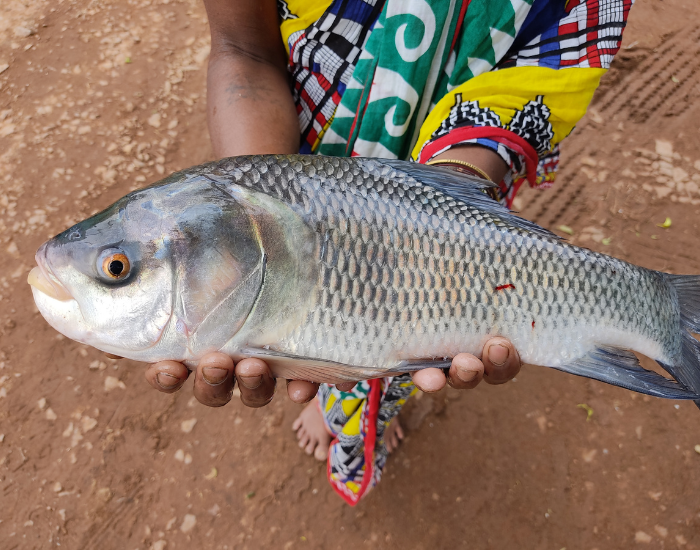
Catla is one of the three Indian major carps and a cornerstone of South Asian aquaculture. The upturned mouth is unmistakable, angled to skim zooplankton from the surface layer.
At a Bihar fish market I watched a trader lift a catla nearly a metre long onto a slab of ice. These fish feed high in the water column, which is why farmers pair them with bottom-feeding species in polyculture ponds.
13. Rohu (Labeo rohita)
Rohu is India’s most farmed carp and, in my view, the best-eating fish on this list. The body is arched, the snout blunt, and the scales carry a faint reddish sheen.
Rohu graze mid-water on plankton and detritus, filling the layer between catla above and mrigal below. That three-tier stacking is one of the oldest and smartest aquaculture designs anywhere in the world.
14. Mrigal (Cirrhinus cirrhosus)
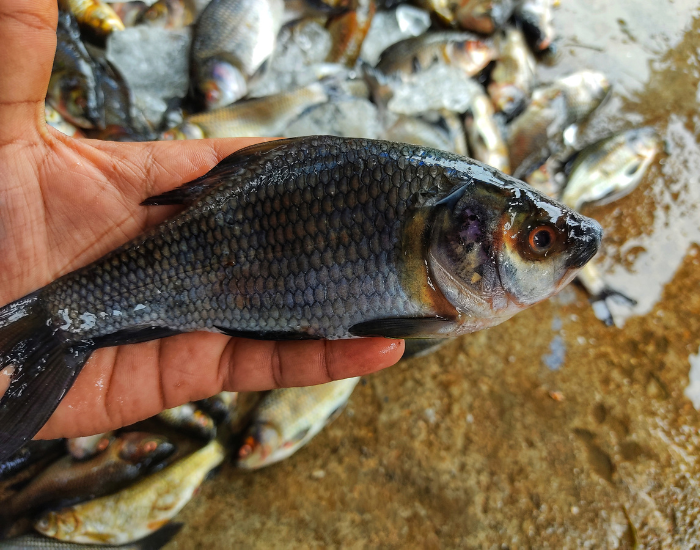
Mrigal work the bottom, sifting detritus, algae, and plant material from soft sediment. Their downturned mouth and fine barbels suit that job perfectly.
The species is native to the Ganges and Brahmaputra systems and now farmed across South and Southeast Asia. Wild populations, however, have declined sharply from damming and abstraction. Farmed abundance and wild scarcity can absolutely coexist.
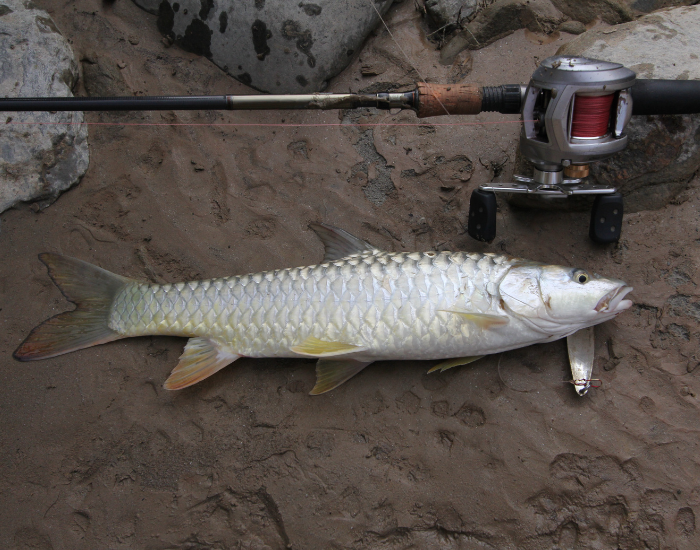
15. Golden Mahseer (Tor putitora)
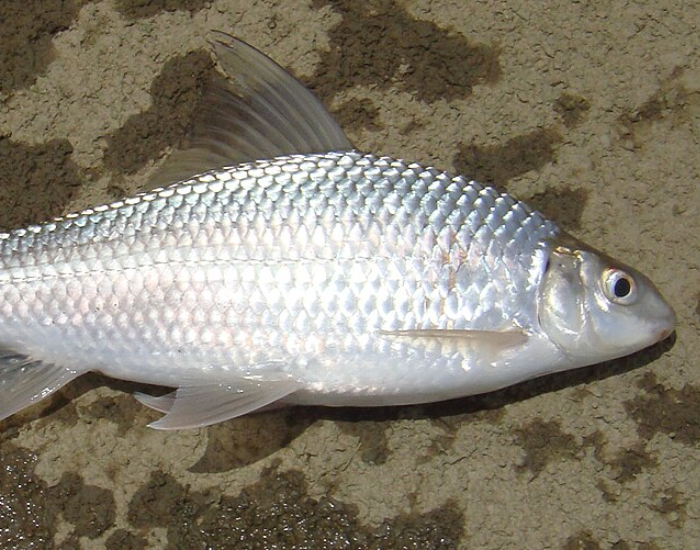
Mahseer are the giants of the family and, for many anglers, the ultimate cyprinid game fish. Golden mahseer exceed 40 kg and hold station in fierce Himalayan streams.
Sadly, the IUCN lists the golden mahseer as Endangered, driven by dams, mining, and dynamite fishing.
Carp fishing: what actually works
Carp fishing rewards patience and observation far more than gear. Location scouting comes first, I look for muddy water, drifting bubbles, and tilted reed stems that betray feeding fish.
Sweet corn remains one of the most effective baits ever devised, cheap and startlingly reliable. Boilies, the hard spherical baits designed to resist nuisance species, target larger carp specifically. The Hair Rig suspends bait beside the hook rather than on it. Because carp test food and eject it fast, that small change dramatically improves hook-up rates.
Longer rods help you cast to distant feeding zones and steer heavy fish away from snags. For close, clear-water sight fishing, though, fly fishing works beautifully. I have taken carp on weighted crayfish flies in barely a foot of water. Every fish caught that morning felt closer to hunting than to angling.
Frequently asked questions
Carp are freshwater ray-finned fish in the family Cyprinidae, the largest fish family on Earth. They lack jaw teeth and instead grind food with pharyngeal teeth in the throat. Most species favour warm, still or slow-moving lakes, ponds, and rivers with soft bottoms. Common carp, koi, goldfish, and grass carp all belong to this group.
No. Tilapia belong to the family Cichlidae and originate in Africa and the Middle East, while carp are cyprinids from Eurasia. Both are farmed heavily and both have become invasive outside their native range. The flesh differs too — tilapia yields clean boneless fillets, whereas carp is bonier and richer.
A single large female can produce up to 1.5 million eggs in one spawning season. Carp spawn in spring as water temperatures climb past roughly 18°C, scattering adhesive eggs across flooded vegetation. That reproductive output explains how quickly populations rebound after control efforts.
In their native range, no — they are simply part of the community. Outside it, the picture changes. Carp uproot plants, resuspend sediment, drive algal blooms, and can undermine river banks and cause erosion. European carp were widely reported to make up 90% of fish biomass in parts of the Murray-Darling. However, a 2024 analysis of three decades of data put the basin-wide median nearer 57%. Local dominance remains very real, but the headline figure needed correcting.
The bigger picture
Carp are neither villains nor victims. They are opportunists we moved around the world, then blamed for succeeding. Humans have farmed them for more than 2,000 years. Evidence from Neolithic Jiahu suggests managed carp aquaculture may reach back 8,000 years.
The encouraging news is that management works. Removing carp measurably improves water clarity and benefits native fish populations. Carp control has also moved well beyond netting — researchers now use stream barriers during migrations, selective attraction with food, and emerging genetic methods.
For more on how these fish reshape ecosystems, read my guide to what makes a species invasive. My full fish archive goes deeper.
Worth comparing, too. Set these freshwater generalists against the ambush hunting of barracudas and the reef grazing of unicornfish. Then look at the sex-changing biology of wrasses, the open-ocean speed of tuna, and the tight schooling of mackerel.
Can You Name That Carp? 🐟
A 15-photo identification challenge — the wrong answers are deliberately tricky look-alikes from a similar group. Go back and change any answer before you score.
Which carp is this?
References:
Caves, S. R., Kraft, C. E., & Sullivan, P. J. (2021). Density-dependent changes in grass carp growth and mortality in long-term aquatic plant management. North American Journal of Fisheries Management, 41(1), 137–147. https://doi.org/10.1002/nafm.10515
Huser, B. J., Bajer, P. G., Kittelson, S., Christenson, S., & Menken, K. (2022). Changes to water quality and sediment phosphorus forms in a shallow, eutrophic lake after removal of common carp (Cyprinus carpio). Inland Waters, 12(1), 33–46. https://doi.org/10.1080/20442041.2020.1850096
Nakajima, T., Hudson, M. J., Uchiyama, J., Makibayashi, K., & Zhang, J. (2019). Common carp aquaculture in Neolithic China dates back 8,000 years. Nature Ecology & Evolution, 3(10), 1415–1418. https://doi.org/10.1038/s41559-019-0974-3
Poole, J. R., Lawson, K. M., & Chapman, D. C. (2024). Size-specific vulnerability of mollusks to juvenile black carp predation. Biological Invasions, 26(7), 2213–2226. https://doi.org/10.1007/s10530-024-03289-3
Stuart, I. G., Fanson, B. G., Lyon, J. P., Stocks, J., Brooks, S., Norris, A., Thwaites, L., Beitzel, M., Hutchison, M., Ye, Q., Koehn, J. D., & Bennett, A. F. (2024). Contribution of invasive carp (Cyprinus carpio) to fish biomass in rivers of the Murray–Darling Basin, Australia. Biological Invasions, 26(9), 2955–2971. https://doi.org/10.1007/s10530-024-03362-x
Whitledge, G. W., Knights, B., Vallazza, J., Larson, J., Weber, M. J., Lamer, J. T., Phelps, Q. E., & Norman, J. D. (2022). Establishment of invasive black carp (Mylopharyngodon piceus) in the Mississippi River basin: Identifying sources and year classes contributing to recruitment. Biological Invasions, 24(12), 3885–3904. https://doi.org/10.1007/s10530-022-02889-1