
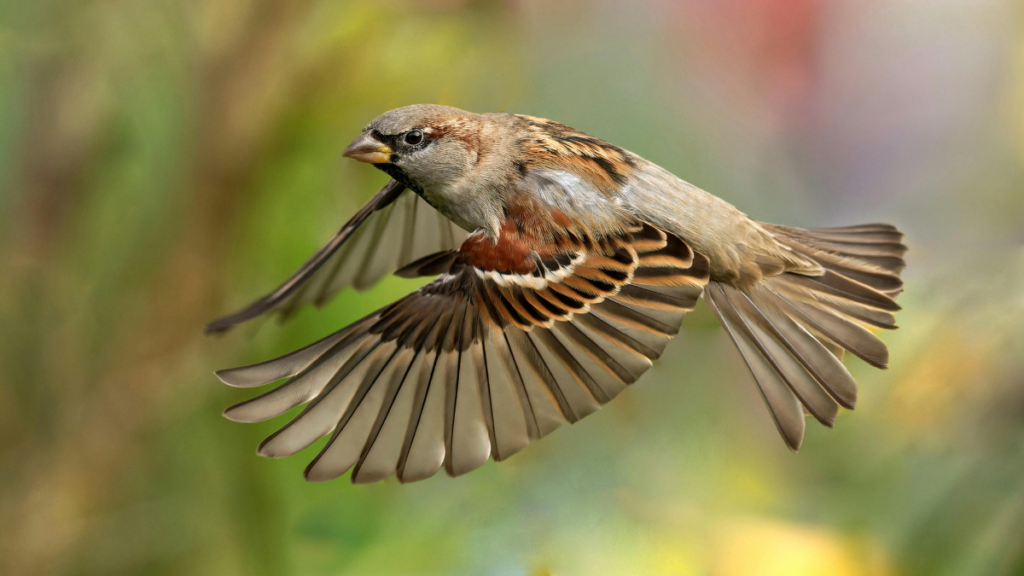
I grew up with one bird outside every window: the common house sparrow, brown and grey and utterly ordinary. Years later, in a suburb of Sydney, I saw the same bird hopping across a café table. For a second it felt like home. Then it hit me, this sparrow doesn’t belong here at all. It’s an invasive species in Australia, carried across oceans by people. That small, familiar bird had quietly conquered nearly the whole planet.
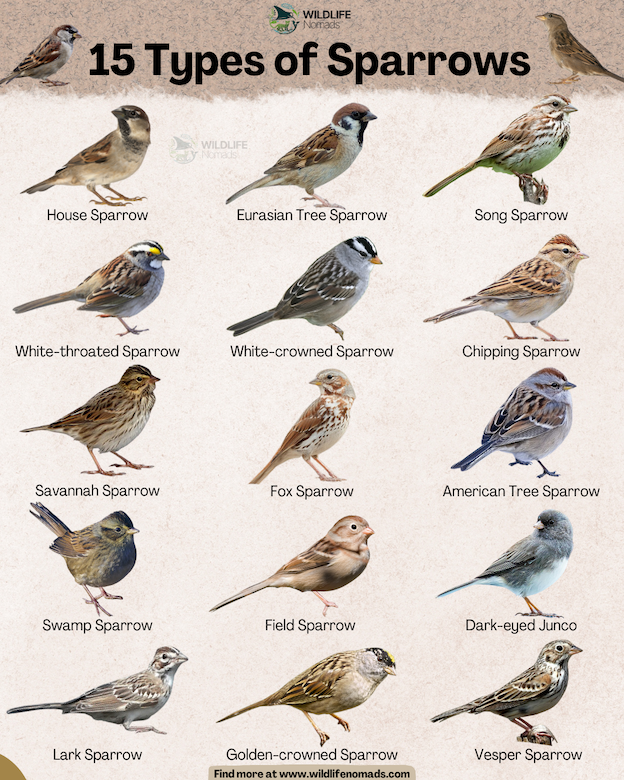
That contradiction is why sparrows fascinate me. We treat them as background noise, yet they carry real stories about adaptation, invasion, and loss. In this guide I’ll walk you through 15 types of sparrows worth knowing, drawing on decades of fieldwork across several continents. You’ll learn how to identify them by head patterns, bill shape, song, and habitat, and why some of the most common ones are disappearing faster than anyone expected.
Birders have a nickname for these small brown birds: “LBJs,” or “little brown jobs.” Sparrows lack the bold color patterns of warblers or finches, which makes them notoriously tricky to identify. But once you know what to look for, the confusion clears fast. Let’s start.
What Makes a Sparrow a Sparrow?
Before the species list, a few shared traits. Sparrows are typically ground foragers that hop rather than walk, so you’ll often see them bouncing across bare soil while feeding. They have an omnivorous diet built mainly on seeds, grains, and insects. During spring and summer, adults switch hard toward insects to feed protein-hungry chicks, then drift back to grass and weed seeds in colder months. In short, sparrows adjust their diet fluidly with the seasons.
They’re also intensely social. Most sparrows travel, forage, and roost in flocks, and their gregarious behavior means you rarely see just one. They maintain complex communication through chirps, calls, and sharp alarm notes, and a distinctive contact call often gives away a hidden flock. Interestingly, sparrows are identified as much by singing as by sight, males sing to attract mates and defend territory.
For identification, I lean on four things: head patterns, breast markings, bill shape, and habitat behavior. Master those, and even the LBJs start to sort themselves out. Two broad groups matter here. Old World sparrows (family Passeridae) are true sparrows and include the house sparrow. Whereas new World sparrows (family Passerellidae) were historically categorized as bunting relatives and are actually closely related to buntings and New World warblers, and include most of the North American species below. They look similar but aren’t close relatives, a nice bit of convergent evolution. Plumage still offers clues: male house sparrows flash black markings on the throat, juncos show blackish wings and tails, and grassland species wear crisp streaks instead.
1. House Sparrow (Passer domesticus)
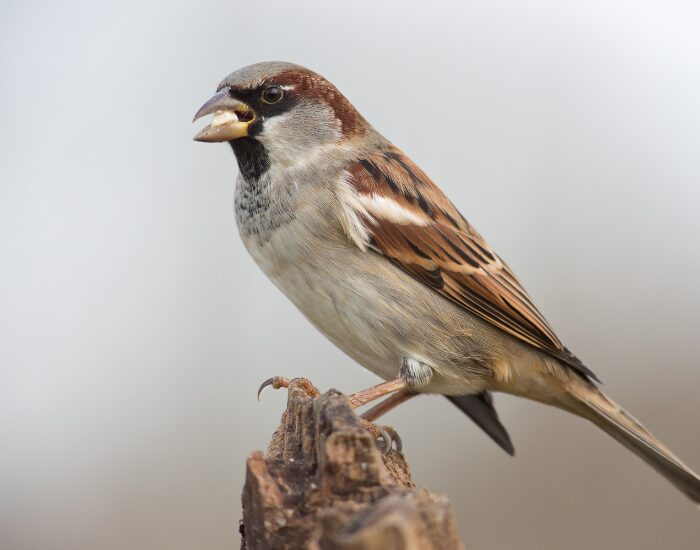
The house sparrow is the bird from my Sydney story, and the most successful sparrow on Earth. Native to the Old World, it originated in the Middle East and spread with human agriculture. Its native range stretches from Europe and North Africa across the Middle East, and today it lives on almost every continent, absent only from dense forests and tundra. It was first introduced to North America in 1852, and during peak historic expansion surges, populations in new territories pushed outward by up to 230 km in a single year
This is a small bird, typically about 16 cm long and weighing between 24 and 39.5 g. Males have bold head markings and reddish-brown backs, with a dark grey bill that turns black in breeding season. Females are plainer, buffish above and below, with no black bib. House sparrows are the definition of sociable birds: they form mixed flocks at feeders, roost communally outside the breeding season, and sing socially in noisy groups. One quirk I love… female house sparrows dominate at feeding stations despite being smaller than males.
2. Eurasian Tree Sparrow (Passer montanus)
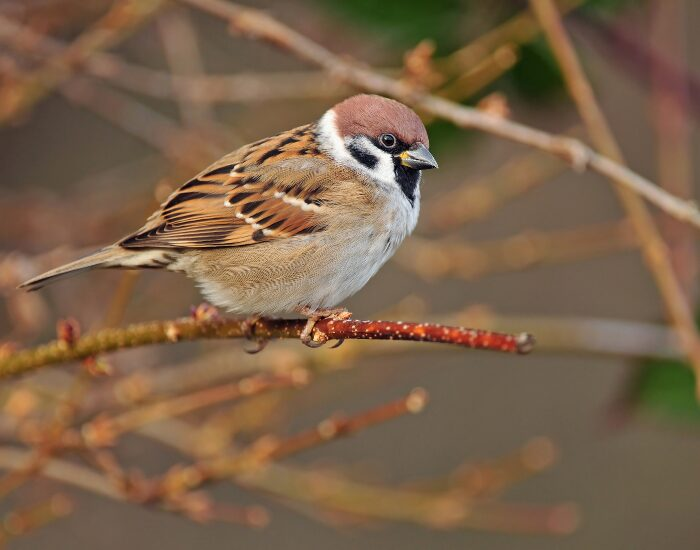
The tree sparrow is the house sparrow’s tidier cousin. Both sexes look alike, with a warm chestnut-brown crown, a neat white collar, and a black spot on otherwise white-and-grey cheeks. That cheek spot is the fastest way to separate the two birds in the field. In much of Asia it’s the default urban sparrow, filling the niche the house sparrow holds in Europe.
In Britain the story is grimmer. Once abundant across farmland, tree sparrow numbers collapsed through the late twentieth century. Today you’ll find scattered pairs in rural areas of southern England and pockets of northern Ireland, often near hedgerows and old barns. They nest in tree hollows and can be fiercely territorial over a good cavity.
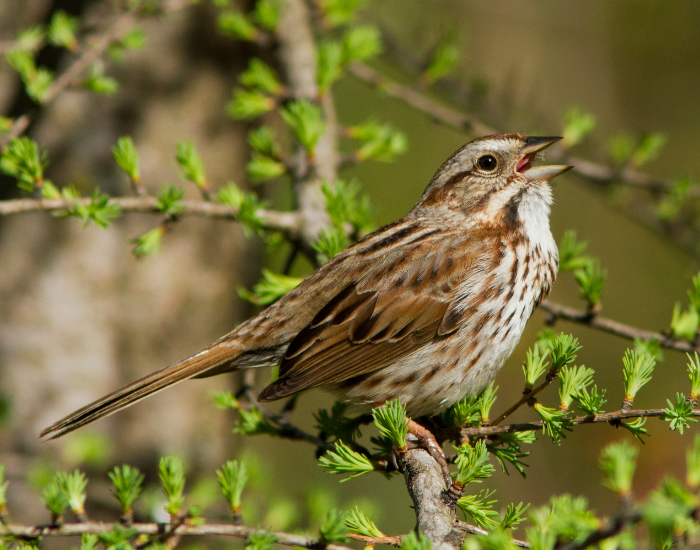
3. Song Sparrow (Melospiza melodia)
If you hear a bright, tumbling melody from a backyard shrub in North America, it’s probably a song sparrow. This is one of the continent’s most widespread and variable species, plumage shifts noticeably from region to region. Look for heavy brown streaking on a white breast that converges into a central dark spot.
I’ve recorded song sparrows from coastal marshes to mountain thickets, and their songs vary just as much. Each male learns and refines his tune, using it year round to hold territory. They forage low, hopping through leaf litter and garden edges for seeds and insects alike.
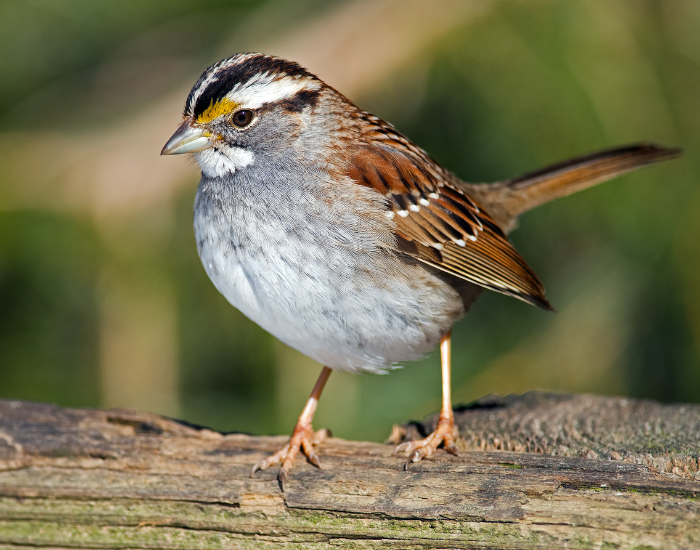
4. White-throated Sparrow (Zonotrichia albicollis)
This handsome sparrow wears a crisp white throat patch, bold black-and-white head stripes, and a small yellow spot between eye and bill. Its whistled song (often written as “Oh sweet Canada Canada”) is one of the classic sounds of the northern woods.
White-throated sparrows breed across Canada’s forested areas and winter across the eastern United States. Curiously, they come in two color forms, one with white crown stripes and one with tan. The two morphs even tend to pair with their opposite, a genuinely unusual mating system among birds.
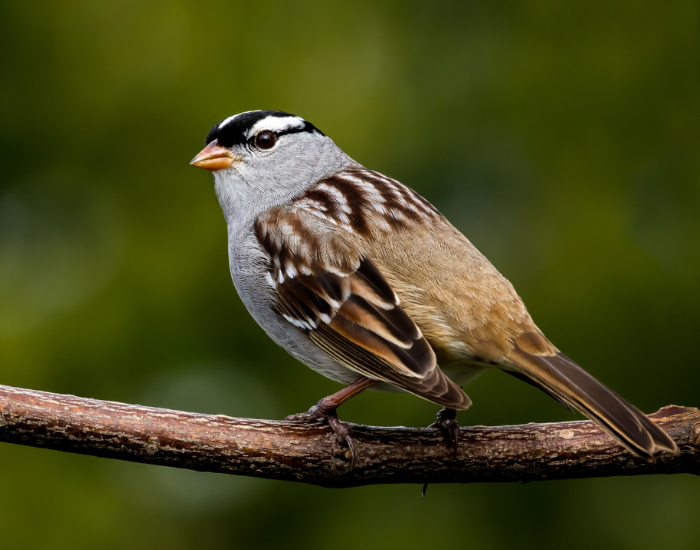
5. White-crowned Sparrow (Zonotrichia leucophrys)
Clean, upright, and elegant, the white-crowned sparrow has bold black-and-white stripes on its head and an unmarked pale grey breast. Its pink bill glows against the monochrome face, making this one of the easier sparrows to identify at a glance.
I’ve watched large numbers of these birds pour through sagebrush during migration. They breed in the far north and mountain west, then spread across much of the continent in winter. Young birds show buff-and-brown head stripes instead of black, a common source of beginner confusion.
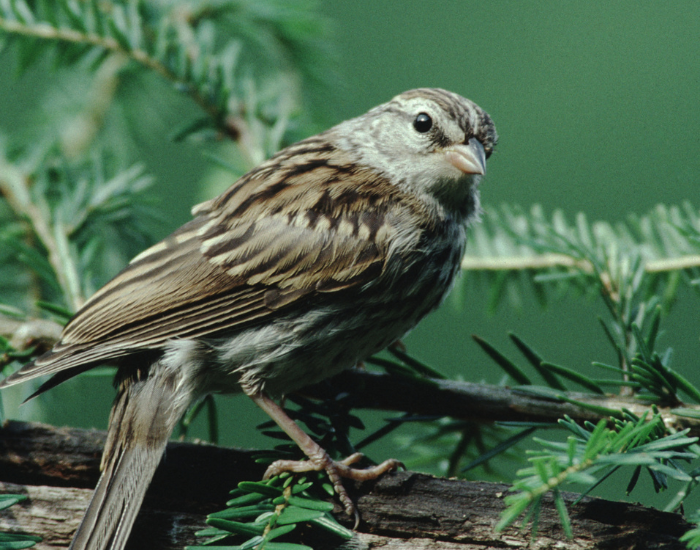
6. Chipping Sparrow (Spizella passerina)
Small, slim, and neat, the chipping sparrow sports a rusty cap, a black eye-line, and clean grey underparts in breeding season. Its song is a long, dry trill, easy to mistake for an insect until you learn it. This is a bird of open woodlands, parks, and suburban lawns.
Chipping sparrows are among the tamest sparrows I’ve worked with, often feeding on the ground just a few steps away. They gather in loose flocks after breeding and drift south in winter, foraging for small seeds across open ground.
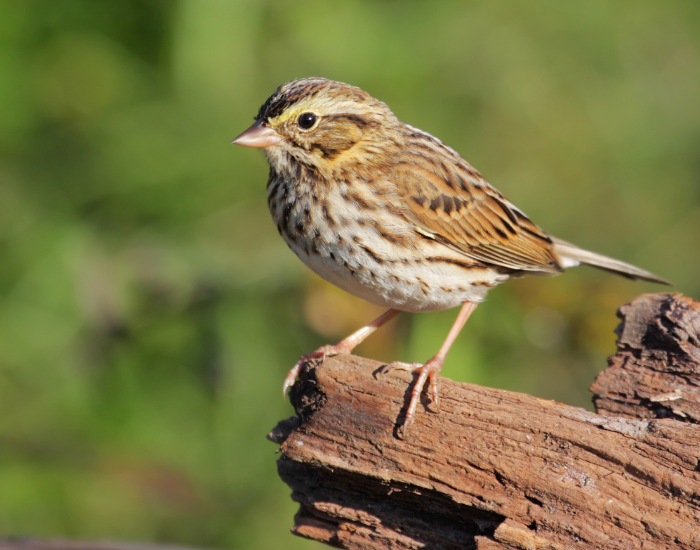
7. Savannah Sparrow (Passerculus sandwichensis)
A grassland specialist, the savannah sparrow is a small, streaky bird best identified by a yellowish wash in front of the eye and a short, notched tail. It’s easy to overlook among the waving grass, but its thin, buzzy insect-like song carries across open fields.
I’ve flushed dozens from coastal meadows and prairie, where they nest on the ground and forage for seeds and insects. During breeding season they lean heavily on insects and spiders to raise their young, then shift back toward seeds in autumn.
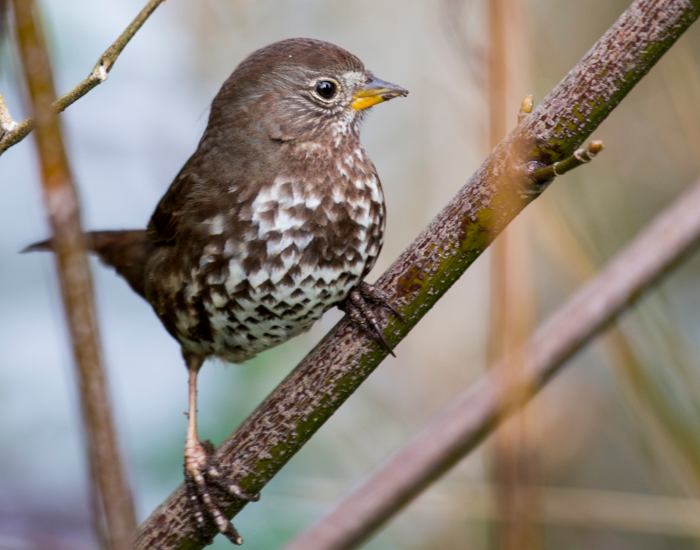
8. Fox Sparrow (Passerella iliaca)
One of the largest and richest-colored sparrows, the fox sparrow lives up to its name with warm, foxy-red tones, though western birds run darker and greyer. Watch for its vigorous double-scratch, kicking back with both feet to expose seeds and insects in the leaf litter.
Fox sparrows breed in northern and montane thickets and winter in dense understory farther south. That energetic ground foraging, more than any single field mark, is often how I pick one out of a shadowy tangle.
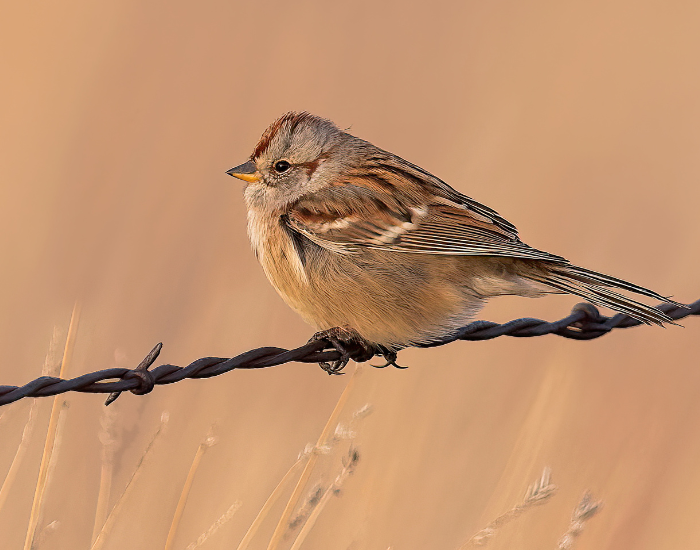
9. American Tree Sparrow (Spizelloides arborea)
Despite the name, this hardy sparrow spends little time in trees. It has a rusty cap, a grey face, a dark central breast spot, and a distinctive bicolored bill, dark above, yellow below. It breeds on the Arctic tundra and, unlike many sparrows, moves south to spend the winter across Canada and the northern United States.
I associate this bird with bitter cold, flocks working over snowy fields and weedy edges, feeding almost entirely on seeds when insects vanish. They’re winter visitors that tend to arrive as the first hard frosts hit.
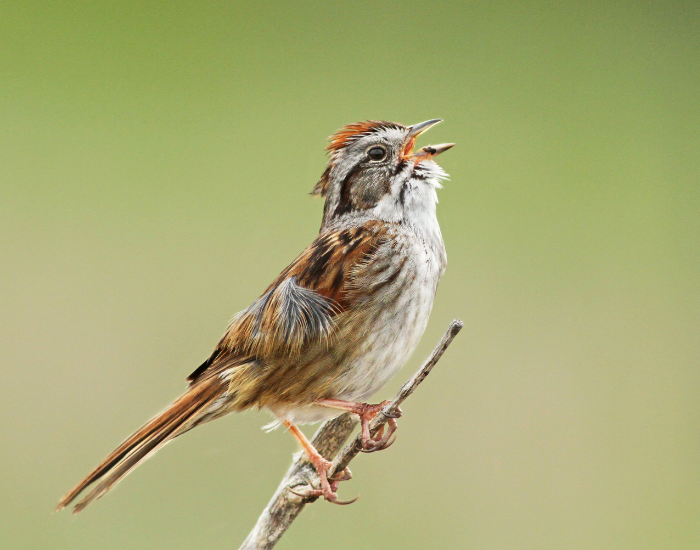
10. Swamp Sparrow (Melospiza georgiana)
True to its name, the swamp sparrow haunts wetlands, marsh edges, and wet meadows. It shows a rusty cap, grey face and breast, and warm reddish wings that stand out in the reeds. Its song is a slow, musical trill, softer than the chipping sparrow’s.
Swamp sparrows have relatively long legs for a sparrow, an adaptation for wading and reaching into shallow water for insects. I’ve watched them cling to swaying cattails, snapping up spiders and larvae along the waterline.
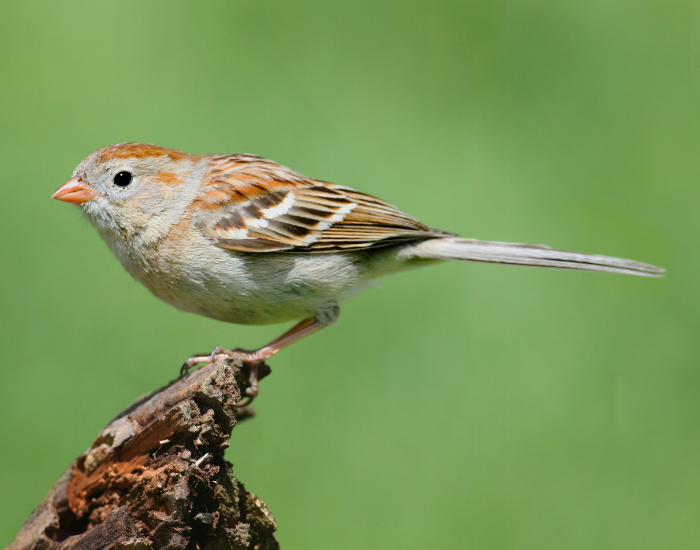
11. Field Sparrow (Spizella pusilla)
A gentle-looking sparrow of overgrown fields and scrublands, the field sparrow has a plain face, a rusty cap, a white eye-ring, and a bright pink bill. Its song is unmistakable, a series of clear whistles that accelerate like a dropped ping-pong ball.
These birds favor abandoned pastures and brushy edges, exactly the scruffy habitat that modern land use keeps erasing. As a result, field sparrow numbers have slipped in many rural areas, a quieter decline than the house sparrow’s but just as real.
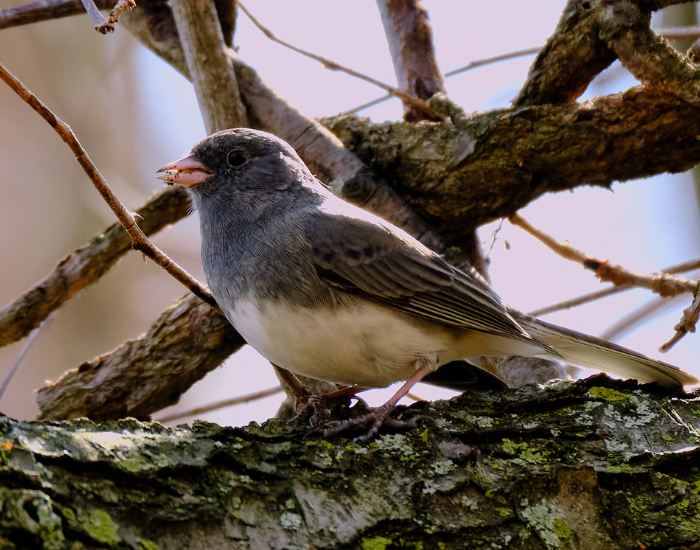
12. Dark-eyed Junco (Junco hyemalis)
Yes, the junco is a sparrow. This slate-grey or brown New World sparrow flashes bright white outer tail feathers as it flies, and its crisp, even trill rings through winter woods. Plumage varies widely across regions, from “slate-colored” to “Oregon” forms.
Juncos breed in northern and mountain forests, then descend to backyards in huge numbers each winter, earning the folk name “snowbird.” They forage on the ground beneath feeders, hopping after fallen seeds. For millions of people, the junco is the first sparrow they ever notice.
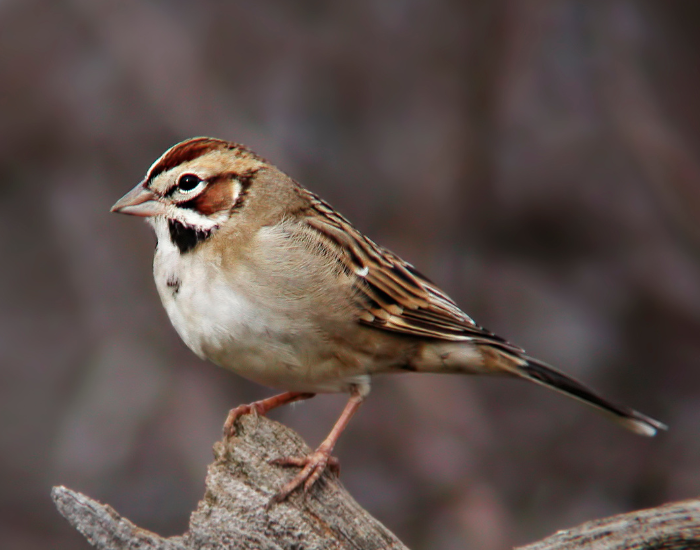
13. Lark Sparrow (Chondestes grammacus)
The lark sparrow is a showstopper by sparrow standards. Its bold face pattern chestnut, black, and white harlequin markings) is unlike any other North American sparrow, and it wears a single dark spot on a clean breast. A white-edged, rounded tail flashes in flight.
I find lark sparrows in open country: pastures, roadsides, and dry grassland with scattered shrubs. Males sing a rich, varied medley from exposed perches, and they perform an odd, wing-drooping courtship walk I never tire of watching.
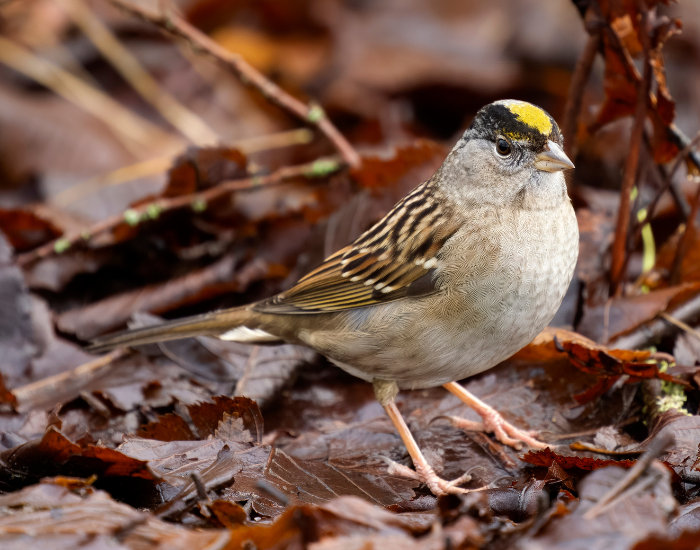
14. Golden-crowned Sparrow (Zonotrichia atricapilla)
A large, handsome western sparrow, the golden-crowned wears a dull golden crown bordered in black during breeding season. In winter that crown fades to a muted olive-yellow smudge, and the bird takes on a plainer, greyer look. Its three-note, minor-key whistle is famously mournful.
Gold miners in the Yukon once nicknamed it the “no gold here” bird for that descending song. It breeds in Alaska and western Canada, then winters along the Pacific coast, often mixing into flocks with white-crowned sparrows at feeders and brushy edges.
15. Vesper Sparrow (Pooecetes gramineus)
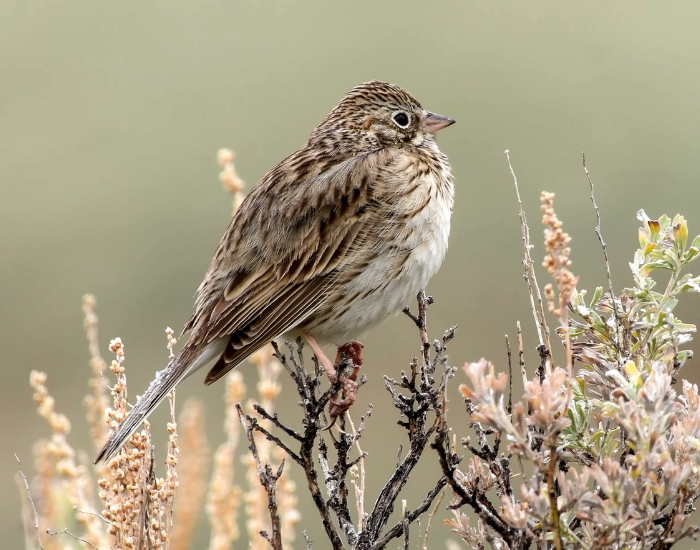
I’ll close with a subtle one. The vesper sparrow is a streaky grassland bird identified by a thin white eye-ring, a small chestnut shoulder patch, and white outer tail feathers that flash as it flushes. It’s named for its habit of singing most sweetly at dusk.
Vesper sparrows nest on the ground in open fields and prairie, where they forage for seeds, insects, and spiders. Like many grassland sparrows, they’ve declined as native grasslands shrink, a pattern that connects nearly every bird on this list.
Why Sparrows Matter, and Why They’re Vanishing
Here’s the part that keeps me up at night. Sparrows aren’t just charming; they’re working members of the ecosystem. They help control insect populations and disperse seeds across the landscapes they inhabit. Lose them, and something breaks upstream.
And we are losing them. The evidence is stark. House sparrow numbers in the Netherlands have dropped by half since 1980. In Bulgaria, populations decreased by 50% by 2023. North American house sparrow populations have dropped by an estimated 60% to 70% since 1966, while some native grassland species have plunged by as much as 84%. Meanwhile, in Great Britain, house sparrow numbers have fallen by roughly 68%. They’ve even vanished from many major cities in South Asia. That a bird this adaptable, one that can breed indoors in factories and warehouses — is collapsing should alarm us all.
The causes are tangled: food shortages for chicks, air pollution, loss of nesting sites, and disease. In suburban London, researchers linked steep sparrow declines to avian malaria. It’s a sharp reminder that “common” is not the same as “safe.” For more on the raptors that hunt these small birds, see our guide to birds of prey, and for other ground predators, our piece on types of foxes.
Frequently Asked Questions
Focus on four features: head patterns, breast markings, bill shape, and habitat behavior. A rusty cap, a black cheek spot, or a pink bill can separate similar species fast. Because sparrows lack the bold colors of other birds, birders nickname them “LBJs”, little brown jobs. Their songs and contact calls are often the quickest giveaway.
Sparrows are native to the Old World but now live on almost every continent. Many common species are closely associated with human habitation, preferring cities, towns, farms, and scrublands close to people. House sparrows thrive nearly everywhere except dense forests and tundra, and prefer drier conditions even in moist tropical climates.
No. House sparrows were first introduced to North America in 1852 from Europe. They spread rapidly and are now found across the continent, including Canada. In many regions they’re considered an invasive species that can displace native cavity-nesting birds by taking over their nesting sites.
Sparrows build messy, dome-shaped nests tucked into building crevices, tree hollows, or shrubs. Female sparrows usually handle most of the nest construction. Many pairs return to the same nesting areas year after year, and they can be fiercely territorial over a favored cavity — even displacing other species to claim it.
Can You Name That Sparrow? 🐦
A 15-photo identification challenge — the wrong answers are deliberately tricky look-alikes. Check the crown, the breast markings, and the bill. Go back and change any answer before you score.
Which sparrow is this?
The Takeaway… Many Types
Sparrows reward a second look. The plain brown bird at your feeder might be one of a dozen species, each with its own song, range, and story of adaptation, and, increasingly, its own quiet crisis. The next time you hear that familiar chirp, stop and actually look. Check the crown, the bill, the breast. You might be surprised who’s been keeping you company all along.
Have a sparrow you can’t identify in your garden or backyard? Tell me in the comments, I read every one. And if you want to keep exploring, browse more from our birds collection.
References:
Berigan, L. A., Greig, E. I., & Bonter, D. N. (2020). Urban House Sparrow (Passer domesticus) populations decline in North America. The Wilson Journal of Ornithology, 132(2), 248–258. https://doi.org/10.1676/1559-4491-132.2.248
Bernat-Ponce, E., Gil-Delgado, J. A., & López-Iborra, G. M. (2021). Recreational noise pollution of traditional festivals reduces the juvenile productivity of an avian urban bioindicator. Environmental pollution (Barking, Essex : 1987), 286, 117247. https://doi.org/10.1016/j.envpol.2021.117247
Dadam, D., Robinson, R. A., Clements, A., Peach, W. J., Bennett, M., Rowcliffe, J. M., & Cunningham, A. A. (2019). Avian malaria-mediated population decline of a widespread iconic bird species. Royal Society Open Science, 6(7), 182197. https://doi.org/10.1098/rsos.182197
Rosenberg, K. V., Dokter, A. M., Blancher, P. J., Sauer, J. R., Smith, A. C., Smith, P. A., Stanton, J. C., Panjabi, A., Helft, L., Parr, M., & Marra, P. P. (2019). Decline of the North American avifauna. Science, 366(6461), 120–124. https://doi.org/10.1126/science.aaw1313
Peach, W. J., Mallord, J. W., Ockendon, N., Orsman, C. J., & Haines, W. G. (2018). Depleted suburban house sparrow Passer domesticus population not limited by food availability. Urban Ecosystems, 21(6), 1053–1065. https://doi.org/10.1007/s11252-018-0784-4
Ravinet, M., Elgvin, T. O., Trier, C., Aliabadian, M., Gavrilov, A., & Sætre, G.-P. (2018). Signatures of human-commensalism in the house sparrow genome. Proceedings of the Royal Society B, 285(1884), 20181246. https://doi.org/10.1098/rspb.2018.1246