I have never stood beneath a wild Andean condor. I will admit that up front. But I have spent long days with its closest cousin, the California condor, in the pine-covered highlands of San Pedro Mártir in Baja California. I lived out of a field camp there for over three weeks, and I watched a young condor ride the morning thermals on warm air currents. I studied birds inside a reintroduction program up close.
That experience rewired how I see the Andean condor. Both birds share the same ancient scavenger blueprint. Both nearly vanished for the same grim reasons. Yet one difference stops me cold every time: size. The Andean condor dwarfs its northern relative. In this blog, I want to hand you the real biology behind that scale, plus the culture, threats, and quiet hope wrapped around this bird. These Andean condor facts blend hard science with what I have seen in the field. Let’s get into eleven worth knowing.
1. The Andean Condor Is the Largest Flying Bird by Combined Size
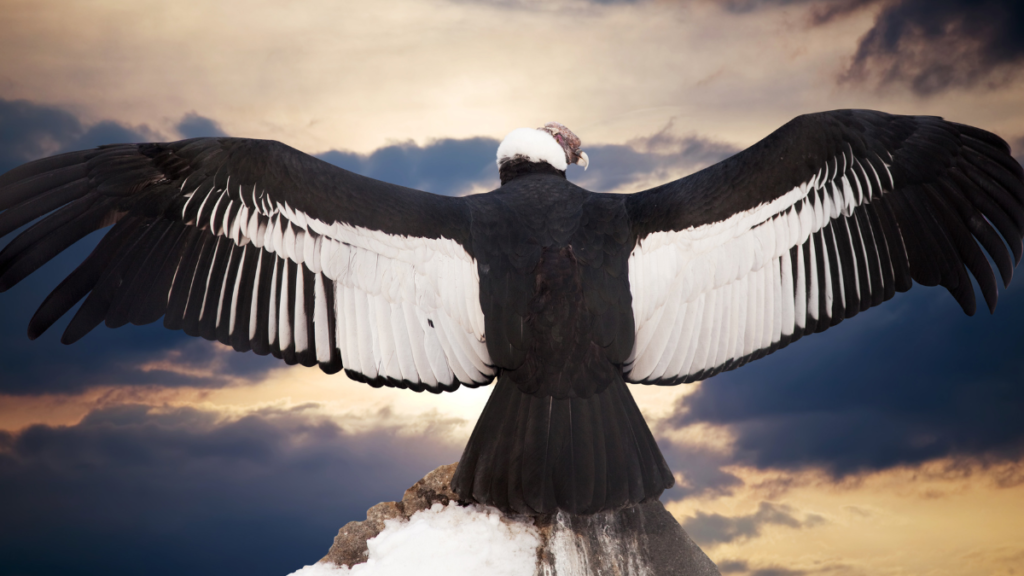
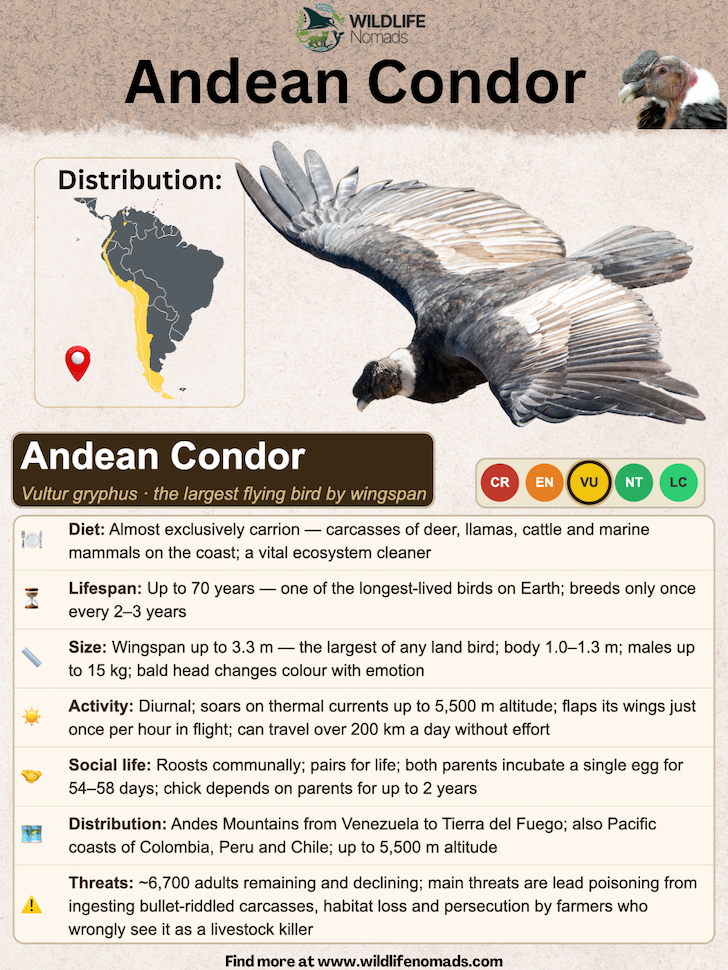
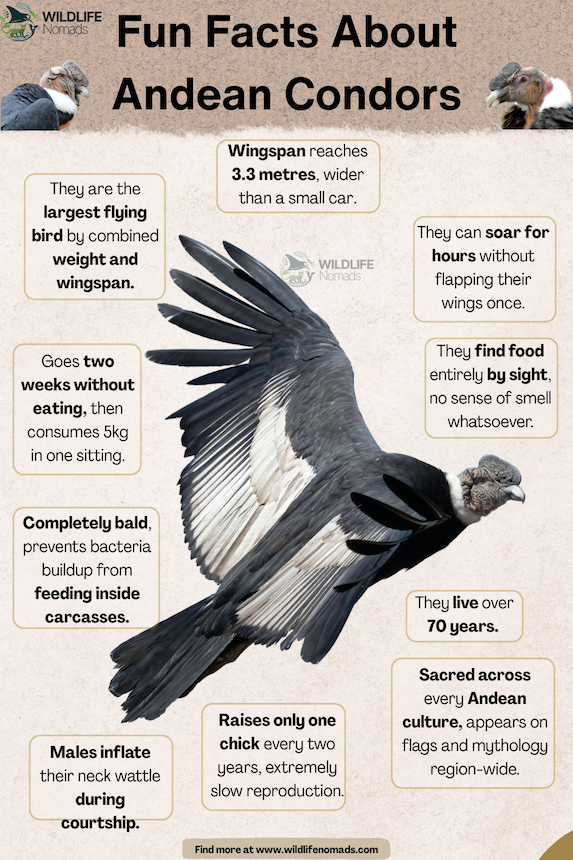
The Andean condor is one of the world’s largest flying birds, and by combined wingspan and weight, arguably the largest. Its wingspan stretches up to 3.3 meters. That is nearly eleven feet of feather and bone slicing the alpine wind. Among all raptors, this is the longest wingspan on record. Few majestic birds match such an impressive wingspan.
Adult Andean condors weigh between roughly 10.1 and 12.5 kilograms, with some records pushing higher. For comparison, the California condor I worked with in Baja tops out around 10 kilograms. Standing beside those birds, I could barely wrap my head around something 25 percent heavier. The Andean condor size still feels almost mythical to me.
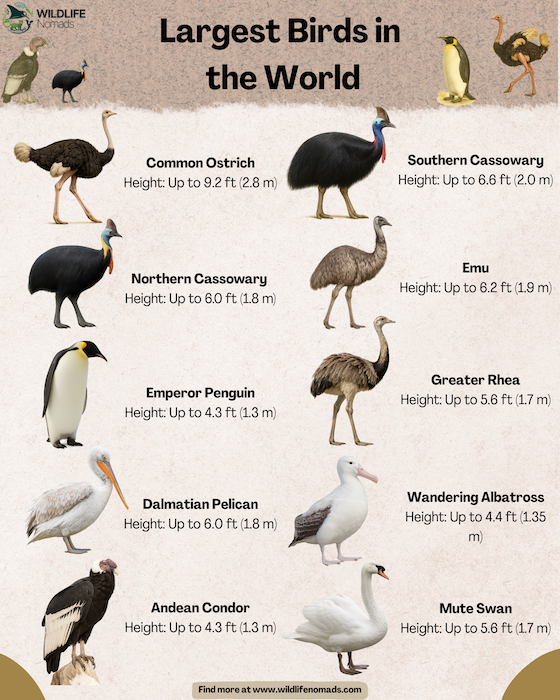
Weight matters here because it settles a common debate. Wandering albatrosses edge out the condor on pure wingspan. However, combine wingspan with body mass, and the Andean condor ranks as the largest flying bird in the world among land birds. No other raptors carry this much muscle aloft on wind alone.
2. No, an Andean Condor Is Not Quite as Big as a Human
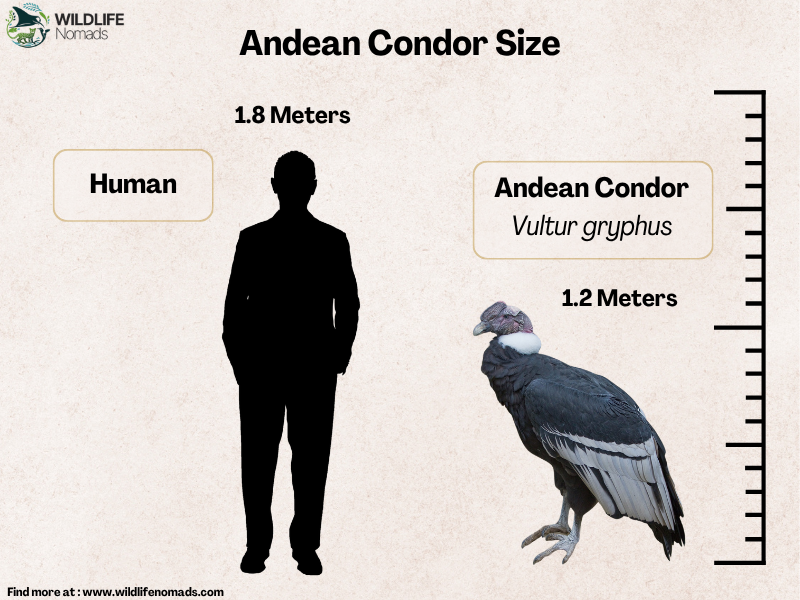
People often ask if the Andean condor is as big as a human. Standing height tells one story. A large condor stands around 1.2 meters, so shorter than most adults. The Andean condor height reads more like a big child than a grown person.
The wings tell a different story. With its wings spread wide, the span rivals two people lying head to foot. That contrast between a modest body and enormous wings is the whole design. This is a bird built to glide, not to flap.
3. Males Wear a Comb, and the Sexes Look Strikingly Different
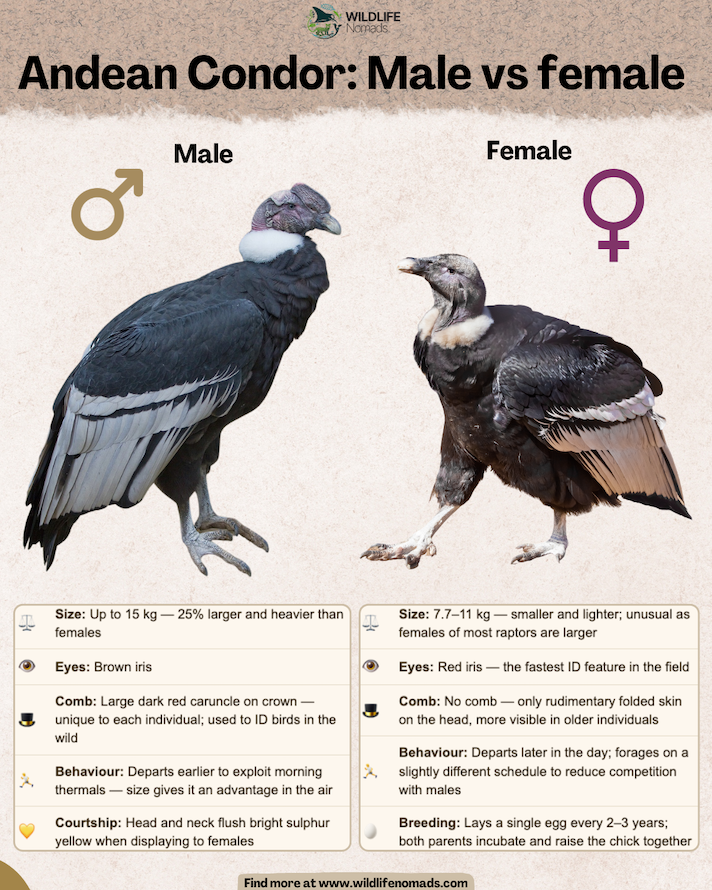
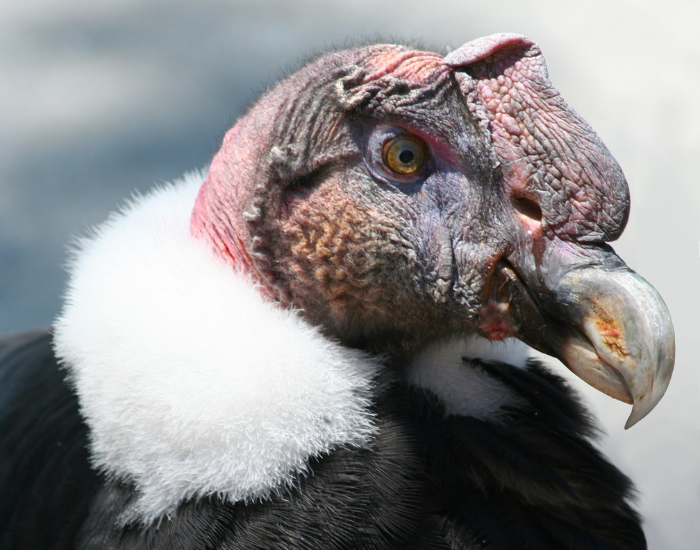
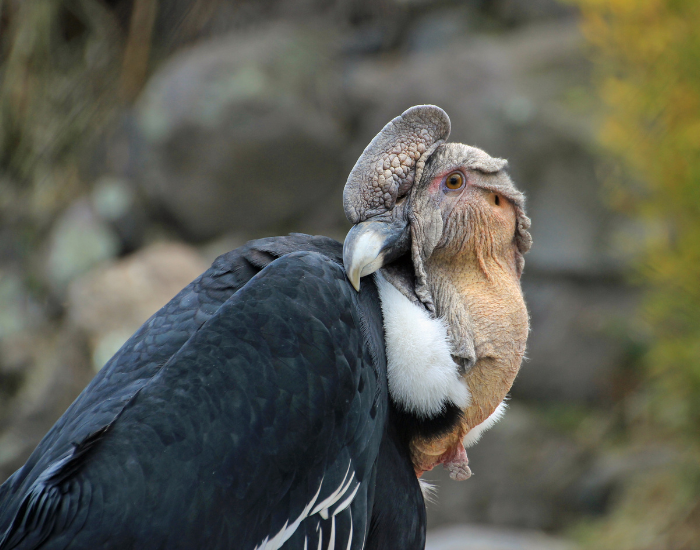
Andean condors show clear sexual dimorphism, which is unusual among birds of prey. In most birds and most raptors, females outsize males. Here the pattern flips. A male Andean condor grows larger and wears a distinctive fleshy comb, or caruncle, on the head.
Both sexes share a bald head, and that bare skin is practical. A featherless face stays cleaner deep inside a carcass, which keeps the surrounding feathers healthy. Adult Andean condors wear mostly black plumage with a broad collar of white neck ruffles. A young condor looks completely different, cloaked in grayish-brown with a blackish head. When I first saw young California condors, I mistook their drab coats for another species. The same trap catches new observers of the Andean condor bird.
These Andean condor characteristics matter for fieldwork. Age, sex, and health all read from a distance if you know the plumage. A birder who learns the code can survey a population without ever disturbing it.
4. They Fly on Thermals, Not Muscle
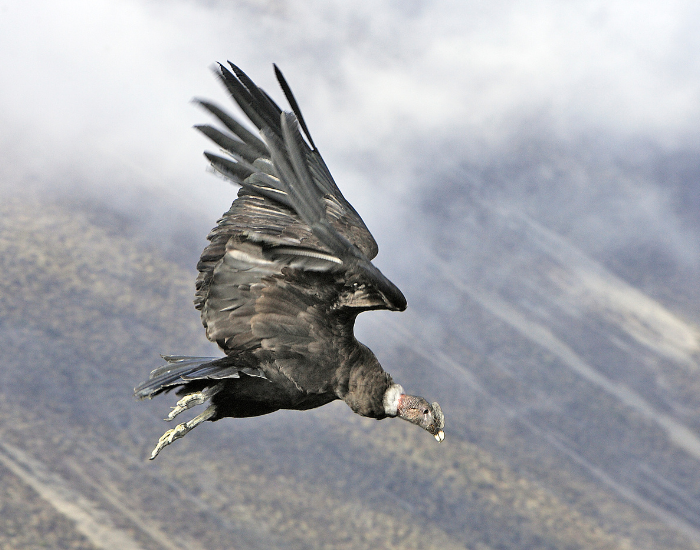
The Andean condor is great at energy conservation. Most birds flap constantly to stay airborne. This one barely does. Rather than beating those massive wings, it rides thermal air currents, columns of warm air rising off sun-baked slopes. The condor soars upward in a spiral, then glides for kilometers on those air currents with barely a flap.
This is why the Andean condor habitat centers on windy areas across mountains and coasts. In Baja, I spent hours watching condors wait for the day to warm before launching. Cold air meant grounded birds. Once the warm air currents built, they simply vanished into the sky. Andean condor flying is remarkably efficient, and condors often travel over 200 kilometers daily in search of food. To shed heat on hot days, they even defecate on their own legs, a cooling trick called urohidrosis.
5. Andean Condors Are Scavengers, Not Hunters
The Andean condor is a vulture, one of the New World vultures in the family Cathartidae. As a condor vulture, it feeds on the dead rather than chasing the living. The Andean condor diet consists primarily of carrion from large animals. Think deer, guanacos, vicunas, and livestock carcasses scattered across open country.
A hungry condor can consume over 6.8 kilograms of meat in a single sitting. That gorging strategy makes sense for a bird that may not find food for days. Their keen eyesight spots carrion from great height, or they follow other avian scavengers to a kill. Along the coast, condors also feed on dead marine mammals like seals. On occasion, they take newborn animals like calves and goats, which fuels old conflicts with ranchers.

6. These Birds Are Nature’s Clean-Up Crew
Here is the fact that reframes everything. As scavengers, Andean condors help recycle nutrients and limit the spread of disease. A carcass left to rot becomes a breeding ground for pathogens. A condor turns that carcass into clean bone in hours. They are a natural clean up crew no machine could replace.
That service is easy to overlook. However, remove the condors, and disease risk climbs for wildlife, livestock, and people alike. When you understand this role, the bird stops being a grim omen and becomes essential infrastructure. It is the same quiet job the world’s vultures perform on every continent. Call them nature’s clean up crew, and you are not exaggerating.
7. Their Range Runs the Entire Length of the Andes
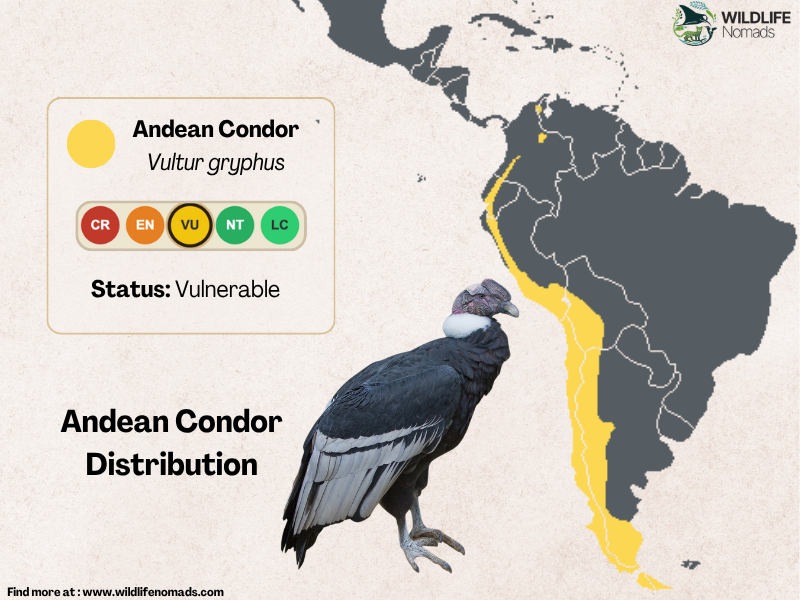
Andean condors primarily inhabit the Andes mountain range, the backbone of western South America. Their range runs from Colombia in the northern part to Tierra del Fuego in the southern part. This andean mountain region also includes Colombia’s Santa Marta Mountains. Numbers run thin in the northern area and grow strong toward the south.
The Andean condor location is not limited to high peaks, though. These large birds prefer open grasslands and mountainous areas up to 5,000 meters. Their habitat use also spans coastal areas and the Atacama Desert in Chile and Peru. Anywhere in the wild with strong wind, few obstacles, and dead animals will do. To see the wider cast of species sharing this landscape, the animals of Chile make a vivid starting point.
8. They Nest on Cliffs and Breed Painfully Slowly
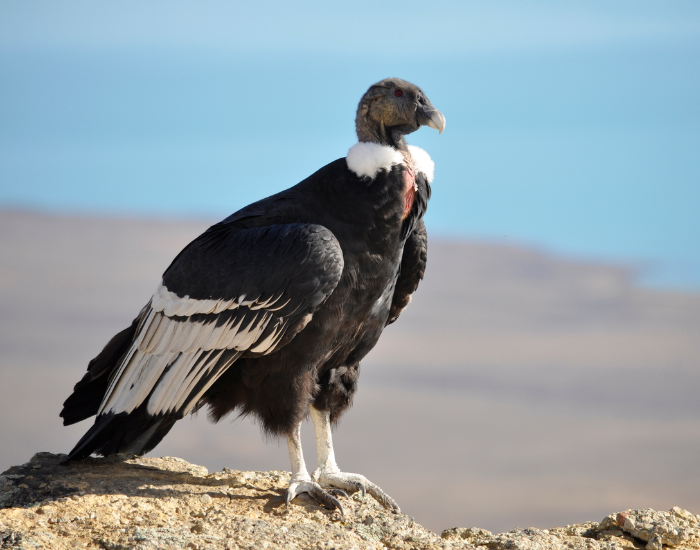
Their breeding behavior is built around safety. Andean condors nest on bare rock ledges and cliffs, out of reach of most natural predators. Reproduction moves at a glacial pace. Pairs mate every two years, and the female lays a single egg every two to three years.
That egg is bluish-white and weighs about 280 grams. It hatches after 54 to 58 days of incubation shared by both parents. Chicks fledge at around six months but stay with their parents for two full years. Condors do not reach sexual maturity until five or six years old. This slow math is exactly why every lost adult hurts the population so much.
9. Some Live Past 70 Years
Slow breeding pairs with long lives. The Andean condor lifespan reaches up to 50 years in the wild. In captivity, with steady food and no poison, some individuals have lived over 70 years.
I find that longevity humbling. A single condor riding the Andes today may have hatched before I was born. These are among the longest-lived birds on Earth, and that alone shapes how we must protect them. You cannot rush a species that takes half a decade just to grow up. That long lifespan also means threats compound slowly, hiding decline until it is severe.
10. The Andean Condor Is Sacred Across the Andes
Few animals carry the cultural weight of the condor de los Andes. In Inca and wider Andean mythology, the condor was a messenger tied to the sun deity. It carried prayers to the heavens. Its image has appeared in Andean art since around 2500 BCE.
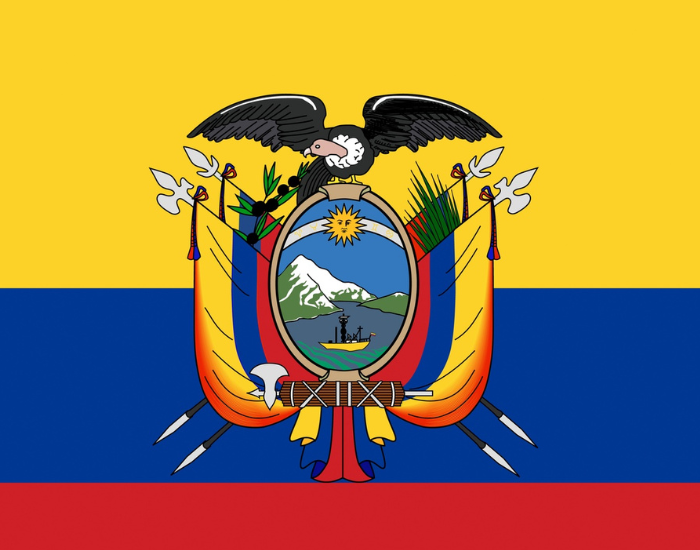
That reverence never faded. The Andean condor is the national bird of Bolivia, Chile, Colombia, and Ecuador. It symbolizes power and health across many Andean cultures. In Ecuador, the bird appears on the national flag and currency, woven into the country’s very identity.
11. It Is Vulnerable, and Recovery Depends on Us
The IUCN considers the Andean condor Vulnerable. In 2020, the species was reclassified from Near Threatened to Vulnerable as the numbers kept sliding. Only about 10,000 Andean condors remain in the wild, and roughly 6,700 are breeding adults. Andean condor populations stay largest and healthiest across Argentina and Chile.
Major threats include habitat loss, poisoning, and outright human persecution. Much of that poisoning is secondary. Hunters or ranchers lace a carcass to kill predators, and condors feeding on it die too. Conservation efforts are fighting back. Captive breeding, including pioneering work at the San Diego Zoo, powered reintroduction programs that began in 1989 to rebuild wild populations. They mirror the California condor rescue I witnessed firsthand. That northern recovery proves these birds can come back when we clear the poison and give them room.
Frequently Asked Questions
Yes. The national bird of Ecuador is the Andean condor. The country honors it as a symbol of strength, freedom, and health, and the bird appears on Ecuador’s coat of arms, flag, and currency.
The Andean condor serves as Ecuador’s national animal and national bird. It shares this honor with Bolivia, Chile, and Colombia, all of which name the condor a national symbol rooted in Andean heritage.
Not in height. A condor stands around 1.2 meters tall, shorter than most adults. Its wingspan, however, reaches up to 3.3 meters, wider than any human is tall. So the body is smaller, but the wings are far larger.
Andean condors eat carrion, feeding mainly on the carcasses of large animals like deer, livestock, and guanacos. They can also take newborn calves and goats. As scavengers, they clean the landscape and slow the spread of disease.
Why This Bird Still Matters
Strip away the myth and the record-breaking wingspan, and you find a slow-breeding scavenger holding an entire ecosystem together. That is the real Andean condor. Losing it would mean losing a cleanup crew that no other animal can fully replace.
If this bird pulls at you the way it pulls at me, go further. Read the full comeback story of the California condor, the cousin I worked with in Baja. Explore how other birds of prey shape their worlds, or meet the wider community of scavengers doing this unglamorous, vital work. For a broader tour of the world’s birds, start there. Better yet, if you ever reach the Andes, look up. Let me know in the comments if a condor finds you first.
Andean Condor: Fact or Fiction? 🦅
Twelve statements about the giant of the Andes — six true, six myths. Can you tell them apart?
Fact or Fiction?
Find Incredible Experiences with Andean Condors!
This blog is reader-supported. When you buy experiences through links listed on this site, we may earn an affiliate commission.
References:
Alarcón, P. A. E., & Lambertucci, S. A. (2018). A three-decade review of telemetry studies on vultures and condors. Movement Ecology, 6(1), 13. https://doi.org/10.1186/s40462-018-0133-5
BirdLife International. (2020). Vultur gryphus. The IUCN Red List of Threatened Species 2020. https://doi.org/10.2305/IUCN.UK.2020-3.RLTS.T22697641A181325230.en
Lambertucci, S. A., Alarcón, P. A. E., Hiraldo, F., Sanchez-Zapata, J. A., Blanco, G., & Donázar, J. A. (2014). Apex scavenger movements call for transboundary conservation policies. Biological Conservation, 170, 145–150. https://doi.org/10.1016/j.biocon.2013.12.041
Naveda-Rodríguez, A., Vargas, F. H., Kohn, S., & Zapata-Ríos, G. (2016). Andean condor (Vultur gryphus) in Ecuador: Geographic distribution, population size and extinction risk. PLOS ONE, 11(3), e0151827. https://doi.org/10.1371/journal.pone.0151827
Wiemeyer, G. M., Pérez, M. A., Torres Bianchini, L., Sampietro, L., Bravo, G. F., Jácome, N. L., Astore, V., & Lambertucci, S. A. (2017). Repeated conservation threats across the Americas: High levels of blood and bone lead in the Andean condor. Environmental Pollution, 220, 672–679. https://doi.org/10.1016/j.envpol.2016.10.025