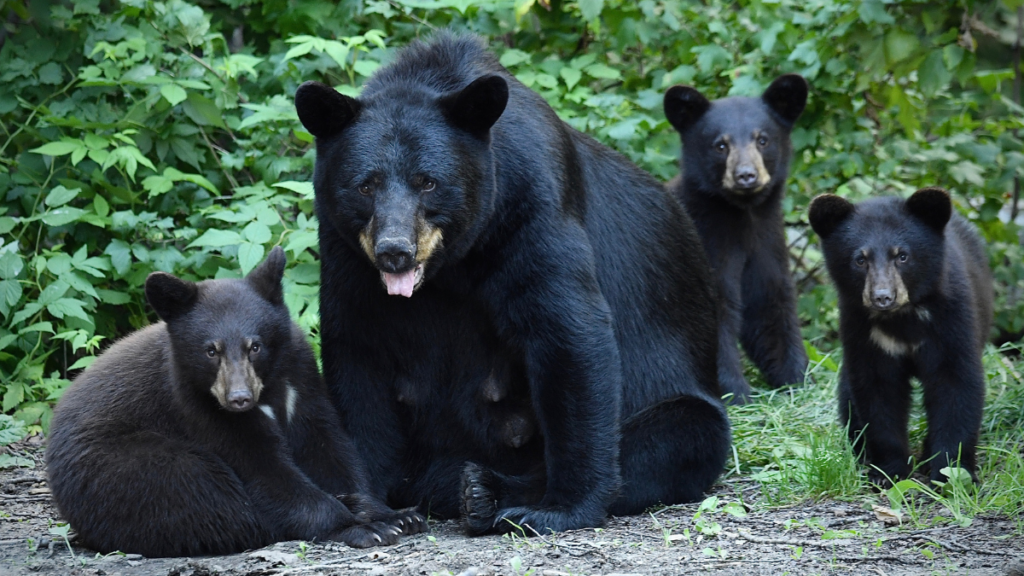
Last year I spent a month in Canada. I moved from Edmonton to Banff National Park, then finally out to Vancouver Island. On one quiet hike there, a black bear stepped onto the path ahead of me. I froze for a moment. It looked at me, unbothered, then melted back into the forest. The whole encounter lasted seconds, and I already expect to see more in the years ahead.
That brief meeting is exactly why black bears fascinate me. They live closer to us than most people realize, yet we rarely understand them. As a biologist, I have chased animal stories across the world, and few species reward curiosity like this one. Below are ten things about black bears that blend hard science with what I have watched in the wild. By the end, you will read the woods a little differently.
1. They Are North America’s Most Common Bear
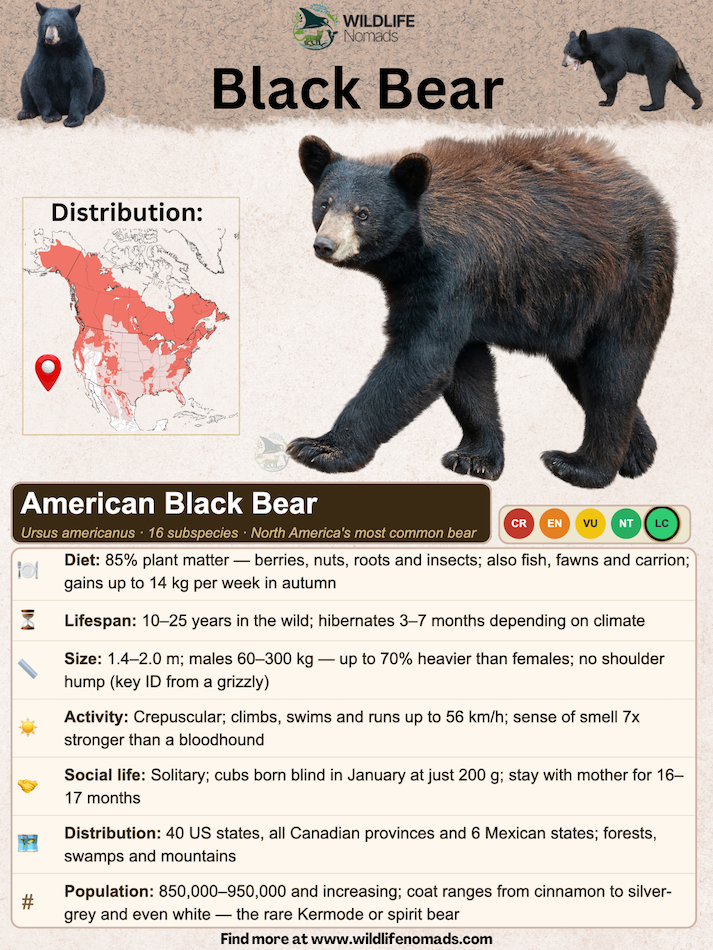
The American black bear (Ursus americanus) is the most common bear species on the continent by a massive margin. Recent syntheses by wildlife management agencies estimate the total North American population to be between 850,000 and 950,000 animals, roughly twice the number of all other bear species on Earth combined.
These bears inhabit at least 40 U.S. states, most of Canada, and parts of northern Mexico. While they are famously associated with the dense forests of the East and the rugged ranges of the West, their numbers are actively expanding. For example, California’s Department of Fish and Wildlife now estimates the state’s population at roughly 60,000 bears, a massive jump from historical baselines. Nationwide, over 300,000 black bears roam within U.S. borders alone, making them one of the greatest large-carnivore conservation success stories on the continent. When I say you have probably walked near one, I mean it.
2. Black Bears Aren’t Always Black
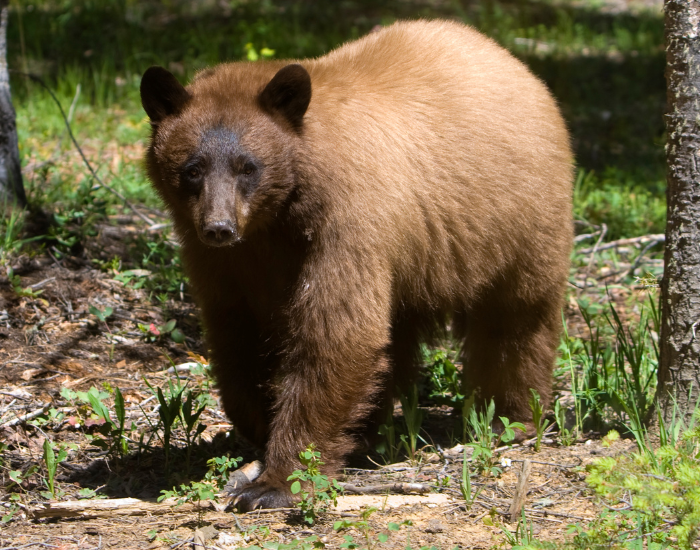
Here is the first misconception I love to correct. The name misleads people. Many black bears wear jet black coats, but plenty do not.
Across their wide geographic range, these animals appear in brown, cinnamon, and even blond. Along the coast of British Columbia and southeastern Alaska, rare individuals show a smoky blue-gray coat, the famous “glacier bears.” Others carry white fur. This color variety is one of my favorite pieces of black bear information to share, because it quietly upends what the name promises.
3. How to Tell One From a Grizzly
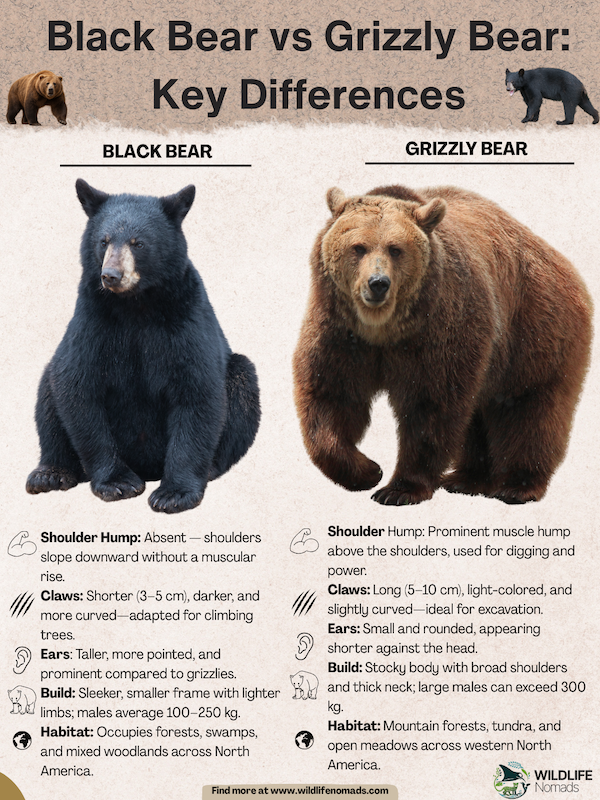
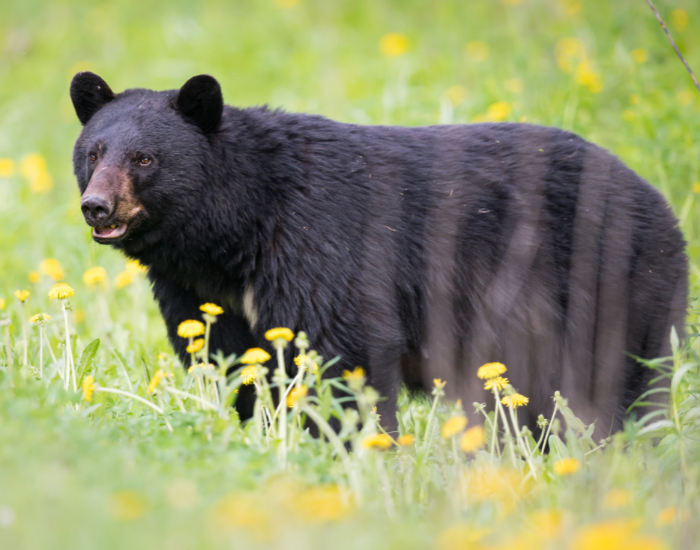
People mix up their bears constantly, so let me give you a field shortcut. A black bear has a flat back and lacks the prominent shoulder hump of its cousin. That muscular hump is a signature of the grizzly bear, which uses it for digging.
North America hosts three bear species: black bears, brown bears (the grizzly), and the polar bear. If you want to compare all three species and beyond, our guide to the different types of bear breaks down the whole family. A bear’s claws also give it away. A grizzly’s claws are long and straight for digging, while a black bear’s claws are short and curved for climbing. That back profile, though, stays the fastest tell.
4. How Big Do Black Bears Really Get?
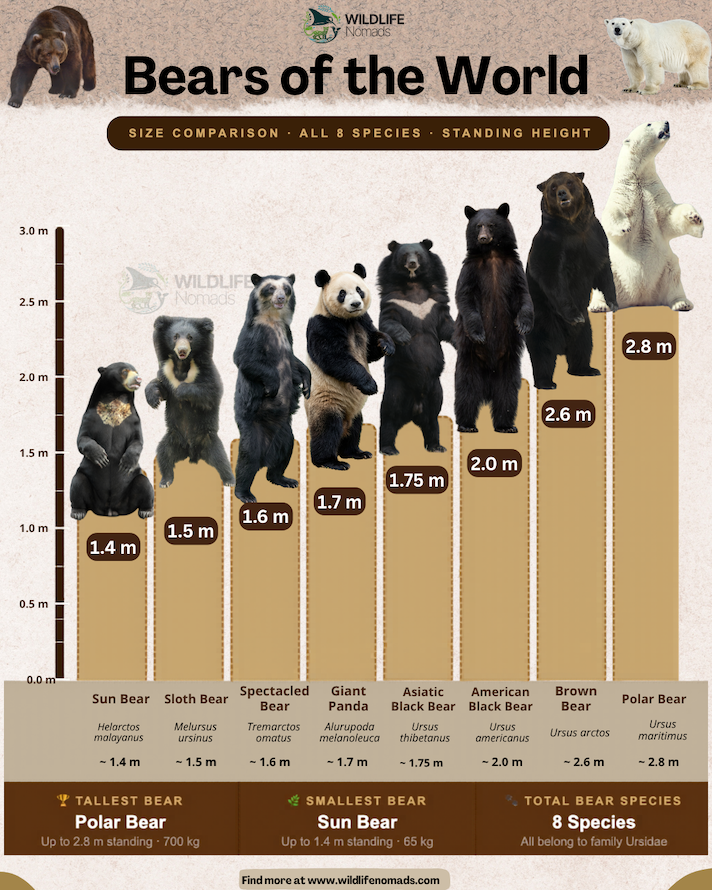
Size surprises almost everyone I talk to. Black bears are large animals, yet smaller than their reputation suggests. Adult males, called boars, usually weigh 130 to 300 pounds. Adult females, or sows, run lighter at roughly 90 to 175 pounds.
Standing on their hind legs, big male black bears can reach five to seven feet tall. On all fours they look stocky and low, closer to a large dog in height than a grizzly. Male bears outsize females by a wide margin, and for a fun benchmark, a heavy boar can outweigh a full-grown adult deer. Weight also swings wildly by season. Adult bears carry far more body fat in fall than in spring, and the biggest adult black bears look almost inflated before denning.
5. They Are Excellent Tree Climbers
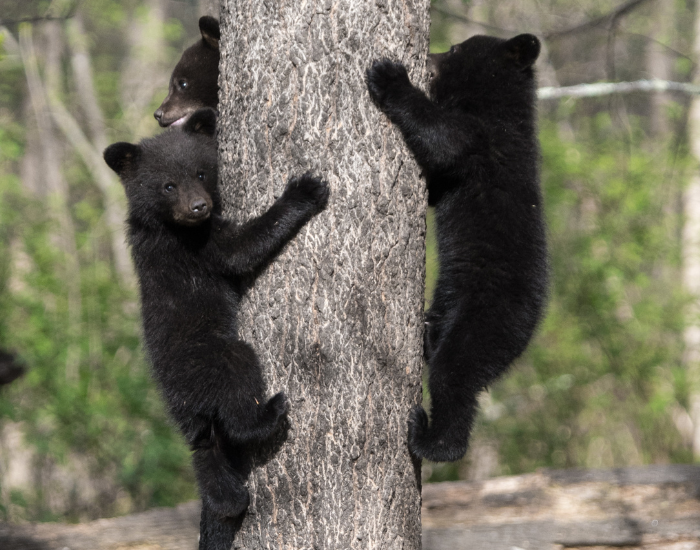
This is where black bears truly outclass their relatives. They climb trees with ease, and their short, curved, non-retractable claws work like crampons on bark. A frightened cub can scramble up a trunk in seconds.
Adult females often send cubs into hollow trees and tree cavities for safety while they forage nearby. That climbing skill is not unique to North America, of course. The tiny sun bear of Southeast Asia is an even more dedicated arborealist, and the sloth bear of India climbs to raid honey and fruit. Still, watching a 200-pound black bear flow up a pine never stops impressing me.
Climbing shapes their whole life history. Cubs spend early months in the canopy while their mother works the ground below. That vertical escape route is one reason black bears survived alongside larger predators. It also explains why they favor dense forest over open country, where a quick climb offers no safety.
6. Mostly Vegetarian, Deeply Opportunistic
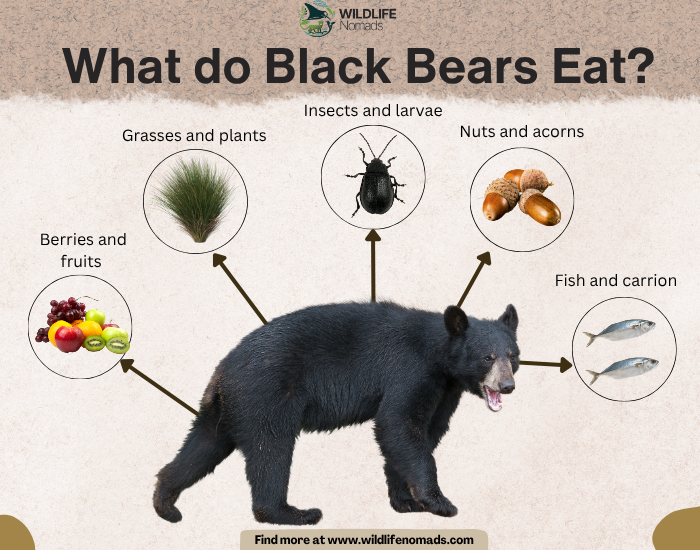
Forget the image of a pure predator. Black bears are omnivores, and up to 85% of their diet is vegetation. They chase soft mast like berries and hard mast like nuts through the seasons.
In the Great Smoky Mountains, bears lean heavily on berries and nuts, timing their movements to the ripening fruit. However, they will not turn down protein. Insects, carrion, small mammals, and the occasional winter-killed animal all fill the menu. That flexible appetite explains why these bears thrive from swamps to the Rocky Mountains.
I have watched this opportunism up close in the field. A bear will flip a fallen log for grubs one minute, then strip a berry bush the next. Their food sources shift with the calendar, tracking whatever natural foods peak that week. This is why habitat diversity matters so much for black bear populations across their range.
7. The Fall Feeding Frenzy
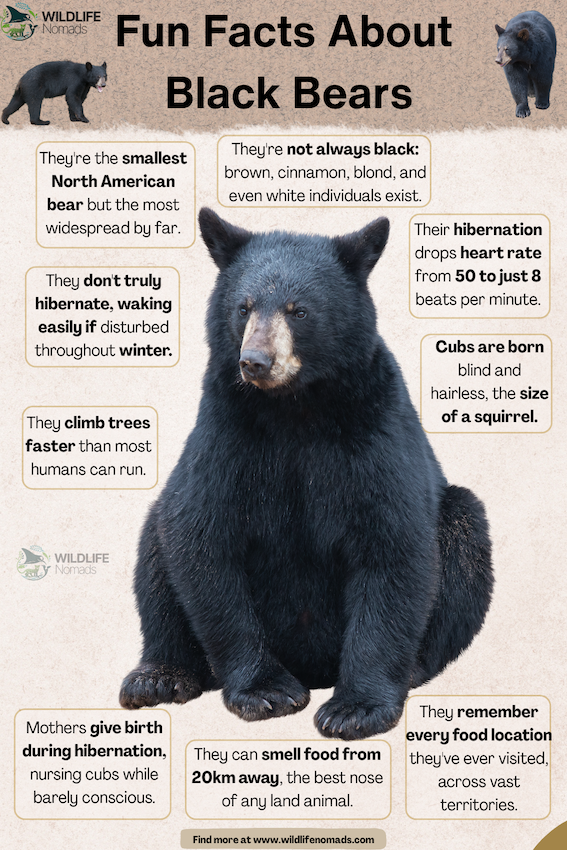
If you want to understand black bear behavior, watch them in autumn. Biologists call this stage hyperphagia, and it is astonishing. In fall, a black bear can consume 15,000 to 20,000 calories in a single day.
This binge builds the fat reserves that carry them through winter. A bear may add up to 30 pounds of body fat before denning. So what do black bears do in October? They eat with single-minded intensity, packing on the body fat that winter demands, then begin drifting toward their dens.

8. Winter Torpor Isn’t True Hibernation
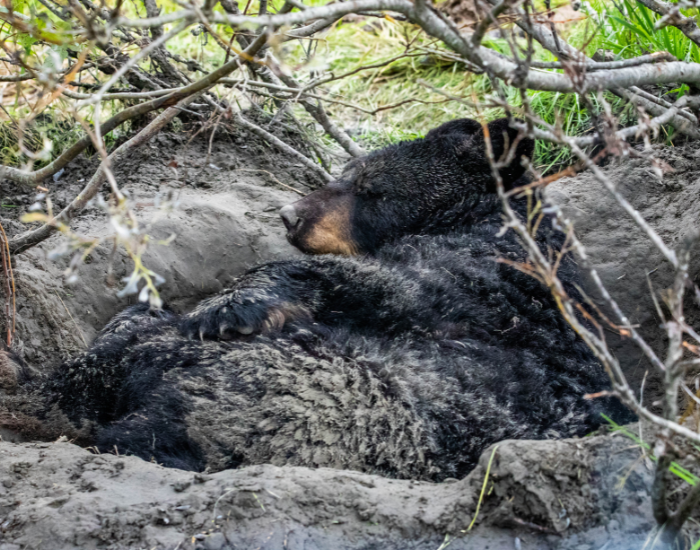
Here is a nuance that trips up even nature documentaries. Black bears spend winter in a state of torpor, not the deep true hibernation of ground squirrels. They can wake and move if disturbed.
Bears enter dens in October and November, with stragglers denning by early December in milder country. This dormancy carries them through the winter months and lasts three to eight months depending on climate. During deep torpor, a bear’s heart rate can fall to as low as 8 beats per minute while its body temperature drops only modestly. As a result, they burn fat slowly and never eat, drink, or relieve themselves for months. They den in surprising places too, from hollow trees to brush piles.
Research has revealed just how strange this state is. A landmark study found that hibernating black bears suppress their metabolism to about 25% of normal, largely independent of body temperature. In other words, the slowdown is not simply about getting cold. Scientists studying this trick hope it may one day inform human medicine.
9. A Slow, Strange Path to Parenthood
Black bear reproduction reads like a biology puzzle. The mating season runs from June to August, yet cubs do not arrive for months. The trick is delayed implantation, where fertilized eggs pause before attaching to the womb.
Counting from implantation, gestation lasts about 235 days, or about seven months of development. Pregnant females give birth inside the winter den, usually in late January to early February. Litters range from one to six newborn cubs but average two to three. Sows typically produce their first litter at three to five years old, and cubs remain with their mother for about 18 months.
Mother bears carry the entire parenting load alone. Females raise cubs without any help from males, teaching them to climb, forage, and read danger. That long apprenticeship is why black bears learn to thrive in so many landscapes.
10. Solitary by Nature
Do not expect to find black bears in social groups. These are solitary animals, and the main exception is a mother with her cubs. Adult males and adult females mostly lead solitary lives.
Their home ranges can be large, and males roam farther than females. On Vancouver Island, the bear I met was almost certainly patrolling its own patch of forest alone. That solitary streak shapes nearly everything about how they use the land.
11. Fast, Sharp-Nosed, and Underestimated
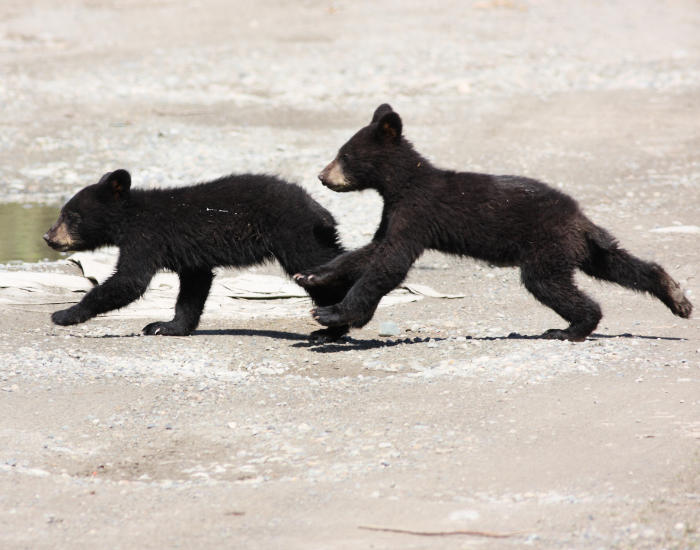
People assume a bulky bear must be slow. They are wrong. Black bears can run up to 40 km/h, about 25 mph, faster than any human sprinter. You cannot outrun one, which is exactly why respecting their space matters.
Their real superpower, though, is scent. A black bear’s sense of smell ranks among the best in the animal kingdom. That nose leads them to natural foods across miles, and unfortunately to human food, pet food, and bird feeders when we leave them accessible.
12. Quiet Ecosystem Engineers
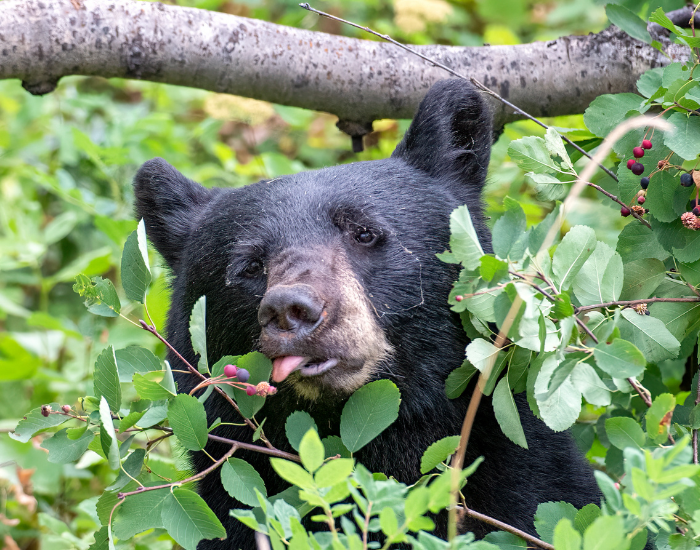
Black bears do more than survive in the forest. They shape it. As they eat their way through countless berries, they disperse seeds across huge distances in their droppings. One well-fed bear can move tens of thousands of seeds in a day.
They also help control insect populations by tearing into rotten logs and ant nests. This mix of seed dispersal and pest control makes them genuinely valuable to healthy forests. Their remarkable adaptability, from northern Mexico to Alaska, only widens that ecological reach.
A Conservation Comeback Worth Celebrating
Not every wildlife story ends in decline, and this one gives me hope. Black bears are not currently listed as endangered in the United States. Two subspecies show why. The Florida black bear (Ursus americanus floridanus) was delisted in 2012, and the Louisiana black bear (Ursus americanus luteolus) followed in 2016 after decades of recovery work.
That said, real threats remain. Habitat loss and vehicle collisions kill many bears each year, and human-bear conflicts rise wherever development pushes into bear country. As bears expand back toward human communities, from suburbs to national park edges, coexistence gets more important. The best thing we can do is respect bears by securing attractants and keeping human food out of reach. Coexistence is not complicated, but it does take effort from us.
Frequently Asked Questions
Rarely. Black bears are naturally timid and usually flee from people, exactly as the one on my Vancouver Island hike did. Most encounters end with the bear leaving. Serious attacks are extremely uncommon, though a surprised mother or a food-conditioned bear deserves real caution and distance.
Hawaii is the only U.S. state with no native bear population, since bears never reached the islands. On the mainland, black bears now occupy at least 40 states, and populations continue expanding into areas they had vanished from a century ago.
The scent bears avoid most reliably is capsaicin, the active compound in bear spray, which is the deterrent backed by field research. Anecdotally, many people report that strong pine-based cleaners and ammonia also repel bears. Their powerful nose cuts both ways, drawing them to food and pushing them from harsh chemicals.
October is peak fattening season. Bears feed almost around the clock during hyperphagia, building body fat for winter, and many begin entering their winter dens by late in the month. Fewer natural foods and colder weather push them toward dormancy.
Yes. Every color variation, from jet black to cinnamon to the blue-gray glacier bears, belongs to one species, Ursus americanus. Regional subspecies like the Florida and Louisiana black bear differ in range and genetics, not in being a separate animal.
The Takeaway
The more time I spend in bear country, the clearer one thing becomes. Black bears are adaptable, intelligent neighbors doing their best to live around us, not against us. That fleeting encounter on Vancouver Island taught me more than any textbook could.
So the next time you lace up your boots, move a little slower and look a little closer. Secure your food, give any bear room, and treat the sighting as the privilege it is. Seen a black bear yourself? Drop your story in the comments, and if you love these animals, explore our deeper dives into the world’s other bears next.
Can You Name That Salamander? 🦎
A 12-photo identification challenge — the wrong answers are deliberately tricky look-alikes. Go back and change any answer before you score.
Which salamander is this?
References:
Enders, M. S., & Vander Wall, S. B. (2012). Black bears (Ursus americanus) are effective seed dispersers, with a little help from their friends. Oikos, 121(4), 589–596. https://doi.org/10.1111/j.1600-0706.2011.19710.x
Garshelis, D. L., Scheick, B. K., Doan-Crider, D. L., Beecham, J. J., & Obbard, M. E. (2016). Ursus americanus (errata version published in 2017). The IUCN Red List of Threatened Species 2016, e.T41687A114251609. https://doi.org/10.2305/IUCN.UK.2016-3.RLTS.T41687A45034604.en
Laske, T. G., Iaizzo, P. A., & Garshelis, D. L. (2017). Six years in the life of a mother bear: The longest continuous heart rate recordings from a free-ranging mammal. Scientific Reports, 7, 40732. https://doi.org/10.1038/srep40732
Tøien, Ø., Blake, J., Edgar, D. M., Grahn, D. A., Heller, H. C., & Barnes, B. M. (2011). Hibernation in black bears: Independence of metabolic suppression from body temperature. Science, 331(6019), 906–909. https://doi.org/10.1126/science.1199435
Tøien, Ø., Blake, J., & Barnes, B. M. (2015). Thermoregulation and energetics in hibernating black bears: Metabolic rate and the mystery of multi-day body temperature cycles. Journal of Comparative Physiology B, 185(4), 447–461. https://doi.org/10.1007/s00360-015-0891-y
U.S. Fish and Wildlife Service. (2016). Endangered and threatened wildlife and plants; Removal of the Louisiana black bear from the federal list of endangered and threatened wildlife. Federal Register, 81(47), 13123–13171. https://www.federalregister.gov/documents/2016/03/11/2016-05206/endangered-and-threatened-wildlife-and-plants-removal-of-the-louisiana-black-bear-from-the-federal