
A few weeks ago, a video out of China went viral: a skiing tourist in the Kekuhai Geopark moved within ten feet of a snow leopard resting in the snow to take a selfie. The cat did exactly what any cornered wild animal would do, it lunged. Within hours, social media was flooded with misinformation. Some called the cat “aggressive,” others insisted it must have been “rabid,” while some even argued snow leopards are basically oversized housecats who “just wanted to play.”
The truth is far more sobering, and watching the misinformation spread in real-time is what pushed me to write this. I have spent years writing and studying about wild cats across continents, from African wild cats on the Namibian plains to the Bengal tiger in Indian sal forests and the very elusive clouded leopards of south east Asia, but the snow leopard has always held a different kind of grip on me. After that viral video I decided that here are 12 things about the endangered snow leopard most people, even serious nature enthusiasts, get wrong.
1. They Are Not Actually “Leopards”
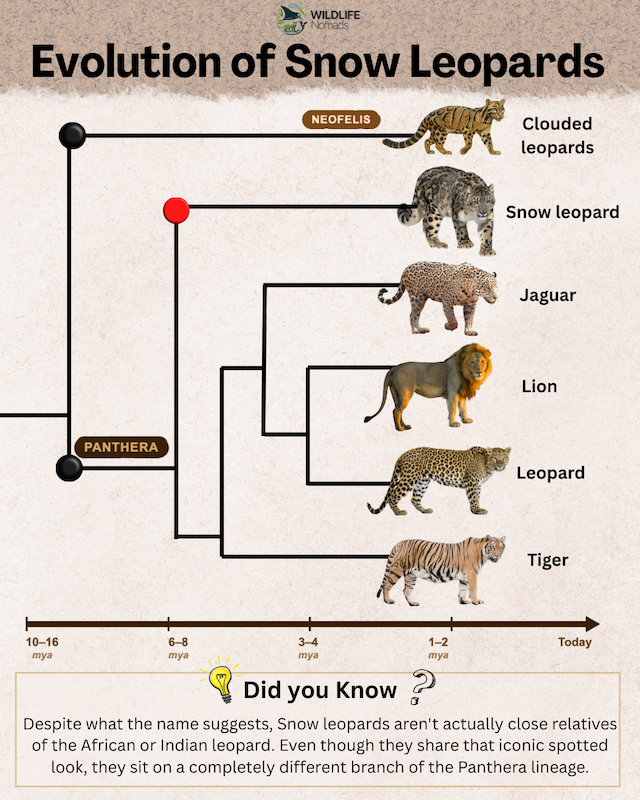
Despite the name, snow leopards are not close relatives of the African leopard. Genetically, they sit in their own lineage within the Panthera genus. Their closest cousin is actually the tiger. The confusion comes from the rosette pattern on their coat, which evolved independently as camouflage against rocky, snow-dappled terrain.
I find this fact endlessly useful, because it reframes how people think about big cat evolution. Pattern does not equal relationship. Two species living on opposite ends of Asia can look similar simply because the problem they are solving, blending into a dappled landscape, is the same. You can see similar examples of independent quill development in hedgehogs, porcupines and echidnas in totally different continents!
2. The Viral Tourist Video Got Almost Everything Wrong
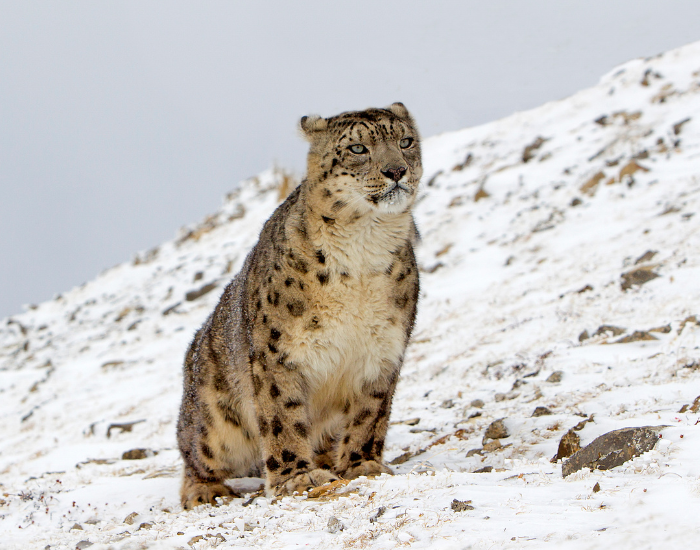
The cat in that video was not attacking. It was defending. Snow leopards are among the shyest big cats on the planet, and a wild snow leopard will go out of its way to avoid humans. When one does not, something has gone badly wrong: the animal is injured, starving, cornered, or habituated by irresponsible tourism.
That woman was lucky. Snow leopards have the bite force and limb strength to kill prey three times their body weight. If the cat had truly meant to attack, she would not have walked away. The cat was asking her to leave. She did not listen.
3. They Cannot Roar but They can “Prusten”
This one surprises almost everyone. Of the five Panthera species, the snow leopard is the only one that cannot produce a true roar. Their hyoid bone is ossified differently, and instead they produce a haunting call called a “chuff,” along with yowls, hisses, and a strange puffing sound used between mothers and cubs.
The first time I heard a chuff in the wild, in the high mountains of Mongolia, I mistook it for wind moving through a rock crevice. It took a local herder pointing at a ridge for me to understand what I was actually listening to.
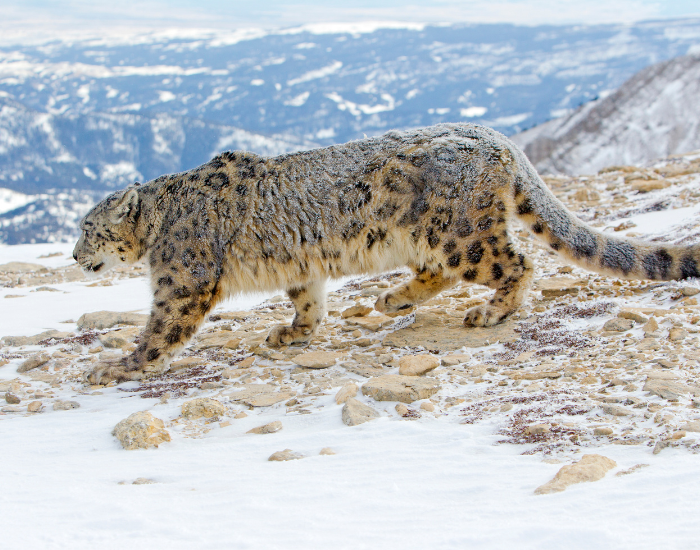
4. Their Tail Is Almost as Long as Their Body
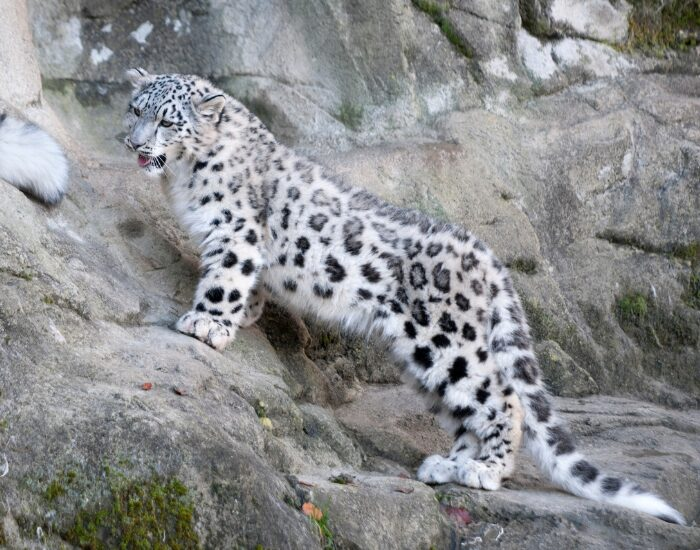
A snow leopard’s tail can reach nearly a meter, roughly 75 to 90 percent of its body length. It functions as a counterbalance on cliff faces, a blanket wrapped around the face during brutal Central Asia winters, and a social signal between individuals.
I have watched camera trap footage from snow leopard research projects where a cat walks along a narrow ledge, tail slowly swinging like a tightrope walker’s pole. You cannot watch that footage and doubt that evolution is, at heart, an engineering problem.
5. They Live in 12 Snow Leopard Range Countries
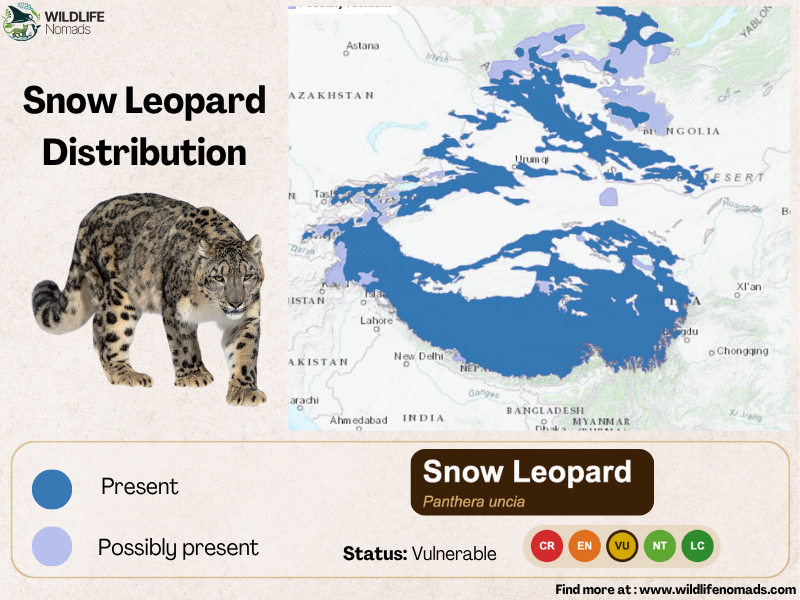
Wild snow leopards are found across 12 snow leopard range countries: Afghanistan, Bhutan, China, India, Kazakhstan, Kyrgyzstan, Mongolia, Nepal, Pakistan, Russia, Tajikistan, and Uzbekistan. China alone holds roughly 60 percent of the remaining snow leopard habitat, which makes it the single most important country for the long term survival of the species.
This geography matters because it means snow leopard conservation cannot be a single-country project. It has to be diplomatic. The 2013 Bishkek Declaration, signed by all 12 snow leopard countries, was the first real attempt to coordinate protection at an international level.
6. Nobody Knows Exactly How Many Are Left
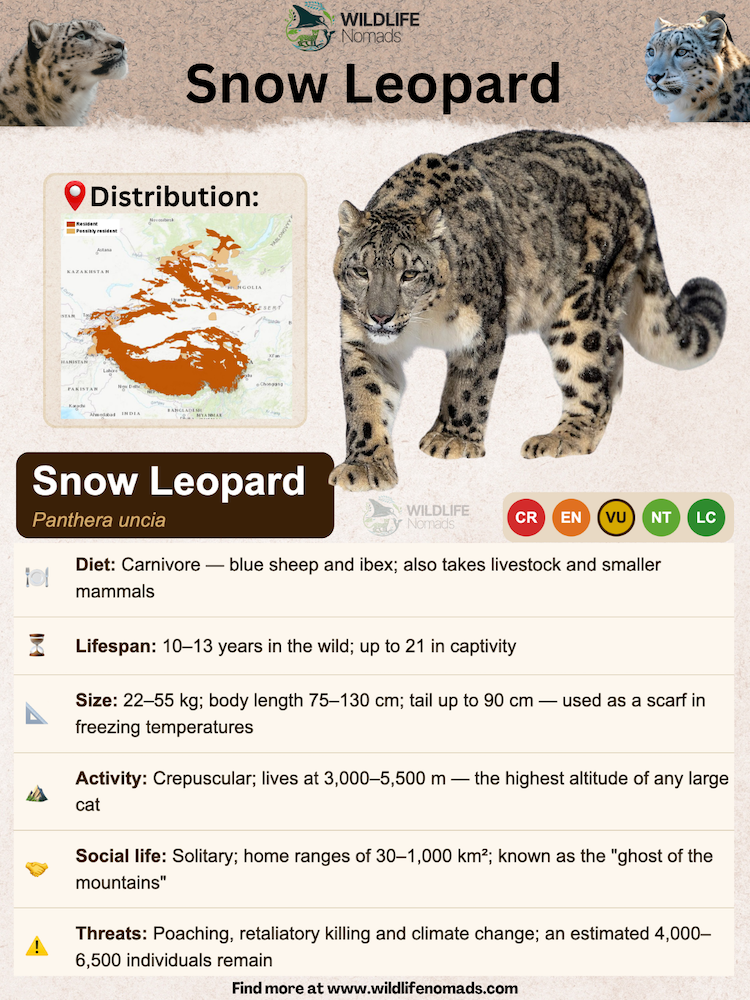
Population estimates range from about 4,000 to 7,500 wild snow leopards today. That is a staggeringly wide window for a species this charismatic, and it reflects just how hard these animals are to survey. They live at 3,000 to 5,500 meters elevation, often in terrain no human can reach without serious technical gear.
Most of what we know comes from camera traps, scat analysis, and conservation genetics work that lets researchers identify individuals from a single hair. The IUCN currently lists them as Vulnerable, downlisted from Endangered in 2017, a decision that remains controversial among conservationists who felt the data did not support the change.
7. Their Main Prey Is the Ibex, Not Livestock
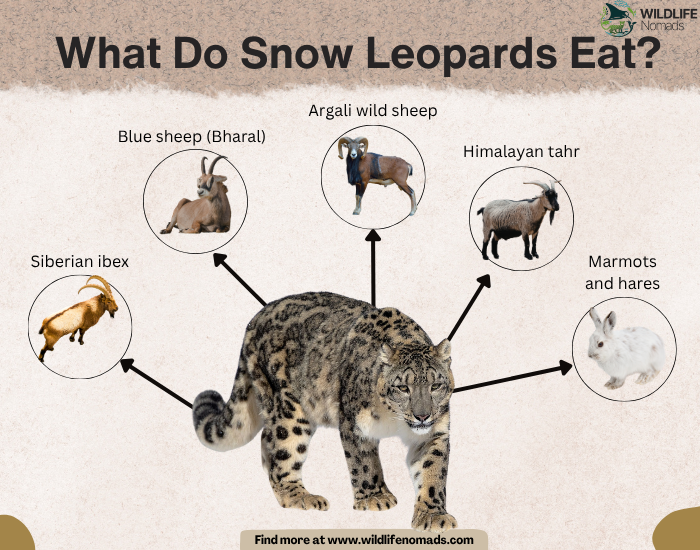
In a healthy snow leopard habitat, the primary prey is the ibex, along with blue sheep, argali, and marmots. Predator prey dynamics in these high mountains are tight: remove the ibex, and the cats turn to livestock. Once they turn to livestock, retaliatory killings by rural communities follow.
I know that hunting concessions in Tajikistan haveshifted from trophy hunting to community based conservation. The shift worked because local people finally had an economic reason to protect ibex populations, and healthy ibex meant fewer dead sheep, which meant fewer dead cats.
8. A Single Cat Needs an Enormous Range
A male snow leopard’s territory can exceed 200 square kilometers. Females use smaller ranges, but still vast by any normal standard. This is why creating protected areas that are too small is essentially useless for the species: a “reserve” that fits inside one cat’s home range is not a reserve, it is a holding pen.
This is also why habitat fragmentation, driven by roads, mines, and climate change pushing tree lines upward, is such a severe threat. Snow leopards need connectivity across the land, not isolated islands of protection.

9. They Have Been Called “Mountain Spirit” for Centuries
Across Central Asia, traditional ecological knowledge has long treated the snow leopard as a sacred animal. In parts of Mongolia, they are called the mountain spirit. In Ladakh, old Buddhist texts reference them as guardians of the high passes. This cultural reverence is not just poetic window dressing, it has real conservation value.
Conservationists like Ashleigh Lutz Nelson and Maria Azhunova have spent years working with local communities to fold traditional beliefs into modern conservation programs. When a community already sees a species as sacred, the job of a conservation organization is not to lecture, it is to listen.

10. The Snow Leopard Trust Invented “Snow Leopard Enterprises”
Founded in Seattle in 1981, the Snow Leopard Trust is the oldest and largest organization dedicated to protecting this species. One of their best ideas is a program called Snow Leopard Enterprises, which pays herder families in Mongolia for handmade wool products in exchange for a pledge not to kill snow leopards or their prey.
It sounds simple. It is revolutionary. By tying household income directly to the presence of live cats on the land, the Trust turned a conflict species into a community asset. The Snow Leopard Trust shop still sells those products, and yes, the money goes back into the villages.
11. Climate Change Is Eating Their Habitat From Below
As temperatures rise, tree lines climb, and forested ecosystems push into what was once open alpine snow leopard habitat. Some projections suggest up to a third of current snow leopard range could become unsuitable within decades. Combined with poaching for pelts and bones, and infrastructure development across Asia, the species faces a genuinely compounding threat.
That said, I am cautious about pure doom messaging. Populations in parts of the Kyrgyz Republic and Mongolia have stabilized where serious anti-poaching initiatives, community education, and livestock insurance schemes have been put in place. The tools work. They just need funding.
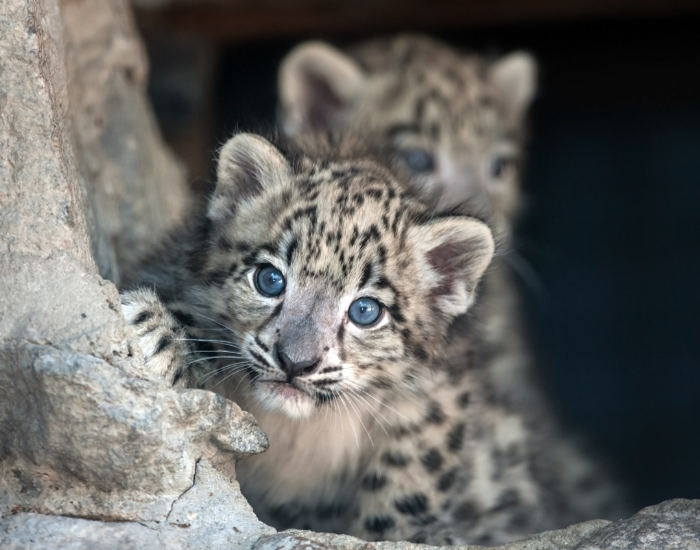
12. Zoos Are Not Where You Save Snow Leopards
I will say this plainly, because it may be unpopular: zoos are not the best tool for snow leopard conservation. Captive populations are not enough contribute to wild snow leopard populations. Many well know orgnaizations focus their work in the field, not in enclosures.
If you want to help save snow leopards, the highest-leverage actions are supporting community based conservation, backing the snow leopard fund and other conservation organizations running on-the-ground projects, and, if you travel, choosing operators who follow strict wildlife viewing ethics. Symbolic adoption programs are also a simple way to contribute to long term protection.
FAQ
Current estimates place the wild population between 4,000 and 7,500 individuals across the 12 snow leopard range countries. China holds the largest share, followed by Mongolia and India. The wide range reflects how difficult these cats are to count in remote mountains.
No. Snow leopards are wild animals and solitary predators. They are not aggressive toward humans by nature, in fact they are extraordinarily shy, but they are absolutely not “friendly.” Approaching one, as the viral Chinese tourist video showed, is dangerous for the person and often fatal for the cat.
They live at elevations up to 5,500 meters, their tail is nearly as long as their body, they cannot roar, they can leap up to 9 – 12 meters in a single bound, and they are the only big cat adapted to life in Central Asia’s high mountains.
The scientific name is Panthera uncia. Across snow leopard range countries they carry many local names, including “ounce,” “irbis,” and “mountain spirit.” Each name reflects the culture and landscape where the species is found.
The Takeaway
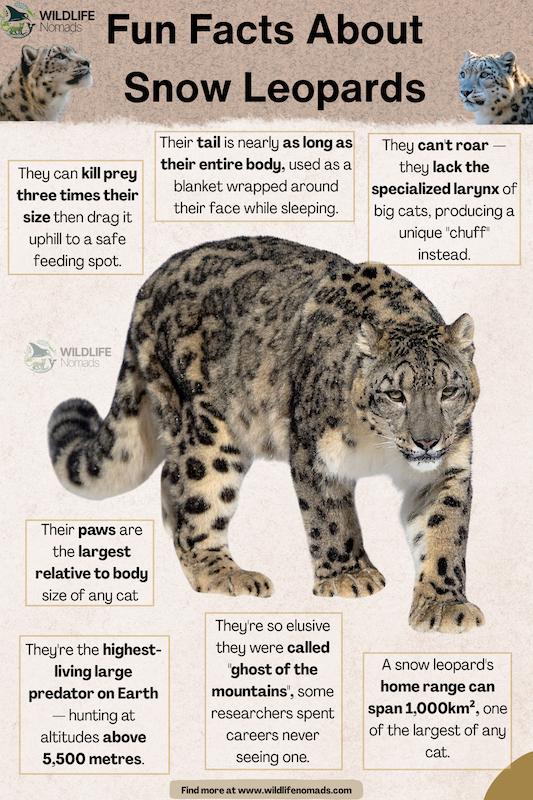
The viral video should not be remembered as “the time a snow leopard attacked a tourist.” It should be remembered as a warning about how we behave around endangered wildlife, and how quickly misinformation fills the space where education should be. These cats are ghosts for a reason, and the best thing we can do as nature lovers is keep them that way, protected, unbothered, and wild.
If you have ever seen a snow leopard, even a tail tip behind a rock, drop a comment and tell me where. I read every one. And if you want to go deeper on the cats I have written about, start with my piece on snow leopard tourism, then compare it to my work on the ocelot and Eurasian lynx. Different cats, same fight.
References:
Alexander, J. S., Zhang, C., Shi, K., & Riordan, P. (2016). A granular view of a snow leopard population using camera traps in Central China. Biological Conservation, 197, 27–31. https://doi.org/10.1016/j.biocon.2016.02.023
Janecka, J. E., Zhang, Y., Li, D., Munkhtsog, B., Bayaraa, M., Galsandorj, N., Jackson, R. (2017). Range-wide snow leopard phylogeography supports three subspecies. Journal of Heredity, 108(6), 597–607. https://doi.org/10.1093/jhered/esx044
Li, J., Weckworth, B. V., McCarthy, T. M., Liang, X., Liu, Y., Xing, R. Beissinger, S. R. (2020). Defining priorities for global snow leopard conservation landscapes. Biological Conservation, 241, 108387. https://doi.org/10.1016/j.biocon.2019.108387
Mishra, C., Redpath, S. R., & Suryawanshi, K. R. (2016). Livestock predation by snow leopards: Conflicts and the search for solutions. In Snow Leopards (pp. 59–67). Academic Press. https://doi.org/10.1016/B978-0-12-802213-9.00005-0
Suryawanshi, K. R., Redpath, S. M., Bhatnagar, Y. V., Ramakrishnan, U., Chaturvedi, V., Smout, S. C., & Mishra, C. (2017). Impact of wild prey availability on livestock predation by snow leopards. Royal Society Open Science, 4(6), 170026. https://doi.org/10.1098/rsos.170026
McCarthy, T., Mallon, D., Jackson, R., Zahler, P., & McCarthy, K. (2017). Panthera uncia. The IUCN Red List of Threatened Species 2017: e.T22732A50664030. https://doi.org/10.2305/IUCN.UK.2017-2.RLTS.T22732A50664030.en
Zhang, Y., Dai, Y., Li, J., Cong, W., Zhang, Y., Nie, X., Wu, Q., & Xue, Y. (2025). Climate Change and Human Pressure: Assessing the Vulnerability of Snow Leopard (Panthera uncia) Habitat Integrated With Prey Distribution on the Qinghai-Tibet Plateau. Ecology and evolution, 15(4), e71232. https://doi.org/10.1002/ece3.71232