
I’ll never forget the first time I spotted an Anna’s hummingbird in Ensenada, Mexico. Growing up there, these tiny birds were a constant in my life. However, I didn’t truly appreciate their biological grit until I became a professional field biologist. Now, living in Australia for the last four and a half years, anna’s hummingbirds are among the creatures I miss most.
There’s something about the way a male Anna’s hummingbird catches the light — a flash of iridescent magenta that defies the dusty coastal scrub. Let;s dive into the biology of these tiny birds to get to know them better
Anna’s Hummingbirds in a Nutshell
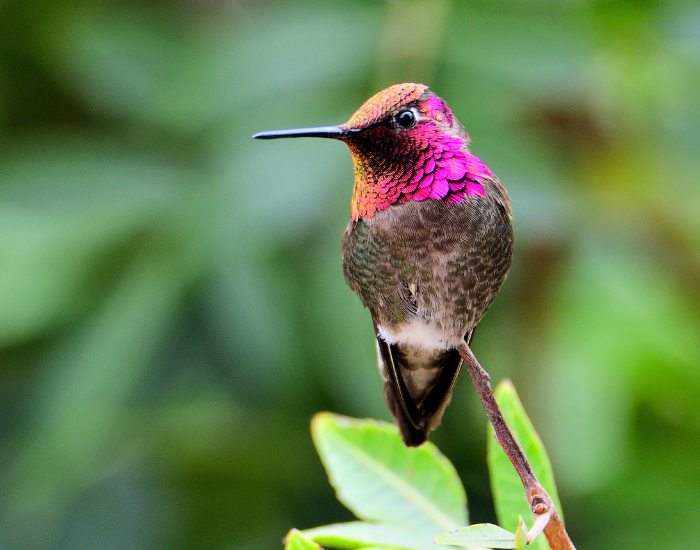
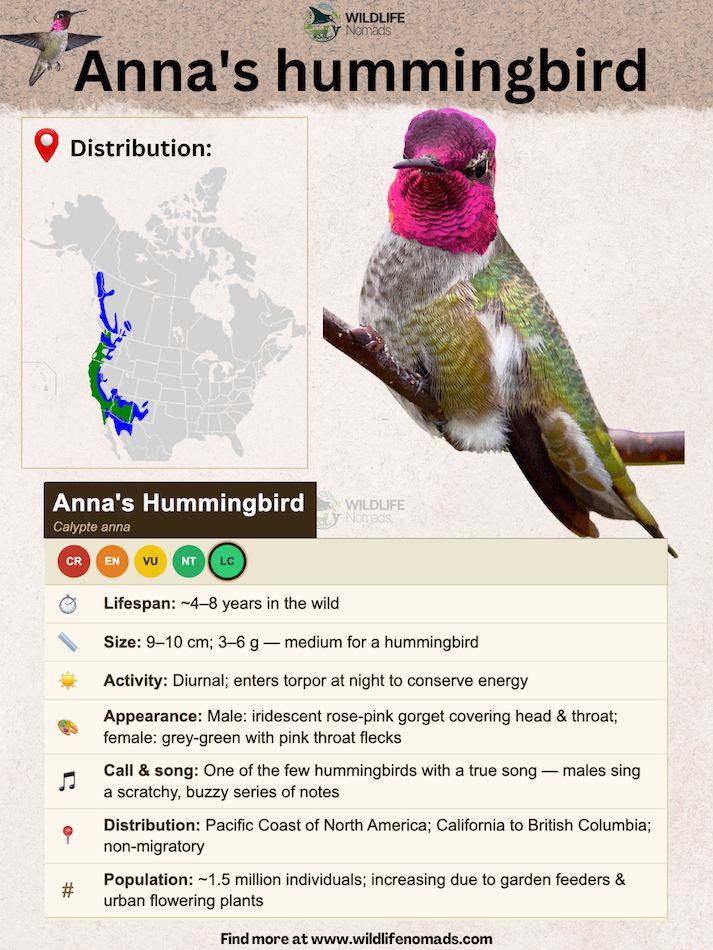
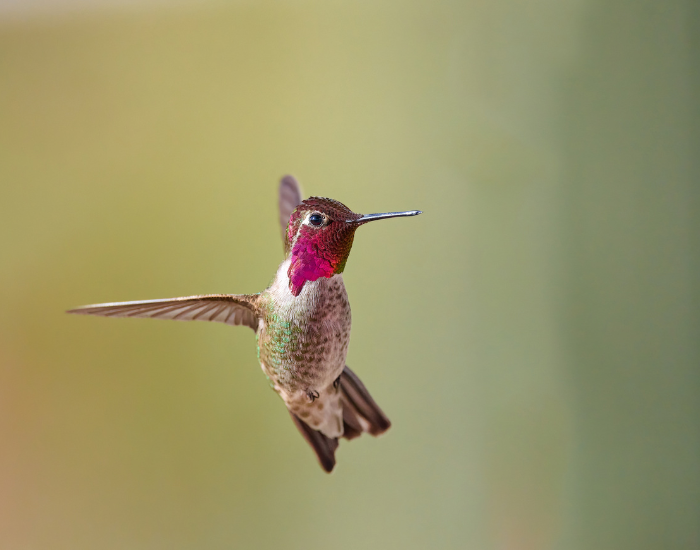
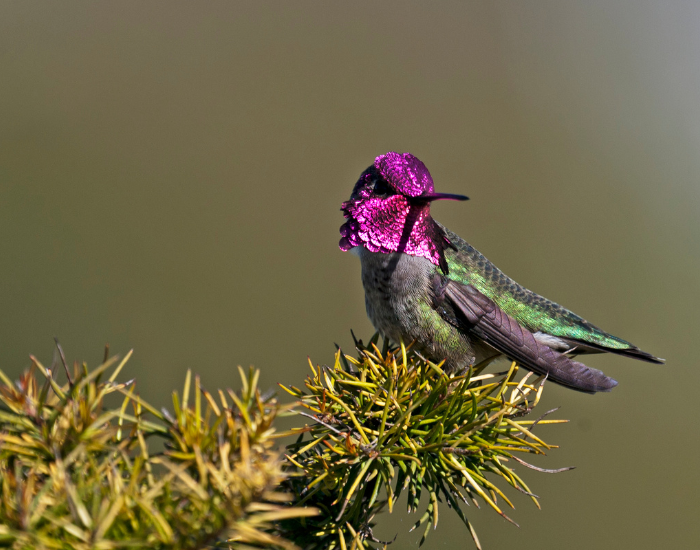
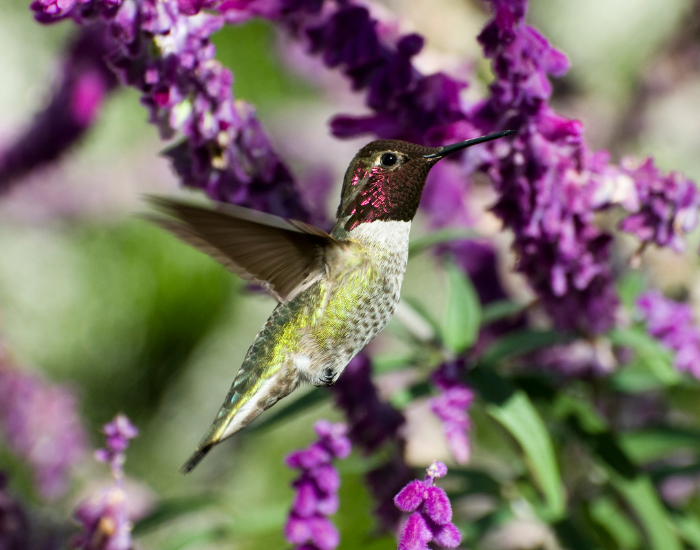
Anna’s Hummingbirds (Calypte anna) are among the most common hummingbirds gracing the Pacific Coast of North America. Instantly recognizable, the male hummingbirds dazzle with their iridescent reddish pink feathers on the crown and throat, flashing brilliant color in direct sunlight. Their backs shimmer with metallic green, while their fairly broad tail and streamlined bodies allow them to hover effortlessly in mid-air. In lower light, these vibrant feathers can appear dull brown or gray, but catch the right angle and their iridescent throat patch comes alive.
Let’s dive into 12 of the most surprising Anna’s hummingbird facts.
| Feature | Description |
|---|---|
| Scientific Name | Calypte anna |
| Length | 3.9 – 4 inches |
| Weight | 3 – 6 grams (0.1 – 0.2 oz) |
| Wingspan | 4.7 – 5.25 inches |
| Conservation Status | Least Concern (IUCN) |
1. They Are the Fastest Vertebrates Relative to Body Size
When we think of speed, we think of cheetahs as the fastest animals on land and of peregrine falconswhen it comes to the fastest birds. However, in the world of physics, relative speed is what defines high performance. During courtship, an adult male Anna’s hummingbird performs a death-defying aerial display dive over his territory that would make a fighter pilot nauseous.
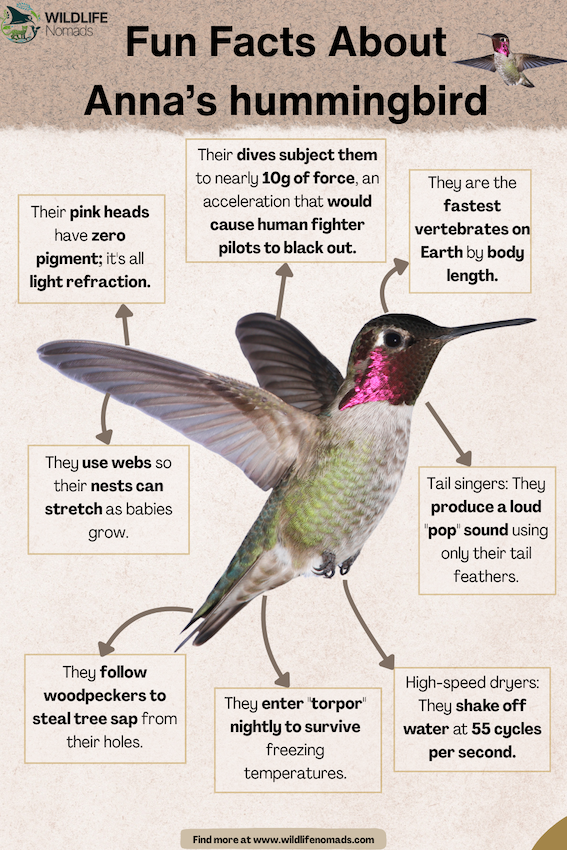
The adult male climbs roughly 130 feet, then plunges toward the ground. At the bottom of the arc, he reaches approximately 385 body lengths per second. As he swoops toward the ground, the male produces an audible ‘explosive squeak’ at the bottom of the dive. The adult male also performs a ‘shuttle display’, swinging back and forth above the female while singing. For comparison, a fighter jet with afterburners hits around 150 body lengths per second. For a brief moment, this 4-gram bird becomes the fastest vertebrate on the planet relative to its size.
2. They “Chirp” With Their Tail Feathers
One of the most debated mysteries in ornithology was the explosive squeak heard at the bottom of an Anna’s dive. For years, scientists argued over whether it was a vocalization. High-speed video research finally settled the debate: it’s a mechanical sound produced entirely by the tail.
The outer tail feathers of a male Anna’s hummingbird have a specific shape. They vibrate like a reed in a clarinet at high speeds. This “tail-chirping” is actually louder than their vocal song. Therefore, males can broadcast their fitness without overtaxing their tiny syrinx.
3. Their Diet Is Far More Than Nectar
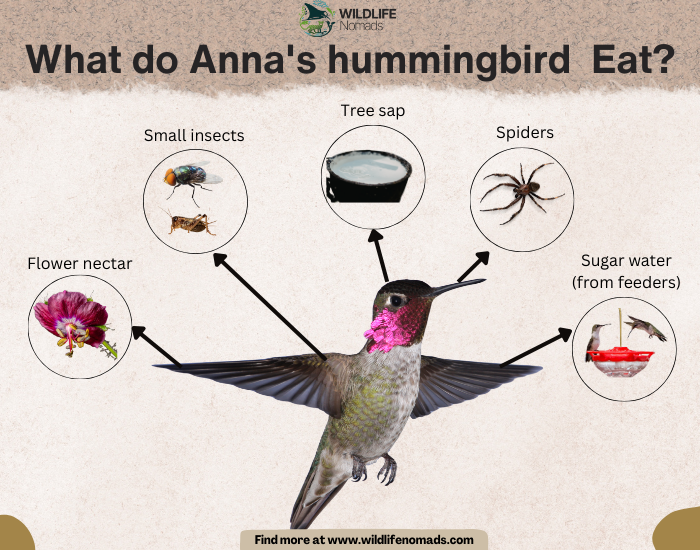
Anna’s hummingbirds are birds that feed on both nectar and insects. While we often picture Anna’s hummingbird feeding at hummingbird feeders or flowering plants, nectar is only half the story. Birds feed at feeders, which supplement their natural food sources, especially in winter. Anna’s hummingbirds eat more insects than any other North American hummingbird, which may help them survive in colder climates. As a biologist, I think of the Anna’s hummingbird diet as a high-protein fuel mix.
These birds are surprisingly skilled hunters. They pluck spiders from webs, hawk midges and small insects mid-air, and target leafhoppers with precision. Nesting females, in particular, consume more insects to support chick growth. They need the amino acids to fuel growing chicks. In addition to insects, they’ll investigate eucalyptus trees and predators disturbing feeders around suburban gardens.
4. They Use “Suspended Animation” to Survive Cold Nights
Unlike many hummingbirds, the anna’s hummingbird range has expanded into genuinely cold climates. How does a bird with a 107°F body temperature survive a freezing night?
They enter a state called torpor — a temporary mini-hibernation. Their heart rate drops from around 1,200 beats per minute to as low as 40. Their body temperature can plummet to 48°F. In my field work, I’ve seen birds in torpor that looked almost lifeless, only to rev up and fly away 20 minutes later.
5. That “Pink” Gorget Is Actually an Optical Illusion
The male is famous for his iridescent reddish-pink crown and gorget (throat patch), with shimmering feathers covering the male’s head. The adult male Anna’s Hummingbird is the only North American hummingbird species with a red crown. However, the iridescent crimson-red crown and gorget can appear dull brown or gray without direct sunlight. This isn’t pigment — it’s structural color.
The feathers carry microscopic layers of platelets that reflect direct sunlight like a prism. During courtship, the male carefully orients himself so the sun reflects off his gorget directly toward the female. He essentially “flashes” her with a burst of color that is physically impossible to ignore.
6. Females Break the Rules of Avian Fashion
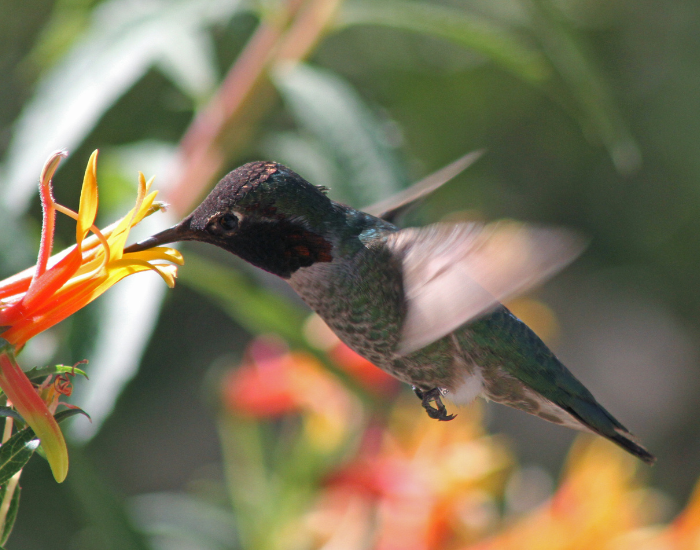
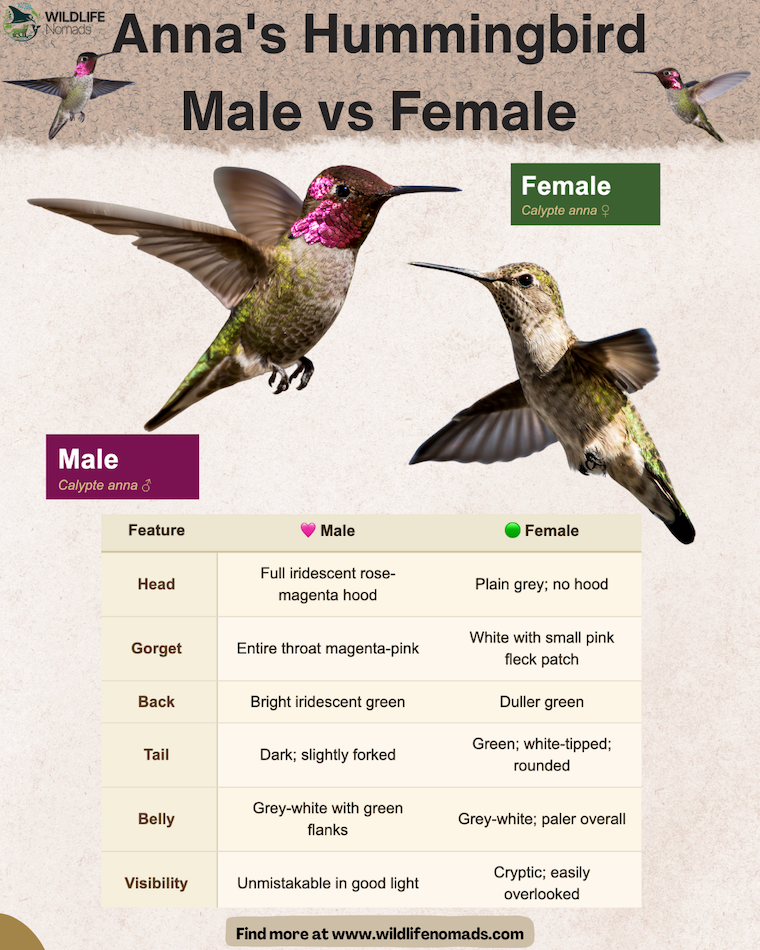
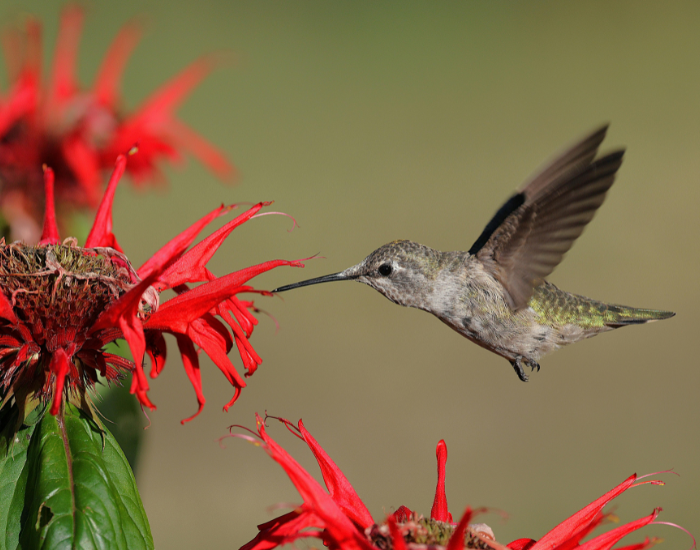
In many types of birds, females are drab to stay camouflaged while nesting. The anna’s hummingbird female is indeed more muted — mostly metallic green above with grayish-white underparts. However, she breaks the mold by sporting her own tiny red gorget, a small patch of iridescent red spots on the throat that is rare among female hummingbirds.
In most North American species, females have zero iridescent throat feathers. This “mini-gorget” is a key identification feature. Females and juveniles also have white tips on their outer tail feathers, which serve as visual cues in courtship displays and territory defense, contrasting with the males’ iridescent coloration. It’s also a sign of Anna’s unique evolutionary path among hummingbird species.
7. Their Nests Stretch as Their Chicks Grow
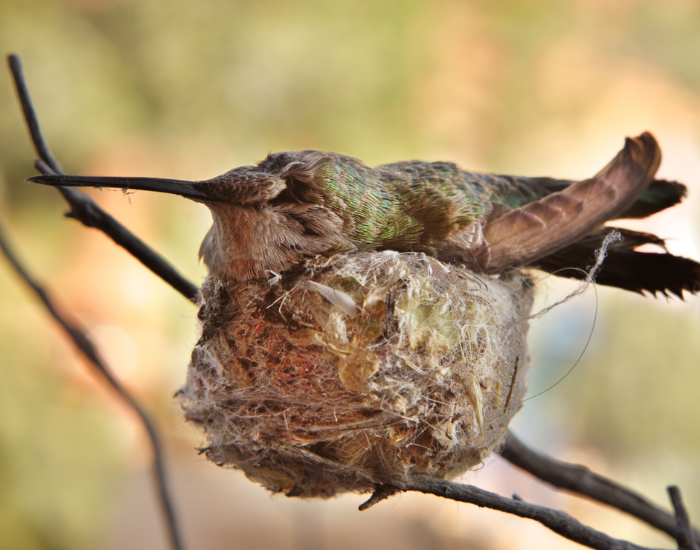
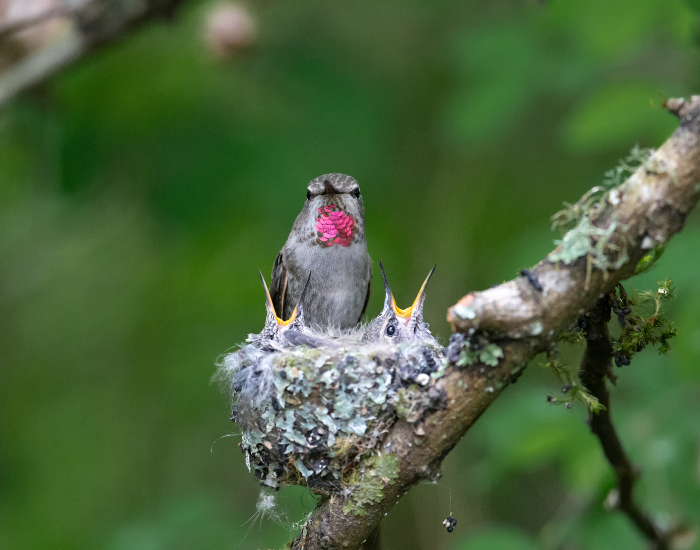
The anna’s hummingbird habitat isn’t just about where they feed — it’s also about extraordinary nest engineering. A female uses spider webs (spider silk) as her primary construction adhesive.
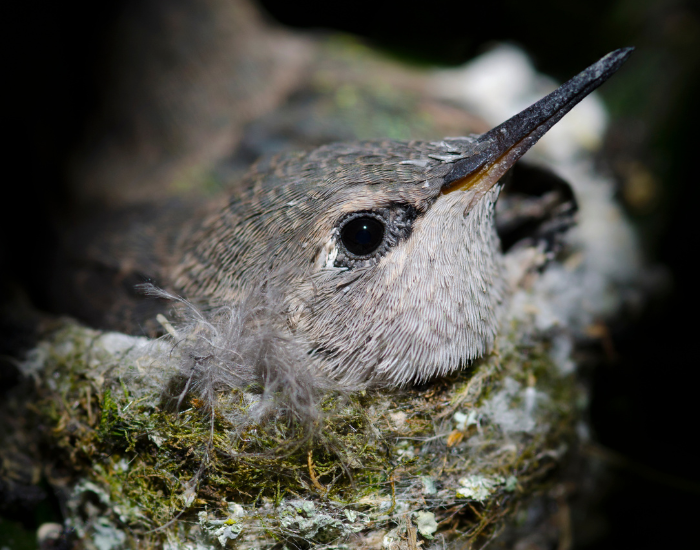
The nest is constructed of plant fibers, downy feathers, and animal hair, all bound together with spider silk and camouflaged with lichen and plant debris. The typical nest site is chosen by the female and may be in a shrub or tree, in vines, or attached to wires or other artificial substrates. The silk binds together plant down, lichen, and feathers. Crucially, the silk makes the nest elastic. As two navy-bean-sized eggs hatch and chicks develop, the nest literally stretches around them. The female typically lays two eggs in her nest. It’s one of the most elegant solutions in the bird world.
8. They Nest in the Dead of Winter
While other birds wait for spring, Anna’s hummingbirds often start breeding in winter. In Southern Arizona and California, I’ve seen them nesting as early as December or January.
This strategy lets them exploit early-blooming shrubs like manzanita before migratory hummingbirds arrive to compete. For example, they’ll claim a territory around a flowering plant long before most hummingbirds are even thinking about heading north.
9. Their Distribution Spans the Entire Pacific Coast — and Growing
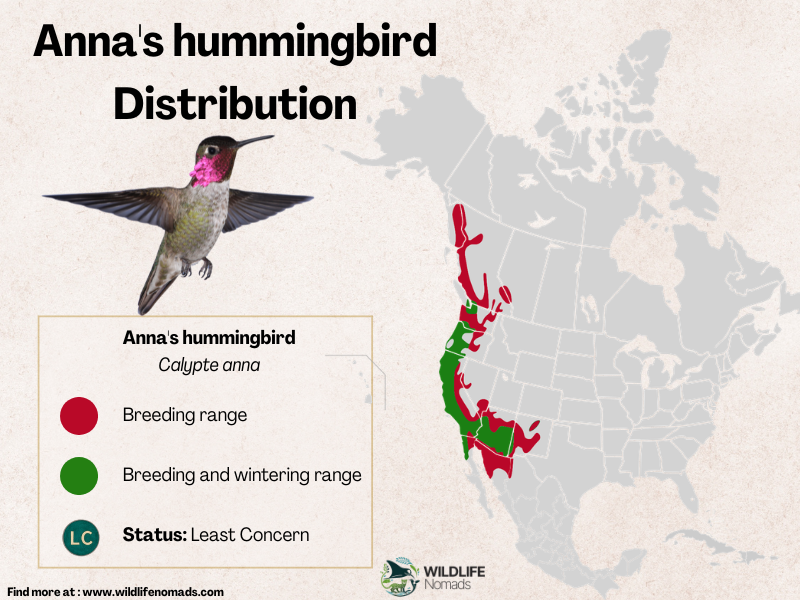
Anna’s hummingbirds are largely non-migratory, and their range tells an impressive story of adaptability. Their core territory runs the length of western North America — from northern Baja California through California, Oregon, Washington, and into British Columbia, with occasional sightings as far north as Alaska. They also push east into Arizona and Nevada. Since the 1970s, this range has expanded dramatically, driven by the spread of ornamental gardens, backyard feeders, and non-native flowering plants like eucalyptus. Today, Anna’s holds the title of the northernmost year-round hummingbird in the world, and its population has been steadily growing since 1970.
Within that range, they’re remarkably versatile. Anna’s can be found anywhere from sea level to around 6,000 feet, thriving in coastal scrub, oak savannas, open woodlands, and suburban backyards alike. Rather than undertaking long seasonal migrations like most North American hummingbirds, they simply shift to lower elevations in winter or move short distances to find food. This stay-put strategy is central to their urban success — they claim a feeder, defend it fiercely, and rarely leave. It’s a lifestyle that suits a bird whose heart can beat up to 1,260 times per minute in flight.
10. They Are Fierce and Highly Territorial
Most hummingbirds are relatively quiet, but Anna’s are genuine singers. Males deliver a complex, scratchy, metallic song from high perched positions to defend their territory.
They are also incredibly aggressive. I’ve watched them chase birds twice their size. They’ll even pursue large insects like bees and wasps that get too close to “their” feeders. This tactical approach to survival is exactly why they’ve become one of the most successful birds in North America. They don’t just adapt — they dominate.
11. They Have a Long, Extendable Tongue Built for Extraction
Beyond their bill, Anna’s hummingbirds possess a long extendable tongue that laps up nectar at extraordinary speed — up to 13 licks per second. The tongue is forked and fringed at the tip, which helps trap liquid through a pumping action.
This anatomy means they’re highly efficient at extracting nectar even from deep, tubular flowers. In addition, the tongue helps them probe flowers that other pollinators simply can’t reach. It’s a tool as precise as a surgeon’s instrument.
12. Their Song Is Surprisingly Complex
Anna’s hummingbirds are one of the few hummingbird species in the world that genuinely sing. Males produce a surprisingly long, complex vocalization — an unusual trait in a group of birds typically known for buzzing wingbeats rather than music.
Research has shown that male Anna’s song contains distinct phrases that they learn and refine over time, much like songbirds. This vocal complexity appears to play a role in mate selection, making it more than just territorial noise. It’s a genuine performance.
Conservation Status
Anna’s Hummingbird is currently listed as a species of Least Concern on the IUCN Red List, reflecting its widespread presence along the Pacific Coast. However, this doesn’t mean the species is free from challenges as other endangered birds. As urban development expands and climate change alters habitats, Anna’s Hummingbirds and other birds face new pressures that could threaten their populations in the future.
Organizations like the Cornell Lab of Ornithology are actively involved in monitoring Anna’s Hummingbird populations and promoting conservation strategies. Creating and protecting hummingbird-friendly habitats—by planting native flowering plants (a native garden), preserving open woodland, and maintaining clean hummingbird feeders—can make a significant difference. By supporting these efforts and making small changes in our own backyards, we can help ensure that Anna’s Hummingbirds continue to thrive as one of the most iconic species along the Pacific Coast, rather than becoming a threatened species in years to come.
FAQs about Anna’s Hummingbird
Keep your hummingbird feeders from freezing and plant winter-blooming native shrubs. Insulated feeder covers or rotating multiple feeders in and out of the house on cold nights can make a big difference.
No. Their conservation status is Least Concern according to the IUCN. In fact, their range is actively expanding north due to urbanisation and climate change.
No — they are largely non-migratory, though they may move to lower elevations or short distances seasonally.
References:
Araya-Salas, M., & Wright, T. (2013). Open-ended song learning in a hummingbird. Biology letters, 9(5), 20130625. https://doi.org/10.1098/rsbl.2013.0625
Clark, C. J. (2009). Courtship dives of Anna’s hummingbird offer insights into flight performance limits. Proceedings of the Royal Society B: Biological Sciences, 276(1670), 3047–3052. https://doi.org/10.1098/rspb.2009.0508
Clark, C. J., & Feo, T. J. (2008). The Anna’s hummingbird chirps with its tail: A new mechanism of sonation in birds. Proceedings of the Royal Society B: Biological Sciences, 275(1637), 955–962. https://doi.org/10.1098/rspb.2007.1619
Clark, C. J., Elias, D. O., & Prum, R. O. (2011). Aeroelastic flutter produces hummingbird feather songs. Science, 333(6048), 1430–1433. https://doi.org/10.1126/science.1205222
Giraldo, M. A., Parra, J. L., & Stavenga, D. G. (2018). Iridescent colouration of male Anna’s hummingbird (Calypte anna) caused by multilayered barbules. Journal of comparative physiology. A, Neuroethology, sensory, neural, and behavioral physiology, 204(12), 965–975. https://doi.org/10.1007/s00359-018-1295-8
Greig, E. I., Wood, E. M., & Bonter, D. N. (2017). Winter range expansion of a hummingbird is associated with urbanization and supplementary feeding. Proceedings. Biological sciences, 284(1852), 20170256. https://doi.org/10.1098/rspb.2017.0256
Pollock, H. S., Lamont, D., MacDonald, S. E., Spence, A. R., Brawn, J. D., & Cheviron, Z. A. (2023). Widespread Torpor Use in Hummingbirds from the Thermally Stable Lowland Tropics. Physiological and biochemical zoology : PBZ, 96(2), 119–127. https://doi.org/10.1086/722477