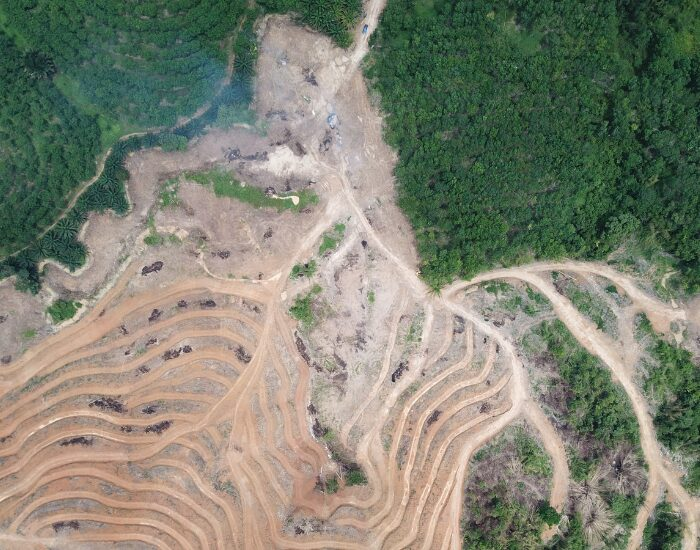
Riding a scooter in Indonesia, I passed rows and rows of oil palms where rainforest once stood.
Later, trekking in Bukit Lawang, our guide told us how logging and plantations had eaten into the forest. Once you know what to look for, you see the damage everywhere.
I didn’t expect to see it so clearly at home too. Driving my lap around Australia, I’ve crossed acres and acres of cleared land, where rainforest made way for cattle. It is genuinely sad.
That is habitat destruction, and it is one of the biggest environmental issues of our time. Below are 12 things you need to know about it in 2026.
First, we’ll look at what it is and what causes habitat loss. Then we’ll explore its effects, with real loss of habitat examples, and finally how we can turn it around.
🌳 How much do you know about habitat loss?
Twelve questions on forests, reefs and the animals that depend on them. Read on, then test yourself at the end.
Jump to the quiz ↓12 Things You Need to Know About Habitat Destruction
1. Habitat Destruction Has Three Faces
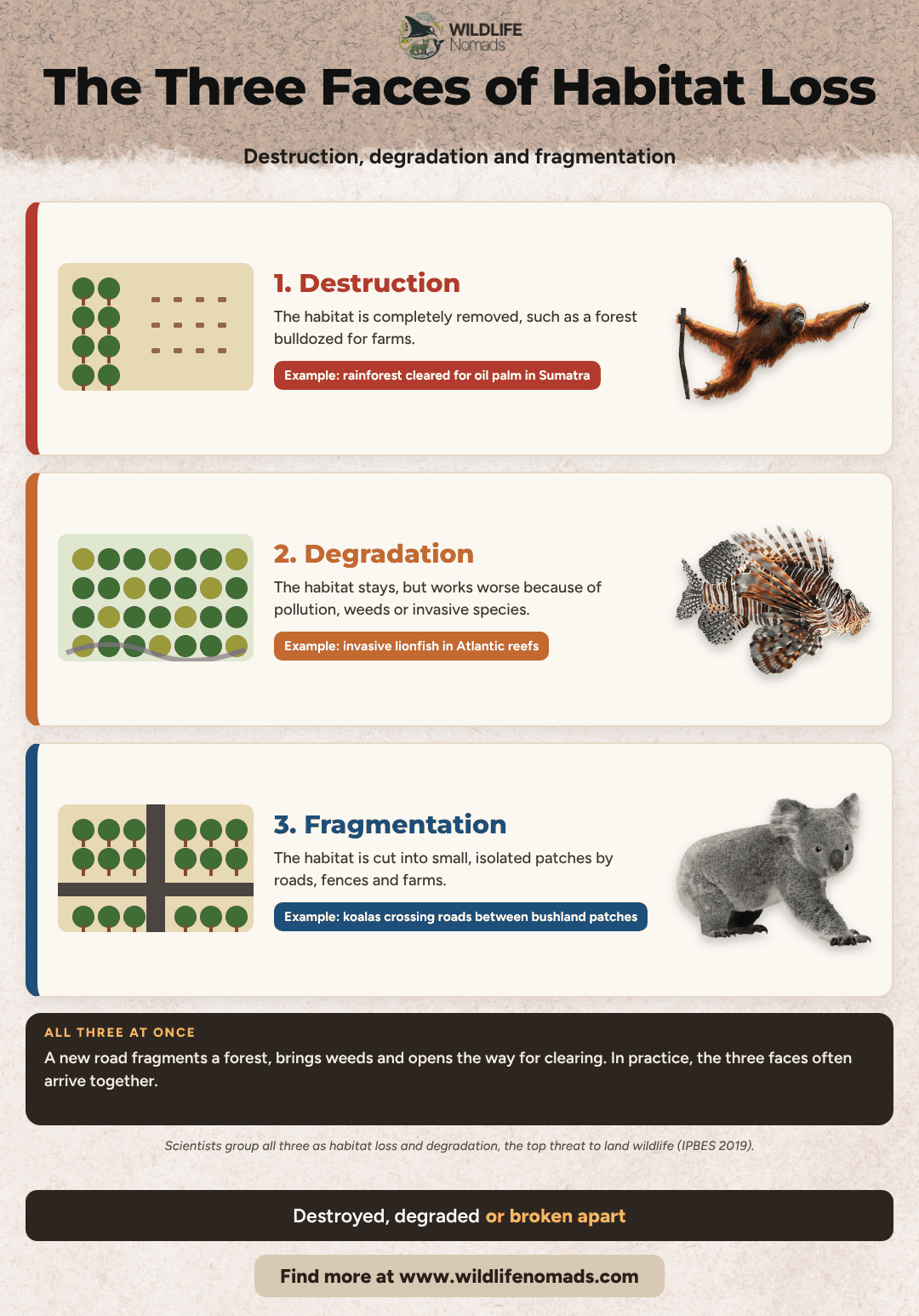
Habitat destruction occurs when a natural habitat can no longer support its native species. Scientists usually split it into three types of habitat loss:
- Destruction: the habitat is completely destroyed, for example when farmers bulldoze a forest.
- Degradation: the habitat survives but works worse, because of pollution, weeds or invasive species.
- Fragmentation: the habitat is cut into smaller, isolated pieces, often by roads and fences.
Together, scientists call this habitat loss and degradation. In practice, all three often happen together. A new road fragments a forest, brings weeds and opens the way for clearing.
2. It Is the Greatest Threat to Wildlife
Climate change gets the headlines. Yet habitat loss remains the greatest threat to life on Earth, and the primary threat to most endangered species.
In 2019, the global IPBES assessment named land-use change as the biggest driver of nature loss on land. A 2022 review agreed, finding habitat loss more urgent than climate change for wild species.
Similarly, the pattern holds in the United States. A classic study found habitat loss threatened 85% of the country’s imperilled species.
In addition, a study by the US National Academy of Sciences journal warned of “biological annihilation”. About a third of the vertebrate animal species it studied were shrinking in number and range.
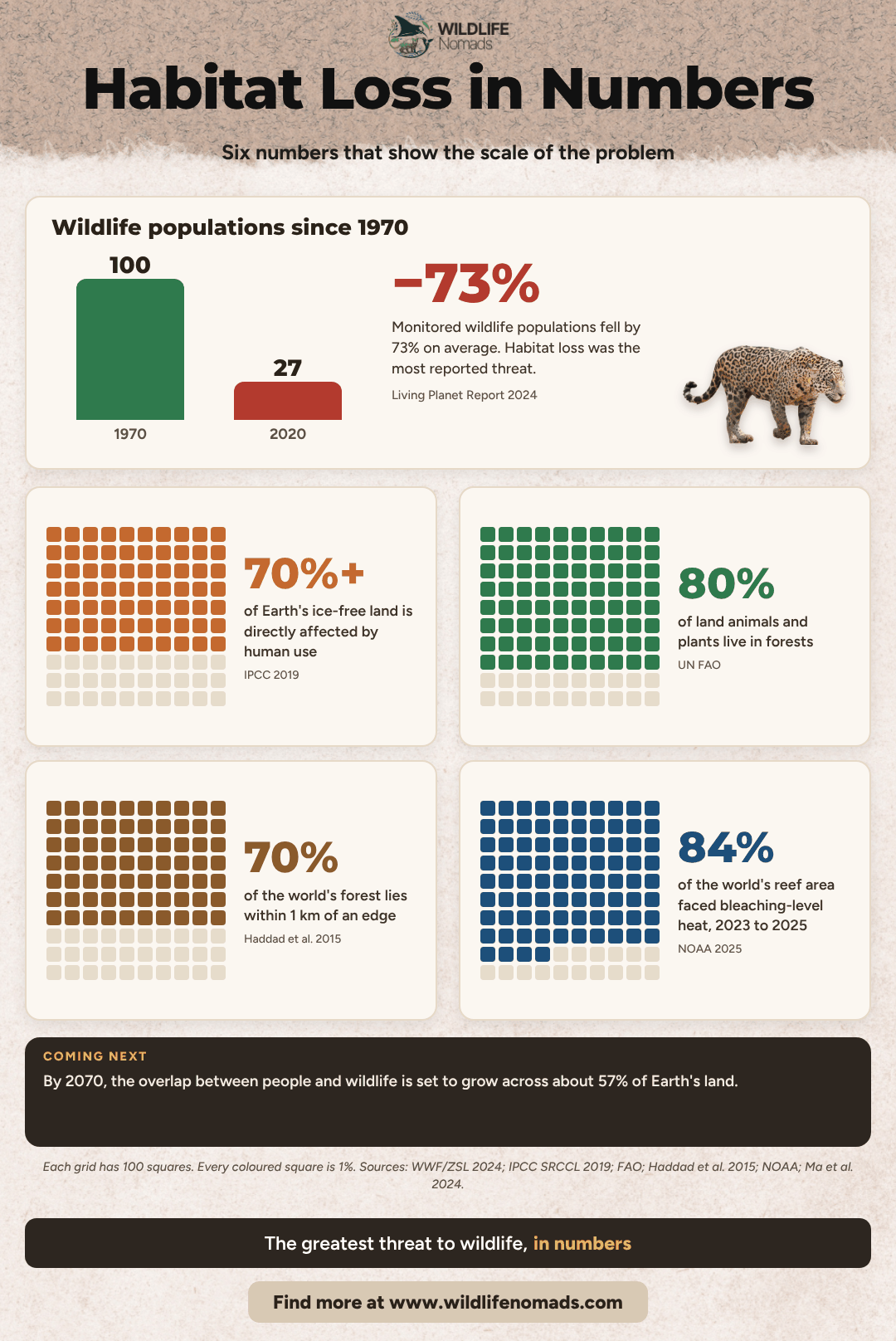
Meanwhile, the 2024 Living Planet Report recorded a 73% average decline in monitored wildlife populations since 1970. Habitat loss was the most reported of the major threats. Explore why biodiversity is important.
3. Humans Have Changed Most of Earth’s Land
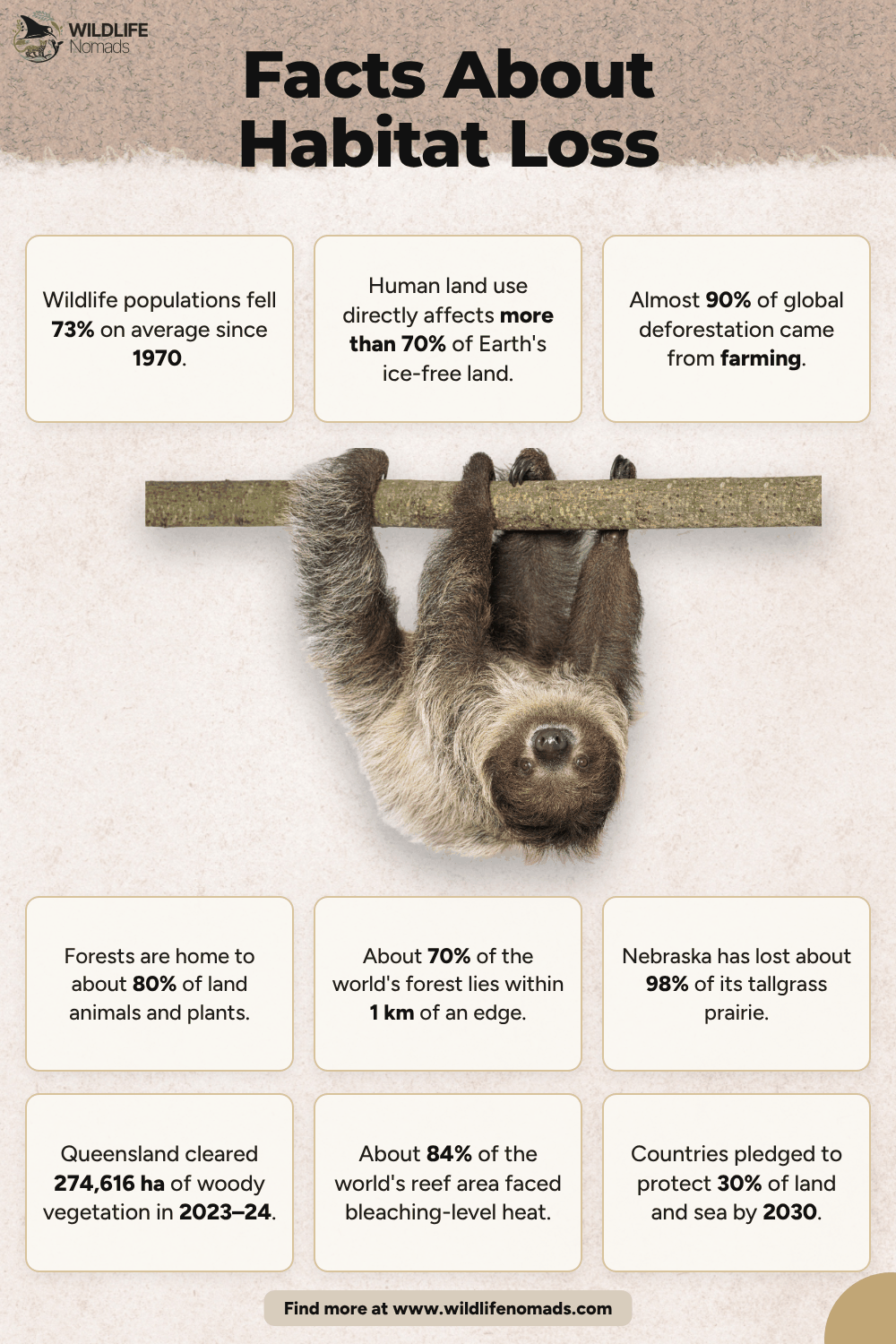
Our footprint is enormous, and it works on a global scale. According to the IPCC, human land use directly affects more than 70% of Earth’s ice-free land.
As the human population grows, so does the increasing pressure for more land and more food. We also need natural resources and energy sources. Commercial development adds roads, mines and housing.
Unfortunately, the squeeze isn’t over. A 2024 study projected that people will overlap with wildlife across about 57% of the planet’s land by 2070.
In other words, well over half of the natural world on land now carries a human imprint.
Back in 2005, the Millennium Ecosystem Assessment already warned that habitat change was a primary factor in biodiversity decline. Two decades later, the warning still stands.
4. Agriculture Is the Leading Cause
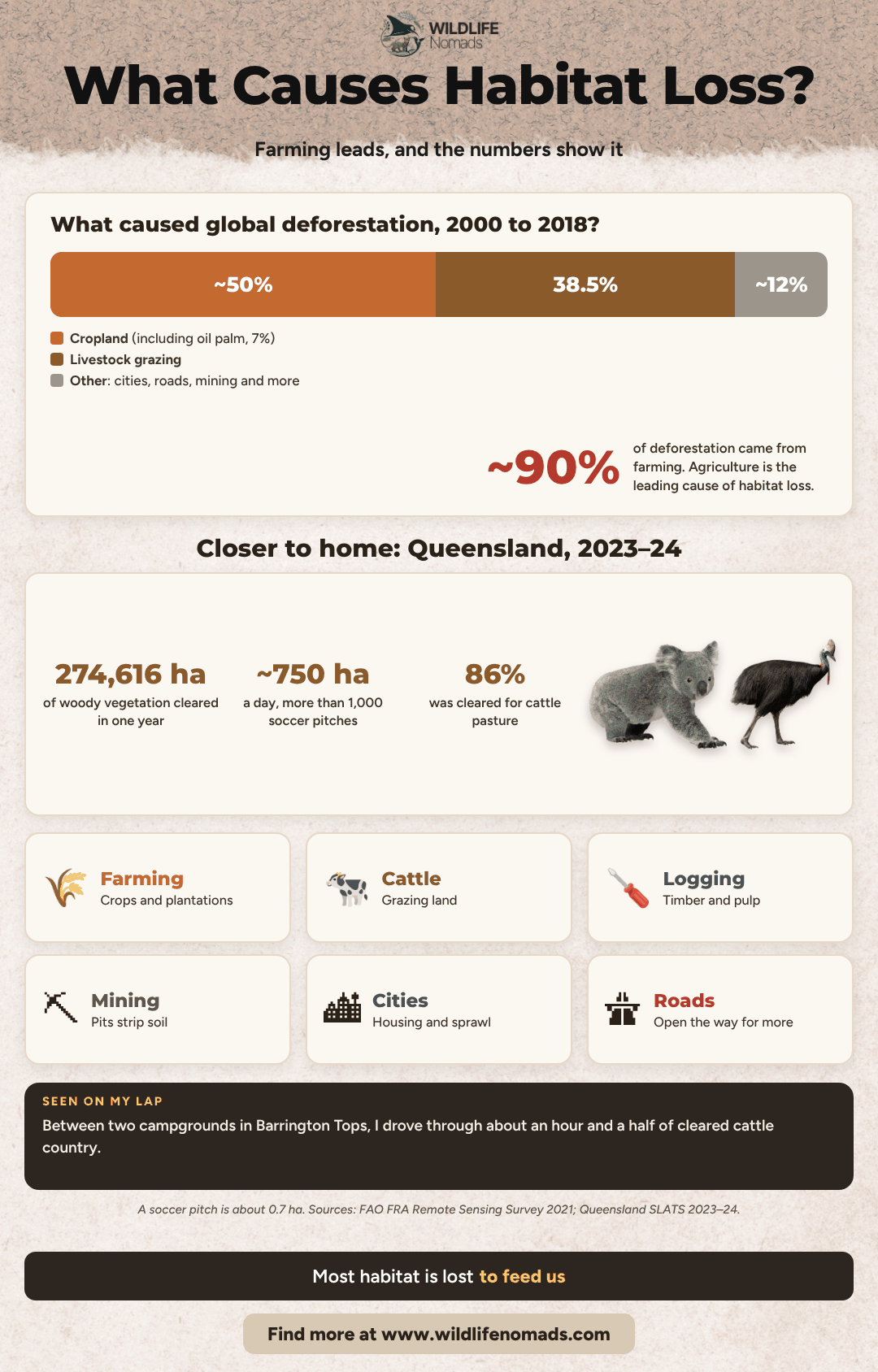
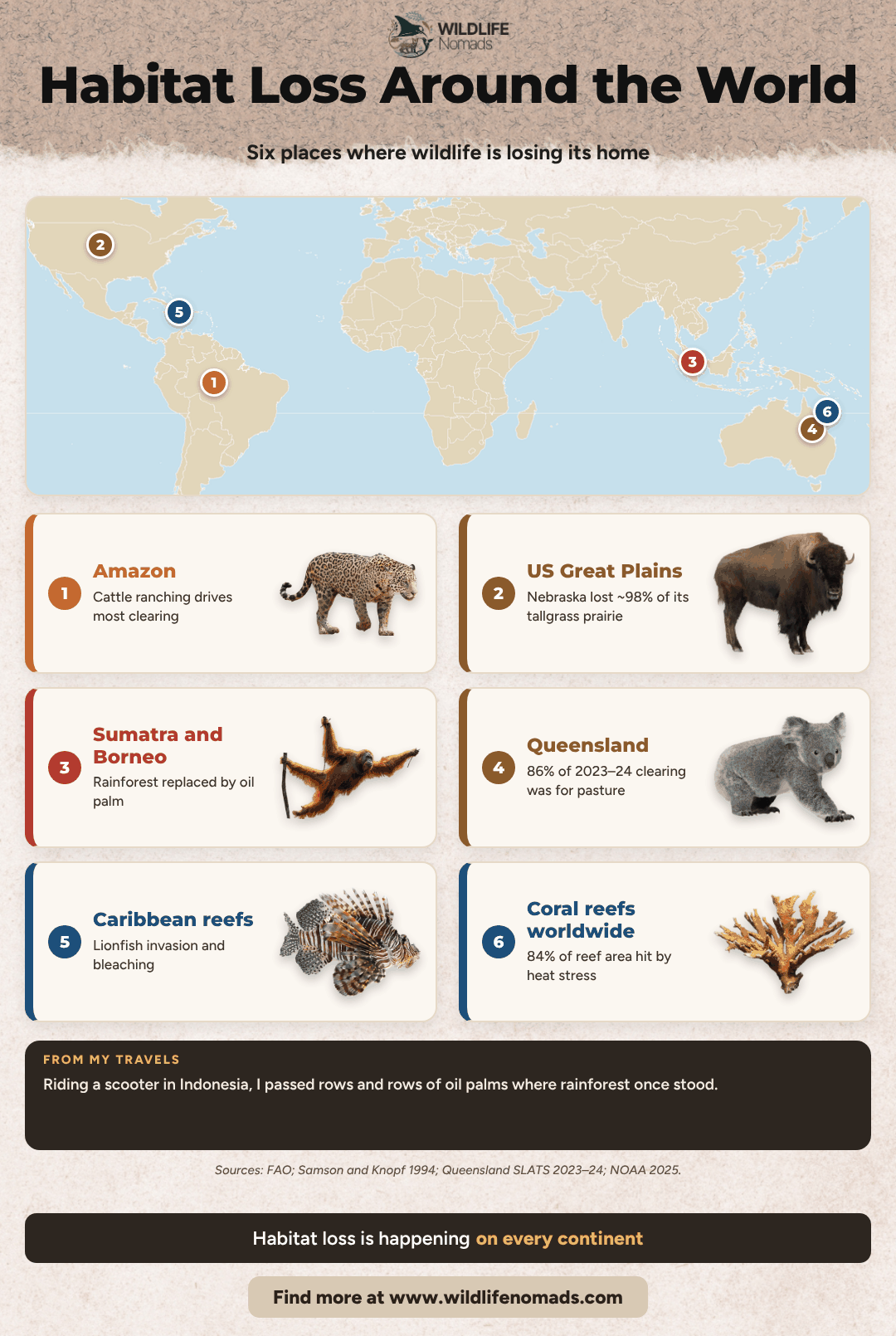
So, what causes habitat loss most? Farming. Turning natural areas into agricultural land is the leading cause of habitat loss worldwide. According to the FAO, farming drove almost 90% of global deforestation between 2000 and 2018.
For example, North America’s tallgrass prairie shows how fast habitat loss occurs. Nebraska alone has lost about 98% of it, almost all to the plough.
Meanwhile, in the Amazon, cattle ranching drives most deforestation. Soy farms add to the pressure.
I’ve seen the same story in Australia. Driving between two campgrounds in Barrington Tops, I crossed about an hour and a half of cleared cattle country. In Queensland, about 86% of clearing in 2023–24 was for pasture.

5. Palm Oil Has Reshaped the Tropics
Palm oil is in almost everything, from biscuits to shampoo. Indonesia and Malaysia grow most of the world’s supply.
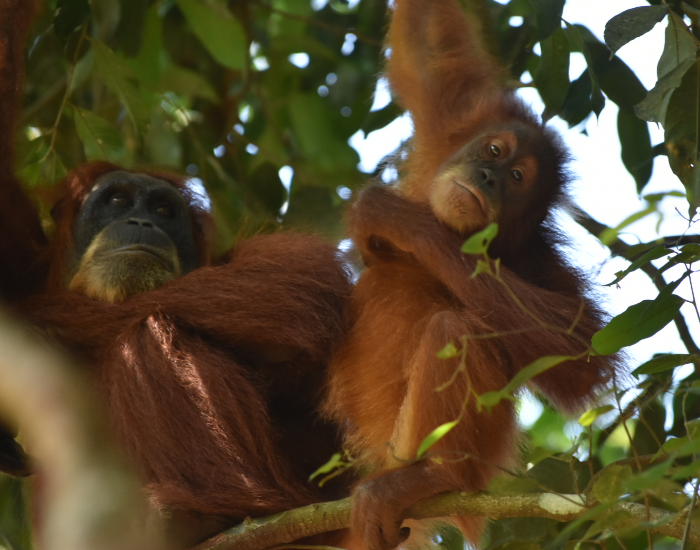
Unfortunately, many plantations replaced lowland rainforest, home to orangutans, Sumatran tigers, elephants and rhinos.
From the scooter, the plantations were easy to spot. Natural forest is layered and full of life. In contrast, a plantation is neat rows of a single tree, with far fewer animals.
Forest loss also hurts people, not just wildlife. In 2003, a flash flood in Bukit Lawang killed 239 people. Locals blamed illegal logging upstream.
6. Forests Hold Most Land Biodiversity
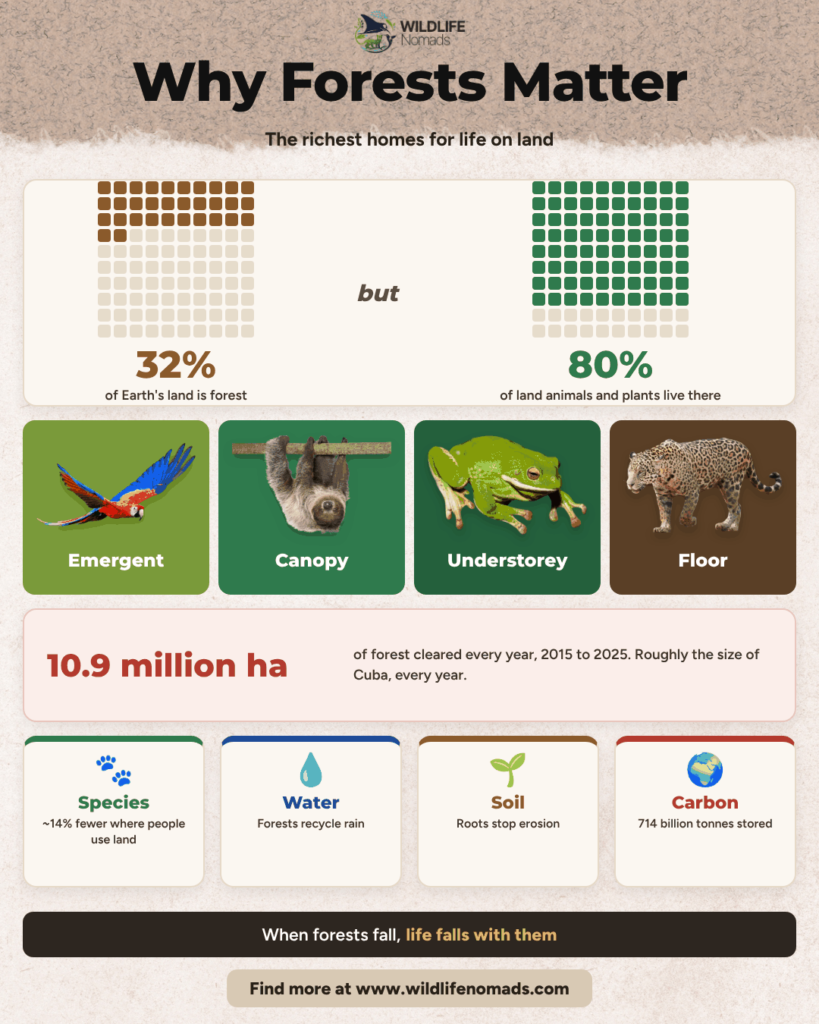
Forests are home to about 80% of the world’s land animals and plants. Therefore, when forests fall, many species fall with them, along with fungi and countless other organisms.
Losing natural vegetation also breaks natural processes, such as water cycling and soil formation.
Cutting forests also releases carbon dioxide. In other words, deforestation feeds climate change, which then degrades the forests that remain.
In fact, a huge global study found that land use cut local species richness by an average of about 14%. Read more about rainforest animals or the wildlife of Ecuador.
7. Fragmentation Turns Forests Into Islands
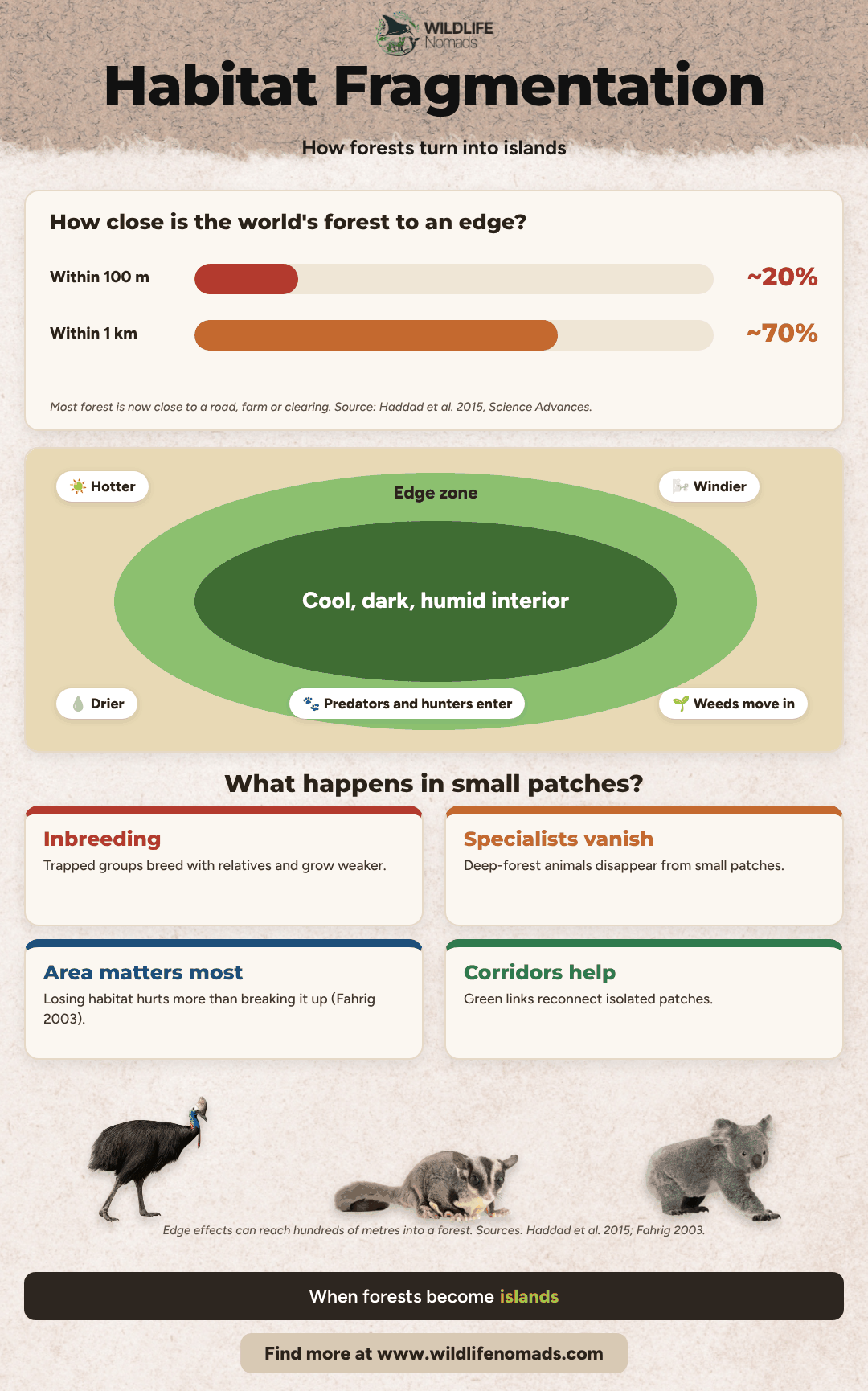
Even when forest survives, it is often broken up. A 2015 review found that 70% of the world’s remaining forest lies within 1 km of an edge.
Edges are hotter, drier and windier than forest interiors. They also let in predators, weeds and hunters. As a result, many forest specialists vanish from small patches.
Habitat destruction and fragmentation also trap animals. Isolated populations inbreed and struggle to recover.
Interestingly, a major paper in the Annual Review of Ecology, Evolution, and Systematics found that habitat amount matters most. In other words, losing area hurts more than breaking it up. {L(‘what-are-wildlife-corridors’,’Wildlife corridors’)} help reconnect them.
8. Degradation Can Be Silent
Habitat degradation examples are everywhere, even where land looks green. Pollution, weeds and invasive animals slowly change the physical environment.
For instance, I spent about two years as a field ecologist controlling invasive plants around Sydney. Weeds smother native plants, change soils and leave less food for native animals.
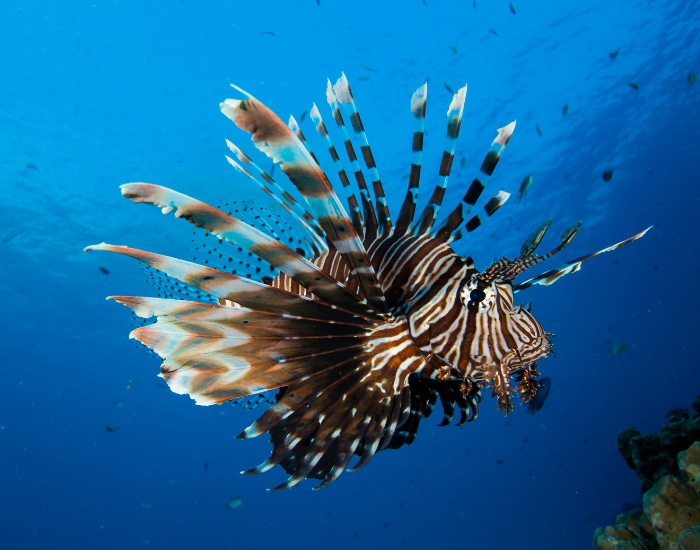
At sea, the lionfish shows the same problem. In the Atlantic, it can sharply cut the numbers of young native reef fish. See more invasive species in Australia.

9. Oceans Lose Habitats Too
However, habitat loss isn’t only a land problem. Coral reefs, mangroves and seagrass meadows are vanishing too.
For example, between 2023 and 2025, the fourth global bleaching event hit about 84% of the world’s reef area. That makes it the largest on record.
In 2025, I joined a coral restoration project in Pemuteran, Bali. While working on the reef, I even found a long, slender seahorse. Restoration helps, but it can’t keep pace with warming seas alone.
These are clear habitat degradation examples, with environmental impacts on biological diversity at sea.
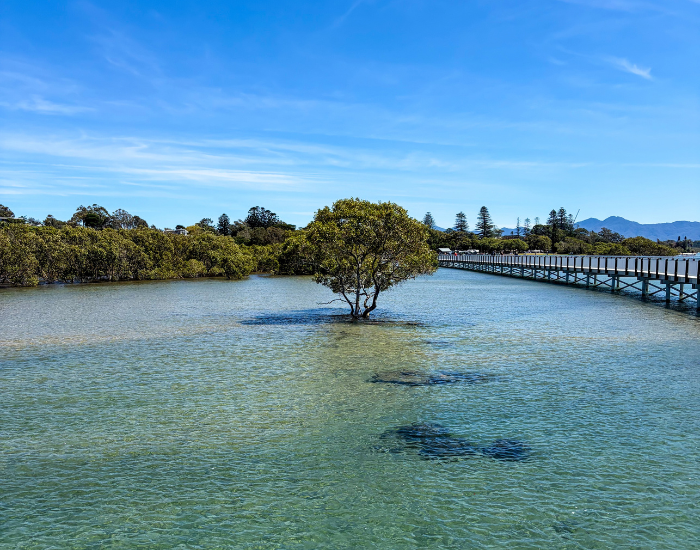
Mangroves matter just as much. They shelter fish nurseries and protect coasts from storms. Learn why mangroves are so important and explore types of corals and almost extinct sea animals.
10. Climate Change Makes Everything Worse
Climate change acts as a multiplier for biodiversity loss. Heat, drought and fire degrade habitats that are already broken.
For example, rising seas are swallowing coastal wetlands and beaches. Meanwhile, warmer temperatures push species uphill or towards the poles.
However, fragmented landscapes block those escape routes. So human caused habitat loss and climate change together hit far harder than either alone.

11. The Negative Effects Ripple Outward
Habitat loss rarely stops with one species, though. Its negative effects spread through whole ecosystems.
- Extinction: species with nowhere left to go disappear, as many animals have recently.
- Conflict: displaced elephants, tigers and other apex predators raid crops and clash with people.
- Lost services: fewer pollinators and seed dispersers weaken forests and harvests.
- Migratory species: birds and whales lose the stopovers and feeding grounds they need.
Above all, these ecosystem services support human societies, from clean water to food production. In short, a healthy ecosystem supports our well being too. See how keystone species hold ecosystems together.
12. We Can Still Turn It Around
Finally, here is the good news: loss of habitat is reversible in many places. Conservation biology offers proven tools.
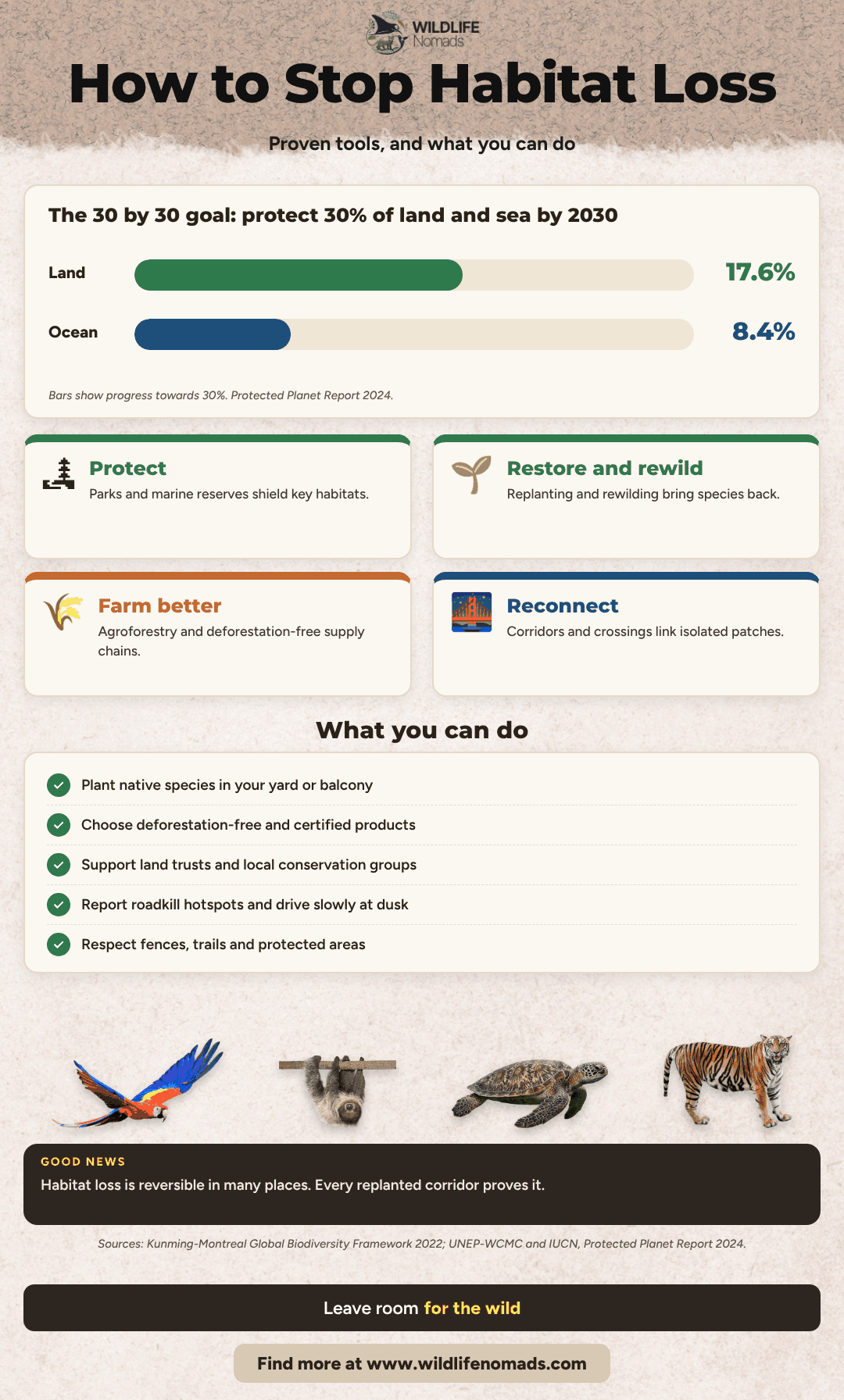
- Protected areas: parks and marine protected areas shield key habitats. Under a 2022 global deal, countries pledged to protect 30% of land and sea by 2030. So far, about 17.6% of land and 8.4% of the ocean are protected.
- Restoration and rewilding: replanting forests and rewilding landscapes bring species back.
- Better farming: agroforestry and deforestation-free supply chains reduce pressure on forests.
- Connections: corridors and crossings link isolated patches.
Many of these ideas came from biological conservation research over decades. Even so, they only work when human activities change too. After all, the vast majority of wildlife habitats lie outside parks. Read whether protected areas are effective for conservation.
FAQs About Habitat Destruction
Habitat destruction happens when a natural area can no longer support its native species. Clearing forests for farms or filling wetlands for houses are common examples.
Agriculture is the leading cause. Clearing land for crops, cattle and plantations destroys more habitat than any other human activity.
Habitat loss removes a habitat entirely. Habitat degradation leaves it standing but in poorer condition, for example because of pollution, weeds or invasive species.
Deforestation for palm oil, clearing rainforest for cattle, draining wetlands, ploughing prairies and bleaching coral reefs are all examples.
It removes food, shelter and breeding sites. As a result, populations shrink, animals clash with people and species can go extinct.
Fragmentation cuts habitats into small, isolated patches. Animals then struggle to find mates and food, and inbreeding becomes more likely.
Protect and restore natural areas, support deforestation-free products and plant native species. Wildlife corridors also help reconnect habitats.
Leave Room for the Wild
I’ve now seen habitat destruction in many places across Indonesia, and on my own lap around Australia. Each time, it made me sad.
Still, every protected forest, restored reef and replanted corridor proves we can bring wildlife back. Start small: plant natives, choose deforestation-free products and learn how to save endangered animals.
Then compare threatened species in our Endangered Animals Explorer, or see how ecosystems balance in our carrying capacity simulator. What habitat near you is worth protecting?
References:
Caro, T., Rowe, Z., Berger, J., Wholey, P., & Dobson, A. (2022). An inconvenient misconception: Climate change is not the principal driver of biodiversity loss. Conservation Letters, 15(3), e12868. https://doi.org/10.1111/conl.12868
Ceballos, G., Ehrlich, P. R., & Dirzo, R. (2017). Biological annihilation via the ongoing sixth mass extinction signaled by vertebrate population losses and declines. Proceedings of the National Academy of Sciences, 114(30), E6089–E6096. https://doi.org/10.1073/pnas.1704949114
Fahrig, L. (2003). Effects of habitat fragmentation on biodiversity. Annual Review of Ecology, Evolution, and Systematics, 34, 487–515. https://doi.org/10.1146/annurev.ecolsys.34.011802.132419
Haddad, N. M., Brudvig, L. A., Clobert, J., Davies, K. F., Gonzalez, A., Holt, R. D., Lovejoy, T. E., Sexton, J. O., Austin, M. P., Collins, C. D., Cook, W. M., Damschen, E. I., Ewers, R. M., Foster, B. L., Jenkins, C. N., King, A. J., Laurance, W. F., Levey, D. J., Margules, C. R., . . . Townshend, J. R. (2015). Habitat fragmentation and its lasting impact on Earth’s ecosystems. Science Advances, 1(2), e1500052. https://doi.org/10.1126/sciadv.1500052
Newbold, T., Hudson, L. N., Hill, S. L. L., Contu, S., Lysenko, I., Senior, R. A., Börger, L., Bennett, D. J., Choimes, A., Collen, B., Day, J., De Palma, A., Díaz, S., Echeverria-Londoño, S., Edgar, M. J., Feldman, A., Garon, M., Harrison, M. L. K., Alhusseini, T., . . . Purvis, A. (2015). Global effects of land use on local terrestrial biodiversity. Nature, 520(7545), 45–50. https://doi.org/10.1038/nature14324
Wilcove, D. S., Rothstein, D., Dubow, J., Phillips, A., & Losos, E. (1998). Quantifying threats to imperiled species in the United States. BioScience, 48(8), 607–615. https://doi.org/10.2307/1313420