The Fascinating World of Animal Vision

When we think about superhuman abilities, exceptional vision often tops the list (an maybe flying!). But here’s the thing, we humans don’t even come close to having the best eyesight in the animal kingdom. While we pride ourselves on our 20/20 vision, countless creatures possess visual capabilities that would make us feel practically blind in comparison.
The animals sense of light varies dramatically across species, with some detecting ultraviolet rays invisible to us, others seeing in near-total darkness, and many possessing visual acuity that’s four to eight times sharper than ours. So, what animal has the best sense of sight? The answer isn’t straightforward because different species excel in different aspects of vision.
From the microscopic detail detection of birds of prey to the complex color perception of marine creatures, the animal kingdom showcases an incredible diversity of visual adaptations. Each species has evolved unique visual capabilities perfectly suited to their environment, hunting strategies, and survival needs.
Some of these animals possess truly amazing eyes, with adaptations that far surpass human vision and allow them to thrive in challenging environments.
Let’s dive into the fascinating world of animal vision and discover the top 12 creatures that put our human eyesight to shame.
Understanding Animal Vision: Beyond Human Perception
Before we explore which animal has the best sense of sight, it’s crucial to understand that vision encompasses much more than just seeing clearly. Animal vision includes:
- Visual acuity: The sharpness and clarity of sight
- Color perception: The ability to distinguish different wavelengths of light
- Night vision: Seeing in low-light conditions
- Motion detection: Spotting movement quickly and accurately
- Depth perception: Judging distances precisely
- Field of view: How much area can be seen at once
- Light sensitivity: Detecting minimal amounts of light
Human vision, while impressive in its own right, typically operates within a narrow spectrum of visible light and performs best in well-lit conditions. Many animals have evolved to see beyond these limitations, developing specialized visual systems that give them significant advantages in their environments. Photoreceptor cells in the retina are responsible for detecting light and color, and the number and type of these cells vary greatly among animals, contributing to their unique visual abilities.
Note, it is important to differentiate:
The two main concepts to understand here are:
- Visual Acuity (Sharpness): The ability to resolve fine detail.
- The Champion: Eagles (diurnal hunters). They have high cone density and deep foveae.
- Light Sensitivity (Night Vision): The ability to detect minimal light.
- The Champion: Owls/Geckos (nocturnal hunters). They have a high number of light-sensitive rods and large pupils.
Top 12 Animals With the Best Sense of Sight
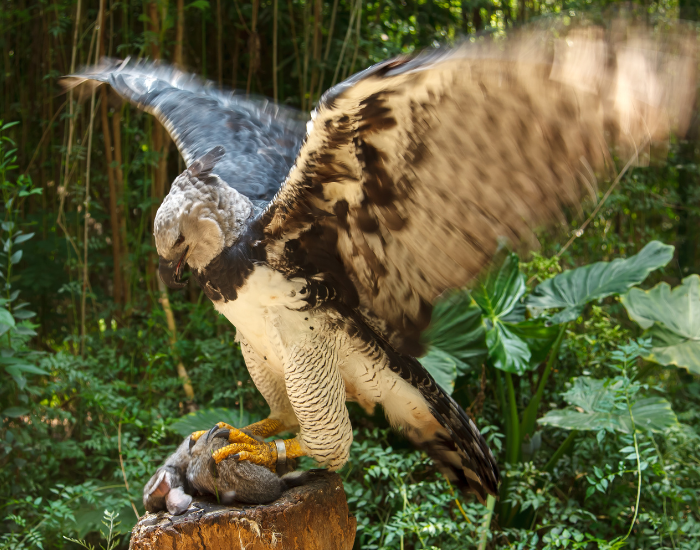
1. Eagles: The Undisputed Champions of Distance Vision
Eagles are consistently on top this list. These magnificent birds of prey possess visual acuity that’s 4-8 times sharper than humans, making them the gold standard for long-distance vision. The legendary ‘eagle eye’ is synonymous with extraordinary sharpness and clarity, setting a benchmark for visual precision.
Eagles can spot a rabbit from over two miles away, thanks to their incredibly dense retinas packed with photoreceptors. Their eagle eyes have earned a reputation for exceptional vision, allowing them to detect even the slightest movement from afar. Their eyes are proportionally larger than ours, and they possess a higher concentration of cones in their fovea – the area responsible for sharp, detailed vision. The large eye size relative to their body size further enhances their visual acuity, giving them a distinct advantage in the wild.
What makes eagle vision truly exceptional:
- Telescopic vision: Can zoom in on distant objects
- Binocular vision: Excellent depth perception for hunting
- UV light detection: See patterns invisible to humans
- Rapid focus adjustment: Switch between near and far objects instantly
- Eagle’s ability: Detect prey from great distances with unmatched precision
The golden eagle, in particular, has been recorded spotting prey from distances exceeding 3 miles. This remarkable ability allows them to soar high above their territory while maintaining constant surveillance for potential meals. Their keen eyesight is crucial for successful hunting, enabling them to track and capture prey with incredible accuracy. With their sharp eyesight, eagles remain unmatched in the animal kingdom.
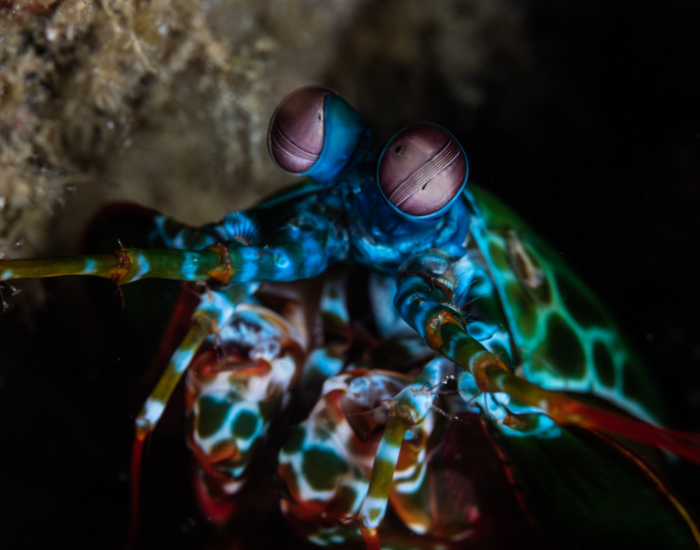
2. Mantis Shrimp: The Most Complex Eyes in Nature
The mantis shrimp deserves recognition as having the most sophisticated visual system in the animal kingdom. These colorful crustaceans possess mantis shrimp eyes that can detect an incredible range of visual information.
Each eye contains up to 16 different types of photoreceptors (humans have only three), allowing them to:
- See 12-16 different color channels
- Detect linear and circular polarized light
- Perceive ultraviolet, visible, and infrared light
- Process visual information at incredible speeds
Mantis shrimp eyes can process a wide range of light waves, including ultraviolet and polarized light, which contributes to their vision.
Their trinocular vision provides exceptional depth perception, while their ability to move each eye independently gives them an almost 360-degree field of view. This advanced visual perception helps them hunt, communicate, and navigate their coral reef environments with extraordinary precision. Their remarkable eyesight is crucial for detecting prey, giving them a significant advantage in spotting hidden or camouflaged animals.
However, despite having many photoreceptors, research suggests their system is not designed for fine color discrimination. Instead of comparing the different receptor signals in the brain (like humans do to see billions of colors), the mantis shrimp uses the receptors in a fast, hard-wired, interval-decoding system. This allows for rapid color recognition (e.g., distinguishing color bands in a 12-band spectrum) without needing the complex, energy-intensive process of comparing wavelengths, which is crucial for quick hunting decisions. They are actually relatively poor at differentiating similar colors compared to humans

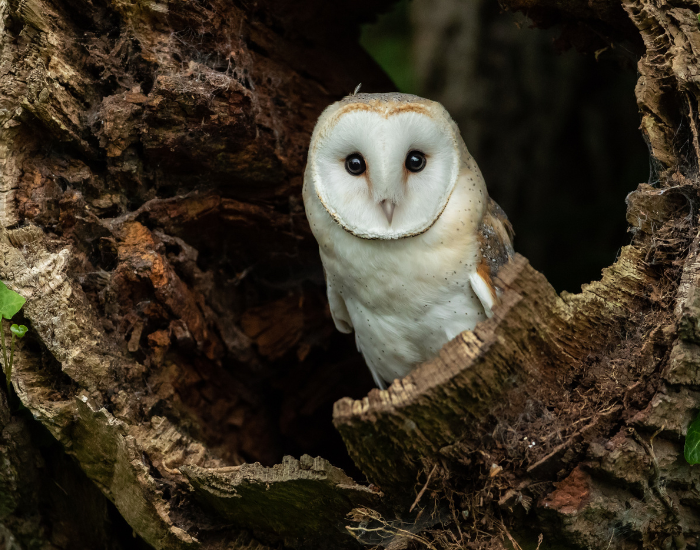
3. Owls: Masters of Night Vision
Owls represent the pinnacle of nocturnal vision, earning them a spot among animals with great eyesight in low-light conditions. Their large, forward-facing eyes, which are proportionally much larger relative to their head size than in most birds, are a key adaptation for night vision and hunting in darkness.
Key features of owl vision:
- Asymmetrical ear placement: Enhances their ability to pinpoint prey
- Large pupils: These adaptations allow owls to gather more light in dim environments
- High rod density: Specialized cells for night vision; rods interpret light in low-light conditions, and owls have a high density of these cells
- Tubular eye shape: Concentrates light more effectively
Great horned owls can see clearly in light levels 100 times dimmer than what humans require. Their eyes are so large that they cannot move them in their sockets – instead, they rotate their entire heads up to 270 degrees to track movement. These adaptations give owls some of the best night vision in the animal kingdom.
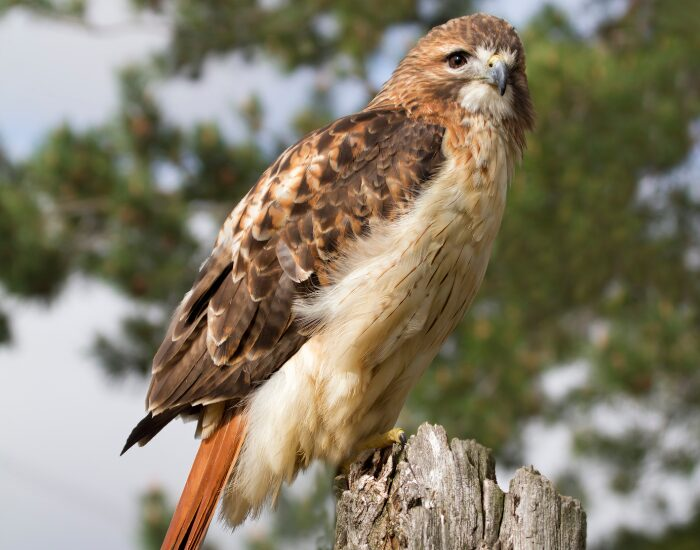
4. Hawks: Precision Hunters with Exceptional Detail Detection
Hawks, close relatives of eagles, possess similarly impressive visual capabilities. These raptors have evolved some of the sharpest eyesight in the animal kingdom, with visual acuity approximately 8 times better than humans.
Red-tailed hawks can detect movement from over a mile away and distinguish between different types of prey based on subtle visual cues. Hawks possess exceptional colour vision, which helps them identify subtle differences in their environment. Their eyes contain a high concentration of photoreceptors, allowing them to see fine details that would be invisible to us.
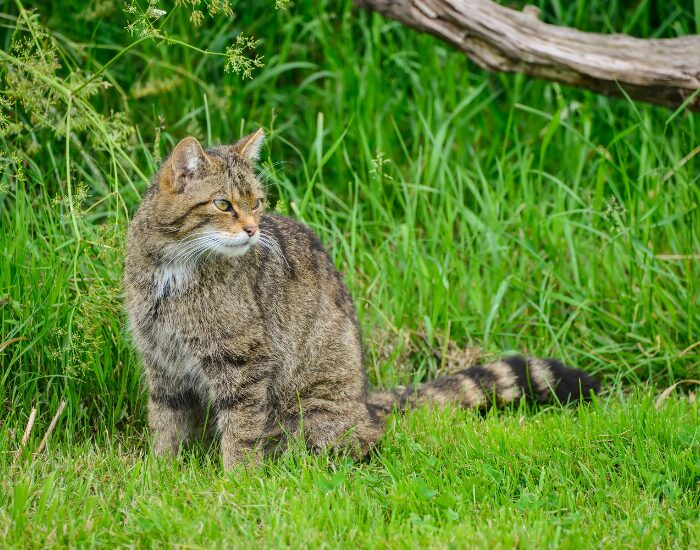
5. Cats: Built-in Night Vision Goggles
Domestic cats and their wild relatives possess remarkable night vision capabilities, making them efficient nocturnal hunters. Their eyes are designed to capture and amplify available light, giving them a significant advantage in low-light conditions.
Cat vision features:
- Reflective tapetum lucidum: The mirror-like layer behind the retina that causes their eyes to glow
- Large pupils: Can dilate to let in maximum light
- High rod concentration: Specialized for detecting movement and shapes in darkness
- Wide field of view: Approximately 200 degrees compared to humans’ 180 degrees
- Nerves running horizontally: Big cats have nerves running horizontally across the center of their eyes, which enhances their peripheral vision and ability to detect movement
While cats sacrifice some color perception for enhanced night vision, they can still see some colors, particularly blues and greens.
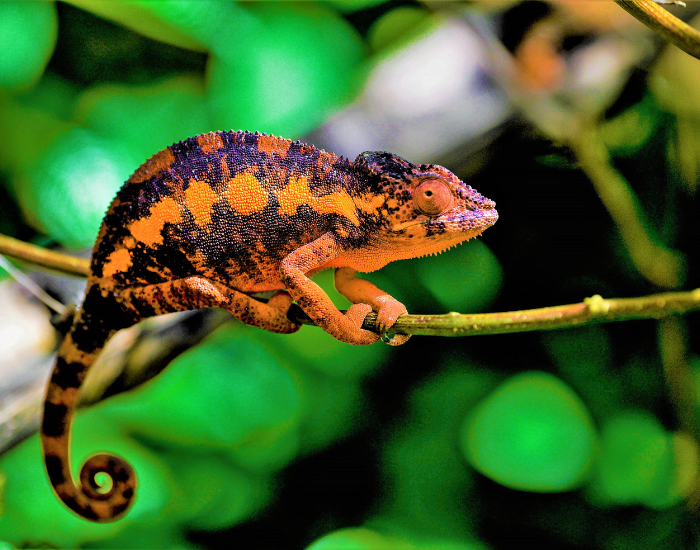
6. Chameleons: Independent Eye Movement Champions
Chameleons possess one of the most unique visual systems in the animal kingdom, often referred to as chameleon eyes. Chameleon eyes can move independently of each other, providing them with an almost complete 360-degree field of view. This ability makes them exceptional at detecting both predators and prey.
A chameleon’s ability to rotate each eye independently gives them a nearly 360-degree field of vision, allowing them to effectively monitor their surroundings and hunt without moving their head.
Each chameleon eye can focus independently, allowing them to:
- Track multiple objects simultaneously
- Maintain constant awareness of their surroundings
- Judge distances accurately for their projectile tongues
- See into the UV spectrum
Their cone-shaped eyes can zoom in on objects like a telephoto lens, providing detailed images of potential prey or threats.
Recent research using 3D CT imaging has revealed a new adaptation behind this extraordinary ability: chameleons have a long, coiled optic nerve that provides extra flexibility, reducing strain during the extreme eye rotations unique to this species. This anatomical innovation further explains how chameleons have evolved to thrive in complex, three-dimensional arboreal environments, where precise vision and movement are key to survival.
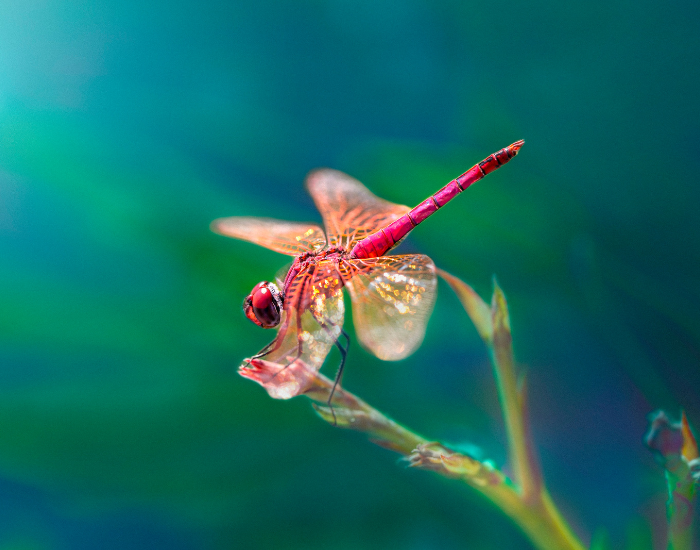
7. Dragonflies: Motion Detection Specialists
Dragonflies have some of the most efficient visual systems for detecting movement. Their large, multifaceted eyes, each containing thousands of individual lenses, provide them with an incredibly wide field of view and exceptional motion detection capabilities.
These aerial predators can:
- See in nearly every direction simultaneously
- Detect movement faster than almost any other creature
- Track multiple objects at once
- Process visual information at remarkable speeds
Their success rate in catching prey (over 95%) is partly due to their extraordinary visual capabilities and ability to predict flight paths.
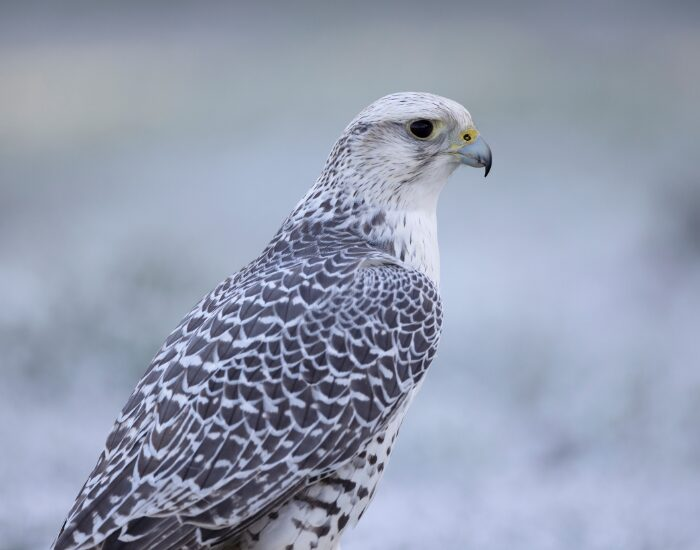
8. Falcons: Speed and Precision Combined
Peregrine falcons, the fastest birds in the world, possess visual capabilities that match their incredible speed. During high-speed dives exceeding 200 mph, they can still track and capture prey with remarkable precision.
Their visual adaptations include:
- Nictitating membrane: Protects eyes during high-speed flight
- Exceptional temporal resolution: Can process rapidly changing visual information
- Precise depth perception: Essential for high-speed hunting
- UV vision: Helps track prey against various backgrounds
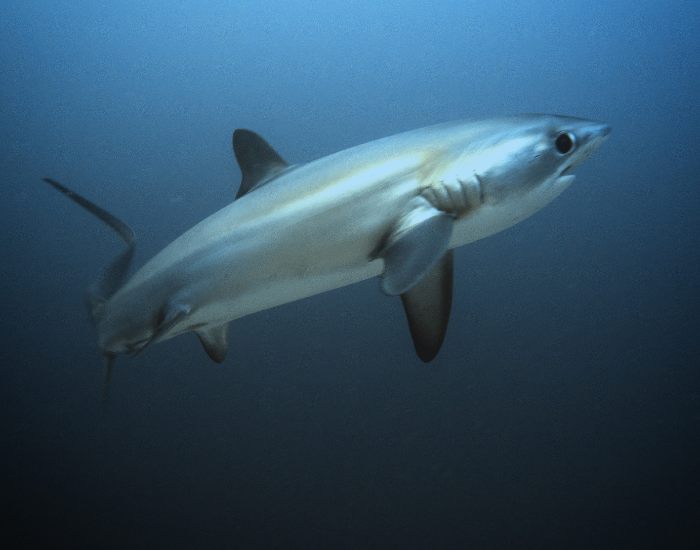
9. Sharks: Underwater Vision Specialists
Sharks are often considered to have the best underwater vision among marine animals. They have evolved exceptional vision for their aquatic environment. Their eyes are adapted for aquatic vision, allowing them to see clearly underwater, where light behaves differently than in air.
Shark vision features:
- Tapetum lucidum: Reflects light back through the retina for enhanced sensitivity
- Protective nictitating membrane: Shields eyes during attacks
- Motion sensitivity: Detects the slightest movements of potential prey
- Adaptation to blue light: Optimized for underwater light conditions
Great white sharks can see clearly at depths where humans would perceive only darkness.
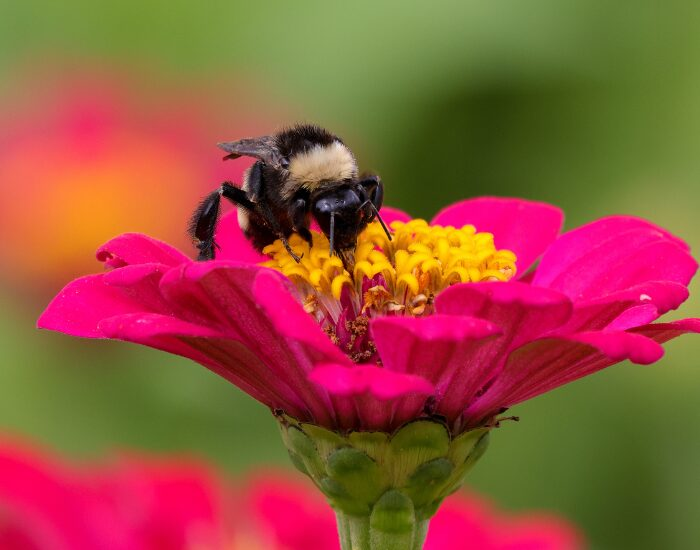
10. Bees: Ultraviolet Vision and Pattern Recognition
Bees possess fascinating visual capabilities that allow them to navigate, communicate, and locate flowers efficiently. Their advanced visual perception, including the ability to see ultraviolet and polarized light with their complex compound eyes, enables them to efficiently navigate and locate flowers.
Bee vision includes:
- UV light detection: See ultraviolet patterns on flowers
- Polarized light perception: Use sun position for navigation
- Fast motion detection: Essential for flight stability
- Color vision: Optimized for flower recognition
Their ability to see UV patterns helps them identify the most rewarding flowers and navigate back to their hives.
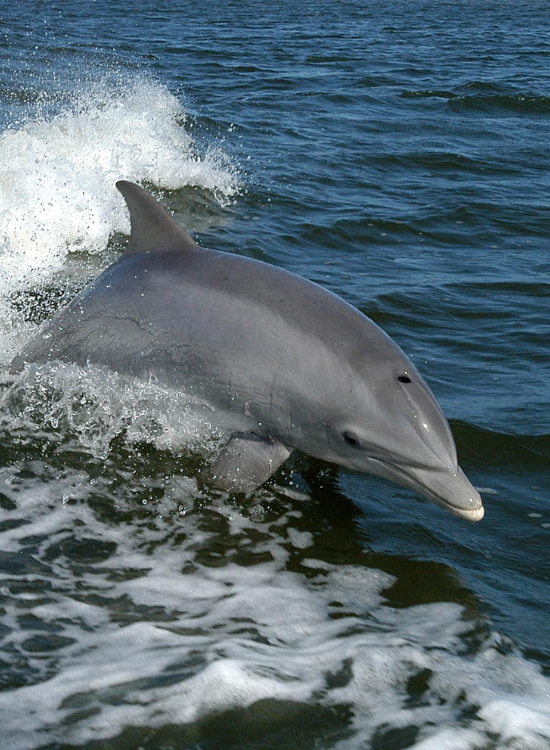
11. Dolphins: Echolocation and Vision Combined
While dolphins are famous for their echolocation abilities, they also possess excellent vision both above and below water. Their eyes are adapted to function in both air and water environments.
Dolphin visual capabilities:
- Binocular vision: Good depth perception
- Adaptation to aquatic environments: Clear vision underwater
- Integration with echolocation: Visual and sonar information combined
- Motion detection: Excellent for hunting fast-moving fish
12. Kingfishers: Precision Diving Specialists
Kingfishers have evolved remarkable visual adaptations for their unique hunting strategy of diving into water to catch fish. Their eyes must account for light refraction when transitioning from air to water.
Their visual system includes:
- Compensation for refraction: Accurate targeting despite light bending
- Excellent depth perception: Essential for successful diving
- Rapid focus adjustment: Switch between air and water vision
- High visual acuity: Spot small fish from considerable distances

13. Tarsiers: The Mammals With the Biggest Eyes
Tarsiers, tiny primates from Southeast Asia, like Indonesia, hold the record for the largest eye-to-body ratio of any mammal. Each eye is as large as their brain! These huge eyes are packed with light-sensitive rods, giving them incredible night vision. Tarsiers can spot insects and small prey under starlight conditions where humans would see nothing but darkness.
Key features of tarsier vision:
- Gigantic eyes fixed in their skulls (cannot rotate them).
- Exceptional night vision for hunting insects.
- Head rotation up to 180° to compensate for immobile eyes.
- Sensitivity to ultraviolet light.

14. Jumping Spiders: Tiny Predators With Super Senses
Despite their small size, jumping spiders boast some of the sharpest vision in the invertebrate world. Their large forward-facing eyes give them depth perception and allow them to judge distances precisely for their lightning-fast pounces.
Jumping spider vision highlights:
- Color vision extending into the UV spectrum.
- Four pairs of eyes: central pair provides detail, lateral ones detect motion.
- Excellent depth perception for stalking and leaping on prey.
- Ability to focus and scan like a camera lens.

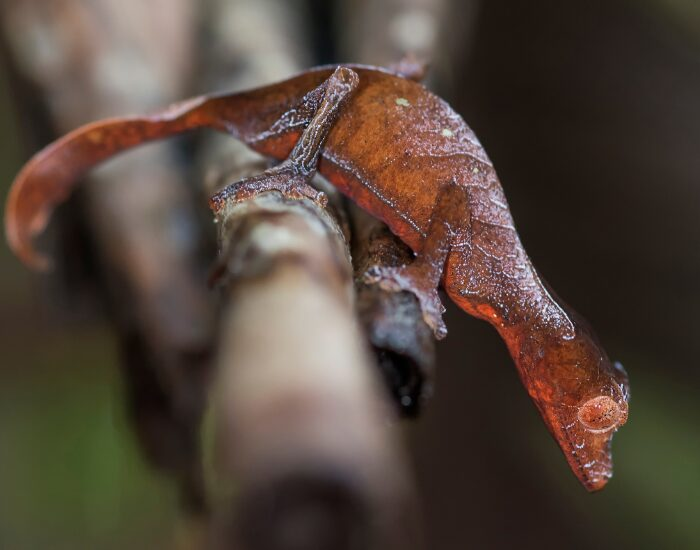
15. Geckos: Night Hunters With Color Vision in Darkness
Geckos have some of the coolest adaptation in the animal word. They have evolved some of the most advanced low-light vision among vertebrates. Studies show that certain gecko species can see up to 350 times better in the dark than humans, and uniquely, they can even detect color in near-total darkness.
Gecko visual features:
- Highly sensitive cone cells adapted for low light.
- Excellent ability to distinguish colors in dim conditions.
- Wide field of vision to detect movement at night.
- Specialized for nocturnal hunting of insects.
Are you interested in Geckos? Have a look at our article about Tokay Geckos
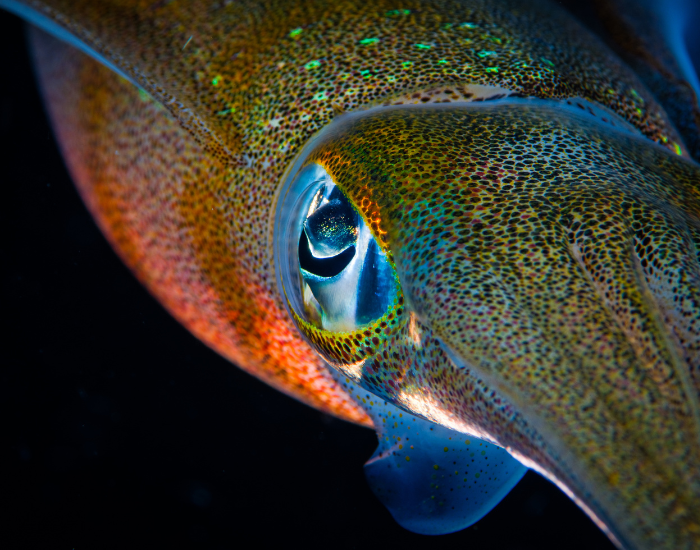
16. Cuttlefish and Squid: Masters of Polarization Vision
Though colorblind in the human sense, cuttlefish and squid perceive the world through polarization sensitivity, giving them a unique view of contrast and patterns invisible to us. This ability helps them communicate with each other and detect camouflaged prey.
Key aspects of cephalopod vision:
- Advanced polarization vision.
- Superb contrast detection even without color perception.
- Large, complex eyes similar in design to vertebrates.
- Excellent vision in low light, helping them hunt at night.
Read more about the Giant Squid on our article here!
The Science Behind Superior Animal Vision
Understanding which animal has best vision requires examining the anatomical and physiological adaptations that make exceptional eyesight possible. The eyes in the animal kingdom display a remarkable range of adaptations, allowing species to thrive in diverse environments. These adaptations have evolved over millions of years to give animals specific advantages in their environments.
Anatomical Adaptations
Eye Size and Shape: Many animals with exceptional vision have proportionally larger eyes than humans. Owls, for example, have eyes that are nearly as large as their brains. The shape of the eye also matters – tubular eyes concentrate light more effectively than spherical ones.
Retinal Density: Animals with sharp vision typically have much higher concentrations of photoreceptors in their retinas. Eagles can have up to 1 million photoreceptors per square millimeter, compared to humans’ 200,000.
Specialized Structures: Many animals have evolved unique structures like the tapetum lucidum (reflective layer) in cats and sharks, or the complex compound eyes of insects and crustaceans.
Physiological Adaptations
Photoreceptor Types: While humans have three types of color receptors, some animals have many more. Birds often have four types, while mantis shrimps can have up to 16 different types.
Processing Speed: Some animals can process visual information much faster than humans. Dragonflies can detect movement and react in milliseconds, while we might take several times longer.
Light Sensitivity: Many nocturnal animals have evolved extreme light sensitivity, allowing them to see in conditions that would leave humans completely blind.
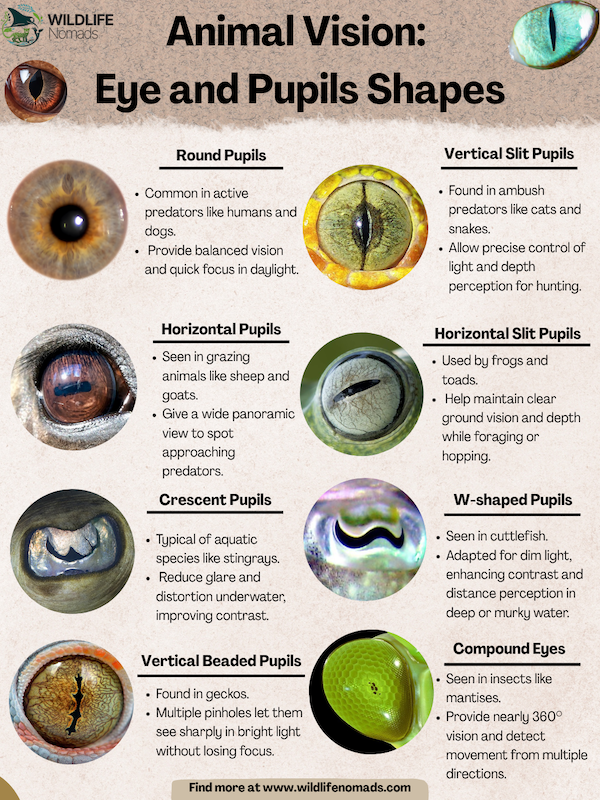
Pupil Shape as an Adaptation: The Eye’s Window to Survival
The shape of an animal’s pupil isn’t random; it is a key evolutionary adaptation tied directly to the creature’s ecological niche—whether it is a hunter, prey, or active during the day or night. The pupil acts as the eye’s aperture, controlling the light and profoundly influencing how the animal perceives its surroundings.
The three primary pupil shapes are highly optimized for different survival needs:
- Round Pupils: Common in diurnal (daytime) hunters like humans, eagles, and most apes. This shape provides the best overall optical clarity across a wide field of view when light is plentiful.
- Vertical-Slit Pupils: Predominantly found in ambush predators that are active both day and night, such as cats, crocodiles, and geckos. This shape offers two major advantages:
- Massive Light Range: The vertical slit can narrow dramatically to a tiny pinhole to protect the sensitive retina from bright daylight, and dilate widely at night.
- Precise Ranging: It creates a superior astigmatic depth of field that helps the animal estimate distance with greater accuracy for a quick pounce.
- Horizontal Pupils: Common in prey animals with eyes positioned on the sides of their head, such as horses, sheep, and goats. This shape allows for a wide, panoramic view and crucially keeps the horizon in sharp focus while scanning for approaching predators. Research shows that even when the animal bends its head to graze, the eye rotates to keep the pupil parallel to the ground.
Binocular Vision in Animals: The Power of Depth Perception
Binocular vision is one of the most powerful tools in the animal kingdom’s visual arsenal. This adaptation, found in humans and many other animals, allows for the perception of depth and three-dimensional space by overlapping the fields of view from both eyes. When both eyes focus on the same object, the brain merges the two slightly different images, granting the ability to judge distances with remarkable accuracy—a crucial advantage for survival.
In the wild, binocular vision is a game-changer for predators and arboreal animals alike. Birds of prey, such as eagles and hawks, are prime examples. Their forward-facing eyes provide exceptional binocular vision, enabling them to spot small prey from very far distances and execute precise dives. Their visual acuity is legendary, far surpassing human vision, and their depth perception is essential for tracking fast-moving targets and navigating complex environments.
Primates, including humans, also benefit from binocular vision. Our eyes are positioned at the front of the head, giving us excellent depth perception and the ability to see fine details—an evolutionary advantage for tasks like climbing, foraging, and manipulating objects. Cats and dogs, while not as specialized as birds of prey, also possess a degree of binocular vision that helps them judge distances when hunting or navigating obstacles, especially in low light conditions where their exceptional night vision comes into play.
Environmental Factors Affecting Animal Vision
The environment plays a crucial role in determining what animal has the best vision for specific conditions. Different habitats present unique visual challenges that have shaped the evolution of specialized visual systems. In fact, only animals with specific adaptations can thrive in certain visual environments, highlighting the diversity of visual abilities across the animal kingdom.
Aquatic Environments
Water absorbs light differently than air, with red light disappearing first and blue light penetrating deepest. Marine animals have adapted their vision accordingly:
- Sharks have evolved to see primarily in the blue-green spectrum
- Dolphins have developed vision that works both above and below water
- Mantis shrimps in shallow coral reefs can see the full spectrum plus UV and polarized light
The four-eyed fish is a unique aquatic species with specialized eyes that allow it to see both above and below the water surface, an adaptation especially useful in tropical river environments.
Aerial Environments
Flying animals face unique visual challenges, including:
- Rapid changes in perspective and distance
- Need for exceptional depth perception
- Ability to see ground-based prey from great heights
Birds of prey like eagles and hawks have evolved the sharpest distance vision to meet these challenges.
Terrestrial Environments
Land-based animals have developed diverse visual adaptations:
- Nocturnal hunters like owls and cats have evolved superior night vision
- Diurnal predators like big cats have balanced vision for various lighting conditions
- Prey animals often have wide fields of view to detect approaching predators
The Role of Vision in Animal Behavior
Understanding animals with great eyesight isn’t just about visual acuity – it’s about how vision influences behavior and survival strategies. In hunting and predation, some animals have evolved vision capable of detecting objects hidden in vegetation or fast moving objects, which is crucial for both predators and prey.
Hunting and Predation
Superior vision gives predators significant advantages:
- Early detection of prey allows for strategic positioning
- Precise targeting ensures successful attacks
- Depth perception enables accurate strikes and catches
Communication and Social Behavior
Many animals use visual signals for communication:
- Color patterns may be visible only to others of their species
- UV markings can indicate health, maturity, or territorial boundaries
- Polarized light patterns help some species navigate and communicate
Navigation and Migration
Exceptional vision aids in:
- Landmark recognition for territorial animals
- Celestial navigation using sun and star positions
- Magnetic field detection in some species with specialized visual cells
Comparing Animal Vision to Human Vision
While humans have developed technology to enhance our vision, we still fall short of many animals’ natural capabilities. Here’s how we compare:
Visual Acuity
- Humans: 20/20 vision is considered normal
- Eagles: Equivalent to 20/4 or 20/5 vision
- Hawks: Similar to eagles with 20/4 vision
- Cats: About 20/100 vision but superior night vision
Color Perception
- Humans: See approximately 10 million colors
- Mantis Shrimps: Can distinguish billions of color variations
- Birds: Many see four primary colors instead of our three
- Bees: See UV patterns invisible to humans
Field of View
- Humans: Approximately 180 degrees
- Cats: About 200 degrees
- Chameleons: Nearly 360 degrees with independent eye movement
- Dragonflies: Complete 360-degree vision
The Diverse World of Animal Vision
After exploring the fascinating world of animal vision, it’s clear that there’s no single answer to what animal has the best sense of sight. Different species have evolved exceptional visual capabilities for their specific needs and environments.
Eagles dominate in long-distance visual acuity, while mantis shrimps excel in color perception and complexity. Owls reign supreme in night vision, and chameleons master independent eye movement. Each represents the pinnacle of evolution in their particular visual niche.
The diversity of animal vision reminds us that human eyesight, while remarkable, is just one solution among many for interpreting the visual world. From the ultraviolet patterns visible to bees to the polarized light detection of marine creatures, the animal kingdom showcases an incredible array of visual adaptations.
As we continue to study and understand these remarkable visual systems, we gain insights that not only help us appreciate the natural world but also inspire technological advances and conservation efforts. The next time you marvel at a soaring eagle or watch a cat navigate in darkness, remember that you’re witnessing millions of years of evolutionary refinement in action.