
What Makes Porpoises Special?
When you think of marine mammals, dolphins and whales species likely come to mind first. But there’s another fascinating group of cetaceans that deserves your attention: the types of porpoises. These small, torpedo-shaped creatures are among the most misunderstood animals in our oceans.
There are many dolphin species, and porpoises are part of a larger group of small cetaceans found throughout the world’s oceans. Small cetaceans, including dolphins, porpoises, and some smaller whale species, are distributed widely and face unique challenges in marine environments.
Porpoises are small dolphin-like cetaceans classified under the family Phocoenidae. Although similar in appearance to dolphins, they are more closely related to narwhals and belugas than to the true dolphins. This surprising fact alone makes the porpoise family one of the most intriguing branches of marine biology. While all three, whales, dolphins, and porpoises, are cetaceans, baleen whales (Mysticetes) are filter feeders using baleen plates, whereas toothed whales, including dolphins and porpoises, use teeth to catch their prey.
Currently, there are seven to eight recognized species of porpoise, each with unique characteristics that have helped them survive in diverse marine environments. From the critically endangered vaquita to the lightning-fast Dall’s porpoise, these remarkable porpoise animals showcase nature’s incredible adaptability.

Understanding the Porpoise Family: Characteristics and Distinctions
What Defines the Porpoise Family?
The porpoise family – Phocoenidae represents a distinct evolutionary lineage that split from other cetaceans millions of years ago. Porpoises are seven species of toothed whales distinguishable from dolphins by their more compact build, generally smaller size (maximum length about 2 meters, or 6.6 feet), and curved blunt snout with spatulate rather than conical teeth.
These porpoise animals share several key characteristics that set them apart from their dolphin cousins:
Physical Features:
- Flattened, spade-shaped teeth instead of conical ones
- Rounded heads without pronounced beaks
- Triangular dorsal fins
- Compact, torpedo-shaped bodies
- Sexual dimorphism where females are often larger than males
- The tail fin is used for powerful vertical propulsion, allowing porpoises to move efficiently through the water.
Behavioral Traits:
- Generally shy and elusive nature
- Tendency to live in small groups or alone
- Preference for coastal and shallow waters
- Some porpoise species have a restricted range, preferring specific coastal or shallow habitats.
- Use of echolocation for navigation and hunting
- When swimming at the surface, porpoises may create or ride a bow wave, similar to other small cetaceans.
Taxonomy and Evolution of Porpoises
Porpoises are members of the family Phocoenidae, a unique branch of the cetacean order that also includes whales and dolphins. Unlike true dolphins, porpoises are more closely related to narwhals and belugas, sharing a more recent common ancestor with these Arctic dwellers. The family Phocoenidae is currently divided into three genera: Neophocaena (finless porpoises), Phocoena, and Phocoenoides. Across these genera, there are eight extant species, each adapted to different marine environments, from the familiar harbor porpoise found in coastal waters to the elusive Dall’s porpoise of the open ocean.
Taxonomically, porpoises are distinguished by their spade-shaped teeth and the absence of a pronounced beak, features that set them apart from dolphins. Their evolutionary journey began around 50 million years ago, when the ancestors of modern cetaceans diversified from land-dwelling, even-toed ungulates. As cetaceans diversified, porpoises diverged from their common ancestor with dolphins approximately 15 million years ago, developing unique adaptations for life in both shallow and deep marine habitats. Today, porpoises can be found in oceans around the world, with species like the harbor porpoise thriving in temperate coastal waters and finless porpoises inhabiting both marine and freshwater environments across Asia.
The Seven Species of Porpoises: A Detailed Look
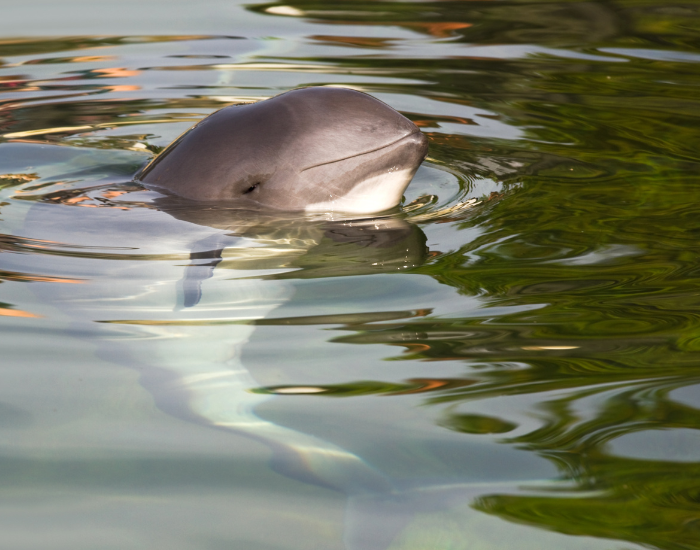
1. Harbour Porpoise (Phocoena phocoena)
The harbour porpoise is perhaps the most familiar of all types of porpoises. The species’ taxonomic name, Phocoena phocoena, is the Latinized form of the Greek φώκαινα, phōkaina, “big seal”, as described by Aristotle.
Key Characteristics:
- Length: 4-6 feet (1.2-1.8 meters)
- Weight: 110-170 pounds (50-77 kg)
- Coloration: Dark gray to black on top, lighter gray underneath
- Distinctive rounded head with inward-curving lips
Habitat and Distribution:The harbour porpoise is a shy animal, most often seen in groups of two or three. They prefer coastal areas and are most commonly found in bays, estuaries, harbors, and fjords. This preference for shallow, temperate waters makes them the most commonly observed porpoise species from shore. Atlantic porpoises are well adapted to coastal and estuarine environments and may follow seasonal bait fish migrations in response to regional prey availability.
Behavior and Diet:Harbour porpoises surface approximately every 25 seconds, creating a distinctive puffing sound. They primarily feed on small schooling fish like sardines, herring, and anchovies. After birth, the mother squirts milk directly into the calf’s mouth, providing high-fat nourishment essential for rapid development. Their shy nature means they typically avoid boats and human interaction.
2. Dall’s Porpoise (Phocoenoides dalli)
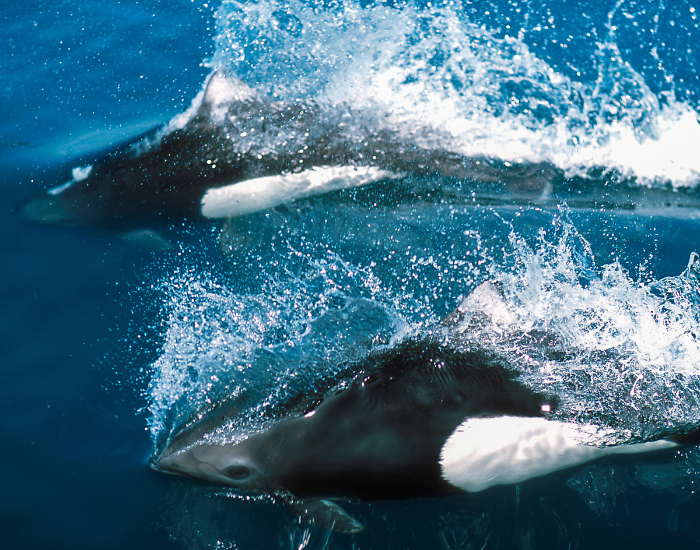
Dall’s porpoise stands out as the speed demon of the porpoise family. These remarkable animals can reach speeds of up to 35 mph, making them among the fastest marine mammals.
Physical Characteristics:
- Length: Up to 7 feet 7 inches (2.3 meters)
- Weight: Up to 490 pounds (220 kg)
- Distinctive black and white coloration
- Robust, muscular build
- Thick blubber layer for cold water insulation
Unique Features:Dall’s porpoises are famous for creating a “rooster tail” spray when swimming at high speeds. They also generate a bow wave at the surface, which they may ride while moving quickly through the water. Unlike other porpoise species, they’re more social and may approach boats, particularly in the North Pacific where they’re commonly found.
Habitat:These porpoises inhabit the cold waters of the North Pacific, from Japan to California. They prefer deeper, offshore waters compared to other porpoise species.
Conservation:Dall’s porpoise has been subject to the largest direct hunt of any cetacean species, particularly by Japanese fishers, which has raised significant conservation concerns.
3. Vaquita (Phocoena sinus)
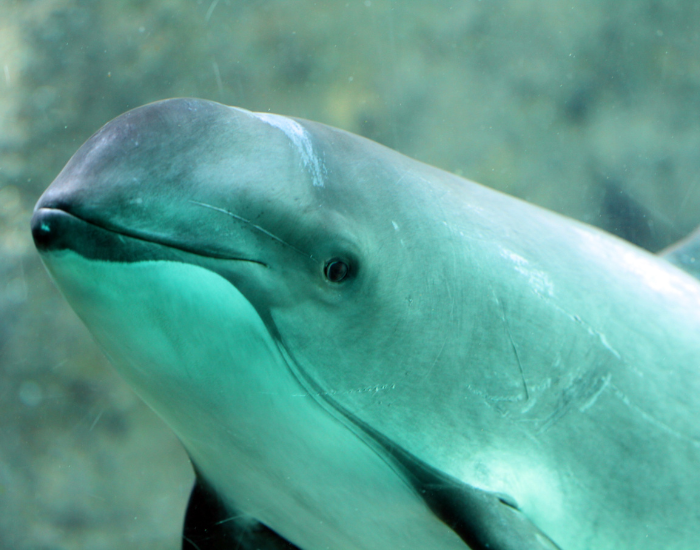
The vaquita represents one of conservation’s most urgent challenges. The vaquita is the most endangered cetacean in the world. With an estimated population of fewer than 30 individuals, they are critically endangered, primarily due to bycatch in illegal fishing nets.
Critical Statistics:
- Population: Fewer than 10 individuals remaining
- Length: 4-5 feet (1.2-1.5 meters)
- Weight: 95-120 pounds (43-54 kg)
- Endemic to the upper Gulf of California, Mexico
Conservation Crisis:The vaquita population has declined drastically, falling from nearly 600 in 1997 to fewer than 10 in 2024 because of entanglement in gillnets. Entanglement in fishing nets poses a significant threat to vaquita survival, as abandoned or discarded nets are a major source of accidental entrapment and bycatch for these marine mammals. This tragic decline makes the vaquita not just the rarest porpoise, but the most endangered marine mammal on Earth.
Distinctive Features: Vaquitas have dark patches around their eyes and mouth, giving them an almost panda-like appearance. They’re the smallest of all cetaceans and are known for their elusive, shy behaviour.

4. Finless Porpoise (Neophocaena phocaenoides)
The finless porpoise is unique among species of porpoise for its lack of a dorsal fin. Instead, it has a ridge of small tubercles along its back.
Physical Characteristics:
- Length: 4-6 feet (1.2-1.8 meters)
- Weight: 66-160 pounds (30-72 kg)
- Smooth, rounded back without a dorsal fin
- Flexible neck allowing greater head movement
Habitat:These adaptable porpoises inhabit both marine and freshwater environments, including rivers, estuaries, and coastal waters throughout Asia. Some populations live exclusively in freshwater rivers.
Behavior:Finless porpoises are known for their acrobatic abilities and can often be seen leaping completely out of the water. They’re more social than other porpoise species and may form larger groups.
Their breeding behavior typically involves seasonal mating, with reproductive success influenced by environmental factors such as pollution, habitat degradation, and human activities, especially in river systems.
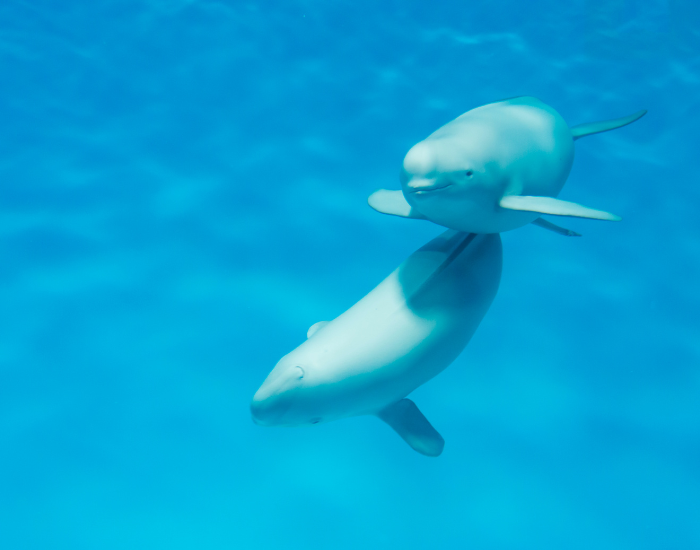
5. Spectacled Porpoise (Phocoena dioptrica)
The spectacled porpoise gets its name from the distinctive dark patches around its eyes, resembling spectacles or glasses.
Physical Features:
- Length: 4-7 feet (1.2-2.1 meters)
- Weight: 130-185 pounds (60-84 kg)
- Black and white coloration with distinctive eye patches
- Robust build adapted for cold waters
Distribution:These porpoises inhabit the southern oceans, particularly around South America, the Falkland Islands, and sub-Antarctic waters. They prefer deeper, offshore waters and are rarely seen from shore.
Behavior:Spectacled porpoises are among the least studied of all porpoise species due to their remote habitat and elusive nature. They typically live in small groups and feed on small fish, squid, and other sea creatures.

6. Burmeister’s Porpoise (Phocoena spinipinnis)
Burmeister’s porpoise is found exclusively in South American waters and is notable for its unique reproductive characteristics.
Physical Characteristics:
- Length: 4-6 feet (1.2-1.8 meters)
- Weight: 110-150 pounds (50-68 kg)
- Dark gray coloration with lighter underside
- Distinctive spiny tubercles on the dorsal fin
Reproductive Biology:
Female Burmeister’s porpoises reach sexual maturity at 7-10 years, later than most other porpoise species. They give birth to a single calf after approximately one year of gestation, with calves being born tail-first underwater to prevent drowning.
Habitat:
These porpoises inhabit the coastal waters of Peru, Chile, Argentina, and southern Brazil. They prefer shallow, temperate waters and are often found in bays and estuaries.

7. Narrow-ridged Finless Porpoise (Neophocaena asiaeorientalis)
Recently recognized as a separate species from the finless porpoise, the narrow-ridged finless porpoise represents the newest addition to our understanding of porpoise diversity.
Distinguishing Features:
- Length: 4-6 feet (1.2-1.8 meters)
- Narrow ridge of tubercles along the back
- Slightly different skull morphology
- Primarily found in Japanese and Korean waters
Conservation Status:
This species faces significant threats from fishing activities, pollution, and habitat degradation in heavily industrialized East Asian waters.

Diet and Foraging Habits of Porpoises
As toothed whales, porpoises are skilled predators that play a vital role in marine ecosystems. Their diet primarily consists of small, schooling fish such as herring, sardines, and anchovies, but they are also known to consume squid, octopus, and various crustaceans. Some porpoise species, like the finless porpoise, have even been observed eating algae and plant material, showcasing their adaptability as opportunistic feeders.
Porpoises rely on echolocation to hunt, emitting clicks and listening for echoes to locate prey in often murky or dark waters. Their streamlined bodies and powerful tail fins allow them to make quick, agile movements while pursuing fast-moving fish. The harbor porpoise, for example, is often seen feeding alongside other marine mammals, such as bottlenose dolphins and even killer whales, taking advantage of bait fish driven to the surface. While all porpoise species share a preference for fish, their specific diets can vary depending on their habitat and the availability of prey, making them versatile and resilient marine mammals.
Social Organisation and Behavior
Porpoises are generally more reserved than their dolphin relatives, often found alone or in small groups rather than large pods. Harbor porpoises, for instance, are typically seen in pairs or trios, especially in areas where food is plentiful. While not as overtly social as dolphins or killer whales, porpoises do communicate using a range of clicks, whistles, and body movements, forming a subtle but complex social structure.
Despite their shy nature, porpoises can display curiosity, occasionally approaching boats or interacting with other marine mammals. However, they are less likely to bow ride or surf the waves created by vessels, behaviors more commonly seen in dolphins. Porpoises are extremely sensitive to changes in their environment, and human activities such as noise pollution, fishing gear, and habitat loss can have significant impacts on their well-being. Conservation efforts, including those led by NOAA Fisheries and the Alaska Department of Fish and Game, are crucial for monitoring and protecting harbor porpoises and other species in coastal waters. These initiatives aim to reduce bycatch, manage marine mammal populations, and ensure the long-term survival of these remarkable cetaceans.
Comparison of Porpoises with Dolphins
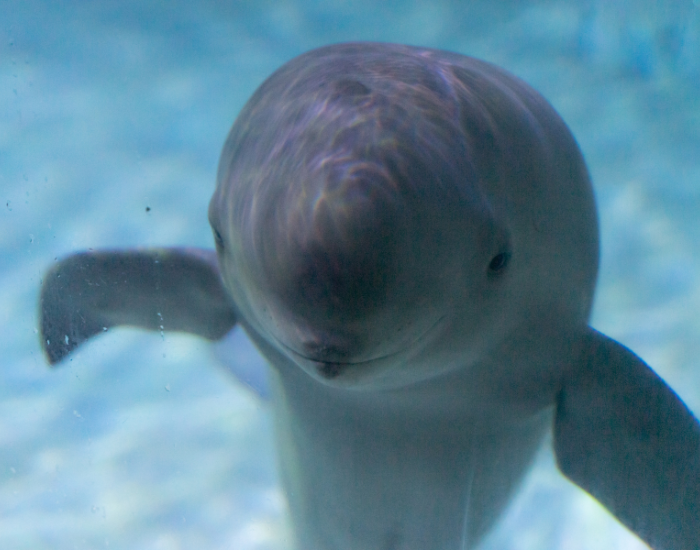
Are porpoises and dolphins the same thing? While porpoises and dolphins are both toothed whales and share certain similarities, they are different in several key ways. There are many dolphin species, and dolphins and porpoises are both classified as toothed whales, but they differ in physical traits, behavior, and social structure. Many species of dolphins and porpoises share certain characteristics, but there is significant diversity among dolphin species worldwide.
For example, common dolphins and other oceanic dolphins are known for their acrobatic behavior and large, active groups, while porpoises are generally more reserved. Pilot whales and beaked whales are other examples of toothed whales, each with unique adaptations such as deep-diving abilities or strong social bonds.
- Size: Porpoises are generally smaller than most dolphins.
- Teeth: Porpoises have spade-shaped teeth, while dolphins have cone-shaped teeth.
- Behavior: Dolphins are generally more social and vocal, while porpoises tend to be shyer and less interactive with humans.
- Dorsal Fins: Dolphins have curved dorsal fins, while porpoises have triangular dorsal fins.
Porpoise Conservation: Challenges and Efforts
Primary Threats
Porpoise animals face numerous anthropogenic threats that have led to declining populations across multiple species:
- Fishing Industry Impacts: Bycatch in gillnets, overfishing of prey species, and habitat degradation from fishing gear
- Pollution: Oil spills, plastic debris, and noise pollution from shipping
- Climate Change: Rising ocean temperatures and shifting prey distributions
Conservation Efforts
To protect types of porpoises, various conservation measures have been implemented:
- Marine Protected Areas (MPAs): Designated regions where human activity, such as fishing, is regulated to protect porpoise habitats
- Bycatch Mitigation: Gear modifications to reduce accidental entanglements
- Public Awareness: Campaigns to reduce pollution and advocate for marine conservation
Preserving the Porpoise Family and Future Research Directions
Porpoises are remarkable marine mammals that contribute to the health and balance of the world’s oceans. Yet, many porpoise species face mounting threats from habitat destruction, pollution, and unsustainable fishing practices. Continued conservation efforts are essential to safeguard the future of porpoises, including the creation of protected areas, the development of bycatch-reducing technologies, and the promotion of sustainable fisheries.
Looking ahead, future research should focus on deepening our understanding of porpoise behavior, ecology, and population trends. Studies on migration patterns, the effects of climate change, and innovative methods to minimize human impacts will be vital for effective conservation. Public education and outreach are equally important, empowering individuals to make choices that benefit porpoise populations and marine ecosystems. By fostering collaboration among scientists, policymakers, and conservation organizations, we can develop strategies that ensure the survival of every porpoise species and preserve the rich biodiversity of our oceans for generations to come.