Christmas in Australia falls in summer. On Christmas 2024, my partner’s family took us by boat to North Stradbroke Island. There, I watched 20 to 30 bar-tailed godwits feeding on the shore.
Those birds had flown from the Arctic to spend summer with us. Follow their journey on our bar-tailed godwit migration map.
That day reminded me what the season can be. However, Christmas also brings waste, bright lights and piles of plastic that wildlife pays for. Below, I explain how the holidays affect animals, share tips for a wildlife-friendly Christmas, and suggest sustainable gifts.
🎁 Stuck on what to gift?
Answer six quick questions and our Sustainable Gift Finder will match your person with a gift that’s kind to wildlife.
Find a gift ↓How Does Christmas Affect Wildlife?
The festive season brings a surge in spending on gifts, decorations and food. Each of those choices has a footprint somewhere in nature.
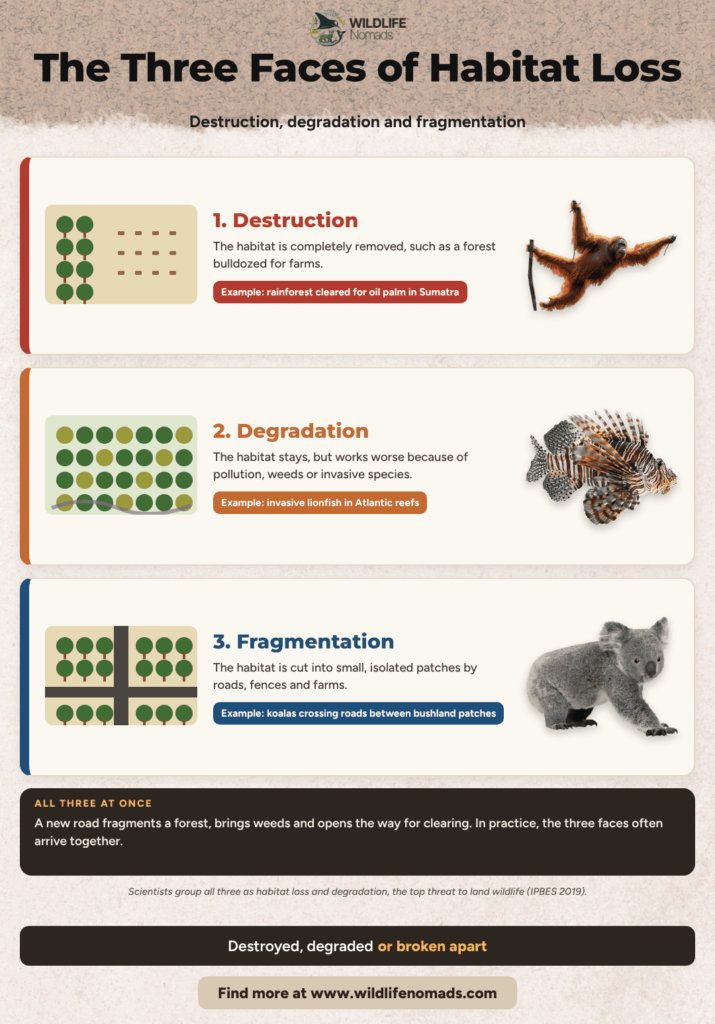
1. Habitat Loss and Palm Oil
Paper wrapping, cards and packaging all rely on timber. Meanwhile, festive chocolates, biscuits and snacks often contain palm oil. Both drive habitat destruction in tropical forests.
In Borneo, a 2018 study estimated that more than 100,000 orangutans disappeared between 1999 and 2015. Logging, plantations and killing all played a part. Sumatran tigers lose forest to the same plantations.
Palm oil isn’t simply bad, though. A 2020 review in Nature Plants found that swapping it for other oils could clear even more land. Instead, look for certified sustainable palm oil and buy less processed food.
2. Plastic Pollution
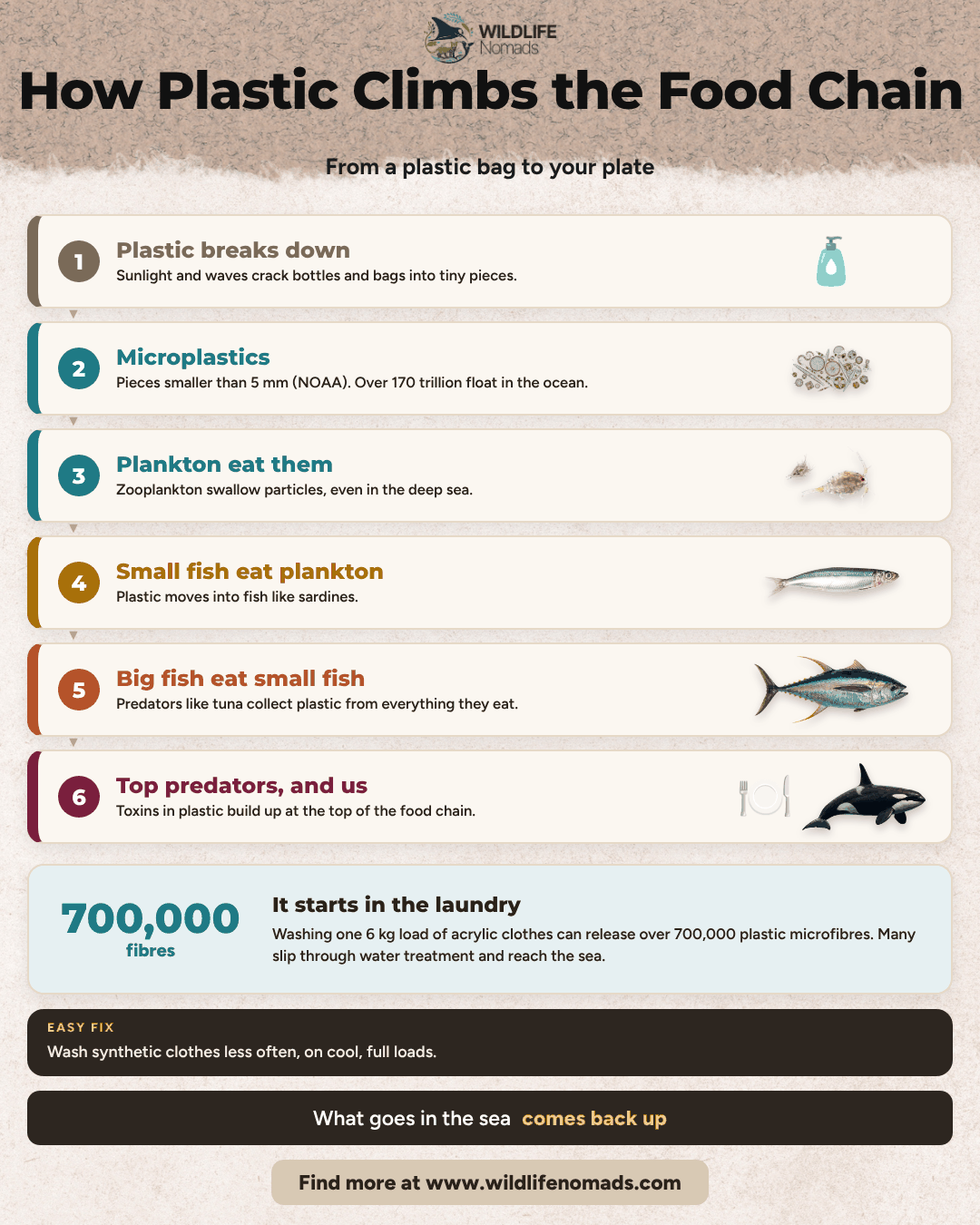
Tinsel, glitter, cheap decorations and gift packaging are mostly plastic. Much of it ends up in landfill or the ocean, where animals mistake it for food.
For example, a global review found green and leatherback sea turtles have grown more likely to swallow debris. Another study predicted that plastic ingestion could reach 99% of seabird species by 2050.
I have seen this myself. While snorkelling in Amed, Bali, I swam among plastic bags and soft drink cans.
3. Overexploitation and Wildlife Products
Also, some gifts come straight from wild animals and plants. Think ornaments made of coral, shells, ivory, exotic leather or rare timber. Buying them keeps the demand alive.
Unless you know where a product comes from, skip it. Read more about the illegal wildlife trade.
4. Light Pollution
Christmas lights look magical to us. For many nocturnal animals, though, they turn night into day. Research in Australia and overseas shows artificial light can harm wildlife in several ways.
- Predation: lit animals are easier for predators to spot, so many small animals forage less.
- Breeding: artificial light can shift the timing of breeding in some birds and insects.
- Collisions: lights attract and disorient night-flying birds. In the United States, building collisions kill an estimated 365 to 988 million birds each year.
- Lost hatchlings: sea turtle hatchlings crawl towards the brightest horizon. Lights behind a beach can lead them inland.
That last point matters here in Queensland. Loggerhead turtles nest on our beaches in early summer, and their hatchlings emerge from about January.
Years ago, I helped release olive ridley hatchlings at Puerto Escondido, Mexico. We watched them scramble towards the sunset glowing on the sea. Without that natural light, they could easily have headed the wrong way.

How Holidays Fuel Consumerism
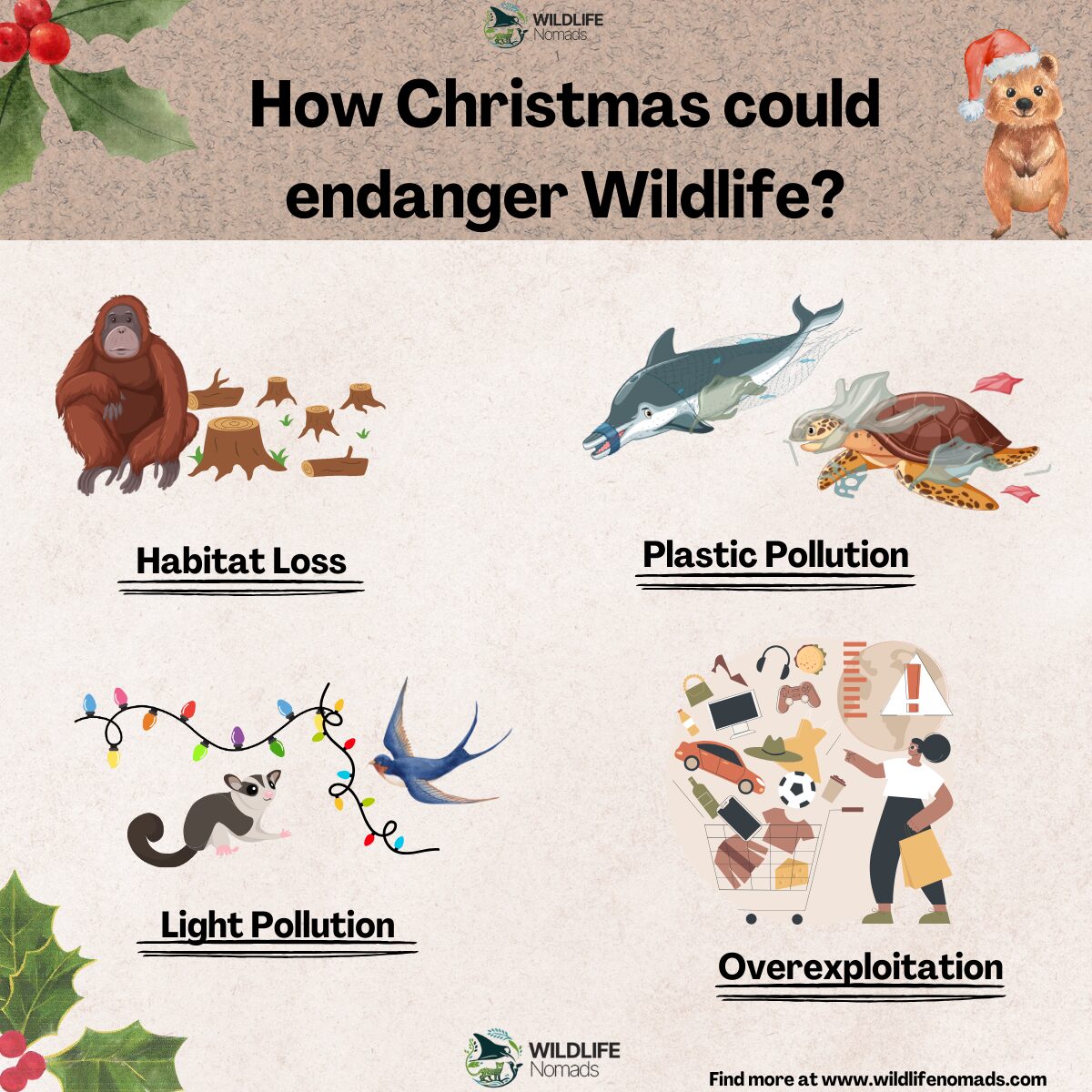
Christmas isn’t the only holiday tied to shopping, but it’s one of the biggest. Its traditions drive extra consumption in three main ways.
- Mass-produced decorations: tinsel, baubles and lights are often made cheaply from plastic and replaced every year.
- Over-packaged gifts: layers of plastic, foam and cardboard add waste and use extra resources.
- Extra energy use: big light displays use more power, often from fossil fuels.
Tips for a Wildlife-Friendly Christmas
A wildlife-friendly Christmas doesn’t mean giving up your traditions. Instead, it means rethinking them with nature in mind.
1. Choose Eco-Friendly Decorations
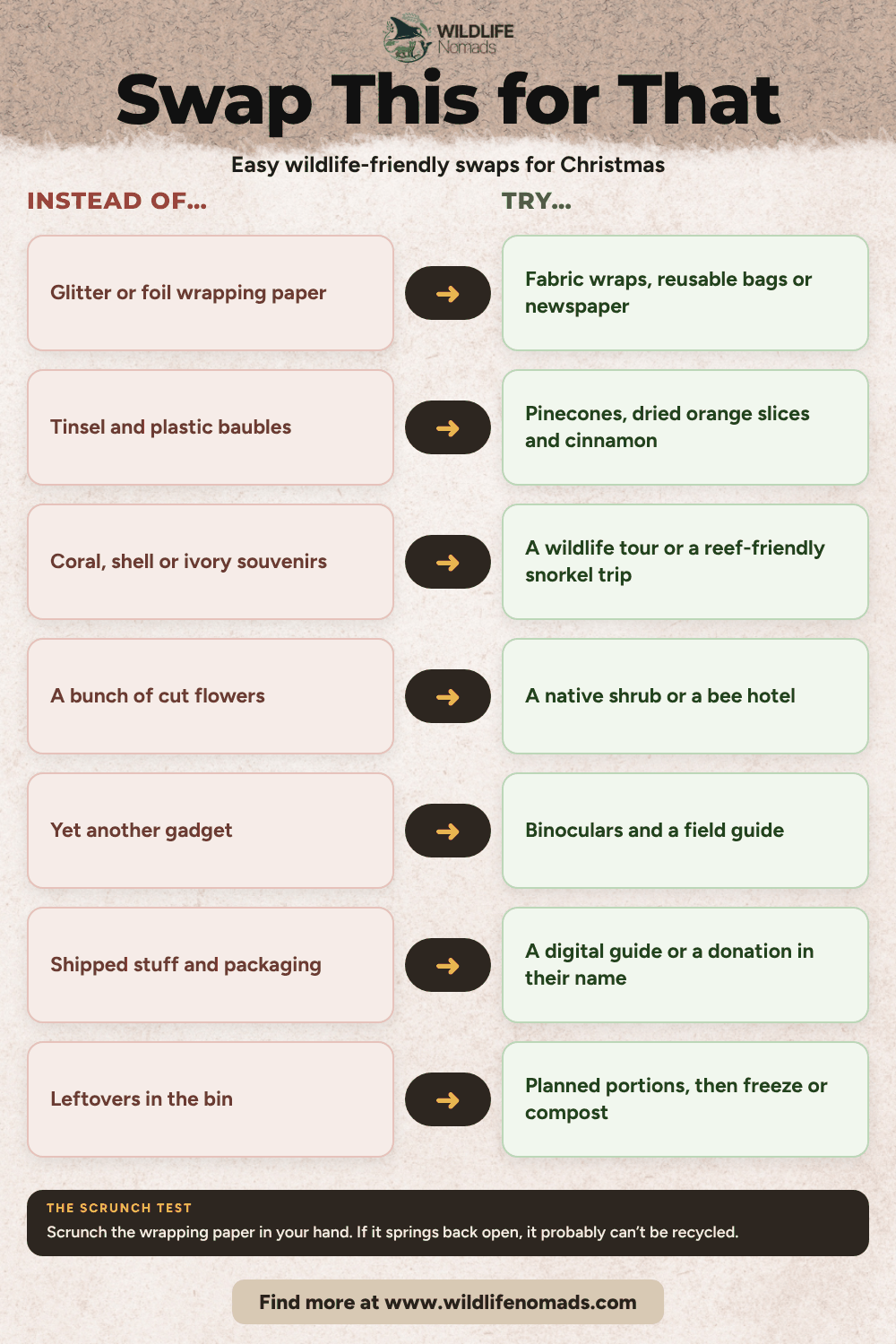
Decorate with natural, compostable materials like pinecones, dried orange slices and cinnamon sticks. In Australia, a vase of native Christmas bush or bottlebrush looks festive too.
Also, reuse decorations year after year rather than buying new ones. You can make garlands and ornaments from fabric scraps or old paper. Avoid glitter, because most of it is plastic.
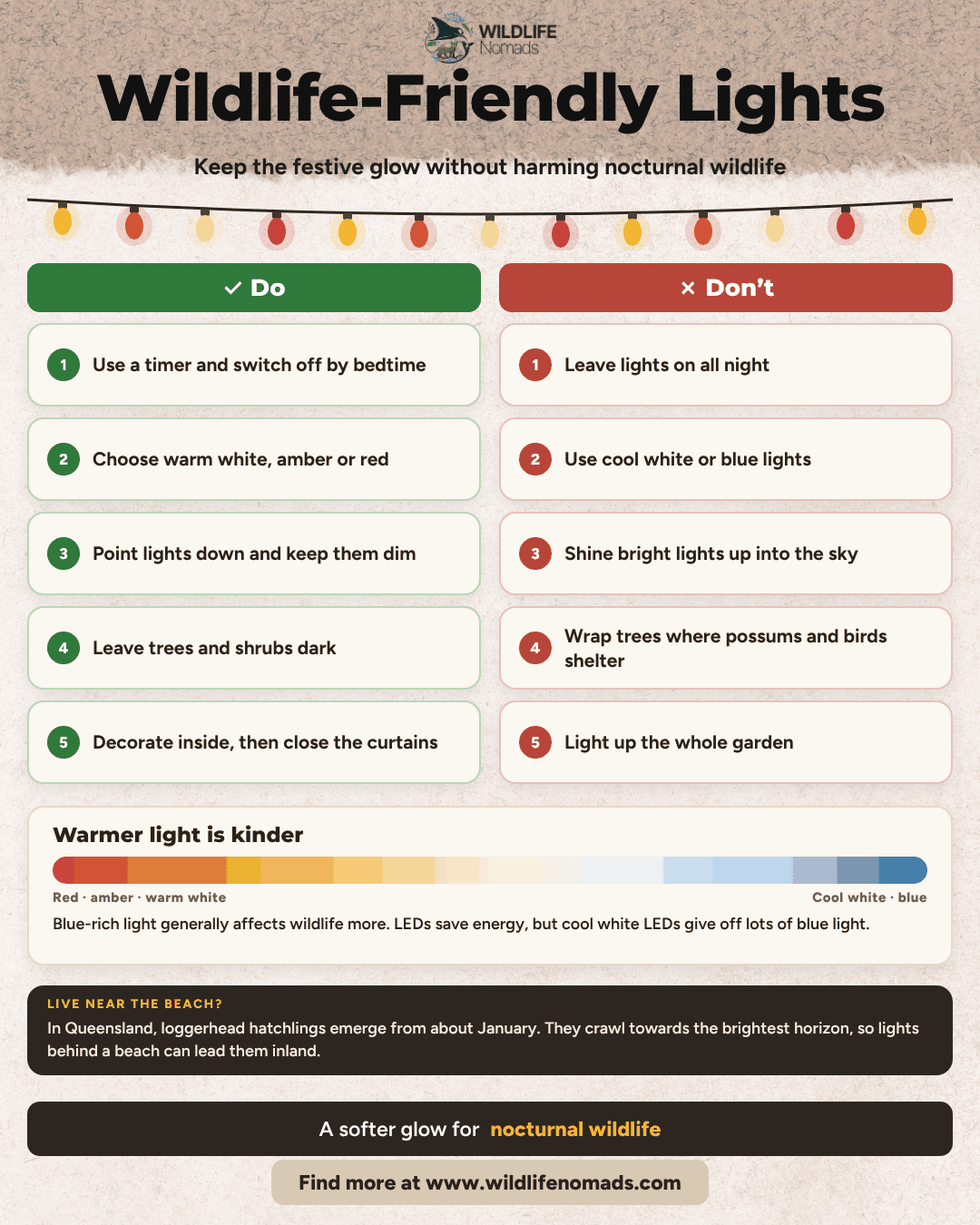
2. Tone Down the Lights
You don’t have to switch off Christmas. Still, a few changes make a big difference for wildlife.
- Use a timer: switch lights off by bedtime, rather than leaving them on all night.
- Pick warm colours: choose warm white, amber or red lights. Blue-rich light generally affects wildlife more.
- Keep them low and dim: point lights down and use the lowest brightness that still looks good.
- Leave trees dark: skip lights in trees and shrubs, because possums, birds and insects shelter there.
- Decorate inside: put lights in windows instead of the garden, then close the curtains at night.
Note that LED lights save energy, but they don’t automatically cause less light pollution. In fact, cool white LEDs emit lots of blue light. Choose warm LEDs instead.
3. Cut Wrapping Waste
Many shiny, foil or glitter papers can’t be recycled. As a quick test, scrunch the paper in your hand. If it springs back open, it probably isn’t recyclable.
Instead, try fabric wraps inspired by Japanese furoshiki, reusable gift bags or old newspaper. Save ribbons and bows for next year, too. Buying locally also avoids the extra packaging that comes with shipping.
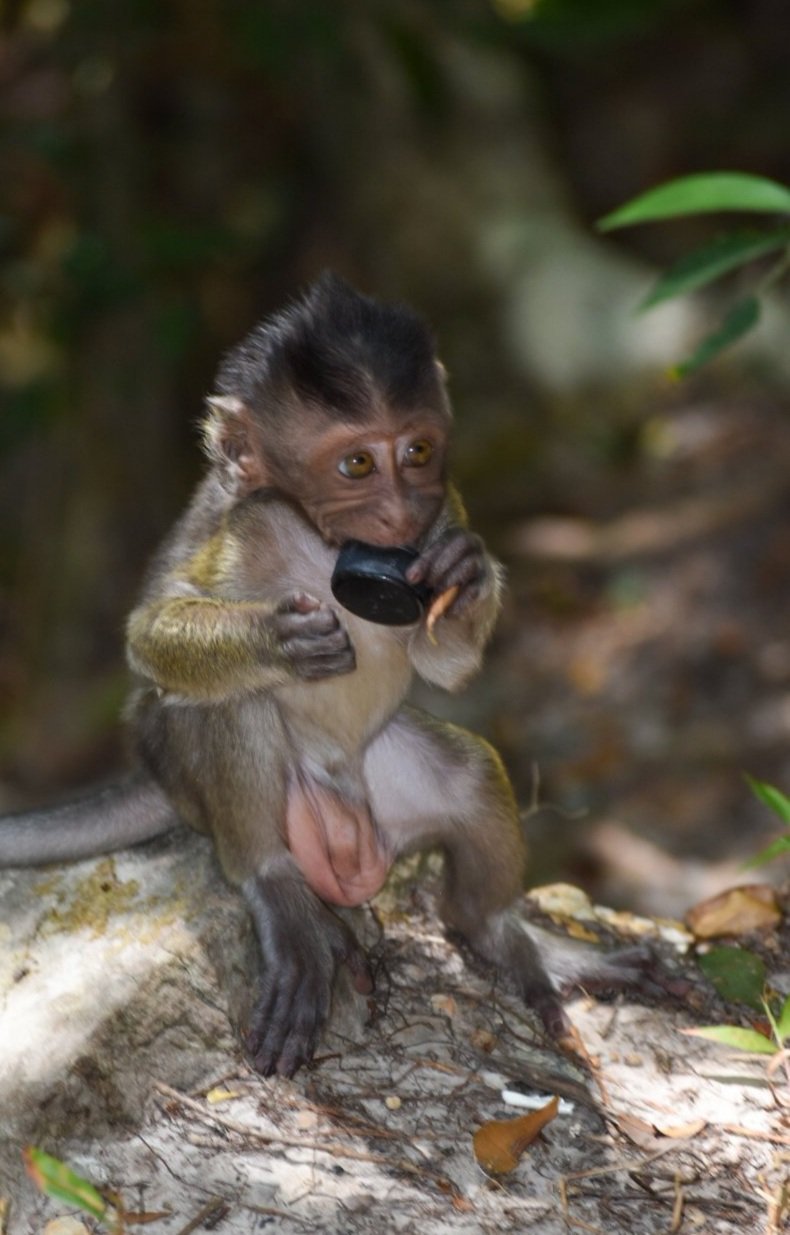
Plastic doesn’t stay in the bin. During a month on Langkawi, Malaysia, I watched a baby macaque chewing on a plastic bottle cap.
4. Plan an Eco-Friendly Feast
Holiday feasts can carry a heavy environmental cost. With some planning, however, you can make yours delicious and kinder to nature.
- Plan portions: buy only what you need, then freeze or compost the leftovers.
- Shop local: choose seasonal produce from local growers and markets.
- Add plant-based dishes: less meat means less land cleared for livestock and feed.
- Check the labels: look for certified sustainable palm oil, cocoa and seafood.
5. Support Conservation
The spirit of giving can extend to wildlife too. For instance, donate to a trusted conservation group in a loved one’s name. Choose one that reports clearly where the money goes.
Also, share what you learn at the Christmas table. Many people simply don’t know that lights harm turtles or that glitter is plastic. Find more ideas in how to save endangered animals.
Sustainable Gift Ideas for Christmas
Choosing presents is where most of us struggle. Luckily, the most sustainable gifts are often the most memorable ones.
Give an Experience
Research backs this up. People tend to feel happier after experiences than after buying things. Another study found that experiential gifts make recipients feel closer to the giver.
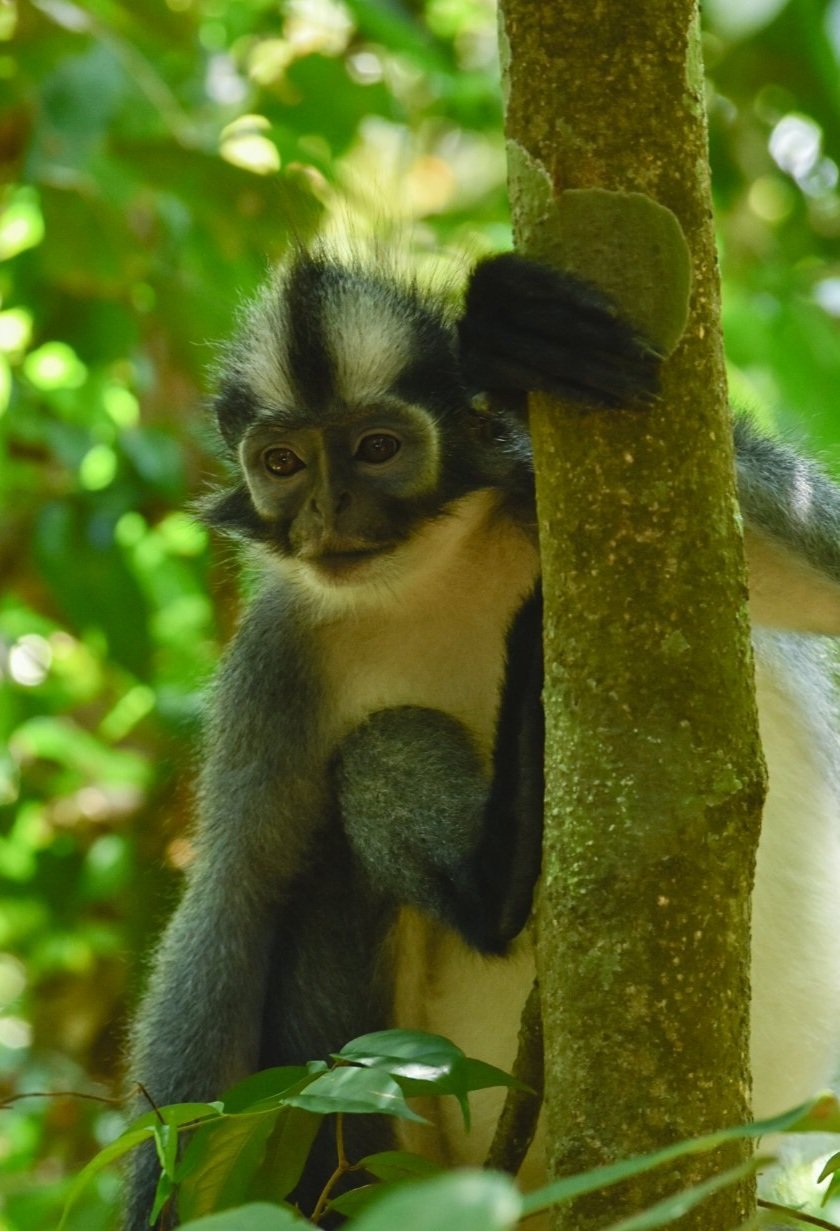
So consider a wildlife tour, a snorkelling trip, a guided night walk or a cooking class. On a jungle trek in Sumatra, I met this Thomas’s leaf monkey. Browse our wildlife tours for ideas.
My partner also runs Gifting Owl, a platform that sells experience gifts worldwide, from eco-adventures to cultural workshops.
Give Something That Grows
Native plants make some of the best gifts for wildlife. For example, a 2018 study found Carolina chickadees only held steady where over 70% of yard plants were native.
At university in Mexico, I helped a professor plant a garden of native flowers. Soon it buzzed with bumblebees, moths and spiders. Gift a native shrub, a bee hotel or a bird bath. Then share our guide to building a wildlife-friendly garden.
Kids can also learn how flowers and pollinators work together with our pollination lab.
Give the Gift of Birdwatching
Binoculars, a field guide and a notebook can start a lifelong hobby. They also last for years and get people outdoors. See our gift ideas for bird lovers and birding for beginners guide.
Give Digital or Learning Gifts
Digital gifts need no packaging and no shipping. Our store has wildlife guides and e-books for curious kids and adults. Similarly, our free interactive tools are a fun way to explore wildlife together.
Give Handmade or Second-Hand
Homemade treats, knitted scarves and hand-drawn cards also carry a personal touch. Second-hand books and gear also keep things out of landfill. Above all, a thoughtful small gift beats a big one that ends up in the bin.
FAQs About a Wildlife-Friendly Christmas
Choose natural or reusable decorations, cut plastic wrapping and switch outdoor lights off by bedtime. Plan your feast to avoid food waste, and look for certified sustainable palm oil. For gifts, favour experiences, native plants and handmade or second-hand presents.
Yes. Artificial light at night can disrupt feeding, breeding and migration. It can disorient night-flying birds and lead sea turtle hatchlings away from the sea. Using timers, warm colours and fewer outdoor lights reduces the impact.
LED lights use far less energy, but cool white LEDs give off lots of blue light, which generally affects wildlife more. Choose warm white, amber or red LEDs, and switch them off overnight.
A sustainable gift has a small footprint and gets used or remembered. Good examples include experiences, native plants, digital gifts, second-hand items, handmade presents and donations in someone’s name.
Plain paper usually is, but foil, glitter and plastic-coated papers usually aren’t. Try the scrunch test: if the paper springs back open, it probably can’t be recycled. Fabric wraps and reusable bags avoid the problem.
Nature lovers often enjoy wildlife tours, binoculars, field guides, birding journals and native plants. A donation to a conservation group in their name is another thoughtful choice.
The Gift of a Sustainable Future
A wildlife-friendly Christmas isn’t about giving up the fun. Instead, it’s about small choices that add up.
Dim the lights a little earlier, wrap gifts in fabric and choose a present that creates a memory. Then, if you can, spend part of the holidays outside watching wildlife.
How will you make your Christmas kinder to wildlife this year? Tell me in the comments.
The Sustainable Gift Finder 🎁
Six quick questions. One gift that’s kind to people and wildlife.
References:
Chan, C., & Mogilner, C. (2017). Experiential gifts foster stronger social relationships than material gifts. Journal of Consumer Research, 43(6), 913–931. https://doi.org/10.1093/jcr/ucw067
Longcore, T., Rodríguez, A., Witherington, B., Penniman, J. F., Herf, L., & Herf, M. (2018). Rapid assessment of lamp spectrum to quantify ecological effects of light at night. Journal of Experimental Zoology Part A: Ecological and Integrative Physiology, 329(8–9), 511–521. https://doi.org/10.1002/jez.2184
Loss, S. R., Will, T., Loss, S. S., & Marra, P. P. (2014). Bird–building collisions in the United States: Estimates of annual mortality and species vulnerability. The Condor, 116(1), 8–23. https://doi.org/10.1650/CONDOR-13-090.1
Narango, D. L., Tallamy, D. W., & Marra, P. P. (2018). Nonnative plants reduce population growth of an insectivorous bird. Proceedings of the National Academy of Sciences, 115(45), 11549–11554. https://doi.org/10.1073/pnas.1809259115
Schuyler, Q., Hardesty, B. D., Wilcox, C., & Townsend, K. (2014). Global analysis of anthropogenic debris ingestion by sea turtles. Conservation Biology, 28(1), 129–139. https://doi.org/10.1111/cobi.12126
Van Boven, L., & Gilovich, T. (2003). To do or to have? That is the question. Journal of Personality and Social Psychology, 85(6), 1193–1202. https://doi.org/10.1037/0022-3514.85.6.1193
Wilcox, C., Van Sebille, E., & Hardesty, B. D. (2015). Threat of plastic pollution to seabirds is global, pervasive, and increasing. Proceedings of the National Academy of Sciences, 112(38), 11899–11904. https://doi.org/10.1073/pnas.1502108112