
Wildlife Nomads · Play · Pollination Lab
What Is Pollination? Follow a Pollen Grain from Flower to Seed
Pollination is the move of pollen from the male part of a flower to the female part of the same species. Open a flower, follow one pollen grain, then play bee, hummingbird, moth or bat in a garden that turns from day to night.
By Cesar Medina, conservation biologist · 8 interactive stops
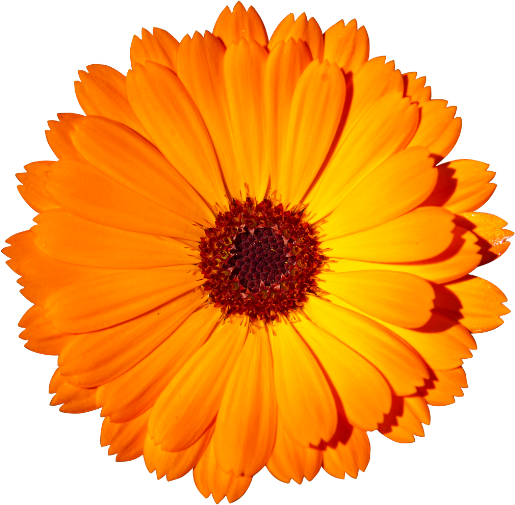
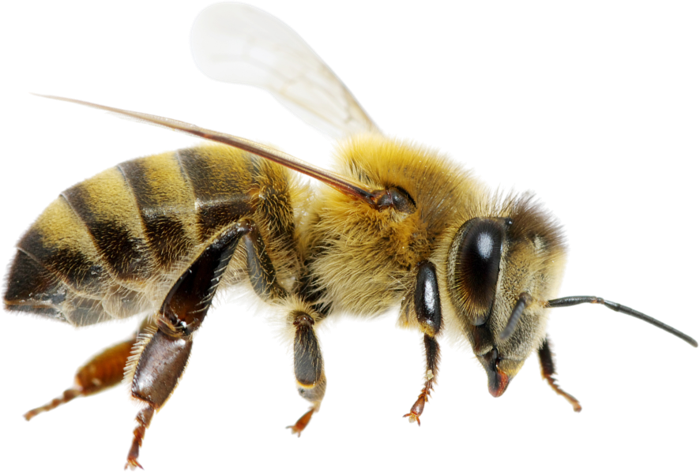
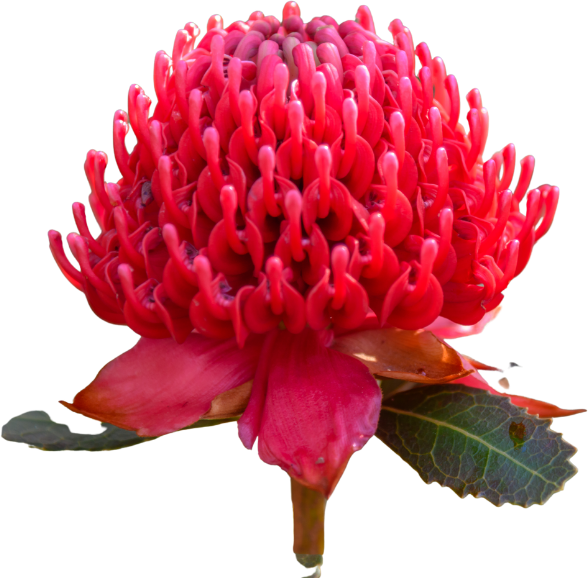
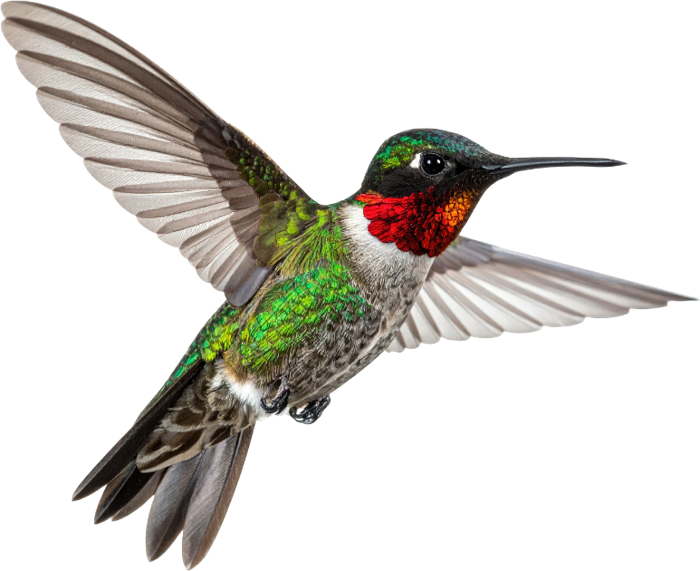
What is pollination?
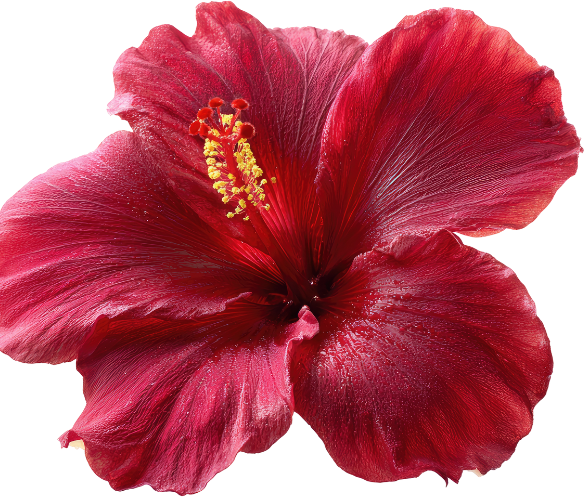
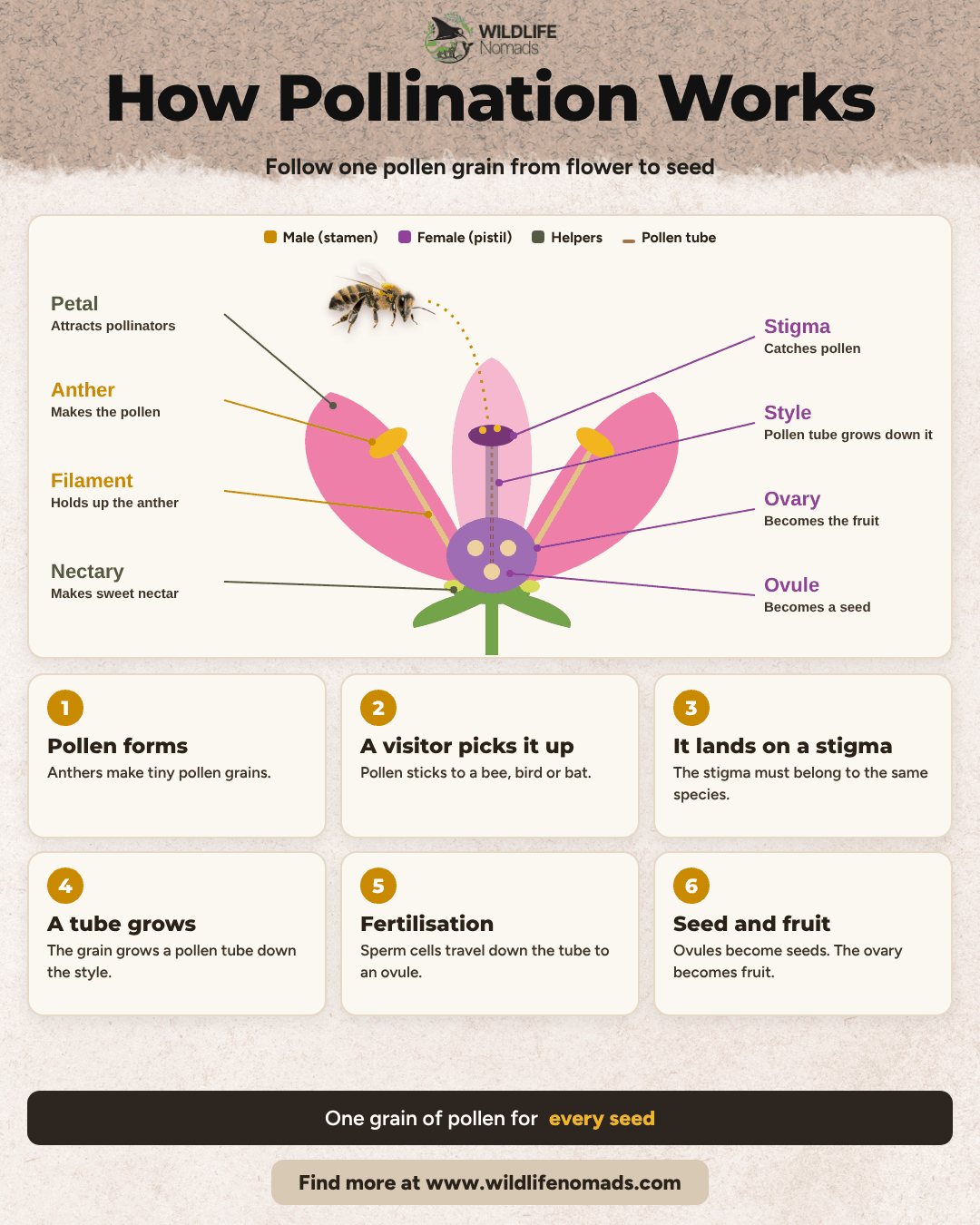
Pollination is the transfer of pollen from a flower’s anther (male part) to stigma (female part) of the same species. It is the first step in plant reproduction. Once pollen reaches the stigma, the flower can make seeds and fruit.
That is the simple definition of pollination. The meaning goes deeper. Plants can’t walk to find a partner, so they hire couriers. Bees, butterflies, birds, bats, beetles, the wind and even water carry pollen for them. In return, most animal couriers get paid in nectar or pollen.
I think of every flower as an advert. Its colour, scent and shape tell a particular visitor that a meal is waiting. The Pollination Lab above lets you open a flower, follow one grain and play the courier yourself.
The parts of a flower involved in pollination
To understand how pollination works, you need to know where pollen comes from and where it needs to go. Most flowers hold both male and female parts in the same bloom.
| Part | Male or female | What it does |
|---|---|---|
| Anther | Male | Makes pollen. It splits open when the pollen is ripe. |
| Filament | Male | Holds the anther up. Anther and filament together make a stamen. |
| Stigma | Female | The sticky or feathery tip that catches pollen. Pollination happens here. |
| Style | Female | The stalk the pollen tube grows down. |
| Ovary | Female | Holds the ovules. It ripens into the fruit. |
| Ovule | Female | Holds the egg cell. It becomes the seed. |
| Petals | Neither | Attract pollinators with colour, pattern and scent. |
| Nectaries | Neither | Make sugary nectar, the reward for a visit. |
How is a flower pollinated? Step by step
Here is what happens in flowers from the moment pollen forms to the moment a fruit appears.
The stigma checks every grain that lands on it. Pollen from the wrong species usually fails to grow. Many plants also reject their own pollen. When the right grain lands, it sprouts a pollen tube. Depending on the plant, the tube takes from under an hour to several days to reach an ovule.
Flowering plants then do something unusual, called double fertilization. The tube delivers two sperm cells. One joins the egg and becomes the embryo. The other joins the central cell and becomes the endosperm, the food store inside the seed.
How do bees pollinate flowers?
Bees are the best-known pollinators, and for good reason. They visit flowers to collect food for themselves and their young. Pollination is a side effect of all that shopping.
A bee’s branched hairs trap thousands of pollen grains on every visit.
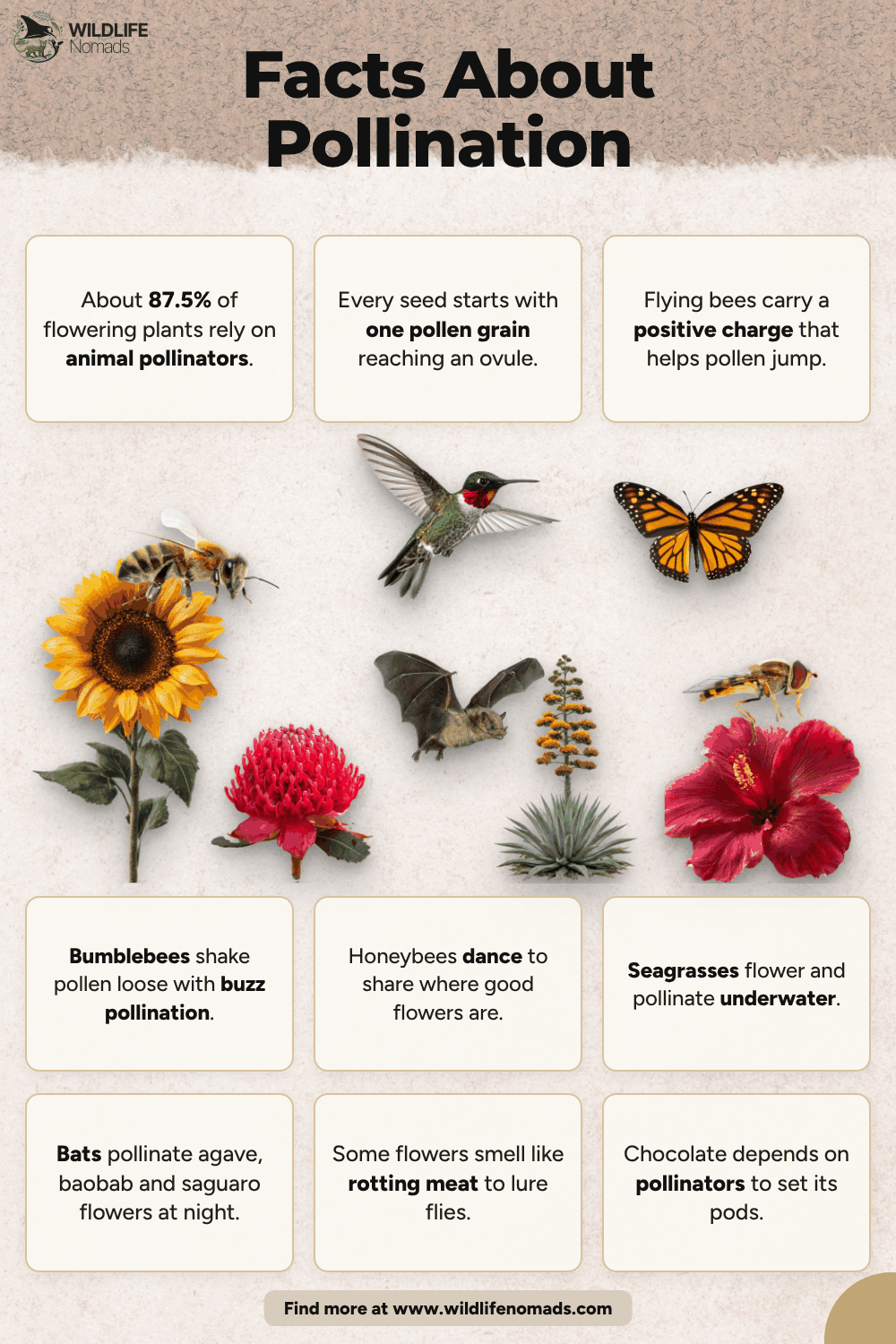
Flying bees build up a small positive charge. Flowers are slightly negative, so pollen can jump across the gap.
Many bees pack pollen onto their back legs. Grains that stay loose rub off on the next stigma.
Honeybees often visit one kind of flower per trip. That keeps the right pollen moving to the right plants.
Tomatoes and blueberries lock pollen inside their anthers. Bumblebees vibrate their flight muscles to shake it out.
Honeybee foragers dance in the hive to tell nestmates where the best flowers are.
So what happens when bees pollinate flowers? The bee drinks nectar or gathers pollen. Some grains stick to its body. At the next flower of the same kind, a few of those grains brush onto the stigma. That flower can now make seeds.
Types of pollination
Biologists sort pollination in two ways: by where the pollen ends up, and by what carries it there.
Self-pollination and cross-pollination
| Type | Pollen goes to | What it means |
|---|---|---|
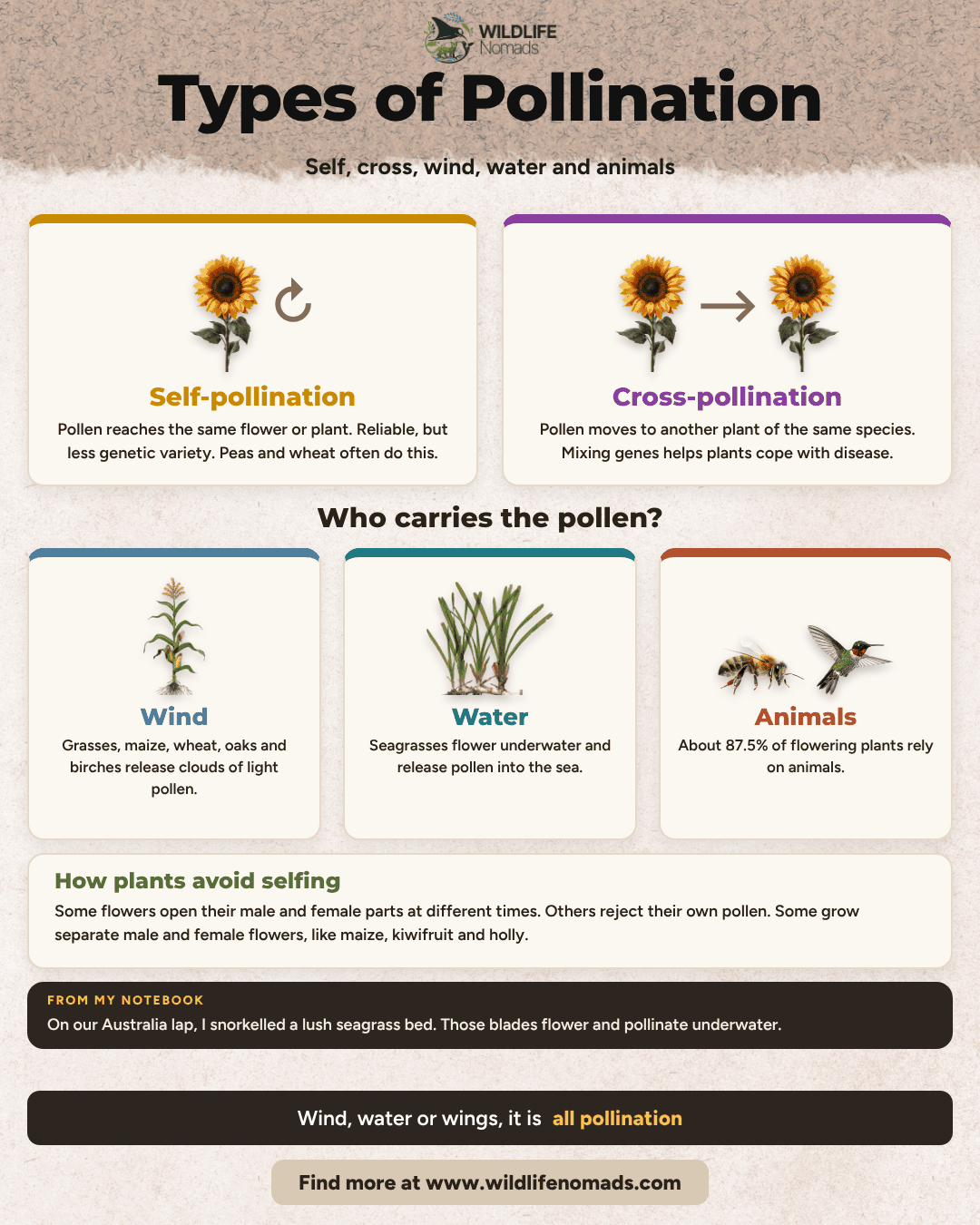
| Self-pollination | Same flower | Reliable, with no courier needed. Seeds get genes from one parent. Peas and wheat often do this. |
| Self-pollination | Another flower, same plant | It looks like a trip, but the genes are the same. Botanists call it geitonogamy. |
| Cross-pollination | Another plant, same species | Seeds mix genes from two parents. Variety helps populations survive disease and change. |
Many plants work hard to avoid their own pollen. Some ripen their anthers and stigma at different times. Maize grows separate male tassels and female silks. Kiwifruit and holly come as separate male and female plants.
Pollination by wind, water and animals
Grasses, maize, rye, oaks and birches make huge amounts of light pollen. Their flowers are small and plain, with feathery stigmas.
Seagrasses flower underwater and release pollen into the sea. It is rare, and fascinating.
Most flowering plants use animals. Couriers include bees, butterflies, moths, flies, beetles, birds, bats and even some possums and lizards.
On my lap of Australia, I snorkelled over a lush seagrass bed. It felt like a scene from Avatar, with a wobbegong, a stingray, wrasses and a pufferfish. I had no idea those blades were flowering plants pollinated underwater.
Pollination vs fertilization
People often mix these up. Pollination is delivery: pollen arrives on the stigma. Fertilization is the meeting: a sperm cell from that pollen joins an egg inside an ovule. Pollination always comes first. Fertilization only follows if the pollen is compatible and its tube reaches an ovule.
Who are the pollinators?
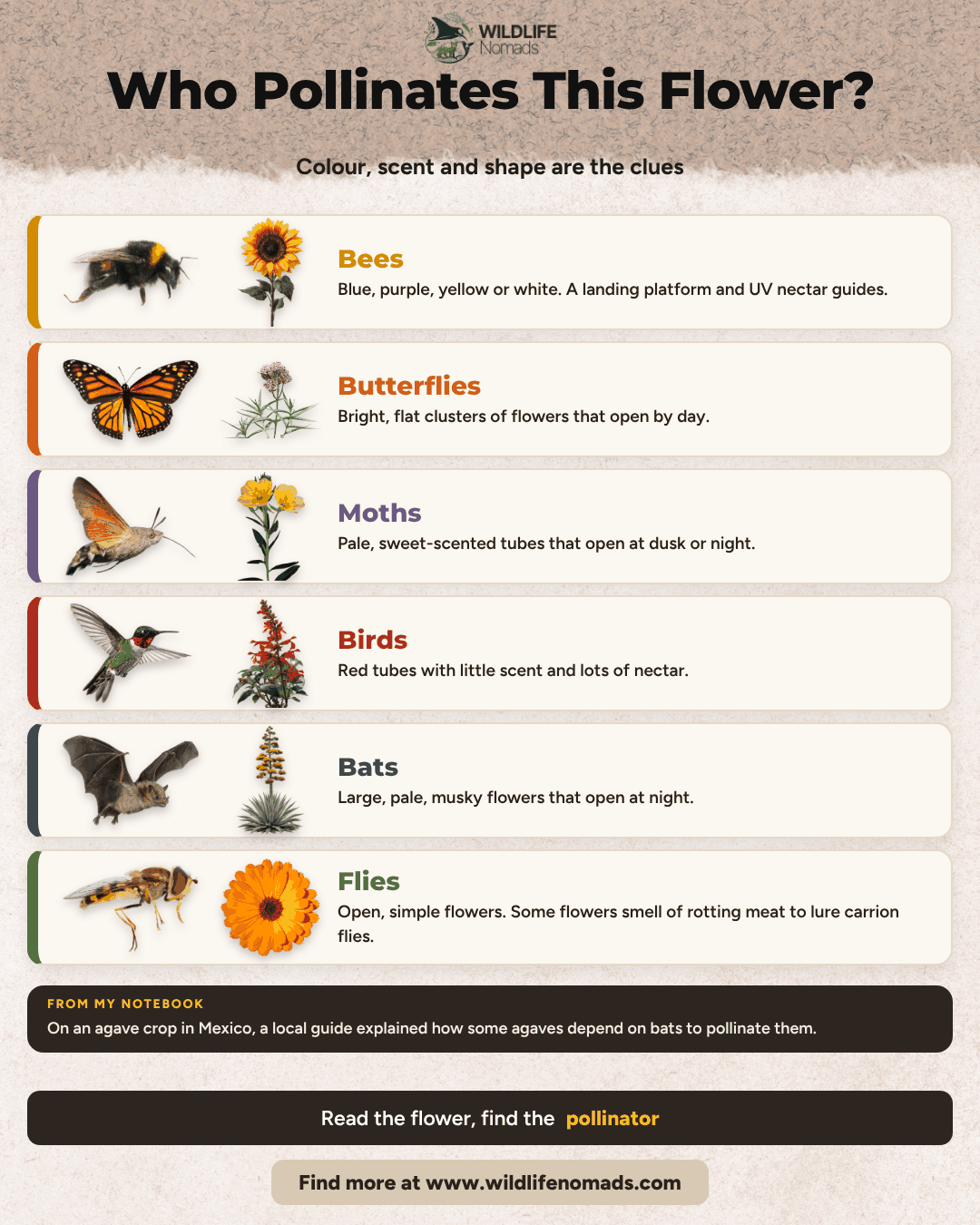
Each group of pollinators favours a different kind of flower. Biologists call these matches pollination syndromes. You can read about all of them in my guide to types of pollinators.
Blue, purple, yellow and white flowers with landing platforms. Many have ultraviolet nectar guides. Meet the types of bumblebees.
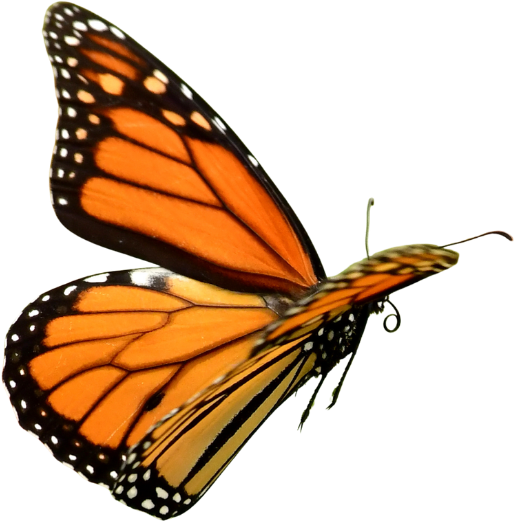
Butterflies like bright flat clusters by day. Moths seek pale, scented tubes at night. See the monarch butterfly.
Red, tubular, unscented flowers full of nectar. Explore the species of hummingbirds.
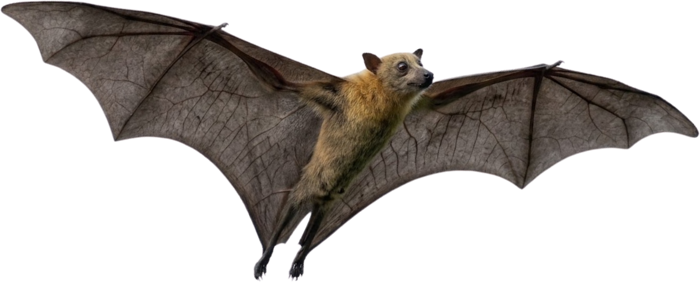
Large, pale, musky flowers that open at night, like agave, baobab and saguaro. Read my fruit bat facts.
Some flowers smell like rotting meat to fool carrion flies. Hoverflies visit ordinary flowers too.
Big bowl-shaped, fruity-smelling flowers such as magnolias. Beetles are among the oldest pollinators.
Bats matter more than most people think. On a visit to an agave field in Mexico, a local guide explained how some agave species depend on bats. In a way, tequila depends on them too.
Why is pollination important?
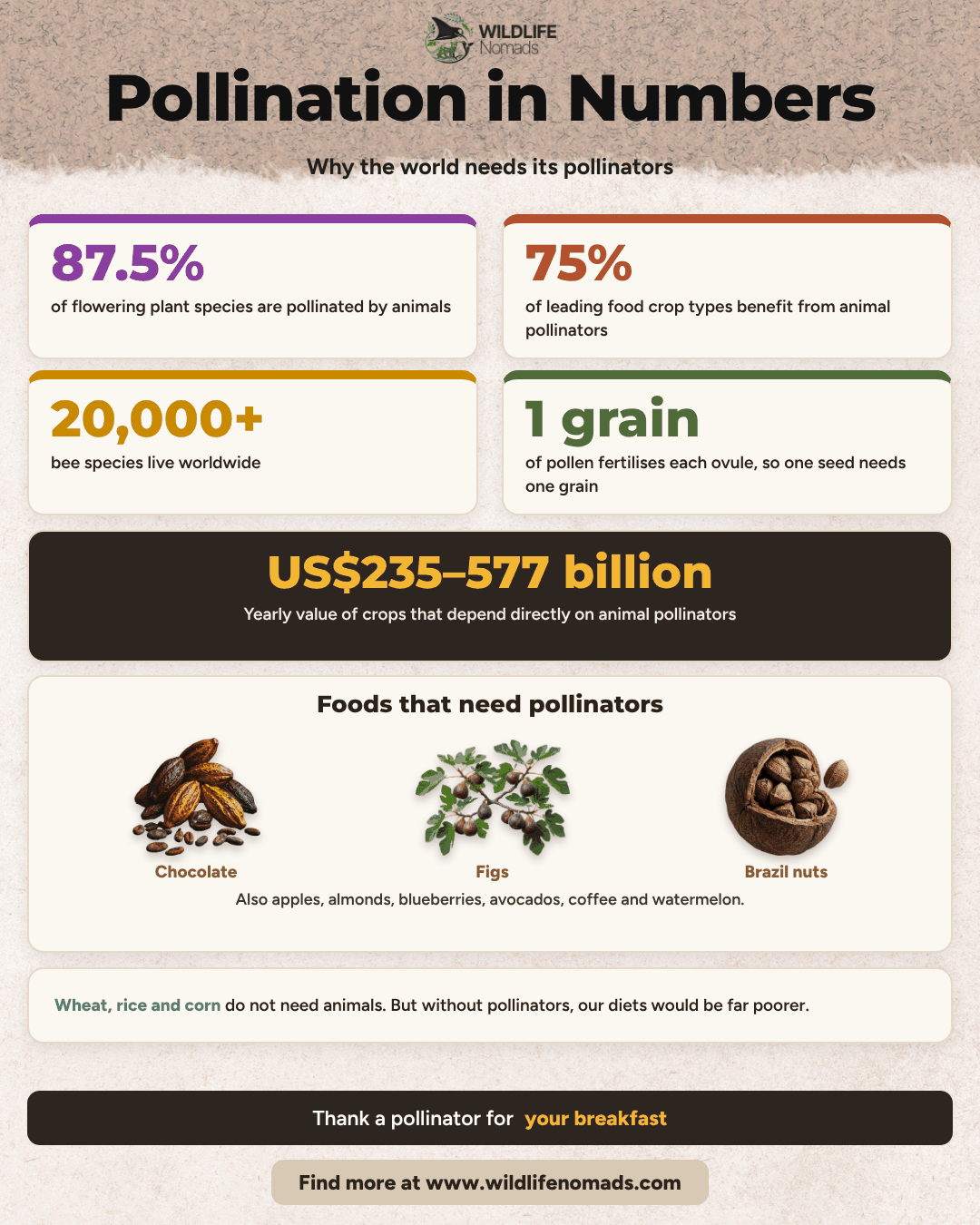
Nearly 9 in 10 flowering plant species rely on animals to move their pollen. Without pollination, those plants would set few seeds, and animals that eat their fruit and seeds would go hungry.
People depend on it as well. Animal pollinators help produce chocolate, coffee, apples, almonds, blueberries, avocados and watermelons. Scientists value the crops that depend directly on them at US$235–577 billion a year. Wheat, rice and corn don’t need animals, so we would not starve. But our diets would be poorer and our fruit far more expensive.
Try it: switch off the pollinators in stop 7 of the lab and watch the breakfast table empty.
How you can help pollinators
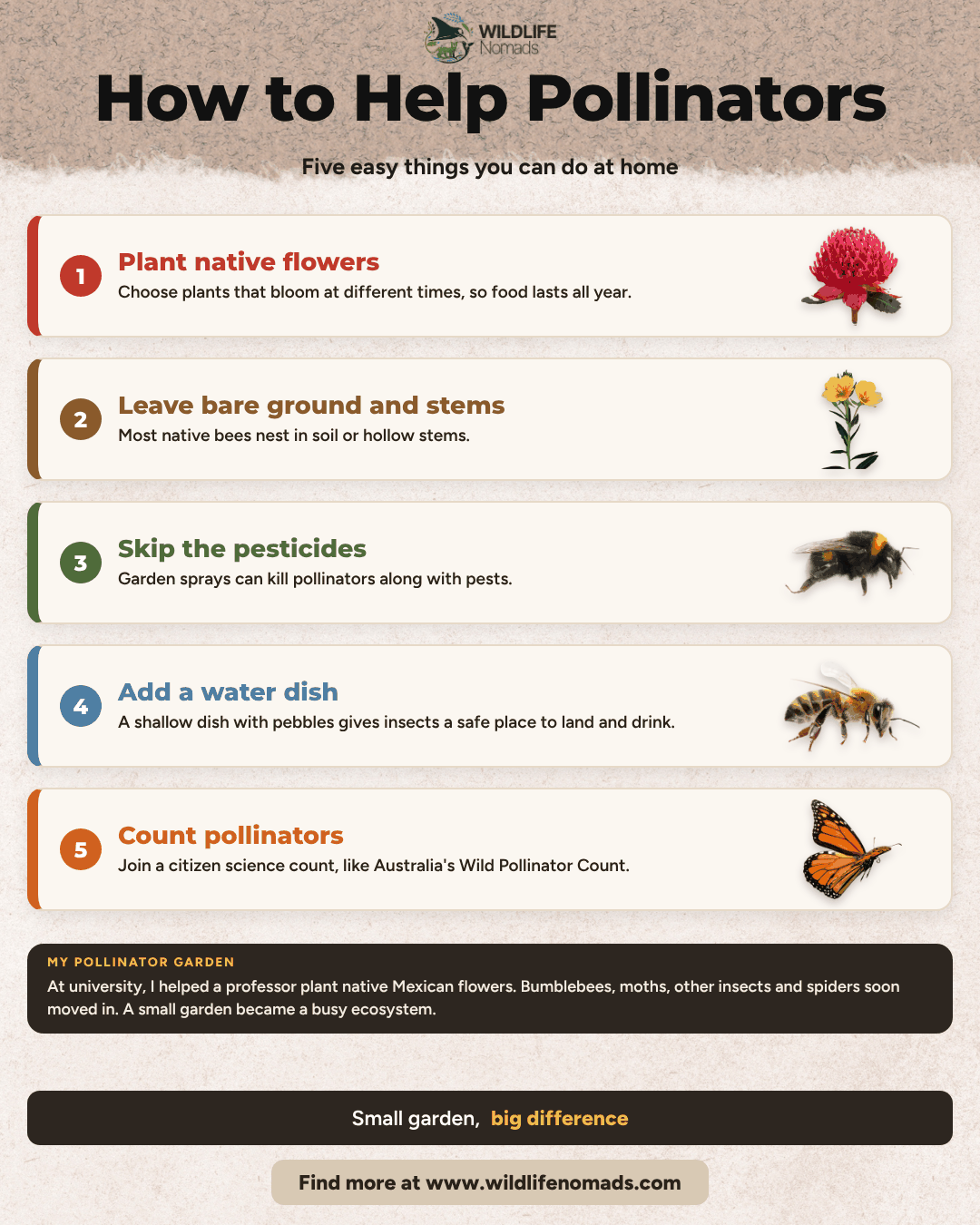
Pollinators face habitat loss, pesticides, pests and diseases, invasive species and a changing climate. The good news is that small changes at home help.
- Plant native flowers that bloom at different times of year.
- Leave some bare ground and dead stems. Most native bees nest in soil or hollow stems.
- Skip pesticides in your garden.
- Put out a shallow dish of water with pebbles for landing.
- Join a pollinator count, such as Australia’s Wild Pollinator Count.
At university, I helped a professor plant a pollinator garden with native Mexican flowers. As it grew, bumblebees, moths, other insects and spiders moved in. It became a small ecosystem of its own. A garden bed can do the same in your backyard.
Pollination FAQ
Pollination is when pollen moves from a flower’s male part to the female part of a matching flower. It lets the plant make seeds and fruit.
Self-pollination and cross-pollination. In self-pollination, pollen reaches the same flower or another flower on the same plant. In cross-pollination, pollen travels to a different plant of the same species.
Pollination is the delivery of pollen to the stigma. Fertilization happens later, when a sperm cell from that pollen joins an egg inside an ovule. Pollination always comes first.
A bee visits a flower for nectar or pollen, and pollen grains stick to its hairy body. At the next flower of the same kind, some grains rub off onto the stigma. Now that flower can make seeds.
Yes. Many flowers, such as peas and wheat, often pollinate themselves. Others block their own pollen with timing tricks, separate male and female flowers or a chemical lock.
Butterflies, moths, flies, beetles, wasps, hummingbirds, honeyeaters, sunbirds and bats are all pollinators. In some places, possums, lizards and even tiny crustaceans in seagrass meadows carry pollen too.
Many wild plants would set few seeds, and the animals that depend on them would suffer. Crops such as cacao, watermelon and kiwifruit would almost vanish, and apples and blueberries would become scarce.
References
Arditti, J., Elliott, J., Kitching, I. J., & Wasserthal, L. T. (2012). ‘Good Heavens what insect can suck it’: Charles Darwin, Angraecum sesquipedale and Xanthopan morganii praedicta. Botanical Journal of the Linnean Society, 169(3), 403–432. https://doi.org/10.1111/j.1095-8339.2012.01250.x
Clarke, D., Whitney, H., Sutton, G., & Robert, D. (2013). Detection and learning of floral electric fields by bumblebees. Science, 340(6128), 66–69. https://doi.org/10.1126/science.1230883
Fenster, C. B., Armbruster, W. S., Wilson, P., Dudash, M. R., & Thomson, J. D. (2004). Pollination syndromes and floral specialization. Annual Review of Ecology, Evolution, and Systematics, 35, 375–403. https://doi.org/10.1146/annurev.ecolsys.34.011802.132347
Klein, A.-M., Vaissière, B. E., Cane, J. H., Steffan-Dewenter, I., Cunningham, S. A., Kremen, C., & Tscharntke, T. (2007). Importance of pollinators in changing landscapes for world crops. Proceedings of the Royal Society B, 274(1608), 303–313. https://doi.org/10.1098/rspb.2006.3721
Ollerton, J., Winfree, R., & Tarrant, S. (2011). How many flowering plants are pollinated by animals? Oikos, 120(3), 321–326. https://doi.org/10.1111/j.1600-0706.2010.18644.x
Potts, S. G., Imperatriz-Fonseca, V., Ngo, H. T., Aizen, M. A., Biesmeijer, J. C., Breeze, T. D., Dicks, L. V., Garibaldi, L. A., Hill, R., Settele, J., & Vanbergen, A. J. (2016). Safeguarding pollinators and their values to human well-being. Nature, 540(7632), 220–229. https://doi.org/10.1038/nature20588
Trejo-Salazar, R.-E., Eguiarte, L. E., Suro-Piñera, D., & Medellín, R. A. (2016). Save our bats, save our tequila: Industry and science join forces to help bats and agaves. Natural Areas Journal, 36(4), 523–530. https://doi.org/10.3375/043.036.0417
van Tussenbroek, B. I., Villamil, N., Márquez-Guzmán, J., Wong, R., Monroy-Velázquez, L. V., & Solis-Weiss, V. (2016). Experimental evidence of pollination in marine flowers by invertebrate fauna. Nature Communications, 7, 12980. https://doi.org/10.1038/ncomms12980



