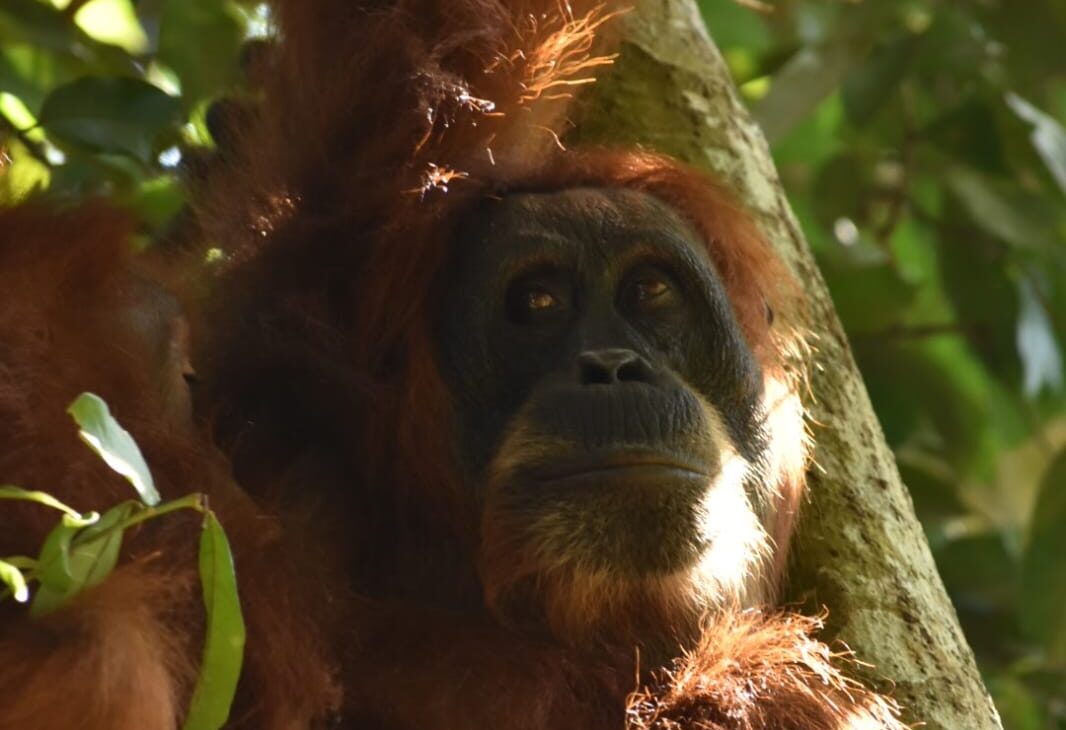
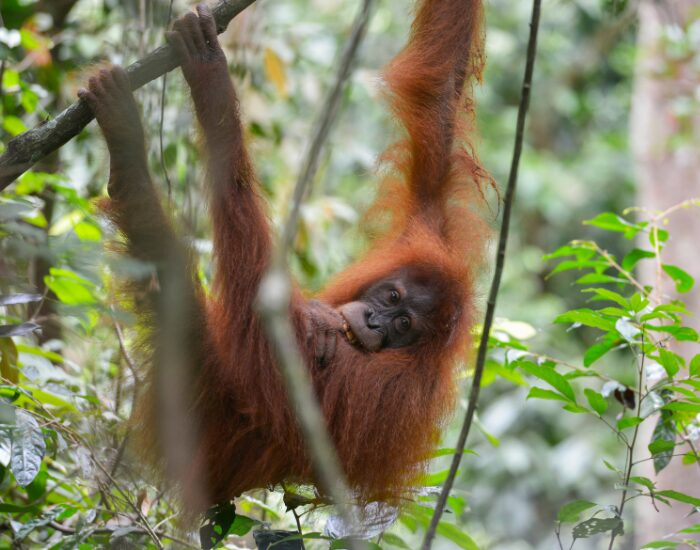
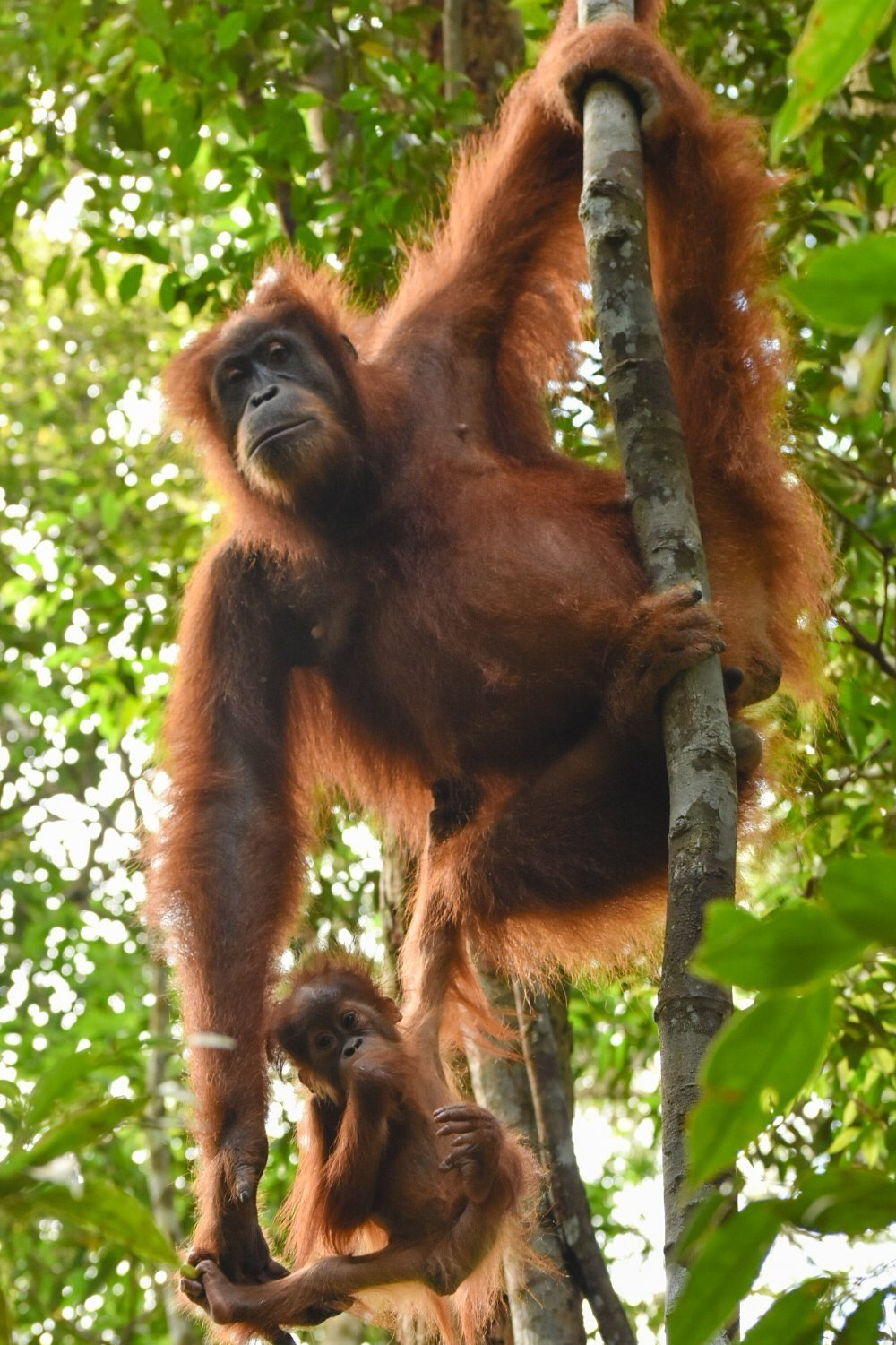
In the jungle above a small Sumatran village, a mother orangutan and her baby looked straight at me.
Looking an orangutan and her baby in the eyes is one of the most humbling things I have ever lived. It happened in Bukit Lawang, a tiny village in North Sumatra, Indonesia.
My partner and I spent 10 days in North Sumatra. During that time, we trekked into the jungle of Gunung Leuser National Park. We slept a night in the forest and met amazing orangutans, gibbons and monkeys.
This post is my honest account of that trip. First, it covers what the trek is really like. Then it explores how tourism helps orangutans in Sumatra, and the fine line between helping and harming.
🦧 Are you a responsible trekker?
Twelve questions on Bukit Lawang, orangutans and ethical travel. Read my story, then test yourself at the end.
Jump to the quiz ↓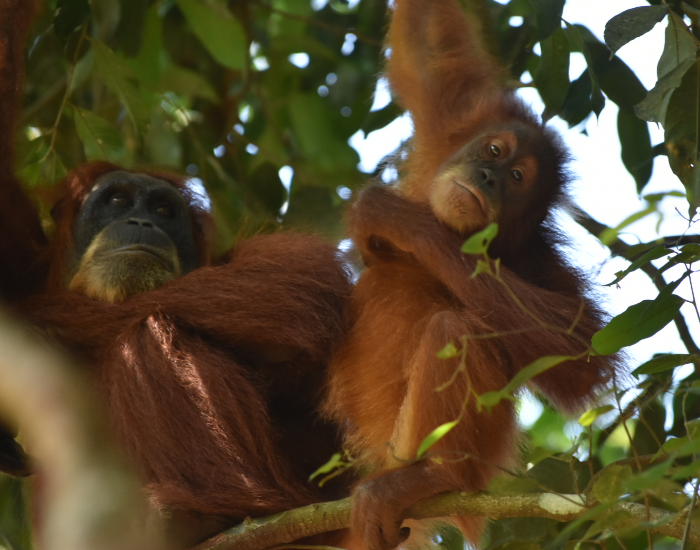
Why Bukit Lawang?
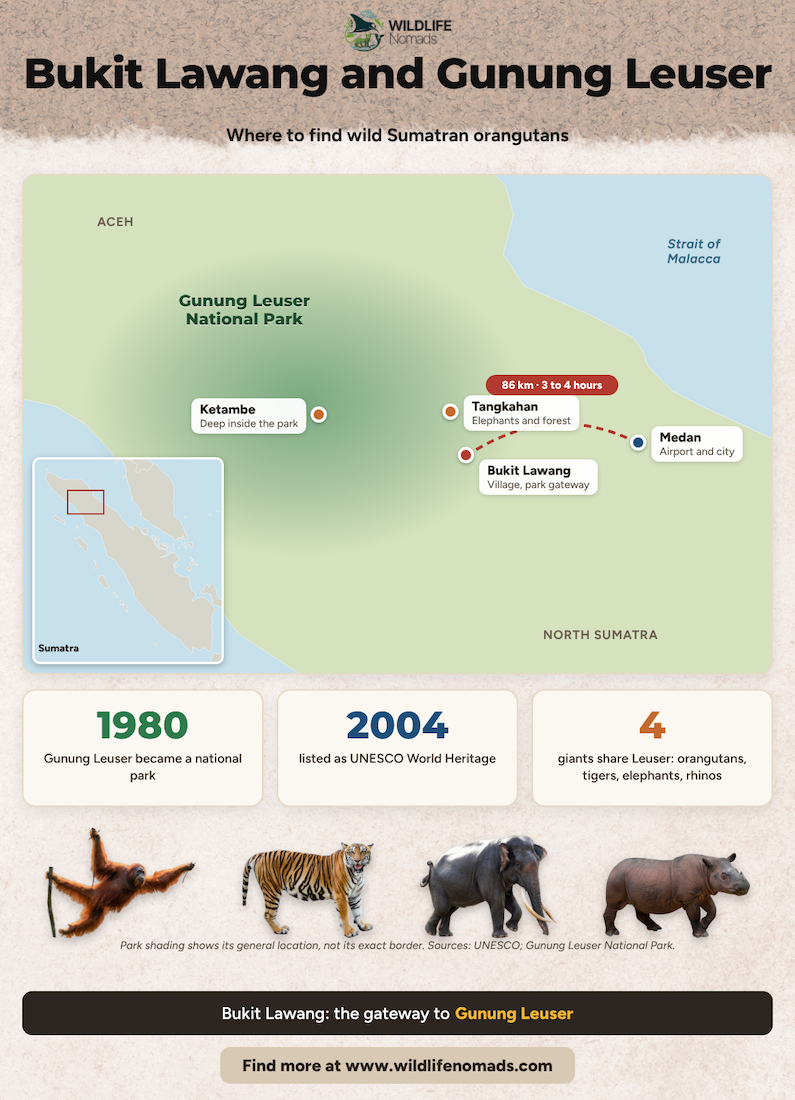
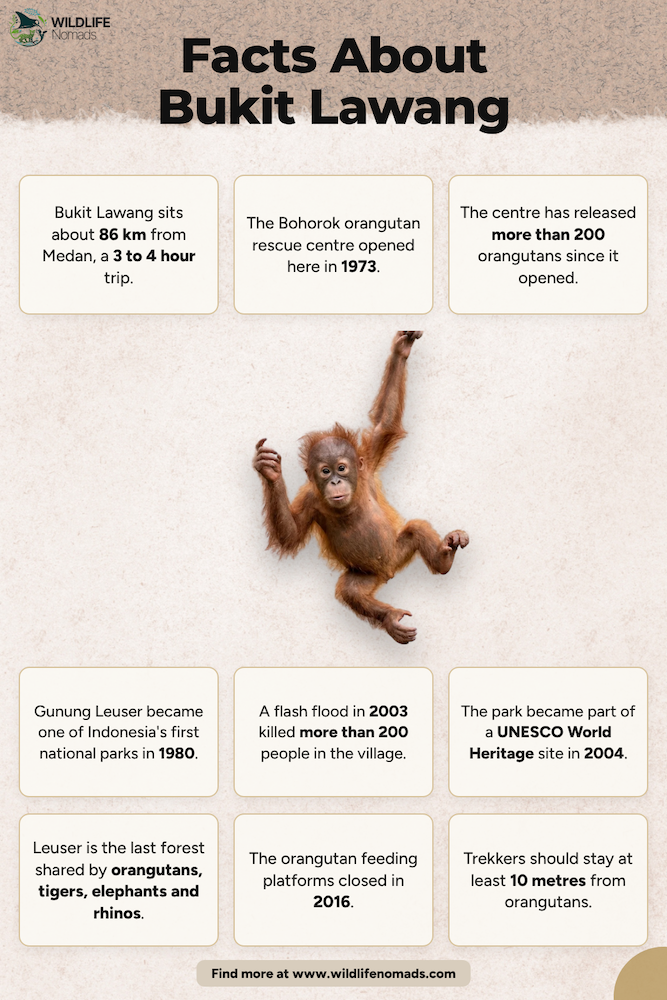
Bukit Lawang sits on the eastern side of Gunung Leuser National Park, beside the Bohorok River. In fact, it is the best-known gateway to see wild Sumatran orangutans in the primary rainforests of this Indonesian island.
The park is part of the vast Leuser Ecosystem. It is the last place on Earth where orangutans, Sumatran tigers, elephants and rhinos still share the same forest.
Most travellers reach the village from Medan, about three to four hours away. You can take a private car or, alternatively, a cheaper local bus.
The village itself, however, is small and full of life. Guesthouses line the river, and the locals are some of the warmest, most welcoming and smiling people I’ve ever met.
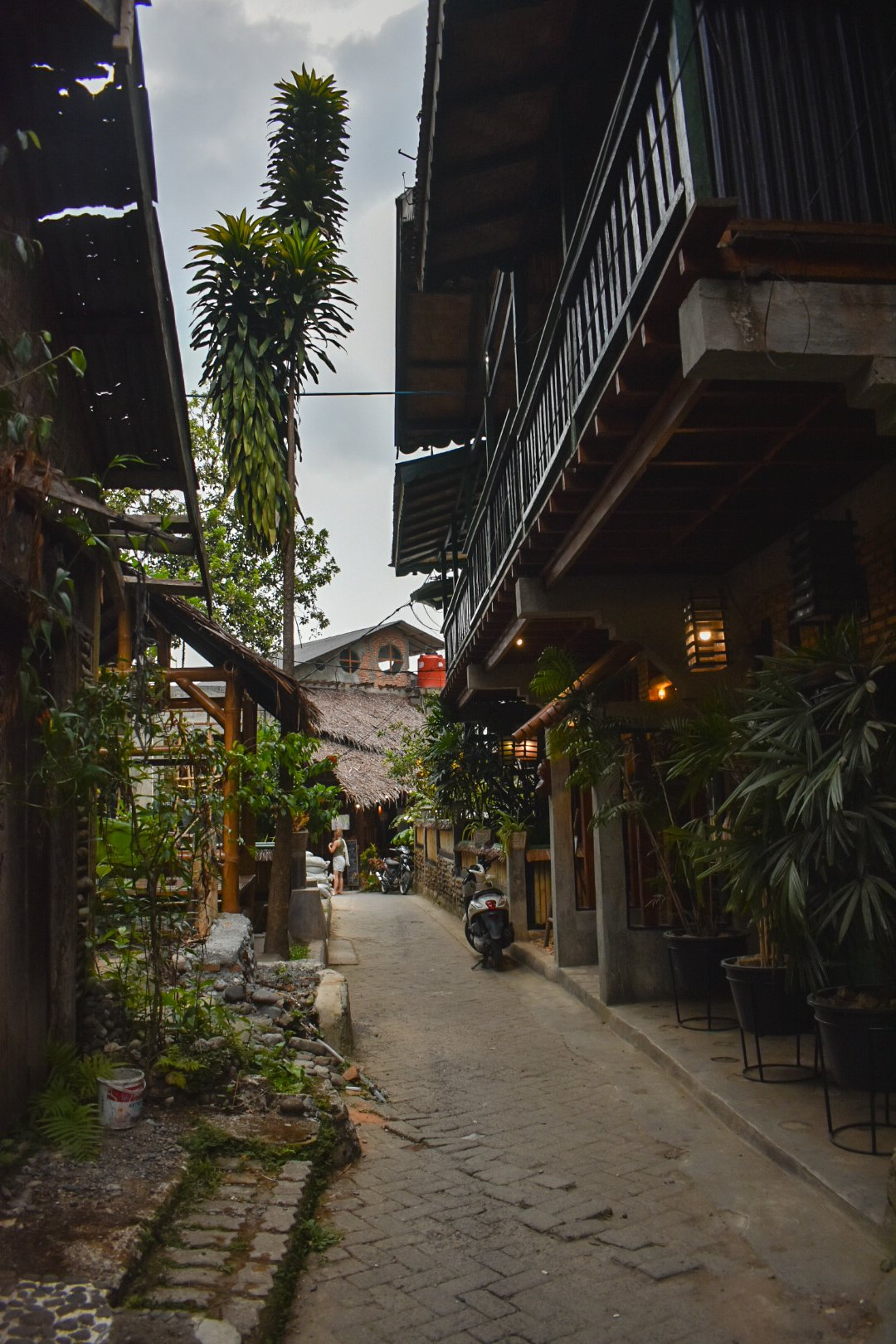
My 10 Days in North Sumatra
We arrived at the start of April and stayed for ten days. Overall, the weather was kind to us. Only the last couple of days brought intense rain.
We stayed at Riverside Guest House, run by a lovely couple. They recommended a certified trekking operator. They also arranged a tour to see a corpse flower, although the one we found had already died.
I had also planned a trip to see wild Sumatran elephants. In the end, however, we didn’t go, so I still haven’t seen a wild elephant. It’s high on my list.
Instead, we gave most of our time to the forest. And the forest delivered.
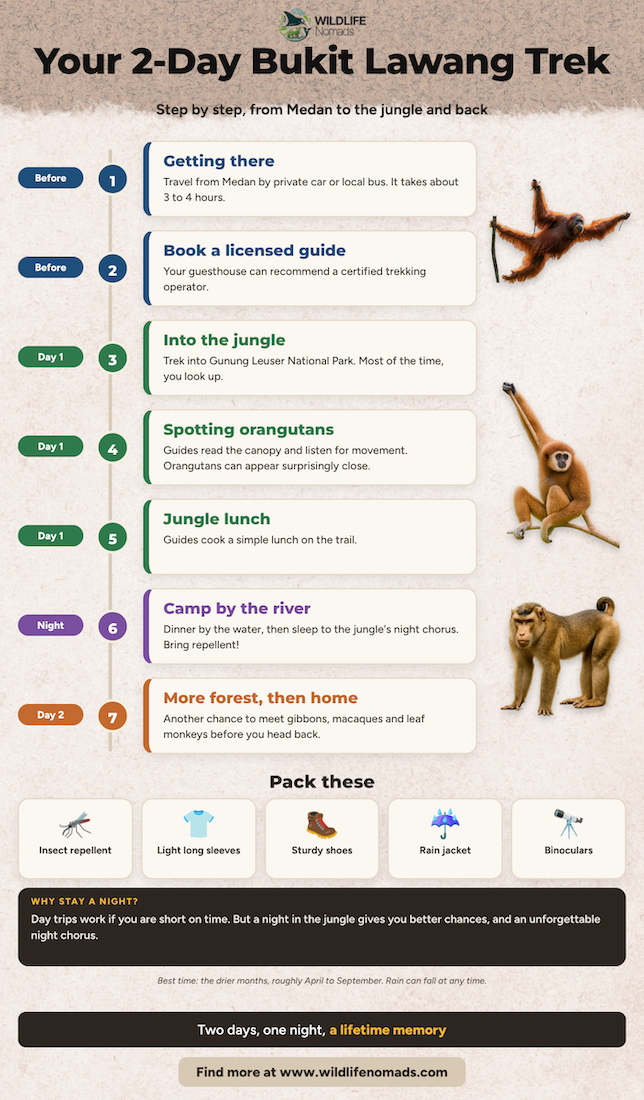
Our Two-Day Jungle Trek
Choosing the Trek
Treks range from short day tours to multi-day trips deep into the Sumatran jungle. We chose two days and one night.
We wanted to go deeper than a day trip. Still, we only had a few days for trekking, so two days felt like the right balance.
For this reason, I highly recommend staying at least one night. Sleeping in the jungle, surrounded by insects, flowing water and the sounds of nature, is an unforgettable experience.
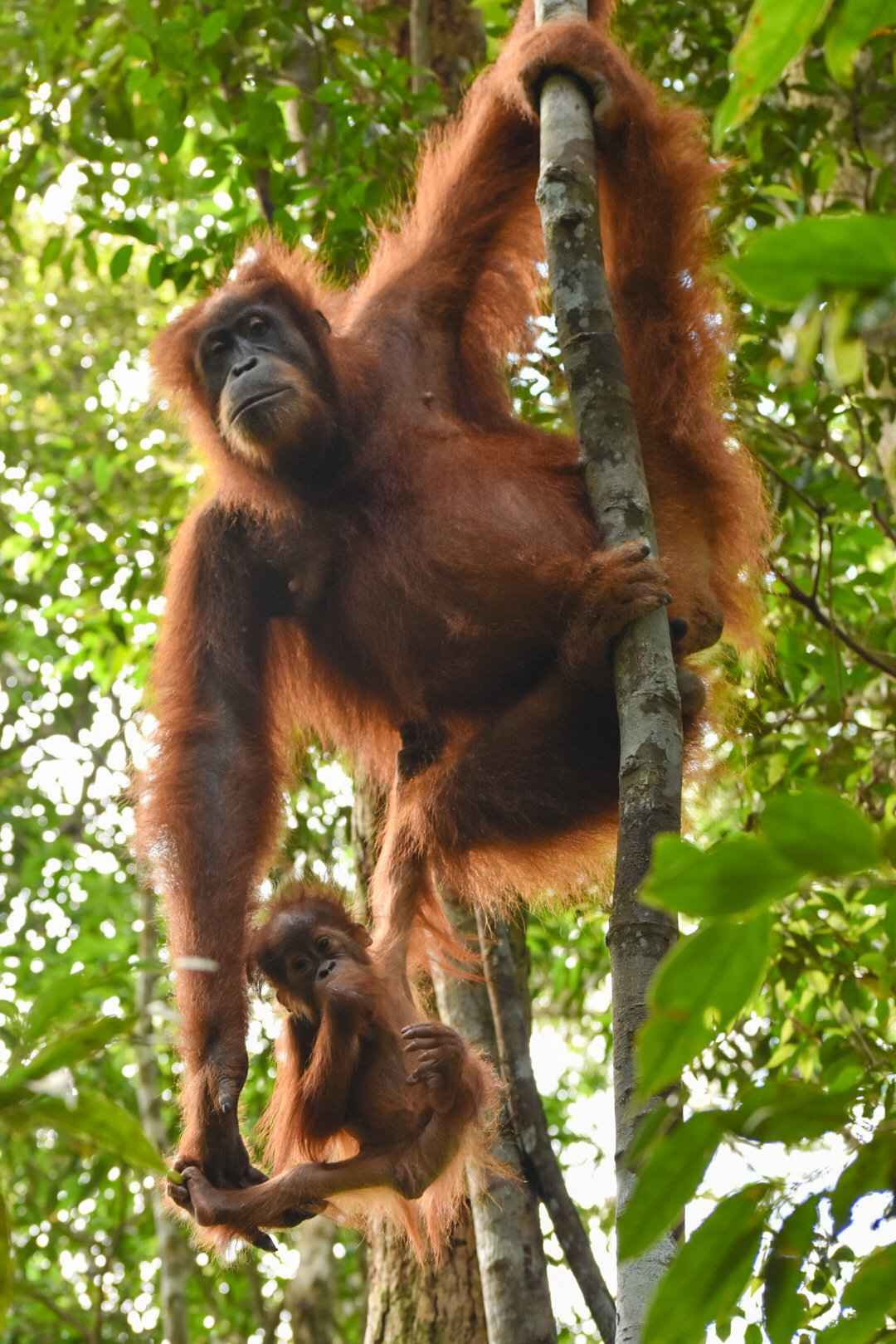
Face to Face With Wild Orangutans
A good guide has extensive knowledge of the forest. Guides read the canopy and listen for movement, which helps you spot orangutans high in the trees.
Orangutans are arboreal, so you spend most of the trek looking up. Even so, they can appear surprisingly close.
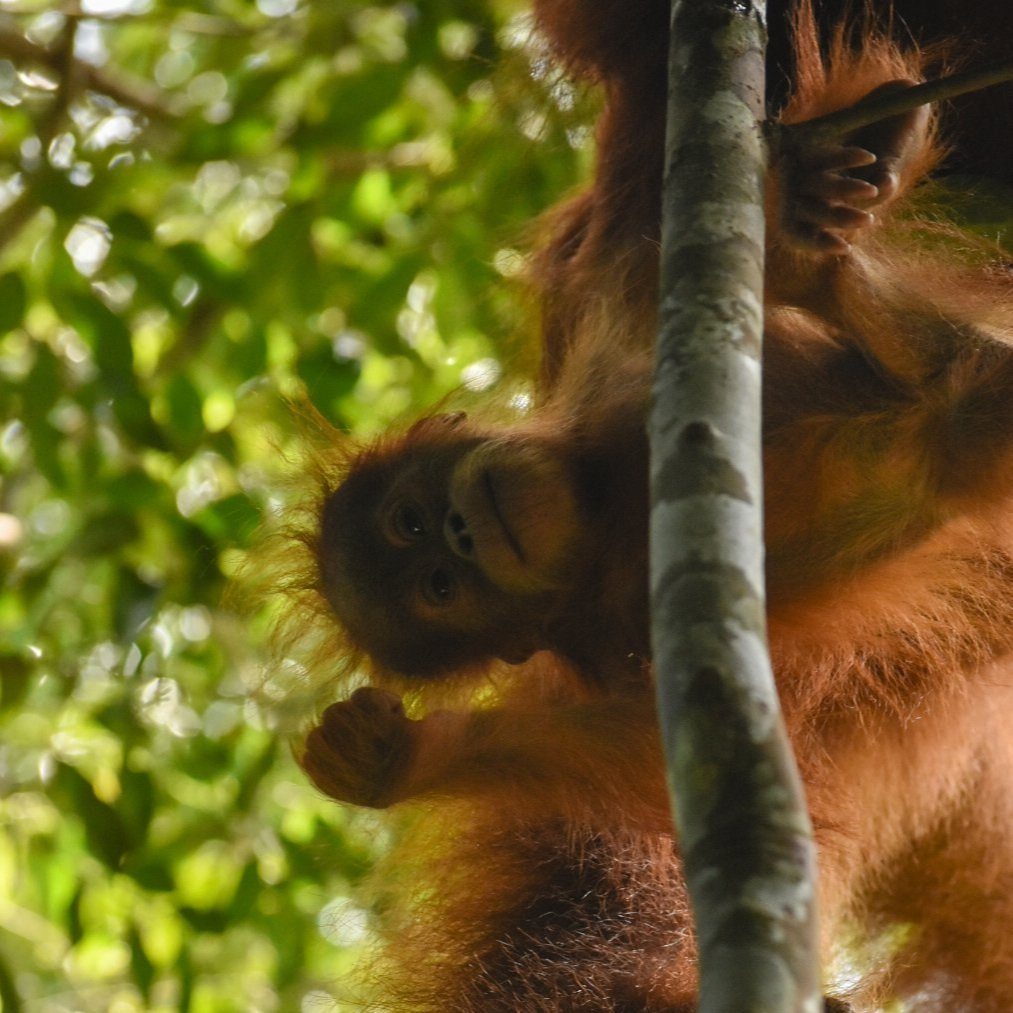
On our trek, we met a mother with her baby. Looking into their eyes is a moment I will never forget.
Gibbons, Macaques and a Curious Leaf Monkey
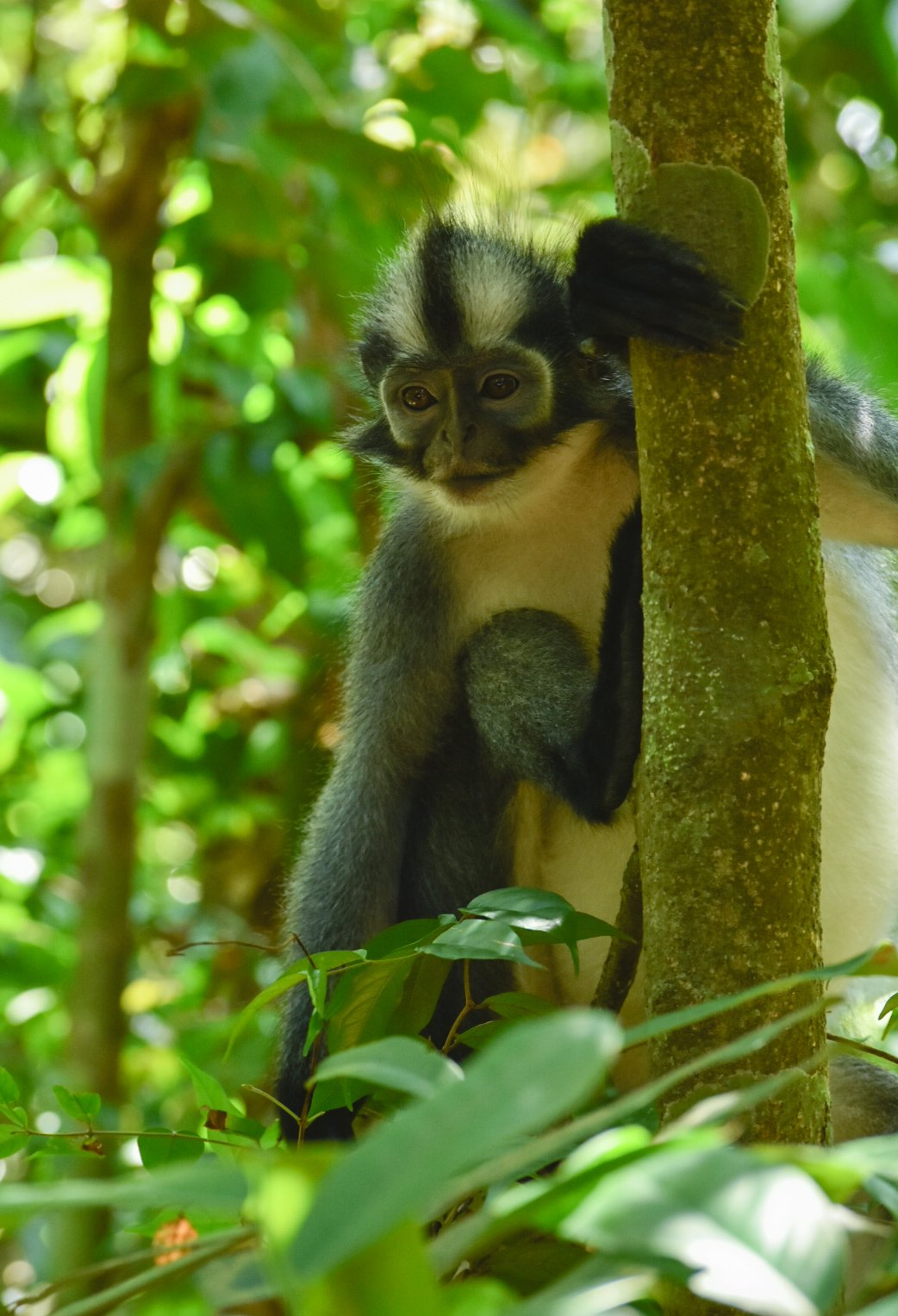
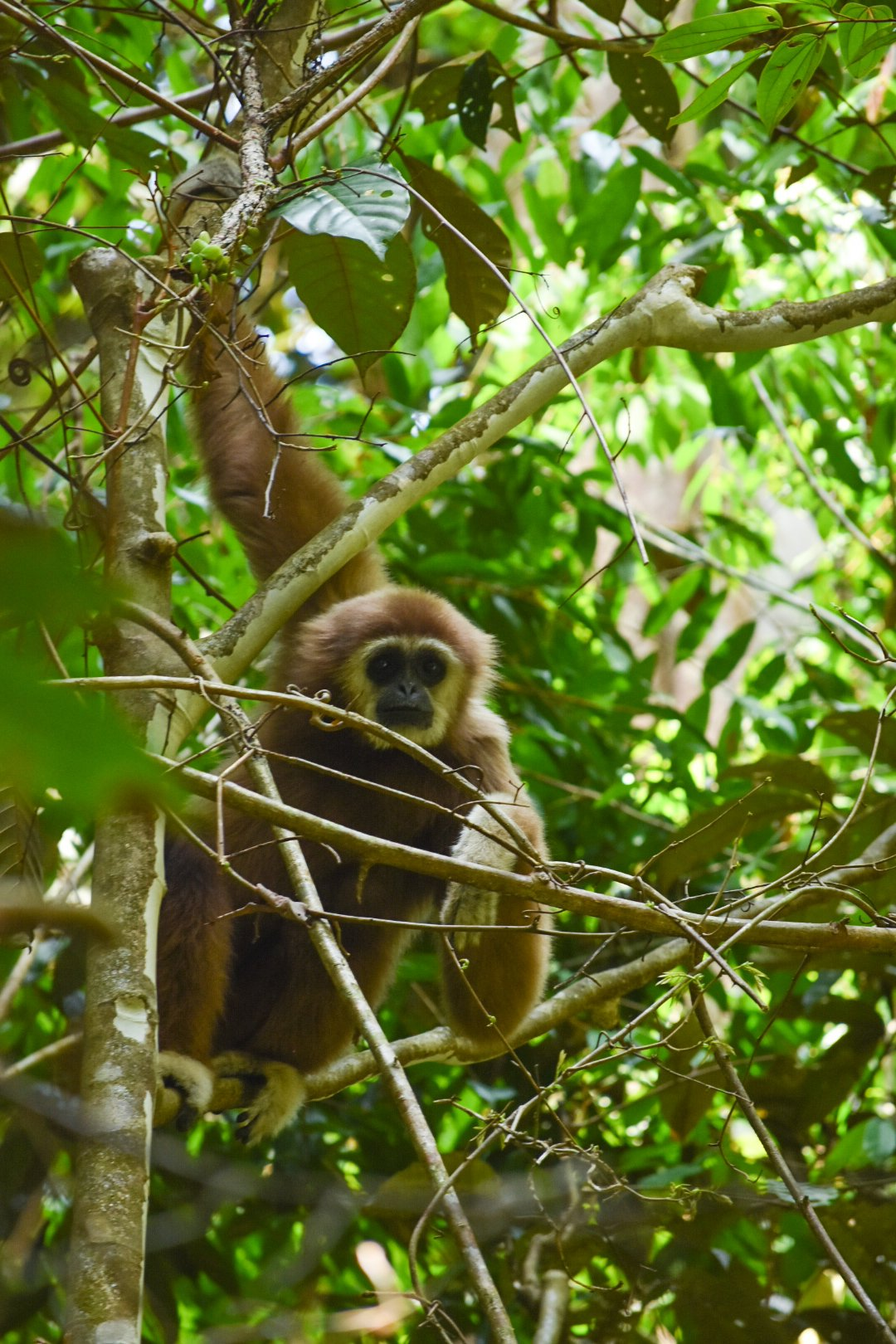
Orangutans weren’t the only stars, though. We also watched a white-handed gibbon moving through the canopy.
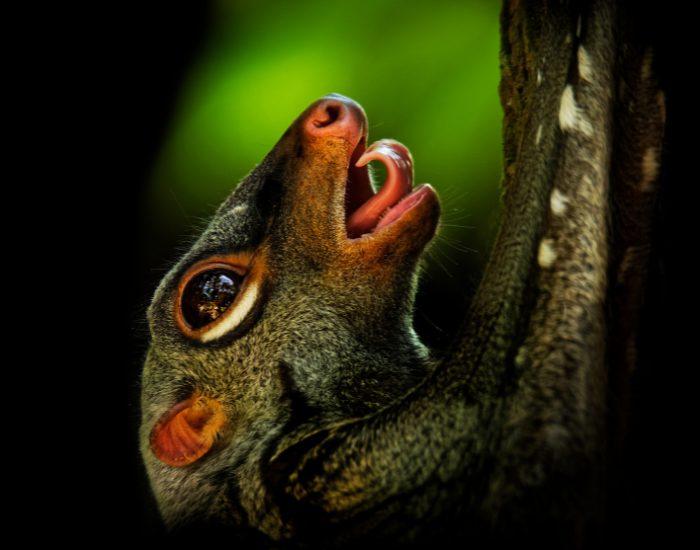
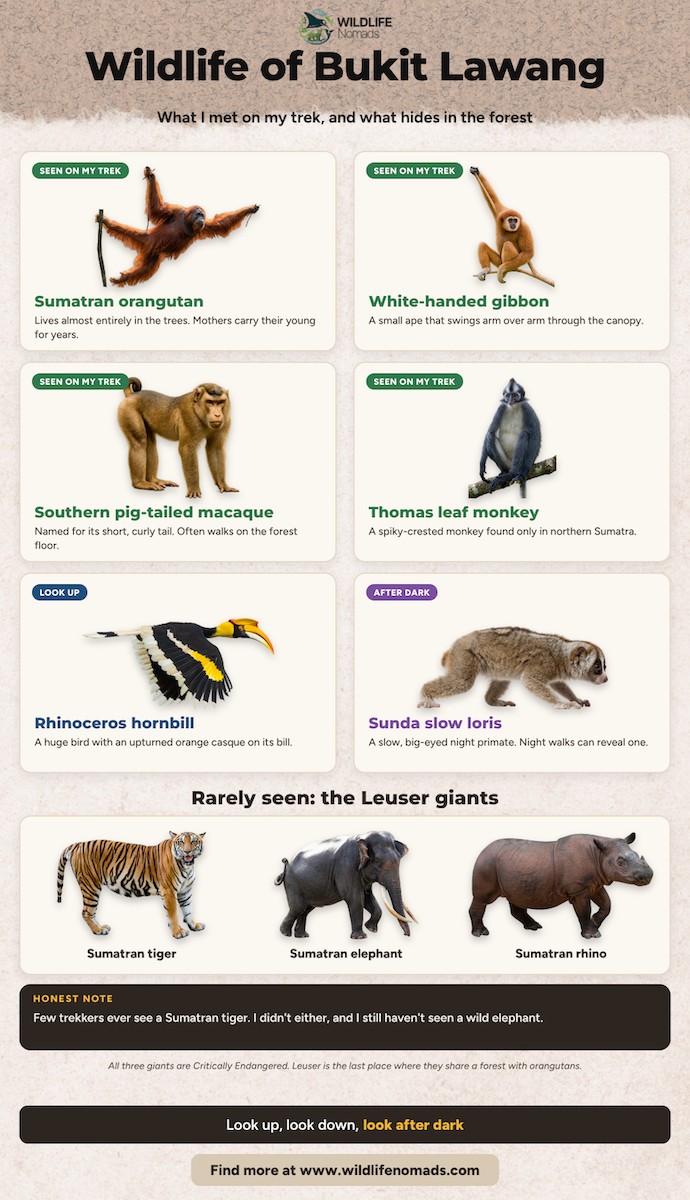
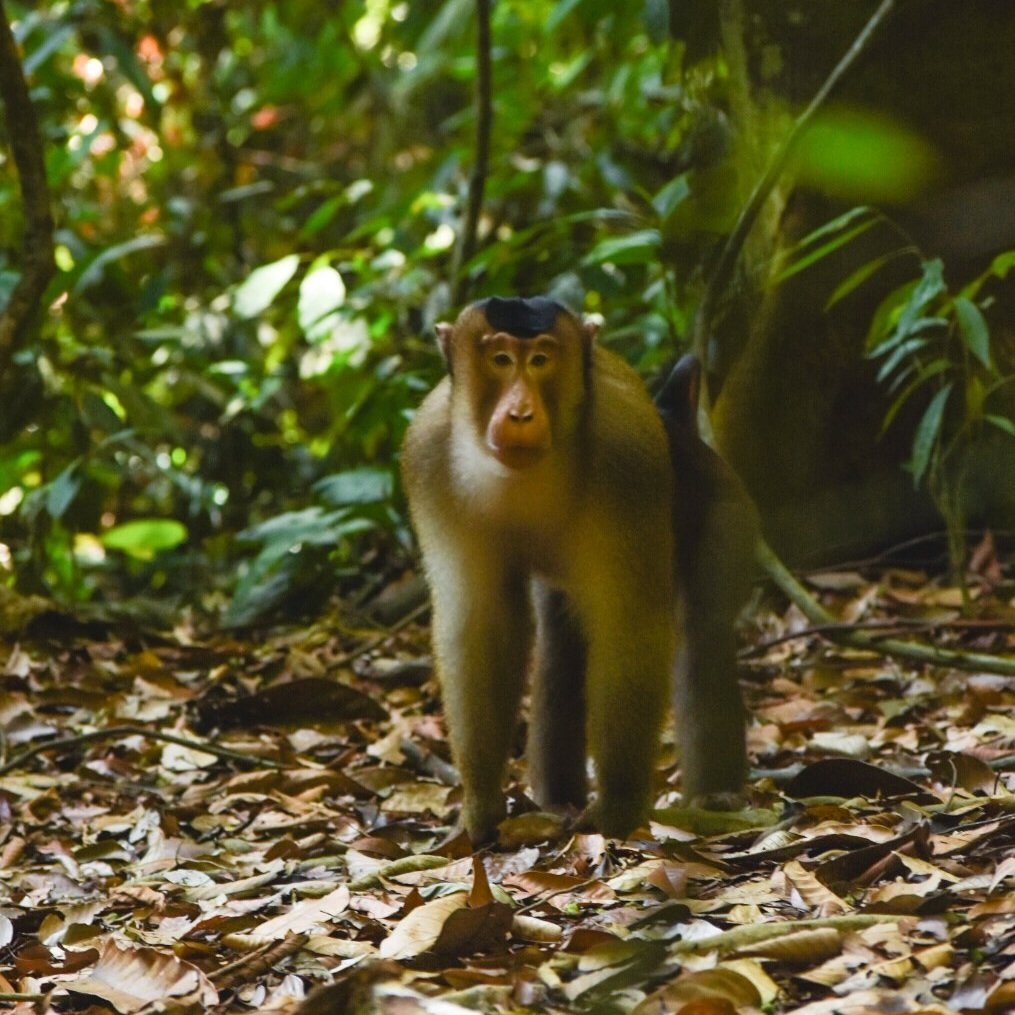
In addition, we saw a pig-tailed macaque and a very curious Thomas leaf monkey.
Besides these, Gunung Leuser holds many more primates. Night walks can even reveal a slow loris. See more types of monkeys on the blog.
A Night in the Jungle
Our camp sat in the surrounding jungle, with the sound of water nearby. Treks here usually include a simple jungle lunch and dinner cooked by the guides.
Be ready for basic conditions, though. There is little luxury, and the mosquitoes are relentless. Bring plenty of repellent.
Still, falling asleep to the jungle’s night chorus was worth every bite.
Wild or Semi-Wild? The Story of Bukit Lawang’s Orangutans
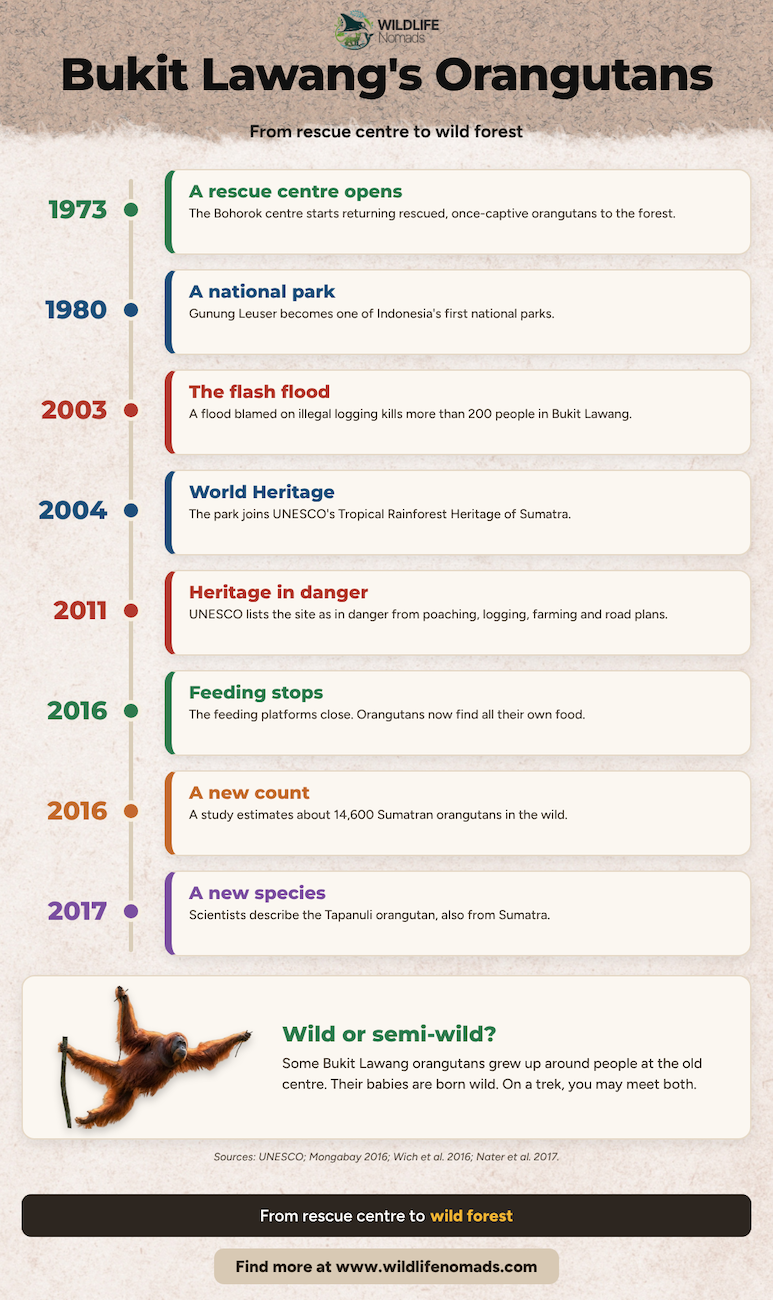
Bukit Lawang’s orangutans have an unusual past. In 1973, the Bohorok rehabilitation centre opened here to return rescued orangutans to the wild.
Before that, many of these orangutans had been kept in captivity as pets. Staff fed them on platforms while they learned to survive in the forest.
The rehabilitation work wound down from the mid-1990s, and the feeding platforms finally closed in 2016. As a result, today you may meet semi wild orangutans that grew up around people, plus their fully wild offspring.
Many orangutans on the trails are females with young. Mature males, with their huge cheek pads, are rarer, because they roam widely and alone.
Sumatran Orangutans at a Glance
Sumatran orangutans live only in northern Sumatra, mostly in Aceh and North Sumatra provinces. A 2016 study estimated about 14,600 remain in the wild.
Every Sumatra orangutan belongs to a species listed as Critically Endangered since 2000. It is one of the most endangered and protected species in Indonesia.
Interestingly, Sumatra also holds a second species. In 2017, scientists described the Tapanuli orangutan, with fewer than 800 individuals. A third species lives on Borneo.
I’m writing a full guide to orangutan facts, from Borneo to their record-long childhoods. Meanwhile, compare great apes in how long apes live.
How Tourism Helps Orangutans in Sumatra
Done well, tourism gives people a reason to protect the forest. I’ve seen the same idea work with gray whales in Mexico. It also drives gorilla tourism in Rwanda.
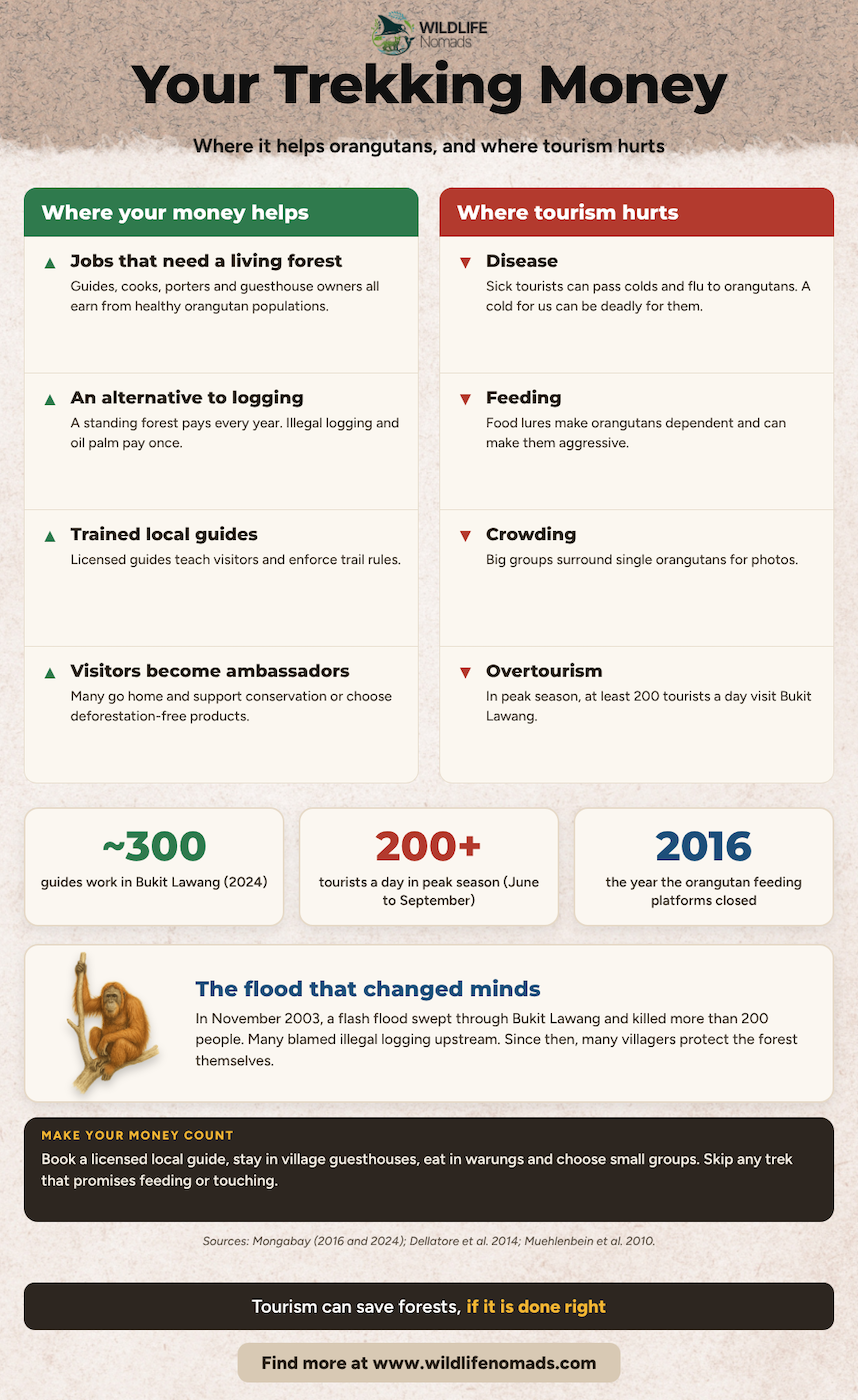
1. It Creates Jobs That Need a Living Forest
First, guides, cooks, porters and guesthouse owners all depend on healthy orangutan populations. A standing forest earns them a living every year.
As a result, the local community has an alternative to illegal logging and clearing land for oil palm plantations. Both drive deforestation across the island.
2. It Turned a Disaster Into a Lesson
In November 2003, a flash flood swept through Bukit Lawang and killed 239 people. Locals and officials blamed illegal logging upstream.
Afterwards, the village rebuilt, and many residents became actively involved in protecting the forest. For them, conservation is personal.
3. It Trains Professional Guides
Many guides are licensed through the Indonesia Tourist Guides Association. Good guides teach visitors about the forest and enforce rules on the trail.
4. It Turns Visitors Into Ambassadors
Finally, few people forget their first wild orangutan. Many go home and support conservation groups, or choose deforestation-free products.
The Fine Line: When Tourism Hurts
Tourism isn’t automatically good. There is a fine line between sharing wild animals with people and squeezing profit from them.
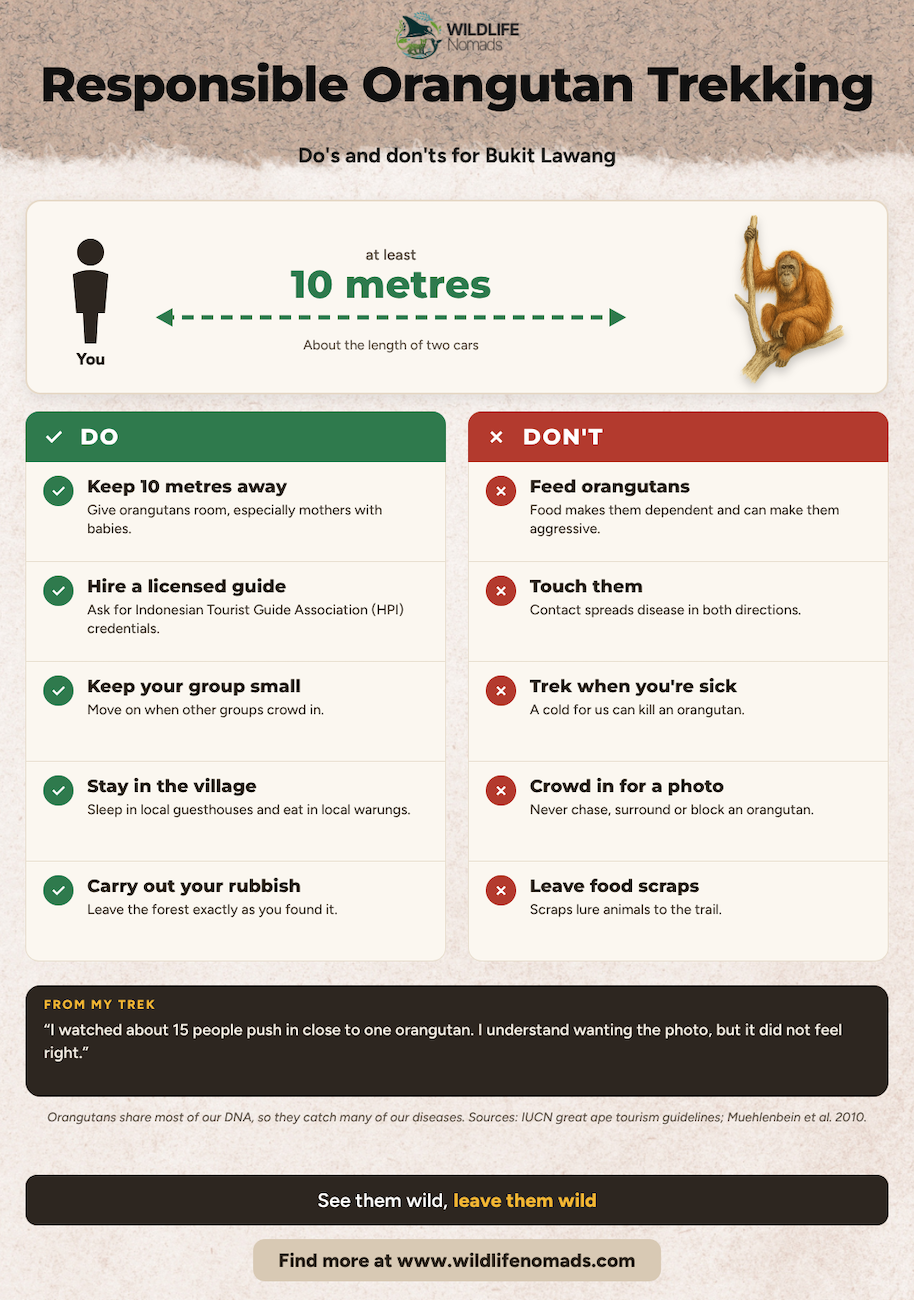
On our trek, I watched a group of around 15 people push in close to one orangutan. It did not feel right.
Still, I get it. You travel thousands of kilometres, sweat through the jungle and endure mosquito bites. Then, at last, an orangutan is right in front of you. Of course you want a photo.
But please, respect their space. Read my tips on ethical wildlife photography.
Disease and Feeding
Orangutans share most of our DNA, so they catch many of our diseases. A cold for us can be deadly for them.
For example, studies at orangutan sites have found tourists visiting while sick. Researchers also warn that tourism and rehabilitation make a risky mix.
Meanwhile, some guides have even used food to lure orangutans closer for tourists. That habit can make orangutans dependent and aggressive.
Overtourism
Bukit Lawang has become very popular. In 2024, a local guide estimated that about 300 guides work there. From June to September, at least 200 tourists a day arrive.
Because of this, local conservationists have suggested limiting daily visitor numbers. In my view, fewer, better-managed treks would protect both the orangutans and the experience.
How to Trek Responsibly in Bukit Lawang
- Keep your distance: stay at least 10 metres from orangutans.
- Never feed or touch them: it changes their behaviour and spreads disease.
- Stay home if you’re sick: even a mild cold can harm them.
- Choose a licensed guide: ask for Indonesia Tourist Guides Association credentials.
- Keep groups small: and leave when other orangutans or groups crowd in.
- Carry out your rubbish: some operators also run trash clean-ups.
- Support local: stay in village guesthouses and eat in local warungs.
Other Places to See Orangutans in Sumatra
- Batu Katak: a quieter village near Bukit Lawang, with fewer crowds.
- Tangkahan: famous for elephants, with orangutans in the surrounding forest. It is also where I planned my missed elephant trip.
- Ketambe: deep inside Gunung Leuser, with truly wild orangutans and fewer tourists.
Orangutans also live on Borneo, a different species on a different island. Explore the best wildlife destinations in Indonesia to plan more trips.
Planning Your Trek
- Best time: the drier months, roughly April to September, offer easier trails. We had great weather in early April.
- Trek length: day tours suit tight schedules, but an overnight trek gives you far better chances.
- What to pack: repellent, light long sleeves, sturdy shoes, a rain jacket and binoculars.
- Wildlife bonus: watch for hornbills, monitor lizards and countless insects.
The park also hides the critically endangered Sumatran tiger. Few trekkers ever see one, and I didn’t either.
FAQs About Orangutan Trekking in Bukit Lawang
Yes. Bukit Lawang has both semi-wild orangutans, descended from the old rehabilitation centre, and fully wild ones. An overnight trek with a good guide gives you the best chance.
A 2016 study estimated about 14,600 Sumatran orangutans in the wild. The species is Critically Endangered, and its forest keeps shrinking.
It can be. Choose a licensed guide and keep at least 10 metres away. Never feed or touch orangutans, and stay away if you’re sick.
Day treks work if you’re short on time. However, a two-day trek with a night in the jungle gives better sightings and a far richer experience.
The drier months, roughly April to September, offer the easiest trekking. Rain can still fall at any time of year.
Most visitors travel from Medan by private car or local bus. The trip takes about three to four hours.
The park is home to gibbons, macaques, Thomas leaf monkeys, hornbills and slow lorises. Sumatran tigers, elephants and rhinos also live in the wider Leuser Ecosystem.
Go, but Go Gently
Seeing wild orangutans in Sumatra changed how I think about travel. Our money, our distance and our behaviour all matter.
So go. Hire local guides, keep your distance and leave the forest as you found it. Then learn how to save endangered animals back home.
Want more great apes? Read are gorillas endangered? or compare species in our Endangered Animals Explorer. Would you trek to see orangutans?
Orangutan Experiences in Bukit Lawang
This website is reader-supported. When you click and book through links listed on this site, we may earn an affiliate commission.
References:
Dellatore, D. F., Waitt, C. D., & Foitová, I. (2014). The impact of tourism on the behavior of rehabilitated orangutans (Pongo abelii) in Bukit Lawang, North Sumatra, Indonesia. In A. E. Russon & J. Wallis (Eds.), Primate tourism: A tool for conservation? (pp. 98–120). Cambridge University Press. https://doi.org/10.1017/CBO9781139087407.008
Muehlenbein, M. P., Martinez, L. A., Lemke, A. A., Ambu, L., Nathan, S., Alsisto, S., & Sakong, R. (2010). Unhealthy travelers present challenges to sustainable primate ecotourism. Travel Medicine and Infectious Disease, 8(3), 169–175. https://doi.org/10.1016/j.tmaid.2010.03.004
Nater, A., Mattle-Greminger, M. P., Nurcahyo, A., Nowak, M. G., de Manuel, M., Desai, T., Groves, C., Pybus, M., Sonay, T. B., Roos, C., Lameira, A. R., Wich, S. A., Askew, J., Davila-Ross, M., Fredriksson, G., de Valles, G., Casals, F., Prado-Martinez, J., Goossens, B., . . . Krützen, M. (2017). Morphometric, behavioral, and genomic evidence for a new orangutan species. Current Biology, 27(22), 3487–3498. https://doi.org/10.1016/j.cub.2017.09.047
Russon, A. E., & Wallis, J. (2014). Reconsidering primate tourism as a conservation tool. In A. E. Russon & J. Wallis (Eds.), Primate tourism: A tool for conservation? (pp. 3–18). Cambridge University Press. https://doi.org/10.1017/CBO9781139087407.002
Wich, S. A., Singleton, I., Nowak, M. G., Utami Atmoko, S. S., Nisam, G., Arif, S. M., Putra, R. H., Ardi, R., Fredriksson, G., Usher, G., Gaveau, D. L. A., & Kühl, H. S. (2016). Land-cover changes predict steep declines for the Sumatran orangutan (Pongo abelii). Science Advances, 2(3), e1500789. https://doi.org/10.1126/sciadv.1500789