
When most people think of wild cats in Africa, their minds jump straight to the big cats: Lions, Leopards, and Cheetahs. And rightly so, they are magnificent, powerful, and truly the stars of any safari. However, what if I told you the continent is home to ten unique species of wild cats? And that one of them, the African wildcat (Felis lybica), is the direct ancestor of your couch-cuddling companion back home? These cats inhabit a wide native range, including regions such as West Africa, the Kalahari, the Congo, and the Atlas Mountains.
This isn’t just a list. It’s a journey into the continent’s entire feline roster, exploring the genetic wildness that still stalks the African landscape. I hope you enjoy it!
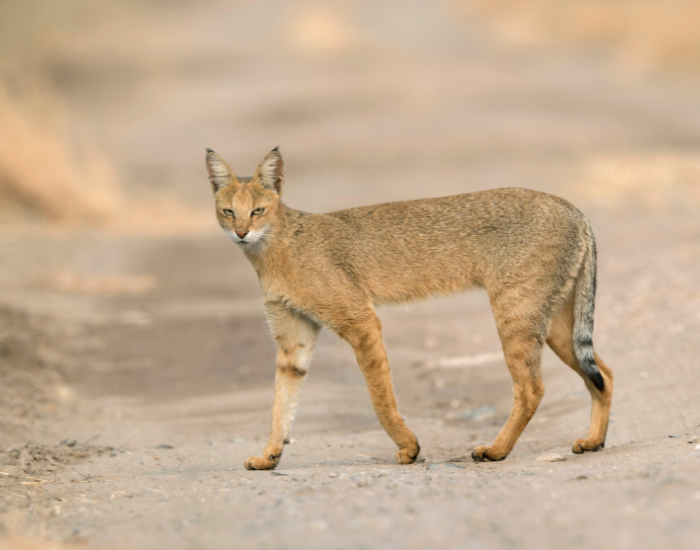
Africa’s 10 Wild Cat Species: The Complete Roster
Africa is a sanctuary for the cat family (Felidae), housing ten incredible species. Notably, the southern African wildcats are a distinct subspecies, adapted to the region’s unique conditions. Taxonomically, the African wildcat is classified as Felis lybica, differentiating it from other wildcat groups. Each species is found primarily in specific habitats across the continent, from deserts to forests. Their adaptation to different environments is reflected in the variation of their coat ranges, which can differ in color, thickness, and markings depending on geography.
Let’s meet all ten species, divided into big cats and small cats.
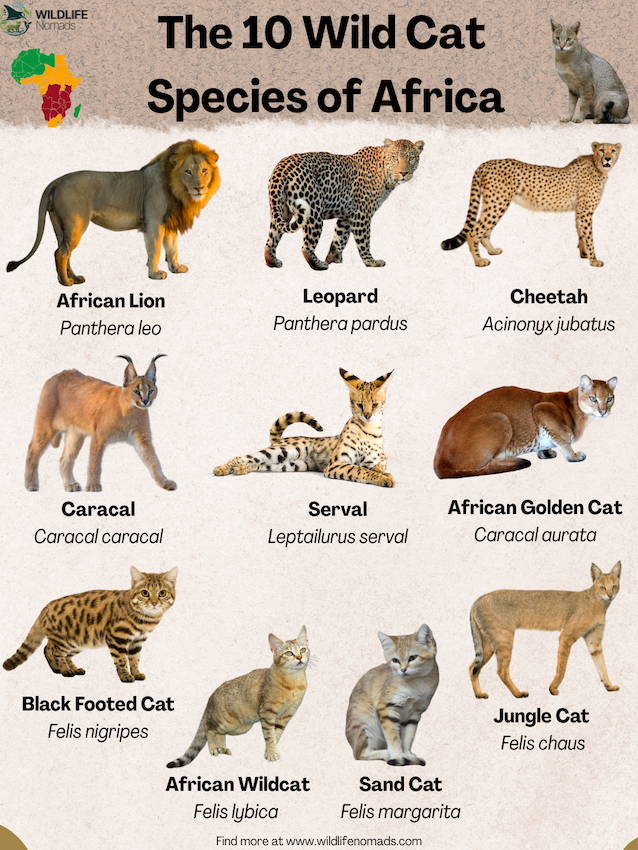
The Big Cats of Africa
These are the titans whose roars define the soundscape of the savanna. While “African wildcats” often refers specifically to smaller species, the big cats are an undeniable part of Africa’s wild feline identity. Young wild cats, however, face threats from natural predators such as large birds, including owls and hawks.
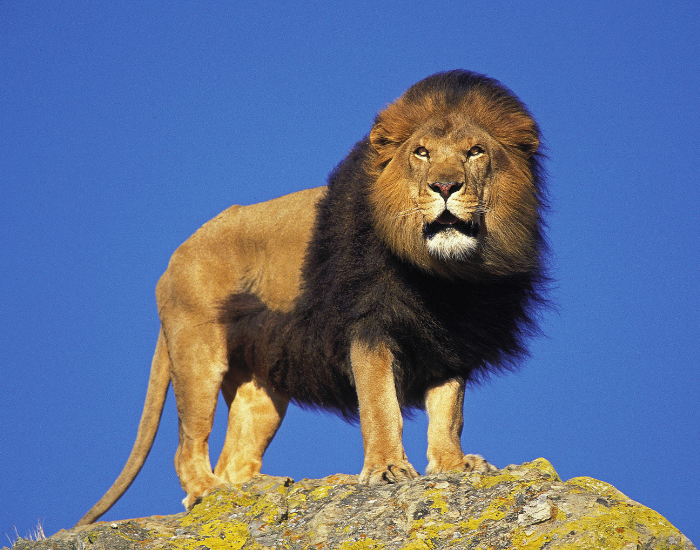
1. African Lion (Panthera leo) – The King of Beasts
The African Lion is the largest wild cat in Africa, with males weighing between 330-550 pounds, measuring a body length of 5.6-8.2 feet, and a tail length of 2-3.3 feet, and standing 4 feet tall at the shoulder. Males sport magnificent manes ranging from blond to black, which protect their necks during fights and signal genetic fitness to females. Lions are unique among cats for their social structure, they live in prides consisting of related females, cubs, and male coalitions. This cooperative living allows them to take down massive prey including zebras, wildebeest, buffalo, and even young elephants.
Lions once roamed across Africa, Europe, and Asia. Today, they inhabit savannas and open woodlands primarily in eastern and southern Africa, with a critically endangered Asiatic subspecies surviving in India’s Gir Forest. Despite their fame, lion populations have declined by approximately 43% over the past 21 years.
Conservation Status: Vulnerable due to habitat loss, human-wildlife conflict, and prey depletion.
For those lion fans, there is a rare lion called the white lion, and no, I am not talking about albino lions. If you are curious, dive into our article: 12 Fascinating Facts About White Lions
2. Leopard (Panthera pardus) – The Master of Stealth
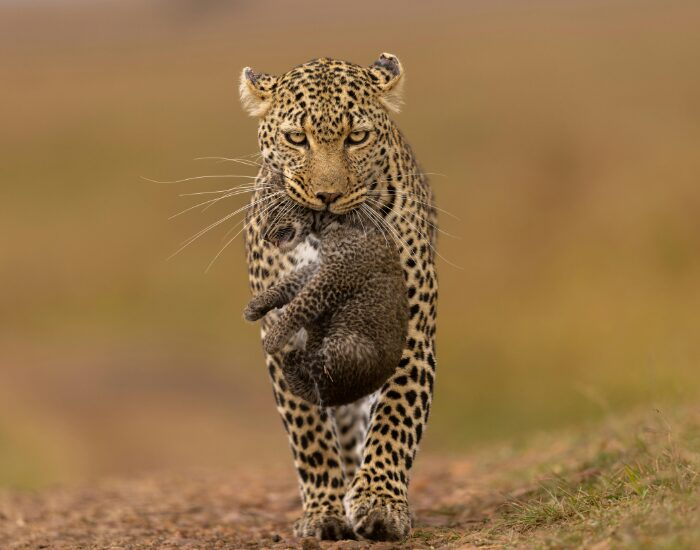
The Leopard is Africa’s most adaptable large cat, weighing 60-150 pounds for males. Their body length typically ranges from 4.25 to 6.25 feet, with a tail length of 3 to 3.5 feet, which helps with balance in trees and distinguishes them from other wildcats. These solitary hunters are famous for their incredible strength and signature spotted coat featuring rosettes—rose-shaped markings unique to each individual like human fingerprints. Their most impressive behavior? Hauling kills—sometimes weighing as much as themselves, up into trees to avoid scavengers like hyenas and lions. Leopards hunt over 100 different prey species, from fish and insects to antelopes and young giraffes.
Leopards demonstrate remarkable adaptability, inhabiting everything from arid deserts to tropical rainforests throughout sub-Saharan Africa and into the Arabian Peninsula. This adaptability has allowed them to survive closer to human settlements than most other large cats. Melanistic leopards (black panthers) occur throughout Africa, though they’re more common in Asian populations. Conservation Status: Vulnerable, though their secretive nature gives them better survival prospects than lions or cheetahs.
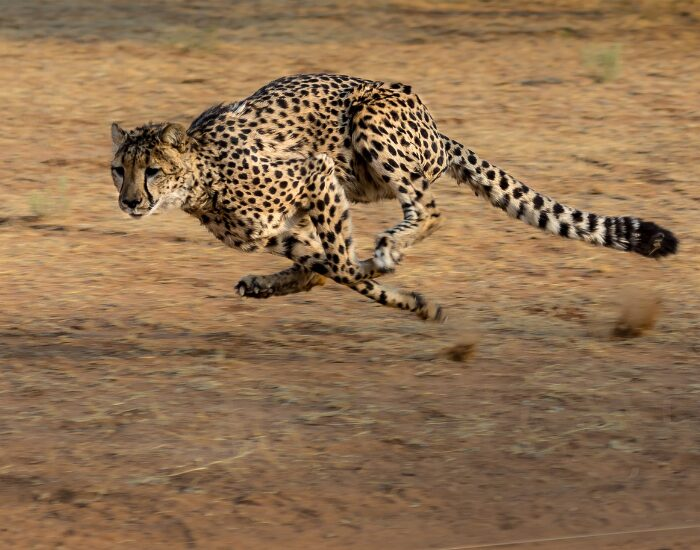
3. Cheetah (Acinonyx jubatus) – The Speed Demon
The Cheetah holds the title of fastest land animal on Earth, reaching speeds up to 70 mph in short bursts. Everything about their body screams speed: long slender legs, a flexible spine, deep chest, small aerodynamic head, and semi-retractable claws that work like running spikes. The distinctive black “tear marks” running from their eyes to their mouth reduce sun glare, helping them focus during high-speed chases. Cheetahs typically have a body length of 110–150 cm (43–59 in) and a tail length of 60–80 cm (24–31 in), which helps with balance during rapid turns. Unlike other big cats, cheetahs can’t roar, they chirp, purr, and make bird-like sounds.
Cheetahs prefer open grasslands and savannas in eastern and southern Africa where they can spot prey from a distance. They’re diurnal hunters, typically hunting in early morning or late afternoon. The chase usually lasts less than a minute, covering 600-700 yards before they catch medium-sized ungulates like Thomson’s gazelles and impalas. After a kill, they must eat quickly before larger predators steal their meal. Conservation Status: Vulnerable. Only 7,000-10,000 cheetahs remain in the wild, threatened by habitat loss and low genetic diversity from an extinction event 10,000 years ago.
The Small Cats of Africa
These seven smaller felines are no less important. As a group, African wild cats represent a diverse array of small felines found across the continent. They’re the silent, solitary hunters, the unsung heroes of pest control, and keepers of fascinating evolutionary secrets. African wild cats, such as the African wildcat (Felis lybica), display a range of coat coloration, often with a speckled appearance and are typically marked with faint tabby stripes and spots. These markings help distinguish them from domestic cats and hybrids. Their ecological role is vital, as they help control populations of small rodents, which are a primary prey item in their diet. The African wildcat (Felis lybica) is among this group and represents the ancestor of all domestic cats.
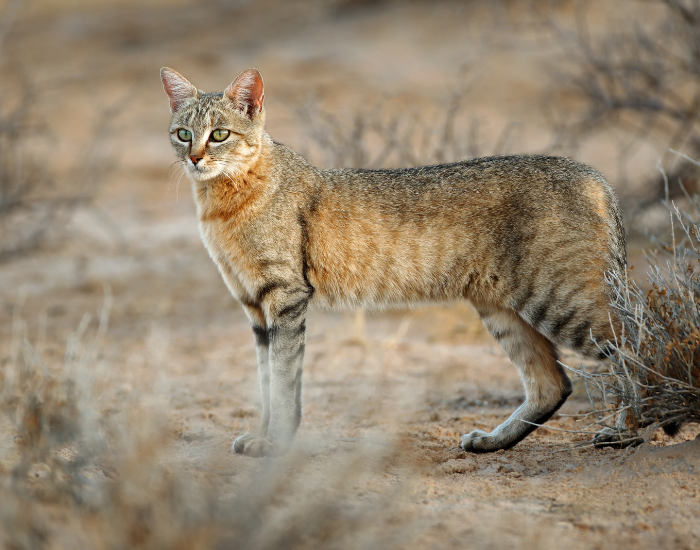
4. African Wildcat (Felis lybica) – The Ancestor of Your House Cat
Here’s the star of our show, the African wildcat (Felis lybica) is the direct ancestor of every domestic cat alive today. Weighing 7-15 pounds, they’re slightly larger than house cats with noticeably longer legs and a more upright gait. The African wildcat’s body length typically ranges from 45 to 75 cm, with a tail length of 25 to 38 cm. Their sandy-yellow to tawny-grey coat features faint tabby stripes and a speckled appearance due to black-tipped hairs, reflecting a wide range of coat coloration and coat ranges across their native habitats. The wildcat is typically marked with black bars on the legs, and the hind legs are long and strong, aiding in their agile movement.
African wildcats are found primarily in 46 African countries from Morocco through sub-Saharan Africa, including west Africa, and extending into the Arabian Peninsula and Asia. Their native range also reaches into western India, where they overlap with the Asiatic wildcat, and they are often compared to the European wildcat found in Europe. These nocturnal hunters are exceptional at using their keen senses and long legs to capture prey, especially small rodents. Their legs raise their body into a distinctive sitting position, creating an almost vertical pose that is rare among domestic cats.
5. Serval (Leptailurus serval) – The Stilt-Walker
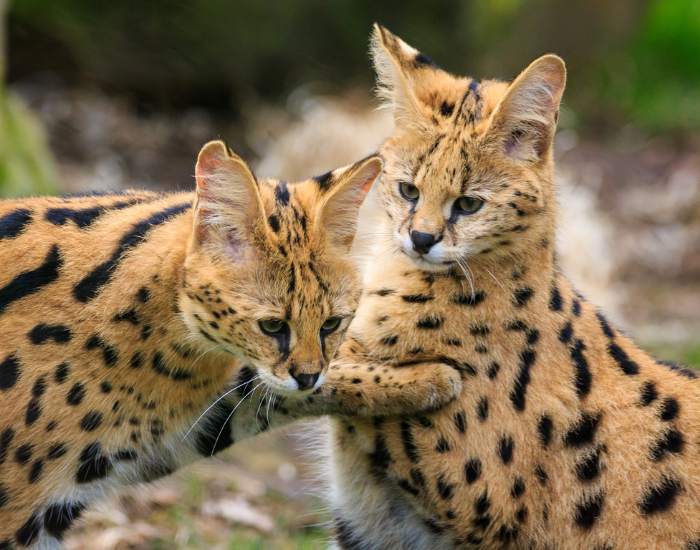
The serval is immediately recognizable by its enormous ears and extraordinarily long legs—the longest of any cat relative to body size. Standing 54-62 cm tall at the shoulder and weighing 20-40 pounds, these golden-yellow cats with black spots are built for hunting in tall grass. Those massive ears have over 20 muscles each, rotating up to 180 degrees like satellite dishes to detect prey. Their hunting strategy? Patient waiting in tall grass, remaining motionless for up to 15 minutes before exploding upward, jumping up to 4 meters in the air to attack with front paws.
Servals inhabit sub-Saharan Africa in savannas and grasslands with tall grasses, particularly near wetlands and rivers. Unlike many cats, servals love water and wade into marshes to hunt frogs. They catch prey in over 50% of their attempts, making them one of the best hunters in the wild cat kingdom, about 20% better than lions hunting together. On average, one serval eats 4,000 rodents per year. Conservation Status: Least Concern, though populations are declining in North Africa.
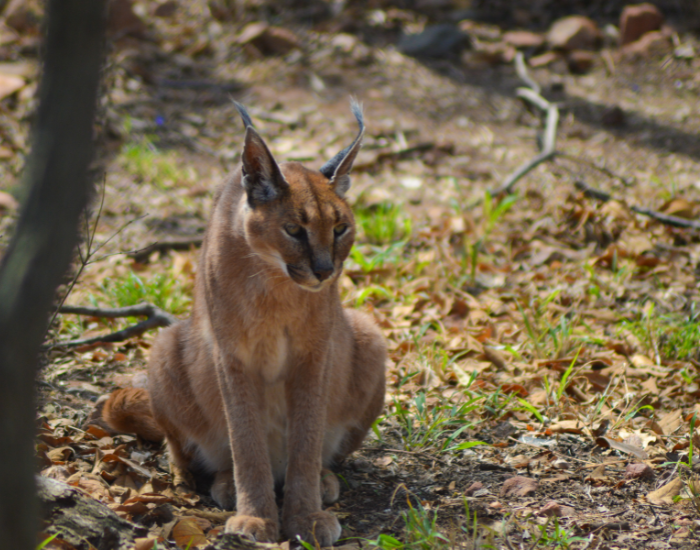
6. Caracal (Caracal caracal) – The Desert Lynx
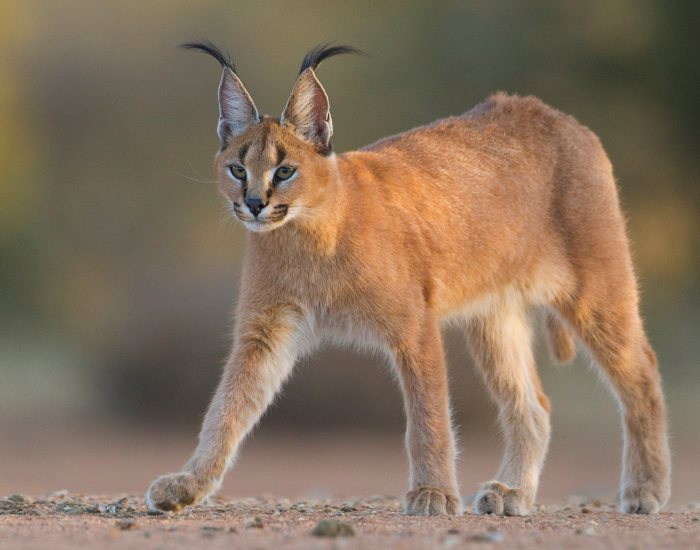
The caracal is nature’s Olympic high jumper. These 18-42 pound cats with uniformly reddish-tan coats can leap higher than 3 meters (10 feet) into the air to catch birds in flight, twisting and changing direction mid-air. Their most distinctive feature is the long black tufts on their ears, which can grow up to 4.5 cm long. Each ear has approximately 20 muscles to help pinpoint prey locations. Scientists believe the tufts enhance hearing and facilitate communication between caracals.
Found across Africa, the Middle East, and into India, caracals prefer savannas, scrublands, and semi-deserts. They’re highly adaptable and can survive long periods without water, obtaining moisture from their prey. Historically, caracals were used in hunts by Indian rulers, they were placed in arenas with flocks of pigeons, and people bet on which caracal would kill the most birds. Today, they hunt rodents, hares, birds, and occasionally young antelopes, killing smaller prey with a bite on the neck. Conservation Status: Least Concern globally, though Asian populations are endangered.
7. African Golden Cat (Caracal aurata) – The Rainforest Enigma
The African golden cat is one of Africa’s most mysterious felines. At first glimpse, it looks very similar to the previous one. This elusive cat inhabits dense tropical rainforests in West and Central Africa from Senegal to Kenya. Despite its name, the golden cat displays remarkable color variation, coats range from golden-brown to red, grey, or nearly black. Some individuals sport spotted coats like mini-leopards, while others have plain coloration. They’re medium-sized cats weighing 11-35 pounds with sturdy builds similar to caracals but lacking ear tufts.
Very little is known about their behavior due to their remote rainforest habitat. Camera trap studies suggest they’re primarily nocturnal and terrestrial hunters taking down duikers (small antelopes), rodents, monkeys, and birds. Local folklore suggests they’re fierce hunters capable of taking larger prey, though this remains unverified.
Conservation Status: Vulnerable. Habitat loss through deforestation for agriculture and logging threatens their survival, and their restricted rainforest habitat makes them particularly susceptible to extinction.
8. Black-Footed Cat (Felis nigripes) – The Pint-Sized Predator
Don’t let the cute factor fool you, the black-footed cat is one of Africa’s deadliest hunters. At just 2.2-5.5 pounds, females are among the world’s smallest wild cats, yet they’re called “miershooptier” (Anthill Tiger) in Afrikaans for their fierce demeanor. Only the soles of their feet are actually black, giving them their name. Their soft, tawny gold coat features bold dark spots, and they have broad skulls with large, rounded ears.
Found in South Africa, Botswana, and Namibia’s arid steppes and Kalahari Desert, these nocturnal hunters are incredibly efficient. Black-footed cats catch vertebrates every 50 minutes and kill up to 14 small animals in a single night. They consume about 250-300 grams of prey nightly, approximately a sixth of their body weight. They hunt everything from rodents and birds to reptiles, and remarkably prey on Cape hares heavier than themselves. During the day, they shelter in abandoned burrows or occupied aardwolf dens. Conservation Status: Vulnerable. Only about 10,000 remain in the wild, threatened by habitat fragmentation, rodenticide poisoning, and road mortality.

9. Sand Cat (Felis margarita) – The Desert Survivor
The sand cat is the ultimate desert specialist, surviving in some of Earth’s harshest environments where temperatures soar above 122°F during the day and plummet below freezing at night. Weighing 3.3-7.5 pounds with a stocky build, these pale sandy-to-grey cats have evolved remarkable adaptations. Most distinctively, thick fur covers the soles of their feet, insulating them from scorching sand and allowing silent movement without leaving tracks. Their broad heads sport large, low-set ears that dissipate heat and detect underground prey.
Sand cats inhabit sandy and stony deserts across North Africa’s Sahara Desert, the Arabian Peninsula, and Central Asia. They’re strictly nocturnal, sheltering during the day in burrows they dig themselves or steal from foxes. Their large ears provide exceptional hearing for detecting rodents underground. Here’s the amazing part: sand cats can survive indefinitely without drinking water, obtaining all moisture from their prey. They hunt rodents, lizards, birds, spiders, and insects, covering up to 5 km per night.
Conservation Status: Least Concern, though accurate population data is lacking.

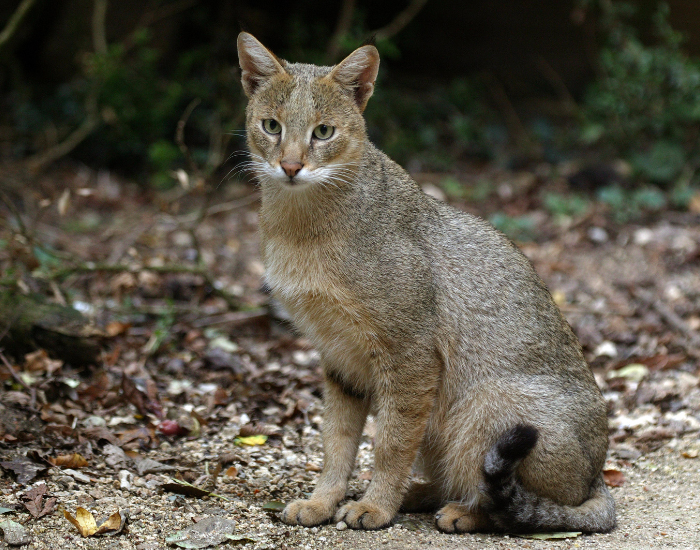
10. Jungle Cat (Felis chaus) – The Marsh Cat
The jungle cat is the least “African” of Africa’s wildcats, with small populations along the Nile River Valley in Egypt. Despite the name, they don’t inhabit jungles, they prefer wetland habitats including marshes, reed beds, and riverbanks. Weighing 9-35 pounds, they’re the largest species in genus Felis with slender builds, relatively long legs, and short tails. Their uniformly sandy-brown to tawny-grey coat lacks spots or stripes, though kittens may show faint markings.
Jungle cats are primarily crepuscular (active at dawn and dusk) and good swimmers who readily enter water to catch fish, frogs, and aquatic birds. Their diet also includes rodents, hares, reptiles, and insects. They’re less secretive than most wild cats and occasionally appear during daylight hours, using abandoned burrows, dense reeds, or hollow logs for shelter.
Conservation Status: Least Concern globally, though African populations are small and potentially declining due to wetland drainage for agriculture and hybridization with domestic cats.
African Wild Cat Behavior and Ecology
The African wildcat is a master of survival, blending seamlessly into its environment with a combination of stealth, agility, and keen senses. Unlike the social lions of the savanna, African wildcats are solitary creatures, with both male and female wildcats fiercely defending their territories using scent marks and vocalizations. Their territories often overlap with those of other wild cats, but direct encounters are rare, as these felines prefer to avoid conflict.
Primarily nocturnal animals, African wildcats spend their nights hunting small mammals, birds, reptiles, and insects. Their highly sensitive hearing and acute vision allow them to detect the faintest rustle of a rodent in the grass, and their long legs and more upright posture give them an advantage when stalking prey through tall vegetation. With a different walking form compared to domestic cats, they move with a more upright, almost vertical position, which helps them navigate their wild habitats.
African wildcats play a crucial role in controlling rodent populations, making them invaluable to both natural ecosystems and human settlements. Their diet helps keep the balance between prey and predator, and their adaptability means they can thrive in a variety of environments, from the sandy yellow deserts of northern Africa to the tawny brown savannas of southern Africa. Despite being solitary animals, African wildcats adapt easily to human-dominated areas, often choosing to live near settlements where food is plentiful. However, this behaviour puts them in closer contact with feral domestic cats and other threats.
Conservation Status and Threats
serWhile the African wildcat is currently listed as Least Concern, its future is far from secure. One of the most pressing threats is hybridization with feral domestic cats, which leads to genetic dilution and threatens the survival of the pure African wildcat Felis lybica. This is especially problematic near human settlements, where feral domestic cats and wildcats often come into contact. The resulting hybrids can outcompete pure wildcats, making it increasingly difficult to find genetically pure populations, particularly in southern African countries.
Habitat loss due to agriculture, urban expansion, and human encroachment is another significant challenge. As wild habitats shrink, African wildcats are forced into closer proximity with humans and domestic animals, increasing the risk of diseases transmitted from feral cats and dogs. Road mortality and poisoning from rodenticides used to control rodent populations also pose serious risks, especially in areas where wild cats are already struggling.
FAQs About African Wildcats
The species Felis silvestris lybica is scientifically called the African wildcat. Common names include North African wildcat and southern African wildcat, depending on subspecies. Southern African wildcats are a distinct subspecies adapted to the southern regions of Africa. Colloquially, “African wildcats” can refer to any of the 10 wild cat species native to Africa.
Yes. The African wildcat (Felis silvestris lybica) is still widespread and found primarily in its native range across Africa and parts of Asia and the Middle East, listed as Least Concern by the IUCN. However, genetically pure populations are decreasing rapidly due to hybridization with feral domestic cats.
No. While domestic cats descended from African wildcats, domestication took thousands of years. An adult African wildcat cannot be a pet—it’s a wild, solitary animal whose temperament makes it unsuited for domestic life. Attempting to keep one is unethical and illegal in most places.
The three big wild cats in Africa are the Lion (Panthera leo), Leopard (Panthera pardus), and Cheetah (Acinonyx jubatus).
The black-footed cat is the smallest, with females weighing as little as 2.2 pounds. Despite their tiny size, they’re fierce hunters called “anthill tigers.”
Remember the African Wildcats
The ten species of African wildcats represent a lineage of evolutionary brilliance. From the mighty lion to the ancestor that first approached a human grain silo, these felines are essential to Africa’s wild heart. Protecting them means preserving our own evolutionary history and ensuring the wild heart of Africa continues to beat with a fierce, feline pulse.
If you are keen to find one of these cats in the wild, have a look at our recommended tours:
This blog is reader-supported. When you buy experiences through links listed on this site, we may earn an affiliate commission.