My First Face-to-Face with a Barn Owl
My connection with the barn owl is a personal one, forged through two distinct encounters that grounded the species in my memory.
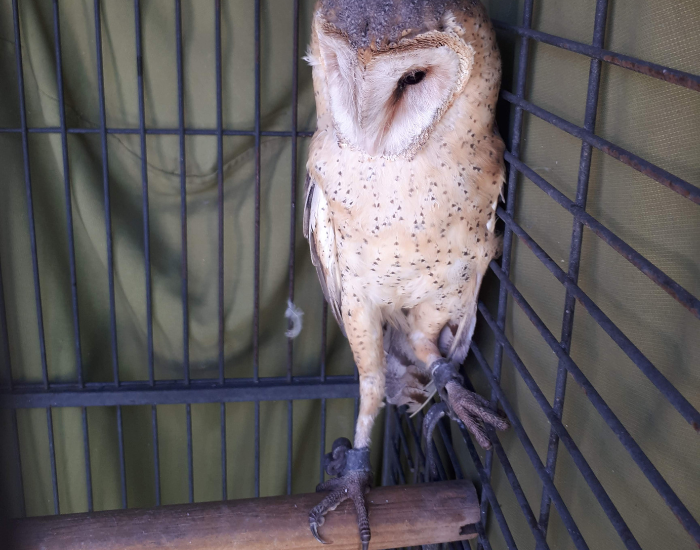
The first was with a biologist friend who, surprisingly, used to run a small boa breeding business but whose passion for all animals was infectious. He’d rescued a beautiful, injured barn owl, a pale flash of white and gray, and was nursing her back to health, thinking of putting her back into the wild. Seeing this formidable bird of prey up close, perched calmly on his arm, was breathtaking. Its large, dark eyes seemed to absorb all the light in the room, and its quiet intensity was palpable. This was a wild animal, a master predator, yet utterly dependent on human kindness for recovery.
The second was during my undergrad years. A dedicated conservation NGO, focused on the rescue and rehabilitation of birds of prey, visited our campus. They brought several birds in recovery, including a majestic barn owl and a few other species. Getting to see those birds, who were in the recovery process, and hear the organization’s dedication to putting them back into the air was an early, powerful lesson in the tangible, hands-on work of conservation. These two instances, seeing the barn owl face-to-face, solidified my deep respect for this species.
Now, let’s dive into the essential facts that make the barn owl one of the most successful and intriguing animal species on Earth.
Top 12 Facts About Barn Owls (Tyto alba)
1. The Distinctive “Monkey-Faced” Look and the Tyto Genus
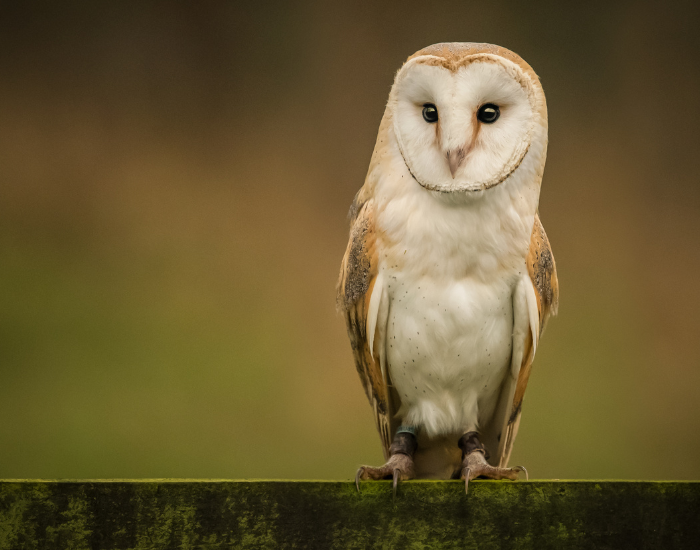
The barn owl is a medium-sized owl and the most widely distributed species within the genus Tyto. It has several common names, including Ghost Owl, Screech Owl (though it doesn’t hoot like some others), and the highly appropriate Monkey-faced Owl, a nod to its unique, rounded, and non-tufted facial shape. The barn owl’s head is rounded and lacks the feather tufts common on other owls, with a heart-shaped facial disk that sets it apart from the Strigidae (true owl) family.
2. That Iconic Heart-Shaped Facial Disk
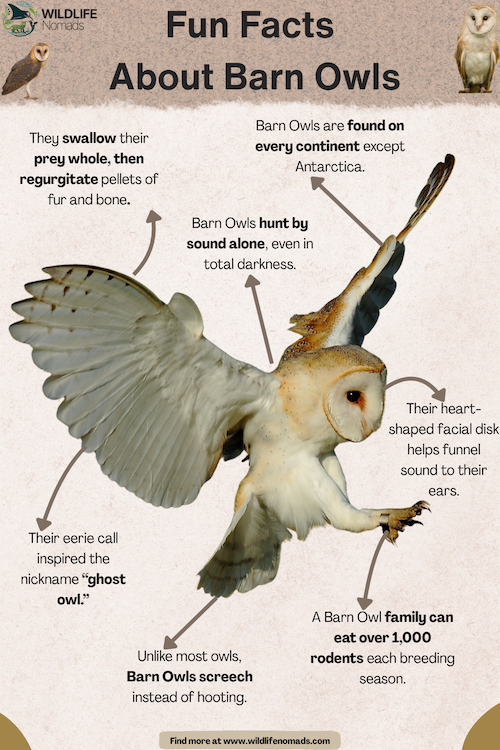
The barn owl’s most recognizable feature is its prominent, heart-shaped facial disk. This structure is a biological marvel. It lacks the ear tufts found on many other owls, and instead, the rigid ring of feathers acts like a parabolic satellite dish, efficiently funneling the faint sounds made by its prey, such as the rustling of a vole in tall grass, directly to its asymmetrical ear openings. This allows them to triangulate the sound source with uncanny accuracy, crucial for a successful nocturnal hunter.
3. A Master of Hunting in Complete Darkness
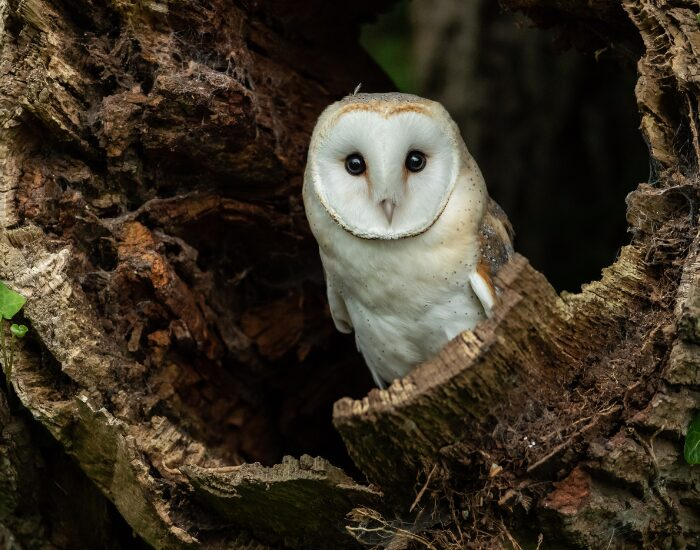
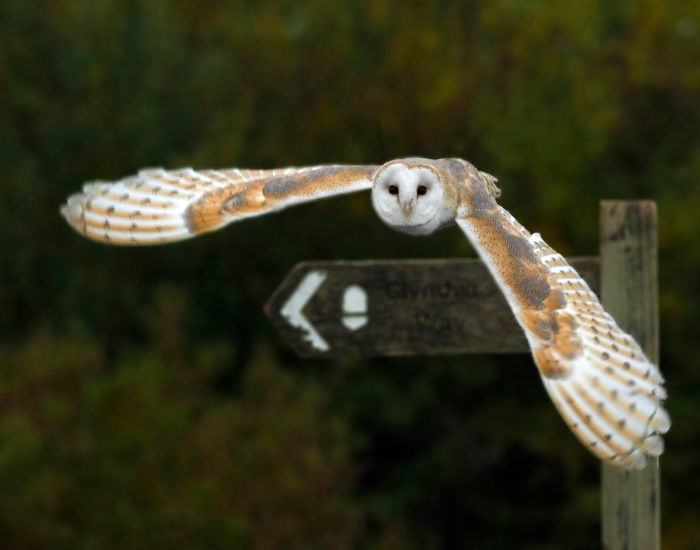
Forget night vision goggles; the barn owl has evolved a better system. They are specialized for hunting in total darkness (low light), relying less on their vision and more on their incredible hearing. The barn owl hunts primarily at night, using its acute hearing and vision to locate prey. This is how they successfully catch up to 6/3-5 prey per night. They are known for flying low over open ground, moving slowly and silently as they search for prey, using a distinct, moth-like wing motion that makes them almost completely silent.

4. The “Ghostly” Plumage: What Color is a Barn Owl?
What color is a barn owl? The characteristic appearance is a mix of golden-buff and gray mottling on the back and wings, and a pale white or buff color underneath. The common pale appearance, especially of the American and Western populations, is what often causes them to be mistaken for a “Ghost” in the shadows. Females tend to have more pronounced speckling or small dark spots on their chest and underside than males.
5. Barn Owls and Their Habitats: Why the Name?
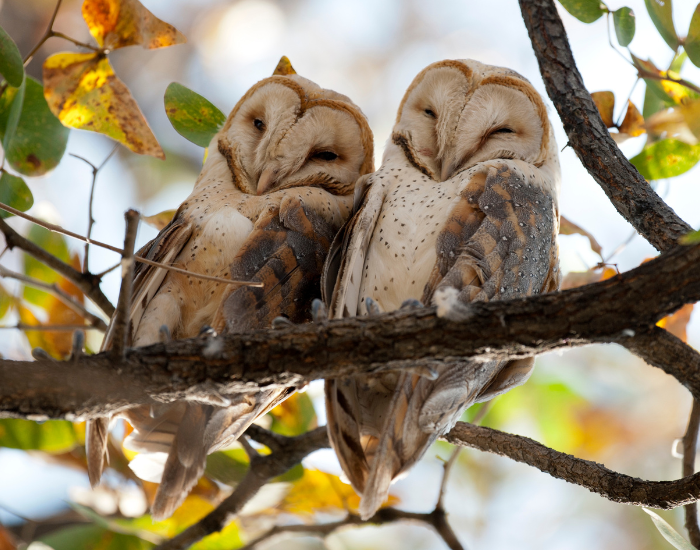
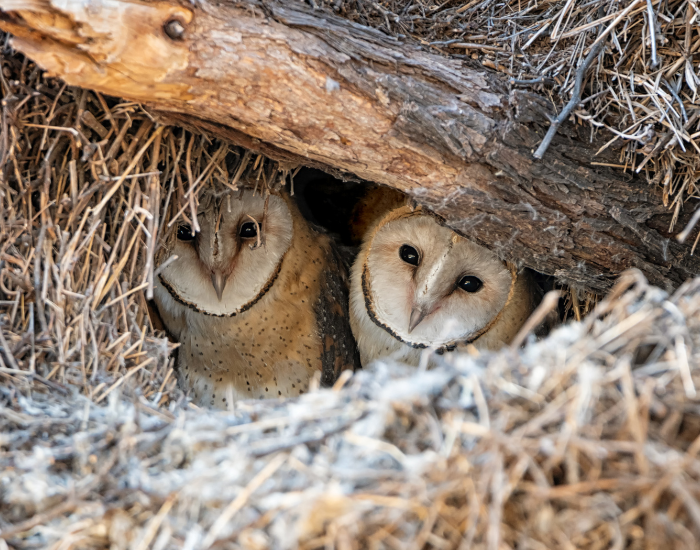
Where does the Barn Owl usually live? The barn owl is an incredibly adaptable bird, leading to its global distribution. They thrive in open country like grasslands, deserts, and agricultural areas. Why is it called a barn owl? The name is descriptive: they readily use man-made structures for roosts and nesting, particularly barns, abandoned houses, barn lofts, church steeples, and sometimes even nest boxes installed by conservationists. During the day, barn owls can often be found roosting in quiet, sheltered locations such as abandoned buildings, dense trees, or barn lofts, where they rest until nightfall. They also use natural structures like caves and cliffs. This preference for human structures is why we see them often. Their habitat is defined by the availability of open hunting ground and safe shelter.
6. A Global Traveler: Location Facts
The barn owl location spans nearly every continent except Antarctica, a distribution so vast that it was historically considered a single, cosmopolitan species, Tyto alba, with many regional subspecies. This is one of the things that makes the barn owl so famous: it’s virtually everywhere!
However, modern science, specifically through advanced DNA sequencing and phylogenetic studies, has painted a more nuanced picture. We now know that the different continental populations have been isolated for so long that they are distinct enough to be considered separate species. This is what we call a taxonomic split, and it gives us a fascinating look at evolution in action.
While some authorities still use the single species name, the prevailing scientific view now often recognizes three primary species in the Tyto complex:
- Tyto alba: The Western Barn Owl, found across Europe, Africa, and the Middle East.
- Tyto furcata: The American Barn Owl, the dominant species throughout North, Central, and South America.
- Tyto javanica: The Eastern Barn Owl, covering Southeast Asia and Australasia.
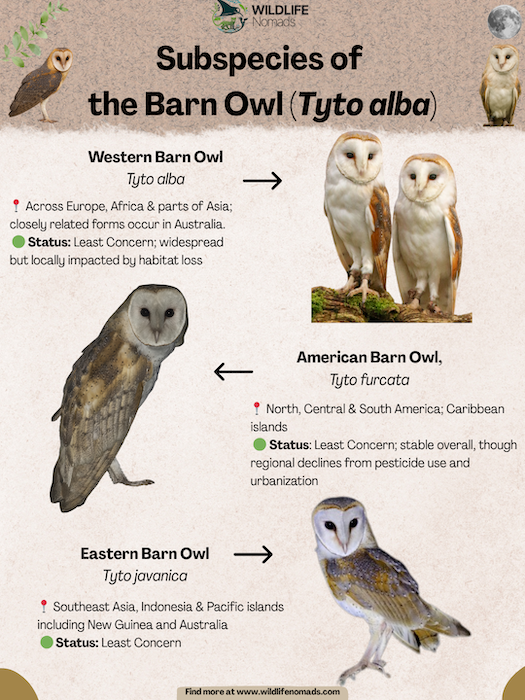
This means that while the American Barn Owl and the Western Barn Owl look strikingly similar, they are now understood to be genetically distinct, a great example of how a scientist’s understanding of nature constantly evolves! This is why, when discussing conservation status or behavior, we increasingly refer to these regional groups separately.
7. Breeding Season and the Clutch of Eggs
The breeding season varies widely depending on the region and, crucially, food availability. In areas with reliable prey, barn owls may breed year-round or twice per year. The female lays a clutch of eggs—often between four and seven, but sometimes up to twelve—in a sheltered cavity, such as a large tree hollow or the rafters of a barn. The eggs are laid asynchronously (every two to three days), meaning the chicks hatch at different times, creating a distinct size hierarchy within the nest. Both males and females care for the young, with the male typically doing the majority of the hunting during the incubation period.
8. The Unforgettable Barn Owl Screech
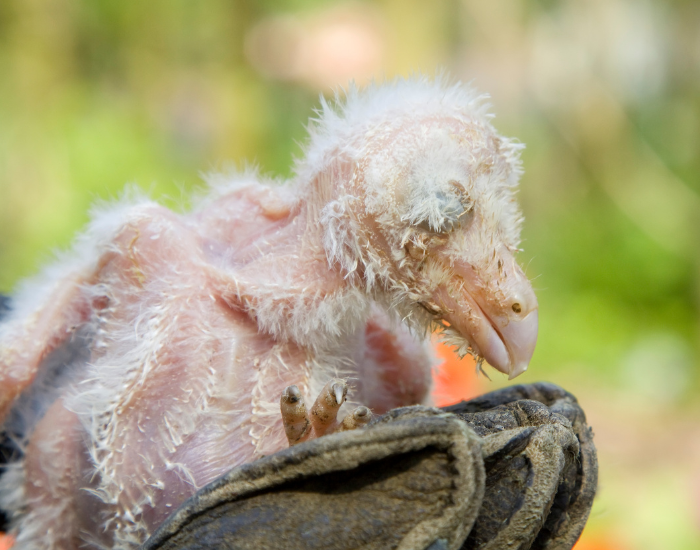
Why do barn owls scream at night? Unlike the deep hoot of a Great Horned Owl or a Tawny Owl, the barn owl is known for a long, drawn-out, hissing shriek or screech. This sound is often heard during the night, especially near a nest site, during courtship, or when a hungry chick is begging for food. It can be startling, earning them their ghostly reputation and the historical name “Screech Owl.”
9. Long Legs and Dark Eyes: Unique Physical Characteristics
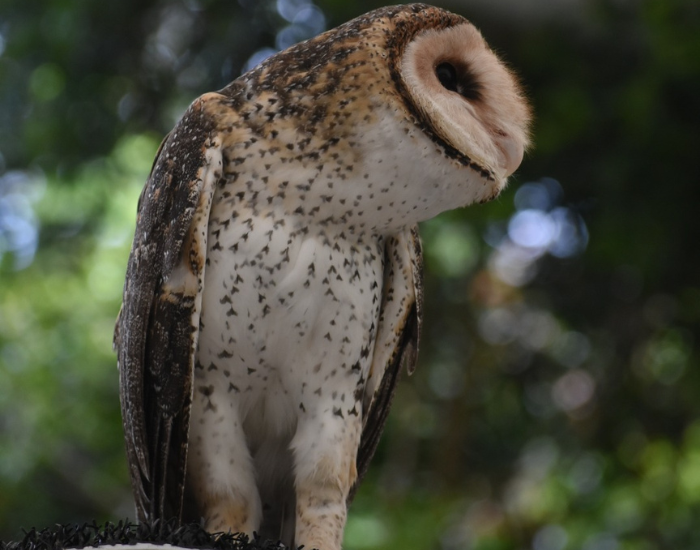
Barn owls possess long legs that allow them to strike prey deep within vegetation or snow. They have small, dark eyes and an incredibly light, buoyant flight pattern that allows them to fly slowly and precisely, making them look like a hovering specter as they hunt.
10. Their Diet is Key to Conservation: Voles and Rodents
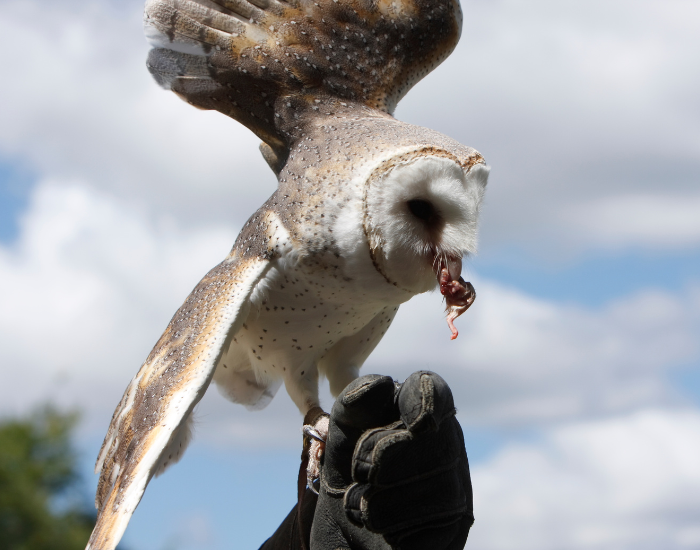
What is special about a barn owl? Their role as a natural, non-toxic form of pest control is incredibly valuable. Their food primarily consists of small mammals, specifically voles and mice, making them beneficial to agriculture. A single barn owl family can consume thousands of rodents in a single year, highlighting their importance in a balanced ecosystem.
11. Conservation Status and Threats
While the barn owl population globally is stable, some regional populations, like the western barn owl, are under pressure. The primary threats are:
- Habitat loss: The conversion of open land and farming practices that reduce hedgerows and nesting spots.
- Pesticide use: Rodenticides pose a massive risk, as the owls consume poisoned small rodents.
- Hard winters and extreme weather events.
This is why efforts like installing nest boxes are so crucial for local conservation status. The Cornell Lab of Ornithology and various other NGOs are key players in these efforts.
12. Barn Owls Are Not Friendly to Humans, But Highly Beneficial
Are barn owls friendly to humans? No, they are wild, solitary predators and should never be approached or handled unless by a trained professional (like the kind I met). However, they are incredibly beneficial. By naturally controlling rodent populations, they are nature’s own form of integrated pest management. They are far more valuable left wild and protected than they would ever be as a captive animal. Their presence on a farm is a sign of a healthy, functioning ecosystem.
Regional Differences: Barn Owls Around the World
The barn owl’s haunting call and ghostly silhouette grace open habitats across nearly every continent, truly making it a citizen of the world.
Whether you call these regional populations Tyto alba (Western), Tyto furcata (American), or Tyto javanica (Eastern), they all require the same essentials: safe roosts and abundant prey.
If you want to attract barn owls to your area, the best strategy is to provide open habitats and secure nesting spots. Installing specialized nest boxes in grasslands, agricultural fields, or property edges makes a world of difference. These boxes closely mimic the natural cavities barn owls seek for nesting and directly help support local populations of this distinctive species.
FAQ: Quick Answers About the Barn Owl
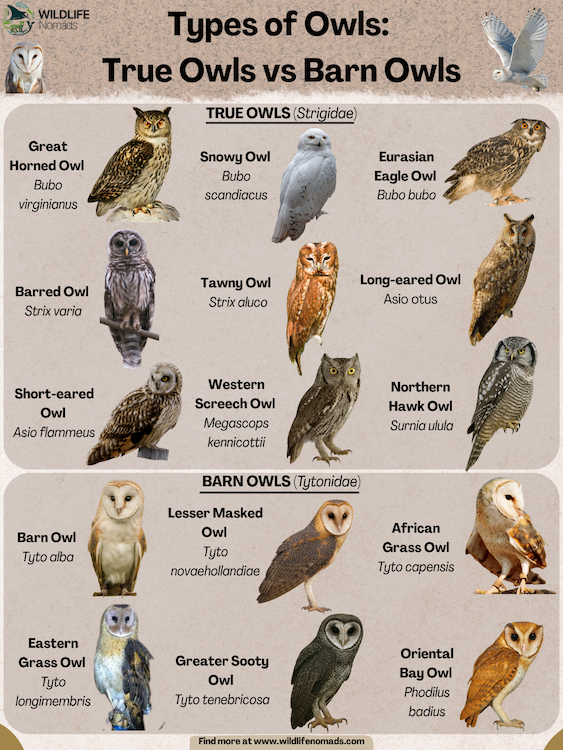
The term “normal owl” is subjective, but typically refers to owls in the Strigidae family (like Great Horned Owls). Barn owls belong to the Tytonidae family. The main differences are the barn owl’s heart-shaped face (vs. round), lack of ear tufts, and a distinctive pale, ghostly plumage.
Seeing a barn owl can be uncommon, but not necessarily rare. They are nocturnal, so they are difficult to spot as they are active primarily at night. Where do barn owls go during the day? They hide in sheltered roosts in dark places like barn lofts, dense trees, or church steeples. Your best chance is at dusk or dawn.
The characteristic pale appearance of the barn owl (often referred to as a white barn owl) is normal for the species. The species Tyto alba is not globally endangered. However, local populations—such as the western barn owl—face regional threats, making them a bird of conservation status concern in many areas.
The Call to Action for Barn Owls
The barn owl is a magnificent predator and an essential part of our ecosystems. Its long-legged hunting style and devotion to its young make it unforgettable. This species deserves both our admiration and protection.
As a biologist, I’ve learned that the health of barn owls mirrors the health of their habitat. When we protect open fields, install nest boxes, and limit rodenticide use, we help far more than one bird. We safeguard an entire food web.
If you’re lucky enough to have barn owls nearby, consider adding a nest box. It’s a small act that offers a safe home to this pale, silent hunter.