
When I first wrote about wasps, I shared how my childhood fear of bees started with a sting. That fear slowly transformed during my biology studies. The day I walked into the university’s entomology lab, everything changed.
Row after row of specimen drawers revealed thousands of bee species. I discovered tiny metallic ones, long-tongued pollinators, and even bees smaller than a grain of rice. The wide range of appearances among bee species was striking, some had a robust, hairy appearance, while others were slender and smooth, and certain species possessed long tongues as an adaptation to access nectar in deep flowers. Each box held more diversity than I ever imagined.
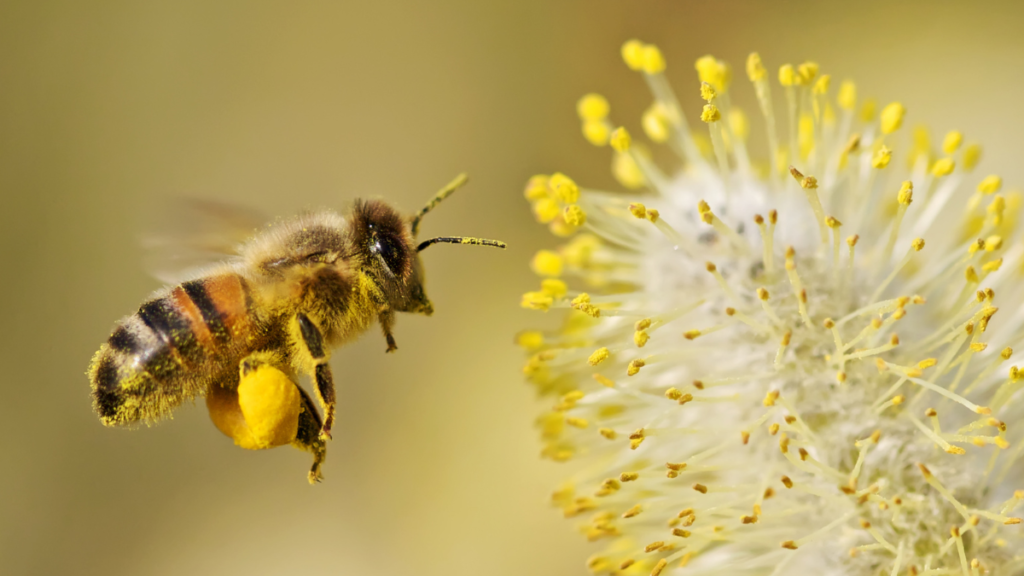
Today, the honeybee (Apis mellifera) stands as one of the most recognized insects on Earth, gaining “fame” due to Black mirror episodes, or climate change activists. However, despite our familiarity, few people truly understand how extraordinary these pollinators are. Therefore, these 12 fascinating facts reveal why honeybees deserve far more than our admiration, they deserve our protection.
1. Honeybees Are True Social Architects
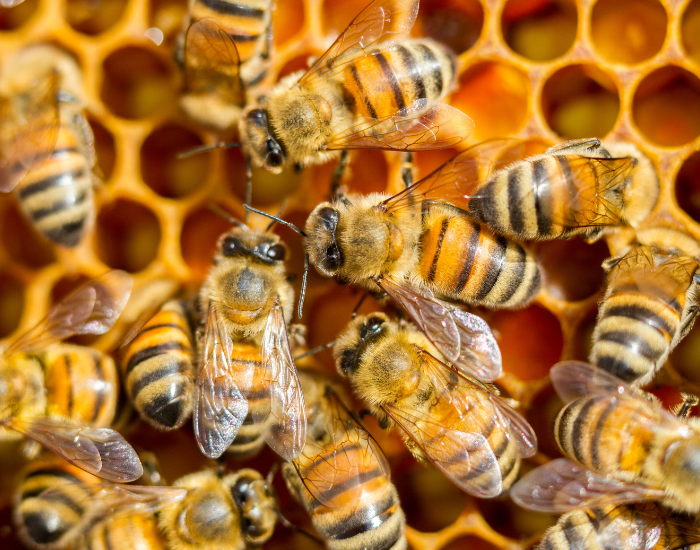
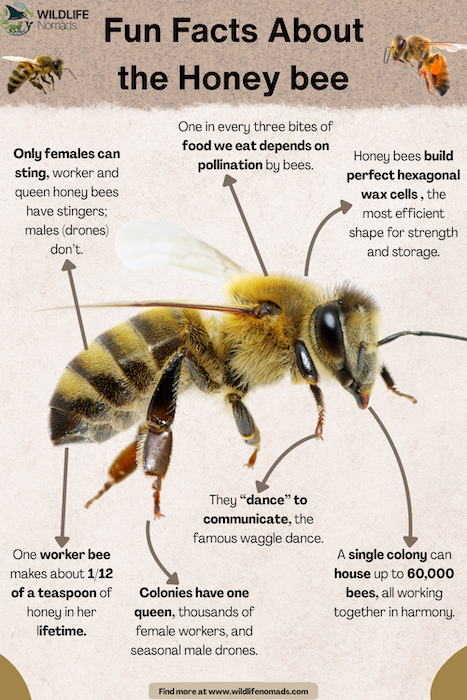
Honeybees are eusocial insects, meaning they live in highly organized colonies where individuals play specific roles. Each colony revolves around a single queen, thousands of female workers, and a few hundred males called drones during mating season.
What’s fascinating is the complexity of this structure. Every bee knows exactly what to do. From foraging and cleaning to tending the brood and defending the hive, tasks are divided by age and ability. Additionally, differences in body size among worker bees can influence their specific roles and abilities within the hive. And if you are curious about how bees compare in size to other animals, have a look at our tool!
A single worker bee might spend its first days nursing larvae. Later, she transitions into fieldwork, gathering nectar and pollen from flowers. This intricate social order is the key to their survival. ALso, it’s one reason honeybees are among the few insects humans have successfully domesticated.
2. Their Hives Are Masterpieces of Natural Engineering
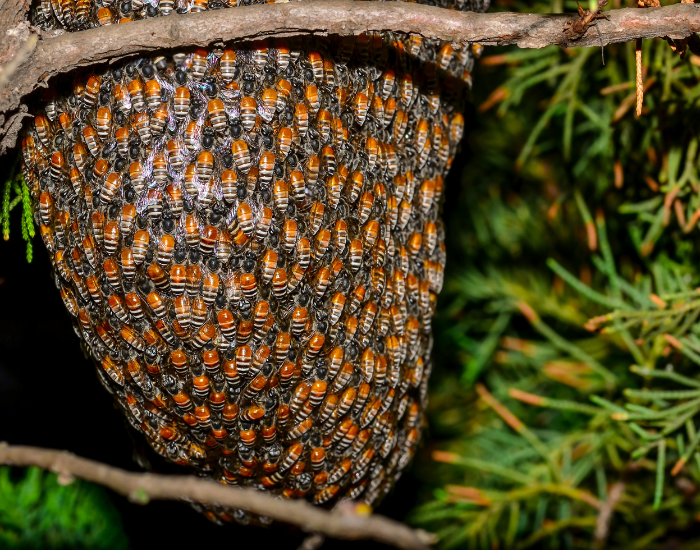
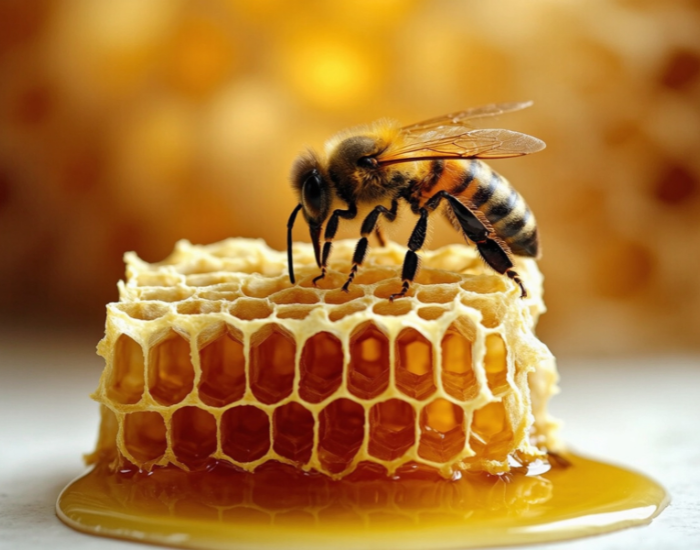
They are one of the most amazing architects in nature, truly, they are. If you’ve ever looked inside a honeycomb nest, you’ve seen the geometric perfection of hexagonal wax cells. However, there’s more science behind that symmetry than beauty alone.
The hexagon is the most efficient shape for storage. It minimizes material use while maximizing strength and space. Each wax cell perfectly fits honey, pollen, or developing larvae. These cells are all built by bees that secrete wax flakes from glands on their abdomens.
Mathematicians and engineers have long admired this design. In fact, NASA once used the honeycomb pattern as a structural model for lightweight aerospace materials. Nature truly thought of it first.
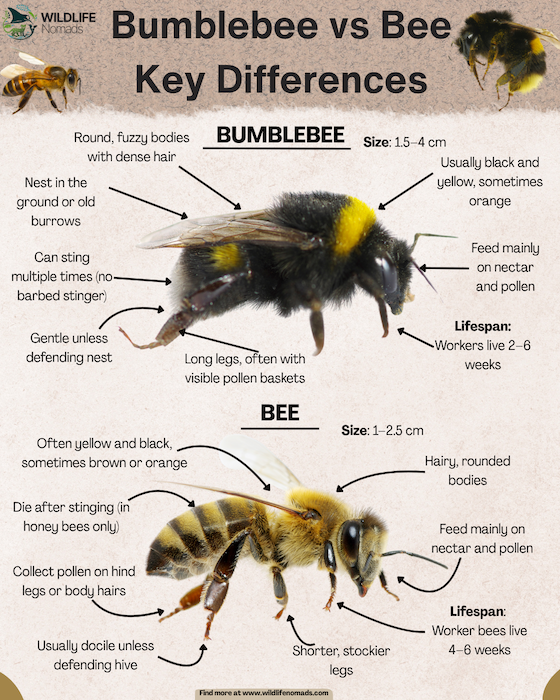
3. Honeybees Are Distinct from Bumblebees, and Often Confused With Them
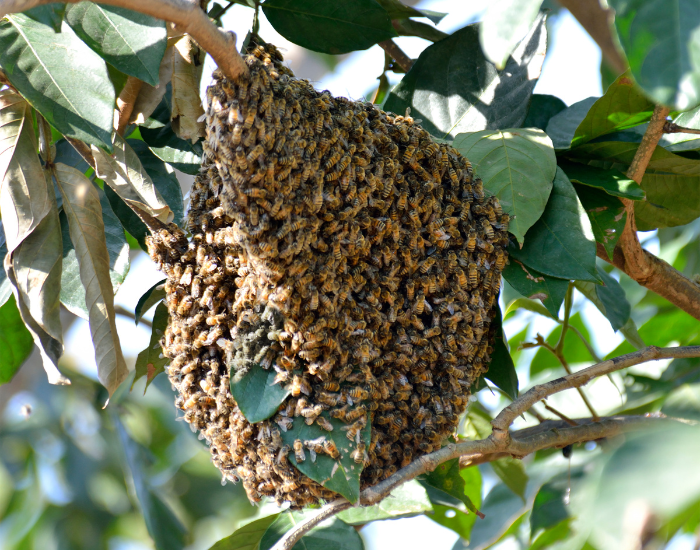
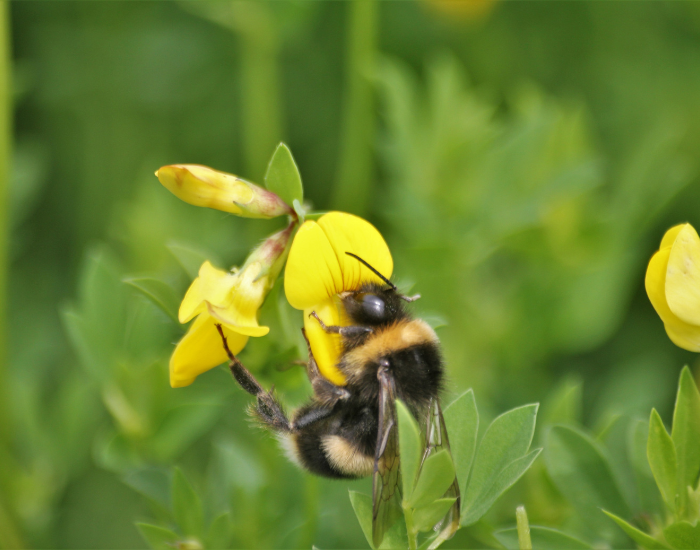
People often use “bee” as a blanket term. However, the difference between honeybees and bumblebees is worth knowing. Honeybees are slimmer, with smoother bodies and lighter, golden-brown tones. Their appearance is characterized by a slender body, less hair, and translucent wings, making them easily distinguishable from bumble bees.
Bumblebees, by contrast, are rounder, hairier, and better adapted to colder climates. The appearance of a bumble bee includes a robust, fuzzy body with black and yellow coloration. Bumble bees have smooth stingers, allowing them to sting multiple times, unlike honey bees. While both species pollinate flowers, honeybees live in large perennial colonies. These colonies can number 50,000 individuals.
Bumblebees form small annual nests, typically under 400 bees. Bumblebee colonies also produce only small amounts of honey, just enough for their own survival. Bumble bees play an important role in pollinating certain crops, such as tomatoes, and are valued as native pollinators. Meanwhile, honeybees store surplus honey, which humans can harvest.
4. Honeybees Speak in Dances
Communication in a hive doesn’t happen through sound but through motion. Honeybees perform what’s famously known as the waggle dance. This consists of figure-eight movements that indicate the direction and distance of food sources.
First decoded by Nobel laureate Karl von Frisch in 1940, this “dance language” is one of the most advanced examples of non-human communication in the animal kingdom. Through vibration and movement, bees convey coordinates of flowers, water, and even new nesting sites.
Each wiggle is a message. Therefore, this proves that language, in its purest form, can exist without words.
5. The Secret Behind Honey Production
Honey production begins when worker bees collect nectar from flowers using their long, straw-like tongues. Back at the hive nest, they pass the nectar mouth-to-mouth. This breaks down complex sugars into simpler ones through enzymes.
The bees then deposit the liquid into comb cells. Here, honeybees store nectar in these cells before it is transformed into honey. Next, they fan it with their wings to evaporate moisture. The result? Thick, golden honey, an energy-rich food that sustains colonies during winter when flowers are scarce.
A single bee produces just about one-twelfth of a teaspoon of honey in her lifetime. However, collectively, colonies can yield several kilograms each season. To produce one pound of honey, workers must fly approximately 55,000 miles and visit two million flowers.
Humans have been harvesting honey for at least 9,000 years. This represents a partnership between species as old as civilization itself.
6. Worker Bees Are the Colony’s Unsung Heroes
The worker bee is the backbone of the hive. She’s sterile, tireless, and astonishingly versatile. In other words, she’s part nurse, builder, forager, cleaner, and defender all in one.
Her short lifespan, roughly five to six weeks in summer, is a flurry of purpose. Compared to other members of the colony, worker bees generally have shorter lifespans, especially during the busy summer months. She tends the larvae, maintains hive temperature, produces wax, guards the entrance, and eventually leaves to gather pollen and nectar. Each task supports the colony’s delicate equilibrium.
When worker bees age, their flight muscles deteriorate. However, they continue contributing, often dying in the field with wings frayed and pollen baskets empty. It’s a quiet devotion that embodies the spirit of the hive.
7. Diversity: There Are Over 20,000 Bee Species Worldwide
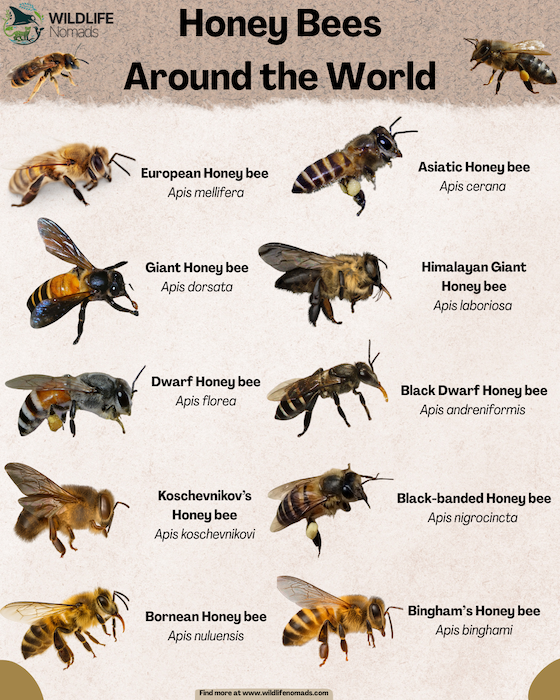
The honeybee may be iconic, but it’s only one of over 20,000 bee species known globally. These include stingless bees, carpenter bees, leafcutter bees, and sweat bees. There are various types of bees found worldwide, including domesticated and wild pollinators, and they interact with other species in their ecosystems, such as predators, other insects, and plants, through complex ecological relationships. Each plays distinct ecological roles as pollinators.
Most bee species don’t produce honey at all. Furthermore, around 90% are solitary, nesting in soil, wood, or plant stems. Still, all share one purpose: pollination. This silent labor sustains most of Earth’s flowering plants.
This staggering diversity is what keeps ecosystems resilient. To lose even a fraction of these species would ripple across food webs, agriculture, and biodiversity itself.
8. Honeybees Are Among the Most Efficient Pollinators on Earth
A single honeybee can visit up to 5,000 flowers in a day. As a result, they transfer pollen grains that enable plants to reproduce. Collectively, honeybees are responsible for pollinating around one-third of global food crops. This includes almonds, apples, and avocados.
However, their dominance as pollinators isn’t without controversy. Studies suggest that in some ecosystems, honeybee overpopulation can outcompete native pollinators. This dilutes the genetic diversity of wild plants.
The takeaway? Honeybees are vital to agriculture. They play an important role in supporting crop pollination and maintaining overall ecosystem health. Nevertheless, they should complement, not replace, other bee species in conservation planning.
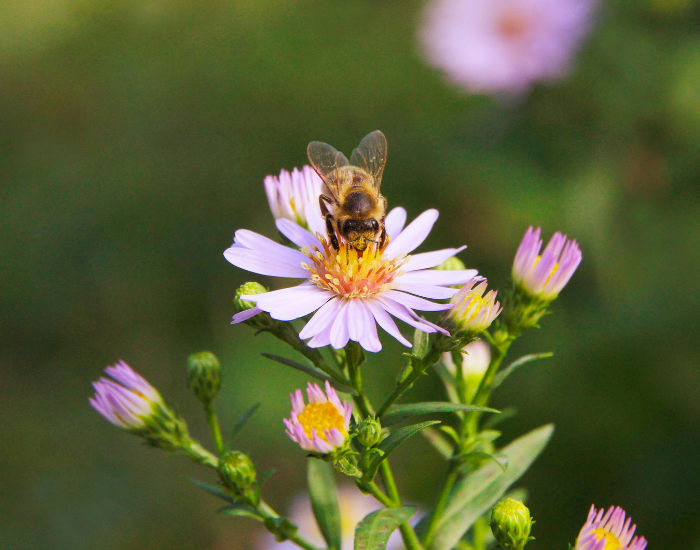
9. Bumblebee Honey Is Real, But Not What You Think
While bumblebees do make honey, it’s not the same as what we consume. Bumblebee honey is stored in small, waxy pots. Moreover, it’s more watery because it isn’t dehydrated for long-term storage.
Bumblebees form small annual nests, typically under 400 bees. A typical bumble bee nest, or bumblebee nest, is much smaller than a honeybee hive and is often found underground or in hidden cavities. The nest site is crucial, as it provides shelter for the queen to overwinter and ensures the survival and longevity of the colony.
Because bumblebee colonies die off each year, their honey never accumulates in large quantities. It exists purely for immediate survival—a fleeting sweetness, gone with the season.
10. Honeybees Recognize Faces, Including Ours
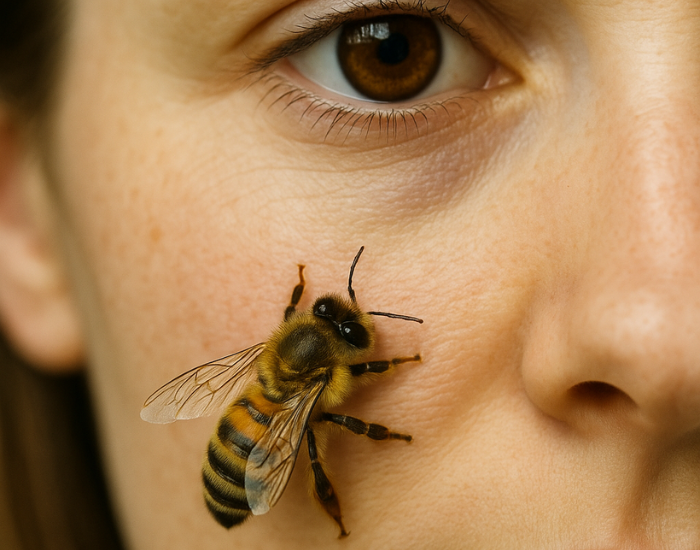
It might surprise you to learn that honeybees can recognize human faces. Research published in The Journal of Experimental Biology showed that bees can learn to identify faces using pattern recognition, much like we do.
This ability helps them distinguish between flowers and landmarks. Therefore, it’s a sophisticated cognitive feat for an insect with fewer than a million neurons.
So next time a honeybee hovers near you, it’s not random curiosity. She might just remember you.
11. Honeybee Colonies Reflect Ecosystem Health
Healthy hives often mirror healthy landscapes. When flowers bloom, water flows, and pesticides are limited, colonies thrive. However, when these systems break down, bees are among the first to show stress.
Beekeepers worldwide have reported colony collapse disorder (CCD). This involves sudden losses linked to pesticide exposure, parasites like Varroa mites, and habitat degradation. Infestation by Varroa mites can devastate honeybee colonies, making effective management of such infestations crucial for colony survival.
The decline of honeybees is not just an insect story. Instead, it’s a warning sign of ecological imbalance. Protecting them means protecting the web of life that sustains us all.
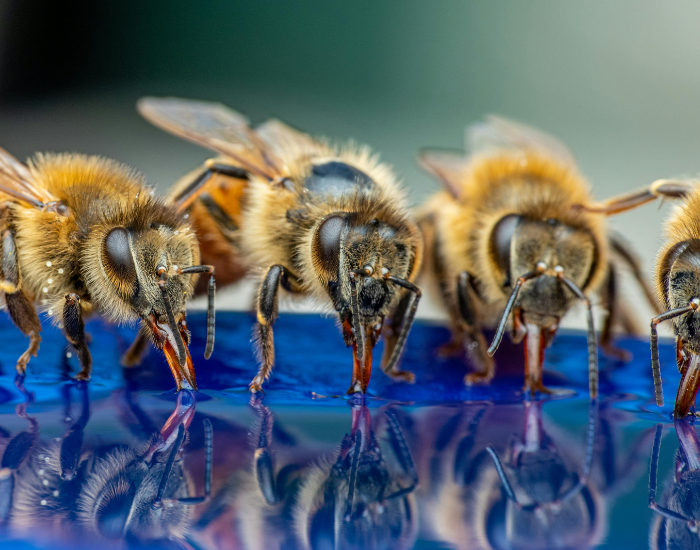
12. The Honeybee’s Legacy: Survival, Symbolism, and Stewardship
The honeybee’s story is one of resilience and reciprocity. These insects have survived for over 30 million years, weathering climate shifts, predators, and now, human pressure.
Their value to agriculture is immeasurable. Without honeybees, the global food supply would face catastrophic losses. Yet beyond economics, honeybees embody something deeper: community, cooperation, and balance.
Across cultures, bees symbolize unity and renewal. In ancient Greece, they were linked to the soul’s immortality. In Celtic mythology, they carried messages between worlds. Even today, they remind us of harmony between effort and reward.
If we protect the honeybee, we protect ourselves, our food, our ecosystems, and our shared future.

The Queen Bee: Monarch of the Hive
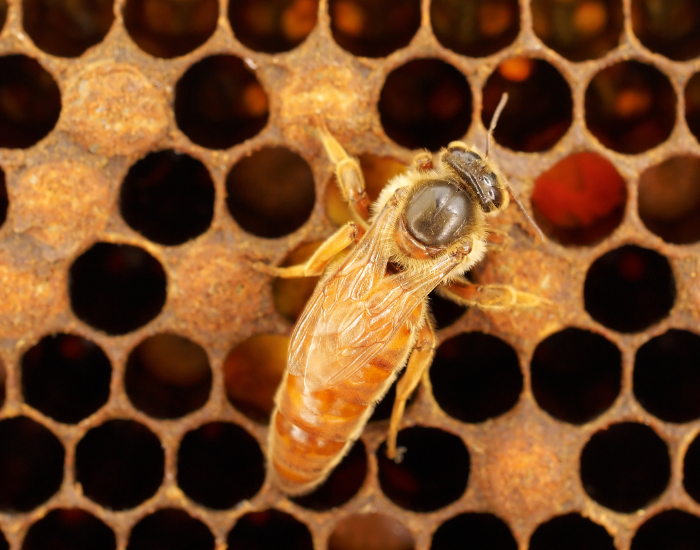
At the heart of every thriving honey bee colony is the queen bee, a singular monarch whose presence shapes the destiny of her entire hive. Larger and more robust than her fellow bees, the queen is the only fertile female in the colony, and her primary role is egg laying. Over the course of her life, which can span up to five years, she may lay hundreds of thousands of eggs, ensuring the constant renewal of worker bees and drones.
But the queen’s influence extends far beyond egg laying. She produces powerful pheromones that regulate the behavior and harmony of the colony, guiding worker bees in their daily tasks and maintaining the social order. Without her steady presence, the colony would quickly descend into chaos and eventually perish.
The queen’s reign begins with a dramatic mating flight, after which she returns to the hive to fulfill her lifelong duty. While worker bees labor tirelessly through the summer, living just a few weeks, the queen’s longevity and fertility make her the linchpin of the colony’s survival. Her relationship with the drones, male bees whose sole purpose is to mate with her, ensures the genetic diversity and resilience of future generations.
The Mating Flight: Secrets of Honeybee Reproduction
The story of honey bee reproduction is as fascinating as it is vital to the survival of the colony. Each spring, when the world bursts into bloom, a newly emerged queen bee embarks on her one and only mating flight. Soaring high above the landscape, she is pursued by a cloud of eager drones, each vying for the chance to mate.
This event, known as polyandry, sees the queen mate with 10 to 20 drones in rapid succession. The drones, having fulfilled their sole purpose, die shortly after mating. The queen, meanwhile, stores their genetic material in a special organ, ensuring she can fertilize eggs for years to come.
Once her mating flight is complete, the queen returns to the hive and begins her lifelong task of laying eggs. These eggs will develop into worker bees, drones, or, under special circumstances, new queens. This remarkable process guarantees the genetic diversity and strength of the colony, allowing honey bees to adapt and thrive in changing environments. The cycle of mating, egg laying, and brood rearing is the heartbeat of every successful hive.
How We Can Help: Conservation Efforts for Honeybees
The good news is that everyone can play a part in supporting honey bee populations and other pollinators. One of the simplest and most effective ways is to plant a diverse array of bee-friendly flowers in gardens, parks, and community spaces. Flowers rich in nectar and pollen, like sunflowers, lavender, and wildflowers, provide essential food for honey bees and help sustain bee colonies throughout the year.
Reducing pesticide use is another crucial step. By choosing natural alternatives or applying chemicals only when absolutely necessary, we can minimize harm to honey bees and other beneficial insects. Supporting local beekeepers by purchasing their honey and hive products not only helps maintain healthy bee colonies but also strengthens local agriculture.
FAQs About Honeybees
Honeybees are generally non-aggressive. Their stinging behavior is primarily defensive; honeybees typically sting only when they feel their hive is threatened. If someone is stung by a honeybee, the bee can only sting once, as it loses its stinger and dies afterward.
Only female worker bees can sting. Males (drones) cannot sting.
Honeybees are slimmer and live in large, permanent colonies. Bumblebees are rounder, fuzzier, and form smaller, seasonal nests. Both are important pollinators.
They pollinate about one-third of global crops. This ensures the production of fruits, nuts, and vegetables essential to our diet. Their important role in agriculture cannot be overstated.
A World Within the Hive
The next time you see one hovering among flowers, remember, that small hum carries the sound of our planet’s heartbeat. Each flight, each pollination, each droplet of honey is part of a rhythm that has pulsed for millions of years.
I often think back to that first moment I held a pinned specimen in the university bee collection, a single honey bee, delicate yet timeless. It struck me how something so small could sustain entire ecosystems, nourish our crops, and inspire centuries of human fascination. These creatures remind us that even the tiniest lives hold vast purpose. Protecting them means protecting the harmony that threads life together, from the blossoms in our gardens to the food on our tables.
How Well Do You Know Honeybees? 🐝
Ten fun, non-expert questions on honeybee dance language, hive social roles, honey secrets, and amazing cognitive skills. Can you score 10/10?
Multiple Choice
References
Nazzi, F. (2016). The hexagonal shape of the honeycomb cells depends on the construction behavior of bees. Scientific Reports, 6, Article 28341. https://doi.org/10.1038/srep28341
Supports Fact 2 (hive engineering).
Dong, S., Lin, T., Nieh, J. C., & Tan, K. (2023). Social signal learning of the waggle dance in honey bees. Science, 379(6636), 1015–1018. https://doi.org/10.1126/science.ade1702
Hung, K.-L. J., Kingston, J. M., Albrecht, M., Holway, D. A., & Kohn, J. R. (2018). The worldwide importance of honey bees as pollinators in natural habitats. Proceedings of the Royal Society B: Biological Sciences, 285(1870), Article 20172140. https://doi.org/10.1098/rspb.2017.2140
Mallinger, R. E., Gaines-Day, H. R., & Gratton, C. (2017). Do managed bees have negative effects on wild bees?: A systematic review of the literature. PLOS ONE, 12(12), Article e0189268. https://doi.org/10.1371/journal.pone.0189268
Goulson, D., Nicholls, E., Botías, C., & Rotheray, E. L. (2015). Bee declines driven by combined stress from parasites, pesticides, and lack of flowers. Science, 347(6229), Article 1255957. https://doi.org/10.1126/science.1255957