A Splash of Color Beneath the Waves
The first time I saw a parrotfish was while snorkeling off the coast of Koh Lipe, a small island in Thailand. A flash of electric blue and green darted past, its powerful beak scraping rhythmically against the coral reef. The sight was mesmerizing. Later, I encountered these vibrant reef fish again in Amed, Bali, and then in the crystal-clear waters of Coron, Philippines. Each time, they were everywhere, grazing tirelessly across the reef like underwater gardeners maintaining their territory.
Years of studying Biology taught me something remarkable. Therefore, these fish aren’t just beautiful residents of tropical seas. They’re essential ecosystem engineers that literally shape the ocean floor and coastlines we love.
Parrotfish (family Scaridae) are herbivorous reef fish found in the world’s oceans. Known for their vibrant colors, fused teeth forming powerful beaks, and their ability to produce white sand, these fish play a vital role in coral reef health. Beyond their striking appearance (and for some, scary), parrotfish are complex, social creatures that maintain the delicate balance of marine ecosystems.
Let’s dive into 12 fascinating facts about parrot fish that reveal why these oceanic artists deserve recognition and protection.
1. Parrotfish Are Essential Coral Reef Custodians
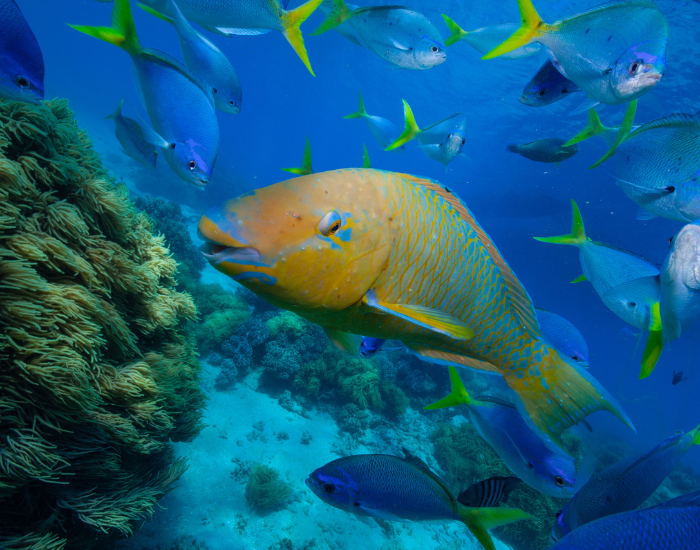
Healthy coral reefs depend on parrotfish. These herbivorous reef fish graze on algae that would otherwise smother coral polyps and kill entire reef systems.
A single large parrotfish can remove several kilograms of algae daily. This grazing creates clean, white coral skeletons that new corals need to colonize and grow. According to research published, reefs with healthy parrotfish populations show significantly more resilience to bleaching events and disease outbreaks.
In addition, their constant feeding prevents algal overgrowth. This simple act maintains the foundation of tropical marine biodiversity that millions of species rely upon.
2. They Have Powerful Beaks Made of Fused Teeth
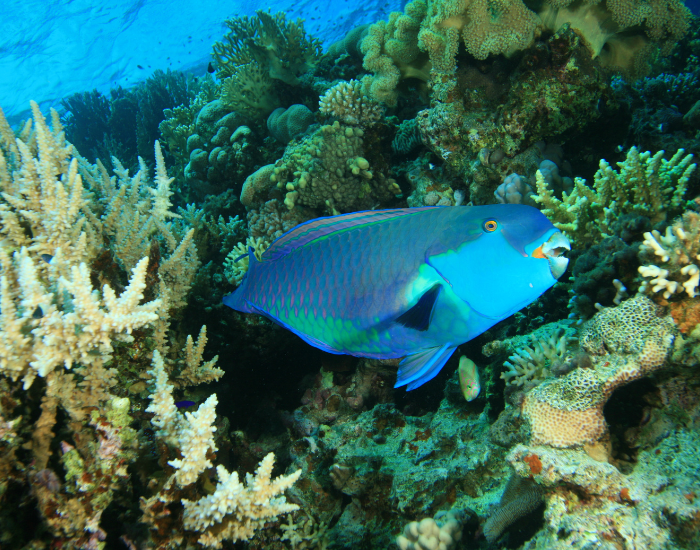
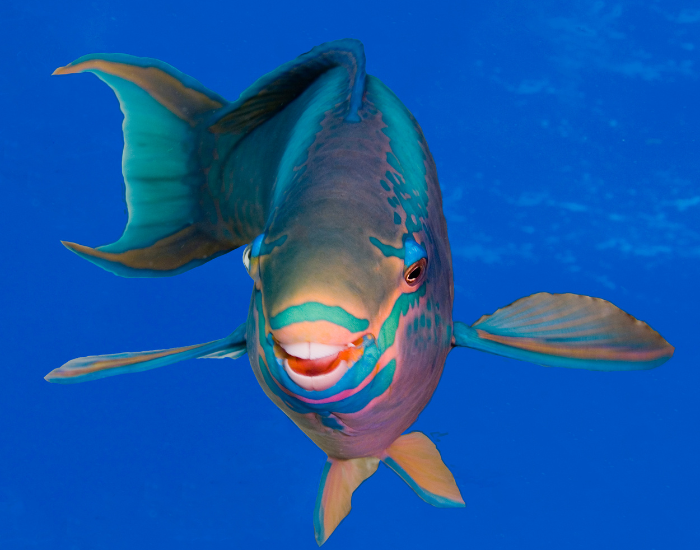
The “parrot” in parrotfish refers to their distinctive beak. This evolutionary masterpiece consists of hundreds to over a thousand tightly packed teeth that fuse together. The result is a structure strong enough to bite through hard coral and scrape stony corals clean of algae.
However, that’s not all. Beneath their beak lies a second set of teeth called pharyngeal teeth. These throat teeth grind coral fragments into fine powder that the fish can digest. This grinding apparatus is known as the pharyngeal mill, which functions like molars to process ingested coral material.
Their bite force is astonishing. For example, Parrotfish bite force is astonishing. A detailed study of Chlorurus microrhinos teeth found hardness values of ~7.3 GPa and an elegant interwoven microstructure demonstrating the mechanical robustness needed to crush coral skeletons.
3. Parrotfish Produce White Coral Sand on Tropical Beaches
Here’s one of nature’s best-kept secrets. That soft white sand on tropical beaches in the Caribbean, Maldives, and Indo-Pacific? Much of it passed through a parrotfish.
When parrotfish bite coral to access symbiotic algae called zooxanthellae, they grind the hard coral skeleton into powder. Parrotfish feed on the coral polyps growing on the surface of the hard coral skeleton, not the skeleton itself. They excrete the leftover calcium carbonate as fine white coral sand. Large species like the bumphead parrotfish (Bolbometopon muricatum) are among the strongest bioeroders, and some estimates suggest individuals may produce hundreds of kilograms of sand per year, though measured values vary.
Next time you walk on a pristine beach, remember this. Therefore, you’re literally stepping on parrotfish handiwork accumulated over decades.
4. Parrotfish Change Sex During Their Lifetime
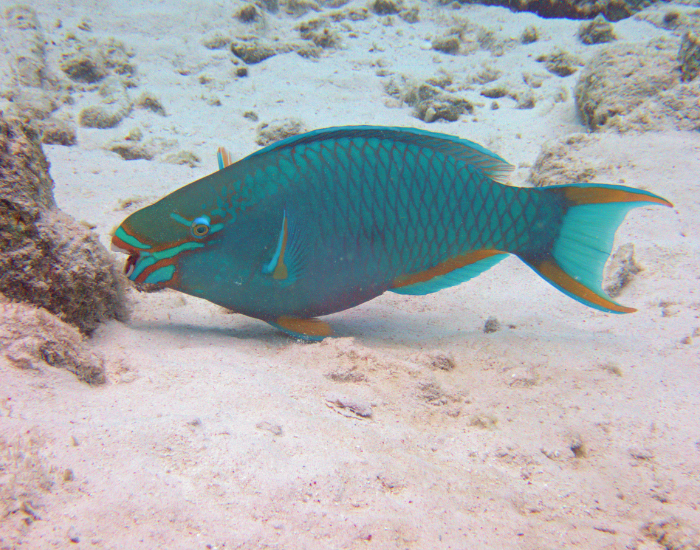
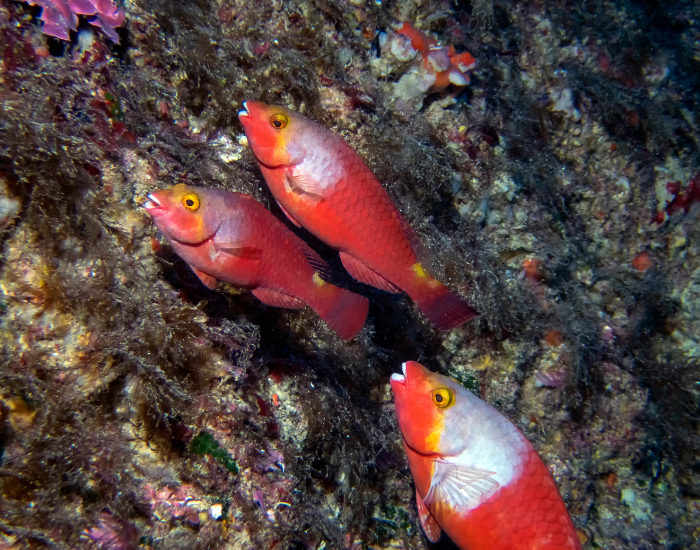
Some people believe that biology only supports two fixed sexes, but nature tells a far more complex story. Parrotfish are a perfect example. Parrotfish don’t stay the same sex throughout their lives. Most species are protogynous hermaphrodites, meaning they start life as females. Later, some transform into males based on social hierarchy and environmental factors. Within the same species, males and females can look very different, and some individuals remain in the initial phase, displaying duller coloration and often functioning as females or non-dominant individuals.
In species like the stoplight parrotfish (Sparisoma viride), this transformation creates “terminal phase males.” These are large, vividly colored males who dominate territories and lead harems of females. The color patterns of these males are far more intense than their female counterparts.
This fluid social system ensures reproductive success. In addition, it maintains genetic diversity within parrotfish populations across different coral reefs.
5. There Are Over 80 Species of Parrotfish Worldwide
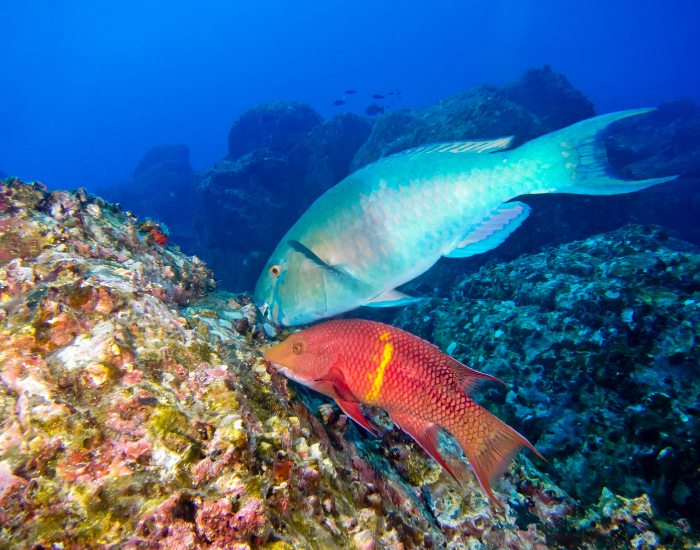
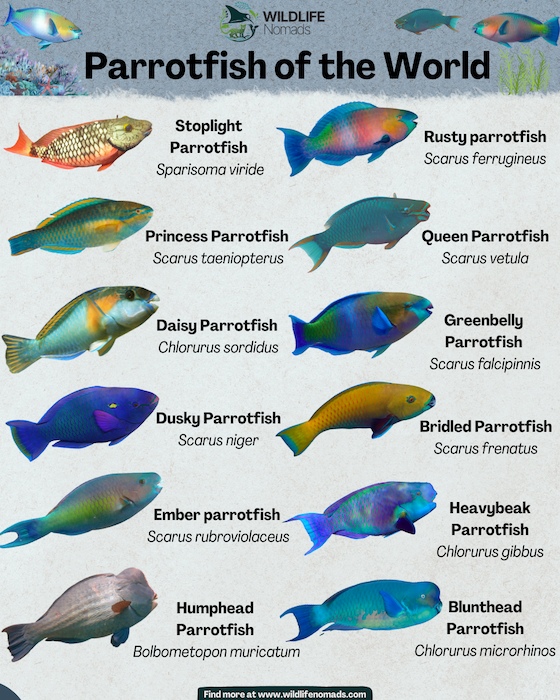
Parrotfish belong to the family Scaridae, closely related to wrasses. Scientists have identified more than 80 separate species distributed across the world’s oceans. These different species inhabit the Indo-Pacific, Caribbean, and Red Sea regions, and can be distinguished by unique features such as teeth structure, color patterns, and morphology.
Among the most recognized species are:
- Bumphead Parrotfish (Bolbometopon muricatum) – The largest species, reaching 1.3 meters in length and weighing up to 46 kilograms
- Stoplight Parrotfish (Sparisoma viride) – Common throughout the Caribbean and Atlantic reefs
- Blue Parrotfish (Scarus coeruleus) – Found grazing in shallow Atlantic coral reefs
Other species of parrotfish may differ in size, feeding habits, and coloration, contributing to the ecological diversity of these fishes.
Each species displays unique color patterns that vary by life stage, region, and social role. Therefore, they’re favorites among divers, marine photographers, and scientists studying reef fishes behavior.
6. Their Changing Color Patterns Tell a Story
Few reef fish display such dynamic coloration. Juveniles often have muted brown or green tones that provide camouflage from predators. However, adult males shine in iridescent blues, greens, and pinks that catch the eye instantly.
Color isn’t just decoration. It signals maturity, dominance, and breeding readiness to other fish. During lek mating displays, terminal phase males intensify their hues to attract females and warn rival males.
I once observed a group off Coron’s reefs. A single bright-blue male circled a dozen females in an underwater dance. The display was as mesmerizing as any bird’s courtship ritual.
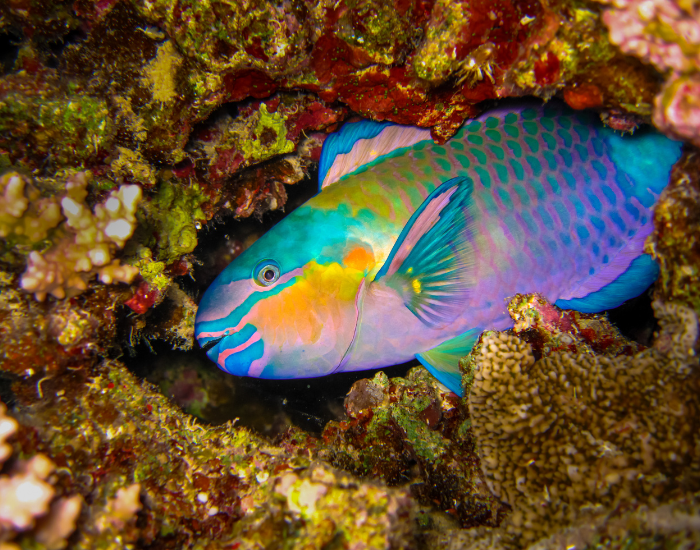
7. Parrotfish Are Nocturnal Architects Creating Mucus Cocoons
At night, many parrotfish species form a transparent cocoon from mucus secreted by their bodies. This protective bubble completely envelops their body, creating a kind of sleeping bag that masks their scent from predators.
Moray eels and reef sharks hunt primarily by smell. Therefore, the mucus cocoon provides essential protection while the fish rests. Scientists also believe it protects them from parasitic isopods, tiny crustaceans that would otherwise latch onto their gills. This bedtime ritual helps shield parrotfish from parasitic bed bugs, such as isopods, and also helps them avoid detection by predators.
This remarkable behavior demonstrates sophisticated evolutionary problem-solving. In addition, it shows how reef fish have adapted to survive in predator-rich environments.
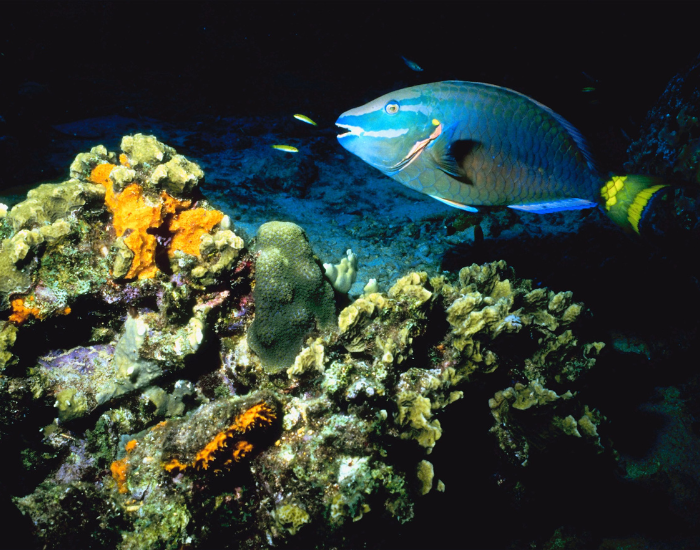
8. Their Diet Shapes the Entire Seafloor Ecosystem
What do parrotfish eat? Their diet consists primarily of algae growing on coral reefs and rocks. Parrotfish are prolific eaters, consuming large quantities of coral and algae each day, which contributes significantly to sand production and reef health. However, they also ingest bits of hard coral and coral sand while scraping surfaces clean.
This combination of herbivory and bioerosion makes them ecosystem engineers. By grazing continuously throughout the day, they prevent algal overgrowth that can choke coral polyps. Their feeding also recycles nutrients back into the reef system.
Furthermore, their excretion of coral sand influences how entire coastlines evolve over time. Without parrotfish, coral reefs would collapse under thick carpets of algae. Stony corals would die, and the entire reef ecosystem would fail.
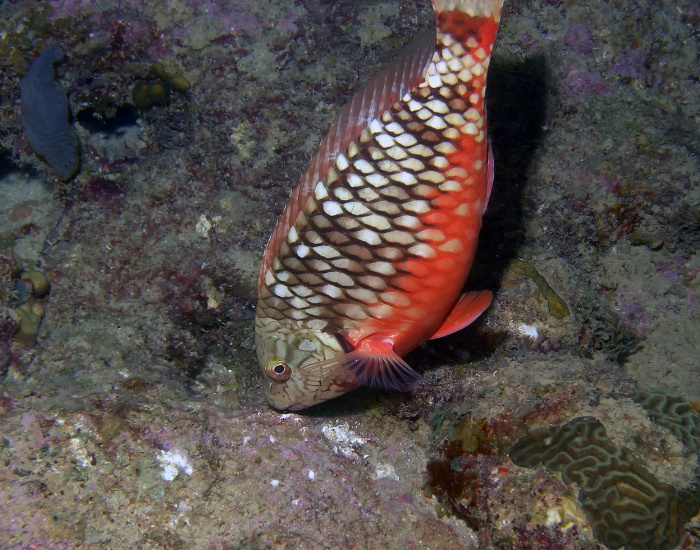
9. Parrotfish Live in Coral Reefs Around the World
From the Great Barrier Reef to Caribbean islands, parrotfish inhabit shallow coral reefs, rocky coasts, and seagrass beds. They typically live at depths between 1 and 50 meters where sunlight penetrates. Parrotfish use their pectoral fins for swimming and rely on their caudal fins for bursts of speed, which aids their mobility and helps them escape predators in reef environments.
They prefer warm, clear waters in tropical and subtropical regions. These are areas where symbiotic algae and coral polyps thrive. While most species remain reef-bound, some venture into lagoons and mangrove edges during their juvenile phase.
Every time I’ve encountered them—whether in Palau, the Philippines, Belize, or the Maldives—they’ve been the persistent background workers. They graze tirelessly across the reef as if on a lifelong mission to maintain balance.
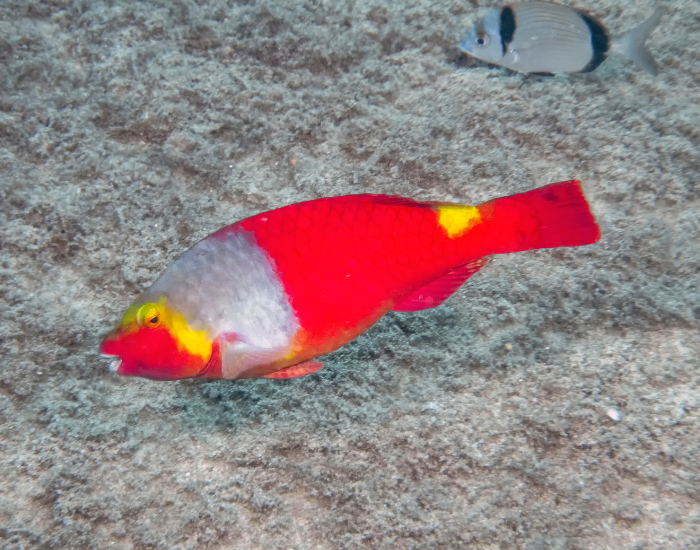
10. Overfishing Threatens Parrotfish Survival Globally
In many regions, parrotfish are considered royal food or a delicacy. Parrotfish are rarely consumed in the United States but are considered a delicacy in other parts of the world, where they may even be served raw, such as in Polynesian cuisine. However, overfishing combined with coral reef destruction and climate change has drastically reduced populations. This creates a dangerous cycle.
Parrotfish are slow-growing and reach reproductive maturity late. Therefore, their removal disrupts entire reef ecosystems. Studies by Mumby et al. (2006) in Nature show that reefs without parrotfish rapidly degrade into algal wastelands. Hard coral cover declines, and biodiversity collapses.
Marine protected areas in Belize, Palau, and the Maldives have banned parrotfish fishing. These conservation efforts have demonstrated measurable coral recovery within just a few years. Protecting these herbivorous reef fish is essential for reef resilience.
11. They’re Favorites Among Divers, Not Suitable for Aquariums
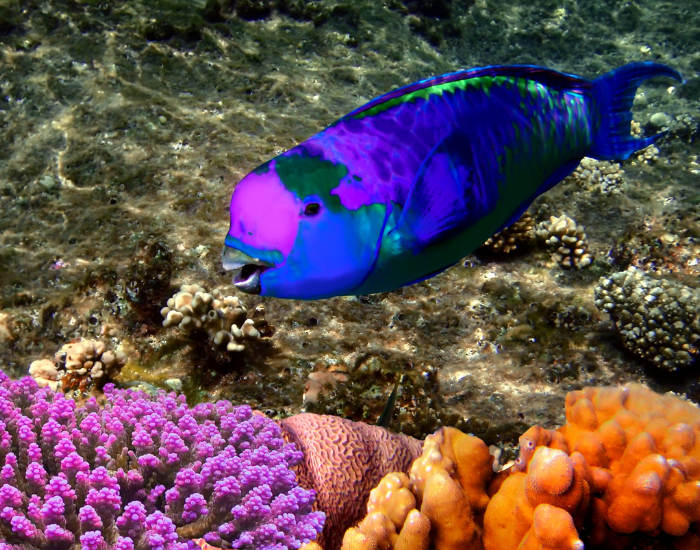
Divers and snorkelers adore parrotfish for their brilliant colors and approachable nature. They often swim close to humans, seemingly unbothered by our presence. However, they’re not suitable for home aquariums.
Their specialized diet requires live coral, specific algae, and coral sand. This makes them nearly impossible to sustain outside natural reef environments. In addition, removing them from the wild for the pet trade harms delicate coral reef ecosystems.
The best way to appreciate these fish? Observe them in their natural element where they belong. Responsible ecotourism supports local economies while protecting parrotfish populations.

12. Parrotfish Literally Help Build Tropical Islands
Perhaps their most mind-blowing contribution involves geology. Parrotfish help create and maintain tropical islands through their sand production.
Over centuries, the white coral sand they excrete accumulates on reefs and in lagoons. This forms beaches and, eventually, small landmasses. In low-lying nations like the Maldives, parrotfish-produced sand is an essential component of island formation and beach maintenance.
When viewed through this lens, these fish aren’t just reef dwellers. They’re geological engineers reshaping coastlines across the world’s oceans. Their ecological impact extends far beyond the reef itself.
FAQs You May Have About the Parrotfish
Parrotfish feed primarily on algae and coral polyps growing on stony corals. Their fused teeth allow them to scrape algae off coral rock and prevent algal overgrowth that would kill coral reefs.
Yes, they do. Parrotfish grind hard coral skeletons to access symbiotic algae. They excrete the ground-up calcium carbonate as fine white coral sand. A single bumphead parrotfish can produce hundreds of kilograms of sand annually.
While parrotfish are edible and considered royal food in some cultures, eating them is strongly discouraged. Overfishing devastates coral reef ecosystems that depend entirely on their grazing behavior. Many regions now ban parrotfish fishing.
Absolutely. In fact, they’re essential for coral reef health. Parrotfish maintain reefs by controlling algae, preventing coral disease, and facilitating new coral growth. Healthy reefs need healthy parrotfish populations.
They scrape hard coral surfaces to access nutrient-rich symbiotic algae called zooxanthellae. These algae live inside coral tissue. The parrotfish teeth are strong enough to bite through the coral skeleton to reach this food source.
No. Parrotfish require live coral, specific algae, and coral sand that’s nearly impossible to replicate in home aquariums. Removing them from the wild also damages reef ecosystems. They should be observed in their natural habitat only.
Most parrotfish are protogynous hermaphrodites. They start as females and some later change sex to become terminal phase males. Males establish territories and spawn with harems of females during full moon periods.
The Gardeners of the Reef
I’ve come to view parrotfish as the quiet conservationists of the sea. They don’t just survive in coral reefs. They sustain them through constant work.
Every bite they take keeps coral alive. Every grain of white sand they excrete reshapes coastlines and builds beaches. And every color change tells a story of resilience and adaptation in the world’s oceans.
Protecting parrotfish means protecting coral reefs, tropical islands, and the millions of species that depend on them. This includes us. Whether through responsible ecotourism, sustainable seafood choices, or supporting marine protected areas, each of us can help.
These herbivorous reef fish need our support. Conservation efforts work. Marine sanctuaries in Belize, Palau, and the Philippines prove that when we stop overfishing, reefs recover. Hard coral cover increases, and biodiversity returns.
Therefore, let’s ensure these underwater artists keep painting the seascape. Future generations of divers, snorkelers, and ocean lovers deserve to see parrotfish grazing peacefully on coral reefs, just as I did in Koh Lipe all those years ago.
Further Reading
- Echinoderms: The Spiny-Skinned Architects of the Ocean
- The Fascinating World of the Seadragon
- The Strange Wobbegong Shark
- Facts about Trigger Fish
Find Underwater Experiences to Spot the Parrotfish!
This blog is reader-supported. When you buy experiences through links listed on this site, we may earn an affiliate commission.