Mee the Platypus
If you eve watched Phineas and Ferb, you probably remember Perry the Platypus, the teal, secret-agent mammal with a fedora and serious attitude. But Perry wasn’t just a cartoon invention; his real-life counterparts actually exist, and they’re just as extraordinary as that secret agent. Native only to Australia, the platypus is one of nature’s most unusual creations, so unique that early European scientists once thought it was a hoax.
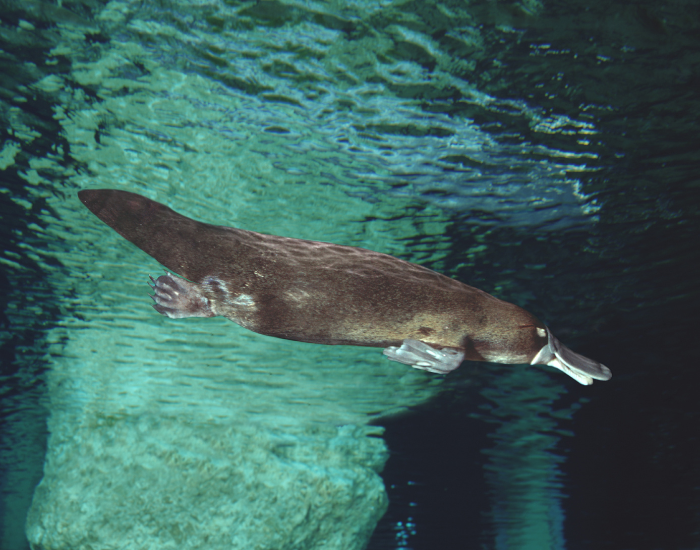
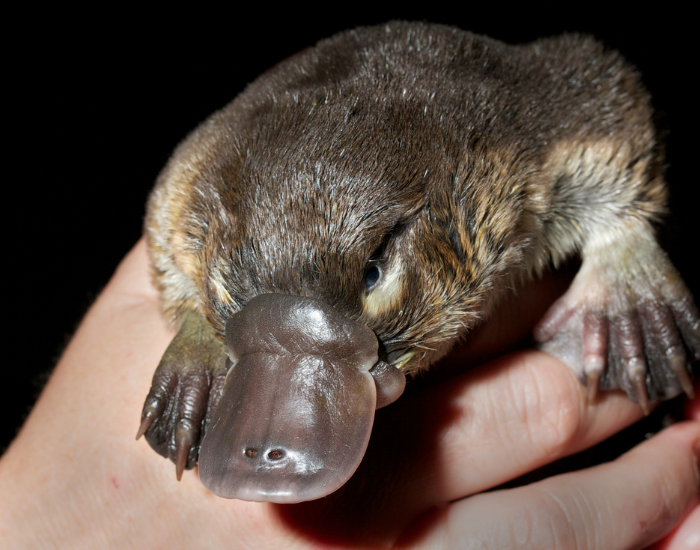
The platypus mammal is unlike anything else on Earth. This venomous, egg-laying mammal combines features that seem impossible. With its duck-like bill, webbed feet, and flat tail, the platypus challenges everything we thought we knew about mammals. The formal scientific name for the platypus is platypus anatinus, which places it as the only extant member of its family in biological classification.
This blog explores 10 fascinating facts about the platypus. Therefore, you’ll discover why these egg-laying mammals remain one of Australia’s most extraordinary animals, and learn about their distinguishing features such as the broad flat tail, webbed limbs, dense waterproof fur, and even a venomous spur.
1. Is the Platypus Really a Mammal?
Yes, the platypus is 100% a mammal. Mammals produce milk, have fur, and maintain warm body temperatures. The platypus (platypus Ornithorhynchus anatinus) checks all these boxes perfectly.
The confusion exists because platypuses lay eggs. In addition, their duck-like appearance adds to the mystery. However, egg-laying doesn’t disqualify them from being mammals, even though most mammals give birth to live young.
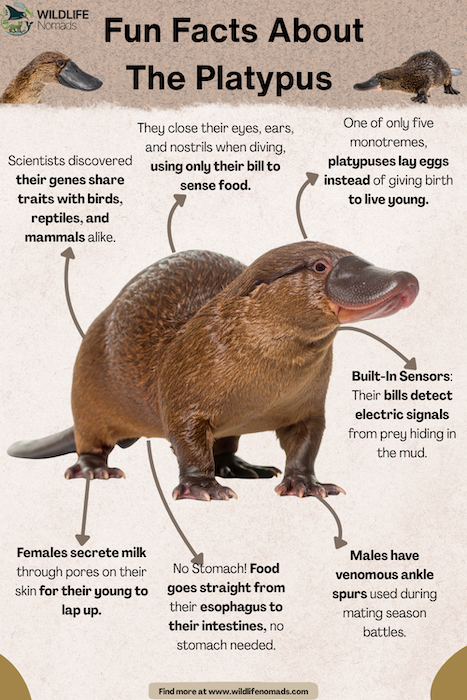
The platypus belongs to monotremes, a special group of egg-laying mammals. Only five species worldwide lay eggs and produce milk. These include the platypus and four species of echidnas. Unlike placental mammals or marsupials, monotremes represent an ancient evolutionary lineage. The scientific description and classification of the platypus established it as a mammal, despite its unique reproductive biology.
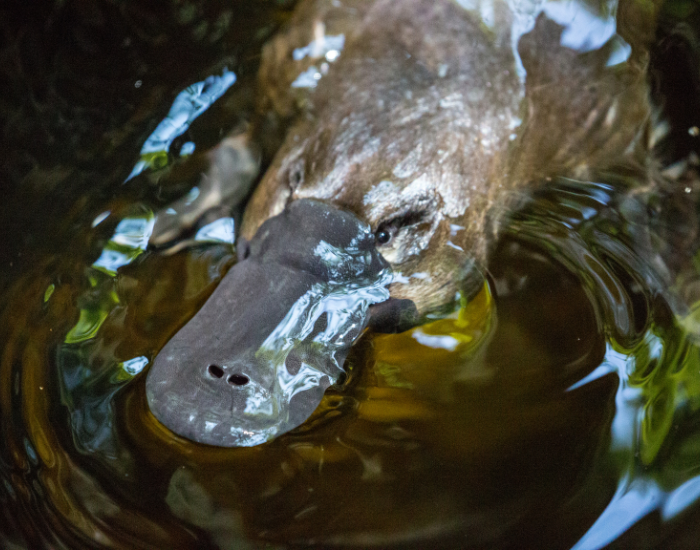
Male platypus and female platypus both possess dense, waterproof fur. This fur keeps them warm in cold freshwater rivers across eastern Australia.
2. Why Are Platypuses Egg-Laying Mammals?
Egg-laying represents an ancient mammalian trait retained only in monotremes. Fossil records suggest that monotremes diverged from other mammals approximately 200 million years ago. This makes them incredibly special in evolutionary history.
Unlike most mammals, the female platypus lays eggs, typically one to three leathery eggs, in underground burrows. These breeding burrows sit near freshwater rivers in South Wales, Tasmania, and eastern Australia. The female spends weeks preparing the nesting burrow before she lays eggs.
Inside the burrow, the mother curls around her clutch protectively. She incubates the eggs for about 10 days using muscular contractions and body heat. When the young hatch, they are blind, hairless, and completely helpless.
Unlike bird eggs, platypus eggs have soft, leathery shells. The eggs remain vulnerable to temperature changes and predators. Therefore, the mother rarely leaves the burrow during incubation.
3. Milk Without Nipples: A Mammalian Oddity
Female platypuses produce milk but lack nipples entirely. Instead, milk seeps through specialized pores in their skin. The milk pools in grooves on the mother’s abdomen, creating what scientists call “milk patches.”
Young platypuses lap up this milk directly from their mother’s fur. This unusual feeding system works perfectly in humid burrows where platypuses nest. The adult platypuses remain underground with their young for 3-4 months.
Studies show that platypus milk contains unique antimicrobial proteins. These proteins help protect vulnerable hatchlings from infection in the damp environment. In fact, researchers are studying these proteins for potential medical applications.
This feeding method differs completely from placental mammals and marsupials. However, it proves that evolution creates diverse solutions to similar challenges.
4. Venomous Spurs on the Male Platypus
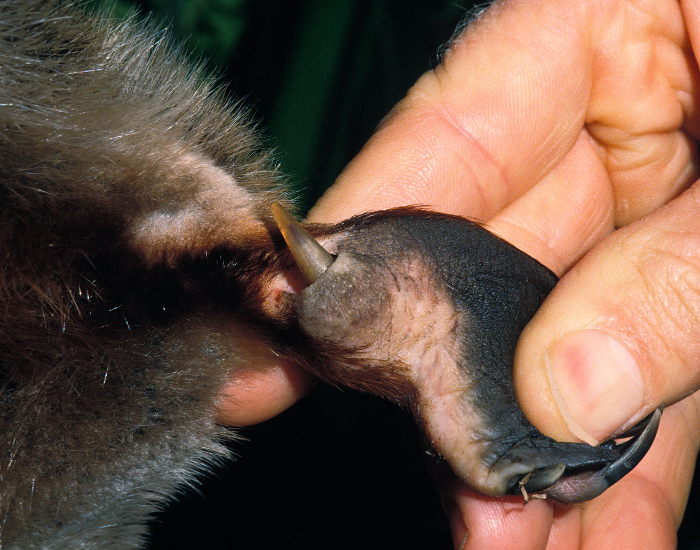
Most people find it surprising that the platypus is a venomous mammal. Male platypus possess sharp, venomous spurs located on their hind feet. These spurs can deliver venom capable of causing excruciating pain in humans.
The venom contains multiple proteins that cause severe swelling. Pain from platypus venom can last for weeks and resist conventional painkillers. Therefore, wildlife handlers treat male platypuses with extreme caution during breeding season.
Venom production peaks during breeding season, which runs from August to October. This timing suggests the spurs evolved for competition between male platypus rather than hunting. Males use these weapons to compete for female platypus attention.
Among mammals, only a few species produce venom. The platypus shares this rare feature with solenodons and slow lorises. This makes venomous mammals one of nature’s most exclusive clubs.
5. The Platypus’s Bill: A Super Sensor
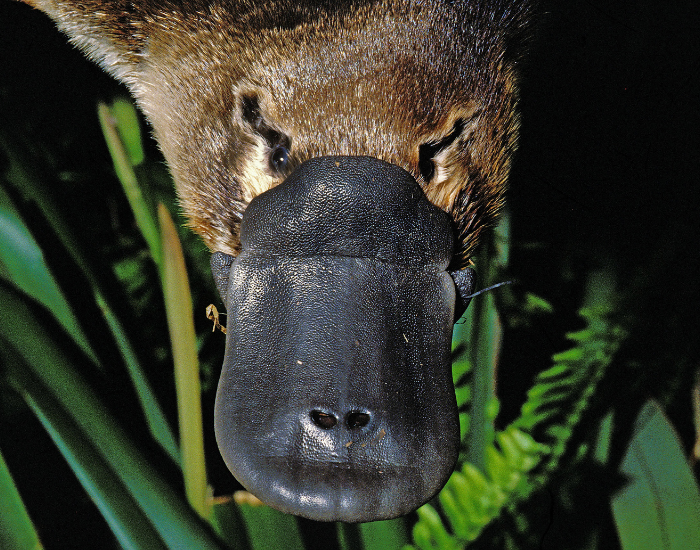
The platypus’s bill is not just for show. This organ functions as an electroreceptor powerhouse. The bill contains approximately 40,000 specialized sensory receptors that detect electrical signals.
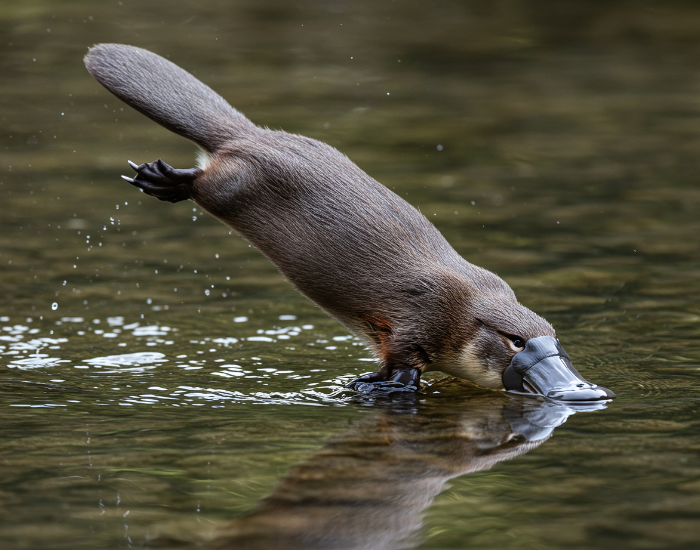
When platypus swimming underwater, they close their eyes, ears, and nostrils completely. Therefore, they rely entirely on their bill to detect prey. The bill picks up tiny electrical signals from muscle contractions in small fish, insect larvae, and freshwater shrimp. The platypus uses its extensively webbed front feet for powerful propulsion in the water, allowing it to maneuver efficiently while foraging.
This electroreception makes the platypus one of the most effective hunters in murky waters. The duck-like bill also contains mechanoreceptors that detect pressure changes. Together, these sensors create a three-dimensional map of the river bottom.
Adult platypuses spend up to 12 hours daily searching for food. They dive repeatedly, scooping up prey with their bills. The platypus spends most of its active time in the water, making this sensory system essential.
6. Freshwater Specialist of Eastern Australia
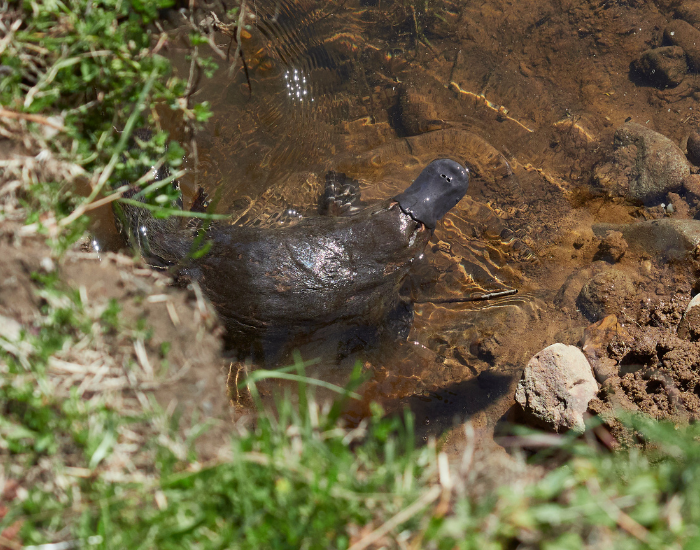
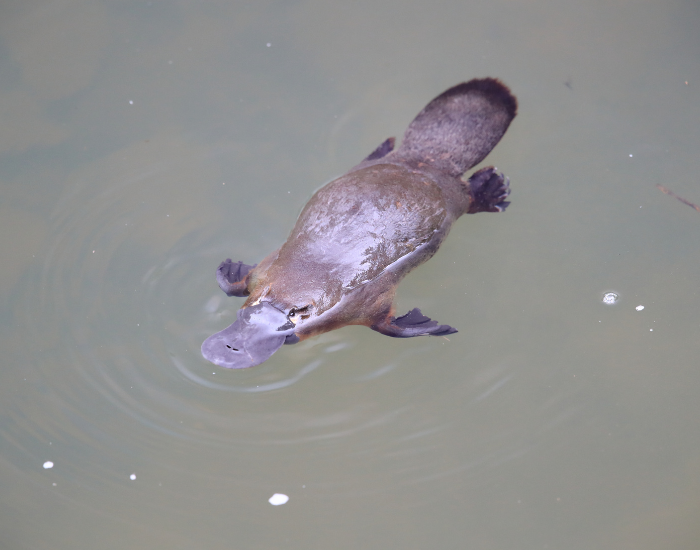
Platypuses are semiaquatic mammals found exclusively in eastern Australia and Tasmania. These unique animals inhabit freshwater rivers, streams, and wetlands throughout their range. From Queensland to South Australia, platypuses adapt to various river systems.
I once camped along a quiet creek in New South Wales at dawn. Waking early, I watched a platypus diving repeatedly in the cool water. Its flat tail propelled it underwater while webbed feet provided precise steering. The tail also stores fat reserves, which help with insulation and energy storage, supporting the platypus’s survival in its aquatic environment. For Australians, these animals symbolize pristine wilderness.
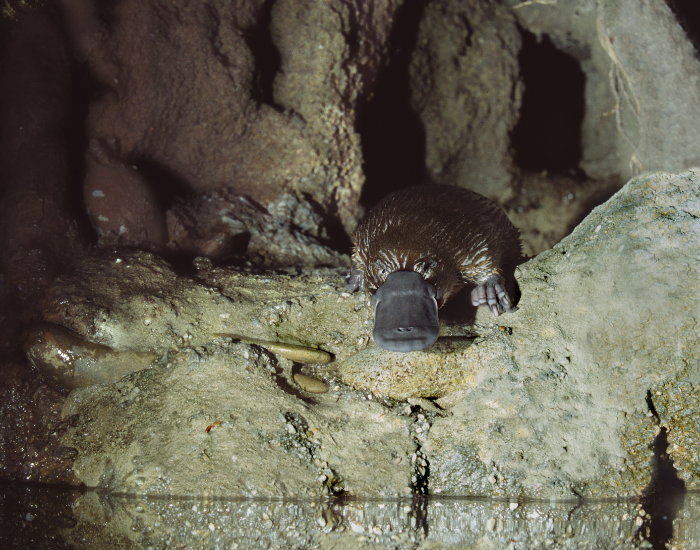
Platypuses create extensive burrow systems along riverbanks. These burrows provide shelter from predators and extreme temperatures. The entrance typically sits just above the waterline, hidden by vegetation.
Tasmanian platypuses tend to be larger than their mainland relatives. In addition, they possess thicker fur to cope with colder water temperatures. Each population adapts to its local environment while maintaining core platypus characteristics.

7. Evolutionary History Through Fossil Records
The evolutionary history of the platypus spans millions of years. Fossil discoveries reveal that platypus relatives once lived across South America and Australia. This distribution reflects the ancient supercontinent Gondwana. The first scientific description of the platypus by European scientists occurred in the late 18th century, marking its initial formal recognition in scientific literature.
The oldest platypus fossil, Obdurodon dicksoni, had functional teeth. Modern platypus lack teeth entirely, using horny pads to grind food instead. This change occurred gradually over millions of years.
Fossil records show that ancient platypuses were much larger. Some extinct species reached twice the size of modern platypus. These giants likely hunted different prey and occupied different ecological niches.
Genetic studies confirm that platypuses share both reptilian and mammalian traits. Their genome contains genes typically found in reptiles, birds, and other mammals. Therefore, scientists call them “living fossils” that provide windows into evolutionary history.
The platypus family (Ornithorhynchidae) once included many more species. Today, only Ornithorhynchus anatinus survives. This makes conservation efforts even more critical.
8. Life Cycle and Breeding Season
Breeding season runs from late winter to spring in eastern Australia. Male platypus compete aggressively for territory during this period. Venomous spurs become their primary weapons in these contests.
After mating, female platypus dig elaborate nesting burrows. These tunnels can extend up to 30 meters into riverbanks. The female blocks the entrance with soil to protect her future young.
The female lays 1-3 eggs approximately three weeks after mating. She curls around the eggs, maintaining constant temperature through muscular contractions. Incubation lasts about 10 days before young platypuses hatch.
Hatchlings measure only 15 millimeters long at birth. They remain completely dependent on their mother’s milk for months. The mother leaves the burrow briefly to feed, returning quickly to nurse her young.
Young platypuses emerge from the burrow at 3-4 months old. However, they continue learning survival skills from their mother. By six months, juvenile platypuses become sexually mature and independent.
Unlike marsupials, platypuses lack pouches entirely. Instead, their young develop underground, protected from predators and weather. This strategy proves highly effective in Australian river systems.
9. What Do Platypuses Eat? Diet and Foraging Habits
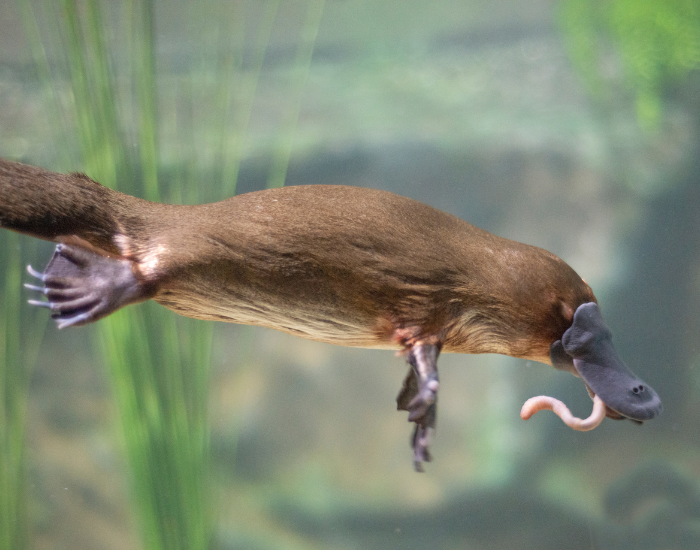
The platypus is a skilled carnivorous mammal, perfectly adapted to hunting in the cool, flowing waters of eastern Australia. Both the male platypus and female platypus rely on a diverse menu of aquatic creatures to fuel their active lifestyles. Their diet centers around insect larvae, which they expertly locate using the sensitive electroreceptors in their bill. In addition to insect larvae, platypuses consume fish eggs, tadpoles, worms, and a variety of small insects found along the riverbed.
While the male platypus may eat slightly more insect larvae than the female platypus, both sexes share similar foraging habits. The platypus spends much of its day swimming and diving, using its webbed feet for propulsion and steering as it searches for food. With each dive, the platypus closes its eyes and relies entirely on its bill to detect prey hidden in the mud or under rocks.
Thanks to their dense waterproof fur, platypuses can remain submerged for up to two minutes at a time without losing body heat. After scooping up prey, they store it in their cheek pouches before surfacing to eat. This efficient hunting strategy allows the platypus to thrive in freshwater rivers, where it plays a vital role in controlling insect populations and maintaining the health of its ecosystem.
10. Conservation Status and Threats
Platypuses currently hold a threatened species designation by the IUCN. While not yet endangered, populations face growing risks across their range. Conservation efforts have intensified in recent years.
Several factors threaten platypus populations throughout eastern Australia:
Habitat loss remains the primary concern. Land clearing and urban expansion destroy critical river habitats. Therefore, many platypus populations become isolated and vulnerable.
River pollution from pesticides and heavy metals accumulates in platypus tissue. These toxins affect reproduction and survival rates. Clean freshwater rivers are essential for platypus survival.
Climate change alters rainfall patterns across Australia. Prolonged droughts dry up rivers and reduce prey availability. In addition, extreme weather events flood burrows and drown young platypuses.
Introduced species like foxes and cats prey on platypuses. Fishing nets and trash also trap and kill many animals annually. The Australian government implements protective measures, but challenges remain.
Additionally, the tick species Ixodes ornithorhynchi parasitizes platypuses, especially around the hind limbs, and can negatively impact their health and disease susceptibility in the wild.
Conservation groups encourage citizen science through programs like PlatypusSPOT. These initiatives help monitor population health across eastern Australia. Recording platypus sightings provides valuable data for researchers.
11. They have Cultural Significance
The platypus holds deep cultural value throughout Australia. For many Aboriginal nations, it features prominently in Dreaming stories. These traditional narratives explain the platypus’s unusual combination of features.
Indigenous stories often describe the platypus as born from both water and land. Some tales explain how the first platypus came from the union of different animals. These stories reflect the platypus’s unique biology through cultural wisdom.
In modern Australia, the platypus appears on the 20-cent coin and postage stamps. It serves as a beloved national mascot representing Australian wildlife. Artistic representations, such as illustrations and designs, often depict two platypuses together to highlight their distinctive anatomy and natural posture. The Australian government uses the platypus image in conservation campaigns.
European naturalists initially thought the platypus was a hoax. George Shaw first described the species scientifically in 1799. He suspected someone had sewn a duck’s bill onto a mammal’s body. However, closer examination proved the platypus was entirely real.
To me, seeing a platypus in the wild feels profoundly special. Each encounter reminds me that nature thrives in surprising ways. Conservation isn’t just science, it’s about preserving wonder and connection to the natural world.
What’s New in Platypus Science?
Recent studies are shedding new light on how platypuses are coping with environmental and climate pressures. A 2025 Nature paper revealed that while platypus populations across southeastern Australia still appear healthy, their genetic diversity is already showing signs of strain from dams, habitat fragmentation, and land-use change. The study found that these effects often lag behind what’s happening in real time, meaning we might not see the genetic consequences of habitat disruption until it’s too late.
Meanwhile, researchers in Tasmania examined how platypuses respond to severe droughts and found that as streams dry up, these aquatic mammals are forced to concentrate their foraging in shrinking pools or travel over land in search of water, increasing their risk of starvation and predation. Together, these findings highlight the urgent need for conservation planning that accounts not just for visible habitat loss, but for the hidden, long-term impacts of climate change and human modification on this uniquely Australian species.
FAQ: Common Questions About Platypuses
Yes, the platypus is definitely a mammal. It has fur, produces milk, and maintains warm body temperature. These characteristics define all mammals.
Platypuses belong to monotremes, the only egg-laying mammals. This represents an ancient evolutionary trait retained from reptilian ancestors.
Yes, absolutely. Female platypus lay eggs and later feed hatchlings with milk. The milk seeps through skin pores rather than nipples.
A duck-billed platypus is a mammal, not a bird. Despite its duck-like bill, it possesses fur and produces milk.
No, platypuses are not marsupials. They belong to monotremes, a separate group. Unlike marsupials, platypuses lack pouches entirely.
Only monotremes lay eggs: the platypus and four echidna species. These five species represent the only egg-laying mammals alive today.
Male platypus possess venomous spurs that can cause severe pain. However, platypuses generally avoid humans and rarely attack unless threatened.
Keeping Safe an Elusive Creature
The platypus mammal proves that evolution doesn’t follow predictable patterns. It challenges our assumptions about what makes a mammal. This egg-laying mammal combines reptilian traits with mammalian characteristics in remarkable ways.
As rivers across eastern Australia face increasing threats, conservation becomes critical. Protecting this threatened species means safeguarding entire freshwater ecosystems. The platypus serves as an indicator species for river health.
For me, each platypus encounter feels like a privilege. These moments remind me of nature’s creativity, resilience, and fragility. The duck-billed platypus represents millions of years of evolutionary innovation.
Protecting platypuses requires preserving their freshwater rivers throughout eastern Australia. In addition, we must address climate change and pollution. Therefore, supporting conservation organizations helps ensure future generations can experience these extraordinary animals.
Further Reading:
- Meet the Bilbies: Facts, Conservation
- 12 Fascinating Facts About Wombats
- 5 of the Most Threatened Animals in Australia