
What Are Matriarchy Animals?
When people think of dominance in the animal kingdom, they often picture big roaring lions or massive antler-clashing stags. But nature doesn’t always follow patriarchal rules. In fact, matriarchy animals, species where females rule, reveal some of the most fascinating stories about power, cooperation, and survival in the animal world.
The animal kingdom showcases incredible diversity in social systems, where females often emerge as the primary leaders. Matriarchal societies demonstrate that female leadership extends far beyond human concepts, creating complex social structures where females rule with authority, intelligence, and strategic prowess. The success of these female leaders is frequently rooted in their unique ability to navigate social dynamics, make critical decisions, and ensure the survival of their groups, traits that go way beyond mere physical strength.
So, let’s dive into 10 matriarchal animals that flip our human assumptions upside down and explore how these species thrive under female dominance. Across several species, including lions, hyenas, bonobos, and more, matriarchal social systems highlight the remarkable diversity of female-led animal societies.

Characteristics of Matriarchal Societies
Matriarchal species share some common traits that distinguish them from other social systems:
- Dominant adult females hold the highest rank in the group and make critical decisions
- Leadership is often based on experience, age, reproductive success, or physical strength
- Conflict resolution and cooperation are crucial for group survival and social harmony
- Females control access to resources, reproduction, territory, and group movement
- Social structures revolve around female alliances and kinship networks
- Males often play secondary roles, focusing primarily on mating and protection
In these societies, males may still contribute to protection, hunting, or mating, but the real decision-making power lies with the females. This creates stable social groups where female leadership drives survival strategies and group cohesion.
1. Spotted Hyenas: Queens of the Savanna
Few examples of female dominated animals are as striking as the spotted hyena. Female hyenas are larger, more aggressive, and dominate males in every aspect of life, creating one of nature’s most extreme matriarchal societies.
- The alpha female rules the clan, which can include up to 80 members across vast territories
- Even the lowest-ranking female outranks the highest-ranking male in social hierarchy
- Females pass down social status to their cubs through inheritance systems
- Female spotted hyenas are 10-15% larger than males and possess unique anatomical adaptations
- Female spotted hyenas possess an elongated clitoris, which resembles a penis and plays a role in their dominance and mating behavior.
- The queen maintains order through physical dominance and social alliances
When I first observed hyenas in Tanzania, I was struck by how often they challenged stereotypes. Far from being mere scavengers, they were skilled hunters led by fierce female animals that coordinated complex hunts, defended kills with unmatched tenacity, and maintained sophisticated social networks. The dominance of female hyenas extends to all aspects of clan life, from territory control to offspring care. Fights among hyenas help establish and maintain the social order within the clan.
These powerful predators demonstrate how female leadership can create highly successful hunting strategies, with females leading group hunts that require incredible coordination and communication among clan members. Males often leave their birth clan to join other clans, which helps maintain genetic diversity and social stability.

2. Bonobos: Peace Through Female Leadership
In stark contrast to their chimpanzee cousins, bonobos are a type of primate that look very similar to chimpanzees and sometimes they are called the “hippy” ones. They represent a model of cooperation where female bonobos form tight alliances that keep males in check through social bonds rather than aggression.
- Conflicts are often resolved through sexual contact and social bonding, not violence
- Female coalitions dominate food distribution, group movement, and territory decisions
- Males inherit their rank through their mothers, not their own physical strength
- Female bonobos use alliances to maintain peace and prevent male aggression
- Social groups prioritize cooperation and conflict resolution over competition
Bonobo females play a central role in social behavior and conflict resolution, using both affectionate interactions and their ability to exert dominance to maintain group harmony.
Bonobo societies are led by females, whose leadership qualities, such as age, experience, and strong social bonds, shape the group’s cooperative and peaceful nature. Female bonobos create inclusive societies where cooperation trumps competition, and their leadership style emphasizes community building and peaceful conflict resolution.
The democratic republic of bonobo society shows how females can maintain social order through relationship-building rather than physical dominance, creating stable groups where all members benefit from female leadership strategies. The interactions between males and females in bonobo groups are unique, as dominance is often held by females and cooperation between the sexes is prioritized, contrasting with the more competitive and male-dominated hierarchies seen in other primate societies.
If you are interested ina pes you may like the articles:

3. African Elephants: Wisdom of the Matriarch
African elephants are perhaps the most famous matriarchal animals, with herds led by the oldest female whose memory and knowledge guide the group through challenging environments and seasonal changes. The matriarch’s experience is especially crucial during mating season, when competition for mates and resources intensifies, as her guidance helps maintain social order and ensures the herd’s stability.
- Matriarchs possess extensive knowledge of waterholes, safe migration routes, and seasonal patterns
- Their leadership significantly improves the herd’s survival rates, especially during droughts and food scarcity
- Young elephants learn essential social behavior and survival skills by following the matriarch
- Elephant families maintain complex social bonds spanning multiple generations
- Female elephants coordinate group movements and make critical decisions about resource allocation
In Amboseli National Park, matriarch leaders can herd directly to a hidden swamp after weeks of dry heat. That single decision saved the calves and demonstrated why female dominated species often thrive when experience outweighs pure aggression. The matriarch’s decades of accumulated knowledge about seasonal patterns, predator behavior, and resource locations makes her invaluable to herd survival.
These magnificent mammals show how female leadership combines wisdom, memory, and social intelligence to create resilient family units that can survive in harsh environments where individual strength alone would fail.

4. Ring-Tailed Lemurs: Madagascar’s Queens
Madagascar is home to many unique animals. One of the is the Ring-tailed lemurs represent a classic example of animals where the female is dominant, controlling virtually every aspect of group life from reproduction to resource access. In these societies, the roles and status of males and females are clearly defined, with females consistently holding higher rank and authority over males.
- Females eat first, choose mates freely, and control prime territory locations
- They use scent marking and aggressive displays to maintain dominance over males
- Even small females can easily oust larger males through strategic aggression
- Female lemurs lead group movements and make decisions about foraging locations
- Social hierarchies place females at the top regardless of size or age differences
Ring-tailed lemurs demonstrate that female rule can be maintained through a combination of aggressive displays, social alliances, and strategic resource control, creating stable groups where females determine group dynamics and survival strategies.

5. Orcas: Grandmothers Lead the Pod
Killer whales, or orcas, live in tightly bonded matrilineal pods where older females serve as leaders, navigators, and teachers for their extended families across ocean territories.
- Older females lead complex hunting strategies, navigation decisions, and social teaching
- Research shows that pods with post-reproductive females have significantly higher survival rates
- Mothers and grandmothers play central roles in raising calves and passing down knowledge
- Female orcas maintain lifelong bonds with their offspring, creating stable family units
- Leadership transitions from mother to daughter, maintaining continuous female guidance
Orcas demonstrate that matriarchal species don’t just exist on land, in the ocean’s depths, female wisdom literally keeps families alive through generations. The presence of older, experienced females correlates directly with pod success, showing how accumulated knowledge and leadership experience benefit entire communities.
These intelligent marine mammals prove that female leadership extends across different environments, with grandmother orcas serving as repositories of hunting techniques, migration routes, and survival strategies that ensure pod survival in challenging ocean conditions.

6. Pride of Lions: Lionesses Run the Pride
Lions are often portrayed as the epitome of male dominance, but in reality, lionesses control pride dynamics and make most critical decisions about territory, hunting, and offspring care. Lions live in prides, which are structured groups with specific roles for males and females: females lead hunting and care for cubs, while males primarily defend the territory.
- Females do the majority of hunting, using sophisticated coordination and strategy
- Lionesses choose where the pride rests, when to move territories, and collectively raise cubs
- Males may defend territory from other males, but without lionesses, the pride collapses
- Female lions maintain stable social bonds that last their entire lives
- Hunting strategies rely on female cooperation, communication, and tactical planning
On safaris across Africa, people report watching lionesses coordinate a hunt at dusk with precision that rivaled any human military maneuver. Their cooperation, silent signals, flanking strategies, and perfectly timed attacks, demonstrated the sophisticated nature of female leadership in lion societies.
While male lions may appear dominant due to their impressive manes and territorial displays, lionesses actually control the pride’s daily operations, survival strategies, and long-term success through their collective leadership and hunting expertise.

7. Bees: The Queen Rules All
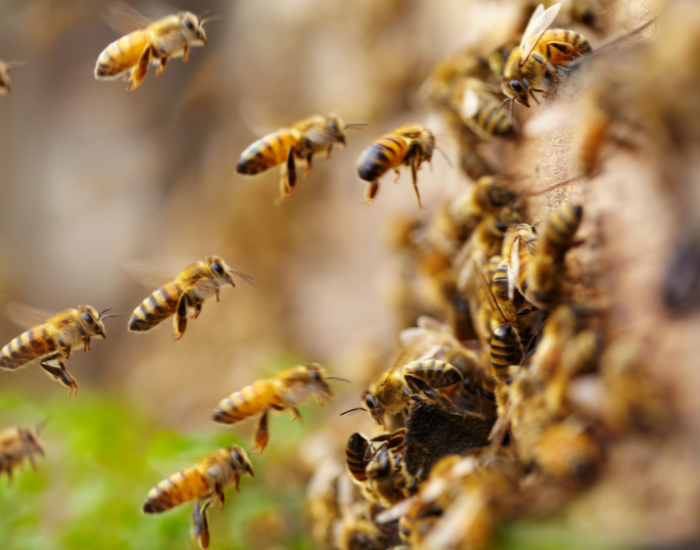
Among insects, bees represent one of the most famous female dominated species, with entire colonies revolving around female roles while males serve limited reproductive functions.
- The queen bee serves as the sole reproductive female, laying up to 1,500 eggs daily
- The queen bee is fed royal jelly, a nutrient-rich substance produced by worker bees that supports her reproductive functions
- Worker bees (all female) control the hive, forage for food, defend against intruders, and maintain colony structure
- Male drones exist solely for mating purposes, then die after fulfilling their reproductive role
- Female workers make all decisions about colony location, food storage, and defense strategies
- Colony survival depends entirely on female labor, organization, and collective decision-making
A beehive represents the ultimate example of female dominated animals, where the survival and success of thousands of individuals depends entirely on female organization, cooperation, and leadership. The queen bee holds exclusive breeding rights within the colony, ensuring she is the only individual to reproduce. The queen bee’s reproductive capacity, combined with worker bee labor and intelligence, creates one of nature’s most successful social systems.
These remarkable insects show how female leadership can create highly efficient societies where specialized roles, clear hierarchies, and collective decision-making result in thriving communities that can adapt to environmental challenges and seasonal changes. Worker bees function as a team to support the colony’s survival and the queen’s reproductive success.
8. Lemurs Beyond Madagascar: Female Power Everywhere
It’s not just ring-tailed lemurs that showcase female dominance. Across the entire lemur family, from bamboo lemurs to sifakas, females consistently rule their social groups and control access to resources.
- Female lemurs dominate in feeding hierarchies, conflict resolution, and territorial space use
- Males often disperse from groups, while females maintain group stability and continuity
- This pattern makes lemurs some of the few mammal species where females consistently dominate across multiple species
- Female leadership extends to reproduction, with females choosing mates and controlling mating timing
- Social systems revolve around female kinship networks and alliances
The consistency of female dominance across lemur species suggests evolutionary advantages to female leadership in these primates, creating stable social groups that thrive in Madagascar’s challenging environments.

9. Dolphins: Complex Female Alliances
While not strictly matriarchal, certain dolphin populations demonstrate sophisticated female leadership through complex alliance systems and cooperative behaviors.
- In bottlenose dolphins, older females often guide pods and make navigation decisions
- Female alliances form to protect calves and resist aggressive males through coordinated defense
- Communication and cooperation are central to their survival and hunting success
- Females establish long-term relationships that span decades and multiple generations
- Pod leadership often rotates among experienced females based on situation and expertise
When snorkelling in Amed, Bali, I witnessed female dolphins form a protective ring around their young, a defensive wall against approaching sharks. This display of female dominated behavior underwater demonstrated how cooperation and strategic thinking characterize female leadership in marine environments.
Dolphins show that female leadership can be flexible and situational, with different females taking charge based on their expertise, experience, and the specific challenges facing the group.

10. Meerkats: The Alpha Female Rules the Burrow
In meerkat societies, alpha females exercise complete control over reproduction, territory, and group activities in the harsh Kalahari Desert environment. Meerkats live in small groups, often called mobs, which are composed of several families and have a clear social hierarchy led by a dominant female.
- Only the dominant female reproduces, actively suppressing the fertility of subordinate females
- She leads foraging trips, makes decisions about territory movements, and controls group activities
- Subordinate females help raise the alpha’s pups, reinforcing the dominant female’s genetic lineage
- Alpha females can live longer and produce more offspring than subordinate group members
- Territory control and resource access depend entirely on the alpha female’s decisions
This reproductive monopoly makes meerkats another striking example of species where females are dominant, ensuring genetic success and group stability in harsh desert environments where resources are scarce and predation pressure is high.
The meerkat social system demonstrates how extreme female dominance can create highly successful survival strategies, with the alpha female’s control over reproduction ensuring that only the most successful genes are passed to future generations.

Matriarchal Society Structure
Female Power and Leadership
Dominant females shape the lives and fortunes of their groups across many species. Alpha females, matriarchs, or queens hold power, guiding their groups with experience, strategy, and sometimes sheer force. Female leadership extends far beyond strength or size.
Unique Tools of Leadership
Female bonobos use sexual contact as a tool for conflict resolution, diffusing tension and keeping harmony within their groups. This style of leadership emphasizes cooperation and bonding, allowing them to control access to food, territory, and even male behavior through alliances. In contrast, female spotted hyenas rule with physical dominance and social intelligence. Even the lowest-ranking female outranks the highest-ranking male, while alpha females maintain their position with aggression, food control, and strategic alliances.
Wisdom and Survival Skills
Older females often guide their groups with knowledge and memory. In African elephants, matriarchs remember routes to food and water, avoid predators, and teach survival skills to younger members. Similarly, female orcas, especially post-reproductive grandmothers, lead pods across oceans, using their experience to locate prey and navigate challenging environments.
Bonds, Hierarchies, and Collective Power
Strong bonds between females form the backbone of many societies. In lemurs, female alliances ensure peace and protection against threats. In spotted hyenas, dominant females balance competition with cooperation to secure resources and safeguard group stability. Bee colonies showcase another form of female rule, where queens hold absolute authority, yet the colony survives only through the collective coordination of thousands of female workers.
FAQs about Matriarchy in the Animal Kingdom
A matriarchy occurs when females hold the highest social rank in a group and make primary decisions about territory, resources, reproduction, and group movement. These systems prioritize female leadership and often result in stable, cooperative societies. While females lead, other members of the group also play important roles in maintaining social cohesion and survival.
Hyenas, elephants, orcas, bonobos, ring-tailed lemurs, and meerkats represent some of the most well-documented matriarchal species, with females controlling group dynamics and decision-making processes.
While male lions may appear dominant, lionesses actually control most aspects of pride life including hunting, territory use, and cub care. Males primarily serve defensive and reproductive functions.
Yes — spotted hyenas represent one of the most strongly female dominated animals in nature, with females being larger, more aggressive, and completely dominant over males in all social situations.
Elephants, orcas, bees, lemurs, hyenas, meerkats, bonobos, and many other species feature female leadership, with females making critical decisions about survival, reproduction, and group welfare.
In spotted hyenas, females are significantly larger and stronger than males. Female bonobos also use alliances to dominate physically larger males through cooperation and social intelligence.
Why Female Leadership Matters in Animal Societies
Studying matriarchal animals challenges our assumptions about leadership and reveals the diverse strategies that evolution has produced for survival and reproduction. In these female dominated species, power isn’t solely about brute strength, it encompasses cooperation, memory, reproductive control, social intelligence, and strategic thinking.
Benefits of Female Leadership:
- Enhanced survival rates through accumulated knowledge and experience
- Improved cooperation and conflict resolution within groups
- Better resource management and territory utilization
- Stronger social bonds that increase group stability
- More effective child-rearing through collective female care
- Reduced male-male competition that can destabilize groups
- Control over mate selection by female leaders, ensuring the best genetic outcomes and reproductive success for the group
From the fierce female animals of the African savanna to the powerful female animals navigating ocean currents, matriarchal societies highlight the incredible diversity of survival strategies in the animal kingdom. These systems often outperform male-dominated societies in terms of longevity, reproductive success, and adaptation to environmental challenges.
Conservation Implications: Understanding female leadership in animal societies has important conservation implications. Protecting matriarchal species means preserving not just individual animals, but entire knowledge systems, social networks, and survival strategies that have evolved over millions of years.
Research Insights:
Recent studies continue to reveal new aspects of female dominance in animal societies, showing that these systems are more common and more complex than previously understood. Research on species ranging from mammals to insects demonstrates that female leadership provides significant evolutionary advantages in various environments and ecological niches.
These matriarchal species teach us that strength, intelligence, and leadership manifest in countless ways throughout the natural world, creating a rich tapestry of social systems where females excel as leaders, protectors, and decision-makers.
Leadership Manifest in Countless Ways
The top 10 matriarchy animals showcase that female leadership in the wild is not only possible, it’s vital for species survival and ecosystem stability. From elephants guiding their herds through seasonal challenges to queen bees commanding vast colonies, these female dominated animals prove that strength, strategy, wisdom, and cooperation often belong to the females.
These remarkable species demonstrate that matriarchal societies can be more stable, more cooperative, and more successful than their patriarchal counterparts. Female leaders in the animal kingdom combine intelligence, experience, and social skills to create thriving communities that adapt to environmental challenges and maintain genetic diversity.
Key Takeaways:
- Female leadership appears across diverse species and environments
- Matriarchal societies often show enhanced survival and reproductive success
- Female dominance takes many forms, from physical strength to social intelligence
- These systems provide valuable insights into cooperation, leadership, and social organization
- Conservation efforts must recognize and protect these complex social structures
Protecting these matriarchal species means protecting the very balance of their ecosystems and preserving millions of years of evolutionary wisdom. These female dominated animals remind us that in both natural and human societies, leadership doesn’t have to follow one rigid pattern, it can be as diverse, dynamic, and successful as the incredible natural world that surrounds us.