
A Closer Look at Their Struggles and Conservation Efforts
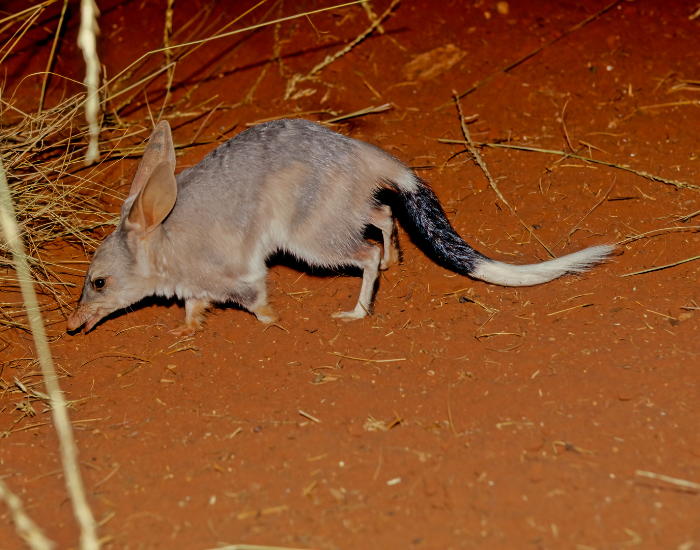
The first time I learned about bilbies wasn’t in the wild, it was during my master’s course in Sydney. They were the very first Australian animals I studied in detail, and I even gave a presentation about them in one of my classes. I still remember being fascinated by their unusual mix of features: rabbit-like ears, a long slender snout, and powerful digging claws. They seemed like a creature stitched together from different animals, yet perfectly adapted to life in the desert. I haven’t been lucky enough to see a bilby in the wild just yet, but they remain high on my list, an encounter I’m still waiting for.
Today, bilbies face an uncertain future. Populations are shrinking, their habitats are fragmented, and introduced predators have pushed them to the brink. But before we dive into their conservation story, let’s start with the basics.
The Greater Bilby
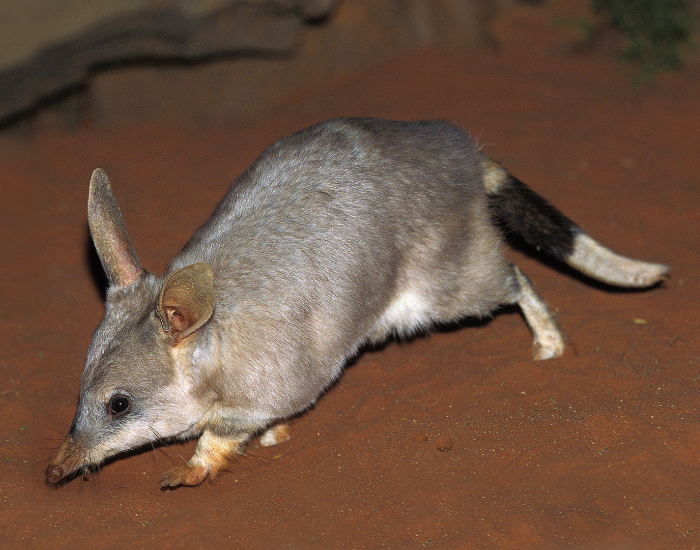
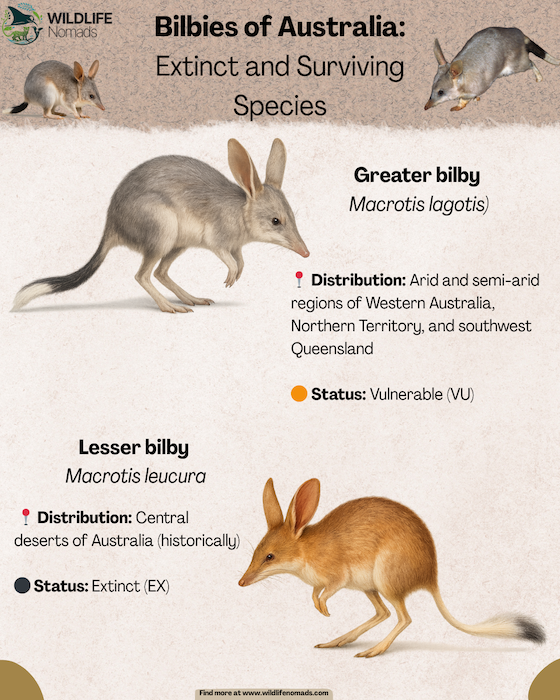
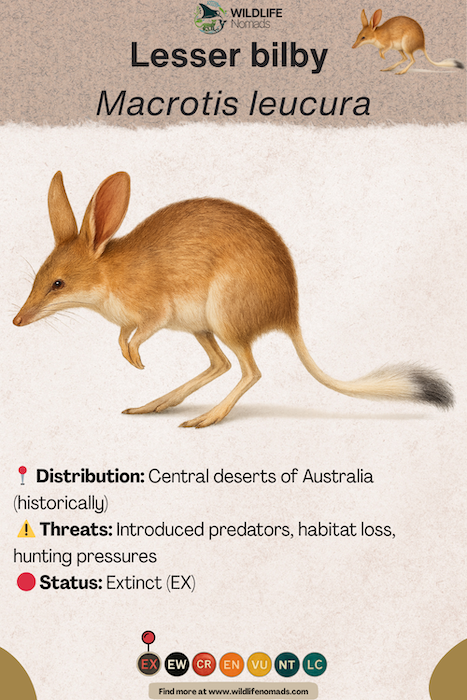
The greater bilby (Macrotis lagotis) is the only surviving bilby species, after the lesser bilby (Macrotis leucura) was declared extinct in the 1950s. Often called the “rabbit-eared bandicoot:, the bilby belongs to the bandicoot family, but stands out for its long ears, slender snout, and extraordinary burrowing skills.
The word “bilby” comes from the Yuwaalaraay Aboriginal language, meaning long-nosed rat. For many Aboriginal communities, bilbies hold deep cultural values, woven into Dreamtime stories and conservation practices.
Unlike many Australian animals, bilbies are still relatively unknown outside the country. Yet they’re one of the most important ecosystem engineers in the desert.
Where? – Habitat and Distribution
Once widespread across 70% of the Australian mainland, bilbies are now confined to isolated populations in:
- Northern Territory – Tanami Desert
- Western Australia – Great Sandy Desert, Pilbara
- Queensland – southwest regions like Currawinya and Astrebla Downs National Parks
Bilby habitat includes:
- Arid rocky soils
- Semi-arid shrublands
- Spinifex and tussock grasslands
- Sandy desert environments with little ground cover
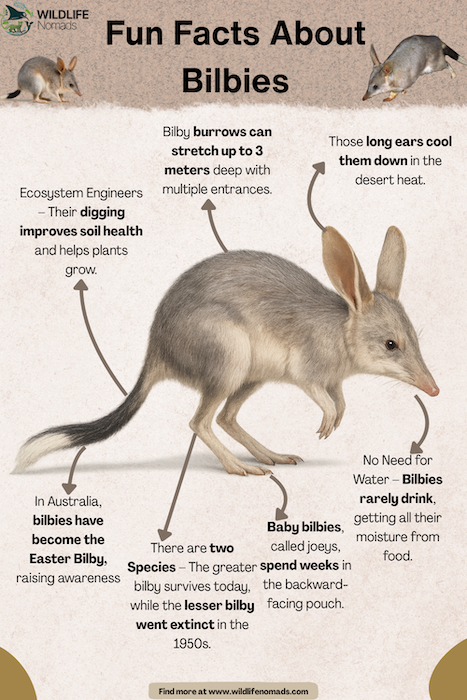
Their burrows can reach 2–3 meters deep and provide shelter from the scorching sun and predators. In fact, one bilby may dig a dozen burrows across its home range. These burrows also benefit other animals, from reptiles to small marsupials, who use them as ready-made shelters.

Life Cycle of the Greater Bilby
The bilby life cycle is short but prolific:
- Life span: 6–7 years in the wild; up to 10 years in captivity
- Reproduction: Females can breed at 6 months old
- Litters: Up to 4 per year, with 1–2 young at a time
- Pouch: The female bilby’s pouch faces backwards to keep dirt out while digging
- Young: Baby bilbies, called joeys, stay in the pouch for about 75 days before moving to a burrow
Their rapid breeding cycle is an evolutionary advantage in harsh environments, but it hasn’t been enough to counter modern threats like feral cats and foxes.
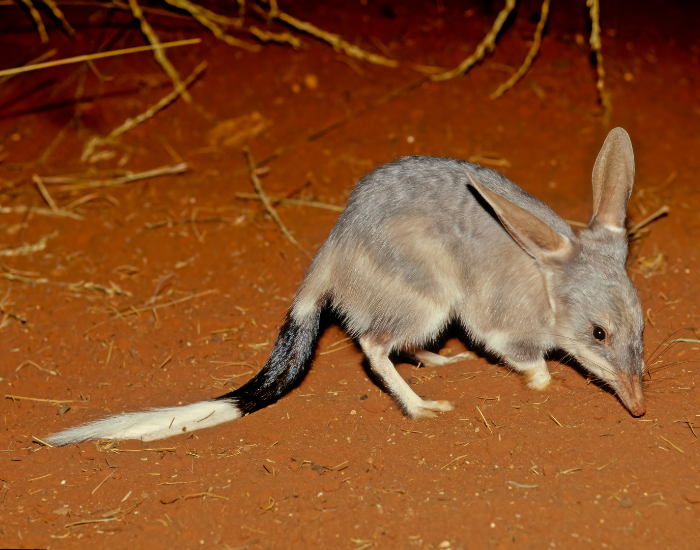
What Do Bilbies Eat?
Bilbies are nocturnal omnivores, and their diet includes:
- Insects (termites, beetles, ants)
- Small animals
- Seeds and bulbs
- Fruits and fungi
- Roots and tubers
One fascinating bilby fact is that they don’t need to drink water. They survive almost entirely on the moisture from their food, an extraordinary adaptation for desert life.
By turning over soil while foraging, bilbies aerate the ground and help with seed germination, much like echidnas and bandicoots. This makes them key players in soil health across arid regions.
Threats to Bilby Populations
Bilbies are officially listed as a threatened species (Vulnerable). Their main threats include:
- Introduced predators: Feral cats and foxes kill young and adults alike.
- Habitat destruction: Land clearing for agriculture reduces their range.
- Inappropriate fire patterns: Fires alter food availability and expose bilbies to predators.
- Competition with introduced animals: Rabbits and livestock degrade bilby habitat and food sources.
The lesser bilby went extinct due to many of these same pressures, a warning sign for the greater bilby’s future.
Bilby Ecology and Behavior
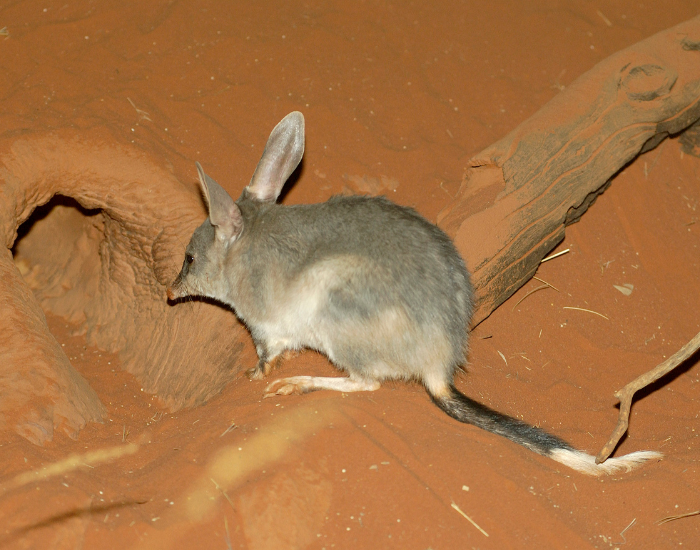
- Burrows: Greater bilbies are expert diggers, creating burrows metres deep that spiral to stay cool.
- Nocturnal: They emerge only at night, avoiding the desert heat.
- Ecosystem engineers: Their burrows and digging improve soil and provide habitat for other wildlife.
- Solitary animals: Except during breeding, bilbies live alone, marking territories with scent.
Their behavior makes them harder to study than kangaroos or possums. Many of my field encounters were little more than fresh tracks near burrow entrances, or soil freshly turned from nocturnal digging. Seeing one in the wild is a rare privilege.
Conservation Status
Today, wild bilby populations are fragmented and declining. The bilby scientific name Macrotis lagotis appears often in conservation documents as one of Australia’s highest wildlife priorities.
- Status: Vulnerable (IUCN)
- Wild populations: Estimated at fewer than 10,000 individuals
- Strongholds: Scattered areas of Western Australia, Northern Territory, and southwest Queensland
Despite their status, bilbies have become a symbol of Australian conservation, even replacing the Easter Bunny in campaigns to raise awareness and funds.
Conservation Efforts
Conservation groups, governments, and Aboriginal communities are working tirelessly to protect bilbies.
- Captive breeding programs – Zoos and sanctuaries reintroduce bilbies into predator-free enclosures.
- Bilby Fund – Raises awareness and money for habitat restoration.
- National parks – Places like Currawinya, Sturt, and Astrebla Downs offer critical safe zones.
- Predator control – Efforts to reduce feral cat and fox numbers in bilby habitat.
- Community programs – Aboriginal rangers play a key role in bilby monitoring and protection.
These projects show success: in predator-free enclosures, bilby populations grow steadily, offering hope for the species in the wild.
Community Involvement
Protecting bilbies isn’t just the work of scientists. Here’s how everyday people can help:
- Support conservation groups like the Bilby Fund.
- Choose chocolate bilbies instead of Easter bunnies, proceeds fund conservation.
- Volunteer with wildlife groups in bilby country.
- Advocate for stronger environmental policies and land management.
When I speak to school groups, I remind them that bilbies are not just cute, they are engineers of Australia’s deserts. Without them, ecosystems would collapse in ways we’re only beginning to understand.
Challenges and Future Outlook
The biggest challenge is balancing conservation with land use. Mining, agriculture, and climate change continue to reshape the landscapes bilbies depend on. Yet there is hope: rewilding projects in fenced reserves, Indigenous land management, and national attention to bilbies as a conservation icon.
The fate of the greater bilby depends on long-term commitment, from governments, scientists, and communities alike.
Latest Research on Bilbies
Genome Breakthrough Helps Conservation
Scientists recently sequenced the entire genome of the greater bilby (Macrotis lagotis) and reconstructed the genome of the extinct lesser bilby from a century-old specimen. This breakthrough is helping conservationists manage wild and sanctuary populations more effectively, track genetic diversity, improve translocation efforts, and understand how bilbies survive without drinking water.
Indigenous Tracking + Range Decline Studies
Recent studies have spotlighted the importance of combining Indigenous tracking techniques with western scientific surveys to better monitor bilby populations in remote areas. Other research highlights how the geographic range of bilbies has contracted, meaning their habitat is shrinking not just in size but also in ecological quality.
Curious about conservation stories across and animals Australia? Dive deeper into any of the following blogs:
FAQ About Bilbies
They live in scattered populations across Western Australia, Northern Territory, and southwest Queensland.
The lesser bilby was declared extinct due to predation, habitat destruction, and human impact.
Bilbies belong to the bandicoot family but have long ears, a pointed snout, and deep burrowing habits.
Feral cats, foxes, habitat destruction, and competition with introduced animals.
They can reach 2–3 meters deep, with multiple entrances.
No, they get almost all their moisture from food.
Bilbies Are Amazing
Bilbies are more than just a quirky Australian marsupial, they are soil engineers, cultural icons, and survivors of one of the harshest environments on Earth. Yet their story is also a reminder of the fragility of ecosystems and the damage caused by introduced predators and habitat destruction.
Protecting bilbies means protecting Australian deserts, Aboriginal cultural heritage, and biodiversity itself. Next time you see a chocolate bilby on the shelves, remember the real one digging quietly in the desert night, and the people working tirelessly to keep it there.