Meet the Gopher Snakes!
A few years ago, while on a field trip in Baja California, we stumbled across a large, blotched snake basking near the trail. At first glance, many of us were convinced it was a rattlesnake, the triangular head, the defensive posture, the hiss. But our guide quickly explained that it was in fact the Baja California gopher snake (Pituophis catenifer bimaris), one of the many subspecies of gopher snakes found across North America.
And if you’ve ever hiked a dusty trail in Arizona or explored the rolling grasslands of California, chances are you probably crossed paths with a gopher snake too. These reptiles, scientifically known as Pituophis catenifer, are among the most widespread non-venomous snakes in North America. With their bold blotches, hissing defensive displays, and impressive size, they often stir both curiosity and fear.
But despite being frequently mistaken for rattlesnakes, gopher snakes are harmless constrictors that play a crucial role in ecosystems. They prey on small mammals, rodents, birds, lizards, and even amphibians, helping to keep prey populations in check.
Let’s dive into 12 fascinating facts about gopher snakes, exploring their physical characteristics, subspecies, habitats, and the important role they play in nature.
1. Gopher Snakes Belong to the Pituophis Genus
The gopher snake is part of the colubrid family, one of the largest snake families worldwide. Its scientific name, (Pituophis catenifer) comes from Greek roots: pitys (pine) and ophis (snake), reflecting its association with open forests and pine-covered regions.
Several recognized subspecies fall under the gopher snake umbrella, including:
- Pacific Gopher Snake (Pituophis catenifer catenifer) – common along the California coast.
- Sonoran Gopher Snake (Pituophis catenifer affinis) – widespread in Arizona and northern Mexico.
- Great Basin Gopher Snake (Pituophis catenifer deserticola) – found across deserts and shrublands of Nevada, Utah, and surrounding states.
Each subspecies varies slightly in markings, body color, and habitat preference, but they all share similar behavior and ecological importance.

2. They Are Among the Largest North American Snakes
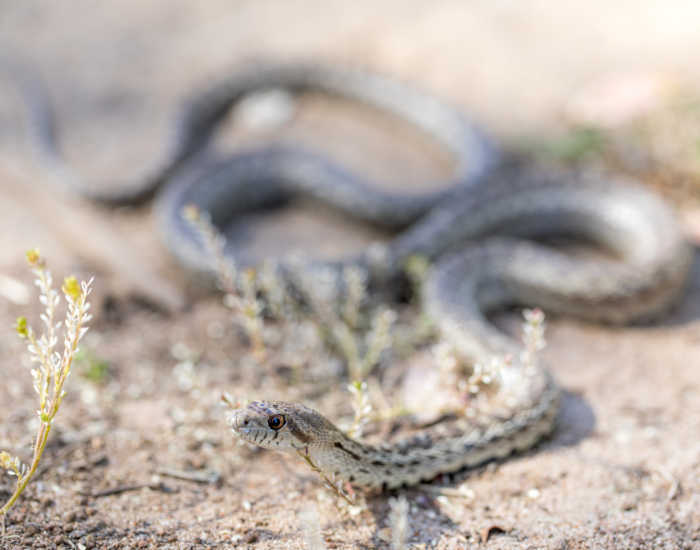
Gopher snakes are large snakes, capable of reaching over 7 feet (2.3 m) in total length, though most average between 4–6 feet. Their impressive size often contributes to people mistaking them for venomous rattlesnakes, especially when they coil into a striking position.
Unlike rattlesnakes, however, gopher snakes have:
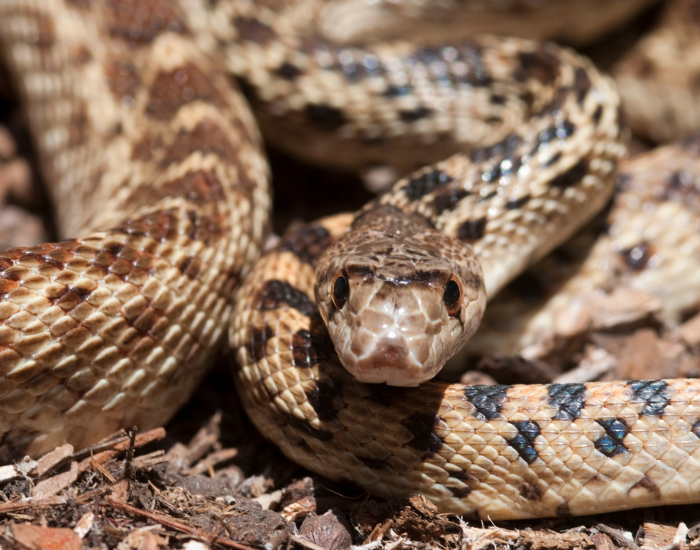
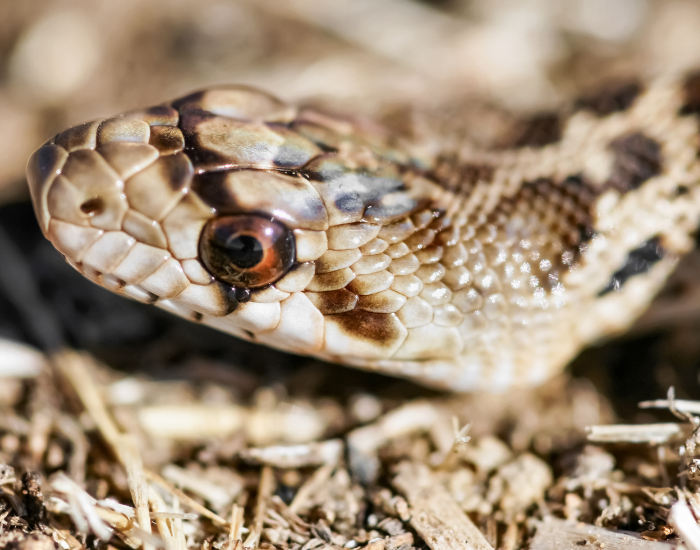
- Round pupils (not vertical slits).
- A narrow head slightly wider than the neck (not a distinctly triangular shape).
- A long, tapered tail with no rattle.
3. Pacific Gopher Snake: A Coastal Specialist
The Pacific Gopher Snake is one of the most commonly encountered snakes in California. It thrives in grasslands, chaparral, and coastal dunes, often basking along hiking trails in areas like San Luis Obispo County, Monterey County, and Santa Clara County.
These snakes feature dark brown blotches against a tan or cream background. Their body markings form a clean pattern that helps with camouflage, blending into dry leaves and sandy soils.

4. Sonoran Gopher Snakes Dominate Arizona
Yes, Arizona has gopher snakes, and lots of them. The Sonoran Gopher Snake is one of the most widespread reptiles in the state, ranging from desert flats to oak woodlands.
Gopher snakes in Arizona (often called “gopher snake AZ” in field guides):
- Display dark bands near the tail and blotches along the back.
- Adapt to desert habitats, rocky foothills, and even urban areas.
- Play an important role in controlling rodents and small mammals in both natural and agricultural settings.
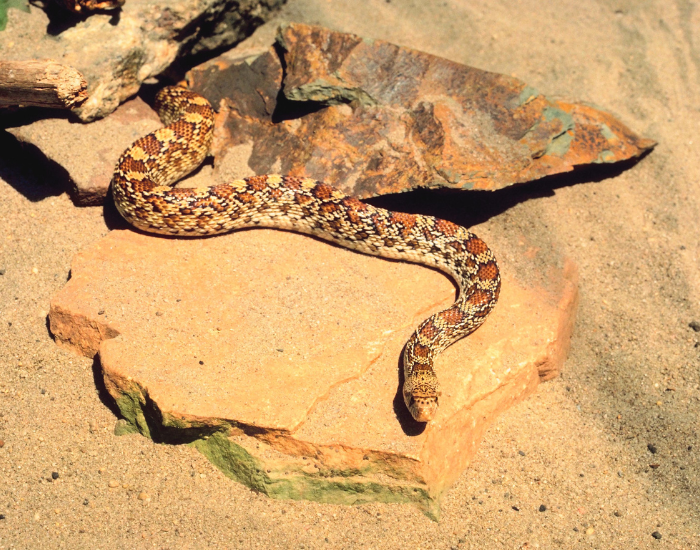
5. They Are Often Mistaken for Rattlesnakes
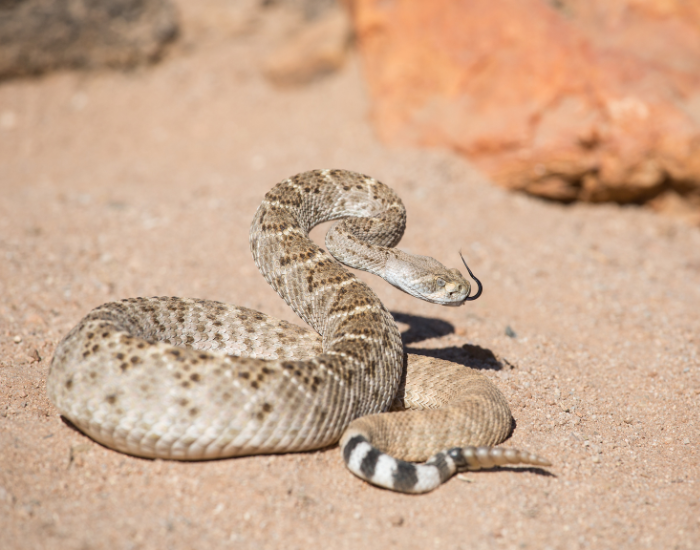
One of the most common questions hikers ask: How do you tell the difference between a gopher snake and a rattlesnake?
Similarities:
- Both have blotched markings with dark spots on a light background.
- Both hiss and may flatten their heads into a triangular shape.
- Both vibrate their tails when threatened.
Differences:
- Gopher snakes have round pupils, rattlesnakes have vertical slits.
- Gopher snakes lack a rattle, just a tapered tail.
- Rattlesnakes are venomous, while gopher snakes are not.
This mimicry is an example of defensive adaptation: by resembling rattlesnakes, gopher snakes discourage predators.
6. Loud Hissers With Defensive Behaviors
When cornered, gopher snakes put on an impressive show. They may:
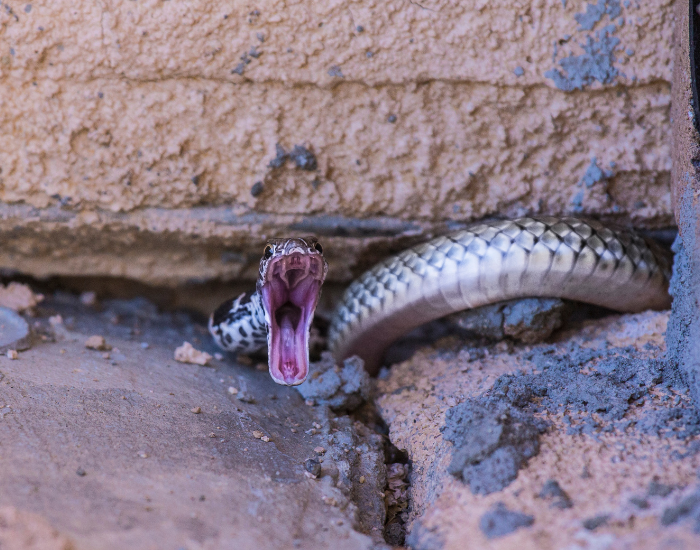
- Hiss loudly (sometimes mistaken for a rattle).
- Coil into a striking position.
- Flatten their heads to appear more dangerous.
- Vibrate their tails in dry leaves, producing a rattling sound.
These defensive behaviors are purely bluff. Unlike rattlesnakes, gopher snakes rarely bite unless severely provoked.

7. Color Variations and Patterns
Across their range, gopher snakes display remarkable variety:
- Background colors: tan, cream, brown, or yellow.
- Blotches: dark brown, reddish-brown, or black.
- Sides: smaller blotches often irregular in shape.
- Tails: dark bands against a lighter plain background.
This patterning makes them one of the most strikingly marked reptiles in North America. It also serves as camouflage, breaking up their outline against rocks, chaparral, and desert soils.
8. Daytime Hunters, Nighttime Explorers
Gopher snakes are generally active during the day, especially in late afternoon, but in hot desert regions like Arizona, they may switch to being more active at night.
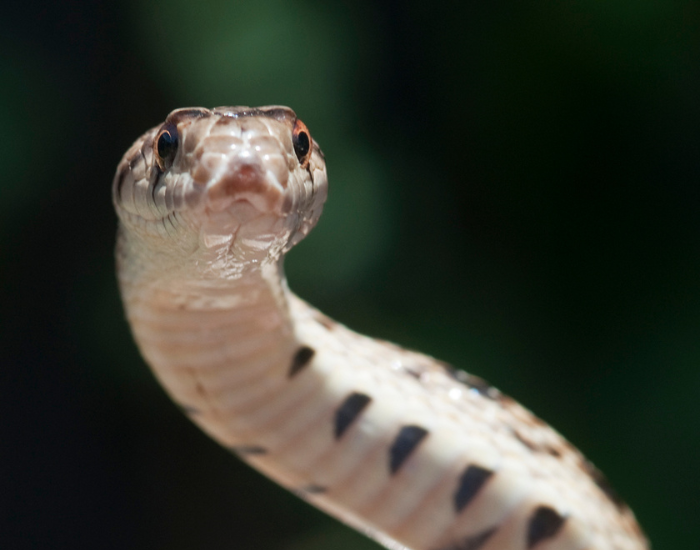
Juveniles are often seen basking on roads or open hiking trails, while adults may be spotted crossing fields or foraging near barns in search of rodents.
9. Farmers’ Best Friends – Rodent Control Experts
Why are gopher snakes good to have around? Because they are natural pest controllers. Their diet includes:
- Rodents (gophers, rats, mice, squirrels)
- Small mammals like rabbits
- Birds and their eggs
- Lizards and amphibians
- Occasionally insects
By feeding on these prey species, gopher snakes help keep ecosystems balanced. Farmers benefit from their appetite for gophers and ground squirrels, which can cause extensive damage to crops.

10. Summer Breeders, Fall Hatchlings
Mating typically occurs in early summer. Females lay eggs (usually 2–24) in sandy soils, rotting logs, or abandoned mammal burrows.
- Eggs hatch after 2–3 months.
- Juvenile gopher snakes measure around 12–18 inches at birth.
- Hatchlings already display the bold blotches of adults.
Like other colubrids, gopher snakes reproduce without parental care, young snakes are independent from the moment they hatch.
11. Distribution: From Oregon to Baja California
The range of gopher snakes is extensive:
- Oregon and northern California – Great Basin and Pacific subspecies.
- Arizona – home to the Sonoran subspecies.
- Baja California and northern Mexico – extensions of Sonoran populations.
- Santa Cruz County, Santa Clara County, and Monterey County – frequent Pacific gopher snake hotspots.
They occupy habitats from deserts and chaparral to forests, grasslands, and agricultural areas. This adaptability explains why they are among the most commonly encountered snakes in western North America.

JorikThePooh, CC BY 4.0, via Wikimedia Commons
12. Gopher Snakes Are Harmless But Important
Despite the mimicry and aggressive defensive displays, gopher snakes are non-venomous. They subdue prey by constriction rather than venom.
So, how poisonous is a gopher snake? The answer: not at all. They pose no venom risk to humans or pets. In fact, by reducing populations of rodents and small mammals, they provide ecological services worth appreciating.
FAQ: Gopher Snakes
Not poisonous at all – they are non-venomous constrictors.
Yes, they help control rodents and other pests.
Often during the day and late afternoon; in deserts, they may be active at night.
Yes, but only if you’re experienced. While non-venomous, they may bite in defense.
They feed on rodents, rabbits, lizards, and birds.
Tan with dark blotches, a narrow head, and a long tapered tail.
No – they are harmless constrictors.

Remember, It Is Not a Rattle Snake
From Pacific coastal dunes to Sonoran deserts, gopher snakes are an essential part of North America’s ecosystems. With their bold blotches, defensive displays, and impressive size, they definitely command attention on trails and in fields.
But beyond their looks, they’re unsung heroes, keeping rodent populations in check, preventing extensive agricultural damage, and reminding us how mimicry and adaptation shape the natural world.
So next time you spot one stretched across a trail or sliding through chaparral, remember: this isn’t a rattlesnake, it’s a gopher snake, a harmless reptile doing its part for the planet.
References:
Allf, B. C., Durst, P. A. P., & Pfennig, D. W. (2016). Behavioral plasticity and the origins of novelty: The evolution of the rattlesnake rattle. The American Naturalist, 188(4), 475–483. https://doi.org/10.1086/688017
Allf, B. C., Sparkman, A. M., & Pfennig, D. W. (2021). Microevolutionary change in mimicry? Potential erosion of rattling behaviour among nonvenomous snakes on islands lacking rattlesnakes. Ethology Ecology & Evolution, 33(2), 153–164. https://doi.org/10.1080/03949370.2020.1837962
Bishop, C. A., Williams, K. E., Kirk, D. A., Nantel, P., Reed, E., & Elliott, J. E. (2016). A population model of the impact of a rodenticide containing strychnine on Great Basin Gophersnakes (Pituophis catenifer deserticola). Ecotoxicology, 25(7), 1390–1405. https://doi.org/10.1007/s10646-016-1690-2
Kissner, K. J., & Nicholson, J. (2003). Bullsnakes (Pituophis catenifer sayi) in Alberta: Literature review and data compilation (Alberta Species at Risk Report No. 62). Alberta Sustainable Resource Development, Fish and Wildlife Division. https://open.alberta.ca/publications/0778523411
Rodríguez-Robles, J. A. (2002). Feeding ecology of North American gopher snakes (Pituophis catenifer, Colubridae). Biological Journal of the Linnean Society, 77(2), 165–183. https://doi.org/10.1046/j.1095-8312.2002.00098.x
Rodríguez-Robles, J. A., & De Jesús-Escobar, J. M. (2000). Molecular systematics of New World gopher, bull, and pinesnakes (Pituophis: Colubridae), a transcontinental species complex. Molecular Phylogenetics and Evolution, 14(1), 35–50. https://doi.org/10.1006/mpev.1999.0698