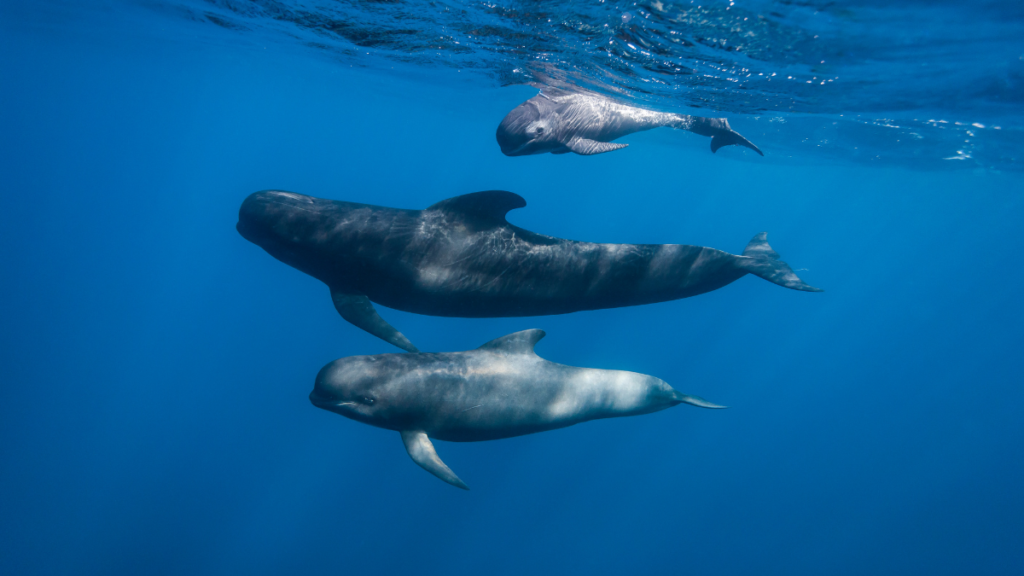
When you think of intelligent marine mammals, porpoises, dolphins and whales probably come to mind. But there’s one incredible species that bridges both worlds in the most fascinating way: pilot whales. These ocean creatures are actually the second-largest members of the dolphin family, and they’re packed with surprises that’ll change how you see ocean life forever.
Whether you’re curious about how big pilot whales really are, why orcas seem to avoid them, or what makes these marine giants so incredibly social, you’re in for a treat. Let’s dive into 12 amazing facts about pilot whales that showcase why these intelligent creatures deserve our attention and protection.
1. Pilot Whales Are Actually Giant Dolphins, Not True Whales
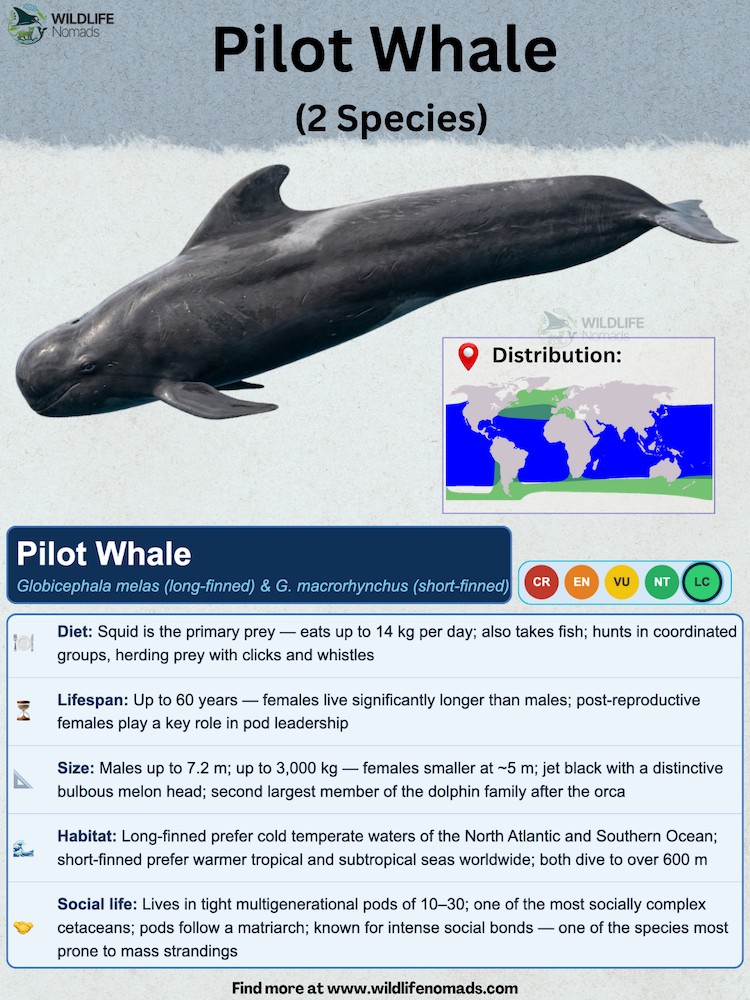
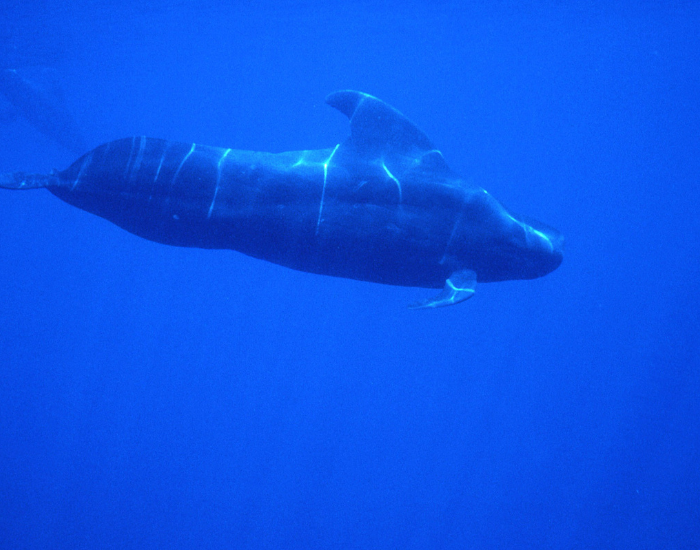
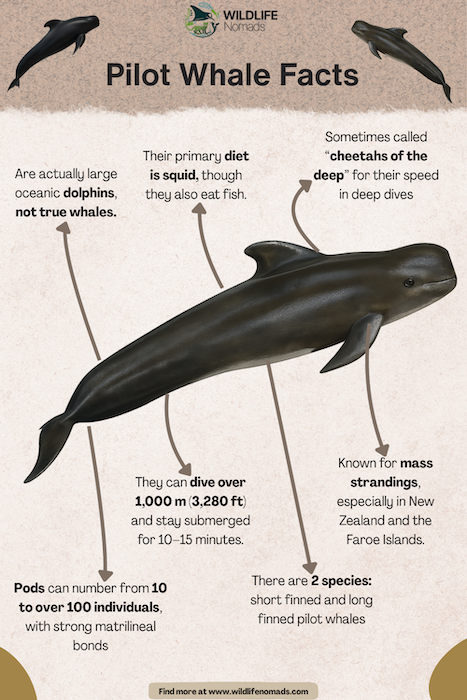
Here’s a mind-bender: despite their name, pilot whales aren’t technically whales at all. They’re actually the largest members of the dolphin family (Delphinidae), making them oceanic dolphins. This classification puts them in the same family as bottlenose dolphins, but with a much more imposing presence.
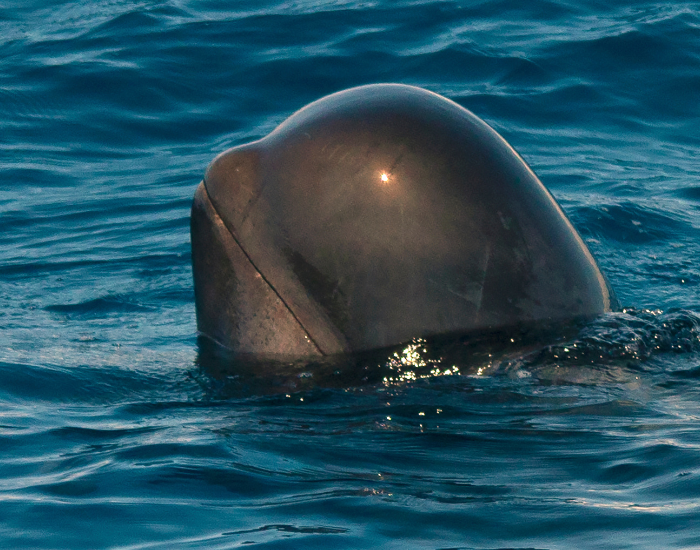
There are two distinct species of pilot whales: the long-finned pilot whale (Globicephala melas) and the short-finned pilot whale (Globicephala macrorhynchus). Some scientists believe that certain populations of long-finned pilot whales may represent separate species due to genetic and geographic differences. Both species share the characteristic bulbous head that gives them their Latin name Globicephala, meaning “round head.” Distinct geographic forms of pilot whales exist, particularly in regions like Japan, and these forms may have unique adaptations to their environments. The classification of pilot whales is complex, and there is ongoing scientific debate about whether some populations should be considered separate species.
The reason they’re called “pilot whales” is actually pretty interesting. Early whalers believed that each pod had a designated leader or “pilot” that guided the group – though we now know their social structure is much more complex than that simple explanation.

2. They’re Massive – But How Big Are Pilot Whales Exactly?
When it comes to size, pilot whales are genuinely impressive. Long-finned pilot whales are typically the larger of the two species, with adult males reaching lengths of up to 6.5 meters (21 feet) and weighing as much as 2,300 kilograms (5,070 pounds). Females are considerably smaller, usually maxing out around 4.9 meters (16 feet) and 1,361 kilograms (3,000 pounds). In terms of body length, both long-finned and short-finned pilot whales are much larger than most other dolphins, making them stand out among oceanic dolphin species.
Short-finned pilot whales are slightly smaller overall, with males reaching about 6.1 meters (20 feet) and weighing up to 2,722 kilograms (6,000 pounds). The sexual dimorphism is quite pronounced – a male pilot whale develops a much more prominent bulbous head and a more curved, prominent dorsal fin as he matures, making him easy to distinguish from females and juveniles.
Both species have distinctive pectoral flippers, with long-finned pilot whales possessing longer, sickle shaped flippers compared to the shorter, more rounded flippers of short-finned pilot whales. An anchor shaped patch on the underbelly is a key visual identifier that helps differentiate between the two species. Short-finned pilot whales also have a lighter grey saddle patch located just behind the dorsal fin, and adult short-finned pilot whales are typically dark grey with lighter markings on their bodies.
To put this in perspective, pilot whales are among the largest oceanic dolphins, exceeded in size only by orcas. Their substantial size allows them to dive to impressive depths of up to 600 meters (1,968 feet), though most of their foraging dives are typically between 30-60 meters deep. Pilot whales have fewer teeth than other dolphins, an adaptation that suits their squid-based diet.
3. The Great Pilot Whale vs Orca Debate: Who’s Actually Bigger?
This is one of the most common questions people ask: are pilot whales bigger than orcas? The short answer is no – orcas (killer whales) are generally larger. Male orcas can reach lengths of 8-10 meters (26-32 feet) and weigh up to 6,000 kilograms (13,200 pounds), making them significantly larger than even the biggest pilot whales.
However, the size difference isn’t as dramatic as you might think, especially when comparing female orcas to male pilot whales. Female orcas typically reach about 7 meters (23 feet) in length, which puts them in a similar size range to large male pilot whales.
What’s fascinating is that despite being smaller, pilot whales have developed unique strategies for dealing with orcas that we’ll explore in the next fact.

4. Orcas Actually Avoid Pilot Whales – Here’s Why
This might be the most surprising fact about pilot whales: orcas, the ocean’s apex predators, often avoid pilot whales. Research has documented numerous instances where killer whales actively move away when pilot whales approach, sometimes at high speed.
The reason for this behavior is quite remarkable. Pilot whales are one of the few cetacean species that actively defend themselves against orcas through mobbing behavior. When threatened, pilot whale pods collectively harass and chase orcas away, making them the only cetaceans that defend themselves from the apex predator in this way.
This defensive strategy is particularly effective because pilot whales travel in much larger groups than orcas. While orca pods typically consist of 5-15 individuals, pilot whale pods can contain hundreds of animals. When faced with a coordinated defense from dozens or even hundreds of pilot whales, orcas often choose to retreat rather than engage.
Recent research has also suggested that pilot whales may use vocal mimicry, copying orca calls to confuse or deter them – a sophisticated defense mechanism that highlights their intelligence.

5. They’re Incredibly Social Creatures With Complex Family Structures
Pilot whales are among the most social marine mammals on Earth. They live in tight-knit pods of 10-20 individuals, but these pods often join together to form massive aggregations called “superpods” that can contain 200-300 animals or more. Some pilot whales live in resident populations, which maintain stable group structures over time.
Related females lead their matrilineal social structure. Female pilot whales stay with their birth pod for life, while males may leave to mate with females from other pods. Individuals typically remain with the same pod for life, forming strong kin bonds. This creates a complex web of family relationships that spans generations.
Pilot whales exhibit what researchers call “cultural behaviors” – learned behaviors they pass down through generations within specific pods. These can include unique foraging techniques, vocal dialects, and even migration patterns.
Pilot whales become sexually mature at around 7-12 years for females and 12-17 years for males. Younger females are more likely to have calves, while older females may help care for the young, highlighting age-related differences in reproductive activity and social roles.
The strength of their social bonds is so strong that it unfortunately contributes to their tendency for mass strandings. When one individual becomes stranded, the entire pod often follows, demonstrating the powerful social cohesion that defines these remarkable animals.

6. They’re Deep-Diving Specialists With Incredible Hunting Skills
Pilot whales are exceptional deep-sea hunters. While they’re capable of diving to depths of 600 meters (1,968 feet), most of their hunting takes place between 30-60 meters deep. What’s interesting is their diving patterns: they tend to make shallow dives during the day and deeper dives at night, following the vertical migration of their prey.
Their primary food source is squid, though they’ll also hunt large fish like cod and turbot. When making deep dives, pilot whales often perform high-speed sprints to catch fast-moving prey. Short-finned pilot whales capture large squid during deep dives, showcasing their impressive foraging abilities. They use echolocation to locate squid and fish in the dark depths, making them incredibly efficient predators.
The hunting process is often cooperative. Pod members will work together to herd prey, demonstrating the kind of coordinated behavior that requires sophisticated communication and planning. This teamwork is particularly important when hunting large squid, which can be challenging prey even for these skilled predators.

7. Short-Finned vs Long-Finned: More Than Just Fin Length
Both species are called pilot whales, but short-finned and long-finned pilot whales differ in more than just fin length. The short-finned pilot whale has a more global distribution, inhabiting tropical and temperate oceans worldwide, including the eastern tropical Pacific Ocean.
Long-finned pilot whales prefer temperate waters and live primarily in the North Atlantic Ocean and the Southern Hemisphere. There are two populations of long-finned pilot whales: one in the North Atlantic and one in the Southern Ocean. They’re particularly common around Iceland, the Faroe Islands, and parts of the Southern Ocean.
The two species also differ in their physical characteristics. Long-finned pilot whales are generally larger and have longer pectoral fins (hence the name), while short-finned pilot whales have proportionally shorter fins and a slightly different head shape. In the wild, it’s actually quite difficult to distinguish between the two species unless you can get a close look at their fins or know their geographic location. The maximum lifespan of short-finned pilot whales can reach up to 45 years for males and over 60 years for females, while long-finned pilot whales may live up to 35–50 years, with females typically outliving males.
Behaviorally, both species share similar social structures and hunting patterns, but they may have different migration routes and seasonal movements based on their preferred water temperatures. Calving peaks and certain behaviors can also differ between pilot whales in the northern hemisphere and those in the southern hemisphere.

8. Pilot Whales Are Surprisingly Friendly Toward Humans
Unlike many large marine mammals, pilot whales are generally friendly toward humans. They often approach boats with curiosity rather than fear, making them popular attractions on whale watching tours around the world. Pilot whales are often calm and tolerate boats that approach at slow speeds, allowing for safe and close observation. Their naturally inquisitive nature and lack of aggressive behavior toward humans has made them relatively easy to study and observe.
This friendliness, however, has historically been both a blessing and a curse. While it makes them wonderful to encounter in the wild, it has also made them more vulnerable to human activities. Their trusting nature means they’re more likely to approach boats, which can lead to ship strikes, and they’re also more susceptible to entanglement in fishing gear.
Pilot whales in captivity have demonstrated remarkable intelligence and trainability, though the ethics of keeping such intelligent, social creatures in captivity remains highly controversial. Their cognitive abilities and emotional complexity make them unsuitable for captive environments, according to most marine mammal experts.

9. They Have Unique Predator-Prey Relationships
While pilot whales are formidable predators themselves, they do face some threats from other marine animals. Pilot whale predators primarily include large sharks, particularly great whites and tiger sharks, though attacks on healthy adult pilot whales are relatively rare due to their size and group living.
Orcas are technically capable of preying on pilot whales – evidence from orca stomach contents shows they do occasionally eat pilot whales. However, as we discussed earlier, pilot whales’ unique defense strategies make them a challenging and often avoided prey species.
Young pilot whales and injured individuals are more vulnerable to predation, which is why the pod’s protective behavior is so crucial. The group will often form protective formations around vulnerable members, with larger adults positioning themselves between potential threats and calves or injured individuals.
Sperm whales, another deep-diving cetacean, also feed primarily on squid and are known to sometimes form mixed groups with pilot whales. Beaked whales, like pilot whales, are deep-diving cetaceans that can be vulnerable to similar threats, such as loud anthropogenic sounds including navy sonar and seismic exploration.
Interestingly, pilot whales themselves are apex predators in their preferred habitat, playing a crucial role in controlling squid and fish populations in deep-water ecosystems.

10. Where in the World? The Surprising Habitat and Global Distribution of Pilot Whales
Pilot whales are true globetrotters of the sea, with a distribution that spans much of the world’s oceans. These marine mammals are found in both temperate and tropical waters, making their home in a variety of marine environments. The two species, long-finned pilot whales and short-finned pilot whales, each have their own preferred habitats, which helps explain their wide-ranging presence.
Long-finned pilot whales are most commonly found in the colder waters of the North Atlantic Ocean, as well as in the Southern Hemisphere’s temperate seas. You’ll often spot them near places like the Faroe Islands, Iceland, and the coasts of northern Europe, where the chilly currents suit their needs. In contrast, short-finned pilot whales are more at home in warmer, tropical waters, including the eastern tropical Pacific Ocean, the Indian Ocean, and the temperate zones of the Pacific Ocean. They’re frequently seen off the coasts of Hawaii, California, and even as far as the western North Atlantic.
Pilot whales typically prefer deeper waters, especially areas near the continental slope where the sea floor drops off into the deep sea. These habitats provide access to their favorite prey—large squid and deep-sea fish. Studies have identified several distinct populations of pilot whales, each adapted to their local environment, whether it’s the chilly North Atlantic or the balmy tropical waters of the Pacific.
11. Unsung Heroes: The Vital Role of Pilot Whales in Ocean Ecosystems
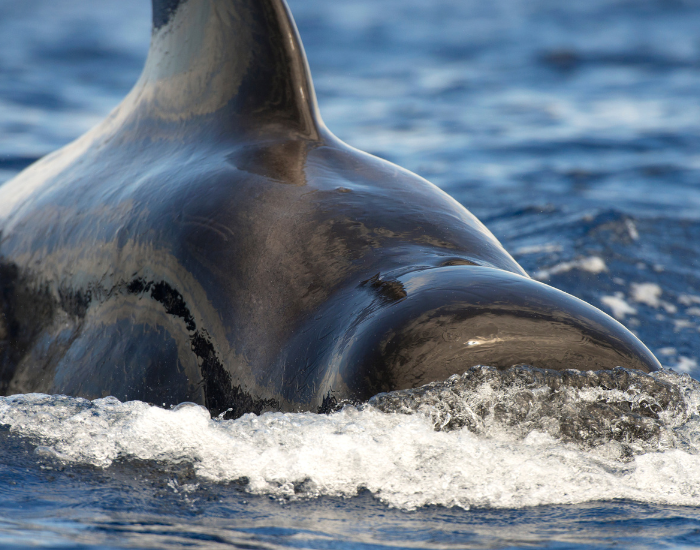
Pilot whales are more than just charismatic marine mammals, they’re essential players in the health and balance of ocean ecosystems. As apex predators, pilot whales help regulate populations of squid and other prey species, maintaining the delicate structure of the marine food chain. By keeping these populations in check, they indirectly support the well-being of countless other marine creatures, from small fish to other marine mammals.
But their importance doesn’t stop there. Pilot whales are also considered key indicators of ocean health. Changes in their numbers, behavior, or distribution can signal broader shifts in the marine environment, such as the impacts of climate change, overfishing, or pollution. For example, mass strandings of pilot whales have been linked to ocean noise and noise pollution, which can disrupt their sophisticated communication and navigation systems. These tragic events serve as a stark reminder of how human activities, like shipping, military sonar, and offshore development, can have far-reaching effects on whales and other marine mammals.
Studying pilot whales gives scientists valuable insights into the impacts of whaling, fishing, and environmental changes on the ocean as a whole. Their complex social behaviors, such as cooperative hunting and playful interactions, also offer important lessons for conservation and management. By understanding how pilot whales interact with their environment and each other, researchers can develop better strategies to protect not only these remarkable animals but the entire marine ecosystem.
10. Conservation Status: Neither Species Is Currently Endangered
Good news for pilot whale conservation! Neither short-finned pilot whales nor long-finned pilot whales are currently classified as endangered. Both species are listed as “Least Concern” by the International Union for Conservation of Nature (IUCN), though this doesn’t mean they’re without threats.
Short-finned pilot whales have a global population estimated in the hundreds of thousands, with healthy populations throughout their range. In the United States, short-finned pilot whales are found along both the east coast and west coast, with notable populations off the U.S. eastern coastline and historical sightings along the California coast. These whales can be found at varying distances from shore, often favoring deeper waters where their preferred prey, such as squid, are abundant. Their wide distribution and adaptability to different oceanic environments have helped maintain stable numbers.
Long-finned pilot whales also maintain healthy populations, particularly in the North Atlantic. Cape Cod is historically significant as a site of pilot whale hunting and more recent marine conservation efforts. However, some regional populations face more pressure than others. For example, the Mediterranean population is smaller and more isolated, making it potentially more vulnerable to local threats.
11. They Face Modern Threats From Human Activities
While pilot whales aren’t endangered, they face several significant threats from human activities. Fishing gear entanglement is one of the most serious issues, with pilot whales accidentally caught in gillnets, longlines, and trawls. These entanglements can cause severe injury, including physical harm and long-term health impacts such as fatigue from dragging gear, and may even result in death. Pilot whales’ social nature means multiple animals may become entangled when trying to help a trapped pod member.
Noise pollution from shipping, military sonar, and offshore development can disrupt pilot whale communication and behavior. Since these animals rely heavily on echolocation for hunting and social interactions, excessive noise can significantly impact their ability to function normally.
Climate change is beginning to affect pilot whale habitats and prey availability. As ocean temperatures rise and currents shift, the distribution of squid and fish populations may change, forcing pilot whales to alter their traditional migration patterns and feeding areas.
Ship strikes are another concern, particularly because pilot whales’ curious nature brings them into close contact with vessels. Their tendency to approach boats, while making them wonderful to observe, also increases the risk of collisions with both commercial and recreational vessels.

12. Pilot Whales Experience Menopause – A Rare Trait in the Animal Kingdom
Here’s a fascinating biological fact: short-finned pilot whales are one of only a few species known to experience menopause. Female pilot whales typically stop reproducing around age 40 but can live well into their 60s. This extended post-reproductive lifespan is extremely rare in the animal kingdom and suggests something important about pilot whale social structure.
The leading theory is that older, post-reproductive females play crucial roles in their pods’ survival. These “grandmother” pilot whales possess decades of knowledge about feeding areas, migration routes, and environmental conditions. Their accumulated wisdom helps guide the pod through challenging situations and increases the survival rates of younger generation.
This grandmother hypothesis is supported by observations showing that pods with older, post-reproductive females have higher survival rates and more successful foraging outcomes. It’s a beautiful example of how evolution can favor traits that benefit the group rather than just the individual.
The Ocean’s Gentle Giants
Pilot whales are truly remarkable creatures that challenge our understanding of marine intelligence and social behavior. From their impressive size and deep-diving abilities to their unique relationship with orcas and complex family structures, these oceanic dolphins continue to surprise and inspire researchers and ocean lovers alike.
Next time you’re out on the water or watching a nature documentary, remember these fascinating facts about pilot whales. They’re not just impressive marine mammals – they’re intelligent, social, and surprisingly complex creatures that deserve our continued protection and admiration.
Pilot Whale Biology & Science Quiz
Ten study questions covering pilot whale taxonomy, defense against orcas, deep-diving adaptations, menopause, and conservation status. Test your retention!
Multiple Choice
References:
Aguilar Soto, N., Johnson, M. P., Madsen, P. T., Díaz, F., Domínguez, I., Brito, A., & Tyack, P. (2008). Cheetahs of the deep sea: Deep foraging sprints in short-finned pilot whales off Tenerife (Canary Islands). Journal of Animal Ecology, 77(5), 936–947. https://doi.org/10.1111/j.1365-2656.2008.01393.x
Curé, C., Antunes, R., Samarra, F., Alves, A. C., Visser, F., Kvadsheim, P. H., & Miller, P. J. O. (2012). Pilot whales attracted to killer whale sounds: Acoustically-mediated interspecific interactions in cetaceans. PLoS ONE, 7(12), e52201. https://doi.org/10.1371/journal.pone.0052201
Ellis, S., Franks, D. W., Nattrass, S., Currie, T. E., Cant, M. A., Giles, D., Balcomb, K. C., & Croft, D. P. (2018). Analyses of ovarian activity reveal repeated evolution of post-reproductive lifespans in toothed whales. Scientific Reports, 8, 12833. https://doi.org/10.1038/s41598-018-31047-8
Selbmann, A., Samarra, F. I. P., Barluet de Beauchesne, L., Marchon, T. M. J., Hayward, E., Svavarsson, J., Miller, P. J. O., Wensveen, P. J., & Curé, C. (2026). Aversive behavioural responses of killer whales to sounds of long-finned pilot whales. Scientific Reports, 16, 4716. https://doi.org/10.1038/s41598-026-35574-7
Van Cise, A. M., Martien, K. K., Mahaffy, S. D., Baird, R. W., Webster, D. L., Fowler, J. H., Oleson, E. M., & Morin, P. A. (2017). Familial social structure and socially driven genetic differentiation in Hawaiian short-finned pilot whales. Molecular Ecology, 26(23), 6730–6741. https://doi.org/10.1111/mec.14397
Van Cise, A. M., et al.,(2019). Oceanographic barriers, divergence, and admixture: Phylogeography and taxonomy of two putative subspecies of short-finned pilot whale. Molecular Ecology, 28, 2886–2902. https://doi.org/10.1111/mec.15107