I remember the exact moment my definition of “animal” shattered. I was an undergrad, hunched over a microscope in a dimly lit lab, staring at a drop of pond water that looked like stagnant tea.
Instead, I saw a gear. Or at least, that’s what it looked like. A tiny, transparent creature with two spinning “wheels” on its head was vacuuming up debris. My professor said, “That’s a rotifer.”
I’ve written before about organisms that defy our standard expectations of what an “animal” should be, like the stationary, floral-looking sea anemones or even the tragic, misunderstood history of the extinct dodo. But the rotifer is even more of a curveball. In that lab, I realized that Biology isn’t just about charismatic megafauna like foxes or whales. Rotifers exist in the blurry spaces in between. They are multicellular organisms, yet smaller than many single-celled protists. They are microscopic animals, but some haven’t had sex in 80 million years.
If you’ve ever wondered what’s happening in the “invisible” world of our freshwater environments, let’s dive into the phylum Rotifera.

What Are Rotifers? (More Than Just “Wheel Animals”)
To the uninitiated, rotifers look like flukes or strange protists. However, these are complex microscopic aquatic animals. They belong to the phylum Rotifera, a group of about 2,200 species that are found almost everywhere there is liquid water.
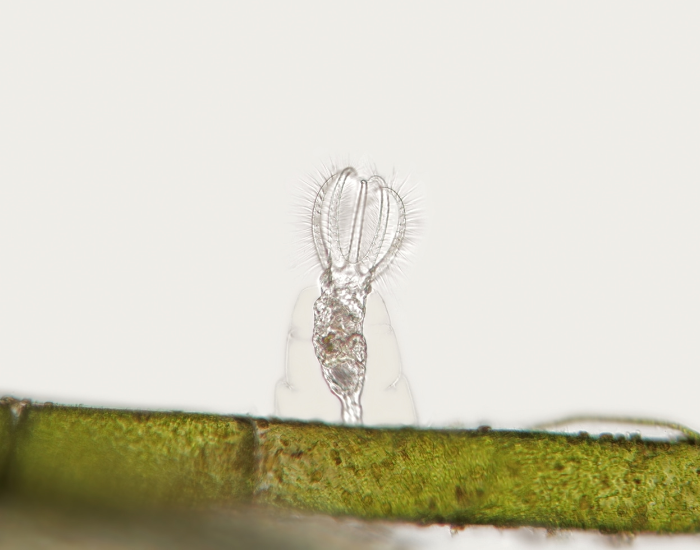
The name “rotifer” comes from the Latin rota, meaning wheel. This refers to their most iconic feature: the corona. This ciliated organ on their head spins so rapidly that it creates a vortex, pulling in food particles like a microscopic whirlpool.
When I first saw rotifers feeding under 40x magnification, I was struck by their mechanical efficiency. These microscopic living organisms aren’t just drifting. They are active hunters and filter feeders that play a massive role in aquatic food webs.
The Anatomy of Microscopic Animals
Despite being microscopic organisms, rotifers are incredibly complex inside. They aren’t just bags of fluid. A typical rotifer consists of several specialized systems.
Complete Digestive System: Rotifers have a mouth, stomach, and anus. The digestive system processes food particles efficiently. In addition, they possess a mastax, essentially a throat lined with trophi (tiny jaws) that grind up other microscopic living organisms.
Sensory Organs: These microscopic aquatic animals have a rudimentary brain and sense organs. They even have tiny eyespots that detect light, allowing them to navigate their environment.
Excretory System: Rotifers use protonephridia (flame cells) to manage digestive and excretory wastes. This is vital since most rotifers live in freshwater environments where salt balance is a constant battle.
Body Structure: Many species exhibit a telescoping body surface with a specialized “foot” that helps them attach to substrates. Free swimming species use this foot differently than sessile species.

Classification of Rotifers: Understanding Bdelloidea, Monogononta, and Seisonidea
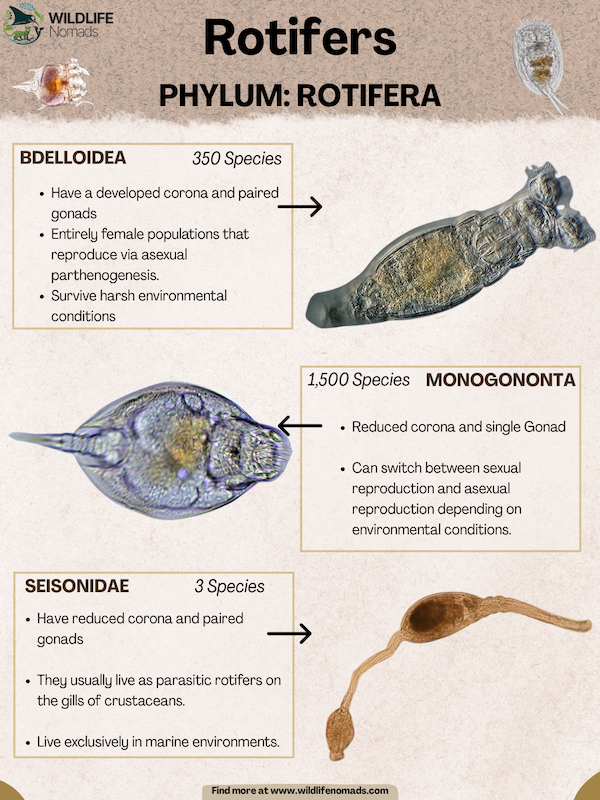
In invertebrate zoology, we categorize rotifers into three main classes. If you’re interested in the classification of rotifers, you’ll mostly encounter these:
Class Bdelloidea: Entirely female populations that reproduce via asexual parthenogenesis. These bdelloid rotifers are famously hardy and can survive harsh environmental conditions that would kill most animals.
Class Monogononta: The largest group of rotifer species. These organisms can switch between sexual reproduction and asexual reproduction depending on environmental conditions. Most species you’ll find in a backyard pond belong here.
Class Seisonidea: Primitive marine environments dwellers that usually live as parasitic rotifers on the gills of crustaceans. This is one of the few species that live exclusively in marine environments.
When we talk about the bdelloidea monogononta and seisonidea trifecta, we see the full spectrum of evolutionary adaptation across the phylum Rotifera.
Where Do Rotifers Live?
One of the fascinating aspects of studying rotifers is their ubiquity. Planktonic organisms like rotifers live in nearly every aquatic habitat on Earth.
Freshwater Environments: This is their stronghold. Lakes, rivers, and ponds are teeming with these microscopic animals. In fact, freshwater environments contain the highest diversity of rotifer species.
Moist Soil: You don’t even need a pond. Many rotifers live in the thin film of water surrounding soil particles. They thrive in damp moss and leaf litter.
Marine Environments: While less common, some rotifers live in ocean habitats. These marine environments support specialized species adapted to saltwater.
Extreme Conditions: I’ve seen resting eggs recovered from habitats that have been dry for decades. When water returns, these eggs develop into functioning adults. This adaptation allows rotifers to survive where other multicellular organisms fail.

The Reproductive Mystery: How Rotifers Reproduce
If you want to talk about biological rebels, we must discuss bdelloid rotifers. In most animals, sexual reproduction is the gold standard for survival. Therefore, it mixes genes and helps weed out harmful mutations.
However, bdelloid rotifers haven’t had sex in millions of years. They represent an evolutionary scandal.
Asexual Parthenogenesis in Bdelloid Rotifers
In this class, there are only females. They reproduce through asexual parthenogenesis, where diploid eggs (eggs with a full set of chromosomes) develop into clones of the mother. Consequently, unfertilized eggs develop without male rotifers.
But here’s the remarkable part: bdelloid rotifers are masters of horizontal gene transfer. Because they live in harsh environmental conditions, they frequently dehydrate. When they rehydrate, their cell membranes become “leaky,” and they actually absorb DNA from other species—bacteria, fungi, and plants—and incorporate it into their own genome.
This morphological variation allows them to survive where other animals cannot. In addition, this genetic flexibility helps explain how only females can persist across millions of years.
Sexual Reproduction in Other Species
Many dioecious species (having separate males and females) reproduce sexually when conditions favor genetic diversity. Male rotifers in these species are typically much smaller than females. Furthermore, they often lack a functional digestive system and live only long enough to fertilize haploid eggs.
When fertilized eggs develop, they produce both male and female offspring. However, when unfertilized eggs develop in certain species, they produce only females. This reproductive flexibility represents one of the most important components of rotifer survival strategies.
Feeding Ecology: What Do Rotifers Eat?
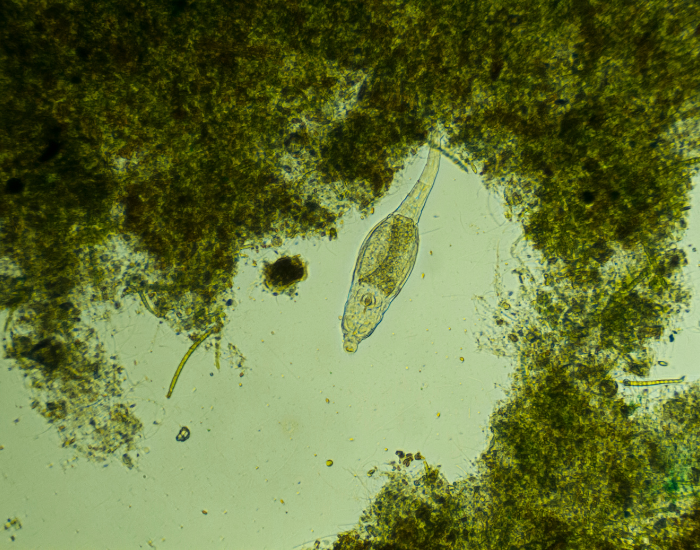
In the lab, we used to joke that rotifers are the “vacuum cleaners of the pond.” However, their diet is actually quite specific depending on the rotifer species.
Filter Feeding: Most rotifers feeding involves using their corona to create currents that bring in food particles. Filter feeders consume bacteria, algae, and other planktonic organisms. This makes them very important components of aquatic food webs.
Raptorial Feeding: Some modified rotifers have trophi (jaws) that can be projected outside their mouths. These predatory species grab other microscopic living organisms or even smaller rotifers.
Detritivory: Many species eat dead material, acting as detritivores that clean up organic debris. Therefore, they help recycle nutrients in freshwater environments.
By consuming algae and being eaten by small fish and spiny headed worms, rotifers act as the vital bridge in aquatic food webs. In addition, they transfer energy from primary producers to higher predators.
The Role of Rotifers in Aquatic Ecosystems
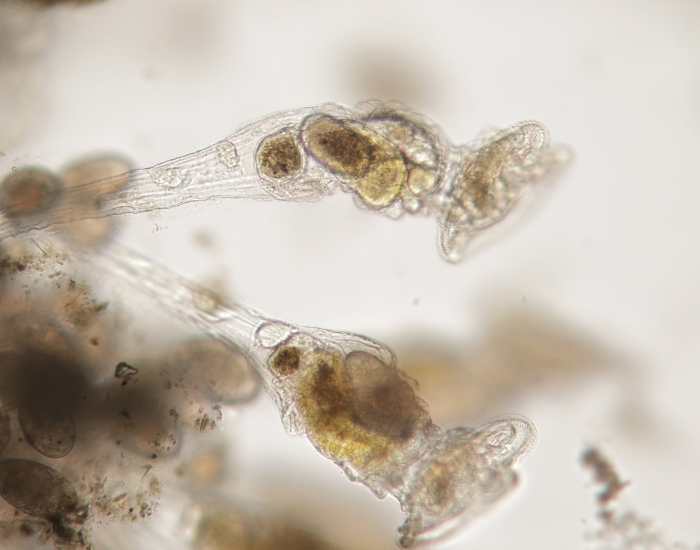
Rotifers consist of some of the most important microscopic animals in freshwater environments. As planktonic organisms, they connect primary producers with higher trophic levels.
Rotifers eat algae, bacteria, and other microscopic living organisms. In turn, they become food particles for larval fish and aquatic invertebrates. This makes them incredibly very important components of ecosystem function. Because rotifers reproduce quickly through both sexual and asexual reproduction, their populations can respond rapidly to environmental changes. Through their digestive system and excretory wastes, rotifers help cycle nutrients through aquatic food webs.
The Bdelloid Rotifer Enigma
Bdelloid rotifers represent one of biology’s greatest puzzles. These microscopic aquatic animals have survived for approximately 80 million years without sexual reproduction, challenging our understanding of evolution.
Research shows that bdelloid rotifers possess exceptional DNA repair capabilities. When they dehydrate and rehydrate, they can reassemble fragmented chromosomes and incorporate foreign DNA from other organisms. This horizontal gene transfer allows morphological variation even without sexual reproduction. In addition, they can survive complete dehydration for years, with resting eggs or dormant adults reviving when water returns (kind of like tardigrades!).
How to Observe Rotifers
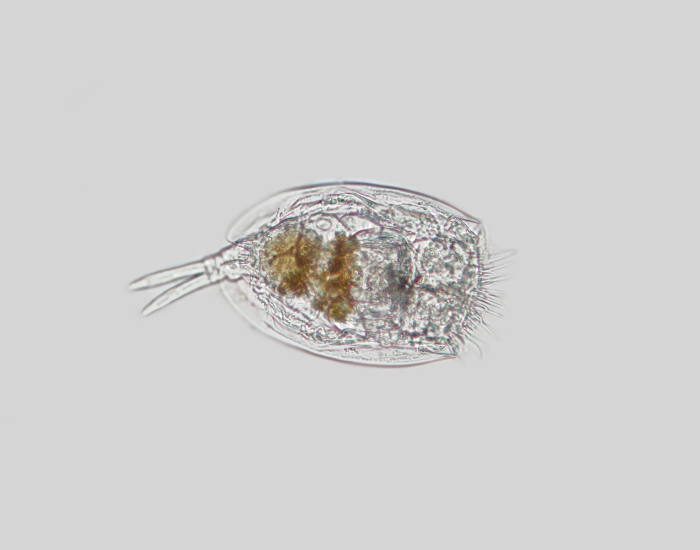
You don’t need a PhD to see these microscopic animals. Collect water from a local pond or squeeze damp moss into a jar. With a basic compound microscope, look for free swimming organisms with spinning “wheels” on their heads. The corona is the defining feature. Watch how these filter feeders create currents to capture food particles with remarkable efficiency.
Common Questions About Rotifers
No. Rotifers are not parasitic to humans. While there are parasitic rotifers that attach to aquatic invertebrates, they have no interest in humans. In fact, they play beneficial roles in water treatment and ecosystem function.
This is a common mistake. No, Rotifera consists of multicellular organisms, not protists. Protists are single-celled. However, rotifers have specialized tissues, a complete digestive system, and a nervous system with sense organs.
No. Many dioecious organisms and dioecious species reproduce sexually. Only bdelloid rotifers rely exclusively on asexual parthenogenesis. In addition, many species alternate between sexual and asexual reproduction based on environmental conditions.
In species with both males and females, they exhibit sexual dimorphism in the extreme. Male rotifers are often much smaller than females. Furthermore, males typically lack a functional digestive and salivary glands system and live briefly.
Adult rotifers typically live only a few days to weeks. However, their resting eggs can survive for decades in dry conditions. When water returns, eggs develop into new individuals.
No. These microscopic organisms measure between 0.1 to 0.5 millimeters. Therefore, you need at least 40x magnification to observe them clearly.
The Continuous String of Life
When we look at rotifers, we see the resilience of life itself. From how unfertilized eggs develop into new generations to how they navigate harsh environmental conditions, these microscopic aquatic animals represent a masterclass in survival.
These wheel animals remind us that biodiversity exists at every scale. Whether examining bdelloidea monogononta and seisonidea, studying how rotifers reproduce, or marveling at their feeding behavior, we discover that life’s innovations occur in the smallest packages. The phylum Rotifera teaches us that “animal” is a remarkably broad term. Whether many dioecious species with elaborate mating behaviors or purely female bdelloids, these creatures prove there are countless ways to solve the problem of survival.
Next time you pass a pond or notice damp moss, remember: an entire world of microscopic animals thrives there. Rotifers live in these hidden spaces, spinning their coronas, processing food particles, and continuing evolutionary experiments that have run for millions of years. These are the wheel animals that prove evolution’s creativity operates at every scale—and perhaps, they serve as a humbling reminder that we are all just tiny bits of life, fulfilling our purpose in a vast, interconnected string.