I still remember the crisp air of a late October morning in British Columbia. I was traveling through Vancouver Island, heading toward a remote island accommodation, when we decided to pull over near a quiet, marshy lake. As a biologist, my eyes are always scanning the water’s edge for different types of waterfowl. There, tucked among the lily pads, was a small group of ducks that looked like floating charcoal sketches.
Most people would have glanced and said, “Oh, look, a Mallard.” But the silhouette was different—peaked, elegant, and sharp. In these wetlands, you might expect to see a colorful Wood Duck or even the striking patterns of a Harlequin Duck near the coast, but these birds were different.
These were Ring-Necked Ducks (Aythya collaris). It was a moment of pure biological serenity, watching these “Black Jack” ducks disappear beneath the surface in total silence. If you’ve ever spotted a black duck with white ring around neck and wondered if you’d found a rare species, you’re in the right place. Let’s dive into the world of the Ring-Necked Duck and uncover the secrets of this fascinating diving duck.
1. The Name is a Total Misnomer
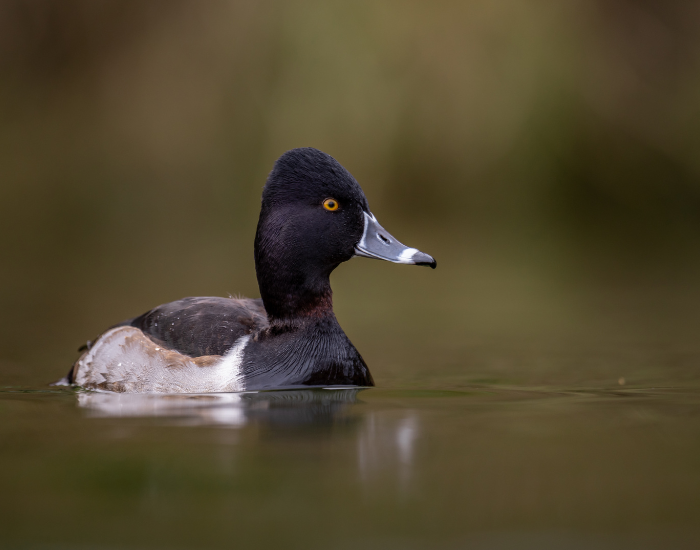
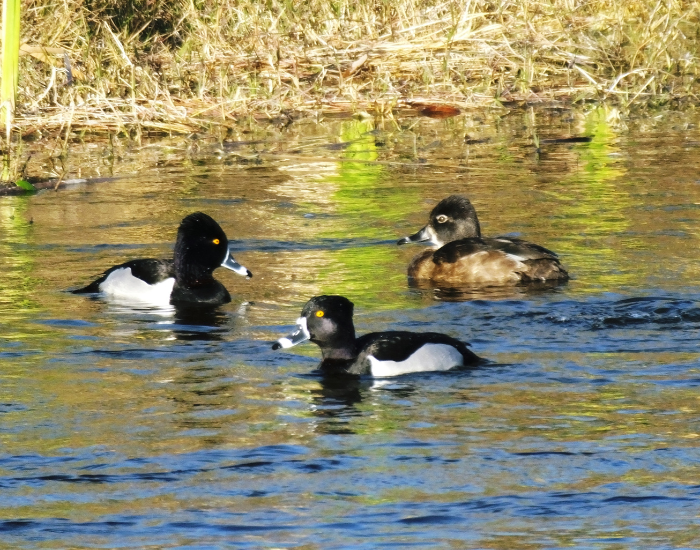
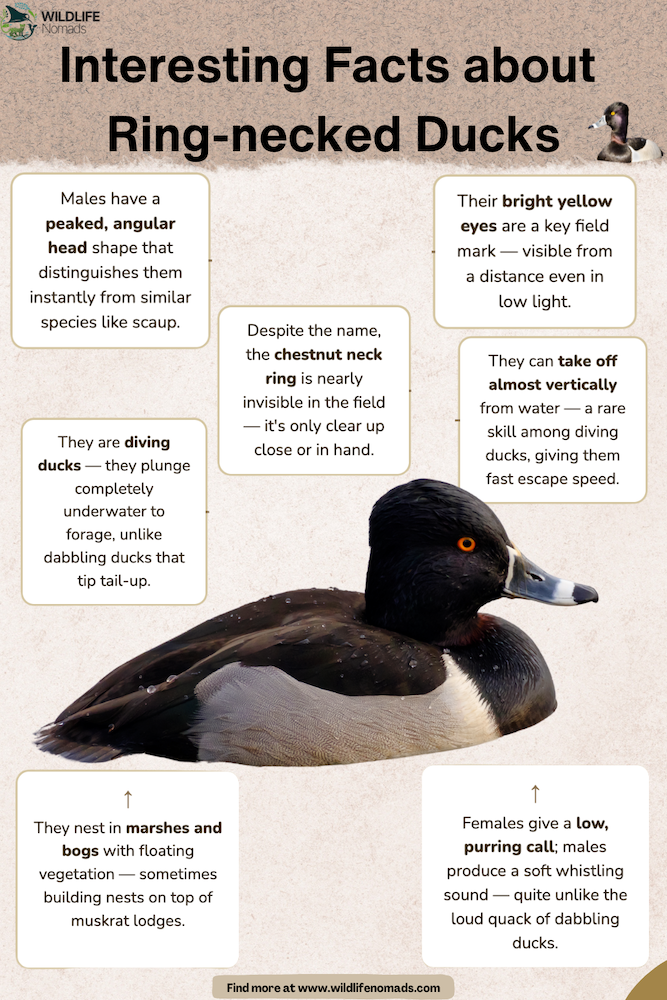
The first thing you should know about the ring necked duck is that you will almost never see the “ring” on its neck.
The name comes from a faint, cinnamon-colored band on the drake’s black neck, which is nearly impossible to see unless you’re holding a specimen in your hand or have perfect lighting and a $2,000 spotting scope. If we were naming them today based on field marks, we’d call them the ring billed duck, because the white band on the bill is what actually stands out.
2. They Are The “Dabblers” of the Diving Duck World
In the world of ornithology, we generally split ducks into two camps: dabblers (like the Northern Pintail) and divers. The Ring-Necked Duck is technically a diving duck, belonging to the genus Aythya alongside the Lesser Scaup and Redhead.
However, they have a bit of an identity crisis. Unlike other diving ducks that prefer deep, open water, the ringneck duck loves shallow, acidic wetlands, beaver ponds, and freshwater marshes. I often find them in water only a few feet deep, foraging for aquatic plants like pondweed and sedges, almost behaving like a dabbler in a diver’s body.
3. Identification: Look for the “Peaked” Head
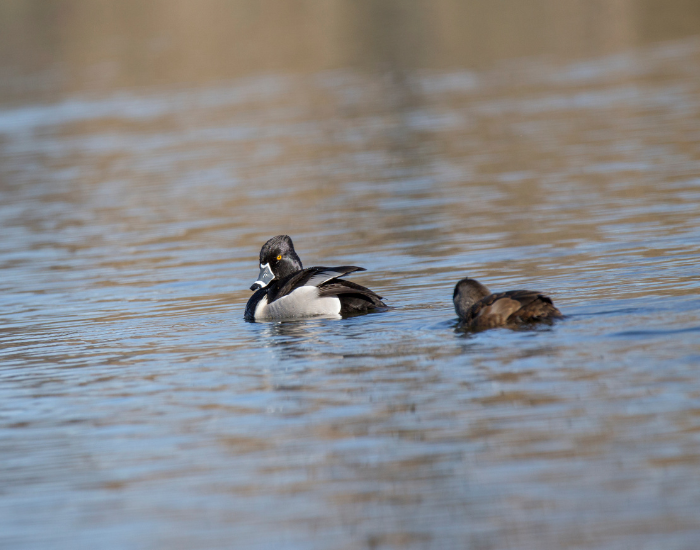
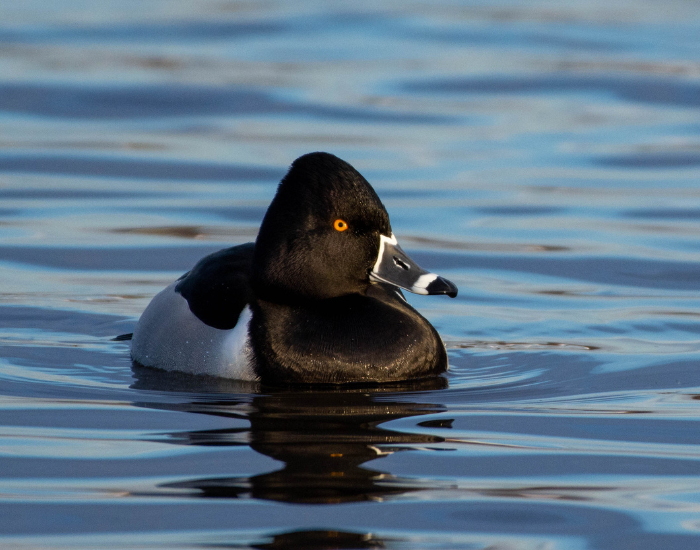
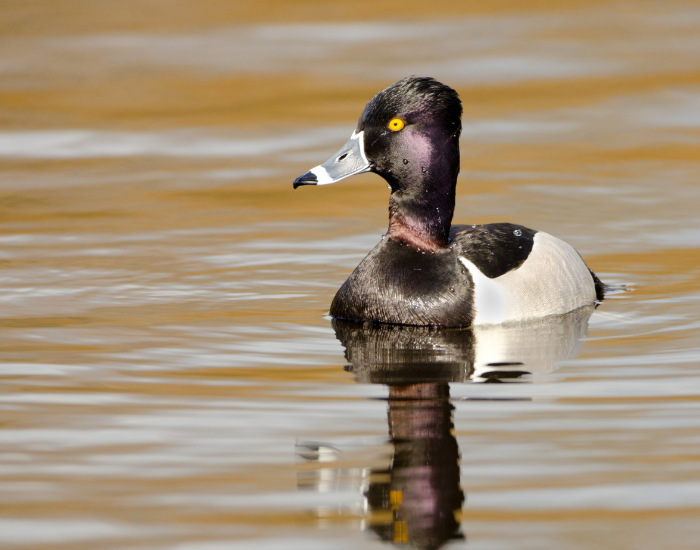
If you’re trying to identify a drake ringneck from a distance, don’t look for the neck ring. Look at the head shape. Unlike the rounded head of a scaup, the Ring-Necked Duck has a distinctively peaked head.
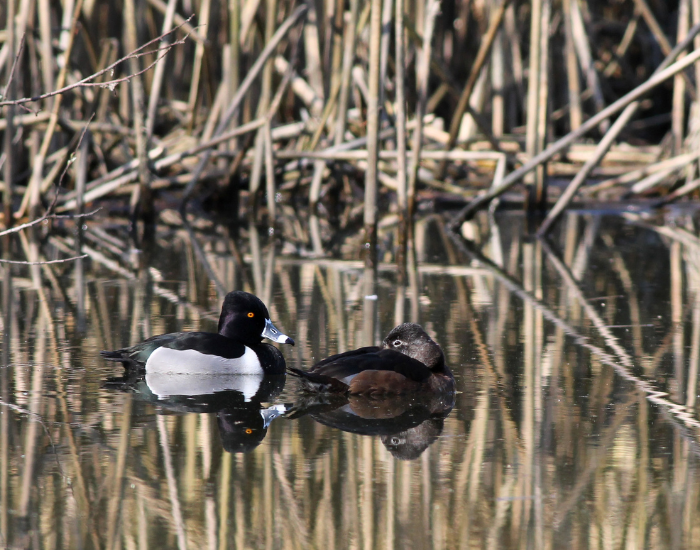
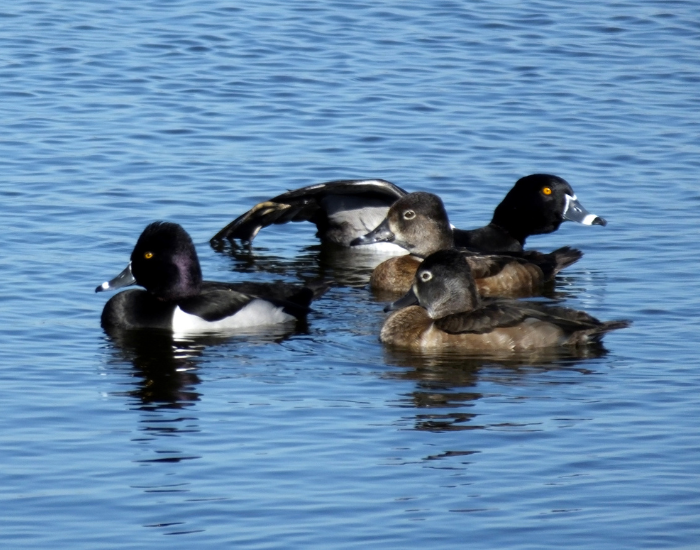
The adult males sport a glossy black head, a black back, and strikingly gray sides. The female ring-necked duck is more subdued—a brownish ring-necked duck hen with a gray face and a characteristic white eyering. Both sexes share that tell-tale white band near the black tip of the bill.
4. They Are Not Scaups (But They Play One on TV)
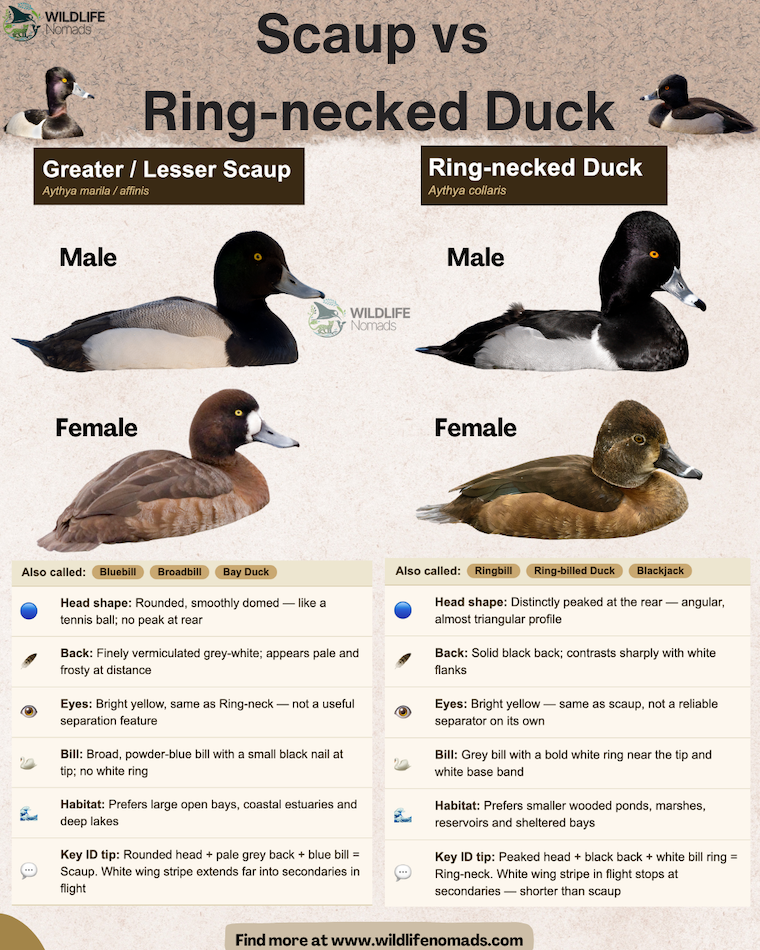
You may be wondering if a Ring-necked Duck a scaup, but the answer is no, though they are cousins.
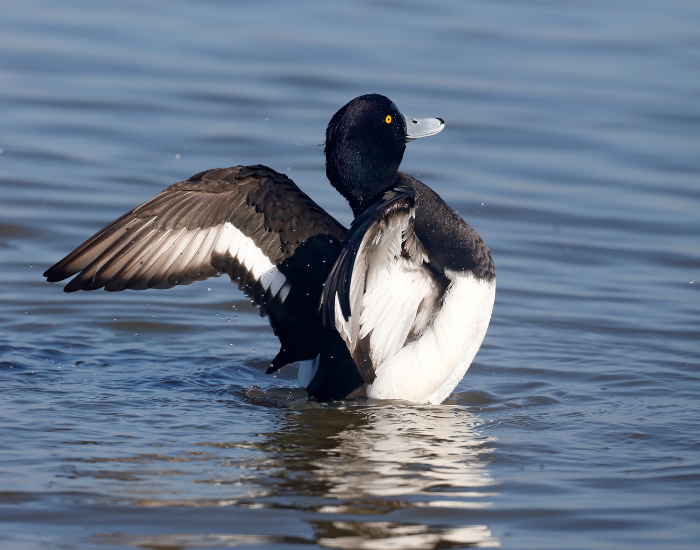
When I was doing driving in Vancouver, it was easy to confuse them with the Lesser Scaup. The key difference? Check the back. A scaup has a grayish, flecked back, while the ring neck duck has a solid black back. In flight, the Ring-Necked Duck also lacks the long white wing stripe seen in scaups, showing a gray wing stripe instead.
5. Their Breeding Habits are Surprisingly Private
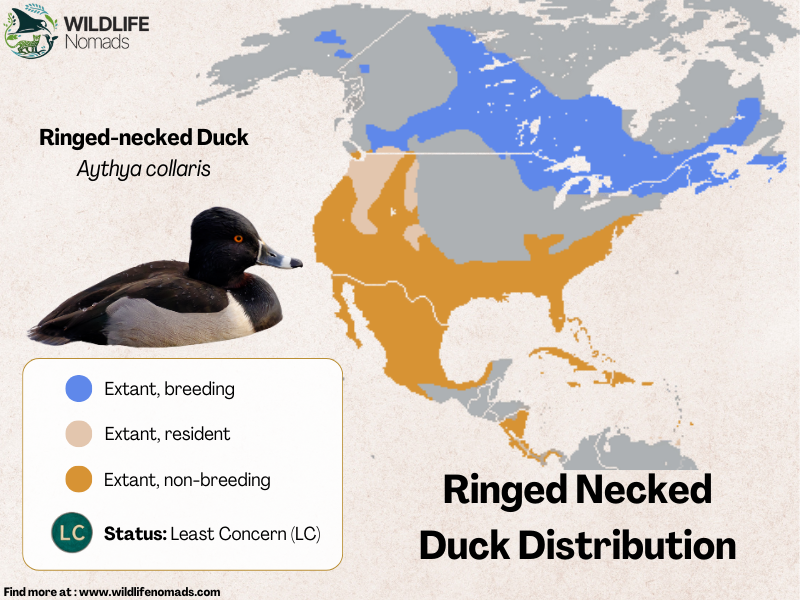
While Mallards will nest in your backyard pool, the breeding habits of Aythya collaris are much more secluded. They head north to the breeding grounds of the boreal forest in Canada and the northern US.
The nest is usually a well-concealed bowl of grasses and white belly feathers, built right on the edge of the water in dense vegetation. They typically lay 6–14 eggs, and the incubation period lasts about 25–29 days. I’ve noticed that they are incredibly sensitive to disturbance during this time; a single passing canoe can sometimes cause a hen to abandon her site.
6. A Diet of Aquatic Plants and Seasonal Protein
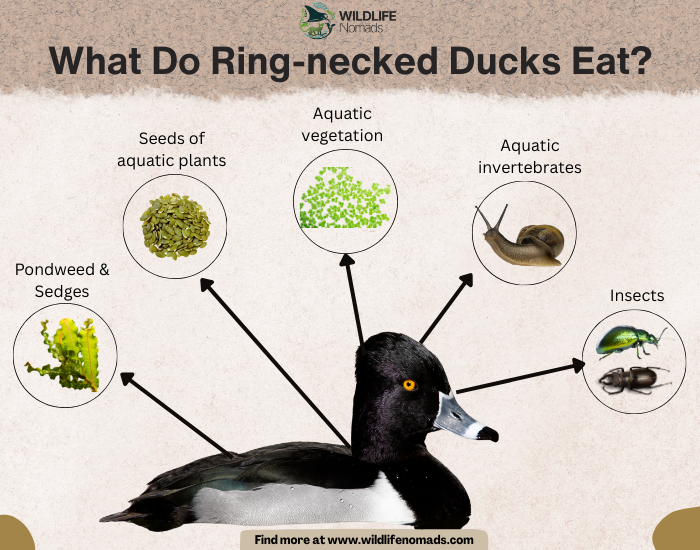
Ring-necked ducks are not strict vegetarians. Their diet consists predominantly of submerged aquatic plants — around 80–90% — including pondweed, wild rice, sedges, and water lilies. However, they supplement this with animal matter such as snails, insects, and mollusks.
During spring migration, protein intake increases significantly. Females bulk up on invertebrates to build the energy reserves needed for egg-laying. This dietary flexibility allows them to thrive across a wide range of habitat types, from shallow waters in the Florida Everglades to beaver ponds in the Canadian boreal forest.
7. They Are Incredible Travelers
The spring migration is a sight to behold. These ducks move in small pairs or groups rather than massive flocks. By April, most have left their southern wintering spots in places like Florida and the Caribbean to head toward the “pothole” regions of the north.
Interestingly, they are one of the few diving ducks whose population is actually increasing. While many species struggle with habitat destruction, the Ring-Necked Duck has expanded its range eastward over the last century, likely benefiting from new small bodies of water created by human activity.
8. Is a Ring-Necked Duck Rare?
This is a bit of a “yes and no” answer. In terms of global population, they are not rare—they are listed as “Least Concern” by the IUCN. However, because they prefer secluded beaver ponds over large public lakes, they can feel rare to the casual observer. These secluded habitats are crucial for supporting a diverse range of wildlife, providing shelter and resources for many species, including the Ring-necked Duck.
The population of Ring-necked Ducks is estimated to be around 2,000,000 individuals. Since the 1930s, the Ring-necked Duck has become a more widespread and numerous breeding bird in eastern Canada and northern New England.
If you want to see one, you have to look in the “right” kind of messy, overgrown water. They love surface cover. If you see a lot of lily pads and fallen timber, keep your binoculars ready.
9. The “Black Jack” of the Hunting World
In the hunting community, ring-necked ducks are affectionately called “Black Jacks.” Because their diet consists primarily of aquatic plants rather than fish, hunters generally consider them far better to eat than fishy diving ducks like Mergansers.
One caution worth noting: ring-necked ducks are among the most likely North American ducks to ingest spent lead shot from wetland bottoms. The 1991 ban on lead shot for waterfowl hunting helped, but old lead shot persists in many wetlands and continues to pose a lead poisoning risk to these birds.
10. The “Contrast” Expert
In the world of bird photography, the Ring-Necked Duck is a master of contrast. The stark white line at the base of the bill, the white band near the tip, and the vertical white “spur” on the side of the breast make them pop against the dark water. This high-contrast plumage is a great example of how scientific name categorization (like collaris) often misses the most obvious visual cues in favor of anatomical technicalities.
11. The “Jump-Flight” Takeoff
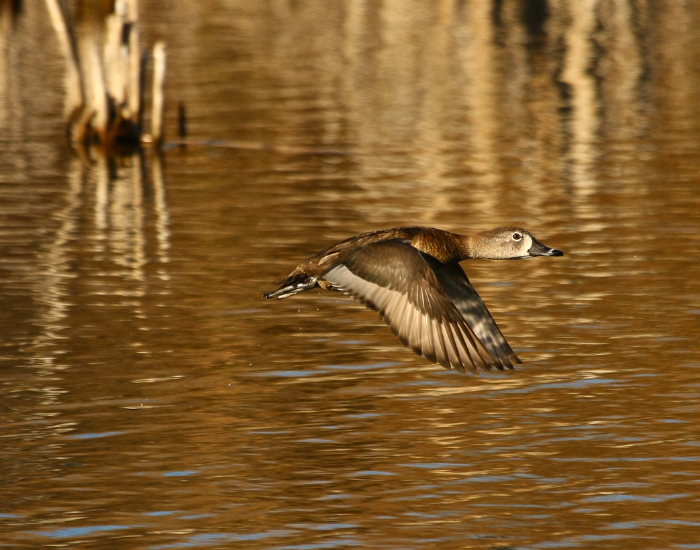
Unlike many other diving ducks (like the Canvasback or Scaup) that have to “run” across the surface of the water to gain enough speed for takeoff, the Ring-necked Duck can spring directly into the air from a standstill.
This is a rare trait for a diver! It’s likely an adaptation for living in those small, “messy” beaver ponds and tight marshes you mentioned—if they had to run across the water to fly, they’d get tangled in the lily pads and fallen timber they love so much.
Quick FAQ: Everything You Need to Know
They live in freshwater environments across North America. They breed in the boreal forests of Canada and the northern US and winter in the southern US, Florida, Mexico, and the Caribbean.
Generally, no. They are quite silent compared to the vocal Mallard. During courtship, the males might give a low whistle or growl, but you won’t hear much from them on a standard afternoon.
No, they are quite common, but their preference for hidden marshes and rivers makes them less visible than “park ducks.”
The adult males have a black back and white/gray sides with a peaked head. The adult female is grayish-brown with a white ring around her eye and a white band on her bill. is grayish-brown with a white ring around her eye and a white band on her bill.
Why We Should Care
The Ring-Necked Duck is a sentinel of our freshwater health. Their reliance on beaver ponds and freshwater marshes links them directly to the health of our wetlands. My time on Vancouver Island reminded me that even the most “common” species have a story to tell if we just stop to look.
If you want to help protect these amazing divers, supporting organizations like WWF or Ducks Unlimited is a great start. Or, better yet, get involved in citizen science and report your sightings!
References:
Cornell Lab of Ornithology. (2019). Ring-necked duck life history. All About Birds. https://www.allaboutbirds.org/guide/Ring-necked_Duck/lifehistory
Roy, C. L., Herwig, C. M., Hohman, W. L., & Eberhardt, R. T. (2020). Ring-necked duck (Aythya collaris), version 1.0. In A. F. Poole (Ed.), Birds of the World. Cornell Lab of Ornithology. https://doi.org/10.2173/bow.rinduc.01
National Audubon Society. (2024). Ring-necked duck (Aythya collaris). Audubon Field Guide. https://www.audubon.org/field-guide/bird/ring-necked-duck
Sauer, J. R., Niven, D. K., Hines, J. E., Ziolkowski, D. J., Jr., Pardieck, K. L., Fallon, J. E., & Link, W. A. (2019). The North American Breeding Bird Survey, results and analysis 1966–2019 (Version 2.07.2019). USGS Patuxent Wildlife Research Center. https://www.pwrc.usgs.gov/BBS/
BirdLife International. (2018). Aythya collaris. The IUCN Red List of Threatened Species 2018: e.T22680370A132078872. https://dx.doi.org/10.2305/IUCN.UK.2018-2.RLTS.T22680370A132078872.en
Scheuhammer, A. M., & Norris, S. L. (1996). The ecotoxicology of lead shot and lead fishing weights. Ecotoxicology, 5(5), 279–295. https://doi.org/10.1007/BF00119051
Pain, D. J., Mateo, R., & Green, R. E. (2019). Effects of lead from ammunition on birds and other wildlife: A review and update. Ambio, 48(9), 935–953. https://doi.org/10.1007/s13280-019-01159-0