
My obsession with pheasants started inside a Balinese temple. On my third trip to Indonesia, driving west across Bali toward Pura Tanah Lot, I detoured into a small village shrine wrapped in offerings and incense smoke. Behind a moss-covered statue, a glossy bird with a violet-green sheen scratched the dirt like a feathered punk rocker. My biologist brain locked on instantly. Pheasants. That was my first instinct. The locals called the bird ayam hutan hijau — the Green Junglefowl, Gallus varius — and they explained how it threads into ancestor traditions across the island.
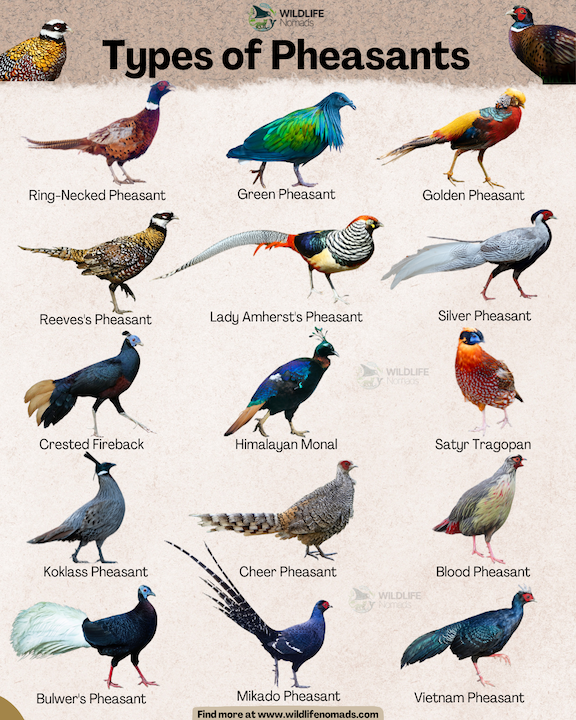
Technically, the Green Junglefowl is a junglefowl, not a true pheasant. But it sits inside the family Phasianidae, the same evolutionary club as the world’s most spectacular game birds. That temple encounter sent me down a years-long rabbit hole. Below are 15 types of pheasants that have completely blown my mind, from the iconic ring-necked pheasant flushing out of Midwestern corn rows to ghost-like species clinging to survival in Vietnamese rainforest.
A Quick Note on What Counts as a Pheasant
Pheasants belong to the family Phasianidae, which they share with grouse, partridges, chukar, peafowl, and chickens. Most pheasant species sit inside a tighter group known as true pheasants, where the males explode with color and the females wear cryptic brown plumage built for nest defense. Pheasants are ground birds first, fliers second. They sprint, scratch through leaf litter for seeds and other insects, and roost in trees at night. Across most pheasant species, hens incubate alone and out-survive their flashy mates.
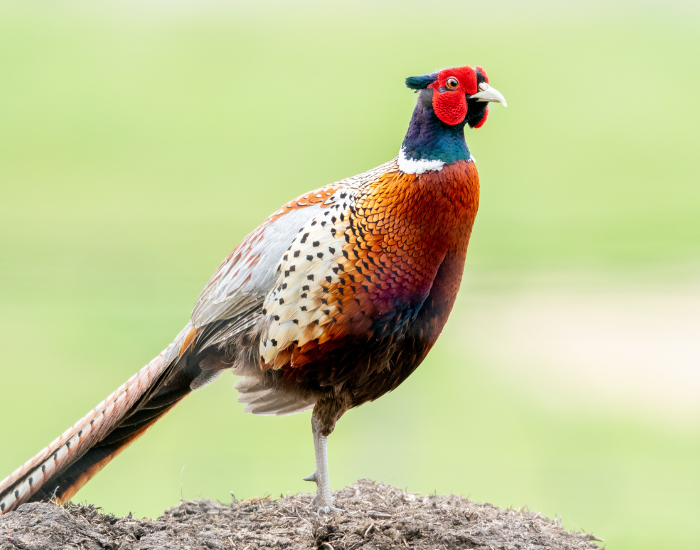
1. Ring-Necked Pheasant (Phasianus colchicus)
The ring-necked pheasant is the bird almost everyone pictures. Phasianus colchicus is native to temperate Asia, but humans have hauled it everywhere: North America, Europe, New Zealand. Mature birds sport coppery body plumage, an iridescent green head, scarlet face wattles, and that signature white neck ring. Hens are mottled brown for camouflage on the nest. The species is the foundation of modern pheasant hunting; entire farms in places like North Dakota exist to release birds for the autumn season.
MacFarlane pheasants — a popular game-farm strain — supply many of the introduced birds you’ll flush across the United States. In good agricultural areas, self sustaining populations persist year-round, with hens building shallow ground nests in hedgerows and laying 8–15 eggs in early summer. Hunters love them because the ring-necked pheasant flushes vertically and explodes into flight at terrifying speed. I’ve watched them on national wildlife refuge edges in the Dakotas, scratching through stubble in loose flocks at first light.
2. Green Pheasant (Phasianus versicolor)
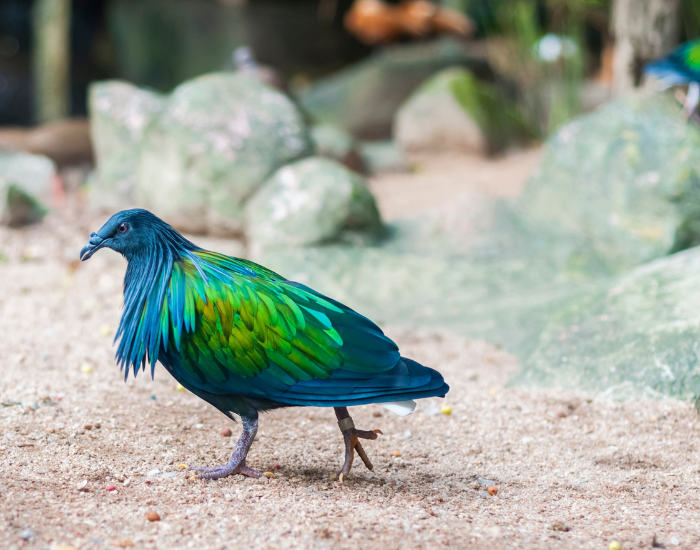
Often lumped with the ring-necked pheasant, the Green Pheasant is Japan’s national bird and arguably its handsomer cousin. The males trade copper for deep green body plumage and skip the white neck ring entirely. Hens are darker than ring-necked females and the species runs slightly smaller. Like most pheasants, hens nest on the ground in tall grasses, laying 6–12 eggs in spring and feeding their pheasant chicks on insects, berries, and tender shoots.
3. Golden Pheasant (Chrysolophus pictus)
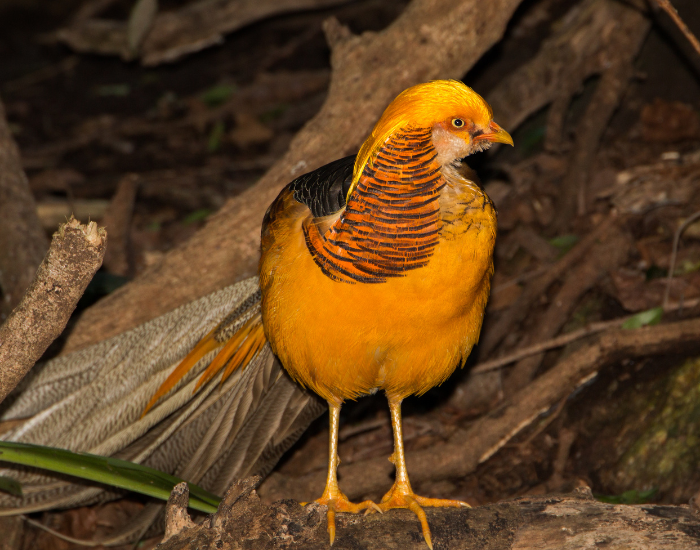
If a Disney animator designed a bird, it would be the Golden Pheasant. The males flame with golden crests, scarlet underparts, and barred orange capes that flare during courtship displays for several females. Native to the mountain forests of central China, this brightly colored pheasant species has established small feral populations in the United Kingdom, although recent surveys suggest those introduced flocks are crashing. Hens, by contrast, look like a handful of dead leaves, dull brown camouflage that hides them on the nest. They forage on the ground for grasses, seeds, berries, and other insects, and roost in trees at night.
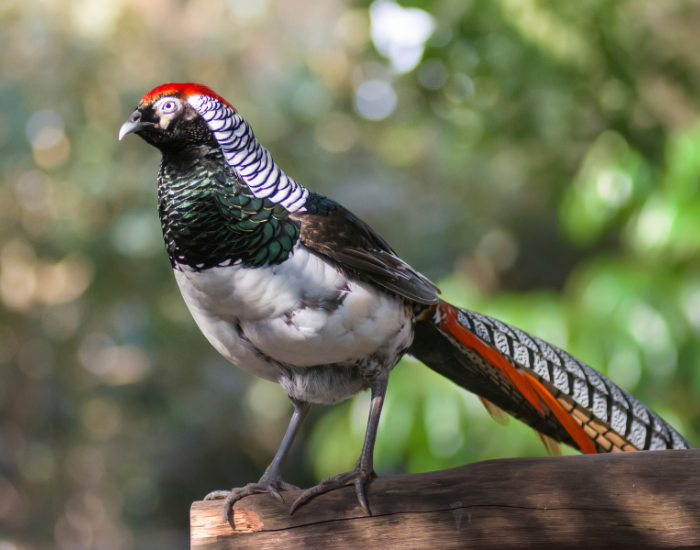
4. Lady Amherst’s Pheasant (Chrysolophus amherstiae)
Lady Amherst’s looks like the Golden Pheasant with a black-and-silver remix. The males wear a white chest, black-barred mantle, and a long, scalloped tail tipped in red. They live in the bamboo forests of southwestern China and northern Myanmar. They are brightly colored but pathologically shy. Hens lay 6–12 eggs in a hidden ground nest. Habitat loss across their range is steadily shrinking the wild population.
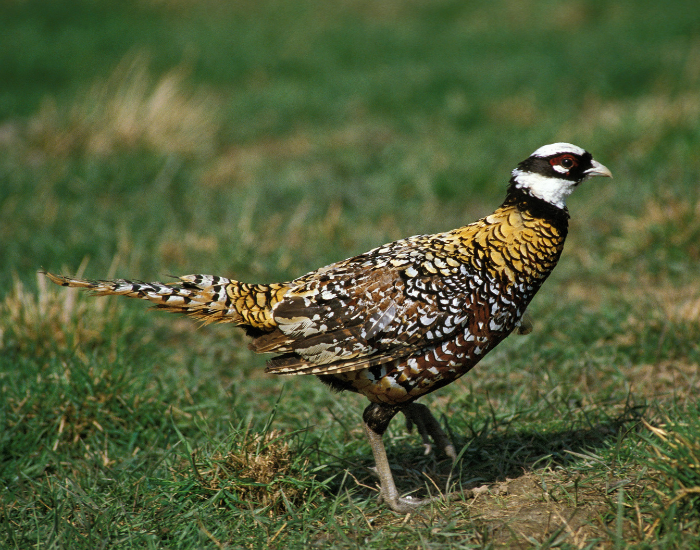
5. Reeves’s Pheasant (Syrmaticus reevesii)
Reeves’s Pheasant carries the longest tail of any bird species, males regularly grow tail feathers over six feet long. The world record sits north of eight feet. They live in central Chinese woodland and have been introduced into European hunting estates. The tail feathers were historically prized for ceremonial costume, which fueled centuries of pressure on wild populations.
Conservation status is now Vulnerable under the IUCN. And now they are listed under CITES Appendix II. This means even trading its feathers requires strict permits! Females wear a much shorter tail and brown body plumage. Reeves’s males are aggressive birds, they will harass other birds and even strike at humans during the breeding season.
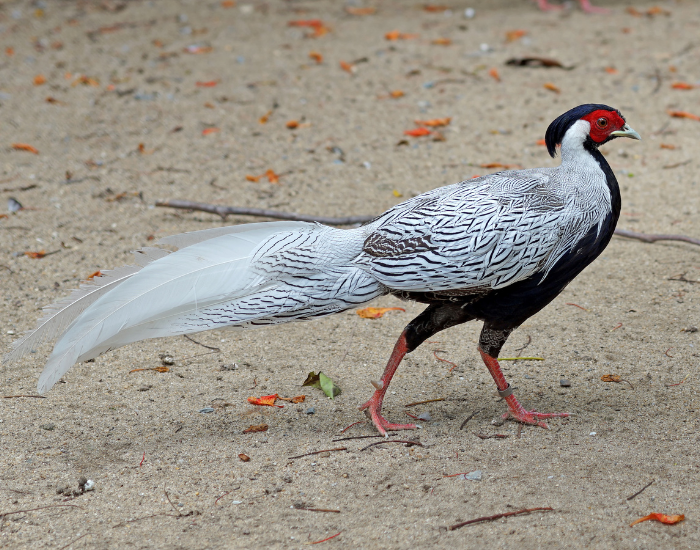
6. Silver Pheasant (Lophura nycthemera)
Few pheasants are as instantly recognizable as the Silver Pheasant. Males look painted: a pure white back and tail finely etched with black, blue-black underparts, and a startling crimson face. They range across mountain forests from southern China into northern Vietnam. Hens, again, are uniform brown with a much shorter tail. The species adapts well to captivity, which is why nearly every European aviary built since the 1700s has kept them. In the wild, they forage for berries, fallen fruit, seeds, and insects on the forest ground, often moving in loose flocks of one male and several females.
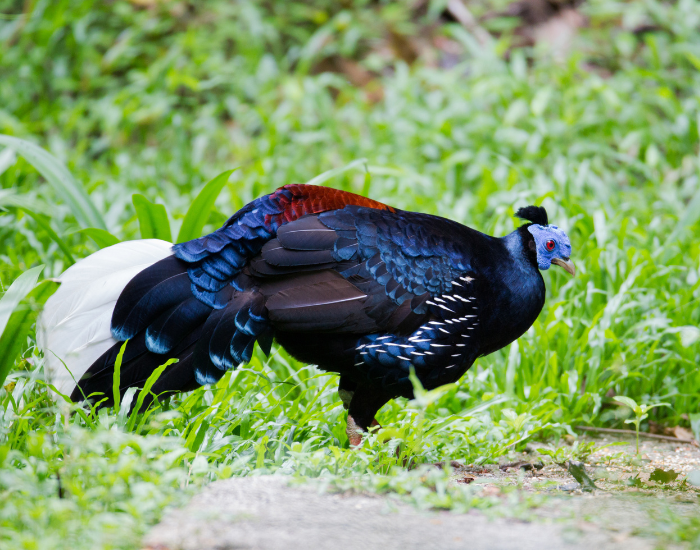
7. Crested Fireback (Lophura ignita)
The Crested Fireback is the rainforest counterpart to the Silver. Found in the lowland forests of Borneo, Sumatra, and the Malay Peninsula, the males show off a metallic blue body, a copper rump patch, and a curling crest like a punk’s mohawk. I stalked one with a Dayak guide in Kalimantan years back; we caught a single brightly colored male crossing a logging road, then nothing for the rest of the day. Crested Fireback flocks are usually one male leading several females and their pheasant chicks. Logging is hammering their habitat, the IUCN now lists the Crested Fireback as Vulnerable.
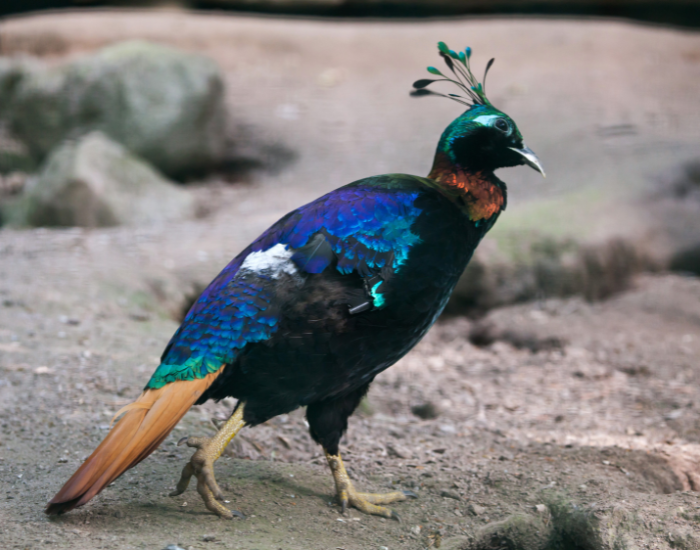
8. Himalayan Monal (Lophophorus impejanus)
The national bird of Nepal, the Himalayan Monal is a walking oil slick of color. Males flash green, copper, blue, and purple under high-altitude sun, with a peacock-like crest perched on the head. They live above tree line in the Himalayas, scratching for roots, tubers, and other insects in alpine meadows. You can spot them at 11,000 feet on the Annapurna circuit. Hens are streaked brown and almost impossible to see against scree. They nest on the ground under boulders, laying 4–6 eggs.
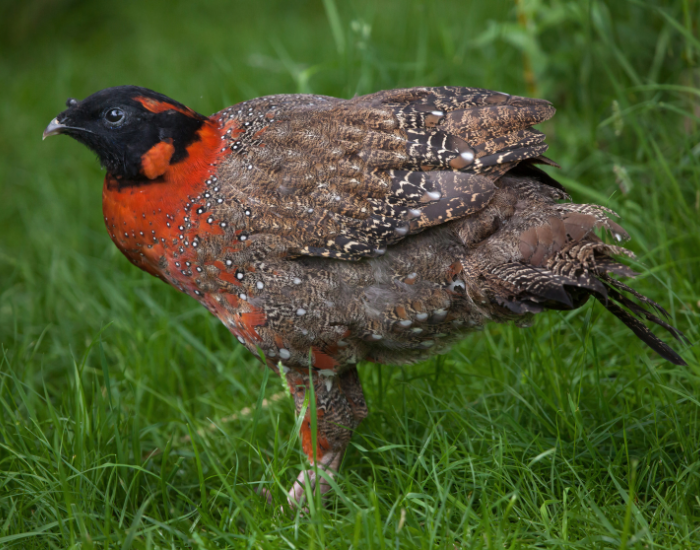
9. Satyr Tragopan (Tragopan satyra)
Tragopans are pheasants that look like nightmares, in the best possible way. The Satyr Tragopan male wears scarlet body plumage spotted with white, and during display he inflates a bright blue throat lappet covered in red horn-like patterns. They live in the eastern Himalayas, often inside dense rhododendron forests.
Unlike most pheasants, tragopans nest in trees, reusing abandoned crow or hawk nests rather than scraping a hollow on the ground. That alone makes them an evolutionary outlier inside the family Phasianidae. Females are mottled brown and almost impossible to spot on the nest.
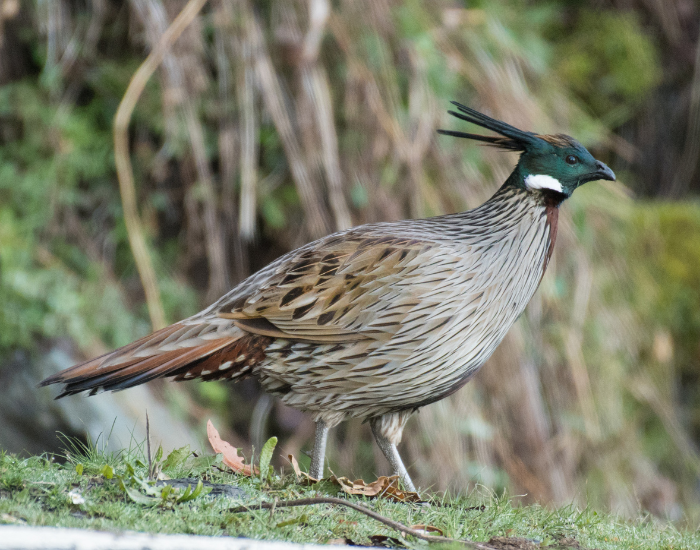
10. Koklass Pheasant (Pucrasia macrolopha)
The Koklass Pheasant haunts the conifer slopes from Afghanistan east through northern India and into China. Males show silver-streaked grey body plumage, a chestnut chest, and a dramatic ear-tuft crest. Their dawn call is one of those sounds that, once heard in a misty Himalayan valley, you do not forget.
They eat seeds, leaves, berries, and insects on the forest ground. Pairs are usually monogamous, which is unusual among pheasants, most pheasant species follow a one-male, several-females structure. Conservation status is Least Concern, but logging is a steady local threat.
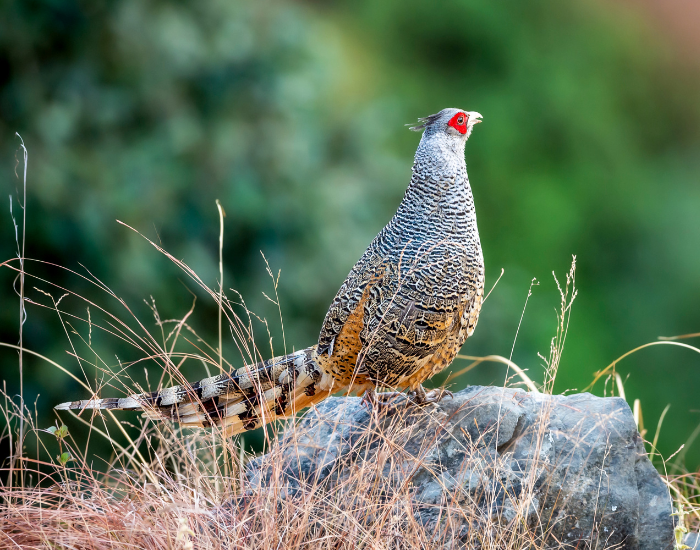
11. Cheer Pheasant (Catreus wallichii)
The Cheer Pheasant is the underdog. It lives in steep, scrubby grasslands across the western Himalayas and is one of the most heavily targeted pheasant species in its range. Males and females both look fairly drab, buffy brown bodies with a longer tail and a tousled crest. Subsistence hunters trap them, eat them, and sell their eggs at village markets. Captive breeding programs in India and Pakistan have tried to seed wild populations with limited success. Cheer hens lay 9–14 eggs in well-hidden nest scrapes lined with grasses.
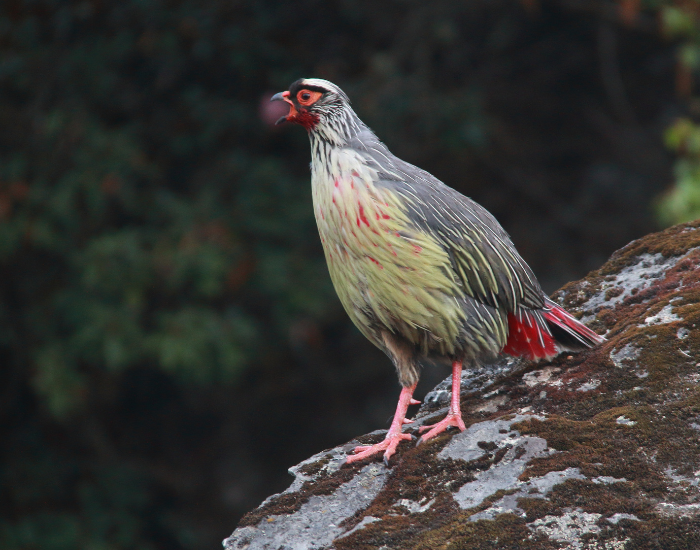
12. Blood Pheasant (Ithaginis cruentus)
The Blood Pheasant is the smallest true pheasant and the only species in its genus. Males show grey body plumage streaked with crimson, as if a brush dipped in blood was dragged across the chest. They live above 11,000 feet in the eastern Himalayas, often in coniferous forests near the snow line. The species is the state bird of Sikkim. Blood Pheasants live in loose flocks of up to 30 birds in winter, which makes them easier to find than most pheasants. They feed on mosses, lichens, ferns, and other insects above the tree line.
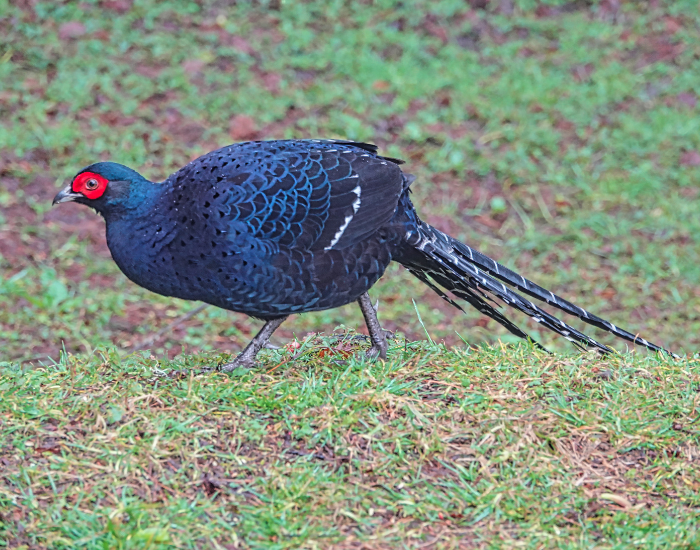
13. Mikado Pheasant (Syrmaticus mikado)
The Mikado Pheasant is endemic to Taiwan and easily one of the most beautiful birds in Asia. Males are a deep iridescent purple-blue with white tail bars; females are warm brown with the much shorter tail typical of the genus. They live in mid-elevation montane forests, mostly between 5,000 and 10,000 feet. The Mikado is a national symbol, its image appears on the Taiwan thousand-dollar bill. Conservation status is Near Threatened. Habitat protection inside Yushan National Park has helped stabilize numbers, but the species still feels like a privilege every time you see one.
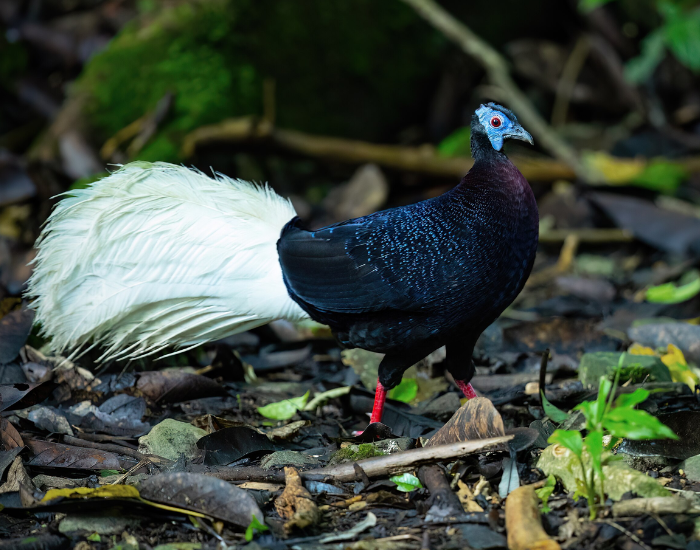
14. Bulwer’s Pheasant (Lophura bulweri)
Bulwer’s Pheasant is one of the strangest pheasants in the world. Found only in Borneo, the male has a snow-white tail of 32 curving feathers, deep blue facial wattles that drop nearly to the chest during display, and bright red legs. Watching one display in person is on every serious birder’s bucket list — and almost no one ever pulls it off. The species is shy, lives at low density, and habitat loss has pushed it to Vulnerable status. They forage for fruit, seeds, and insects on the forest ground and roost in trees overnight.
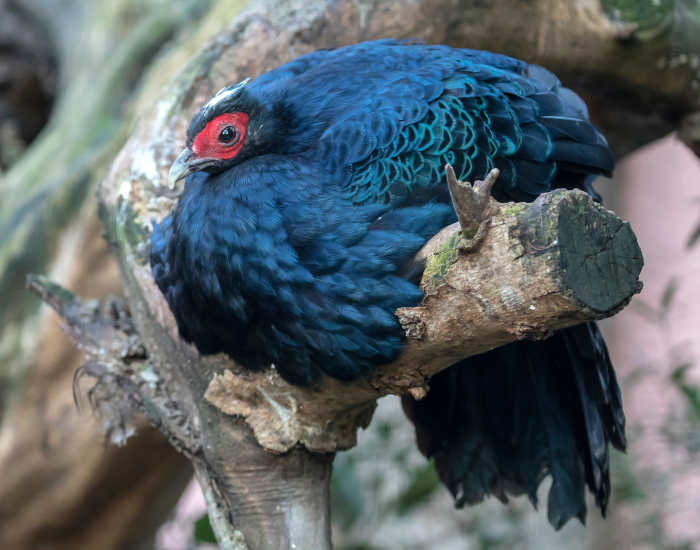
15. Edwards’s or Vietnam Pheasant (Lophura edwardsi)
Edwards’s Pheasant is a heartbreak species. Endemic to the central Annamite mountains of Vietnam, this pheasant species has not been confirmed in the wild since 2000 and is currently listed by the IUCN as Critically Endangered, possibly extinct in nature, although as of late 2025 and early 2026, there are exciting reintroduction efforts! The males are dark blue-black with a white crest and red legs. A captive breeding population in zoos and conservation centers is the species’ only firewall. Reintroduction trials are being designed, but the underlying threats, deforestation, snare hunting, fragmented habitat — have not gone away. If you want a single pheasant species that captures the conservation urgency around family Phasianidae, this is it.
FAQs About Pheasants
A female pheasant is called a hen. The males are called cocks or roosters, the chicks are called pheasant chicks, and a family group is sometimes called a brood. Hens of most pheasants wear cryptic brown body plumage that camouflages them on the nest, which is critical because the female incubates her eggs alone. A hen ring-necked pheasant typically lays 8–15 eggs in early summer.
It depends entirely on the species. Ring-necked pheasant sightings are common across agricultural areas of the central United States, central Europe, and lowland China — the introduced species has built widespread, self sustaining populations. By contrast, species like Edwards’s Pheasant or Bulwer’s Pheasant are extraordinarily rare and may require years of dedicated fieldwork to glimpse. Drive at dawn through farm country in North Dakota and you will almost certainly see a ring-necked pheasant.
Pheasants are explosive short distances fliers. A flushing ring-necked pheasant can reach a flight speed of 35–45 miles per hour over short bursts. They cannot sustain that flight speed for long — most pheasants land within 600 feet and prefer running on the ground to flying. Their leg muscles are built for sprinting, which is why hunters often see them dart through stubble before flushing.
Protecting the World’s Most Spectacular Game Birds
Walking out of that Balinese temple, I had no idea a single green-feathered bird would pull me into a study of more than 50 living pheasant species across Asia, Europe, and North America. The pattern that has stuck with me is simple: pheasants are some of the most beautiful birds on Earth, and they are also some of the most vulnerable. Logging, snare hunting, and farm-edge habitat loss are closing in on the rarest species, while introduced birds like the ring-necked pheasant thrive in human landscapes.
If you live anywhere in temperate North America or Europe, you can probably see a pheasant this weekend, step outside at dawn near a corn field or hedgerow and you will likely flush one. If you want to keep going down the rabbit hole, dive into our field guide to peacocks and peafowls, our deep dive on the bird families of China, or our broader overview of the world’s birds.
References:
BirdLife International. (2024) Lophura edwardsi. The IUCN Red List of Threatened Species 2024: e.T45354985A249120158. https://dx.doi.org/10.2305/IUCN.UK.2024-2.RLTS.T45354985A249120158.en.
Kimball, R. T., & Braun, E. L. (2014). Does more sequence data improve estimates of galliform phylogeny? Analyses of a rapid radiation using a complete data matrix. PeerJ, 2, e361. https://doi.org/10.7717/peerj.361
McGowan, P. J. K., & Garson, P. J. (1995). Pheasants: Status Survey and Conservation Action Plan 1995–1999. IUCN/SSC Pheasant Specialist Group, Gland, Switzerland. https://portals.iucn.org/library/node/6999
Mustin, K., Arroyo, B., Beja, P., Newey, S., Irvine, R. J., Kestler, J., & Redpath, S. M. (2018). Consequences of game bird management for non-game species in Europe. Journal of Applied Ecology, 55(5), 2285–2295. https://doi.org/10.1111/1365-2664.13131
Liang, W., Cai, Y., & Yang, C. C. (2013). Extreme levels of hunting of birds in a remote village of Hainan Island, China. Bird Conservation International, 23(1), 45–52. doi:10.1017/S0959270911000499
Pringle, H., Wilson, M., Calladine, J., & Siriwardena, G. (2019). Associations between gamebird releases and generalist predators. Journal of Applied Ecology, 56(8), 2102–2113. https://doi.org/10.1111/1365-2664.13451